
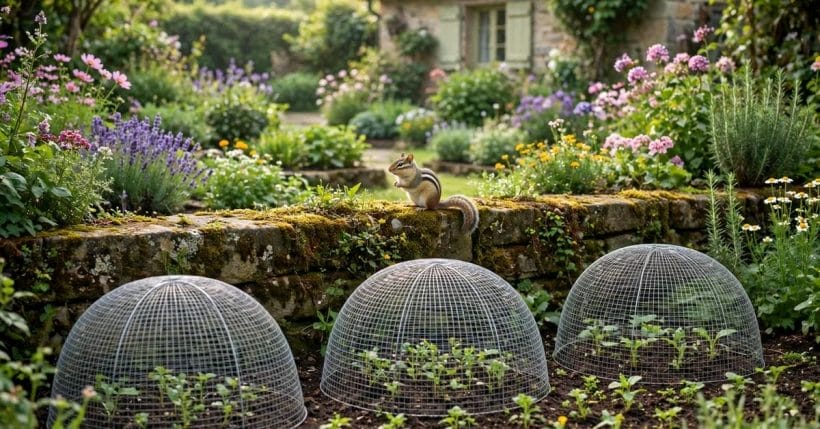
Chipmunks are charming for exactly one visit. Then the bulbs vanish, the strawberries are harvested by someone else, seedlings are dug up for the seeds in their cheeks, and a small striped engineer is tunnelling along the foundation. The wish to be rid of them is understandable — and this guide answers it in one direction only: deterrence.
Everything here works by making a garden unwelcoming rather than by harming the animal: food put away, plants protected, gaps closed, shelter tidied and gentle surprises at the border. Nothing in this post kills, poisons or injures anything, and section 9 states that boundary in full. What deterrence honestly offers is fewer visits and protected plants — not a guarantee, and anyone who promises one is selling something.
1. The Deterrence Rule: Unwelcome, Never Harmed
Five checks carry the whole method, in the order to do them:
| Step | What it means | Weight |
|---|---|---|
| REMOVE FOOD SOURCES | Seal bird seed and pet food | Essential |
| PROTECT PLANTS | Wire mesh and cloches | High |
| SEAL ENTRY POINTS | Close gaps around the home | High |
| MOTION SPRINKLERS | Gentle water deterrent | Easy |
| TIDY THE EDGES | Clear shelter and brush piles | Steady |
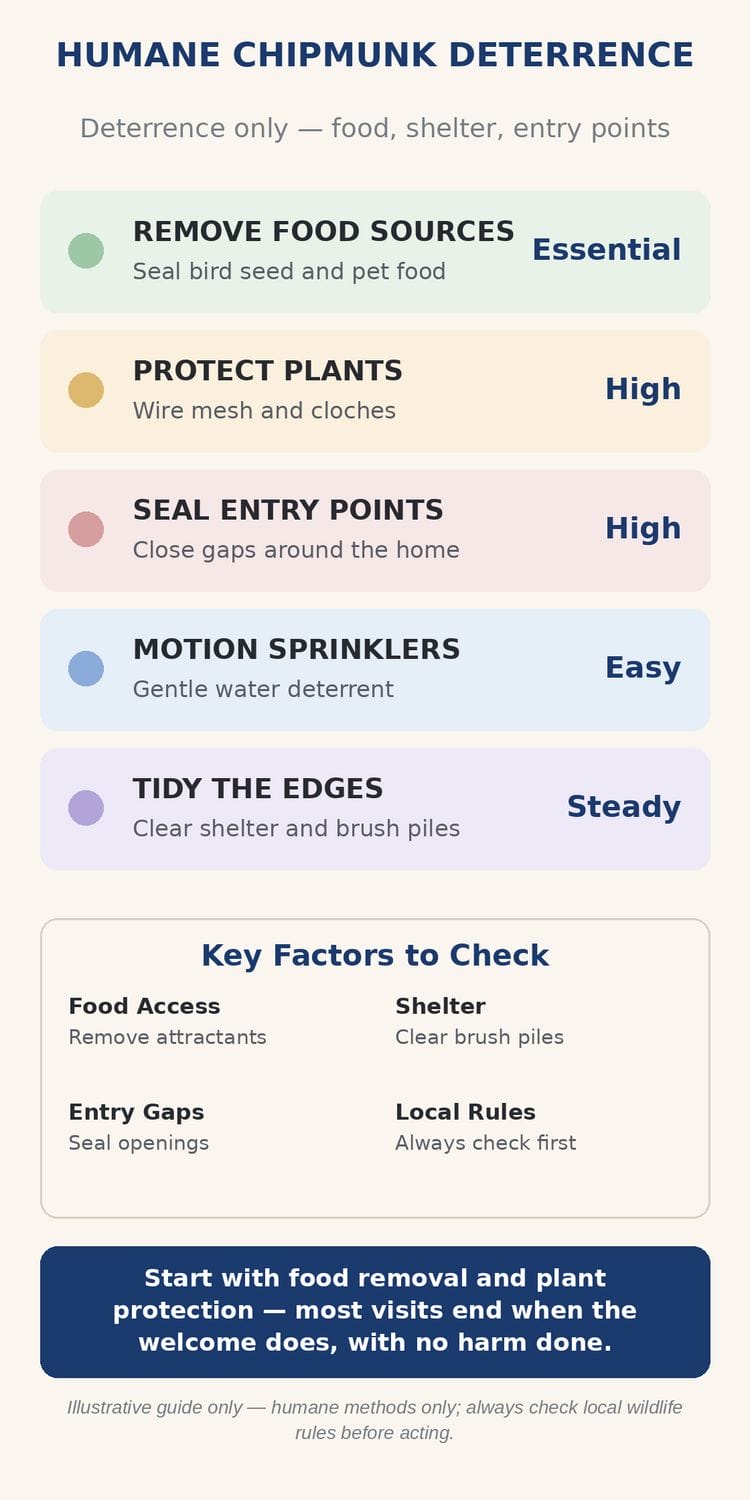
Four factors decide whether the checks work: food access, because a fed chipmunk overlooks every other inconvenience; shelter, because brush and clutter near beds are an invitation; entry gaps, because the house itself should never be part of the problem; and local rules, because wildlife law varies by place and always comes first. Work the five checks with those four in mind and most gardens go quiet within a season.
2. Know the Animal You Are Deterring
Chipmunks are solitary, daytime foragers with an extraordinary memory for food locations. They do not wander at random: they run learned routes between burrow, cover and food, filling their cheek pouches at each stop. That is why the same corner of the garden is raided daily, and why changing what the route offers — removing the food at its end — changes the behaviour instead of merely interrupting it.
They are also prey animals, which shapes everything in this guide. Open ground frightens them; cover reassures them. A garden with long sightlines, tidy edges and no hiding runs feels dangerous to a chipmunk in a way no gadget has to enforce. Deterrence, done well, is mostly landscape design read from the animal’s point of view.
Reading the signs saves wasted effort. Look for small, clean-edged burrow entrances near walls and steps, husks and seed shells gathered under a favourite perch, seedlings clipped or vanished overnight-in-daylight — chipmunks work by day, so damage found at dawn with no night culprit usually means them — and the sudden alarm chirp from a fence post when you approach. Map where the signs gather and you have mapped the route the rest of this guide interrupts.
Burrows are the other thing to understand: chipmunks dig discreet systems, often near walls, steps and woodpiles, with entrances kept surprisingly tidy. You are not trying to evict an established burrow by force — you are making the neighbourhood of it so unrewarding that the next generation settles somewhere wilder.
3. Food: Take Away the Invitation
Start where the graphic starts, because food is the master variable. Bird seed is the single biggest attractant in most gardens: feeders spill, chipmunks learn the spill schedule, and a resident moves in underneath. Store seed in sealed metal bins, as the photograph in section 6 shows, sweep spills, and consider feeder placement away from the beds you care most about — or a pause in feeding while a problem settles.
Pet food belongs indoors or in sealed containers, never in an open bowl on the step. Fallen fruit should be picked up promptly — the same tidiness the growing muscadine from seed guide recommends for vines applies to every fruiting plant — and bulbs, the winter larder chipmunks raid most, are protected physically in section 5 rather than by any substance.
Compost and bins follow the same rule: sealed, tidy, uninteresting. A garden that stops serving food does not need to argue with its visitors; they simply re-route to wherever lunch still is, which is the entire strategy in one sentence.
4. Entry Points: Keep the House Out of It
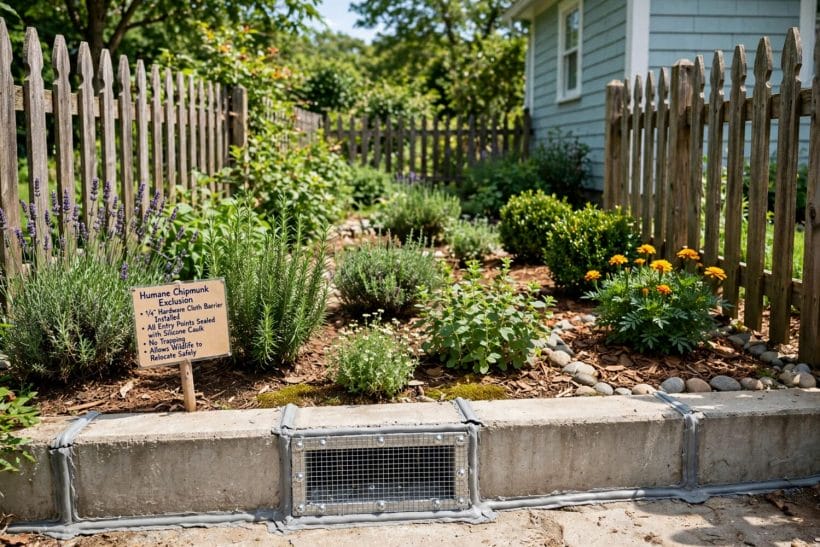
Deterrence outdoors matters twice as much if chipmunks are getting indoors — into wall voids, garages or under-floor spaces. Walk the house slowly and look at it from chipmunk height: gaps around pipes and vents, worn door sweeps, openings where utilities enter, cracks along the foundation line. The meshed foundation vent in the photograph is the pattern: openings screened with sturdy mesh, gaps sealed with appropriate materials.
Two cautions belong here. First, never seal an opening while an animal may be inside — check for activity, use one-way exclusion fitted by a professional where there is doubt, and time the work outside the season when young are in the burrow or nest. Second, chimneys, roof junctions and anything structural belong to professionals; the homeowner’s job is the survey and the small, safe gaps at ground level.
Firewood and storage against the house wall deserve a mention: stacked tight to the siding, they are a covered motorway to every gap behind them. Moving stacks a little away from the wall and onto a raised base removes both the cover and the welcome.
5. Protect the Beds: Mesh, Cloches and Water
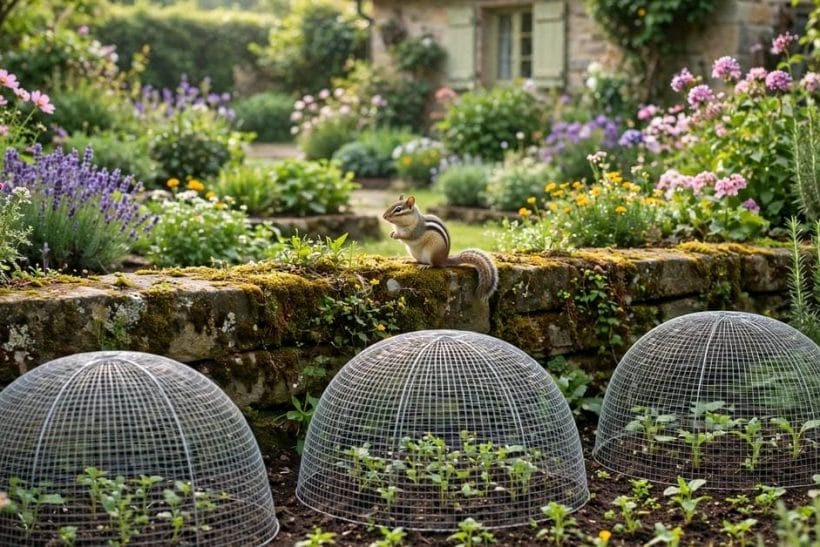
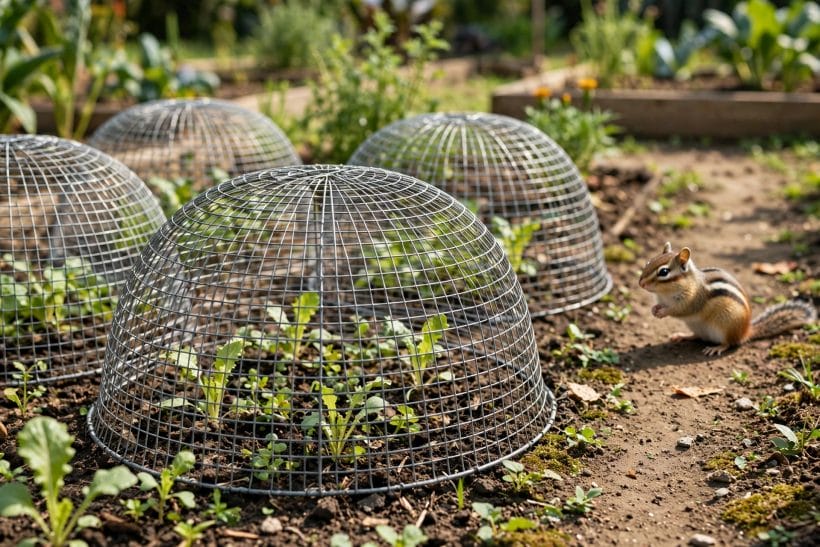
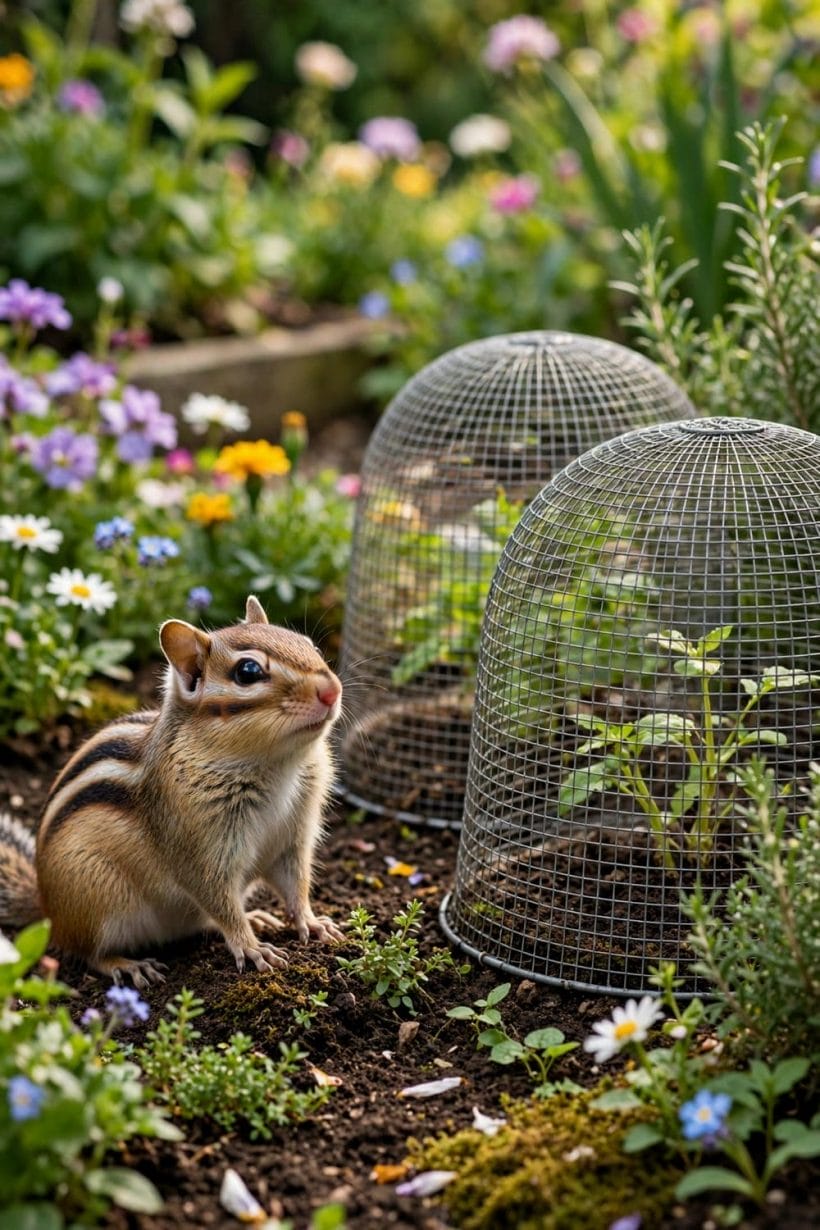
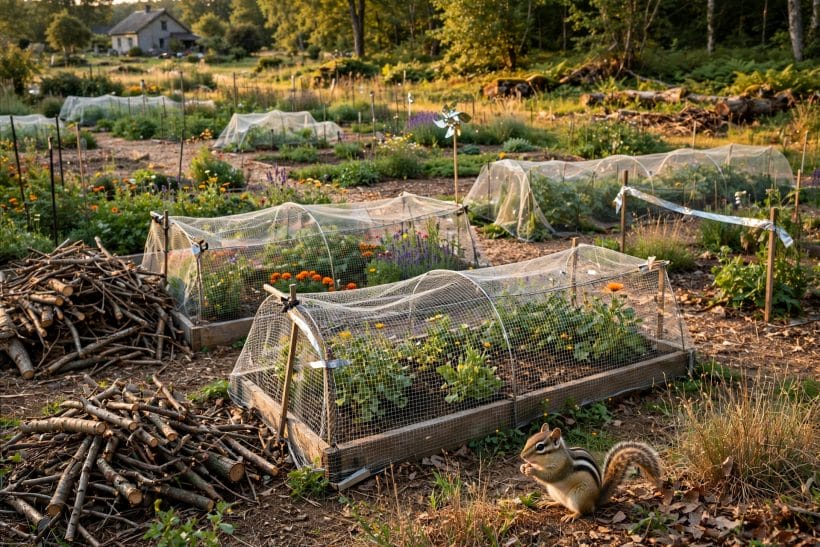
Where food removal persuades, physical protection simply refuses. Wire cloches over seedlings — the domes in these photographs — let light and rain in and keep digging paws out until plants are established. Mesh laid over bulb plantings at soil level, and fine netting over fruiting beds as they ripen, work the same way: the plant is reachable by weather and pollinators, not by cheeks. Vegetable growers will recognise the whole approach from the tiny house garden ideas playbook of small, physical, repeatable defences.
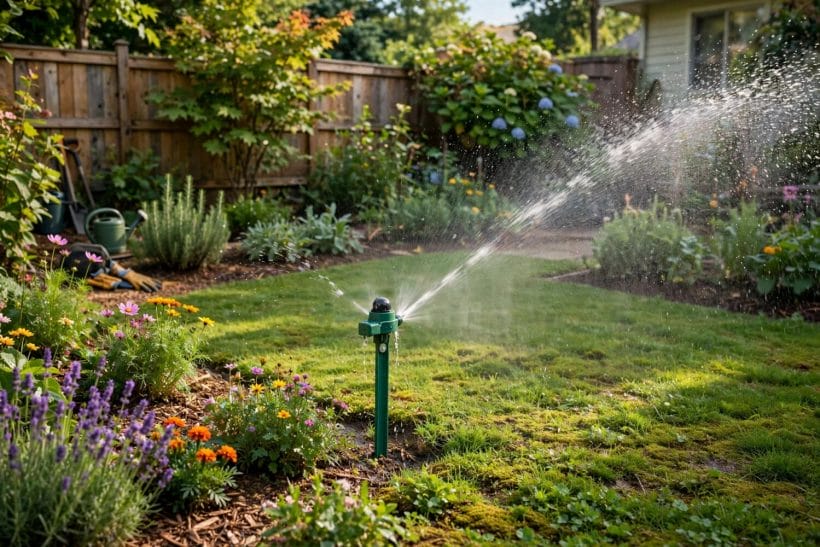
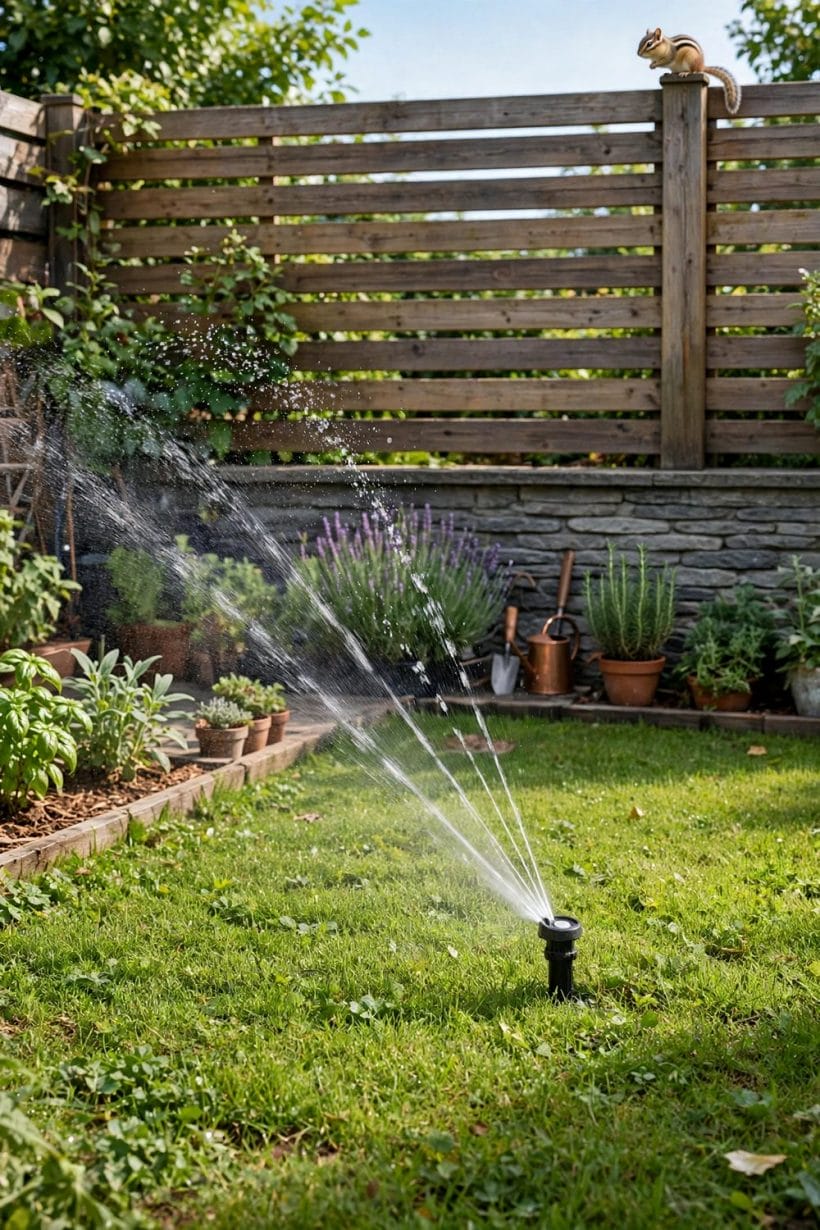
Motion-activated sprinklers guard the approaches: a harmless burst of water when something crosses the bed’s edge. They work because they are unpredictable from the animal’s side and effort-free from yours — the ‘Easy’ rating on the graphic. Move them occasionally so the lesson stays fresh, and mind where the spray lands on paths and guests.
Timing sharpens all of it. Protect bulbs the day they are planted, not after the first excavation; net fruit as it colours, not after the first tasting; and renew the defences in early spring, when chipmunks emerge hungry and re-learn the garden’s map — a route that fails in its first week of the season is often not retried until autumn.
For the wider vegetable patch, the layered version of the same thinking — what to plant, what to cover, what to accept sharing — is covered in the deer-resistant vegetables guide; the defences overlap happily, since mesh and tidiness discourage most small visitors at once.
6. Storage and Shelter: Tidy the Welcome Away
Chipmunks settle where cover and food coincide, so the second half of deterrence is removing the cover. Brush piles, leaf drifts against beds, stacked stone with voids, dense ground cover running unbroken from hedge to house — each is a safe corridor or a burrow suburb. You do not need a bare garden; you need broken corridors: clear strips along the house, tidy edges around the beds that matter, and wild corners kept at the garden’s far end, where a chipmunk is welcome to be somebody else’s neighbour.
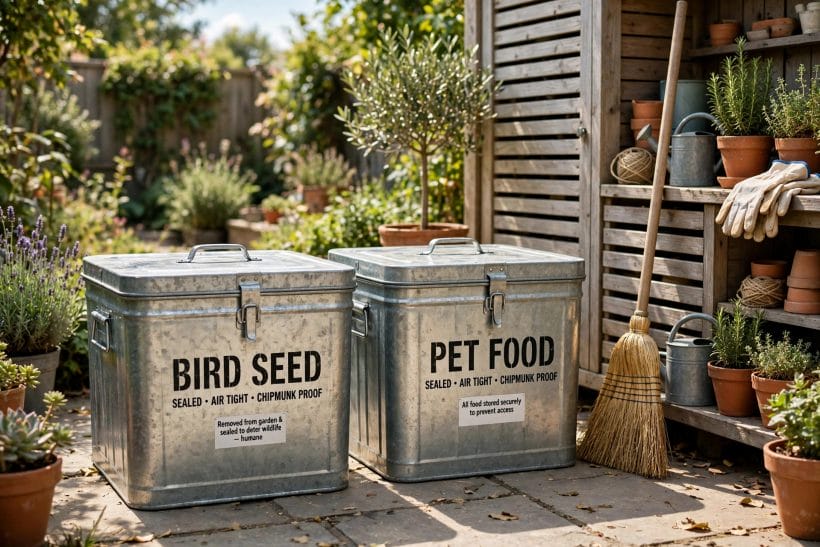
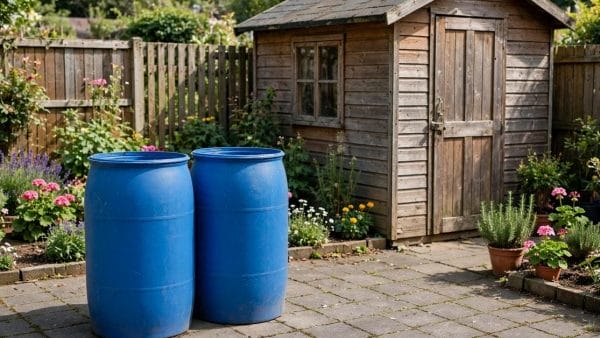
Storage is the other half of the photograph’s lesson: sealed metal bins for seed and pet food, lids that actually close, and a shed or store that does not double as a pantry with the door open. Self-sufficient gardens reach the same point from the food-storage side — the off-grid gardens guide’s sealed-store discipline is chipmunk policy whether it means to be or not.
7. Edges and Boundaries: Mesh Where It Counts
Some spots repay a permanent physical answer: the base of a raised bed, the gap under a shed or deck edge, the run along a fence line where digging keeps appearing. Fine, sturdy mesh fitted as a skirt or barrier at those points — as in the photograph — turns a weekly annoyance into a solved problem, because chipmunks test easy routes and abandon defended ones.
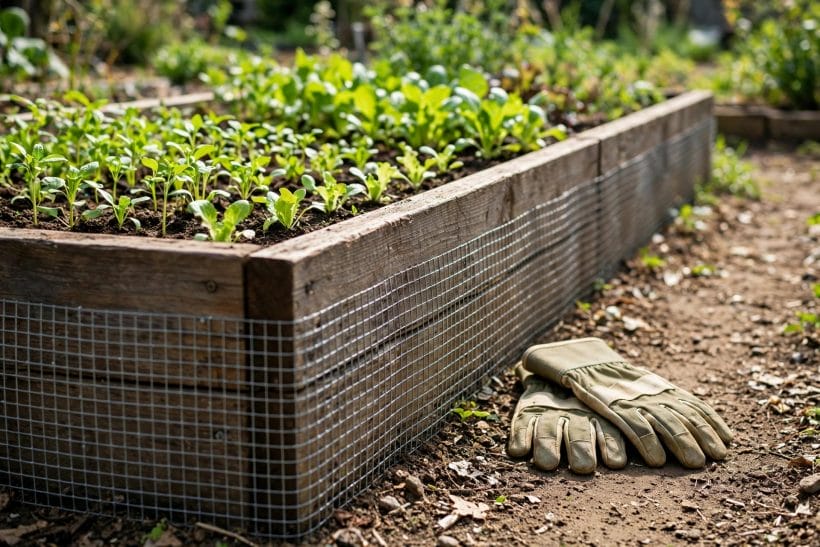
Decks, sheds and steps deserve the same survey as the house. The dark, dry space beneath them is prime burrow real estate precisely because it is sheltered and close to the beds. Screening those edges with mesh — neatly, so it reads as part of the structure — removes the suburb while leaving the garden’s genuinely wild corners, further out, entirely alone.
Fit mesh generously and check it each season; a barrier with one gap is a puzzle, not a deterrent. And keep the same humane check as section 4: before closing any space, be sure nothing is sheltering inside it. A barrier’s job is to say ‘not this way’ — never to shut an animal in.
8. Garden Neighbours That Help
A balanced garden polices itself a little. Chipmunks sit low in the food chain, and a garden that welcomes their natural predators — hunting birds above all — feels riskier to them every day. The explainer on what eats a grasshopper maps the same layered idea for insects; for chipmunks, perches, open hunting ground and a resident hawk’s shadow do quiet work no product can.
Domestic cats and dogs change the maths too — their patrols and scent make borders feel occupied — though they are a fact of a household to note, not a deterrent to acquire, and their own relationship with wildlife deserves the care described in the wildlife-friendly garden guide. The goal throughout is a garden in balance, not a garden at war.
9. The Boundary: What This Guide Will Not Do
Stated once, plainly, so nobody has to guess. This guide covers deterrence only. It does not describe or recommend lethal methods of any kind — no drowning devices, no poisons, no killing traps — and it gives no instructions for building or using anything designed to harm an animal. Searches that arrive here looking for those methods will leave with mesh, sealed bins and a tidier garden instead; that is a deliberate editorial line, not an oversight.
The legal frame points the same way. Chipmunks are protected or regulated in many places, and rules on disturbing, moving or harming wildlife vary by state, province and country — check your local wildlife rules before acting on anything beyond tidying your own beds, and involve a licensed wildlife professional where the law or the situation calls for one. Deterrence of the kind described here — removing food, protecting plants, sealing your own house — is the approach that stays comfortably inside those rules almost everywhere.
10. Living With a Few: The Honest Outcome
Here is the outcome this guide will sign its name to: protected beds, an unraided store, a house with no small tenants, and a garden where chipmunks pass through at the wild end instead of residing at yours. A visible chipmunk is not a failed deterrence — residency and damage are the metrics, and both fall sharply when food, shelter and entry are handled together.
Give the method a seasonal rhythm rather than a single effort. Spring: renew mesh, screen vents, tidy the winter’s brush before territories are set. Summer: guard fruit as it colours and keep spills swept. Autumn: protect new bulbs at planting and clear fallen fruit fast, because autumn is when a chipmunk is provisioning hardest and a generous garden can undo a summer of good habits in a fortnight.
Work the checks in the graphic’s order, give them a season, and adjust the one that is being outsmarted — usually it is food, back at section 3, wearing a new disguise. The garden stays kind, the plants stay yours, and the chipmunks stay chipmunks, somewhere slightly further away. That is the whole of the method, and it is enough.
Final Considerations
Keeping chipmunks out is a design problem with a kind answer: take away the food, protect the plants, close the gaps, tidy the shelter and let water and tidiness patrol the edges. Do those five things in order and most gardens stop being worth a chipmunk’s commute — no harm done, no rules bent, and nothing in this guide that anyone need feel uneasy about using. Check your local wildlife rules first, keep a note of where the signs gather so next season starts from knowledge rather than guesswork, and let the welcome mat be the only thing you withdraw.


0 Comments