
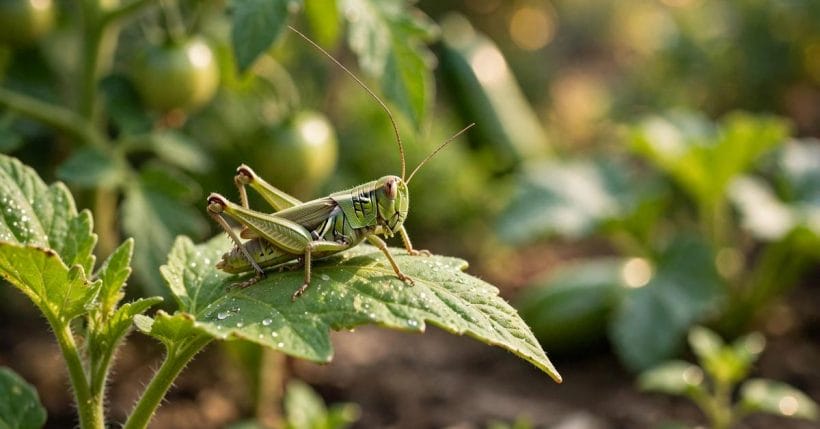
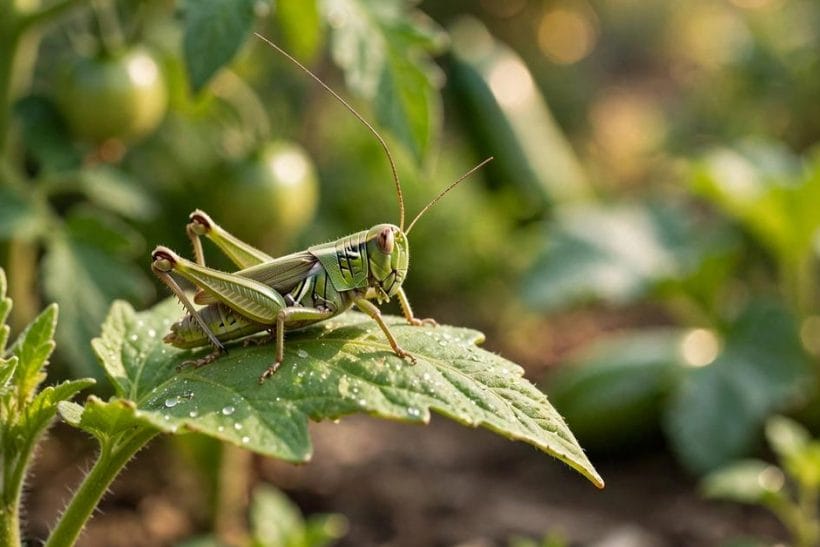
The cry goes up every summer: something is eating everything in the garden, and the something has six legs, huge back thighs and an appetite out of all proportion to its size. Grasshoppers. The hopeful question follows at once — what eats a grasshopper? — and the good news is that the answer is a long list of neighbours already living in the garden.
This explainer walks through those hunters in general terms: the birds, beetles, spiders, mammals and pond-side patrols that keep grasshoppers in balance, and how a garden quietly feeds and shelters them. No shortcuts, no products, no promises of eradication — balance, not victory, is what nature offers, and balance is usually enough.
1. The Short Answer at a Glance
Nearly everything with a beak, a jaw or a web eats grasshoppers when it gets the chance — they are large, protein-rich and, for all their jumping, catchable. The garden’s wider wildlife pressures are a theme of their own, from the browsing end in the deer-resistant vegetables guide to the hunting end here; this post stays with the hunters.
| Hunter | Style | In a word |
|---|---|---|
| Birds | Feathered patrols all day | Constant |
| Beetles and Bugs | Ground hunters in the mulch | Hidden |
| Spiders | Webs and ambush hunters | Patient |
| Mammals and More | Bats, shrews and hedgehogs | Nightly |
| Amphibians and Reptiles | Frogs, toads and lizards | Local |
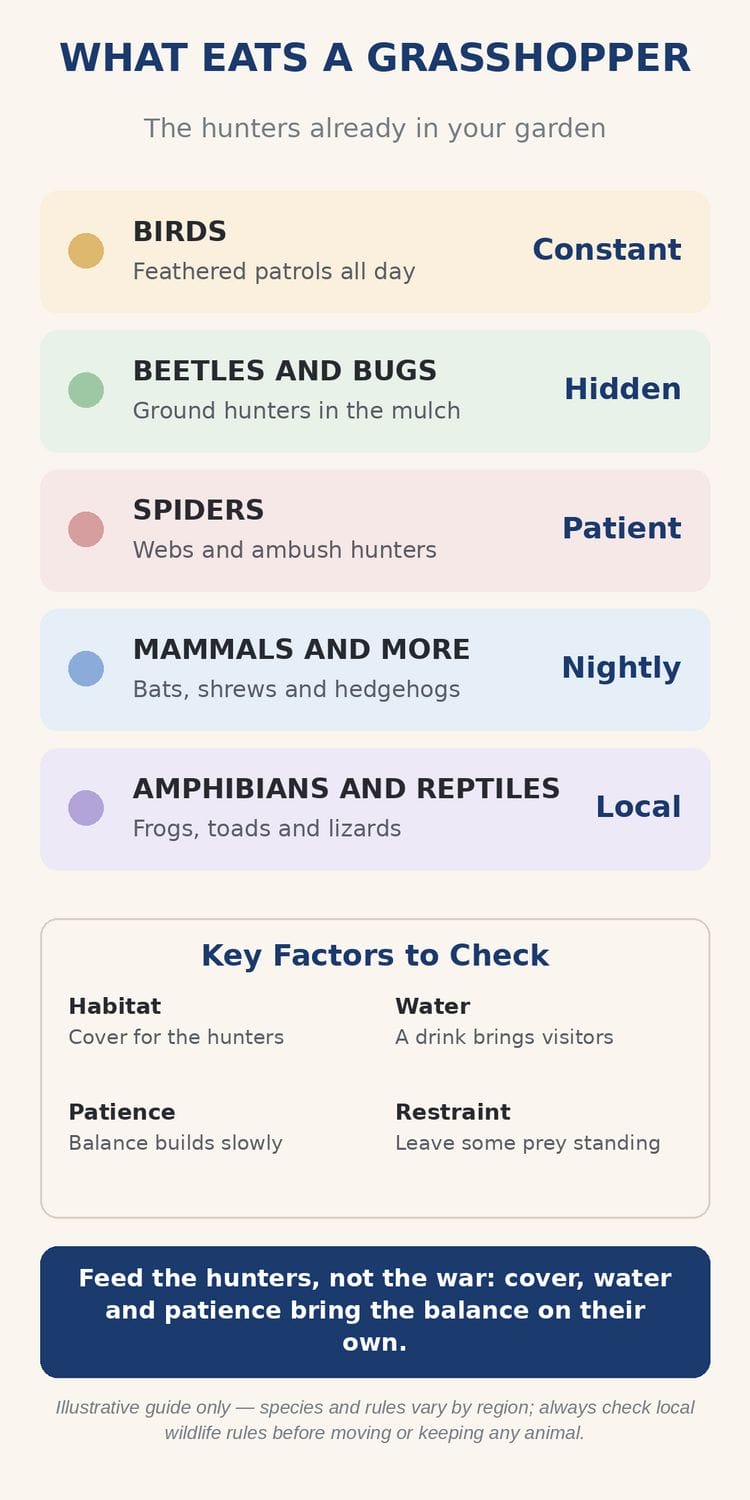
Four factors decide how much help a garden gets: habitat, because hunters need cover to live among; water, because a drink brings visitors of every kind; patience, because balance builds over seasons, not weekends; and restraint, because a garden stripped of all prey starves its own patrol. The sections below take the hunters family by family.
2. The Grasshopper’s Place in the Garden
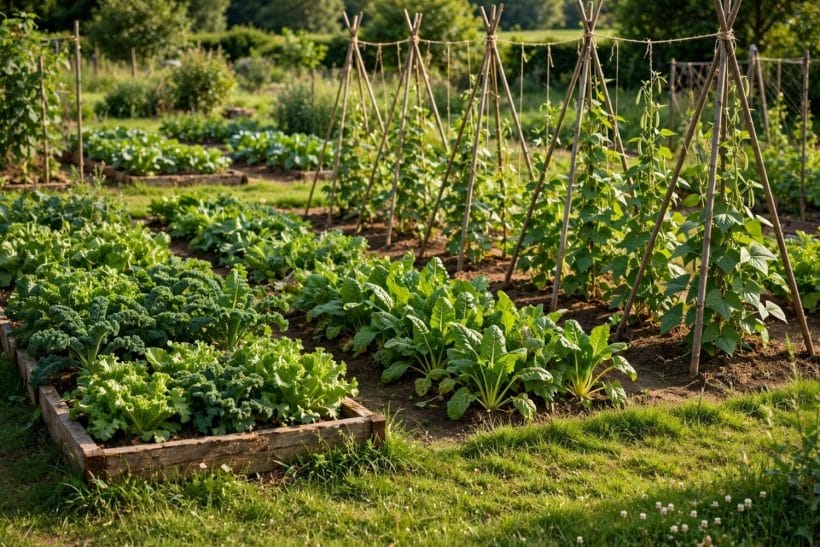
Look at the photograph — lush beds, bean poles, long grass at the edges — and you are looking at both sides of the story at once: everything a grasshopper wants to eat, and everywhere its hunters want to hide.
Why They Surge
Grasshoppers thrive in warm, dry spells and in gardens with plenty of green growth and undisturbed corners for laying eggs. A surge year is usually weather plus hospitality, not a personal vendetta — and the same undisturbed corners that shelter young grasshoppers shelter the beetles and spiders that hunt them, which is why the story is never one-sided for long.
What “Eating Everything” Really Means
The damage looks total because grasshoppers feed in the open, by day, on the leaves gardeners look at most. Underneath the outrage, the ecology is ordinary: grasshoppers are a mid-summer food pulse that half the garden waits for — birds feed nestlings on them, and the night shift fattens on them. Compact gardens feel the pressure most, which is one reason the planning in the tiny house garden ideas collection leaves wild corners standing rather than tidying every edge away.
It helps to see the grasshopper the way the garden does: not as a villain but as a delivery. Grass and leaves go in one end, and out the other comes a slow, fat, protein-rich package that half the food web is equipped to open. Gardens do not have a grasshopper problem so much as a conversion step — and every hunter in this article is simply the next step waiting to happen.
3. Birds: The Daylight Patrol
The portrait photograph says it plainly: a small garden bird on the fence, head up, watching the beds. For grasshoppers, that fence post is a watchtower, and the bird on it is the garden’s most visible answer to this post’s question.
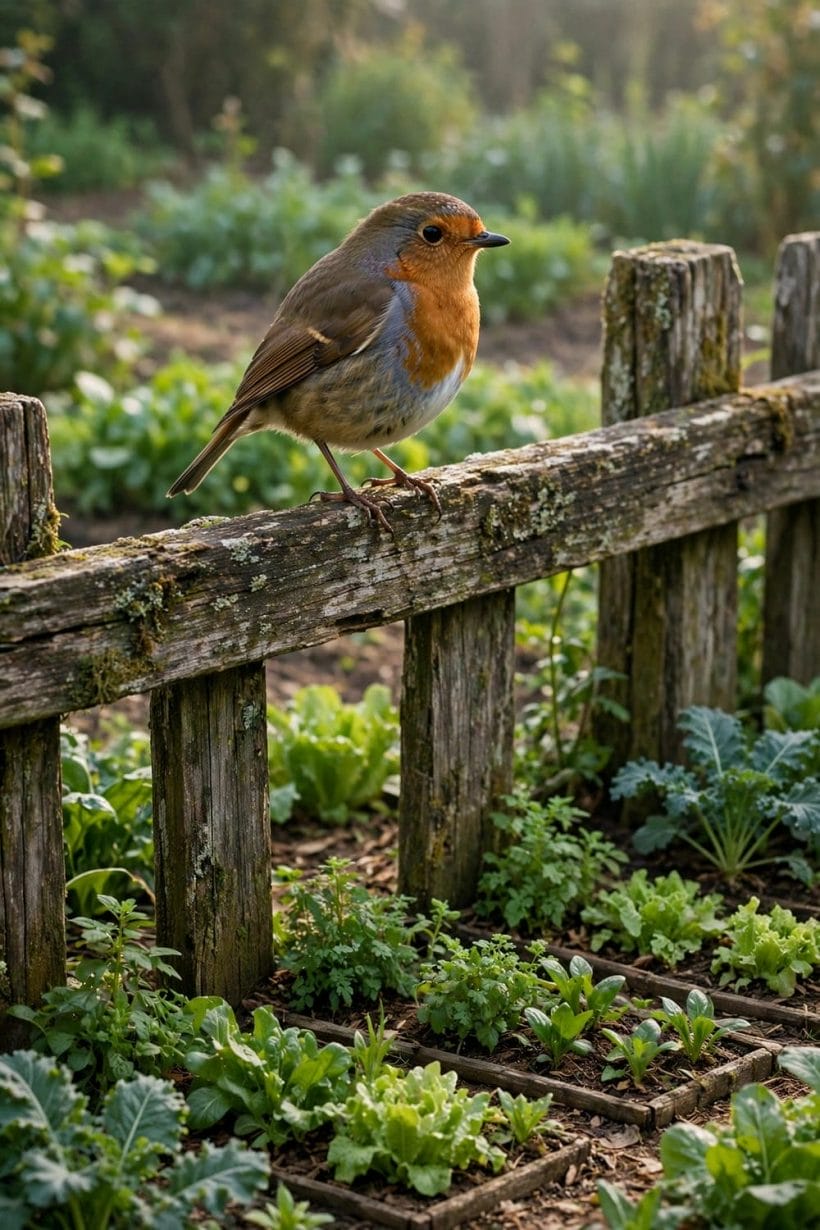
Hunters on Foot and on the Wing
Birds take grasshoppers two ways: snapped up in flight or gleaned from stems and soil by birds that forage on the ground and in low cover. Garden birds of many kinds — and, on farms and grasslands, larger birds too — treat grasshoppers as a staple of high summer, and a pair feeding young works a patch with a thoroughness no gardener could match.
Why Gardens With Birds Fare Better
The patrol needs three things: perches to hunt from, cover to retreat to, and water to drink. A fence, a bean pole, a shrub at the bed’s end — the furniture of an ordinary garden is the patrol’s infrastructure. Gardens that keep those features keep their birds, and gardens that keep their birds rarely meet a grasshopper surge at full strength.
4. Beetles and Bugs: Hunters in the Mulch
Down at soil level, in the world of this photograph — a dark ground beetle picking its way over leaf litter — a quieter hunt runs day and night, and grasshopper eggs and young are squarely on its menu.
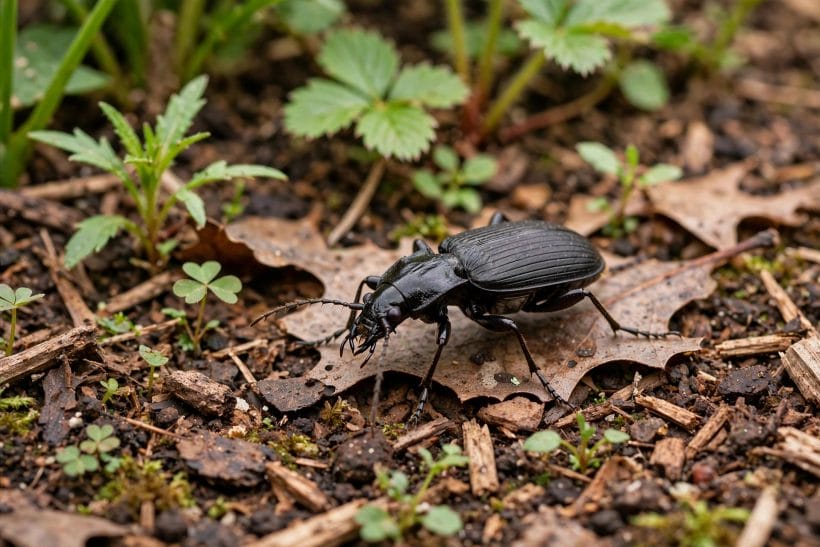
Ground Beetles, the Night Soil Patrol
Ground beetles are among the garden’s most valuable residents: fast, long-lived hunters that take eggs, larvae and small insects from the soil surface and the mulch layer. Grasshopper eggs, laid in the soil in late summer, are exposed to them for months — a pressure no single summer’s hunting could apply.
Ambush Bugs and Robber Flies
Above ground, the predatory insects wait differently: mantises and ambush bugs sit motionless on stems and flowers until prey wanders within reach, and robber flies snatch insects in mid-air. These hunters are generalists — which is precisely the point. A garden full of predatory insects is a garden where no single herbivore’s numbers run away unchecked.
5. Spiders: Webs and Ambush Hunters
The dew-covered web in this photograph, strung between garden plants at dawn, is a trap set the night before — and grasshoppers, for all their leaping, blunder into silk like everything else that flies or jumps without looking.
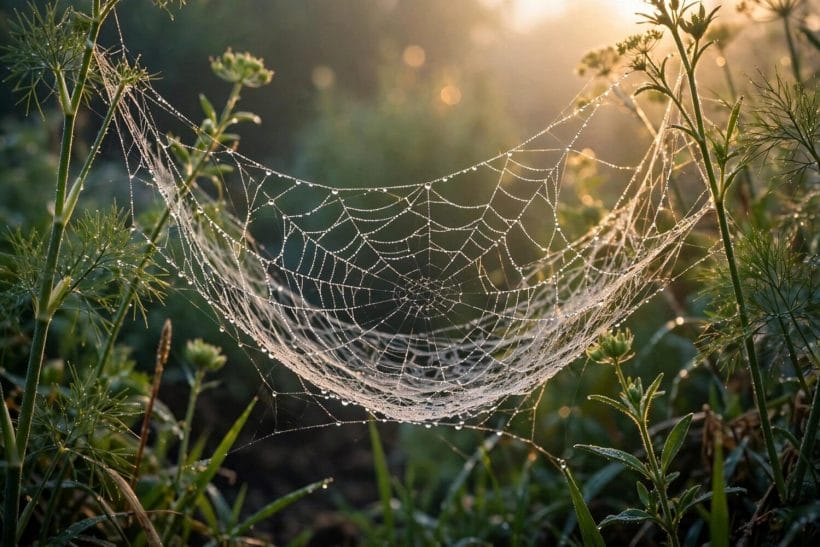
Webs Across the Flight Paths
Orb webs stretched across gaps in vegetation intercept exactly the traffic a garden produces at grasshopper height. A jumping grasshopper is a strong flier for its size, but its trajectory is a guess — and a web across the likely landing zone turns that guess wrong several times a day.
The Hunters That Do Not Weave
Many garden spiders never build a web at all: crab spiders wait on flowers, wolf spiders run prey down on the ground, and jumping spiders stalk with eyesight as good as the garden offers. Between the weavers and the runners, there is no grasshopper height — flower, stem, soil or air — without a spider working it.
6. Amphibians and Reptiles: The Pond Patrol
At the pond’s edge, in the world of this photograph — a frog settled among the leaves at the waterline — the hunting is done by tongue and patience, and grasshoppers straying downslope for a drink make the trip in one direction only.
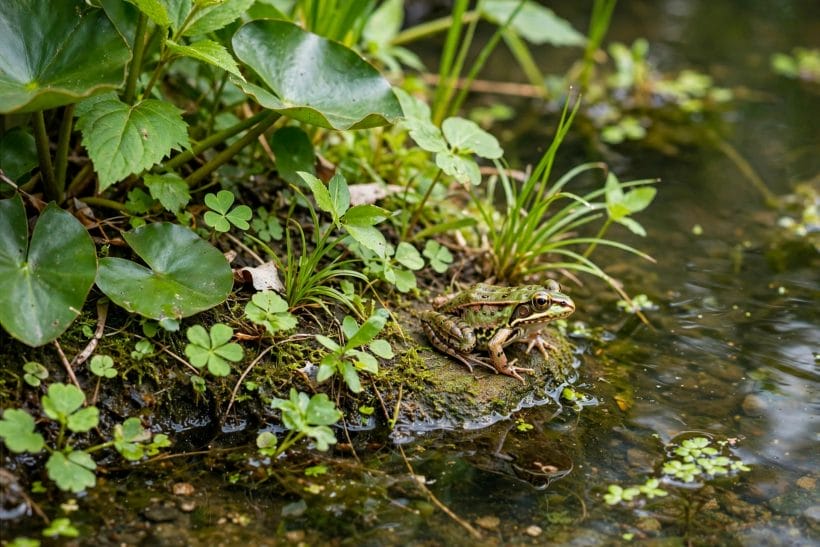
Frogs and Toads
Frogs hunt near water and toads range further into the beds, and both take grasshoppers among their general insect diet, snapped up with a tongue faster than the jump that is supposed to save them. A garden pond is therefore not an ornament in this story; it is a barracks for one of the patrols. The same restraint-first thinking governs the approach taken in the eco weed control for rock gardens guide — solve by design what would otherwise be solved by force.
Lizards and Slow-Worms
Where the climate allows them, lizards work the sunny walls, stones and dry edges — grasshopper habitat exactly — and slow-worms hunt through the compost and long grass. Their ranges and protections vary by region, and the rule everywhere is the same: they are welcome residents to leave entirely alone, never animals to move or import.
7. Mammals and More: The Night Shift
At dusk the garden changes hands. The hedgehog in this photograph, nosing through fallen leaves, is one of a whole shift of hunters that take grasshoppers the daylight patrol missed.
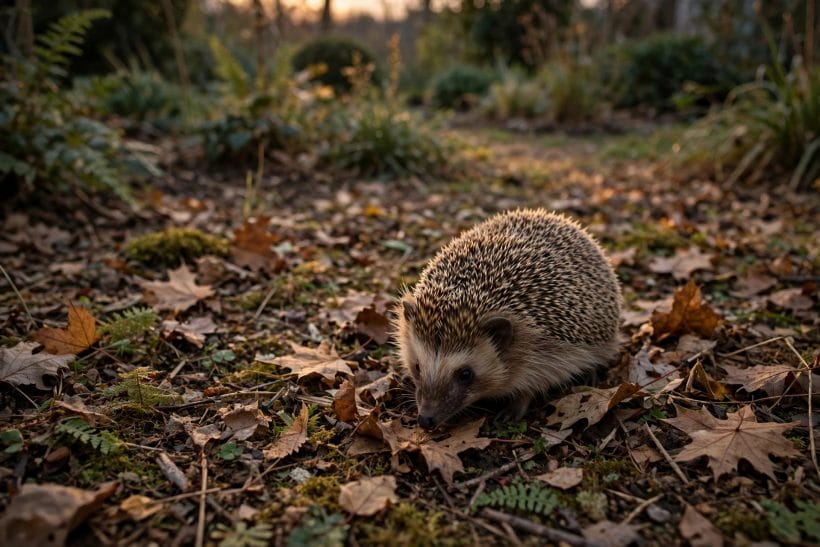
Hedgehogs, Shrews and Other Ground Hunters
Hedgehogs crisscross gardens at night taking beetles and other ground prey, grasshoppers among them; shrews, smaller and hungrier still, hunt almost without pause; and in many regions skunks, armadillos and other digging mammals turn over soil for grubs and insects alike. The cast changes by continent — the shift system does not.
Bats Overhead
Grasshoppers that fly at dusk meet the shift’s air wing: bats, which take night-flying insects in quantities that only become believable when watched for an hour. A garden near bat roosts and flight lines is being patrolled from above every single night of the grasshopper season.
8. Feeding the Hunters: Habitat, Water, Cover
The log pile in this portrait photograph is the whole strategy in one object: shelter for beetles, spiders, slow-worms and hedgehogs, stacked in a corner and left alone. Helping the hunters is mostly a matter of building — and then not tidying — places like it.
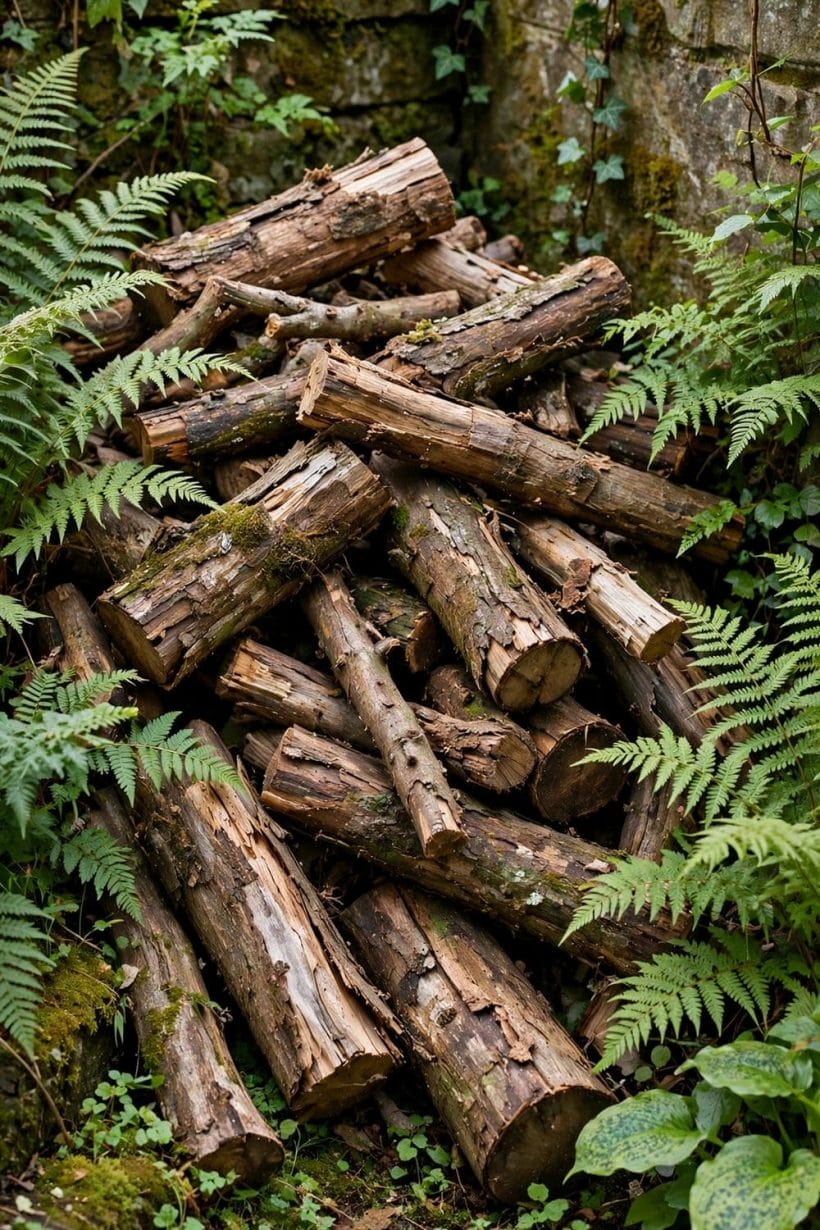
Cover Is the Currency
Log piles, stone heaps, long-grass corners and leaf litter are the hunters’ housing, and a garden without them is asking for patrols it refuses to billet. The design principles are the ones the wildlife-friendly garden guide is built on, and the humble log pile earns its own full treatment in the guide to fallen log landscaping for wildlife habitat: dead wood is not mess, it is infrastructure.
Water and Patience
A shallow dish, a pond edge, a dripping tap — water brings birds, amphibians and hunting insects into daily contact with the beds. Then comes the gardener’s only real task: patience. Hunter populations build over seasons, and a garden that has been feeding them for years shrugs off a grasshopper surge that flattens a garden starting from zero.
Do not overlook flowers in the patrol’s pay. Many of the garden’s predatory insects — hoverflies, parasitic wasps, robber flies — hunt as adults but feed on nectar and pollen between hunts, and the young of several are hunters in their own right. A border of open flowers is therefore not decoration beside the vegetable beds; it is the canteen that keeps the workforce on site.
9. What Not to Do
The honest section, because enthusiasm for natural control has its own failure modes, and gardeners deserve them stated.
Do Not Expect Eradication
No patrol, natural or otherwise, removes every grasshopper — nor should it aim to, since a garden with no herbivores at all has no reason for hunters to stay. The realistic goal is the one this article has described throughout: numbers held at a level the garden absorbs, damage reduced to the tolerable, and the system standing ready for next year.
Broad Force Backfires
The broad-brush approach — treating the whole garden to kill the grasshoppers — reliably starves and poisons the patrol along with the pest, and the grasshoppers, breeding faster than their hunters, return first to a garden emptied of enemies. It is the one strategy that makes next year worse, and this article recommends against it without needing to name a single product.
Never Move or Import Hunters
Wildlife rules vary by region and many garden hunters are protected; moving animals, importing species or keeping wild creatures is restricted in many places and unfair to the animal nearly everywhere. Check local wildlife rules before doing anything beyond providing habitat — habitat is always allowed, and it is also what works.
10. Living With the Balance
The flower-rich border in this photograph — marigolds among the greens, herbs at the edge — is what the destination looks like: not a battlefield won, but a garden busy at every level, where grasshoppers exist and are eaten in roughly equal measure.

What Success Actually Looks Like
Success is statistical, not visible: fewer stripped leaves, more birdsong, a frog by the pond, webs in the morning. The gardener who learns to read those signs stops asking how to win the war and starts enjoying the peace treaty — one that renews itself every season without being renegotiated.
The Long Game
Everything recommended here compounds: the log pile shelters more each year, the pond patrol breeds, the birds learn the address. It is the same long, patient game played by gardeners growing slow things generally — the seasons it takes in growing muscadine from seed, or the self-reliance built across the off-grid gardens collection. Balance is a crop like any other: planted in habitat, harvested in calm.
Final Considerations
What eats a grasshopper? Birds by day, bats by night, beetles in the mulch, spiders in the silk, frogs at the pond and hedgehogs in the leaves — a whole garden working in shifts. Feed that workforce with cover, water and patience, ask of it balance rather than miracles, and the grasshoppers become what they were always meant to be: not an invasion, but lunch.


0 Comments