
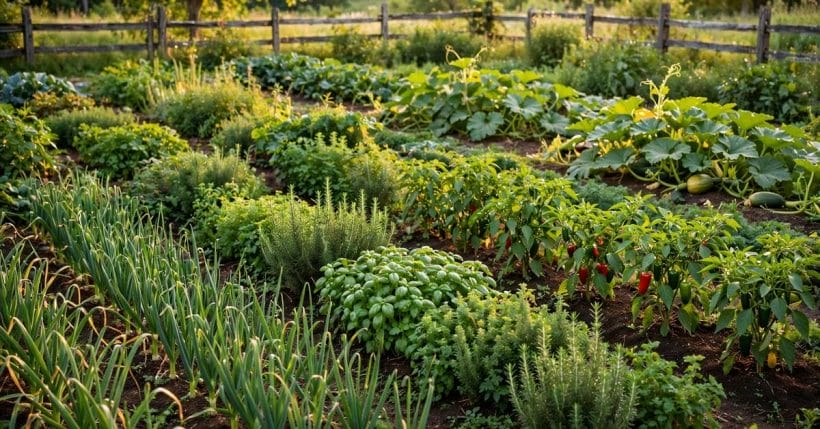
Every gardener in deer country asks the same question, usually over a row of something that was eaten in the night: what can I plant that they will leave alone? The honest answer is shorter than the hopeful one — no vegetable is safe from a hungry deer. But preference is real, and a garden planted toward the bottom of the deer’s menu is a garden that keeps far more of its harvest.
This guide lists the vegetables deer are least likely to eat, explains why, and deals plainly with the famous broccoli question on the way. Treat every claim here as ‘usually’, ‘often’ and ‘less likely’ — because the deer have not read it, and a guide that promises more than that is selling something.
1. Vegetables Deer Eat Least, at a Glance
Five groups sit at the bottom of the deer’s preference list, for three repeating reasons: strong scent, sharp or hot flavour, and leaves that are prickly, fuzzy or tough. None of them is a promise — they are the plants a browsing deer samples last and leaves first when anything better is growing nearby. Read the table as a ranking of reluctance, not a list of exemptions.
| Group | Character | What it means |
|---|---|---|
| Garlic | Strong scent | Rarely browsed |
| Onions | Sharp flavour | Often left |
| Herbs | Basil, rosemary, sage | Low interest |
| Peppers | Hot and sweet types | Often left |
| Squash | Prickly leaves | Less likely |
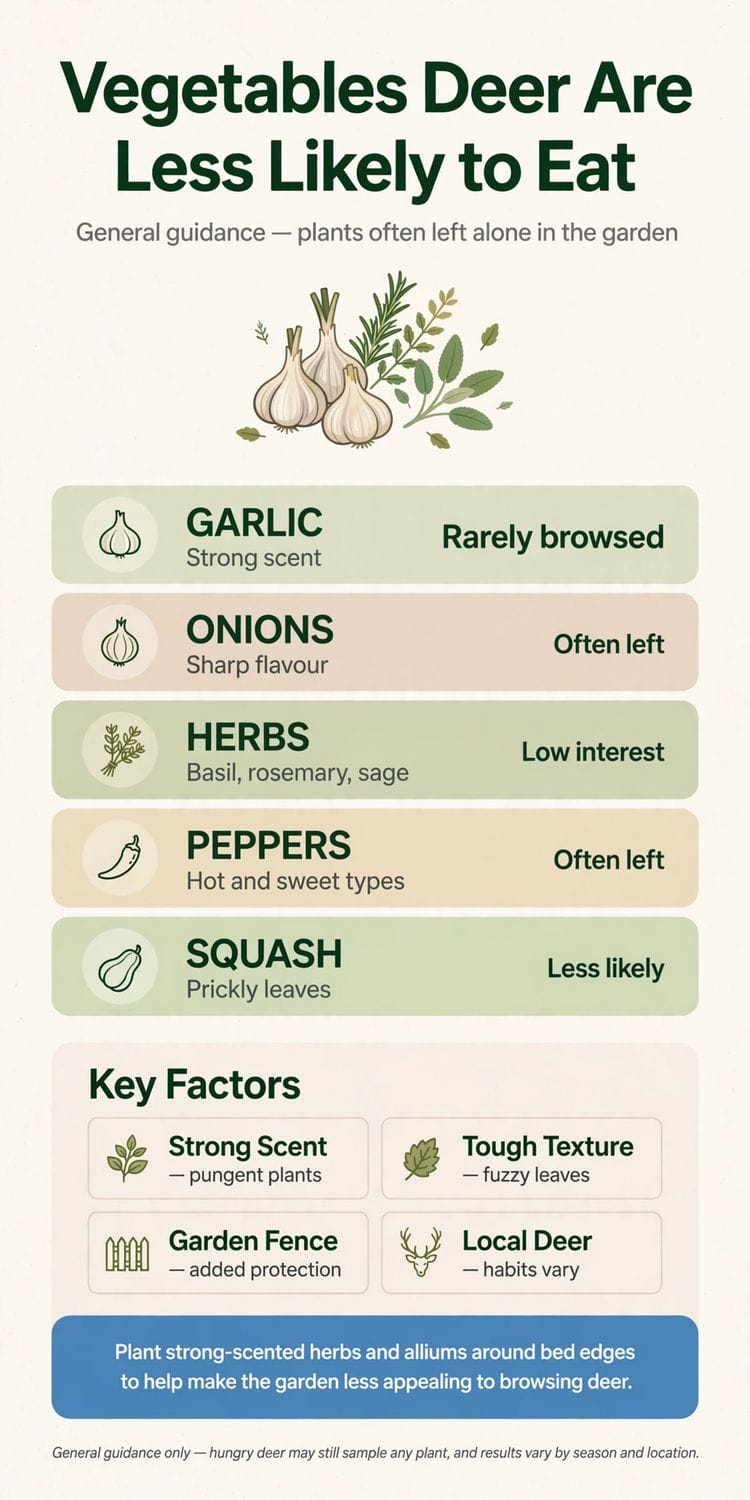
Four factors decide how much of your garden survives: strong scent, because deer browse cautiously around pungent plants; tough texture, because prickly and fuzzy leaves are work; the garden fence, because no planting strategy out-performs a barrier; and the local deer themselves, whose habits, numbers and hunger vary more than any list can. One warning before the detail: every ‘usually’ in this guide was earned by someone’s eaten crop, so the sections that follow spend as long on the exceptions as on the rules.
2. The Honest Answer First
Deer Are Browsers, Not Critics
A deer moving through a garden is sampling, not shopping: a bite here, a few leaves there, more where the eating is easy and the plant is tender. Preference lists describe what gets sampled last and least — under low pressure, from a deer with choices. They are tendencies, not contracts.
Hunger Overrides Preference
In a hard winter, a drought, or a neighbourhood with more deer than forage, the menu widens. Plants ignored for years can be eaten to the ground in a week. This is why experienced gardeners treat the lists in this guide as one layer of a strategy, with fencing as the other — the only layer that does not depend on the deer’s mood.
Seasons Change the Menu
Spring’s tender growth is browsed hardest, when every plant is soft and the wild forage is still waking. Late summer’s abundance relaxes the pressure — a garden in a green landscape is one restaurant among many. Autumn and winter tighten it again. The same row can be ignored in July and stripped in January, which is why this guide’s advice is arranged by plant rather than by promise: the plant’s ranking is steadier than the season’s mercy.
Young and Tender Is Always at Risk
Almost any vegetable is most vulnerable as a seedling, when the whole plant is one soft bite. The farmhouse landscaping ideas in the neighbouring cluster make the same point for ornamental planting: protection matters most in a plant’s first weeks, whatever the lists say about the mature crop.
3. The Broccoli Question
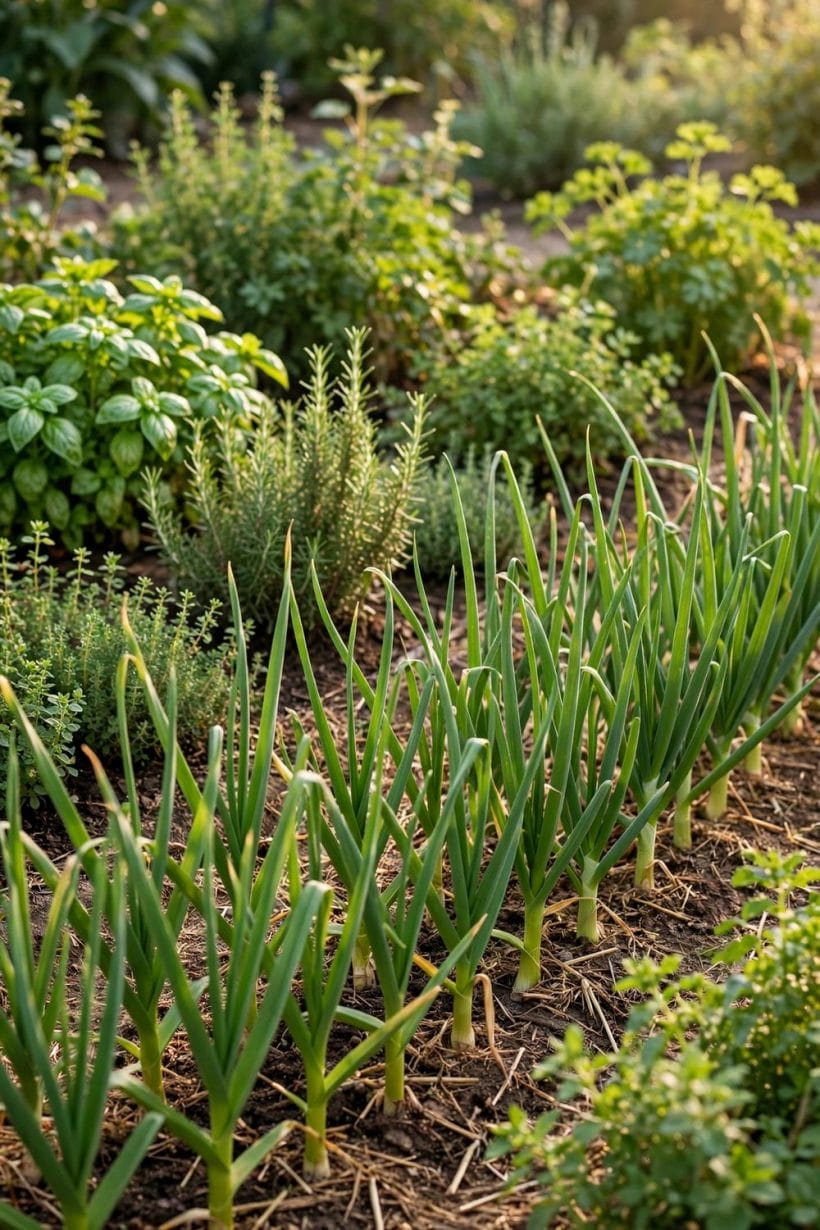
Do Deer Eat Broccoli? Yes, They Can
Broccoli is the vegetable this guide’s readers ask about most, so here is the plain answer: deer can and do eat broccoli — the florets and tender leaves are well within a browsing deer’s idea of food. It is not among their first choices the way beans or lettuce are, but ‘not a favourite’ is a long way from ‘safe’.
Where Brassicas Sit on the Menu
Cabbage-family crops — broccoli, cauliflower, kale, cabbage — occupy the menu’s middle: usually passed over while softer, sweeter planting is available, and taken readily when it is not. Kale’s tougher leaves fare slightly better than broccoli’s tender heads; none of the family belongs on the ‘plant it and relax’ list.
Protecting the Crops You Prize
The practical answer for brassicas is to grow them inside the garden’s defences — the fenced area, the netted bed — and let the least-preferred crops in this guide hold the outer rows. Netting and covers are physical answers, and physical answers are the ones deer respect.
Covers deserve a sentence of their own, because brassicas respond to them better than almost any crop: a simple fleece or mesh over the row, held off the leaves and sealed at the edges, takes broccoli off the menu entirely while it is on. It is not elegant, and neither is an eaten crop — most gardeners in deer country choose the fleece and plant something prettier where the neighbours can see it.
4. Alliums and Herbs: The Scent Strategy
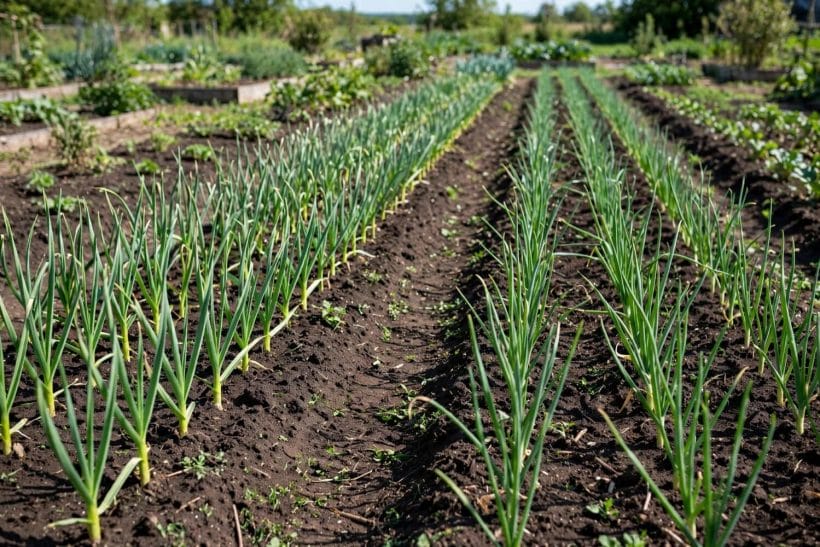
Garlic: Rarely Browsed
Garlic’s pungency is its passport. Deer rarely browse it, and gardeners have long planted it at bed edges partly for the company it keeps away. ‘Rarely’ is the operative word — a starving deer is not a critic — but garlic is as close to a leave-alone crop as this guide offers.
Onions and Their Relations
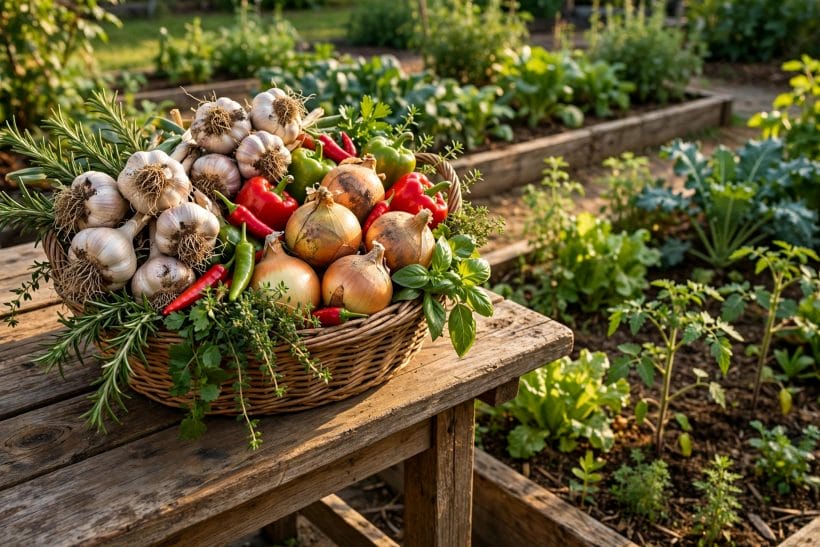
Onions, shallots, leeks and chives share garlic’s strategy: a sharp flavour and a smell that advertises it. Rows of onions, like the ones in this photograph, are usually left standing while softer crops nearby are sampled. The whole allium family earns its garden space twice — once at the table, once as a border guard.
Herbs: Low Interest, High Value
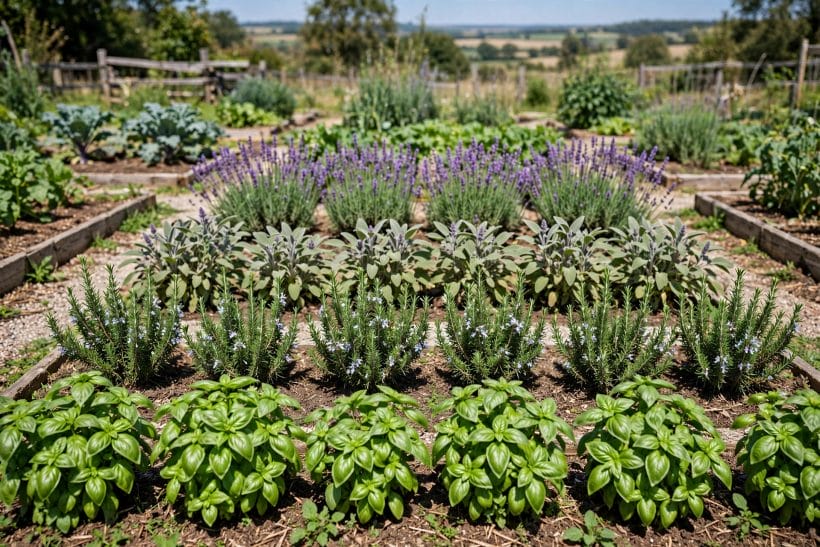
Strongly scented herbs — rosemary, sage, thyme, oregano, mint and basil among them — draw low interest from browsing deer, which is one reason the traditional kitchen garden mixed herbs through everything. A herb edge will not save a bean row behind it, but a garden rich in scent is a garden deer browse more cautiously.
5. Tomatoes and the Nightshade Nuance
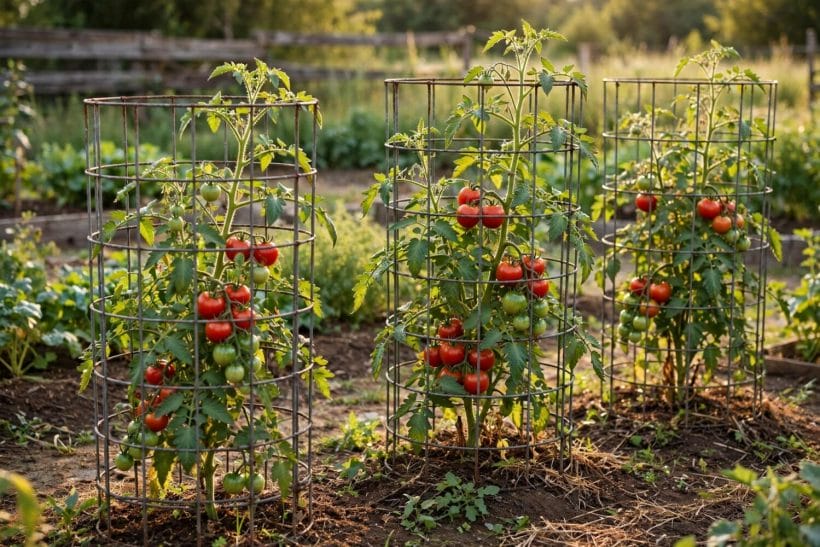
The Foliage Is Rarely the Target
Tomato foliage, like its nightshade relatives’, is bitter and strong-smelling, and deer usually pass the leaves by. Gardeners often report untouched vines — right up until the fruit ripens, which is the nuance this section exists for.
The Fruit Is Another Matter
Ripe tomatoes are sweet, soft and scented to ripeness — everything foliage is not, and deer that find them may take them. The honest summary: grow tomatoes for their leaves’ safety and protect them for their fruit’s sake, especially in the ripening weeks.
6. Peppers and Squash: Heat and Prickles
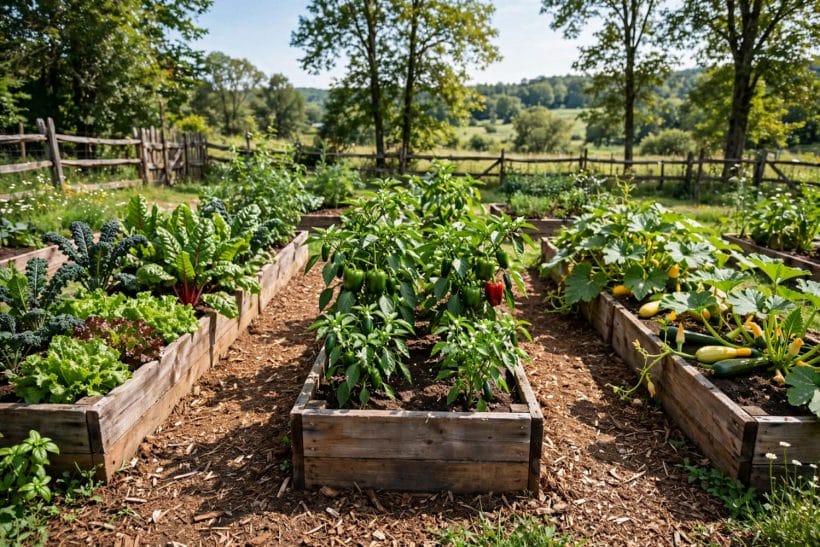
Peppers: Often Left
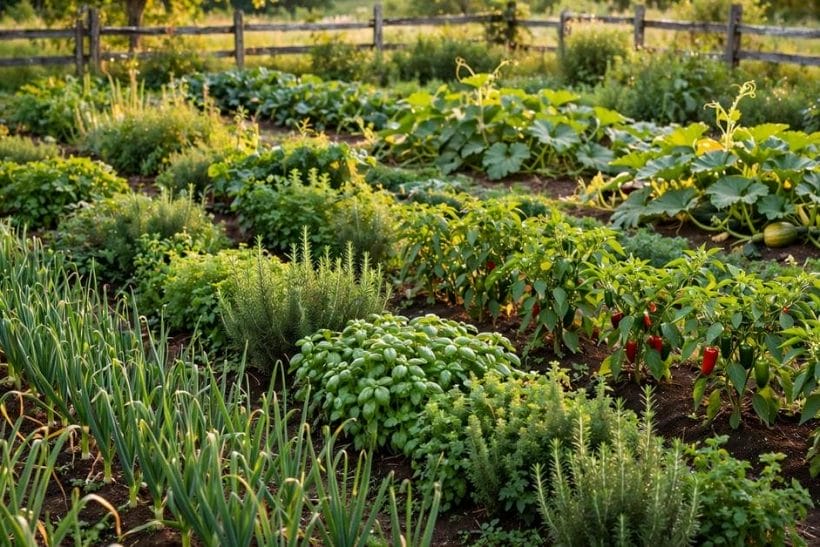
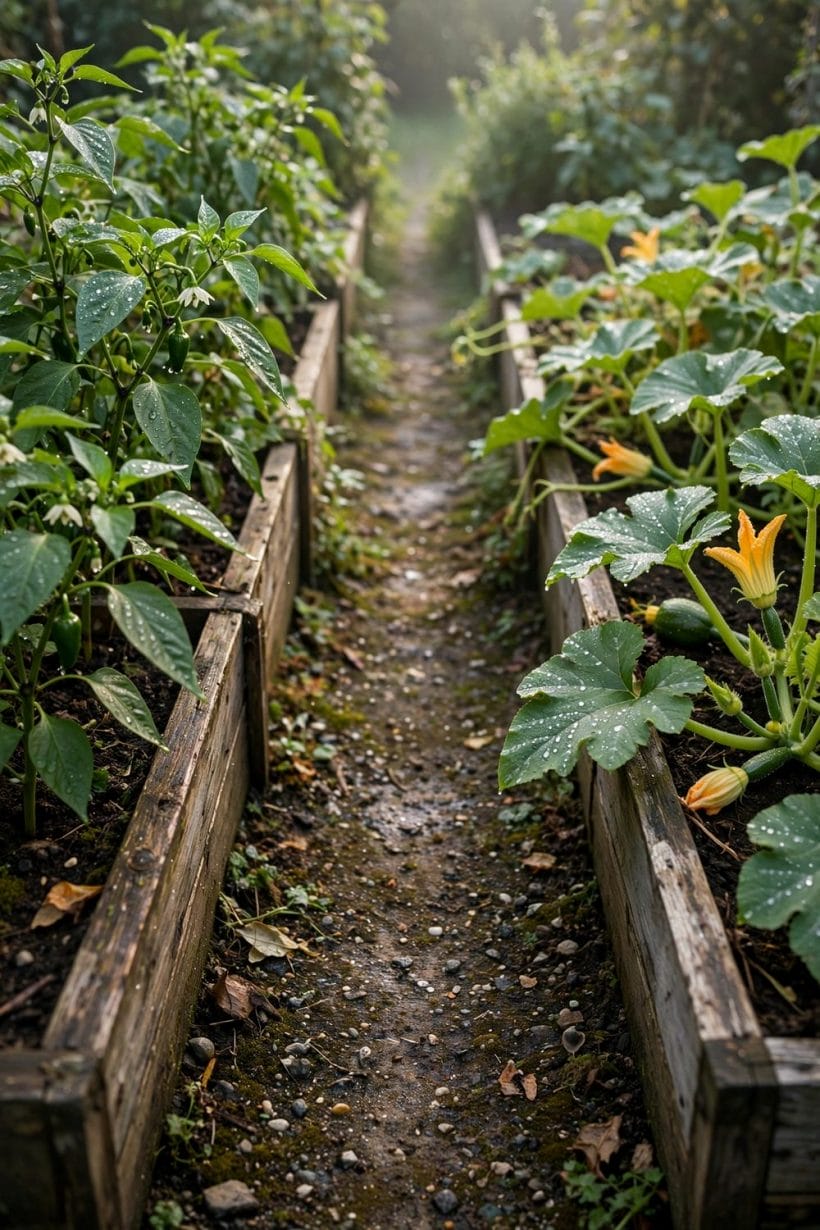
Hot peppers carry their defence in the fruit, and even sweet peppers belong to a family deer treat cautiously. Planted in raised garden beds like these, peppers are among the more reliable crops in deer country — ‘more reliable’ being, as ever in this guide, a comparison and not a promise.
Squash: The Prickly Defence
Squash and cucumber-family leaves are rough, hairy and prickly to the mouth, and deer are less likely to browse them than smooth-leaved crops. The fruit can still be sampled — a deer that steps on a ripe squash has not read the list either — but the vines usually stand unbothered.
Eggplant and the Rest of the Family
Eggplants (aubergines) and potatoes belong to the same cautious family story: foliage that deer tend to leave, on plants grown for what forms below or within. They are supporting evidence for the pattern — strong-flavoured families get browsed last — rather than stars in their own right.
Roots: The Hidden Harvest
Carrots, parsnips, beetroot and potatoes keep their crop below ground, which is its own defence: deer may nibble the tops — beetroot leaves especially — but the harvest itself sits out of browsing reach. A row of roots is rarely a deer’s destination, and even a sampled row usually still yields. For the unfenced gardener, roots are the quiet backbone of the planting plan.
7. Fencing and Layout: The Layer That Does Not Depend on Appetite
A Fence Is the Only Barrier on the List
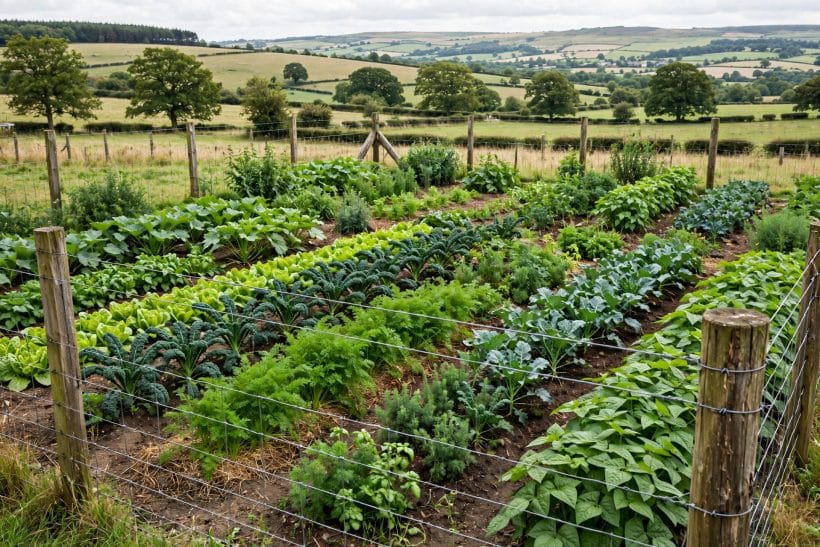
Everything else in this guide negotiates with the deer’s preferences; a fence simply declines the negotiation. Deer are athletic jumpers, so garden fencing is a serious structure — its height, material and gates are matters for local practice and suppliers, and a fence built to a real specification is the single most effective sentence in this article.
Layout That Helps the Planting
Inside or outside a fence, layout helps: the deer’s favourites in the most protected spot, the least-preferred crops on the exposed edges, and scented allium and herb rows along the boundaries where deer first test the garden. The wooden garden gate ideas in the neighbouring post treat the garden’s entrances with the same respect — a boundary is only as good as its gate.
Where a full fence is not possible, even a partial barrier around the prized beds changes the deer’s arithmetic, especially alongside the stone landscaping ideas and walls that already edge many gardens. Deer are cautious animals; a garden that feels enclosed is browsed more nervously than one that feels like open pasture.
Two practical notes belong with fencing. First, the gate: more deer enter through an open or ill-fitting gate than over any fence, so the gate’s latch and fit matter as much as the fence’s height. Second, a garden’s corners: deer test boundaries at their weakest and shadiest points, so walk your own fence line as a deer would before assuming the structure is the whole answer.
8. What Deer Eat First
The Favourites, for Contrast
The top of the menu is as consistent as the bottom: beans and peas, lettuce and tender salad leaves, sweetcorn, and soft fruit are the crops deer seek out and return to. If you grow them in open deer country, grow them behind the fence and inside the netting — they are the garden’s argument for having both.
Reading Your Own Garden
Your garden’s evidence outranks any list, including this one. Note what gets sampled, in what order, and in which month, and the following season’s layout writes itself. Local deer develop local habits, and the gardener who keeps score is the one whose harvest improves.
9. The Least-Eaten Harvest: Putting It Together
A Planting Order That Respects the Menu
The strategy in one paragraph: alliums and herbs on the exposed edges, peppers and squash in the middle ground, brassicas and roots behind them, and the deer’s favourites inside the fence or under the net. Each layer is browsed later than the one outside it, which is all ‘strategy’ has ever meant in a garden.
Small Gardens and Containers
In a small garden the same order compresses: the tiny house garden ideas show how much food a few square metres can hold, and container garden ideas near the house gain the deer’s natural caution about buildings and people. Pots of herbs and peppers by the door are the beginner’s version of the whole strategy.
The Harvest in This Photograph
Garlic, onions and peppers — the basket in this photograph is not an accident of the season. It is roughly what an unfenced garden in deer country harvests most reliably, which is the closest this guide will come to good news stated plainly: plant the bottom of the menu, and there will usually be a basket.
10. Deterrents in General Terms
Commercial Repellents Exist — Read the Label
Scent and taste repellents are widely sold for exactly this problem, and their labels are the authority on what they contain, how they are applied and how often. This guide offers no recipes or mixtures of its own — a home formula passed hand to hand is an anecdote, not a specification — but a labelled product used as directed is a legitimate layer alongside planting and fencing.
Rotation Defeats Habituation
Deer habituate: the scare device, scent or arrangement that startles them in spring is furniture by midsummer. Gardeners who use deterrents rotate them — changing the stimulus before it becomes scenery — and treat each as a temporary advantage rather than a solution.
The Folk Remedies, Honestly
Every gardening community keeps a treasury of folk deterrents — soaps, scents, hair, noise, this herb planted against that one. The honest verdict is that some of them coincide with a quiet week and earn a reputation the next garden cannot reproduce. Nothing in this guide recommends against a harmless experiment; it only insists on the bookkeeping — note the result over a season, not over a weekend, and let the fence fund stay unspent by hope alone.
Local Knowledge Beats General Lists
What works is regional: the desert southwest plants in the neighbouring post survive a different set of browsers and scarcities, and every climate grows its own list of the unbothered. Ask the gardeners on your road what the deer leave standing — their answer, kept over seasons, is the truest version of this guide for your ground.
Final Considerations
Plant the bottom of the menu — alliums, herbs, peppers, squash — protect the top of it, fence what you cannot afford to lose, and keep score of what your own deer actually do. No vegetable is proof against a hungry deer, and any guide that promises otherwise should be read the way deer read a garden: cautiously, and with an eye on what else is available.



0 Comments