

Some homes are decorated; traditional Indian homes feel composed, as if every object had been given a place and a purpose over generations. This article celebrates eight elements we love most in indian houses: the courtyard, carved wood, fearless colour, warm metals, handloom cloth, earth and terracotta, the swing, and the sacred corner. You do not need a haveli or an ancestral village home to borrow from them; each element scales down gracefully into apartments, cottages and compact modern houses, as the sections below show one by one.
1. At a Glance: The Eight Elements
Think of these eight elements as a toolkit rather than a style to copy wholesale. One or two, honestly used, will change the temperature of a home more than a roomful of themed accessories. Here they are together, so you can see the whole palette before we take each one in turn.
| Element | What It Is | What It Brings |
|---|---|---|
| The courtyard | An open-air room at the heart of the plan | Light, air, gathering space and a view of the sky |
| Carved wood | Doors, brackets and jharokha balconies worked by hand | Craft, shadow and a sense of permanence |
| Colour | Washed walls in turmeric, indigo, rose and lime | Warmth, courage and instant character |
| Brass and copper | Lamps, vessels, bells and hardware in warm metal | Glow, ritual and objects that age beautifully |
| Handloom textiles | Block prints, woven cottons and silk accents | Pattern, softness and the mark of the maker |
| Terracotta and clay | Pots, tiles, jaali screens and earthenware | Coolness, texture and honesty of material |
| The jhula | A swing seat in a veranda or living room | Leisure, conversation and gentle movement |
| The sacred corner | A small pooja niche or shelf with a lamp | Daily rhythm, gratitude and a quiet focus |
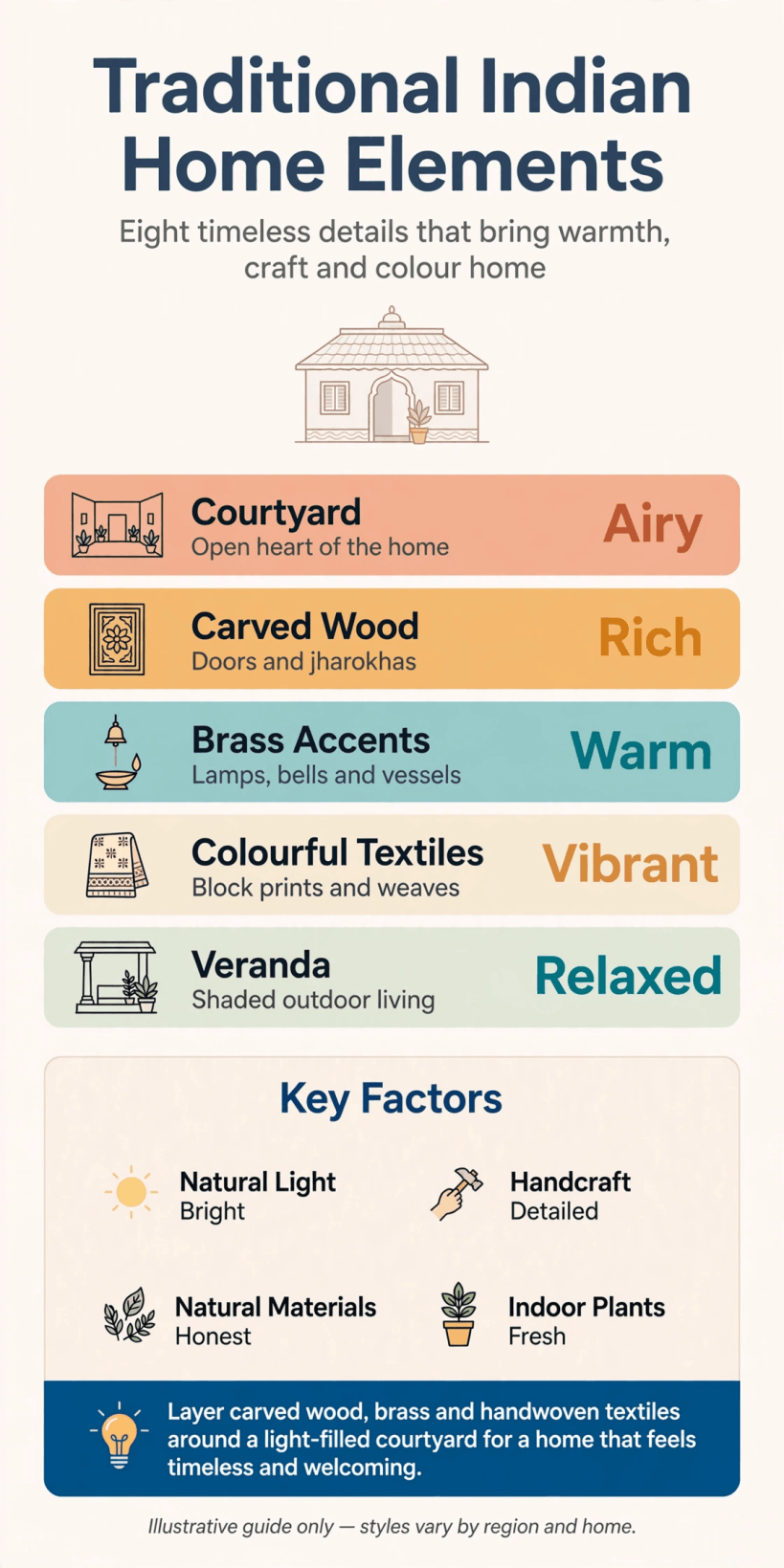
The eight elements at a glance: courtyard, carving, colour, warm metal, handloom cloth, clay, the swing and the sacred corner.
Notice that none of the eight depends on size or wealth. A courtyard can shrink to a lightwell or a balcony garden; carving can live in a single reclaimed door; the sacred corner needs only a shelf. The planning spirit is the same one behind good compact design everywhere: give the important things a real place, and let everything else be simple. With that attitude, the elements below stop being a style and become a way of arranging daily life.
2. Element One: The Courtyard, the Home’s Open-Air Heart
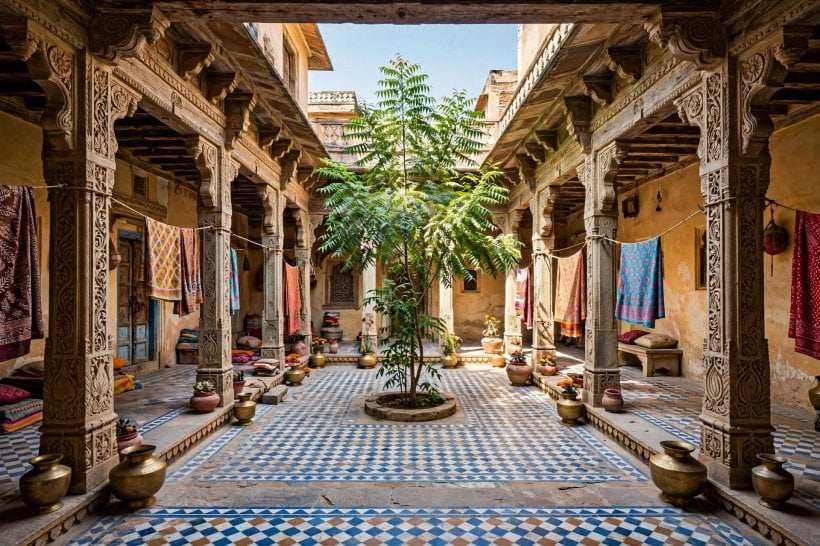
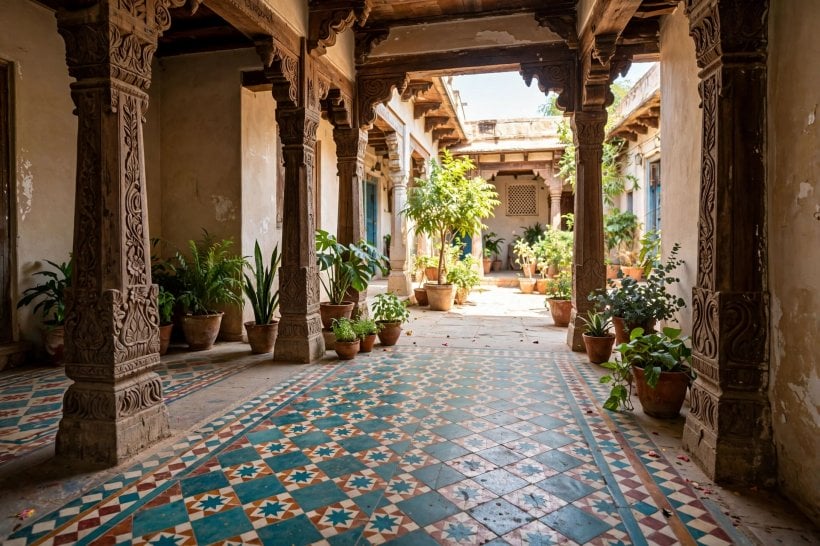
The courtyard, or aangan, is the organising idea of the traditional Indian home. Rooms open onto it, stairs climb around it, and the day’s work, cooking, visiting, drying grain, children playing, elders resting, happens in its light. It keeps the house cool by drawing air through the plan, and it gives every room a borrowed view of sky, rain and a planted tree. Even the smallest traditional houses tried to keep some version of it, because a home arranged around open air feels generous at any size.
Modern homes can borrow the principle without the footprint. A double-height lightwell over a stair, a narrow internal courtyard planted with a single tree, or even a balcony treated as an outdoor room with seating, a rug and shade all repeat the courtyard’s logic: one open-air heart that the plan revolves around. The planting ideas in our guide to tiny house landscaping ideas show how little ground a green focal point actually needs when it is placed where the house looks at it most.
The courtyard is also the home’s social amplifier. Festivals spill into it, monsoon rain is watched from its veranda like theatre, and a simple string of marigolds across it can turn an ordinary evening into an occasion. If you borrow only the feeling, borrow that: one shared open space, however small, that belongs to everyone in the house and to the sky above it, rather than to any single room or person.
3. Element Two: Carved Wood, Doors and the Jharokha
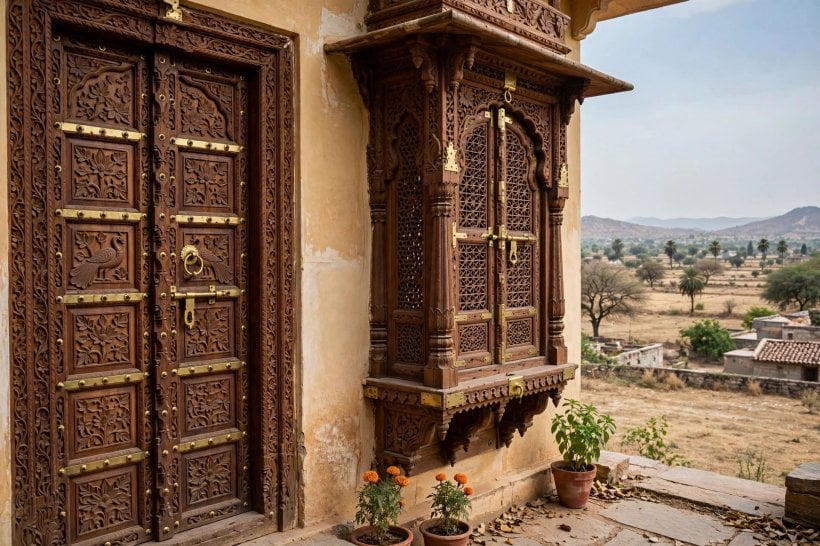
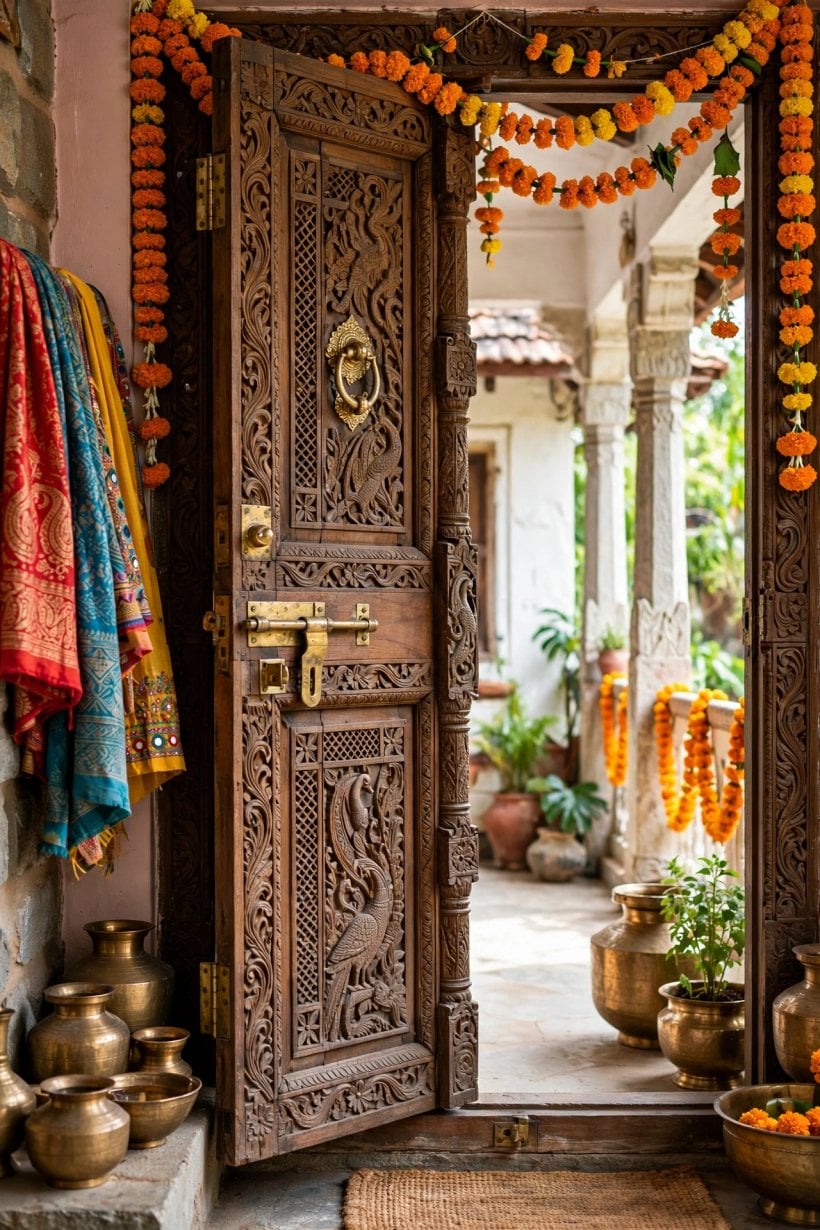
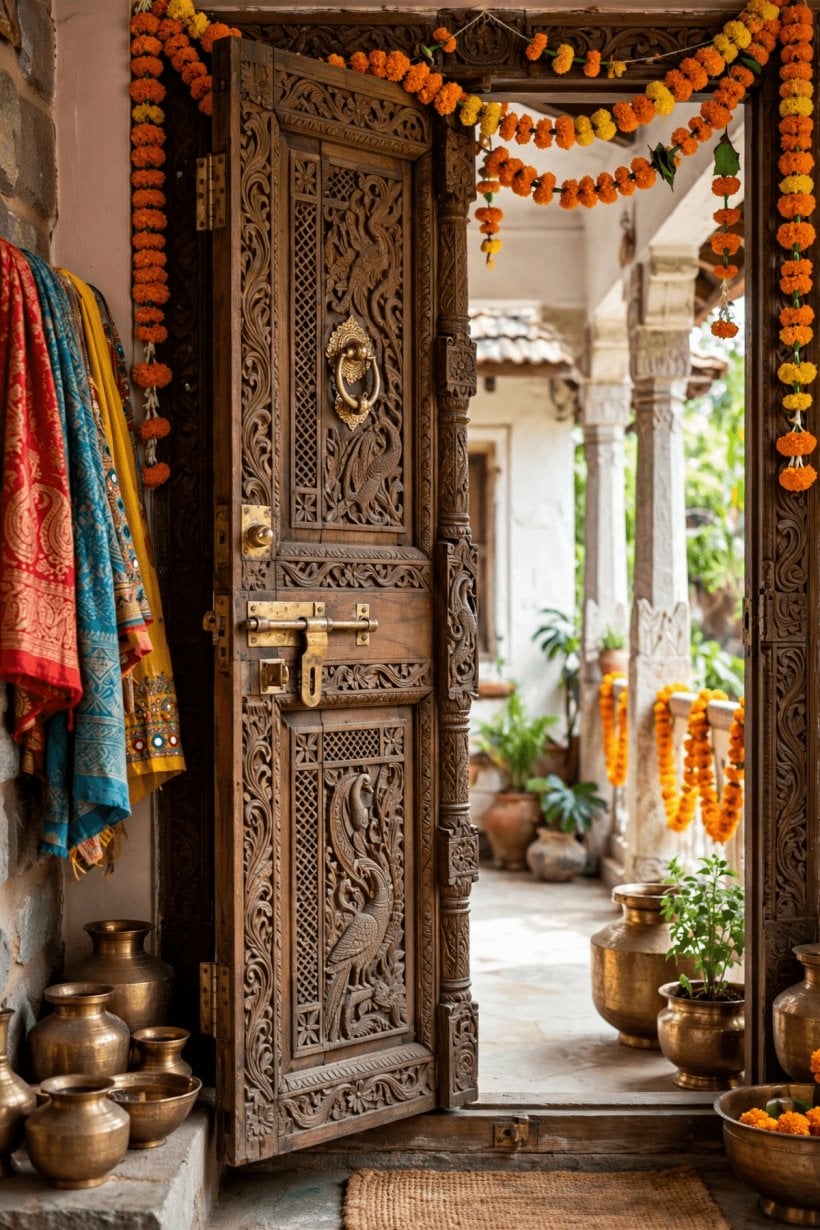
Walk up to a traditional home and the woodwork speaks first. Doors are thick, studded and carved with flowers, peacocks and geometric borders; roof brackets bloom into brackets of animals and vines; and the jharokha, a small enclosed balcony with carved screens, lets the house breathe while its occupants watch the street unseen. None of this carving is only decoration. Deep relief casts changing shadows through the day, and the screens break sun and wind into something gentle.
Reclaimed carved doors and panels are widely loved far beyond India now, and one strong piece is enough: a carved headboard, a pair of old doors as a room divider, or a small jharokha-style window seat with a lattice screen. The crafted-timber spirit is familiar from rustic homes everywhere; our tour of a tiny barn house interior shows the same affection for wood that bears the marks of its making. Keep the rest of the room quiet around a carved piece, and it will hold the eye the way it has held it for centuries.
4. Element Three: Colour Used Without Fear
Traditional Indian colour is both joyful and practical. Walls are washed in turmeric yellow, deep indigo, rose pink, lime green and terracotta, often in combinations that would alarm a cautious decorator and yet settle into harmony because the pigments are earthy and matte. Colour also does work: a deep blue dado resists scuffs, a bright door signals welcome, and cool tones in a sleeping room answer the heat outside. The palette changes by region and festival, but the confidence is constant.
To borrow the confidence without the overwhelm, copy the traditional method rather than the exact shades: one saturated colour on the largest surface, a second as an accent, and everything else in warm neutrals, wood and cream. Test the colour in the room’s own light, and let textiles carry the brightest notes if walls feel like too large a commitment. The joyful, whole-hearted approach in our look at a colorful tiny house interior proves the same point at small scale: colour committed to fully looks calmer than colour apologised for.
5. Element Four: Brass, Copper and the Glow of Warm Metal
Brass and copper thread through the traditional home at every scale: the tall lamp lit at dusk, water vessels that keep their contents cool, bells at a doorway, cooking pots blackened by years of use, and small dishes of flowers floating in water on a threshold. These metals are chosen partly for their beauty and partly for their behaviour; they are durable, they can be polished back to brightness, and their warm glow flatters lamplight and skin alike. A home with brass in it never looks quite cold.
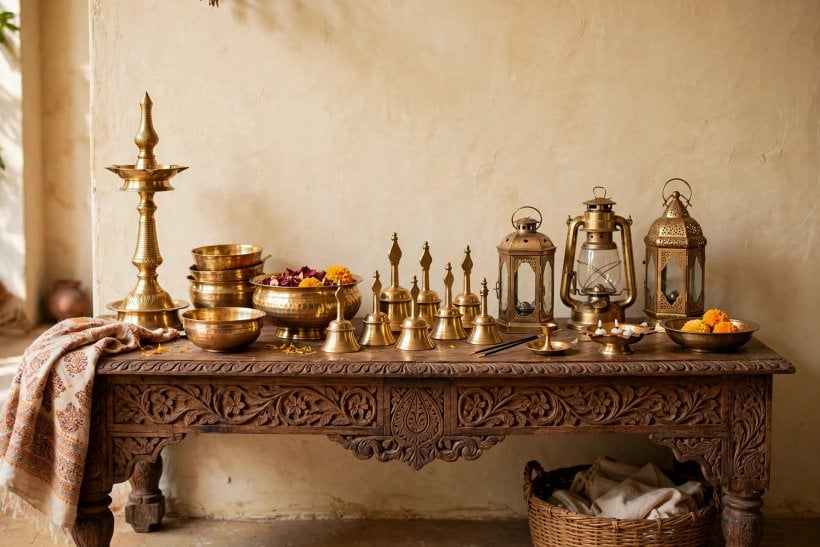
Start small and let the pieces be real. A pair of brass lamps flanking a doorway or a carved panel, a copper vessel used as a vase, brass handles and bells on a plain modern door: each is a working object, not an ornament pretending to a theme. Group warm metals together rather than scattering them, because three pieces in conversation glow more than ten in hiding. Small, hardworking accents earn their keep in any interior, as the details in our notes on tiny house bedroom decor keep showing: the objects you touch daily are the ones that set a room’s tone.
Warm metal also asks for a small ritual of care, and that is part of its charm. Brass darkens, is polished, and darkens again; many households let daily-use pieces keep a soft patina and reserve the bright polish for festivals. Either way, the metal records the life of the house on its surface. Choose solid pieces with some weight in the hand, keep them away from harsh cleaners, and they will outlast nearly everything else you own, gathering meaning as reliably as they gather glow.
6. Element Five: Handloom Textiles and Block Print
Cloth is where the Indian home keeps its softness. Handwoven cottons, block-printed bedcovers, silk cushions saved for festivals, and rugs layered over stone floors give rooms pattern, insulation and a human irregularity that machine-perfect fabric never quite matches. The block printer’s slight wobble, the weaver’s change of thread: these are not flaws but signatures, and they are why a printed cotton bedcover can make a plain rented room feel inherited rather than assembled.
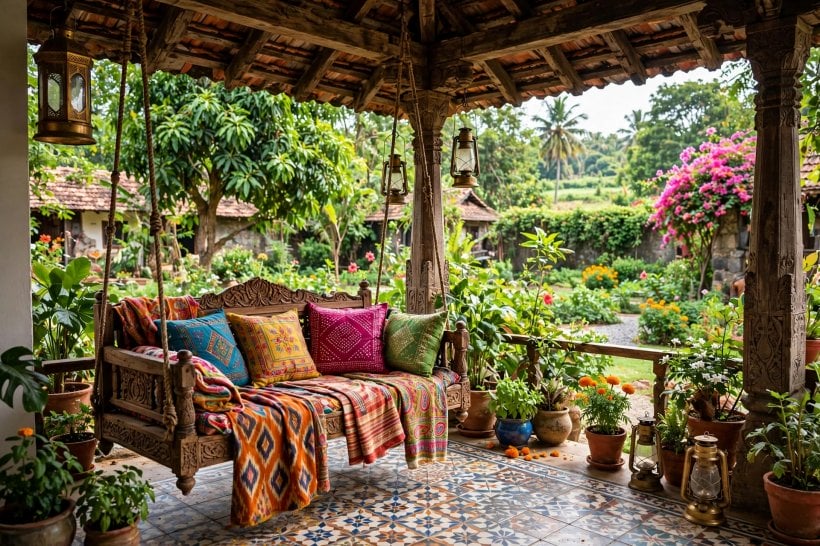
Use textiles the traditional way, in layers with jobs to do. A printed throw over a plain sofa, woven runners where feet actually land, cushion covers rotated with the seasons, and one truly good bedcover rather than five indifferent ones. Because cloth is changeable, it is the safest place to bring in the strongest pattern; the bedding-led transformations in our guide to tiny house bedroom ideas rely on exactly this principle, and it works at any scale: let fabric carry the colour story, and let walls and wood stay calm behind it.
7. Element Six: Terracotta, Clay and the Honesty of Earth
Earth is the oldest building material in the Indian home and still one of the most loved. Terracotta roof tiles and floor tiles stay cool underfoot, clay pots keep water sweet, perforated jaali screens filter light and air into lace, and earthenware lamps and planters appear at every threshold. These materials share a temperament: they are humble, local, repairable and cool to the touch, and they age by softening rather than failing. A clay pot on a windowsill connects a tenth-floor flat to a village courtyard more honestly than any souvenir.
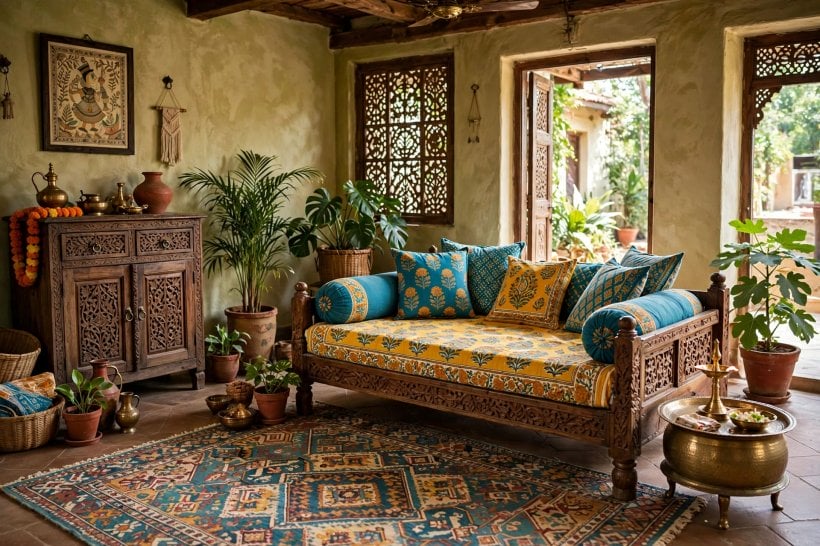
Bring earth indoors in ways that suit modern life: unglazed planters grouped at a sunny window, terracotta-toned tiles in a kitchen or entry where their coolness is welcome, a clay water vessel actually used rather than displayed. Natural, low-intervention materials reward the patient builder, a theme that runs through how to build your own tiny house as much as through any traditional home: choose materials that can be mended, that improve with weather, and that never pretend to be something else.
8. Element Seven: The Jhula, a Swing for Slow Hours
Every element so far has been useful; the jhula is for joy. The traditional swing, a broad wooden seat hung by chains or ropes from a veranda beam or a strong frame, is where conversation drifts, where children are rocked, where the heat of the afternoon is simply waited out in gentle motion. In many homes it is the best seat in the house, claimed early and surrendered late, and its presence announces that this is a home that makes room for leisure as a daily practice, not a holiday exception.
A swing needs less than you think: a veranda, a deep porch, a sturdy beam in a living room, or a frame swing on a balcony, with cushions in handloom cotton and space around it to actually swing. Hung near a window or facing a courtyard, it becomes the seat everyone gravitates to with morning tea or evening talk. The relaxed, sociable layouts in our guide to tiny house living room ideas chase the same feeling; a jhula simply builds the feeling into the furniture, one gentle arc at a time.
9. Element Eight: The Sacred Corner
The last element is the smallest and, for many households, the most important. A pooja corner, whether a carved wall niche, a small wooden temple cabinet or a simple shelf with a lamp, photographs and flowers, gives the home a daily rhythm: a lamp lit morning and evening, a moment of gratitude before the day begins. Architecturally it is modest, often the smallest designed space in the house, yet it is usually the most carefully placed, catching first light and sitting at the home’s calm centre.
Whatever a household’s own practice, the design lesson travels: a home benefits from one small place set aside for quiet. A meditation shelf, a reading chair with a lamp that is never used for work, a niche with objects that carry memory; the form matters less than the protection given to it. Small interiors make the point best, and the thoughtful corners in our look at bedroom interior design for tiny houses show how even a shelf’s width of intention can change the feeling of a whole room.
Practically, give the corner three things: a surface at a comfortable height, light that can be warm and low, and freedom from the household’s clutter currents, the keys, post and chargers that colonise every unguarded shelf. A small drawer or box beneath it for matches, wicks and offerings keeps the ritual effortless. Protected in this modest way, the corner stays what it was designed to be: the still point the rest of the home quietly turns around.
10. Bringing the Eight Elements Into Modern Homes
The elements survive because they were never really about period style; they are answers to permanent questions. How does the house get light and air? The courtyard answers, and a lightwell or balcony garden can answer today. How do we honour craft? One carved door or a handloom bedcover answers. How do we live with colour, keep cool, gather, rest and give thanks? Colour-washed walls, clay underfoot, a swing, warm lamplight and a protected quiet corner answer, in flats and small houses as surely as in the courtyard homes they came from.
Choose two elements, not eight, and use them properly. Borrow with respect for where they come from, buy the real handmade version when you can rather than a printed imitation, and let each piece do its traditional job in your home: the lamp lit, the swing swung in, the clay pot filled. Used that way, these elements do not turn a modern home into a theme; they give it what the best indian houses have always had, which is a sense that daily life was considered, and considered kindly.
Final Considerations
Courtyard, carving, colour, warm metal, handloom cloth, clay, swing and sacred corner: eight simple things, endlessly recombined. Start with the one that answers your own home’s biggest lack, light, calm, craft or joy, and let the others arrive over years, as gifts, finds and inheritances do. A traditional home was never finished in a season, and yours does not need to be either. What matters is the intention each element carries into the rooms where your own days are actually lived.

0 Comments