

Smaller home, smaller bills: the logic sounds airtight until the first month’s invoices arrive and the pitch fee, the insurance and a replacement water pump all land in the same week. So, is tiny house living cheaper in real life, or only in the brochure? The honest answer is that it can be much cheaper, but only when the big monthly lines, land, loan and utilities, are genuinely small. A tiny home does not make expensive land cheap, and it does not repeal the cost of heating, insuring and maintaining a building.
This guide works through a real monthly budget line by line, in the order the money leaves your account. Every figure below is a clearly labelled illustrative range, included to show the shape and relative size of each cost, not as a statistic or a quote. Your land rent, climate, household size and country will move every one of them, sometimes past the top of the range, so the final section shows you how to replace each illustrative figure with your own actual quote before you commit.
Is Tiny House Living Cheaper? The Q&A Summary Table
| Question | Short answer | What drives the answer |
|---|---|---|
| Is the monthly total usually lower? | Often yes, if land and loan costs are low | Land arrangement, purchase price and finance terms dominate the total |
| What is the biggest monthly cost? | Usually land rent or a loan payment, not utilities | Whether you own land, rent a pitch or stay on a park or community site |
| Are utilities dramatically cheaper? | Lower, but not near zero | A small volume heats cheaply, but standing charges, propane and water hookup fees remain |
| Is insurance cheaper? | Not automatically | Wheels versus foundation, certification and how insurers classify the home |
| Is maintenance cheaper? | Per job, usually; per year, plan a real reserve | Fewer systems, but the same categories: roof, seals, tyres, appliances, pumps |
| What costs surprise people? | Towing, site fees, storage and replacements | Moves, deposits, laundry, rented storage for what no longer fits |
| When is tiny NOT cheaper? | Expensive land plus a large loan plus a long commute | When tiny savings are spent several times over on land, finance and transport |
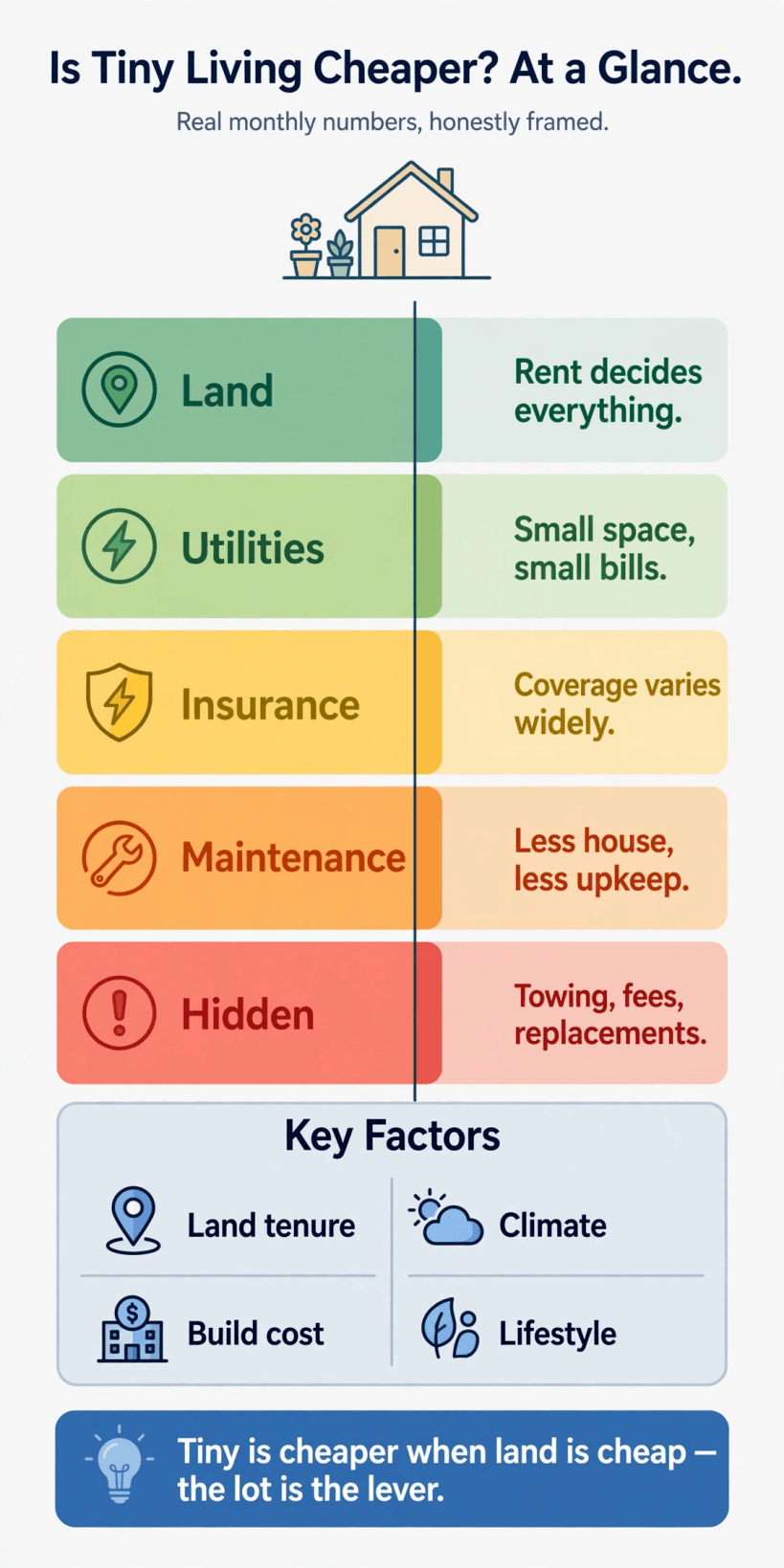
How to read the numbers in this article: every monthly range is an illustrative example for a small household, written to compare cost categories with each other. Treat each range as a placeholder to replace with a quote for your own place and household, never as a promised or average price.
1. The Short Answer: Cheaper When Land and Loan Stay Small
Strip a monthly budget to its skeleton and two lines decide almost everything: what you pay for the ground under the home, and what you pay for the home itself. If both are modest, a tiny house is very hard for a conventional rental to beat, because the smaller lines, utilities, maintenance and insurance, then have room to be smaller too. If either line is large, the arithmetic flips quickly. An expensive pitch in a desirable area plus a short, costly loan can produce a monthly total that surprises people who expected small-home savings to be automatic.
That is why comparisons like the true cost of tiny houses for sale, prefab versus DIY matter before monthly budgeting: the purchase decision sets the ceiling for everything after it. Compare like with like, too. The fair rival for a tiny house on a rented pitch is a small apartment or a room in a shared house in the same area, not a large family house in a cheaper town. Compared fairly, tiny living usually wins on utilities and space-related costs and draws or loses on land, and the sections below take each line in turn.
2. Land Rent: The Monthly Cost That Decides the Answer
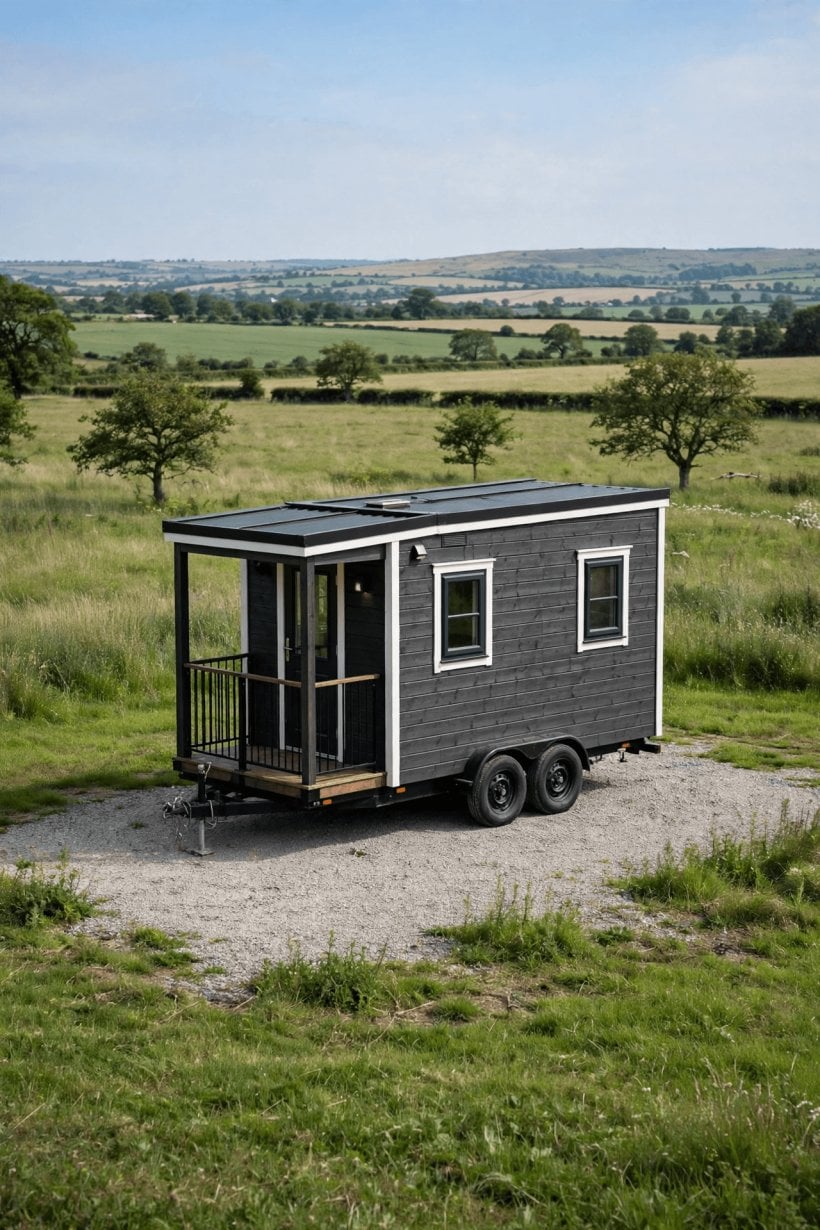
Land is the cost tiny-house marketing photographs never show. Own suitable land outright and this line can approach zero beyond taxes, upkeep and services, which is the single strongest version of the cheaper-tiny argument. Rent a pitch on private land, a farm or a community site and you have a monthly rent that varies enormously by region and by what it includes: a bare pitch with a water tap is a different product from a serviced site with electric hookup, waste, laundry and permission to stay long term. Illustrative examples for a serviced pitch in many areas fall in a broad band of roughly a few hundred a month; treat that purely as a shape, and get the actual figure, the contract length and what happens at renewal in writing.
Before choosing, work through how to prepare your land for a tiny house, including permitting and utility hookups if you are buying, and compare site types with tiny house communities versus RV parks on rules, costs and culture if you are renting. Include the one-off costs honestly in your first-year view: deposits, connection fees, a hardstanding or deck if required, and any application or inspection charges the site or locality asks for. A low monthly pitch with a short, insecure contract can cost more over three years than a steadier arrangement at a slightly higher rent.
3. Utilities: Genuinely Lower, Never Zero
Utilities are where the small volume honestly delivers. Heating or cooling a few hundred square feet takes less energy than heating a whole house, hot water runs are short, and there are simply fewer lights, appliances and standby loads. As an illustrative shape, a careful small household might see combined electricity, heating fuel and water in the region of tens to low hundreds a month, swinging with climate, insulation, and whether the pitch bundles some services into the rent. The floor under that figure is set by fixed charges: connection and standing fees, metered minimums, propane delivery or bottle exchange, and internet, which most households now treat as a utility rather than a luxury.
System choices move this line more than willpower does. The breakdown in tiny house utilities for power, water and off-grid sewage and the comparison in propane versus electric in tiny houses show why two identical homes can have very different bills: an efficient heat source in a well-insulated shell versus resistance heating in a draughty one is the whole story of a winter month. Off-grid setups change the shape rather than deleting it, swapping monthly bills for equipment, batteries and fuel carried in.
4. Insurance: Smaller Home, Not Always a Smaller Premium
Insurance refuses to follow the simple smaller-equals-cheaper rule, because insurers price classification and risk, not floor area alone. A tiny house on wheels may be treated as a recreational vehicle, a manufactured home or something a standard policy will not touch, and each classification changes both the premium and what is actually covered: transit, storm, theft, liability and contents rarely come in the same bundle. As an illustrative shape only, expect a real monthly line worth budgeting for, in the tens rather than the zero many budgets assume, and expect it to rise if the home is your primary residence, carries a stove, or sits somewhere insurers consider exposed.
The practical method is in the tiny house insurance guide for homes on wheels versus on a foundation: get quotes for your exact setup before purchase, confirm in writing how the home is classified, and check the exclusions that matter to you, from moving the home to leaving it empty. Skipping insurance to make the monthly total look better is not a saving; it is moving a rare but ruinous cost into your own pocket and hoping. Lenders and many sites will require cover in any case, which settles the question for most households.
5. Maintenance: Fewer Systems, the Same Discipline
A tiny house has less roof, less paint and fewer appliances, so most individual jobs cost less than their full-house equivalents. What it does not have is fewer categories of maintenance. Sealant around windows and roof junctions still ages, a small water system still has filters and a pump, composting or cassette toilets still need consumables and care, and a home on wheels adds tyres, bearings, brakes and rust prevention to the list. An honest budget carries a monthly reserve, an illustrative few tens a month set aside rather than spent, so that the inevitable larger job, a heater service, a tyre pair, a resealed roof, arrives as an inconvenience rather than a crisis.
Climate quietly sets this line. A mild, sheltered site is kind; a coastal, forested or freezing one works seals, metalwork and plumbing harder, and winter preparation and recovery become annual tasks with real costs in materials and time. Owners who do simple jobs themselves keep this line low, which is a genuine tiny-living advantage: most systems are reachable, understandable and fixable without scaffolding or specialist access equipment. The saving is real but it is payment in your own hours, and a fair budget admits that instead of pretending maintenance is free.
6. Daily Life Costs: Food, Laundry, Storage and Work
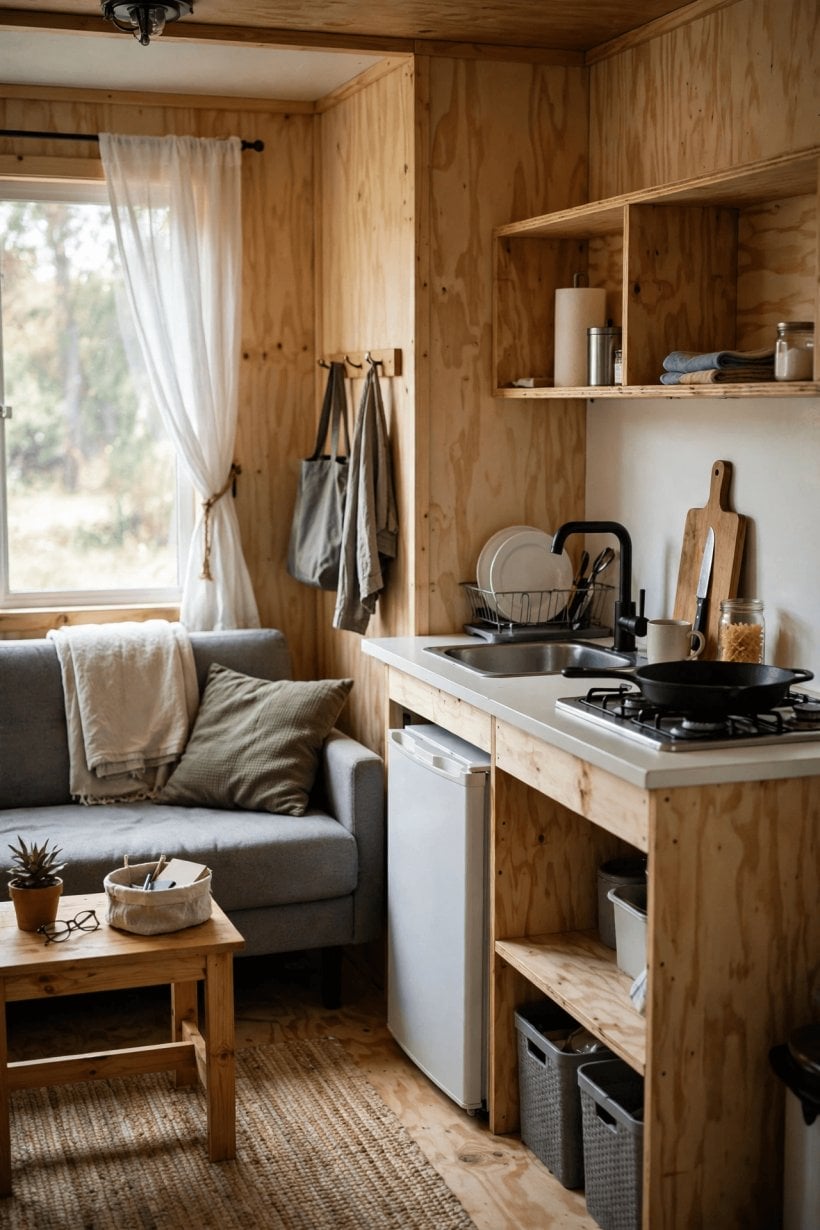
Beyond the housing lines, daily life reprices itself in a small home, mostly in your favour, with a few honest exceptions. A small kitchen and fridge discourage bulk waste and duplicate gadgets, cleaning takes minutes and consumes little, and there is no spare room quietly filling with purchases. The transition itself is well covered in tiny house living and decluttering down to 200 square feet, and households that complete it usually spend less on household goods simply because there is nowhere to put them.
The exceptions deserve their own lines. Laundry may mean a laundromat or a site laundry if no machine fits, which is a real recurring cost in money and time. Overflow belongings in a rented storage unit can quietly become one of the larger monthly lines of all, and the honest fix is either owning less or choosing a home and site with proper storage, not paying indefinitely to store a previous life. Working from home in a small space can add a coworking desk or a coffee-shop habit for calls and sanity. None of these is a reason against tiny living; all of them belong in the budget before, not after, the move.
7. Hidden Costs: Towing, Fees, Replacements and Moves
Every budget has a section its author would rather skip, and for tiny houses it is this one. Moving a home on wheels costs money each time: a suitable tow vehicle or a hired mover, permits or route planning where required, and re-levelling, reconnecting and repairing the small damage any move causes. The scale of that work is set out in the tiny house moving guide on what transport actually costs, and even one move a year turns a trivial-looking line into a monthly average worth writing down. Sites add their own small print: deposits, guest and vehicle charges, winter or storage fees, and penalties or notice rules if you leave early.
Replacements are the other quiet line. Small homes often use compact appliances, pumps, fans and heaters that work hard in a small volume; when one fails, the whole home feels it, and compact or specialist parts are not always the cheapest version on the shelf. Add the small recurring consumables, filters, seals, toilet supplies, moisture control, and the one-off cost of outfitting a much smaller kitchen and storage system when you move in. None of this is dramatic, which is exactly why it gets forgotten: twenty small omissions at a few tens each is how a supposedly cheaper month becomes an ordinary one.
8. The Purchase Itself: Loan Payments and the First Year
A monthly guide that ignored the purchase would be advertising, not advice. If you buy with finance, that payment is usually one of the two largest lines in the budget, and its size is set by the price, the deposit and, above all, the term and the type of loan available for a home that may not qualify as conventional property. Shorter terms, common for vehicle-style finance, can make a modestly priced home surprisingly expensive month by month, which is why how to finance a tiny house with loans and RV finance should be read before, not after, falling for a particular build.
The first year also carries costs that later years do not: transport and siting, connection and inspection fees, skirting, steps and a deck, curtains and storage furniture bought to measure, and the small tools a small home still needs. Spreading those one-off costs across the first twelve months in your comparison is the honest way to see year one, even if you pay them once. A household that survives year one with its budget intact usually finds later years settle to the steadier pattern of land, utilities, insurance and reserve that the earlier sections describe.
9. When Tiny Living Is NOT Cheaper: The Honest Cases
Name the losing cases plainly, because they are common. Tiny living is often not cheaper when the only lawful, pleasant place to put the home carries a high rent that eats the utility and space savings whole; when the purchase is financed expensively over a short term; when a long commute from a cheap rural pitch returns the savings to fuel and vehicle wear; or when a household pays for storage, laundry, coworking and takeaway food because the small kitchen and workspace do not fit how they actually live. Add a family that truly needs more rooms, and the comparison stops being tiny versus large and becomes suitable versus unsuitable, which money cannot fix.
There is also a subtler case: the tiny house bought as a second property, a garden annexe or a sometimes-used retreat. Then almost none of the savings apply, because the main home’s costs continue untouched while a second set of insurance, maintenance and site costs begins. Tiny living saves money as a substitution, one home replacing another, not as an addition. If your plan keeps both sets of bills, enjoy the tiny house for its other gifts, freedom, simplicity, a beautiful small place, but do not let anyone sell it to you as an economy measure.
10. Run Your Own Numbers: A Monthly Checklist That Tells the Truth
Replace every illustrative range in this guide with one real figure, quoted for your household and your place, and the answer for your situation will be standing in front of you. List land rent or the land’s own ongoing costs; the loan payment if any, exactly as quoted; utilities from a similar household in a similar home if you can find one, or estimated generously from your current bills scaled for size and climate; insurance as a written quote; a maintenance reserve you will actually transfer monthly; laundry, storage, transport and coworking if they apply; and a monthly average for moves and replacements, even if it is small.
Then compare the total with the total for the realistic alternative in the same area, including its own easily forgotten lines, and look at the difference over a year, not a month, so seasonal heating and annual fees show themselves. If tiny wins, it will win on paper you trust, and you will know which line does the winning and which line to protect when contracts renew. If it does not win, you have learned something worth far more than a deposit, and you can change the plan, cheaper land, a smaller loan, a different site, while changing it is still free.
Final Considerations: Is the Cheaper Tiny Life Real?
Yes, for many households it is real, and the mechanism is unglamorous: a small volume that costs little to heat and maintain, owned or financed modestly, standing on land whose cost has been chosen as carefully as the home itself. The savings do not come from the word tiny. They come from refusing to let land, finance and hidden costs grow back to conventional size around a small house. Run your own numbers, keep a maintenance reserve, read every site contract, and a tiny home can be exactly what its admirers claim: a good life that leaves more of your income yours.


0 Comments