
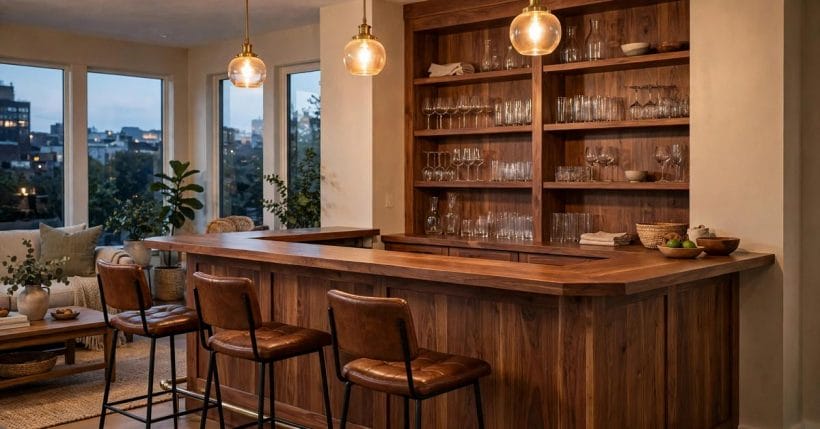
An L-shaped home bar earns its place by doing more than one job at once. One side serves, the other side prepares, and the bend between them keeps guests and work apart without a wall in between. That simple turn is what makes the shape so useful: it fits a corner of a living room, anchors a basement room, or gives a kitchen edge a proper place to gather, all while keeping bottles, glassware and conversation within easy reach.
This guide walks through seventy-five ideas for shaping that bend to your room. It covers layouts, counters, colours, back walls, storage, seating, lighting and styles, plus the practical details that decide whether a bar feels generous or cramped. Every idea here is about the L shape itself — two runs of counter meeting at a right angle — and how to make that shape work for the way you actually host. If your home leans small, the same thinking scales down gracefully, as the wider world of tiny house designs shows again and again.
1. Planning the L Shape
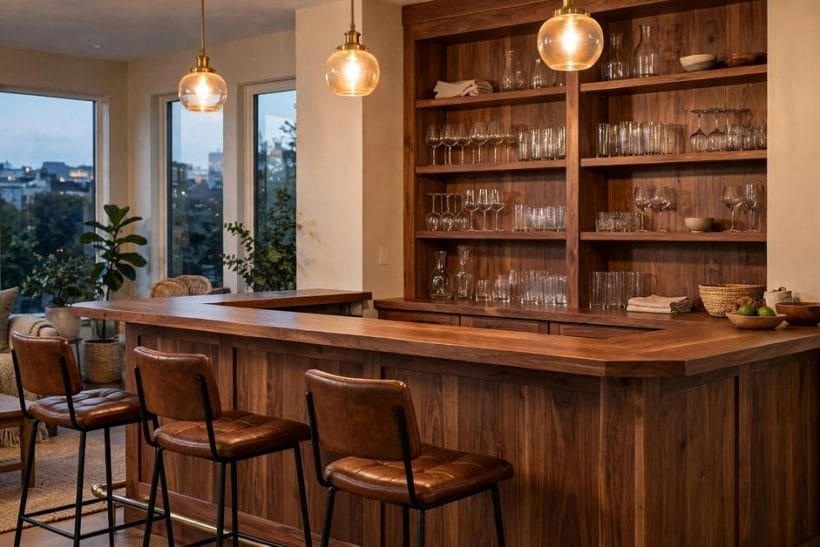
Before choosing a single finish, settle what each side of the bend is for. The long side usually carries seating and serving, while the short side quietly handles preparation and storage. When those roles are clear from the start, every later choice — from counter depth to shelf height — has an obvious answer, and the finished bar feels considered rather than assembled.
| Item | What it is |
|---|---|
| Give the Long Side to Guests | Let the longer run face the room and welcome people. |
| Keep the Short Side for Work | The shorter run is the engine room of the bar. |
| Treat the Corner as Preparation Space | The bend itself is the least comfortable place to sit, so give it to preparation instead. |
| Protect the Walkways on Both Sides | A bar needs breathing room on every open side. |
| Place the Bar Where Guests Already Gather | The best bar sits on a path people already use, near seating rather than stranded in a far corner. |
| Anchor One Side Against a Wall | Running one side against a wall gives the bar a backbone. |
| Let the Bar Frame a View, Not Block It | Think about what you see from the stools and from across the room. |
| Sketch the Shape in the Room First | Mark the outline on the floor with tape or cardboard before anything is built. |
| The Living-Room Bar | In a living room, the bar should behave like good furniture. |
| The Basement Bar | A basement gives the bar room to be dramatic. |
| The Kitchen-Edge Bar | Where a bar meets a kitchen, the short side can borrow the kitchen's rhythm. |
| The Dining-Room Bar | Beside a dining table, the bar works as a staging post. |
| The Open-Plan Bar | In an open-plan space, the bar can mark a boundary without building a wall. |
| The Small-Room Bar | A small room does not rule out the shape, but it does demand discipline. |
| The Large-Room Bar | A generous room lets the bar stretch out. |
| The Garden-Room Bar | A garden room or sunroom suits a lighter, brighter bar. |
| Warm Walnut for a Classic Feel | Walnut brings a deep, warm brown that suits both traditional and modern rooms. |
| Pale Oak for a Lighter Room | Pale oak keeps a small or north-facing room feeling open. |
| Stone for a Cool, Hardworking Top | A stone counter brings a cool, solid feel and shrugs off heat and spills. |
| Butcher Block for a Relaxed Touch | Butcher block gives the bar a kitchen-like warmth that invites people to lean in. |
| A Slim Counter for Tight Rooms | Where space is short, a slimmer counter saves the layout. |
| A Deep Counter for Generous Serving | A deeper counter turns the long side into a real serving station. |
| Contrasting the Two Sides | Using a different material on the short side quietly marks its working role. |
| Protecting the Counter Edge | The front edge takes the most wear, from stool backs to passing bags. |
| Deep Navy for Evening Drama | Deep navy turns a bar into a destination after dark. |
| Sage Green for a Calm Corner | Sage green softens a bar and connects it to plants, timber and daylight. |
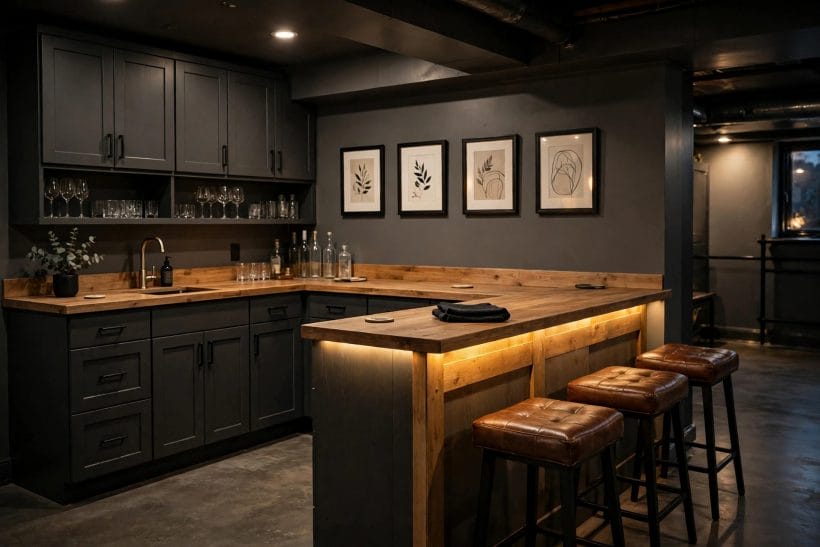
| Charcoal for a Modern Edge | Charcoal gives a bar a sleek, contemporary backbone. |
| Cream for a Bright Welcome | Cream keeps a bar approachable and light, especially in a small or windowless room. |
| Forest Green for a Club Feel | Forest green brings the atmosphere of a classic club into the home. |
| Warm Grey for Quiet Balance | Warm grey sits comfortably between bold and bland, giving the bar a modern calm. |
| Rustic Timber Tones Throughout | Letting natural timber tones run through the whole bar — counter, front and shelves — creates a warm, unified look. |
| Black Accents for Definition | Black hardware, stool frames or shelf brackets give a bar its crisp outline. |
| Open Shelves for Display | Open shelves put the prettiest glassware and bottles on show, turning storage into decoration. |
| A Mirrored Back for Depth | A mirror behind the shelves doubles the sparkle and makes a small bar feel larger. |
| Closed Cabinets for Calm | Closed cabinets on part of the back wall hide the everyday clutter — spare supplies, cleaning items and mismatched pieces — leaving the open shelves for the best of the collection. |
| A Picture Rail of Favourite Prints | Framed prints or small artworks above the shelves give the bar personality beyond bottles. |
| Timber Cladding for Warmth | Timber cladding on the back wall wraps the bar in warmth and texture. |
| A Chalkboard or Letter Board | A small board for the evening's offerings adds a playful, personal touch. |
| Glass-Front Cabinets as a Middle Path | Glass-front cabinets split the difference between open and closed storage. |
| Keeping the Back Wall Uncluttered | Whatever the back wall holds, leave some empty space. |
| Glassware by How Often It Is Used | Everyday glasses belong at hand height near the serving side, while rarely used pieces can live higher or further away. |
| A Dedicated Spot for Bottles | Bottles need a home that keeps them upright, visible and away from heat. |
| Drawers for Tools and Small Items | Shallow drawers near the preparation side swallow the small items that otherwise colonise a counter: openers, cloths, stirrers and spare parts. |
| Cooling Without a Crowded Counter | Chilled items belong under the counter or in a dedicated cooling spot, not lined up on top of it. |
| A Tray System for Clearing Up | Keep a tray or two ready for clearing. |
| Hidden Bins Done Discreetly | A small bin tucked inside a cabinet door or under the short side keeps empties and scraps out of sight. |
| Seasonal Rotation of the Collection | Rotate what sits on display with the seasons. |
| Labelling the Inside, Not the Outside | Small labels inside cabinets and drawers help everyone put things back in the right place, especially when guests offer to help. |
| Leather Stools for Comfort and Patina | Leather stools bring comfort and a lived-in warmth that improves with use. |
| Wooden Stools for a Light Look | Wooden stools keep a bar feeling airy, especially in a small room where upholstery would bulk up the space. |
| Velvet Stools for Evening Glamour | Velvet stools dress a bar up instantly, adding colour and softness against a hard counter. |
| Backless Stools for a Slim Profile | Backless stools slide fully under the counter, keeping walkways clear and the bar's outline clean. |
| Stools With Backs for Long Evenings | Where evenings stretch out, a stool with a back earns its place. |
| A Foot Rail for Tired Legs | A rail along the base of the bar gives feet a natural resting place and stops guests perching awkwardly on stool rungs. |
| Mixing Stool Styles Carefully | Mixing two stool styles can add character, but keep one thing consistent — height, material or colour — so the mix reads as deliberate. |
| Leaving Room Between Stools | Elbow room matters as much as seat width. |
| Pendants Over the Long Side | A row of pendants over the long side gives the bar its rhythm and its warmth. |
| A Glow on the Back Wall | Lighting the back wall separately from the counter lets the display shine without flooding the room. |
| Dimmers for Different Evenings | A dimmer lets one bar serve many moods: bright for preparation, low for conversation, somewhere between for a quiet night. |
| Candlelight as a Soft Layer | Candles add a flickering warmth that electric light cannot quite match. |
| Daylight by Day, Lamplight by Night | A bar near a window lives two lives: bright and casual by day, warm and focused by night. |
| Lighting the Short Side for Work | The working side deserves its own light, so preparation never happens in the shadow of the guest side. |
| Avoiding Glare on Glass and Mirrors | Bright lights aimed straight at glass or mirrors bounce back uncomfortably. |
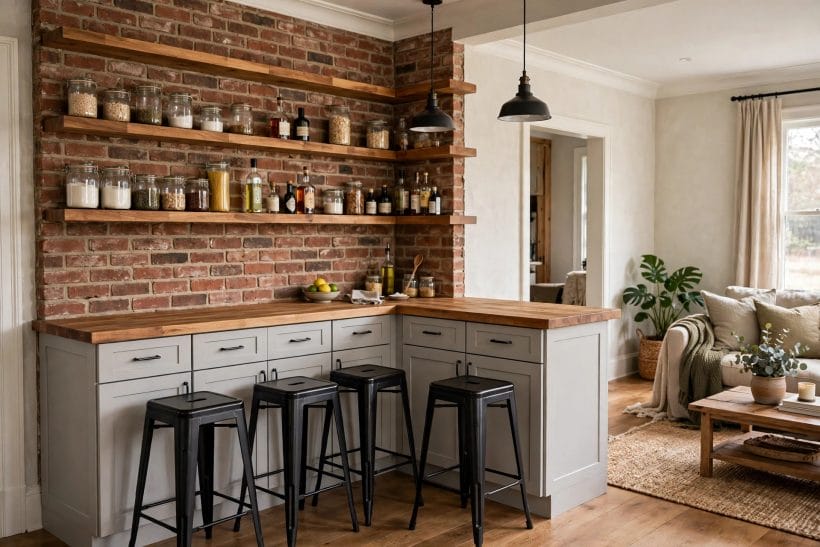
| Rustic and Reclaimed | Reclaimed timber, stone fronts and iron details give a bar a rugged, storied feel. |
| Clean and Modern | Modern bars favour flat fronts, quiet colours and unbroken lines. |
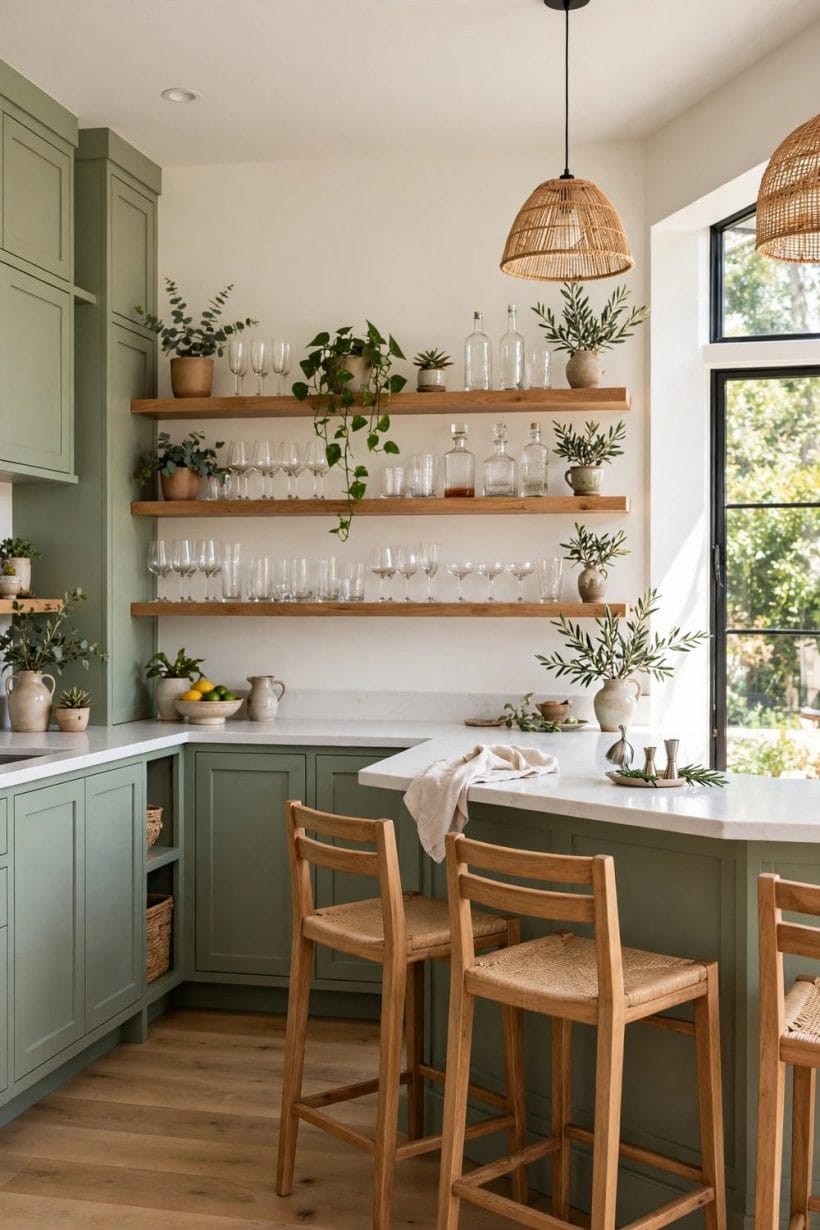
| Farmhouse Warmth | Farmhouse bars mix painted cabinets, timber counters and open shelving into a welcoming whole. |
| Coastal and Breezy | Coastal bars use pale timber, whitewashed finishes and airy shelving to feel like a holiday. |
| Traditional and Panelled | Panelled fronts, raised details and classic colours give a bar a timeless, formal air. |
| Industrial Edge | Industrial bars pair dark metal, exposed brick and raw timber for a workshop-like character. |
| Minimal and Quiet | Minimal bars strip back to the essentials: a calm colour, a clean counter and restrained display. |
| Spill-Friendly Surfaces | Choose surfaces that forgive the inevitable splash. |
| Caring for Timber Through the Seasons | Timber responds to dry winters and humid summers, so a little seasonal care goes a long way. |
| Hosting Flow Around the Bend | Finally, think about how an evening moves around the bend. |
1. Give the Long Side to Guests
Let the longer run face the room and welcome people. Stools line up along it, glasses arrive across it, and conversation gathers on its open side. Keeping this side free of clutter is what makes guests feel invited rather than in the way, so resist the urge to park appliances or piles of supplies where visitors naturally stand.
2. Keep the Short Side for Work
The shorter run is the engine room of the bar. It holds the preparation surface, the tools of the trade and the items you reach for most often, tucked just around the bend from view. Because guests rarely linger on this side, it can stay practical and busy without spoiling the look of the room.
3. Treat the Corner as Preparation Space
The bend itself is the least comfortable place to sit, so give it to preparation instead. A board, a tray or a small collection of everyday tools lives happily in the corner, where both sides can reach it. This single decision frees the long side for people and stops the corner becoming a dead, awkward gap.
4. Protect the Walkways on Both Sides
A bar needs breathing room on every open side. Guests should pass behind seated friends without squeezing, and the person serving should move between the bar and the back wall without a sideways shuffle. Walk through the route in your mind before committing, and favour a slightly shorter bar over a grand one that blocks the room.
5. Place the Bar Where Guests Already Gather
The best bar sits on a path people already use, near seating rather than stranded in a far corner. A bar beside a sofa group or a dining table joins the evening naturally, while one hidden behind a door tends to be forgotten. Follow the social gravity of the room and let the bar meet it.
6. Anchor One Side Against a Wall
Running one side against a wall gives the bar a backbone. The wall carries shelves, lighting and display, while the open side stays free for stools and movement. This arrangement also hides the working side from the main view of the room, so the bar reads as furniture rather than a workstation.
7. Let the Bar Frame a View, Not Block It
Think about what you see from the stools and from across the room. A bar that frames a window, a fireplace or a garden door adds to the room, while one that blocks a favourite view subtracts from it. Set the height and the back wall so sightlines stay open and the room still feels connected.
8. Sketch the Shape in the Room First
Mark the outline on the floor with tape or cardboard before anything is built. Live with the outline for a few days, walk around it, and notice where you bump into it or where it feels generous. This low-effort rehearsal catches awkward corners early, when moving a line costs nothing at all.
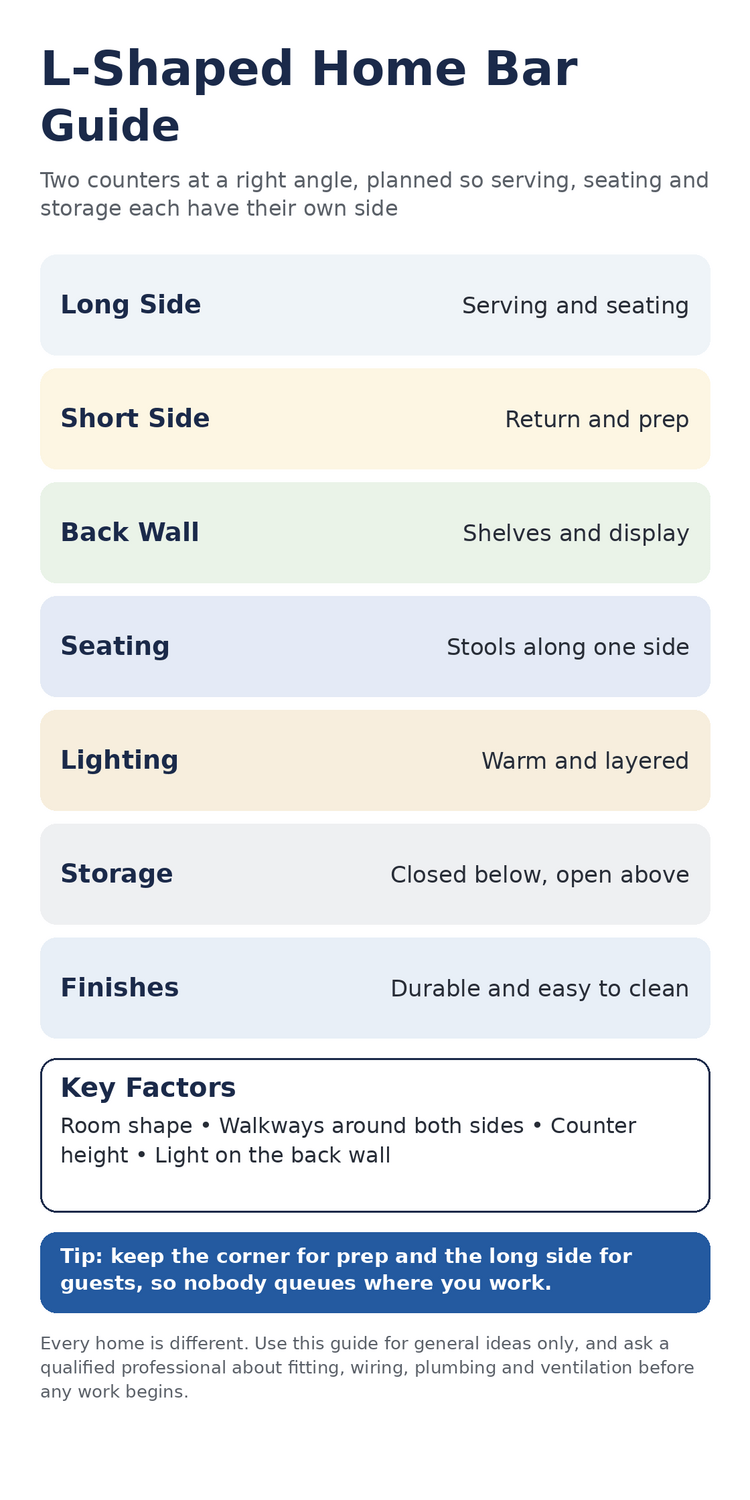
2. Layouts for Every Room
The same bend adapts to very different rooms, but each room asks something different of it. A basement bar can be bolder and darker, a living-room bar needs to share its space politely, and a kitchen-edge bar must work alongside cooking. Match the layout to the room first and the styling will follow more easily.
9. The Living-Room Bar
In a living room, the bar should behave like good furniture. Keep its height and materials in step with the sofas and tables around it, and let it share the room’s lighting rather than demanding its own stage. When the bar matches the room, guests drift to it naturally and it never feels like an intrusion.
10. The Basement Bar
A basement gives the bar room to be dramatic. Lower ceilings and fewer windows suit warm timber, darker shades and pools of lamplight, and the bar can become the centre of the room rather than an accent. Moisture and ventilation still deserve professional attention here, as basement air behaves differently from the rooms above. For more basement thinking, see these basement bar ideas.
11. The Kitchen-Edge Bar
Where a bar meets a kitchen, the short side can borrow the kitchen’s rhythm. Preparation flows naturally between kitchen counter and bar counter, and shared storage keeps duplicates down. Keep the bar’s seating clear of cooking traffic, though, so cooks and guests are not constantly crossing paths.
12. The Dining-Room Bar
Beside a dining table, the bar works as a staging post. Drinks wait on its long side while dinner is served, and the short side holds everything needed for refills without a trip to the kitchen. Matching the bar’s timber to the dining table ties the two pieces together beautifully.
13. The Open-Plan Bar
In an open-plan space, the bar can mark a boundary without building a wall. Its long side faces the seating area and its back faces the kitchen, giving each zone its own edge. This gentle division keeps the space open while still telling guests where one area ends and another begins.
14. The Small-Room Bar
A small room does not rule out the shape, but it does demand discipline. Shorten both runs, choose a slim counter, and keep the back wall light so the bar does not loom. In a tight room, the bend is an advantage: it tucks into a corner that a straight bar would waste.
15. The Large-Room Bar
A generous room lets the bar stretch out. The long side can carry more stools, the short side can hold a second preparation zone, and the back wall can grow into a real display. Resist filling every inch, though — a large room still benefits from open floor around the bar.
16. The Garden-Room Bar
A garden room or sunroom suits a lighter, brighter bar. Pale timber, airy shelving and plants soften the shape, and the bar becomes a daytime gathering spot as much as an evening one. Weather and temperature swings in such rooms deserve care in material choice, so favour finishes that cope with sun and damp.
3. Counters and Materials
The counter is where hands, glasses and elbows meet the bar, so its material matters more than any other surface. It must forgive spills, survive daily use and still look inviting in lamplight. Choose for durability first and beauty second, and the bar will age gracefully instead of showing every evening it has hosted.
17. Warm Walnut for a Classic Feel
Walnut brings a deep, warm brown that suits both traditional and modern rooms. Its grain adds movement to a long run of counter, and it pairs naturally with brass, leather and soft lamplight. Sealed well, it handles the occasional ring mark with dignity, and it grows more handsome as it settles into the room.
18. Pale Oak for a Lighter Room
Pale oak keeps a small or north-facing room feeling open. Its honey tones lift the bar without shouting, and it works beautifully with white shelving, cream walls and green plants. Oak is a forgiving timber too, showing wear less harshly than darker woods when life gets busy around it.
19. Stone for a Cool, Hardworking Top
A stone counter brings a cool, solid feel and shrugs off heat and spills. Light marble veining adds drama to a dark room, while a quiet speckled stone keeps a busy back wall calm. Stone is heavy, so its support and fitting belong to a professional, but the result is a bar that feels permanent and assured.
20. Butcher Block for a Relaxed Touch
Butcher block gives the bar a kitchen-like warmth that invites people to lean in. Its joined planks add texture along a long run, and it suits farmhouse, rustic and casual rooms alike. Regular care keeps it looking fresh, and its softness under glass makes it a kindly surface for an evening’s conversation.
21. A Slim Counter for Tight Rooms
Where space is short, a slimmer counter saves the layout. Guests still have room for a glass and an elbow, but the bar stops short of swallowing the walkway. Slim does not mean flimsy: a well-supported narrow top feels just as solid as a deep one, and it keeps a small room usable.
22. A Deep Counter for Generous Serving
A deeper counter turns the long side into a real serving station. Trays, boards and rows of glasses all find a place without crowding the stools, and the person serving gains a proper working strip behind the guest edge. Depth is a luxury worth taking when the room allows it.
23. Contrasting the Two Sides
Using a different material on the short side quietly marks its working role. A timber long side with a stone return, for example, tells guests where to gather and where to leave the work alone. The contrast adds visual interest too, breaking a long run of one material into two distinct characters.
24. Protecting the Counter Edge
The front edge takes the most wear, from stool backs to passing bags. A rounded or reinforced edge resists chips and feels kinder on forearms, while a sharp square edge looks crisp but shows damage sooner. Choose the edge for the life the bar will actually live, not just the photograph.
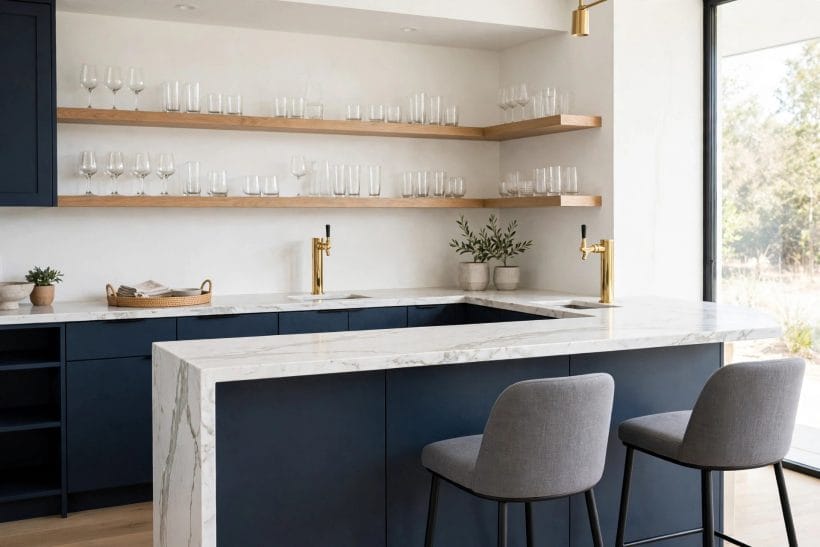
4. Colours and Finishes
Colour decides the mood of the bar before a single glass is poured. Dark shades make a bar feel like an evening destination, pale shades keep it friendly by day, and the back wall can carry a bolder colour than the counter ever should. Keep the palette small — two main shades and one accent — and the bar will feel calm rather than busy. Compact rooms benefit from the same restraint seen in small home bar ideas, where a tight palette does the heavy lifting.
25. Deep Navy for Evening Drama
Deep navy turns a bar into a destination after dark. It pairs with brass, white stone and warm light, and it makes glassware glow against it. Navy suits basements and living rooms alike, and it hides the small scuffs of daily use better than paler shades do.
26. Sage Green for a Calm Corner
Sage green softens a bar and connects it to plants, timber and daylight. It feels relaxed rather than formal, and it works in rooms that serve both day and evening duty. Pair it with pale wood and cream walls, and the bar becomes a gentle presence rather than a statement.
27. Charcoal for a Modern Edge
Charcoal gives a bar a sleek, contemporary backbone. It recedes in low light, letting the counter and the back wall take the stage, and it pairs with almost any metal finish. Keep the lighting warm against charcoal, or the bar can feel cold rather than sophisticated.
28. Cream for a Bright Welcome
Cream keeps a bar approachable and light, especially in a small or windowless room. It reflects lamplight softly and makes a dark back wall feel intentional rather than heavy. Cream does ask for more cleaning attention, but its brightness repays the effort every single day.
29. Forest Green for a Club Feel
Forest green brings the atmosphere of a classic club into the home. With brass details and a mirrored back wall, it feels rich without being loud, and it flatters both timber and stone counters. This is a shade for evenings, low light and long conversations.
30. Warm Grey for Quiet Balance
Warm grey sits comfortably between bold and bland, giving the bar a modern calm. It lets the counter material and the glassware do the talking, and it adapts as seasons and accessories change. Grey is the safe harbour of bar colours, and it rarely disappoints.
31. Rustic Timber Tones Throughout
Letting natural timber tones run through the whole bar — counter, front and shelves — creates a warm, unified look. The grain becomes the decoration, so the room needs little else. This approach suits rustic and farmhouse rooms, and it ages with a patina that painted finishes cannot match.
32. Black Accents for Definition
Black hardware, stool frames or shelf brackets give a bar its crisp outline. Used sparingly, black sharpens pale cabinets and grounds bright counters, stopping the whole piece from floating visually. Think of black as punctuation: a little defines the sentence, too much overwhelms it.
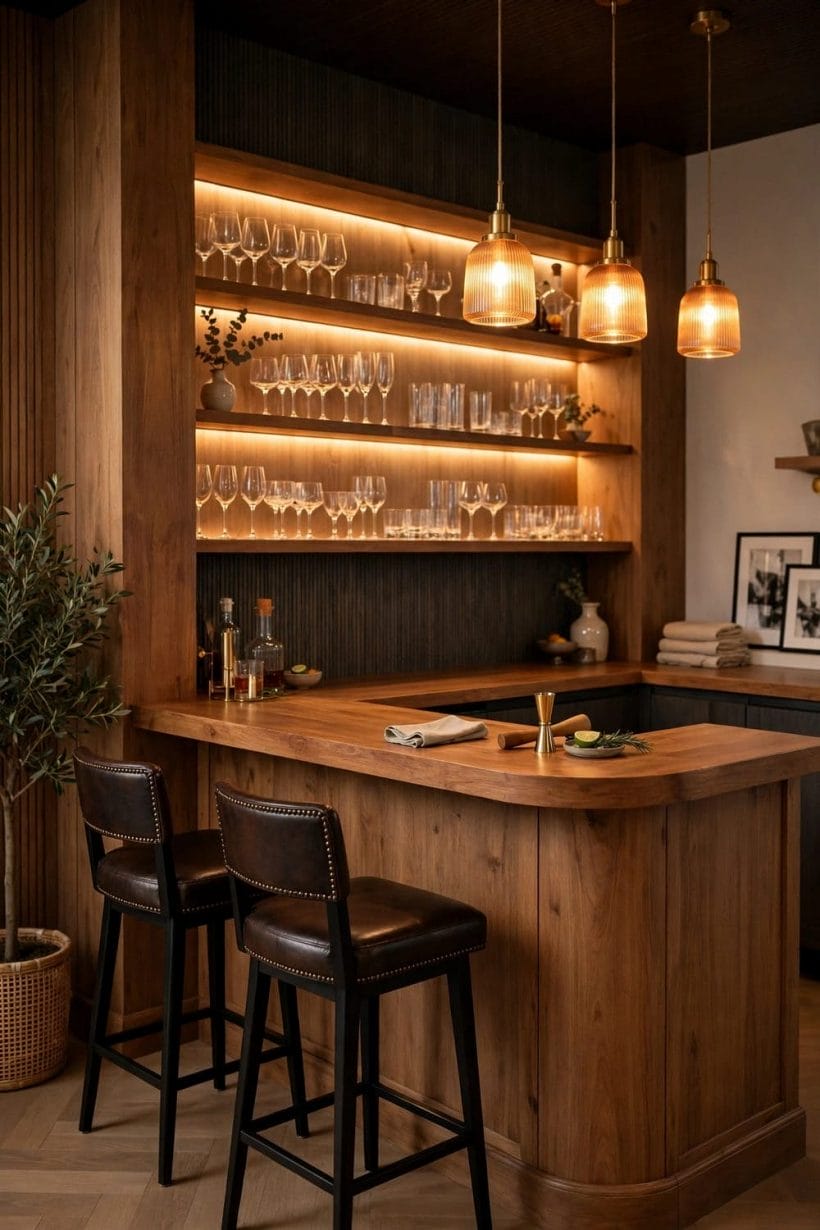
5. The Back Wall
The back wall is the bar’s backdrop and its shop window in one. It holds the display, carries the light and tells guests what kind of bar this is before they sit down. A well-planned back wall balances open display with closed storage, so the eye finds interest without finding clutter.
33. Open Shelves for Display
Open shelves put the prettiest glassware and bottles on show, turning storage into decoration. Keep the shelves shallow and the rows uncrowded, with breathing space between groups, and the wall reads as curated rather than crammed. Open shelving suits guests who enjoy browsing the collection.
34. A Mirrored Back for Depth
A mirror behind the shelves doubles the sparkle and makes a small bar feel larger. It bounces lamplight around the room and gives the back wall a sense of depth that flat paint cannot match. Keep the mirror clean and the shelves tidy, since every reflection doubles what is there.
35. Closed Cabinets for Calm
Closed cabinets on part of the back wall hide the everyday clutter — spare supplies, cleaning items and mismatched pieces — leaving the open shelves for the best of the collection. This mix of hidden and shown is what keeps a working bar looking composed on an ordinary evening.
36. A Picture Rail of Favourite Prints
Framed prints or small artworks above the shelves give the bar personality beyond bottles. Choose pieces that suit the room’s mood, keep frames consistent, and hang them where lamplight catches them. Art reminds guests that this is a room for living, not just a serving station.
37. Timber Cladding for Warmth
Timber cladding on the back wall wraps the bar in warmth and texture. Vertical boards add height, horizontal boards add calm, and the timber ties the wall to a wooden counter beautifully. Cladding also softens echoes in a hard-surfaced room, which guests notice even if they cannot name why.
38. A Chalkboard or Letter Board
A small board for the evening’s offerings adds a playful, personal touch. It can carry a welcome note, a list of favourites or a seasonal suggestion, and it changes with the occasion. Keep the lettering simple and the board clean, and it becomes a talking point rather than a chore.
39. Glass-Front Cabinets as a Middle Path
Glass-front cabinets split the difference between open and closed storage. They protect glassware from dust while still showing it off, and they add a furniture-like quality to the back wall. Lit from within, they glow gently and give the bar its evening presence.
40. Keeping the Back Wall Uncluttered
Whatever the back wall holds, leave some empty space. A shelf with room around each group looks more generous than one packed edge to edge, and an empty stretch of wall lets the eye rest. Restraint on the back wall is what separates a bar that feels curated from one that feels crowded.
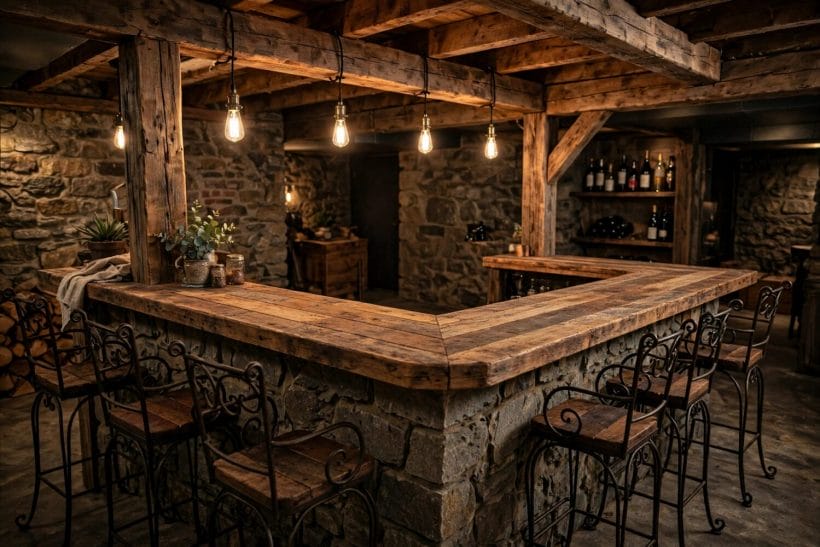
6. Storage That Works
Good storage is invisible when the bar is in use and obvious when it is not there. Glasses should be reachable without a search, supplies should live near where they are used, and the working side should stay clear enough to actually work at. Plan storage around habits, not around a catalogue photograph. Rooms that share duties with cooking can borrow ideas from wider kitchen ideas, where the same reach-and-return logic rules.
41. Glassware by How Often It Is Used
Everyday glasses belong at hand height near the serving side, while rarely used pieces can live higher or further away. This simple sorting means the most-reached-for items are never a stretch or a climb, and the bar stays comfortable through a long evening.
42. A Dedicated Spot for Bottles
Bottles need a home that keeps them upright, visible and away from heat. A low shelf or a cabinet section near the short side works well, with the most-used bottles at the front. When every bottle has a place, tidying up takes moments rather than a full rearrangement.
43. Drawers for Tools and Small Items
Shallow drawers near the preparation side swallow the small items that otherwise colonise a counter: openers, cloths, stirrers and spare parts. Divided drawers keep them findable, and a drawer that closes fully keeps the bar looking calm even mid-evening.
44. Cooling Without a Crowded Counter
Chilled items belong under the counter or in a dedicated cooling spot, not lined up on top of it. Keeping the counter clear for serving is worth more than displaying every cold item, and under-counter placement keeps chilled things within arm’s reach of the person serving.
45. A Tray System for Clearing Up
Keep a tray or two ready for clearing. Used glasses travel to the kitchen in one trip instead of several, and the bar resets quickly between rounds. Trays stored upright in a slim slot stay out of the way until needed, which is exactly when they earn their keep.
46. Hidden Bins Done Discreetly
A small bin tucked inside a cabinet door or under the short side keeps empties and scraps out of sight. Emptying it becomes part of closing the bar rather than a mid-evening chore, and guests never see the working side of the evening.
47. Seasonal Rotation of the Collection
Rotate what sits on display with the seasons. Lighter glassware and brighter accents suit summer evenings, while heavier pieces and warmer tones suit winter gatherings. Rotation keeps the bar feeling fresh without buying anything new, and it gives the collection a reason to be revisited.
48. Labelling the Inside, Not the Outside
Small labels inside cabinets and drawers help everyone put things back in the right place, especially when guests offer to help. Labels stay hidden when doors close, so the bar keeps its polished look while gaining a quiet system underneath.
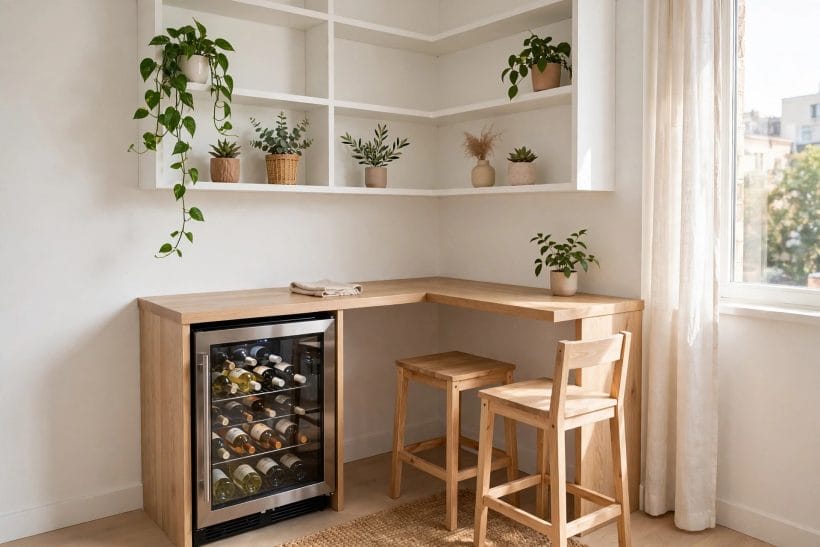
7. Seating Along the Long Side
Seating decides how long guests linger. A stool that suits the counter height, gives feet a place to rest and lets its sitter turn to talk will hold people happily, while a beautiful but awkward stool empties fast. Test seating with real sitting, not just with looking, before settling the arrangement.
49. Leather Stools for Comfort and Patina
Leather stools bring comfort and a lived-in warmth that improves with use. Their padded seats invite long stays, and their tones pair with timber counters and brass details. Leather asks for occasional care, but it rewards that care by looking better year after year.
50. Wooden Stools for a Light Look
Wooden stools keep a bar feeling airy, especially in a small room where upholstery would bulk up the space. Their simple lines suit pale counters and casual rooms, and they tuck neatly under the counter overhang when the evening ends.
51. Velvet Stools for Evening Glamour
Velvet stools dress a bar up instantly, adding colour and softness against a hard counter. Deep green, navy or blush velvet turns seating into a feature, and the texture catches lamplight beautifully. Velvet suits bars that host in the evening more than bars that serve all day.
52. Backless Stools for a Slim Profile
Backless stools slide fully under the counter, keeping walkways clear and the bar’s outline clean. They suit short visits and rooms where floor space is precious, and they let guests perch casually without committing to a long sit. Their modesty is their virtue.
53. Stools With Backs for Long Evenings
Where evenings stretch out, a stool with a back earns its place. Support matters when conversation runs long, and a low back keeps the bar’s sightlines open while still giving sitters something to lean on. Comfort, here, is hospitality in furniture form.
54. A Foot Rail for Tired Legs
A rail along the base of the bar gives feet a natural resting place and stops guests perching awkwardly on stool rungs. Brass, iron or timber all work, matched to the bar’s other metals. It is a small detail that guests feel rather than notice, which is the best kind.
55. Mixing Stool Styles Carefully
Mixing two stool styles can add character, but keep one thing consistent — height, material or colour — so the mix reads as deliberate. A row of mismatched stools with nothing in common looks accidental, while a shared thread makes the variety feel collected over time.
56. Leaving Room Between Stools
Elbow room matters as much as seat width. Guests need space to turn, gesture and set a glass down without nudging a neighbour, so resist filling every inch of the long side. Fewer stools with generous spacing host better than a crowded row.
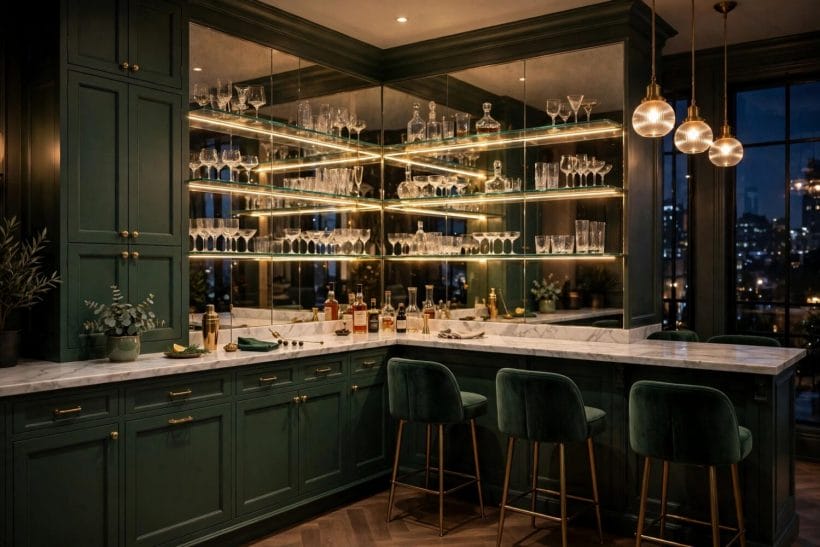
8. Lighting the Two Sides
Lighting makes the bar after dark. Warm pools over the counter, a glow on the back wall and a dimmer for the room turn the same bar from daytime furniture into an evening destination. Any new wiring or fixed lighting belongs to a qualified professional — this section is about the effect, not the installation.
57. Pendants Over the Long Side
A row of pendants over the long side gives the bar its rhythm and its warmth. Hang them low enough to pool light on the counter but high enough to see across, and keep their spacing even so the row reads as one gesture. Glass or brass shades suit most bar styles.
58. A Glow on the Back Wall
Lighting the back wall separately from the counter lets the display shine without flooding the room. A soft wash across shelves makes glassware sparkle and gives the bar depth, and it can stay on as a nightlight for the room long after the evening ends.
59. Dimmers for Different Evenings
A dimmer lets one bar serve many moods: bright for preparation, low for conversation, somewhere between for a quiet night. If the room’s lighting can be adjusted, the bar never has to choose a single atmosphere, and guests can settle the level to suit the evening.
60. Candlelight as a Soft Layer
Candles add a flickering warmth that electric light cannot quite match. Used safely, away from shelves and draughts and never left unattended, they make a bar feel intimate instantly. Battery candles give a similar glow where open flame is unwelcome.
61. Daylight by Day, Lamplight by Night
A bar near a window lives two lives: bright and casual by day, warm and focused by night. Sheer curtains soften harsh sun without darkening the room, and a lamp switched on at dusk marks the change of mood. Designing for both lives doubles the bar’s usefulness.
62. Lighting the Short Side for Work
The working side deserves its own light, so preparation never happens in the shadow of the guest side. A discreet under-shelf light or a small lamp on the short side keeps work safe and easy, without stealing attention from the long side’s display.
63. Avoiding Glare on Glass and Mirrors
Bright lights aimed straight at glass or mirrors bounce back uncomfortably. Angle lights slightly, favour warm tones, and test the effect from a seated position rather than standing. Guests should see sparkle, not squint, and a small adjustment usually fixes a harsh reflection.
9. Styles From Rustic to Modern
Style is the bar’s personality, and the L shape wears many of them well. The bend itself stays constant while materials, colours and details change the character completely. Choose the style that matches the room around the bar, and the bar will feel like it belongs rather than like it arrived. A home with only a single corner to spare takes a different approach — see the corner bar angle — but where two runs fit, the L shape earns its keep.
64. Rustic and Reclaimed
Reclaimed timber, stone fronts and iron details give a bar a rugged, storied feel. Imperfections become character, and the bar suits basements, lodges and rooms with natural textures. Rustic bars invite guests to relax immediately, with nothing too polished to touch.
65. Clean and Modern
Modern bars favour flat fronts, quiet colours and unbroken lines. Handleless cabinets, a slim counter and minimal display keep the focus on form, and the L shape itself becomes the design statement. Modern suits open-plan rooms and homes that prefer calm over ornament.
66. Farmhouse Warmth
Farmhouse bars mix painted cabinets, timber counters and open shelving into a welcoming whole. Cream or sage cabinets with a wooden top feel homely without being old-fashioned, and the style suits kitchens and dining rooms that already lean rural.
67. Coastal and Breezy
Coastal bars use pale timber, whitewashed finishes and airy shelving to feel like a holiday. Light colours and natural textures keep the bar bright, and plants or woven details complete the mood. This style suits sunrooms and homes that live outdoors as much as in.
68. Traditional and Panelled
Panelled fronts, raised details and classic colours give a bar a timeless, formal air. Traditional bars suit dining rooms and older homes, where their craftsmanship echoes the architecture around them. Dark timber and brass complete a look that never dates.
69. Industrial Edge
Industrial bars pair dark metal, exposed brick and raw timber for a workshop-like character. Iron stools, black brackets and a sturdy counter give the bar presence, and the style suits lofts, basements and rooms with plenty of texture already.
70. Minimal and Quiet
Minimal bars strip back to the essentials: a calm colour, a clean counter and restrained display. Nothing shouts, and the L shape does the work quietly. Minimal suits small rooms and busy households, where visual calm is a genuine luxury.
10. Practical Details and Upkeep
The difference between a bar that delights for years and one that fades after a season is rarely the big choices. It is the small practical details: how spills are handled, how the bar is closed each night, and how wear is caught early. Attend to those, and the bar stays a pleasure.
71. Spill-Friendly Surfaces
Choose surfaces that forgive the inevitable splash. A sealed counter, washable paint and wipeable shelf liners mean a spill is a moment’s wipe rather than a lasting mark. Planning for spills is not pessimism; it is what lets guests relax fully.
72. A Closing Routine for the Bar
A short closing routine — glasses cleared, counter wiped, supplies returned, lights dimmed — keeps the bar ready for its next evening. Done nightly, it takes minutes; left for days, it becomes a chore. The routine is the bar’s quiet maintenance crew.
73. Caring for Timber Through the Seasons
Timber responds to dry winters and humid summers, so a little seasonal care goes a long way. Keep the bar out of direct sun where possible, wipe it with a soft cloth, and refresh its finish when it starts to look thirsty. Timber cared for this way deepens in character rather than drying out.
74. When to Call a Professional
Anything involving wiring, plumbing, gas, ventilation or structural change belongs to a qualified professional, full stop. The same goes for heavy stone counters and wall fixings that carry real weight. Knowing where home enthusiasm ends and professional work begins keeps both the bar and the household safe.
75. Hosting Flow Around the Bend
Finally, think about how an evening moves around the bend. Guests arrive at the long side, refills come from the short side, and the corner stays a calm working pocket between them. When that flow works, hosting feels effortless, and the L shape proves why it has earned its place in so many homes. Bars that need no plumbing at all follow a different logic — see these dry bar ideas — but for a plumbed, sociable centrepiece, the bend is hard to beat.
Final Considerations
An L-shaped home bar succeeds when its two sides each know their job and the bend between them stays calm. Give guests the long side, give work the short side, keep the back wall curated, and let lighting do the evening’s work. Choose materials for real life rather than for a photograph, keep colours restrained, and bring in a professional for anything wired, plumbed or structural. Done that way, the bar becomes more than a counter: it becomes the corner of the house where people gather, and it stays that way for years. For the broader room around it, these interior design ideas help the bar sit happily in its setting.

0 Comments