
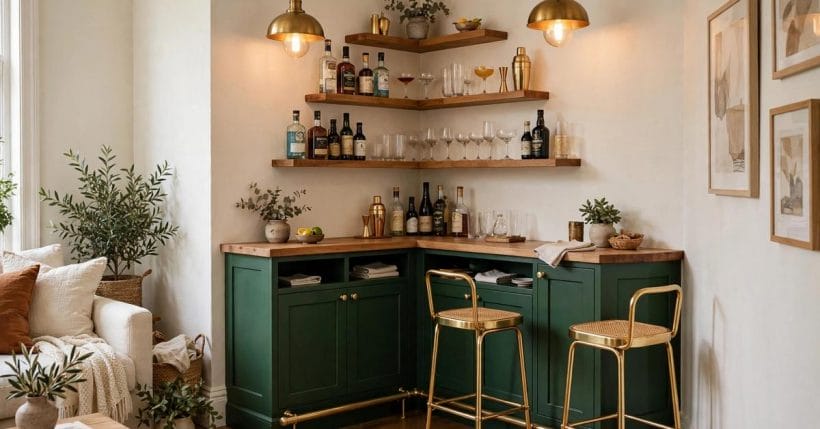
A corner bar is a small idea with an outsized effect: it takes a corner that would otherwise hold nothing much and turns it into a place with purpose. The corner is the point. A bar that fits a corner neatly feels intentional, while one that fights the corner feels like furniture pushed into a gap. This guide is about corner placement only — the layout, storage, seating and styling that make a small corner feel like a real bar, without any drinks or licensing content, which is not what this post is about.
Think of the corner as an asset, not a leftover. Two walls meeting give you shelving on both sides, a counter that wraps, and a natural boundary that keeps the bar contained. Used well, a corner bar adds character to a living room, a basement room or a dining corner without taking over the space.
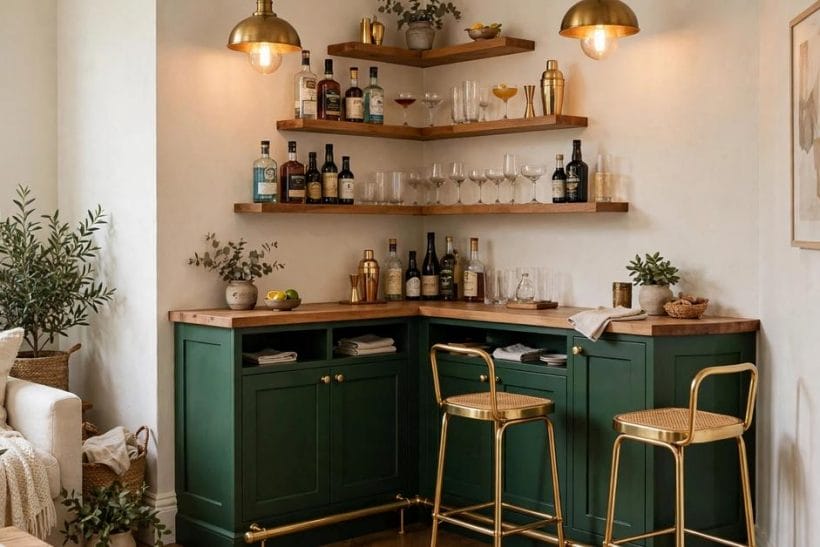
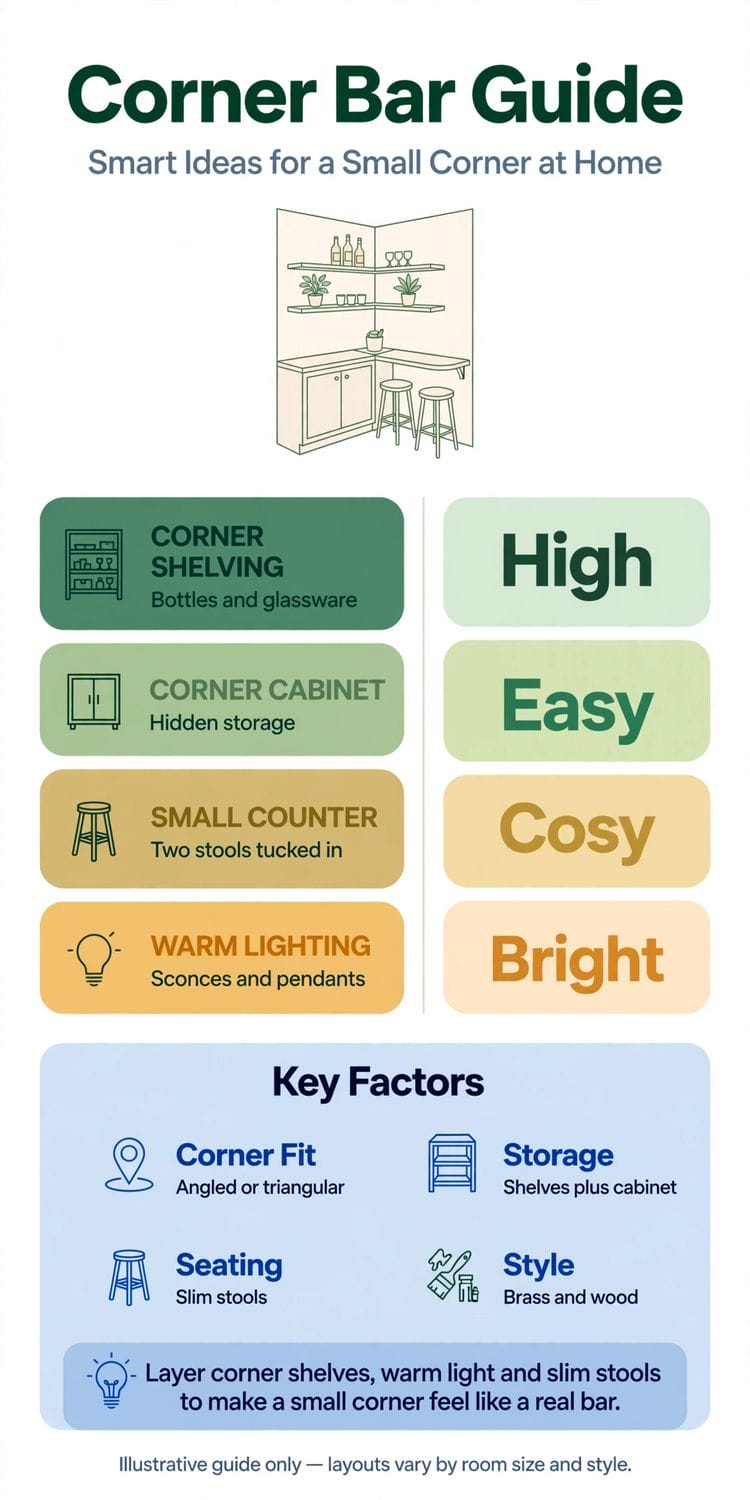
| Item | What it is |
|---|---|
| The Corner Itself Comes First | Measure the corner before you fall in love with any furniture. |
| Shelving That Uses Both Walls | The great advantage of a corner is two walls, and shelving should use both. |
| Cabinets and Hidden Storage | Not everything in a bar should be on display. |
| The Counter: Small, but It Must Work | The counter is the working surface of the bar, and in a corner it is usually small, so every inch counts. |
| Seating That Tucks Away | Seating makes a corner bar a place to sit, not just a place to look at, but in a small corner the seating must tuck away. |
| Lighting That Makes the Corner Glow | Lighting transforms a corner bar more than any other single choice. |
| Style: Brass, Timber and Warmth | Corner bars suit warm materials: timber, brass, leather and glass. |
| Keeping a Small Bar Tidy | Small bars show mess faster than large ones, so tidiness is a design issue, not a housekeeping one. |
| Corners Beyond the Living Room | Corner bars are not only for living rooms. |
1. The Corner Itself Comes First
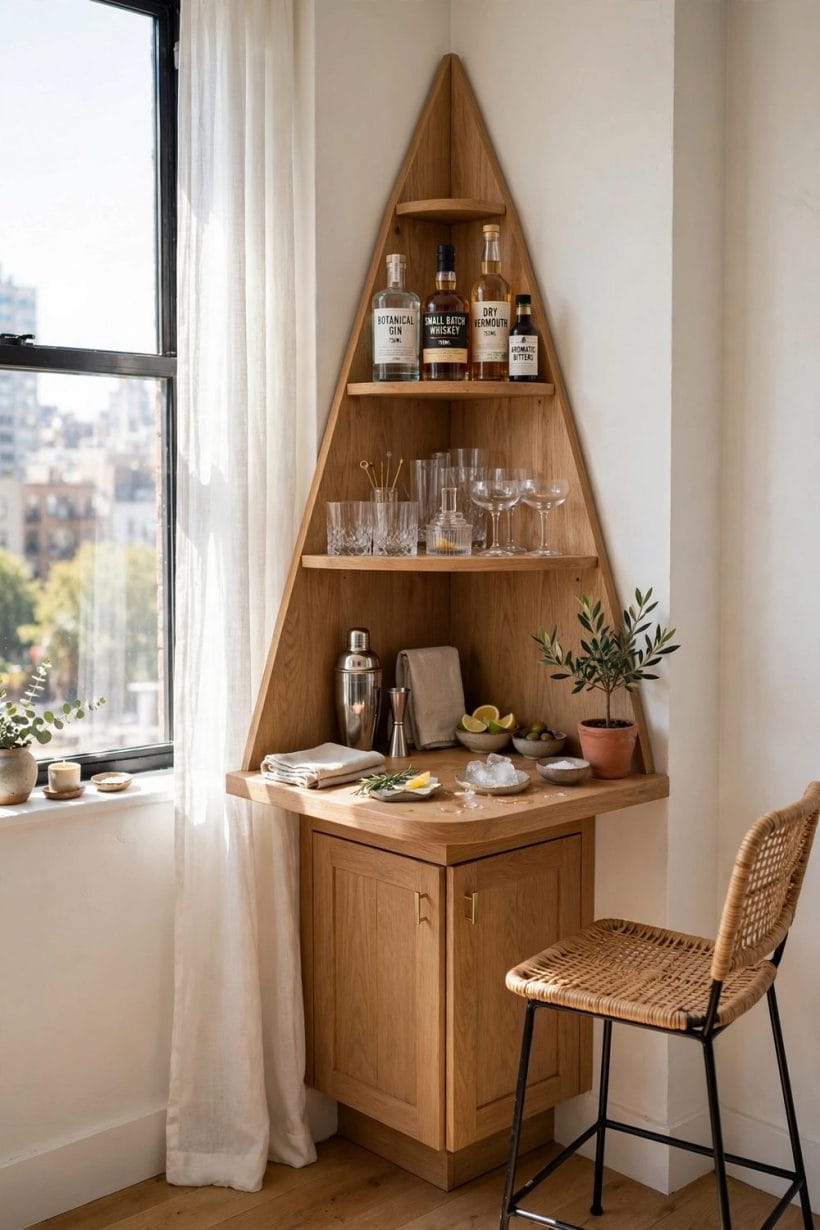
Measure the corner before you fall in love with any furniture. A corner bar lives or dies on fit: the angle of the walls, the skirting, the nearby doorways and the light all shape what works. A corner that looks generous empty can feel tight once a counter, stools and shelving go in, so mark the footprint on the floor with tape and walk around it for a few days. The shape you live with is the shape that works, not the shape that looked good in a photograph.
Also notice what the corner is near. A bar beside a seating area invites conversation; a bar tucked behind a door gets forgotten. Light matters too: a corner with a nearby window feels open and welcoming, while a dark corner needs thoughtful lighting to feel like a destination rather than a cupboard. The best corner bars are placed where people already gather, because a bar is a social piece, and even a small one should sit where life happens. Traffic flow deserves a check too: the corner should be reachable without crossing the main walkway of the room, and stools pulled out should not block a doorway or a fireplace. Tape the stool positions on the floor as well as the counter footprint, and walk the room with the stools “out” in your mind. A corner bar that interrupts the room’s circulation will be resented, while one that sits outside the flow will be enjoyed.
2. Shelving That Uses Both Walls
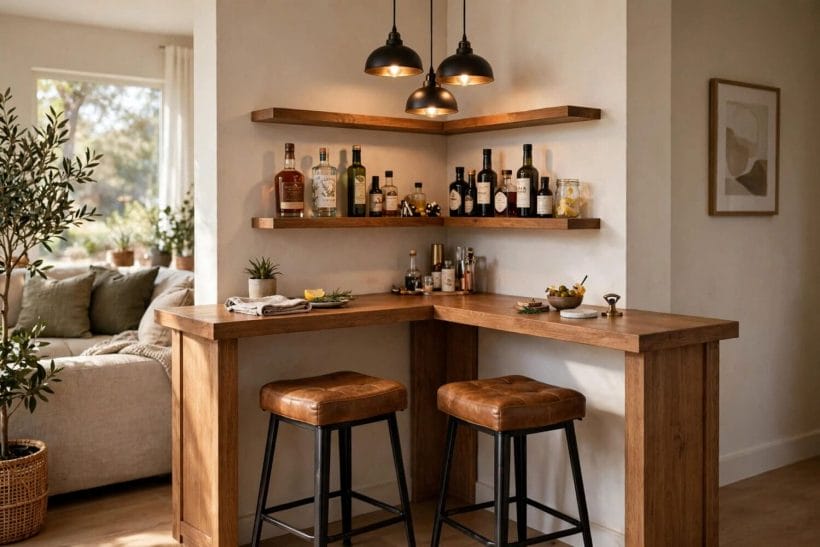
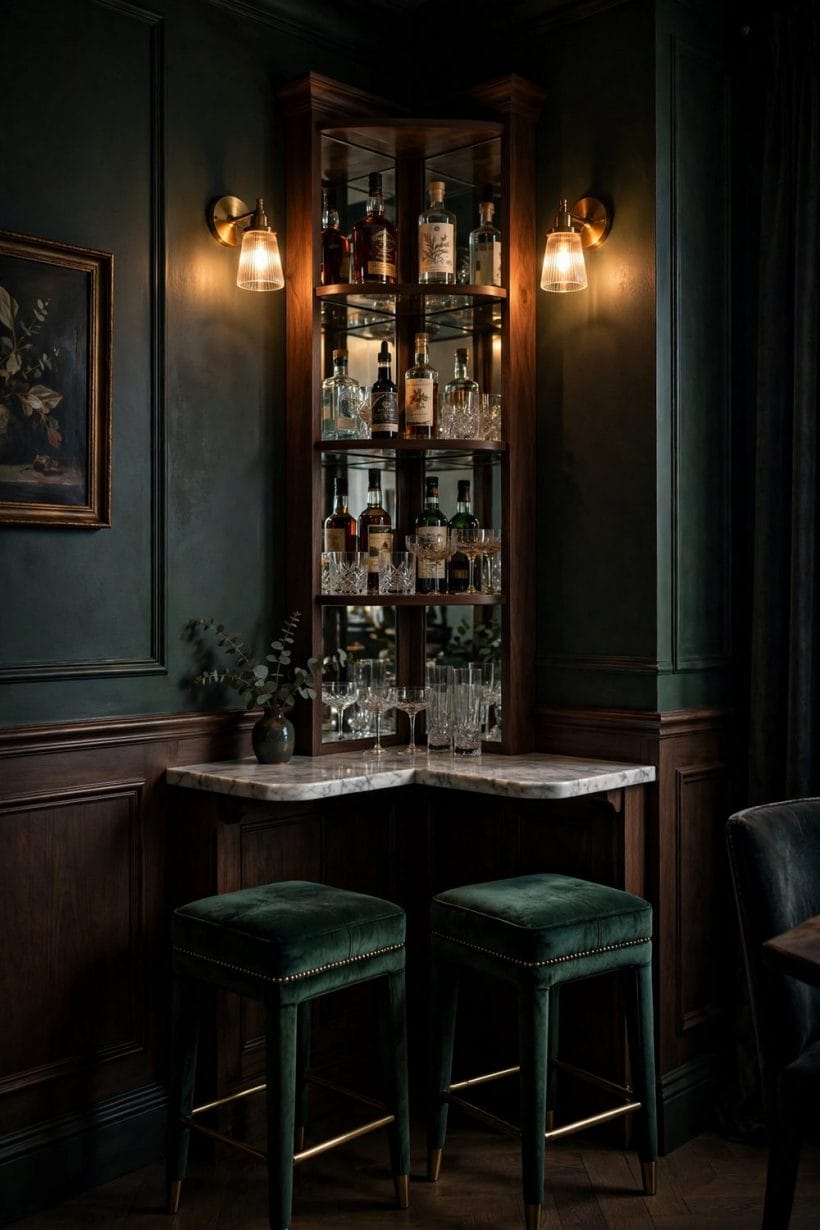
The great advantage of a corner is two walls, and shelving should use both. Shelves that wrap the corner double the display space without taking floor space, and they make the corner feel designed rather than filled. Keep the shelving shallow enough that nothing gets lost at the back, and space the shelves so taller pieces fit without crowding. A shelf that forces you to stack things is a shelf that will look messy within a week.
Style the shelves with restraint. A corner bar looks best when the shelves hold what the bar needs, plus a few decorative pieces that give it character — a plant, a framed print, a piece of glassware with an interesting shape. Resist the urge to fill every inch. Empty space on a shelf is not wasted space; it is what lets the eye rest and the corner breathe. Our bookcase ideas post shows the same discipline applied to shelving generally, and it transfers directly to a bar corner. Grouping helps too: pieces grouped in small clusters read as intentional, while pieces spread evenly across every shelf read as storage. Cluster the display, leave gaps between clusters, and the shelves will look styled rather than stocked.
3. Cabinets and Hidden Storage
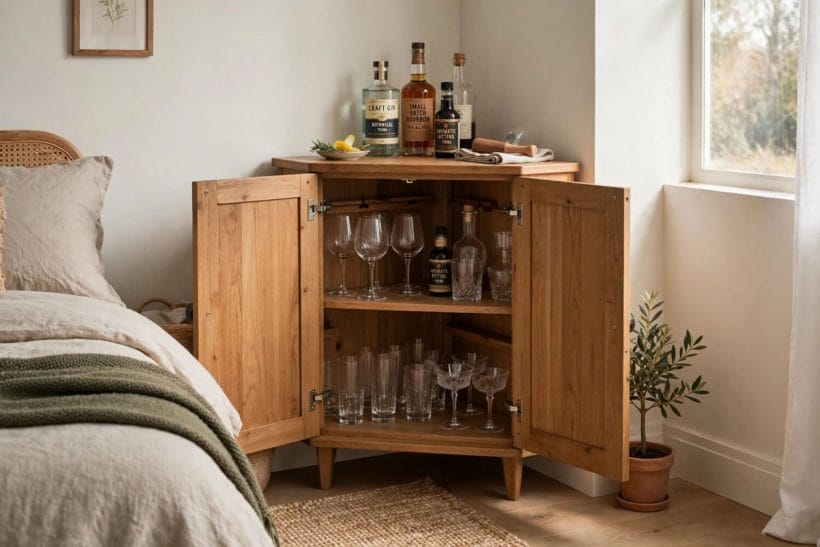
Not everything in a bar should be on display. A corner cabinet — angled, triangular or simply fitted into the corner — hides the practical pieces and keeps the shelves for display. Hidden storage is what separates a bar that looks good in photographs from one that looks good every day, because daily life produces clutter, and clutter needs somewhere to go. Choose a cabinet that opens easily in the corner space, with doors that do not collide with stools or walls.
Think about what actually needs hiding in your bar: spare glassware, trays, linens, and the less photogenic supplies. If the cabinet holds those comfortably, the shelves stay calm. If it does not, the overflow migrates to the counter, and the counter is the worst place for clutter because it is where the bar is used. A cabinet that fits the corner and fits your supplies is worth more than a beautiful cabinet that fits neither.
4. The Counter: Small, but It Must Work
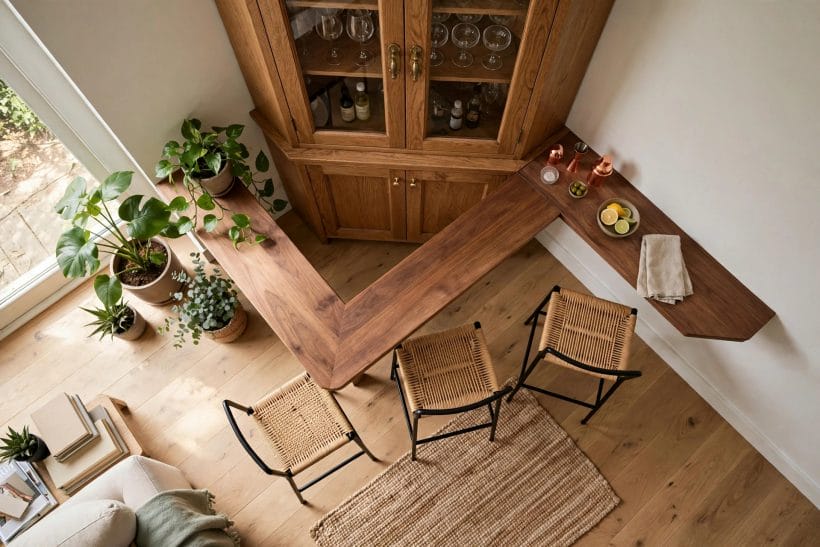
The counter is the working surface of the bar, and in a corner it is usually small, so every inch counts. A counter that wraps the corner gives more usable surface than a straight counter of the same length, because it uses both walls. Check the depth: deep enough to set things down comfortably, shallow enough that you can reach across it without stretching. A counter you cannot reach across is a counter that will frustrate you.
Material matters here, because bar counters take spills and wear. Choose a surface that wipes clean easily and tolerates the occasional ring mark without drama. Timber looks warm and suits most rooms, while stone or a hard composite suits a busier household. Whatever you choose, the counter should feel like part of the room, not a slab dropped into it. The edge profile matters too: a softened edge feels welcoming where a sharp one feels commercial, and in a small corner, that softness counts. Also check the counter height against the stools you plan to use, because a counter that is too high or too low for its stools makes sitting uncomfortable, and an uncomfortable bar is a bar that gets stood at rather than sat at.
5. Seating That Tucks Away
Seating makes a corner bar a place to sit, not just a place to look at, but in a small corner the seating must tuck away. Slim stools that slide fully under the counter keep the corner feeling open when the bar is not in use, and they pull out easily when it is. Backless stools tuck neatest, while stools with low backs offer more comfort for longer sits. Choose based on how long people actually sit at your bar, not on how the stools look in a photograph.
Count the stools honestly. Two stools suit most corners; three can crowd a small one and block the walkway. Measure the legroom as well as the seat room: knees need space under the counter, and feet need somewhere to rest. A footrest on the counter base or a rung on the stool makes a surprising difference to comfort. If the seating is uncomfortable, people will stand, and a bar that nobody sits at is just a shelf with ambition. Height matters as much as number: a stool that is too tall for the counter forces an awkward perch, while one that is too short leaves the sitter reaching up. Test stool and counter together before buying either, because the pair is what matters, not each piece alone.
6. Lighting That Makes the Corner Glow
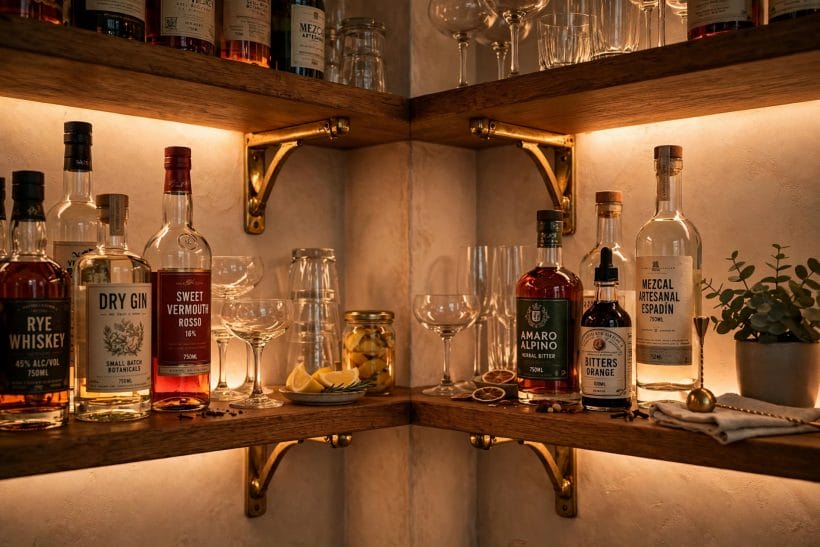
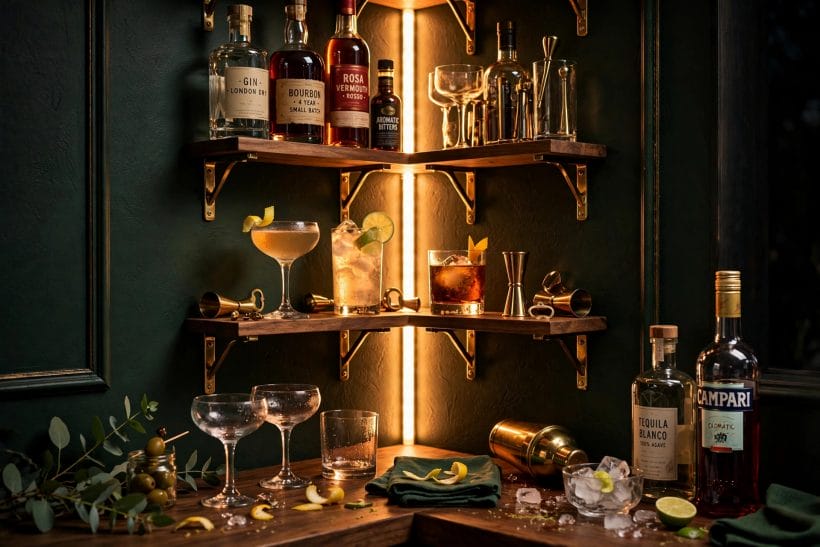
Lighting transforms a corner bar more than any other single choice. A corner is naturally darker than the middle of a room, so it needs its own light: small wall lights, a pendant over the counter, or discreet under-shelf lighting that makes the shelves glow. Warm light suits a bar corner best, because it flatters timber, glass and the room around it, while harsh white light makes the corner feel like a workspace.
Layer the light rather than relying on one source. Under-shelf lighting shows off the shelves, a pendant marks the counter, and a dimmer lets you set the mood. Keep the wiring tidy and the fittings in scale with the corner: oversized pendants overwhelm a small space, while tiny ones disappear. The goal is a corner that glows gently in the evening, inviting rather than demanding attention. Lighting is also where a professional earns their fee if wiring is involved — keep electrical work to qualified people, as with any room. A dimmer is worth particular mention, because a corner bar is used at different times for different moods: brighter light when setting up and tidying, softer light when sitting and talking. A single fixed brightness forces a compromise that suits neither use, while a dimmer lets the same corner serve both. If the wiring allows it, dimming is the cheapest luxury a corner bar can have.
7. Style: Brass, Timber and Warmth
Corner bars suit warm materials: timber, brass, leather and glass. These materials age gracefully, catch light beautifully, and sit comfortably in living rooms of almost any style. A timber counter with brass details and leather stool seats reads as a bar without needing any signage, while cooler materials can make a small corner feel clinical. Let the materials do the talking and keep the styling quiet.
Colour should stay restrained. A deep green, warm navy or rich timber tone on the cabinetry gives the corner presence without shouting, and it pairs well with the brass and glass on the shelves. Avoid turning the corner into a theme: a bar that leans too hard on one look dates quickly and feels like a stage set. The corners that last are the ones that feel like part of the room, with materials and colours borrowed from the furniture around them. Our modern home bar post shows this restraint in a larger bar, and the same principles shrink neatly to a corner.
8. Keeping a Small Bar Tidy
Small bars show mess faster than large ones, so tidiness is a design issue, not a housekeeping one. Give everything a home: glassware on the shelves, supplies in the cabinet, linens in a drawer. If something has no home, it will live on the counter, and a cluttered counter kills a corner bar faster than any styling mistake. Build the storage around what you actually own, not what you imagine owning, and leave a little spare room for the pieces you will acquire.
A regular, tiny routine keeps the corner good: wipe the counter, return pieces to their places, and check the shelves for dust. Five minutes after use beats an hour of rescue later. This is also why the cabinet matters so much — it is where the routine happens. A bar that is easy to tidy gets tidied; a bar that fights you gets left, and a left bar stops being a pleasure. Design for the tidy version of yourself, not the aspirational one. One more habit helps: keep a small tray on the counter for the pieces in current use, so the working surface stays organised even during use. A tray contains the spread, makes clearing a single movement rather than a hunt, and gives the counter a finished look even when the bar is in full swing. It is a small purchase that pays for itself in tidiness every single day.
9. Corners Beyond the Living Room
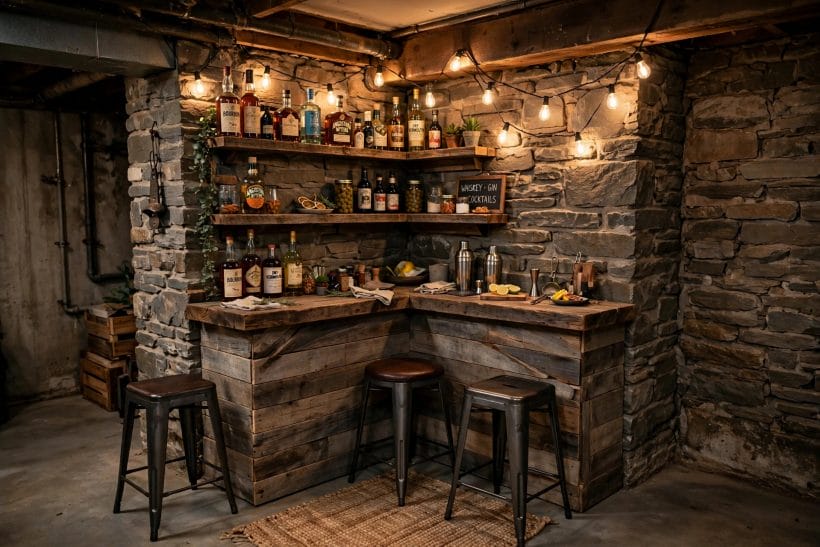
Corner bars are not only for living rooms. A basement room, a dining corner or a garden room can all host one, and each setting shifts the design slightly. In a basement room, lighting matters even more, because there is less natural light to borrow; our basement gym post shows how basement rooms handle light and layout, which applies here too. In a dining corner, the bar should serve the table rather than compete with it, so keep it compact and quiet. In a garden room, the bar can be lighter and more open, borrowing from the garden outside.
The same corner discipline applies everywhere: measure first, use both walls, hide the clutter, seat only as many as fit, and light it warmly. A corner bar that follows those rules feels right in almost any room, because the rules are about the corner, not the room. And if you are planning a garden room to host it, our she shed post shows how a small outbuilding can be styled as a retreat, which is a useful companion read.
10. What Makes a Corner Bar Last
The corner bars that last are the ones that were designed for daily life, not for photographs. They fit their corner without forcing it, they hide what needs hiding, they seat the people who actually sit there, and they glow warmly in the evening. They borrow materials and colours from the room around them, so they feel like part of the house rather than an addition to it. And they stay tidy, because tidiness was designed in from the start.
If you are weighing a corner bar against other ways to use the corner, remember what it offers that a plant or a chair does not: a small, social, purposeful place in a room that already exists. For a broader view of how rooms hold together, our tiny house designs and interior design ideas collections show small spaces used well, which is exactly the discipline a corner bar rewards.
Final Considerations
A corner bar succeeds when the corner feels intentional: measured first, shelved on both walls, stored tidily, seated sensibly and lit warmly. Keep the materials warm, the styling restrained and the routine easy, and a small corner becomes one of the most enjoyed spots in the room — proof that the best use of a corner is rarely to leave it empty.

0 Comments