

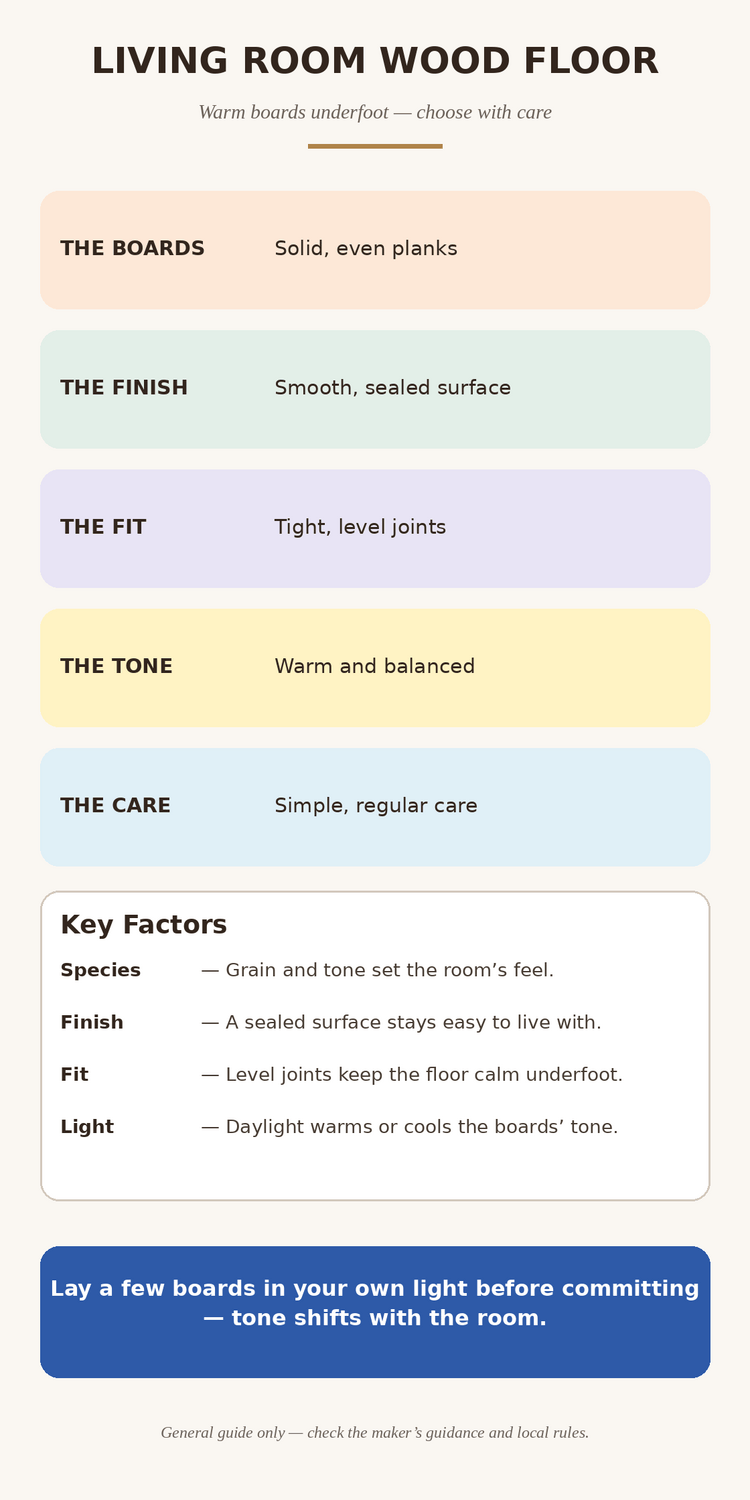
A living room wood floor carries the whole room. It is the surface you walk on, the backdrop for the sofa and rug, and the tone-setter for everything else in the space. Choosing it well means looking past the first impression and checking the boards, the finish, the fit and the colour in your own light, because a floor that looks calm in a showroom can read very differently under your windows at home.
This guide walks through what to check before you commit: the timber itself, the finish that protects it, the way the boards fit together, the tone against your walls and furniture, and the care routine that keeps it looking good. It is about living rooms only, and every check here is something you can do with your eyes, your feet and a few sample boards.
1. Start With the Boards Themselves
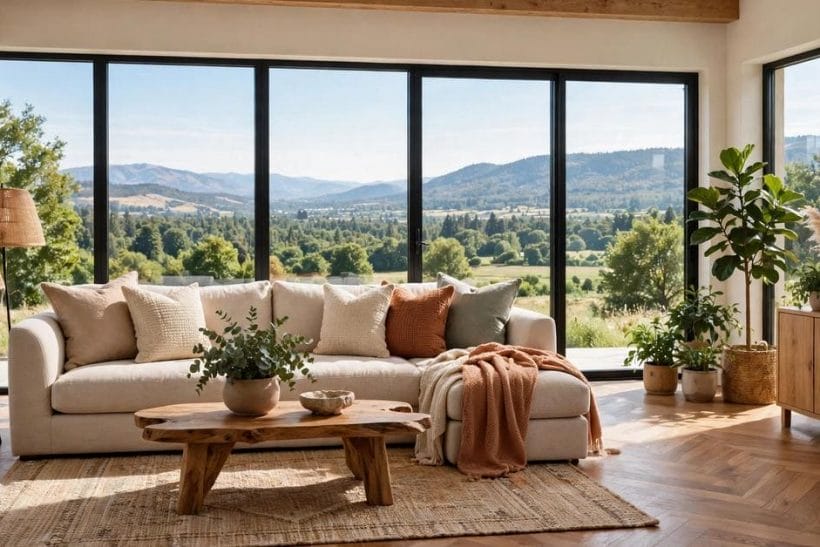
Look at the boards before you look at anything else. A good living room floor starts with boards that feel solid and consistent, with grain that runs in a calm, even direction rather than jumping about from plank to plank. Hold a sample board at arm’s length and then close up: the grain should read as part of the room, not as a distraction. Check the edges too. Clean, straight edges mean the boards will sit neatly together, while rough or chipped edges will show as soon as the floor is laid and the light rakes across it.
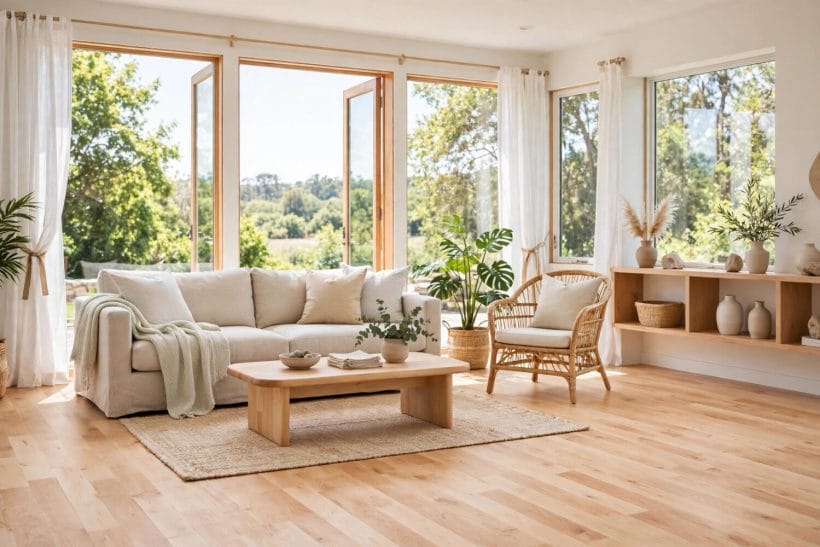
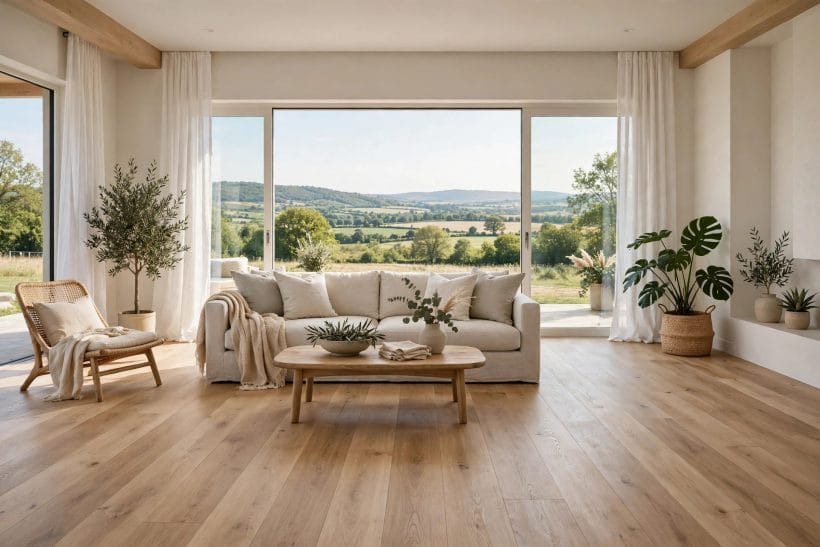
Think about width as well. Wide boards make a room feel open and quiet, because there are fewer joints breaking up the surface. Narrow boards feel busier and more traditional, which suits some rooms perfectly. Neither is better in itself; the question is which rhythm suits your room. Lay several sample boards together on your own floor and step back. The pattern you see there is the pattern you will live with, so trust what your eyes tell you in your own light rather than what a photograph promised.
2. The Finish Decides How the Floor Lives
The finish is the layer between your life and the timber, and it decides how the floor handles feet, spills and sunlight. A smooth, even finish should feel consistent under your hand, with no dull patches or rough spots where the coating has thinned. Run your palm across a sample and look along it in low light: an even sheen means the finish was applied with care, and that care usually carries through to how the floor wears.
Consider how the finish will age in a living room, which is the hardest-working room in most homes. Chairs scrape, shoes track in grit, and sunlight falls on the same boards day after day. A finish that can be cleaned simply and touched up without drama will serve you far better than one that looks flawless on day one but shows every mark by the end of the year. Ask how the finish is maintained, what cleaning it tolerates, and whether worn areas can be refreshed without redoing the whole room. The answers tell you more about the floor than any showroom shine.
3. Fit and Joints Matter More Than You Think
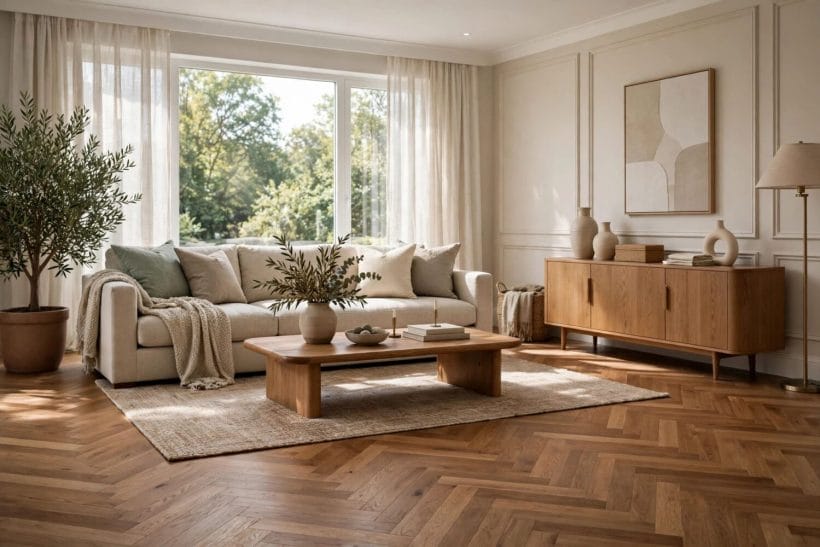
Boards that fit well make a floor feel like one surface rather than a collection of planks. Check that joints close tightly, with no lips where one board sits higher than its neighbour. A lip catches light, catches feet, and catches dirt, and it will annoy you every time you notice it, which will be often. Lay samples together and run a fingertip across the joints: you should feel a smooth, continuous surface, not a series of small steps.
Also check how the boards behave at the edges of the room, where the floor meets skirting, doorways and fireplaces. A floor that fits well in the middle of the room but looks ragged at the edges was not planned properly. Good fitting is quiet work — it shows in the absence of gaps, the neatness of the borders, and the way the floor seems to belong to the room rather than having been dropped into it. If you are hiring the fitting out, ask to see previous work in person; photographs hide exactly the joints you need to inspect.
4. Tone: Warm, Cool or Somewhere Between
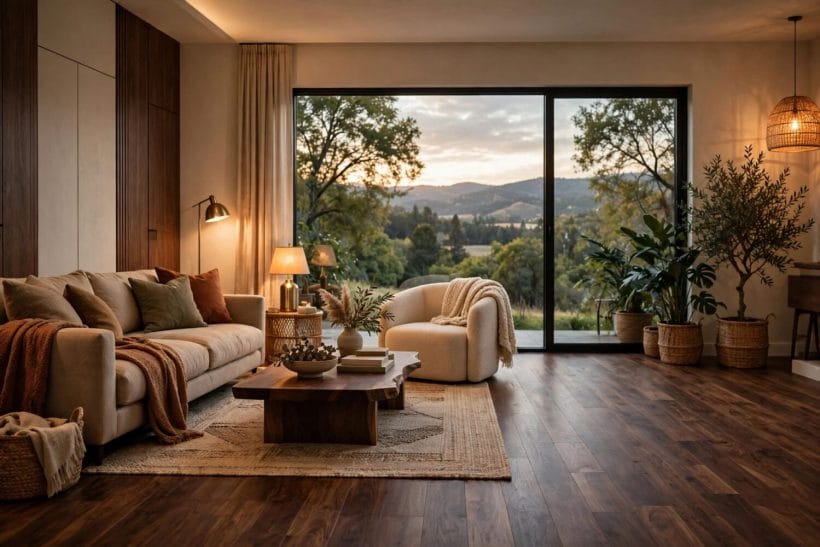
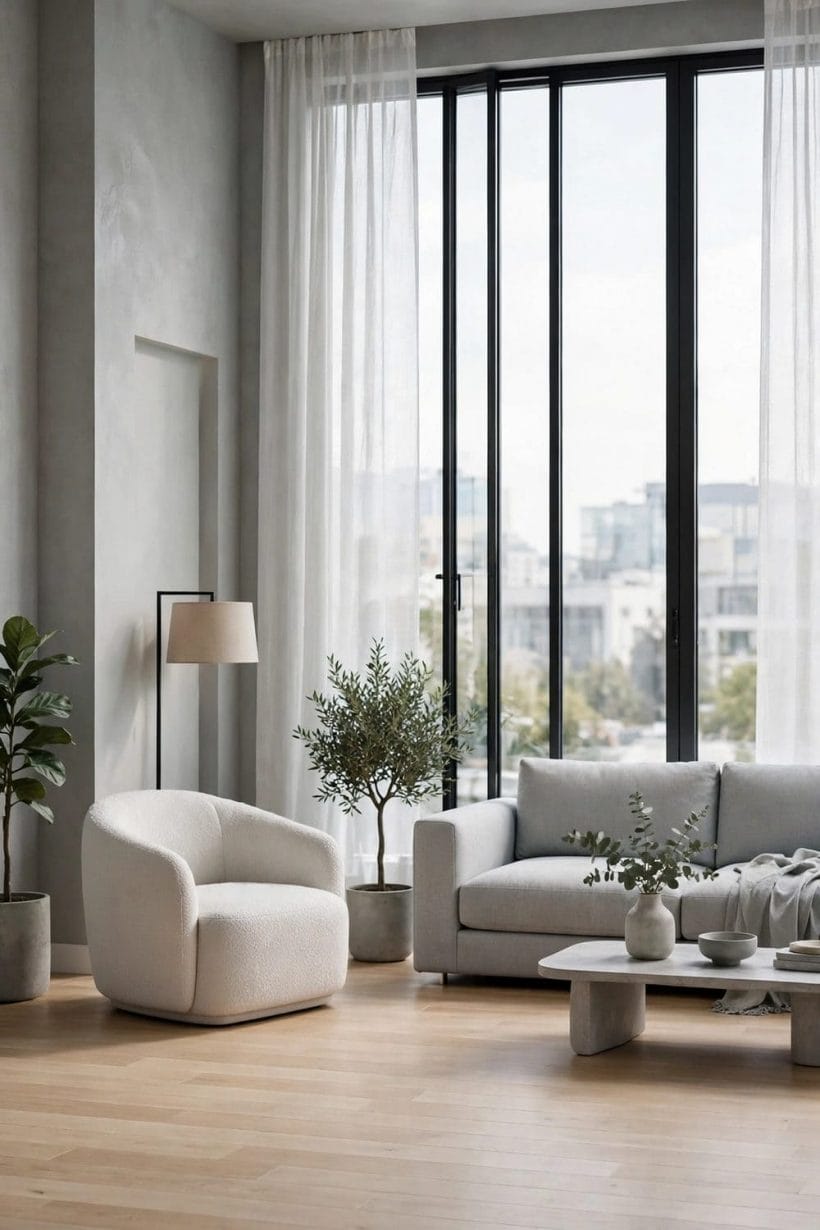
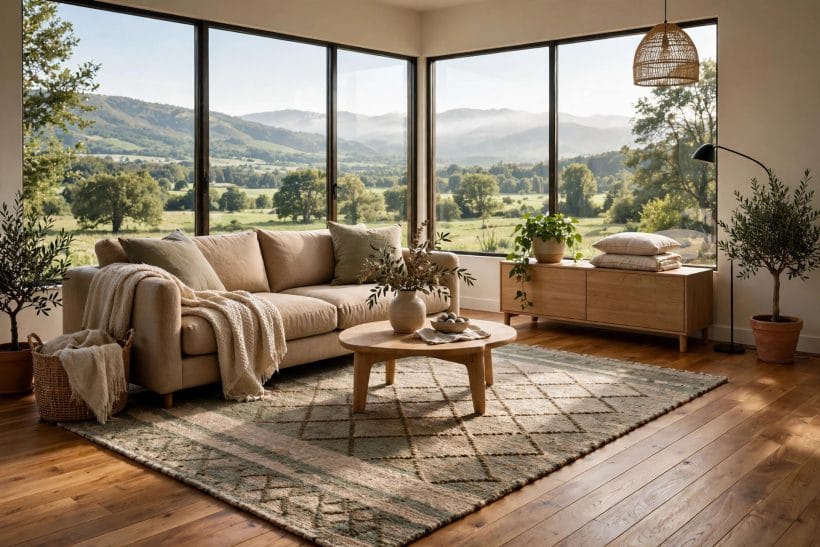
Tone is where most living room floors succeed or fail, because tone is what you actually see all day. Warm tones — honey, amber, mid-brown — make a room feel welcoming and soft, and they pair naturally with timber furniture and warm fabrics. Cool tones — grey-washed, pale, ashen — feel calm and contemporary, and they suit rooms with lots of daylight and pale walls. Neither family is right for every room; the right one is the one that sits comfortably with your sofa, your curtains and your wall colour.
Test tone in your own room, not under shop lights. Borrow samples, lay them where the floor will go, and look at them in the morning, at midday and in the evening. Tone shifts with light more than any other quality of a floor, and a board that looked warm and gentle in the shop can turn orange or grey at home. Live with the samples for a few days if you can. The tone you stop noticing is usually the right one, because a floor should support the room, not demand attention from it. Our hardwood flooring checks guide covers the same ground from the buying side, and it is worth reading alongside this one.
5. Living With the Floor Day to Day
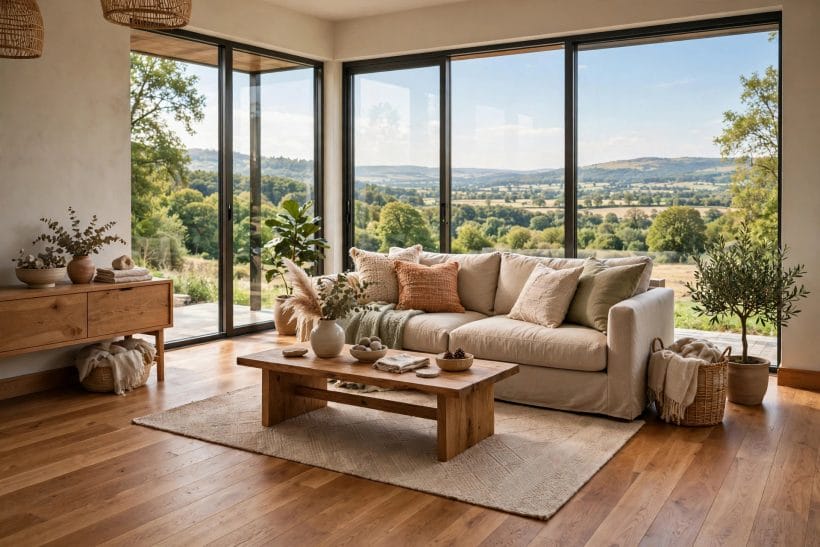
A living room floor has to survive real life: pets, children, guests, moved furniture and the occasional dropped object. Think honestly about how your room is used before you fall for a particular look. A pale, soft timber shows marks sooner than a darker, harder one, and that matters if your living room is also a playroom or the route to the garden. A floor that suits a quiet, shoes-off household may struggle in a busy family room, and no finish rescues a timber that is wrong for the traffic it will carry.
At the same time, do not over-armour the room. A floor chosen purely for toughness can feel cold and uninviting, which defeats the purpose of a living room. The sweet spot is a floor that handles your daily life without fuss and still feels good under bare feet. Rugs help enormously here: they protect the busiest areas, soften the acoustics and let you enjoy a beautiful timber without worrying about every footstep. Plan the rug positions when you plan the floor, not after, so the two work together. A rug also changes how a floor sounds: timber on its own can be lively underfoot, and a rug in the seating area softens footfall and conversation alike. Choose a rug with a backing that suits timber, and avoid rubber-backed rugs that can trap moisture against the finish. Lift the rug occasionally to clean beneath it, because grit collects there unseen, and a few minutes of care under the rug protects the boards that the rug itself is meant to protect.
6. Rugs, Furniture and the Floor Together
A wood floor never sits alone. The rug, the sofa, the coffee table and the curtains all sit on or against it, and the floor has to hold its own without fighting them. A good test is to place your rug on the samples: does the floor still read clearly around it, or does the rug swallow the timber entirely? A floor with a strong grain can handle a plain rug, while a quiet floor can carry a patterned one. The pairing matters more than either piece alone.
Furniture legs deserve a thought too. Heavy pieces concentrate weight on small points, and chairs get dragged. Felt pads under legs are a small expense that prevents a large amount of wear, and they should go on before the furniture does, not after the first scratches appear. If you rearrange often, a floor with a forgiving finish will forgive you; a delicate one will keep a record of every layout you tried. Our craftsman living room ideas show how timber floors sit with timber furniture, which is a useful pairing to study.
7. Light Changes Everything
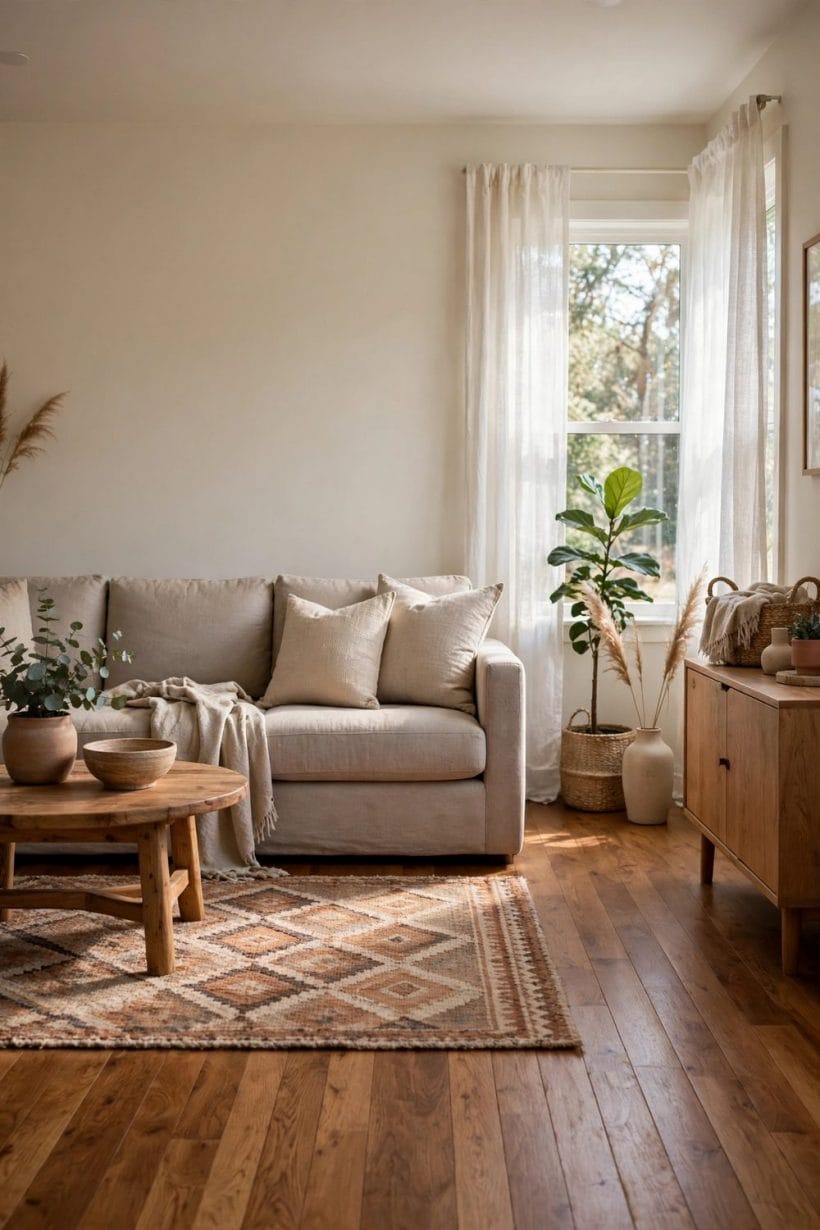
Light is the single biggest influence on how a wood floor looks, and living rooms get the most varied light in the house. A south-facing room floods the floor with warm light for much of the day, which deepens warm tones and can wash out pale ones. A north-facing room gets cooler, softer light, which flatters grey and pale timbers but can make warm boards look dull. Windows, curtains and even the colour of the walls bounce light onto the floor and shift its apparent tone.
Walk your samples around the room. Place them near the window, in the middle of the floor and in the darkest corner, and look at each position at different times of day. The floor you choose has to work in all three places, not just the sunniest one. If one sample looks good everywhere, that is a strong sign. If every sample looks wrong somewhere, the answer may be a rug in the difficult spot rather than a different floor. Light is not a problem to solve; it is a condition to design with, and the best floors are chosen with it, not against it. Curtains and blinds shape the light as much as the windows do: sheer curtains soften direct sun and even out the tone across the floor, while heavy drapes leave pools of shadow that make one part of the floor look darker than another. If you change window treatments seasonally, check the floor under both arrangements, because a floor chosen under sheers can look different under lined curtains, and the difference is worth knowing before you commit.
8. When Wood Is Not the Answer
Sometimes the honest answer is that solid wood is not the best floor for a particular living room. Rooms with frequent damp, heavy pet traffic or constant grit from a garden door can punish a timber floor faster than any care routine can rescue it. In those rooms, an alternative that looks like wood may serve the household better, and there is no shame in choosing practicality over purity. A floor that looks good for years beats a floor that looked perfect for a month.
This is where the wider flooring family earns its place. Our vinyl plank flooring checks guide walks through a wood-look alternative in the same careful terms, and our luxury vinyl plank problems guide covers what to watch for with that material. Comparing honestly, with your own room’s traffic and moisture in mind, is better than choosing on looks alone. The goal is a living room floor you enjoy living on, whatever it is made of.
9. Care That Keeps It Looking Good
Wood floors reward simple, regular care and punish neglect. Dust and grit are the main enemies: they act like sandpaper under shoes, dulling the finish a little with every step. A soft brush or a vacuum with a hard-floor setting, used often, does more good than any polish. Spills should be wiped promptly, not because the floor is fragile, but because standing liquid finds joints and edges sooner or later. Keep the routine boring and regular, and the floor will stay good-looking for years.
What you should not do matters as much as what you should. Avoid soaking the floor, avoid harsh cleaners, and avoid steam on a timber surface unless the maker explicitly allows it. Check the maker’s care guidance for your specific floor and follow it rather than general advice from the internet, because finishes differ and the wrong product can dull or cloud a finish that was fine before. A floor cared for simply and consistently ages gracefully; one that is scrubbed aggressively in bursts does not. Seasonal changes deserve a mention too: timber responds to humidity, expanding slightly in damp weather and contracting when the air dries, and small seasonal gaps are normal rather than a defect. Keep the room’s humidity reasonably steady, avoid soaking the floor in any season, and judge the floor across a full year rather than a single week. A floor that looks good in every season is a floor that was chosen and cared for well.
10. Choosing With Confidence
By now you have a shortlist, and the final step is to choose with confidence rather than second-guess forever. Lay your final samples in the room, live with them for a weekend, and notice which one you keep glancing at with pleasure and which one you keep finding fault with. The floor you enjoy looking at in your own light, at your own times of day, is the right floor for your room, whatever anyone else would pick.
Remember that a living room floor is a long-term companion. Trends change, but a well-chosen timber floor outlasts them, and it can be refreshed, re-oiled or refinished as the years pass. Choose for your room, your light and your life, not for a photograph. If you want a broader view of how living rooms come together, our tiny house designs and interior design ideas collections show timber floors in rooms of every size, which is a useful reminder that the principles here scale from the smallest cottage to the largest house.
Final Considerations
A living room wood floor earns its place by being beautiful, practical and honest about the room it serves. Check the boards, the finish, the fit and the tone in your own light; plan the rugs and furniture alongside the floor; and keep the care routine simple and regular. Do that, and the floor will do what a good floor should do: hold the room together quietly, year after year, while life happens on top of it.

0 Comments