

Livestock punish a bad layout every single day: in mud at the gate, in a long carry for water, in animals that will not move the way you need them to. Pens, paddocks and lanes are the system that decides whether daily chores feel calm and quick, or chaotic in all weathers.
This livestock farm layout plans that system step by step: pens by the barn, paddocks in rotation blocks, water at central points, and lanes linking everything, so animals, feed and people all move in the same easy loops.
1. The Livestock Layout at a Glance
Begin with the whole animal ground on one page, because every decision in a livestock layout touches every other one. Where the pens sit decides how far feed is carried, where the paddocks sit decides how animals are moved, where water is piped decides which ground can be grazed in a dry spell, and the lanes decide whether all of it happens calmly. The summary below, taken from the layout’s own plan, fixes those relationships before a single fence post goes in.
| Pens | Near the barn, for daily chores |
| Paddocks | Rotation blocks, to rest the grass |
| Water | Every paddock, from central points |
| Lanes | Link everything, to move animals calmly |
| Key factors | Rotation, water, lanes and shelter |
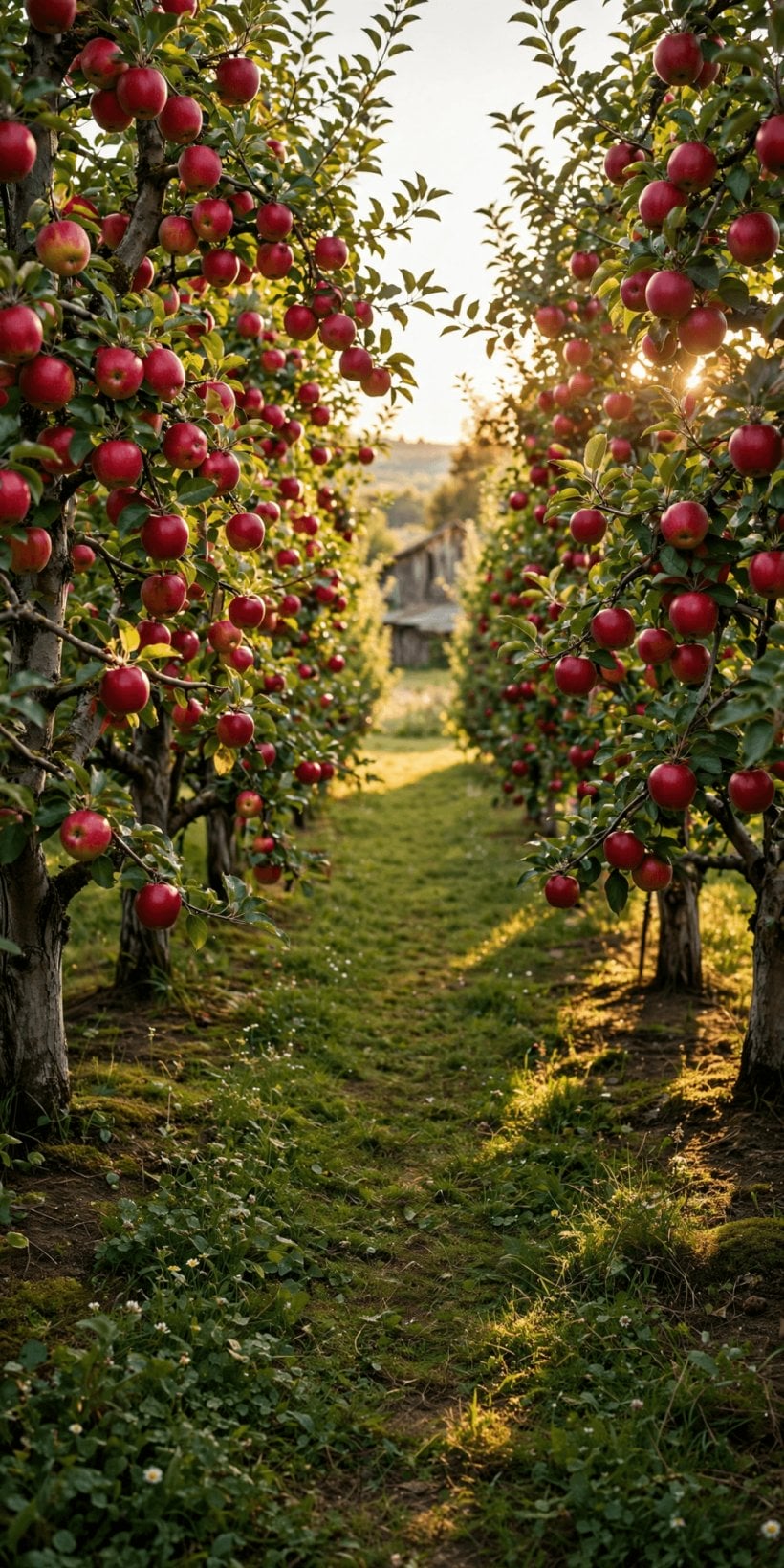
The homestead livestock layout at a glance: pens near the barn for daily chores, paddocks in rotation blocks that rest the grass, water in every paddock from central points and lanes linking everything.
Read the four working rows as promises the layout has to keep. If pens are truly near the barn, feed, bedding and tools move a few steps instead of across the holding, twice a day, every day. If paddocks are truly rotation blocks, grass rests and regrows instead of being grazed into mud. If water truly reaches every paddock, no block is unusable in a dry spell. And if lanes truly link everything, animals move from any field to the handling pen without crossing gardens, yards or open gates to the road.
The tip printed on the summary is the whole philosophy in one line: design the lanes first, because calm animal movement is designed, not improvised. Keepers usually draw fields and fences and leave movement to chance, then spend years shouting at gates. A layout that starts with the routes animals actually walk, from pasture to pen to loading, builds calm into the ground itself, and every later decision hangs off those routes.
2. Start With the Barn and Pens
Every livestock layout has a hub, and it is the barn. The pens that animals use daily, for feeding, milking, lambing, kidding, farrowing or simply overnighting, belong right against it, where feed is stored, water and power already run, and the keeper’s rounds begin and end. A sick animal, a newborn or a beast being watched closely should be reachable in the dark, in the rain, in a few steps from the barn door.
Arrange the pens as a small, flexible yard rather than fixed single-purpose boxes. Gates that open between pens let one yard become a nursery pen this season, a weaning pen next, and a holding pen on handling day, without rebuilding anything. Hard standing at the barn end keeps the busiest ground passable in winter, and a slight fall sheds water away from bedding instead of into it. On a wider holding this hub sits inside the home zones of the eight acre homestead layout, close to the house for the same reason the house is close to the barn: animals are checked more often when checking is easy.
Keep the young, the old and the vulnerable in the pens nearest the barn, and the strong, settled groups further out. Daily feeding order then follows the layout naturally, water points in the yard are shared and simple, and nothing that needs watching is ever at the far end of the farm. The hub is small on the plan, but it is where most keeper hours are spent, so it earns the most careful drawing of any part of the layout.
3. Design the Lanes First
Lanes are the layout’s quiet masterpiece. A lane is a fenced route, wide enough for a group to flow without turning back, that connects the barn and pens to every paddock, the handling area and the loading gate. Animals learn lanes quickly and walk them calmly, because the route is always the same, the footing is kept decent, and there is nowhere along the way to get lost, stuck or separated.
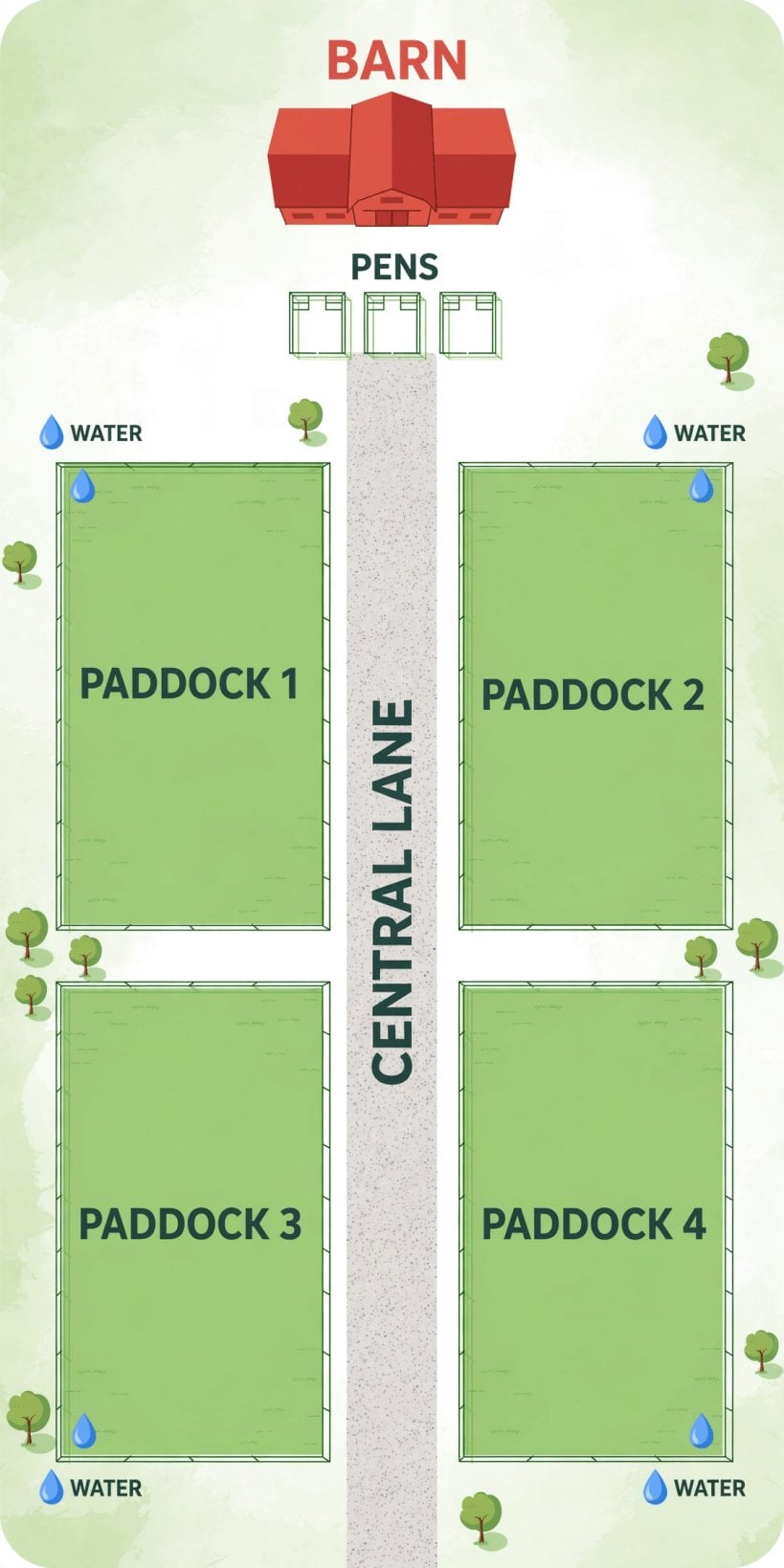
The labelled livestock diagram: barn and pens at the hub, paddocks in rotation blocks around it, water points shared on the fence lines and lanes linking every gate.
Draw the lanes before the paddock fences, and make them earn their ground twice. A lane along a boundary doubles as an access track for fencing materials, feed deliveries and the manure run; a lane between two blocks of paddocks serves fields on both sides. The same routes also serve the rest of the holding when they are planned together, which is why the lane network here is drawn alongside the access in the orchard layout plans: one set of dry, fenced routes for animals, barrows and harvest alike, instead of three networks fighting over the same corners.
Mind the details that make lanes work. Gates belong where animals naturally flow, at the ends of runs and on corners they can see into, not halfway down a fence where a group bunches and argues. Keep lane surfaces drained and, on the busiest stretches, surfaced, because a lane that becomes a bog becomes the place animals refuse in exactly the weather when moving them matters most. A good lane is boring: animals walk in, walk along, walk out, and nothing exciting ever happens there.
4. Divide the Grazing Into Rotation Blocks
Grass is a crop that animals harvest themselves, and like any crop it fails when it is never rested. Dividing the grazing into blocks, and moving the animals between them, lets each paddock be grazed, then rested while the sward regrows, roots rebuild and worm burdens left behind in the dung fade before animals return. A single open field gives the opposite: the best grass grazed to the roots daily, the rough corners never touched, and parasites recycling through the herd or flock all season.
Block size follows the animals and the grass, kept general on purpose: smaller blocks for smaller groups and faster moves, larger ground for larger herds on slower rounds. What matters on the plan is not a magic number but the pattern, a set of blocks that can be grazed in sequence, each with its own gate onto the lane, its own water, and fences that make the next move a few minutes of opening and closing gates rather than an expedition with hurdles and string.
Build flexibility into the blocks. Internal divisions that can be opened up let two rested paddocks become one large field for a bigger group or for a hay cut in a growing year, and closed down again when rotation tightens. Keep one block in reserve near the pens, the sick bay meadow and overflow that every keeper ends up grateful for, and mark the rotation order on the plan itself. Rotation that lives only in the keeper’s head stops the first week anything else goes wrong on the holding.
5. Put Water in Every Paddock
Water decides which ground is truly usable. Animals drink far more than new keepers expect, they drink every day in all weathers, and they will not graze far or contentedly from a supply they trust. A paddock without water is a paddock borrowed against carrying, and carrying water is the chore that breaks backs and routines alike. The layout therefore treats water as a fence-line utility, planned with the fields, not fetched after them.
Run the supply from a central source along the lanes and fence lines, with trough points shared between neighbouring paddocks wherever the geometry allows, so one point serves two blocks from opposite sides of the fence. Central points shorten the pipe runs, make leaks easy to find by walking one route, and keep troughs where they can be checked on the daily round without entering every field. The holding’s water is one system from source to trough, planned alongside the supply for the trees in the orchard and drawn once, properly, rather than extended in panic each time a new block is fenced.
Plan for the hard days as well as the easy ones. Pipes buried or routed where frost reaches least, troughs that can be drained and cleaned without a wrestling match, and a reserve point near the pens for the week the main supply fails: these are layout decisions, made on paper, that decide whether a breakdown is an errand or an emergency. Animals forgive a late feed far sooner than an empty trough, and the layout that remembers that is the one that keeps stock calmest.
6. Fences and Gates That Work With Animals
Fencing is the layout made physical, and it works best when it follows how animals actually behave. Stock push on corners, rub on weak points, test a new fence the day it goes up and remember a gap for seasons. Perimeter fences earn the strongest build, internal fences divide friends rather than defy strangers, and every fence line should be walkable for inspection, because the time to find the sagging stretch is the weekly round, not the morning the field is empty.
Gates deserve their own drawing. A gate belongs where it will be used: opening with the flow of the lane, wide enough for the largest thing that must pass, hung to swing clear of mud and stock, and latched with one hand while the other holds a bucket or a lead. Gates in the middle of long fences, gates that open against a moving group, and gates that must be lifted out of their own mud are daily irritations the plan can delete for free. Put people-gates beside the busiest animal gates too, so the keeper is never climbing wire with full hands.
Choose the fencing by the stock it must hold and the ground it crosses, and keep the system repairable with the tools and spares the holding actually keeps. A fence the keeper can fix the same day stays a fence; an exotic system waiting on parts becomes a suggestion. Walk every line before animals arrive in a new block, and let the layout’s inspection round, pens to lanes to far paddock and back, become a habit the fences can rely on.
7. Shelter, Shade and Dry Lying
Shelter is the fourth key factor on the plan, and it is needed in both directions: shade in the heat, and a dry, wind-free lie in the wet. Animals perform, grow and settle on ground where they can get out of the weather, and a block with no shelter is a block that can only be used in kind seasons. Natural shelter, a mature hedge, a bank or a belt of trees on the weather side, is the cheapest and often the best, provided it does not come with roots in the water pipe’s route or branches over the fence.
Built shelter belongs where animals already gather, near water and the lane end of the resting blocks, on the driest ground the block offers, with its back to the prevailing weather and its open side to the sun and the view of the field. Field shelters shared between two paddocks from the fence line halve the building for the same cover. In the pens and yard, the roofed lying area is part of the hub itself, bedded and drained, sized by the group that winters there rather than the group that happens to be there in a mild autumn.
Poultry need the same thinking at their own scale: a dry, draught-free house, shade over the run and ground that is rested by moving the birds on, which is where this layout meets the poultry ground covered in how to raise chickens and the housing choices in the turkey coop ideas. Shelter planned per species, but placed by one layout, stops the common sprawl of small houses dotted wherever they first landed, each with its own mud and its own long carry.
8. Handling, Loading and Quarantine Space
Every layout needs one place where animals can be caught, held, treated, sorted and loaded, and it belongs at the hub where the lanes meet, not improvised in a field corner on the day. A small handling pen with a funnel from the lane, a race or a simple secure corner where an animal can be examined without a chase, and gates that let sorted animals leave in two directions turns the stressful jobs, dosing, foot care, vet visits, weaning and loading, into routine work.
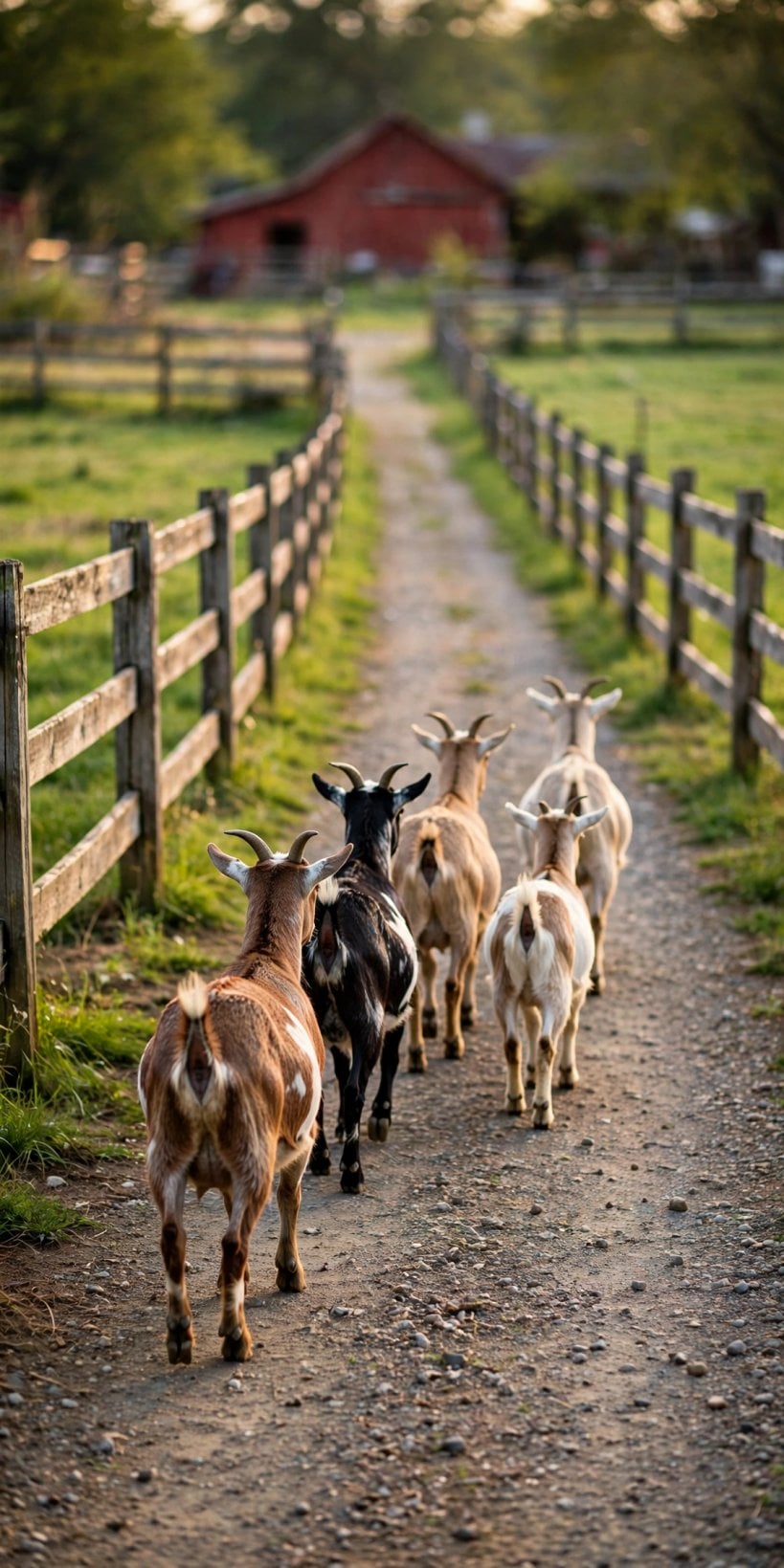
The livestock layout in daily use: pens and handling space at the hub, calm lanes out to the blocks, and water and shelter in every part of the rotation.
Loading is designed, not wrestled. The vehicle waits outside the animal ground on hard standing, animals flow from lane to pen to ramp without crossing their own route back, and no group ever has to be pushed past the open gate it came through. Quarantine space follows the same logic at a distance: a pen and, ideally, a small paddock apart from the main rotation, with its own water, where new arrivals and sick animals live until they are cleared to join the herd or flock. Mixing species and newcomers raises the questions worked through in can turkeys live with chickens, and the layout’s job is to make the cautious answer physically easy.
Keep this corner of the plan permanently set up. Handling gear that must be built from hurdles each time will be skipped on busy days, and the skipped handling is always the one that mattered. A standing handling pen, like a standing lane, makes the right thing the easy thing, which is the whole secret of a livestock layout that works for years.
9. Feed Storage, Manure and the Working Yard
Feed flows one way and manure flows the other, and the working yard is where those flows are organised. Feed storage belongs at the hub, dry, vermin-resistant and reachable by a delivery vehicle without crossing the animal ground, with the daily route from store to pens as short as the whole layout can make it. Hay and straw overhead or alongside the pens, concentrates under lock near the mixing corner, and minerals and gear where the keeper’s hand falls on them without thinking.
Manure is a resource with a route. Pens and shelters are cleaned onto a hard standing muck area, sited so its drainage never reaches water points or lanes, reachable for emptying, and close enough that the daily barrow run is short. From there the route out to gardens and fields should be the same dry track the feed came in on, and it is worth drawing that loop explicitly: the market garden layout at the other end of the loop is the muck’s best destination, and the shared track serves both enterprises in both directions.
The yard itself wants order more than size. A place for the trailer, the fencing kit, the hurdles, the foot-trimming gear and the medicines, each in its own home, with water and power at the working corner and light over the pens for winter evenings. Yards grow by accretion on most holdings; a yard drawn once, with the flows in straight lines and the clutter given homes, stays workable when the enterprise grows into it.
10. Rotation in Practice: Moving, Resting and Records
A rotation exists only if moving day is easy. The layout’s part is done when a move means opening the lane gates, calling or quietly walking the group through, closing the rested block and noting it, all inside the ordinary morning round. Keep moves on a rhythm the grass sets rather than the calendar: animals leave a block when it is grazed down, not when a fixed number of days expires, and they return when the sward has genuinely regrown, which the keeper judges by eye on the daily round the layout makes so simple.
Rest is the active ingredient, so protect it in the plan’s habits. A rested block stays empty even when it looks inviting, parasite larvae and worn sward recover only in an animal’s absence, and the reserve block near the pens stays in reserve for the sick, the newly arrived and the group that must come in when a fence fails. The poultry side of the rotation follows the same discipline, with houses and runs rested between flocks as the chicken coop plans allow, so disease and worn ground are not handed from one batch of birds to the next.
Finally, keep the simple records this livestock farm layout makes possible: which block was grazed when, which group went where, where the lame ewe was treated, which fence line sagged. A notebook at the barn beats a memory by the second season, and the plan on the wall, marked up as blocks change, becomes the holding’s truest document: the layout still learning, one season at a time.
Final Considerations
A livestock layout succeeds when the animals are calm, the grass is rested, the water is everywhere it should be and the keeper’s daily round is short. Lanes first, pens by the barn, blocks in rotation, shelter in every season: draw those four honestly and the rest is fencing. The stock will judge the plan every day, in the only review that matters, and a layout that passes it makes keeping animals feel less like wrestling the farm and more like conducting it.


0 Comments