

Goats are hardy, funny and famously hard to impress — but the right goat shelter ideas make keeping them simple: dry, draft-free rest, deep bedding and fencing that respects their talent for escape.
This guide covers shelter types, sizing, bedding and fencing basics, so a first goat shelter goes up once and works in every season.
1. Goat Shelter Ideas at a Glance
Goats ask surprisingly little of a shelter. They need to be dry, out of the wind, and able to lie down on a warm floor, with room to escape each other’s moods. They do not need a heated palace — in fact a simple three-sided shelter, open to the south or away from the prevailing weather, suits most small herds better than a sealed barn, because fresh air moves through it and damp never builds up. Add deep straw bedding, fencing a goat respects, and a hay rack that keeps feed off the floor, and the basics are complete. The table below is the whole build in miniature; each section that follows turns one row into practical decisions about siting, size, materials and routine.
| Element | What Works | Why It Matters |
|---|---|---|
| Shelter | Three-sided works well | Dry and draft-free rest |
| Bedding | Deep straw | A warm, dry floor |
| Fencing | Goat-tight mesh | No escapes |
| Extras | Hay rack and minerals | Feed kept off the ground |
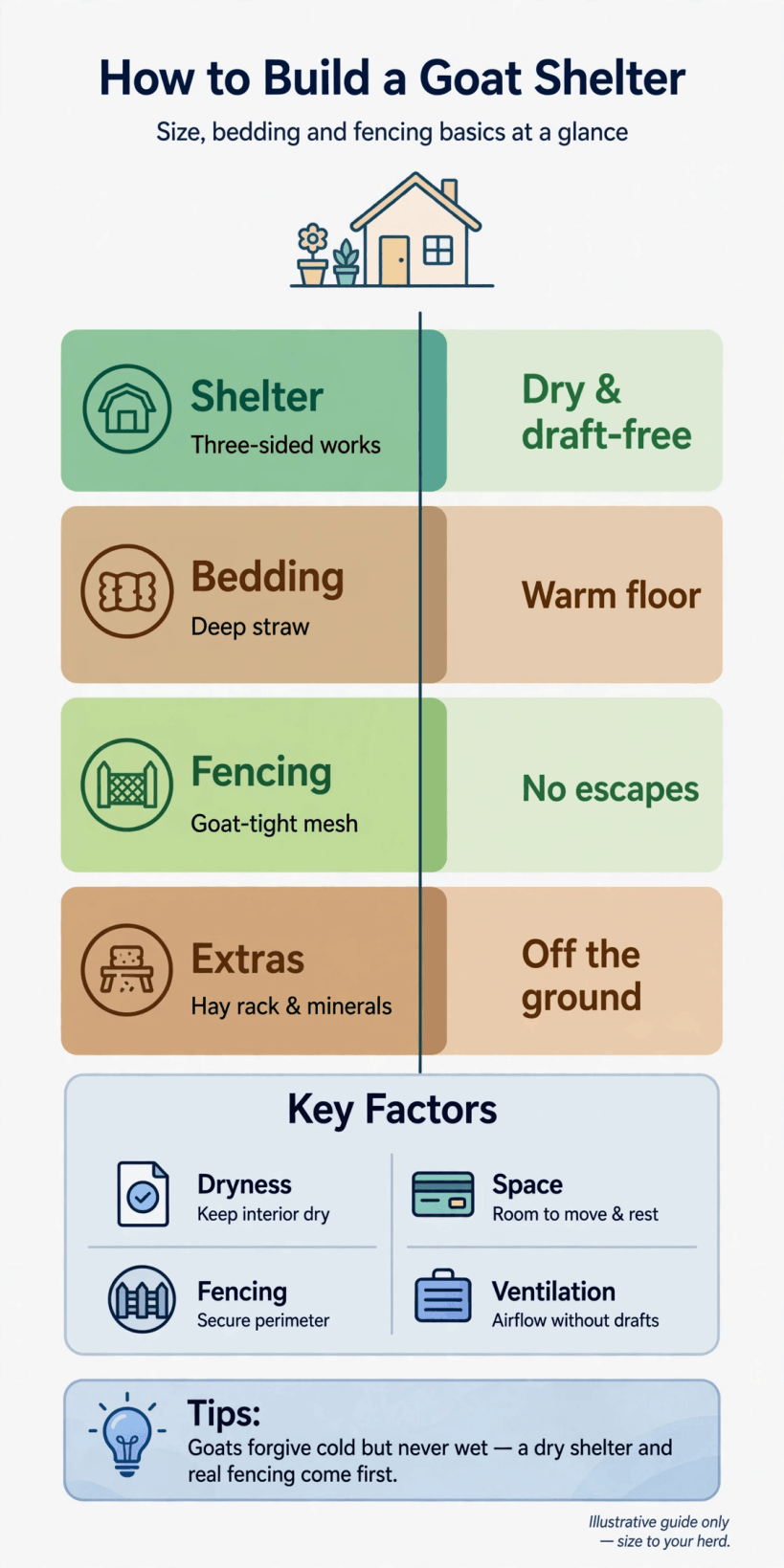
The goat shelter basics in one picture: a three-sided, draft-free shelter, deep straw, goat-tight fencing and feed kept off the ground.
2. Choosing the Shelter Type and Site
Start with the site, because no building fixes a bad one. Goats hate wet ground, so the shelter belongs on the highest, driest spot in their area, on ground that sheds water rather than holds it. Face the open side away from the prevailing wind and rain — in most places that means opening to the south or east — and keep the shelter close enough to your daily route that winter checks stay easy. The planning logic in this homestead livestock layout guide applies perfectly: housing, yard and storage placed together shorten every chore you will ever do there.
As for type, the three-sided field shelter is the smallholder’s favourite for good reason: cheap to build, easy to clean, naturally ventilated, and simple to move or extend. A converted stable, barn bay or large shed works just as well, provided it can be shut against the worst weather and opened up in summer. Whatever you choose, build the doorway wide — goats enter in a cheerful rush, often two at a time — and high enough that a horned head passes without catching.
Think about what happens around the shelter too. A small hard-standing apron at the entrance saves the doorway turning to soup, and siting the shelter where you can see it from the house turns every glance out of the window into a free herd check.
3. How Much Space Goats Need, Indoors and Out
Goats are social but not communal sleepers pressed flank to flank; each animal needs room to lie down, turn, and move away from a bossy herd-mate. Crowded shelters are where bullying, dirty bedding and ill-feeling breed, so size generously and then add a little more for the kids and newcomers who always seem to arrive. As a working approach, give every goat a clearly bedded lying area it can claim, plus shared space to move between door, rack and water without bottlenecks.

Outdoor space matters as much. Goats are browsers built to wander, and a yard or paddock they can explore — ideally with levels, rocks or sturdy platforms to climb — keeps them fit and out of mischief. Bored goats test fences; occupied goats graze, browse and nap. If you are choosing animals as well as housing, the comparison of the best goats for milk is worth reading alongside this guide, because breed size and temperament change how much shelter and yard a herd really uses.
Plan partitions from the start. A shelter that can be split with a hurdle or gate — one side for kidding, a quiet corner for a goat that needs watching — turns one building into a flexible system, and you will use that flexibility every single year.
4. Walls, Roof and Weatherproofing
The shelter’s job is to stop wind and rain, not to store heat. Solid walls on three sides, built without gaps at goat height, cut the draughts that chill resting animals; the open side provides the ventilation that keeps the air sweet. Timber, boards, or sheet materials all work — what matters is that there are no sharp edges, protruding screws or splintered corners at animal height, because goats rub on everything.
The roof deserves your best effort. It must not leak — a dripping shelter is worse than none, because goats will still crowd into it and stand in damp bedding. A single slope shedding water away from the entrance and the yard is simplest and best, with enough height at the front for you to work inside without stooping double. Check gutters, fixings and overhangs every autumn; the weatherproofing rhythm is exactly the one described for poultry housing in the winter chicken care routine, and for the same reason: dry and draft-free beats heated, for almost every farm animal.
Inside, fit a simple barrier or rail where goats can be held briefly for feet, checks and feeding the shy ones, and keep one wall free for the hay rack. Small fittings decided on paper save a season of improvising with baler twine.
5. Flooring and Drainage
More shelter problems start at the floor than anywhere else. Goats produce a lot of moisture, and a floor that cannot drain or be cleaned turns bedding sour within days. The classic solution is a well-drained earth or gravel base, built up slightly above the surrounding ground so water flows away from the shelter, never into it. Some keepers prefer a solid floor — slabs or concrete — for easy sweeping and disinfecting; it works well under deep bedding, which supplies the warmth and comfort the hard surface lacks.
Whichever base you choose, slope is your friend. Even a gentle fall toward the open front lets moisture escape and makes mucking out a downhill job. Keep a dry store of bedding and a barrow’s route to the muck heap in the plan; a shelter that is awkward to clean will not be cleaned often enough, and every keeper knows it.
Watch the entrance most of all. It takes the traffic of the whole herd, in all weathers, and churns first. Hard standing there — gravel, slabs or a timber apron — keeps the doorway passable and the bedding behind it far cleaner, because feet arrive wiped rather than caked.
6. Bedding Systems for a Warm, Dry Floor
Deep bedding is the goat keeper’s simplest technology. A thick layer of straw, built up and topped with fresh material as the surface gets soiled, gives goats a warm, dry, comfortable bed that insulates them from the cold floor and absorbs moisture where it falls. In winter the bed deepens; in summer a thinner layer, cleaned more often, keeps things fresh. The rule is the same as for any housed stock: the surface a goat actually lies on must always be dry and clean-smelling.
Straw is the favourite because it is warm, resilient and easy to fork, but shavings and chopped bedding materials all have their keepers — the right choice is the one you can source consistently and store under cover. Damp or dusty bedding is worse than none: store bales dry, shake out each armful as you lay it, and clear out the whole bed when it stops smelling sweet, rather than forever burying problems under fresh layers.
Bedding management is also flock management. A goat that picks a corner and gets up dry is fine; wet knees, a stained belly or a herd crowding one end of the shelter all point to a bedding or drainage fix. The ground-care thinking in these chicken run ideas — deep litter, dry corners, rested ground — translates directly; only the scale changes.
7. Fencing That Actually Contains Goats
Every goat keeper has a fencing story, and the moral is always the same: build for the goat you have on her most inventive day. Goats climb, lean, rub, squeeze and jump. Fencing must therefore be tight, visible and strong — woven or welded mesh designed for stock, well strained on solid posts, with no sagging top edge inviting a climb and no gaps at ground level inviting a limbo.
Height and tightness beat height alone. A fence a goat cannot get her head through, cannot push under, and cannot rock loose will hold her; a tall fence with a loose bottom wire will not. Gates are fences that move, and they fail first: hang them level, latch them with something a clever mouth cannot work, and check hinges the way you check the wire. Where goats are determined, many keepers add a strand of electric fencing inside the boundary as a trainer — used thoughtfully and checked daily, it teaches respect quickly.
Security runs both ways. The same boundary that keeps goats in keeps dogs and predators out, which is why the principles in the chicken predator protection guide — checked wire, honest latches, no gaps at corners — belong in every goat plan too. Walk your fences weekly, and fix the small lean or lifted corner before it becomes the herd’s new door.
8. The Yard: Feeders, Water and Hay Racks
Feed goats off the ground or waste a third of everything you buy. A hay rack — slatted, at comfortable head height, with a tray to catch the dropped leaves — keeps forage clean, dry and edible, and stops the herd using your best hay as bedding. Site the rack under cover where possible; wet hay is refused hay. Feed hard feed in troughs or individual buckets, spread widely enough that every goat eats in peace, and shy animals get their share unbullied.
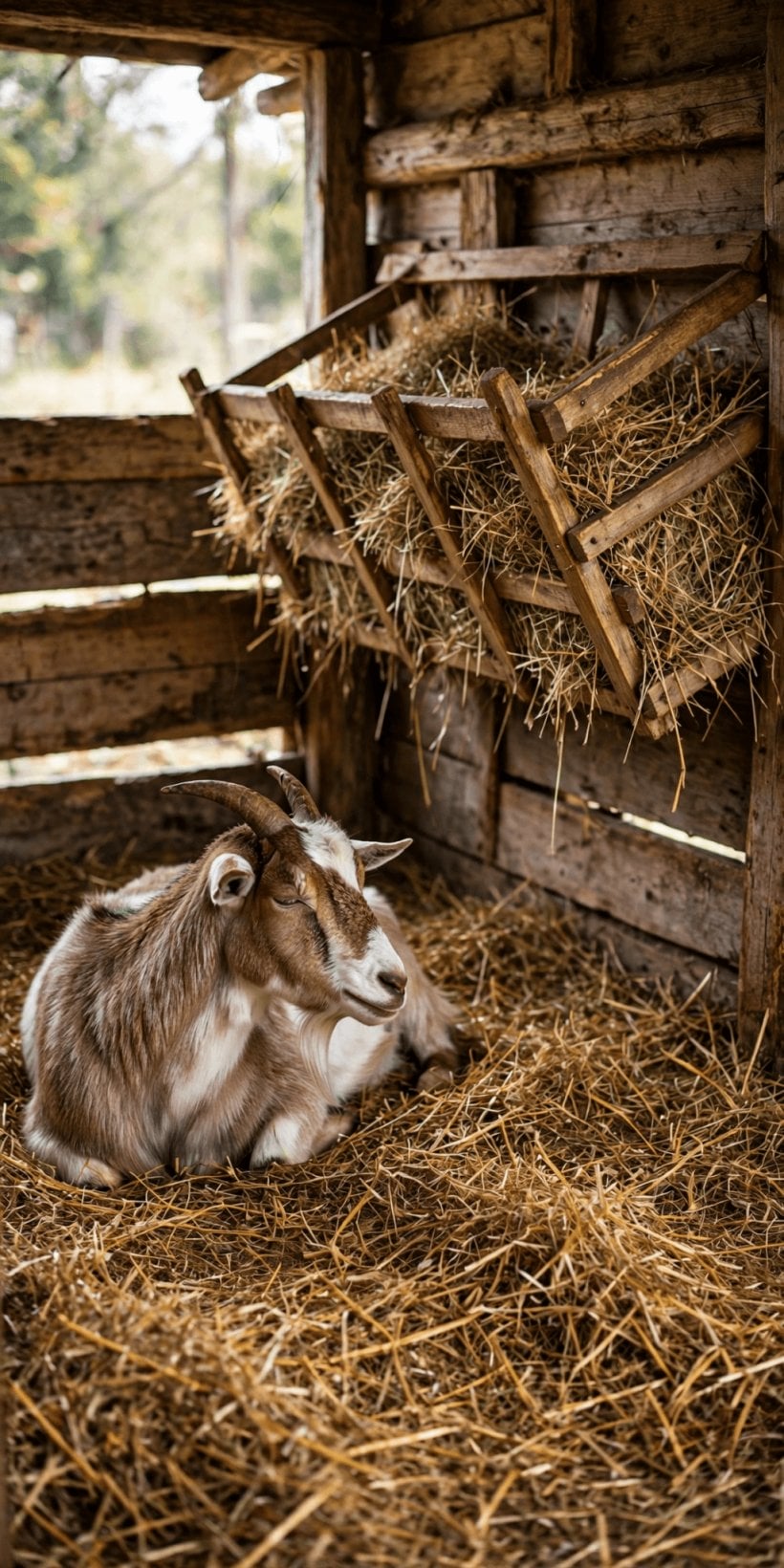
Water must be clean, always available and positioned so it stays that way: a sturdy bucket or trough at the fence line you pass daily, scrubbed often, and in winter checked for ice with the same discipline as every other stock drinker on the place. Minerals matter too — a goat-specific mineral lick or loose minerals, kept dry in a small covered container in the shelter, lets each animal top up what forage and feed do not supply.
Arrange the yard as a circuit: shelter, rack, water, minerals and gate in a loop you can walk in two minutes. When the daily round is easy, it gets done properly, twice a day, in all weathers — and that, more than any single fitting, is what keeps a herd thriving.
9. Keeping the Shelter Clean and Healthy
Cleanliness in a goat shelter is a rhythm, not an event. Daily: pick over the bedding, remove the worst, check water and racks. Weekly: fork the bed, top up fresh, scrub drinkers, and look hard at feet, eyes and coats while the herd is calm around you. Seasonally: a full clean-out, a check of walls and roof, and a rest for the building if you have anywhere to hold the herd for a day — a rested, sunned shelter is a healthy one.
Ventilation is your invisible ally. Ammonia and damp announce themselves at goat height, not yours, so crouch when you check. A shelter that smells fresh at ankle level, with dry bedding and moving air above the animals, prevents most of the coughs and discomforts that keepers blame on the weather. The shared-hygiene basics are the same across a smallholding — the flock routines in the how to raise chickens for beginners pillar rest on identical principles of dry housing, clean water and daily eyes on the animals.
Quarantine and kidding get their own corner of the system. A pen that can be separated, cleaned and bedded fresh for a new arrival, a sick goat or a mother and kids is not a luxury; it is the difference between a manageable week and a miserable one. Build it into the shelter from the start.
10. Seasonal Checks and Small Upgrades
Shelters improve a little every season if you let them. Spring: repair winter’s damage, clear the deep bed, and re-strain fences before the herd goes out full of energy. Summer: check shade and airflow, because a shelter that was perfect in January can be an oven in July — an extra vent, a shade panel or a moved rack solves most heat grumbles. Autumn: roof, gutters, drainage and bedding store, in that order, before the weather turns.
Winter is the test the whole system was built for: wind-driven rain finds every gap, frozen water tests your routine, and the deep bed earns its keep. Walk the shelter on the worst morning of the year and write down what annoys you; that list, fixed by spring, is the cheapest consultancy in goat keeping.
As herds grow, the same basics scale. Keepers adding bigger or different stock will find the housing logic in these turkey coop and shelter ideas familiar — dry rest, honest fencing, feed off the ground — because good shelter is one idea, repeated at every size.
Final Considerations
A goat shelter succeeds when it is dry, draft-free, deeply bedded and honestly fenced — and when the daily round around it is so easy that it never gets skipped. Choose the dry site, face away from the weather, build the simple three-sided shelter well, and spend your remaining effort on bedding and fencing rather than decoration. Do that, and the shelter quietly disappears from your list of worries, which is the highest praise any farm building can earn.


0 Comments