

Chickens are the friendliest way into keeping animals: small, characterful, useful in the garden and generous with eggs once the routines are right. They are also living creatures whose care is daily, so a good start matters more than a grand one.
This guide to how to raise chickens takes you from the first decision to a settled, laying flock: checking the ground rules, choosing chicks or pullets, housing them safely, feeding them well, and learning the everyday routines that keep birds healthy and calm.
1. Raising Chickens at a Glance
Begin with the whole flock on one page, because every part of chicken keeping touches every other. The birds you start with decide the housing you need and when you need it; the housing decides how safe and dry the flock stays; the feeding routine decides condition and laying; and your daily round decides whether small problems are spotted while they are still small. The summary below, taken from this guide’s own overview, fixes those relationships before the first chick arrives.
| Start | Chicks or pullets, beginner friendly |
| Housing | Coop and run, safe and dry |
| Feeding | Layer feed and grit, as a daily routine |
| Eggs | From point of lay, where patience pays |
| Key factors | Housing, feed, water and predators |
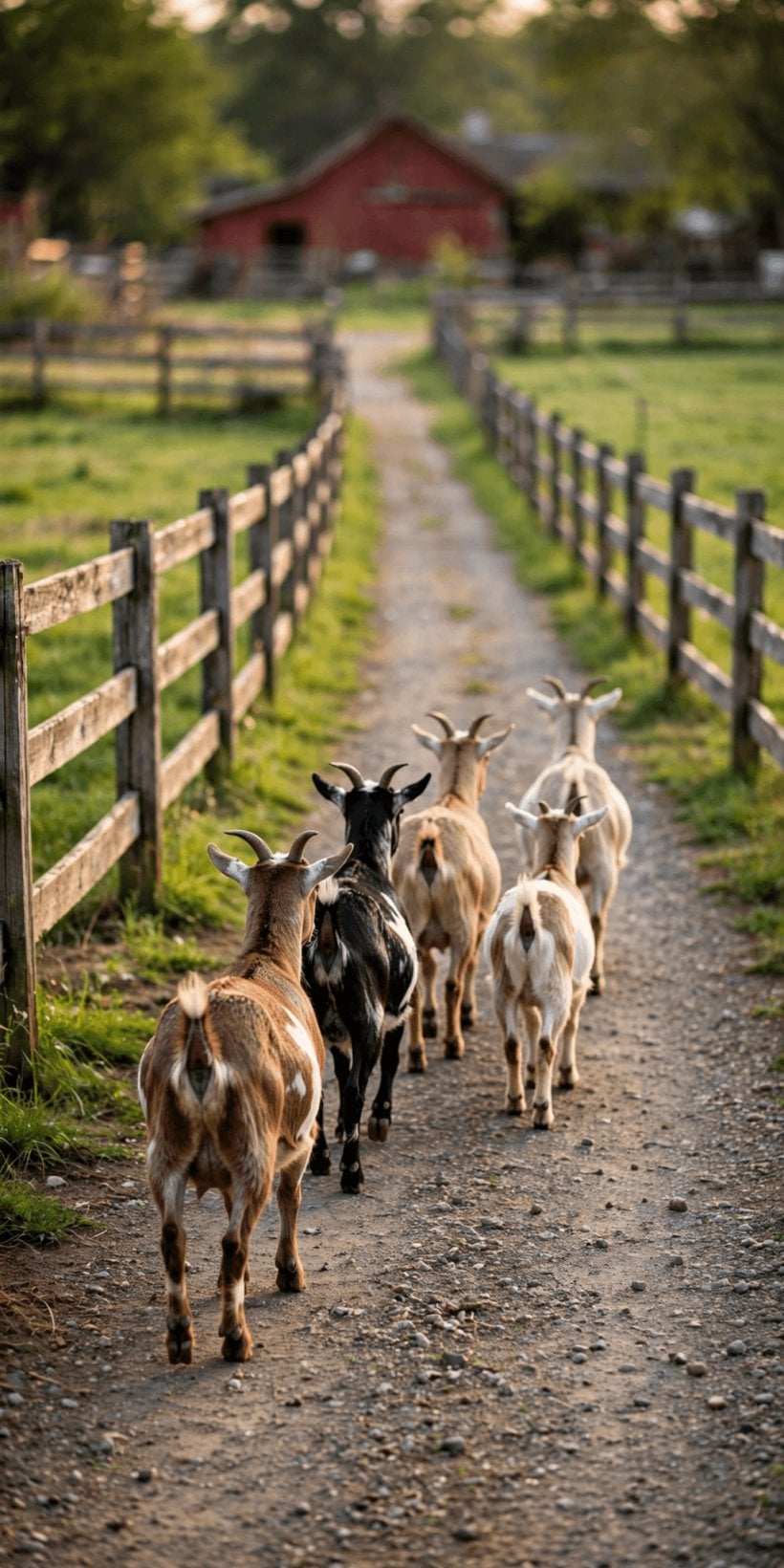
Raising chickens at a glance: start with chicks or pullets, house them in a safe, dry coop and run, keep the layer feed and grit routine daily, and expect eggs from point of lay.
Read the four working rows as the shape of the whole hobby. The start is a choice, not a race: both routes reach a laying flock. Housing is the one place money and effort should never be skimped, because a safe, dry, draught-free coop prevents more problems than any medicine treats. Feeding is a routine rather than a recipe, the same simple offering at the same times. And eggs are the reward that arrives on the birds’ schedule, not the keeper’s, which the summary states plainly: patience pays.
The tip printed on the overview is the philosophy in one line: chickens are easy when the coop, feed and water routines never slip. Almost every beginner disaster, the empty drinker on a hot day, the unlatched door, the feed that ran out last week, is a slipped routine rather than a lack of knowledge. Build the layout in this guide so the routines are short, visible and hard to skip, and the flock mostly raises itself.
2. Before You Start: Rules, Space and Commitment
Start outside the fence, with the paperwork and the honest questions. Many places welcome hens while restricting roosters, flock sizes or the distance of a coop from a boundary, and the rules differ between town, suburb and open country, so check the local position before ordering birds rather than after a neighbour complains. The overview’s own footer carries the same advice: this is a beginner overview, so check local rules for where you actually live.
Space comes next, judged qualitatively but honestly. A flock needs a coop for sleeping and laying, a run or ranging ground for the day, room for feeders and drinkers that are not under the perches, and space for you to work around them in boots in February. Birds also need more in bad weather than the bare ground suggests, because a flock shut in by storms on too little ground gets bored, muddy and quarrelsome. Where the birds sit on the holding as a whole is worth drawing once, and the paddock thinking in the livestock farm layout applies to poultry ground exactly as it does to larger stock.
Finally, count the commitment truthfully. Chickens need letting out, feeding, watering, shutting in and checking every day of the year, eggs collected often, housing cleaned regularly, and cover arranged for every holiday. None of it is heavy, all of it is non-negotiable, and the keepers who thrive are the ones who build the flock into the day’s existing shape rather than bolting it on as an extra chore that competes with everything else.
3. Chicks or Pullets: Choosing Your Starting Point
The first real choice is where your flock begins. Day-old or young chicks are inexpensive, charming and imprint on their keeper beautifully, but they need a brooder with safe heat, chick feed, close watching and several stages of growing accommodation before they ever see the main coop, and their sex and final laying quality are partly a lottery. For a first flock with children involved and time to enjoy the process, chicks are the classic start and teach more chicken keeping per month than any book.
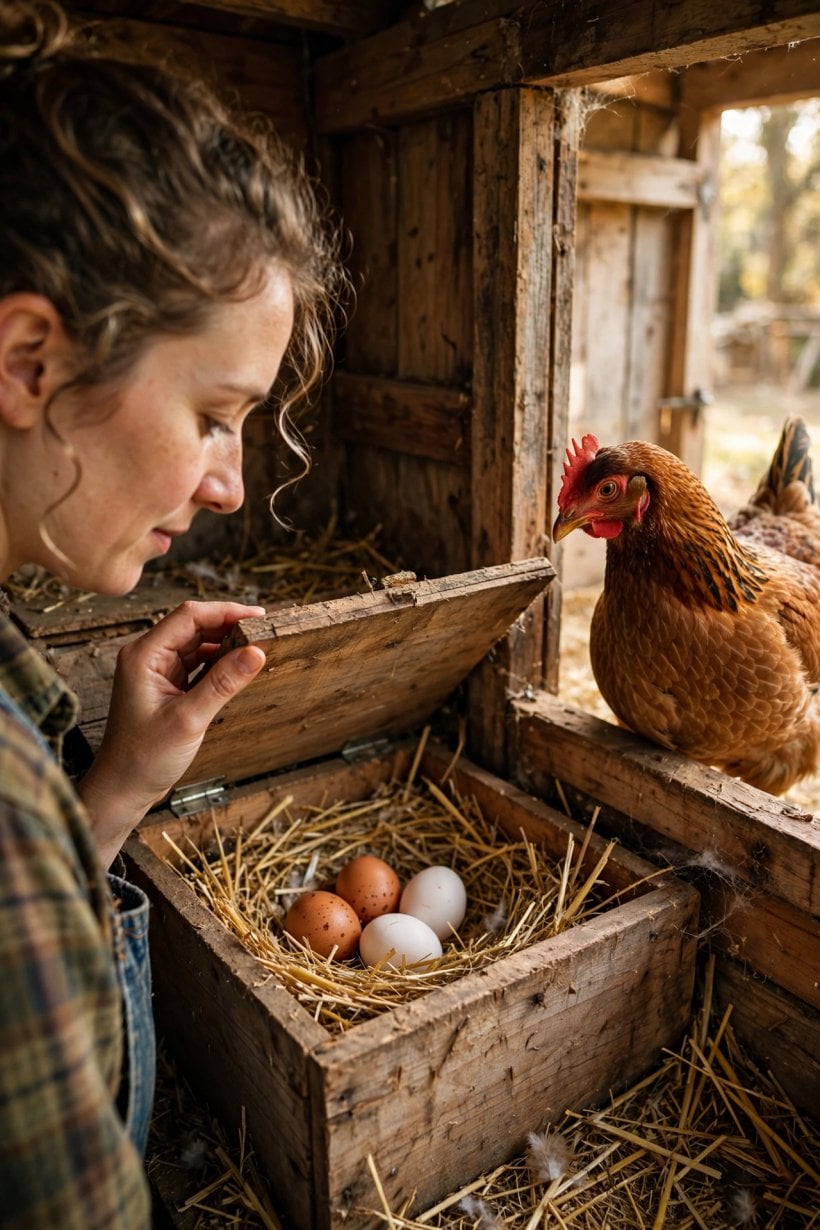
Starting with chicks: warmth, safety and small daily checks in the brooder are the whole job for the first stage of the flock’s life.
Pullets, young hens at or near point of lay, are the other honest route. They cost more per bird and skip the delightful chick stage entirely, but they move straight into the coop, need only the adult routine, and start the keeper’s egg story almost at once. For anyone whose real goal is a laying flock with the least risk, or who is starting later in the season, pullets are not a shortcut to be embarrassed about; they are the professional’s choice on most small farms too.
Whichever route you choose, buy from a source you can question: a breeder or supplier who can tell you the birds’ age, breed, vaccination and feeding history, and who keeps their own pens clean enough to show you. Start with a small, manageable group rather than the largest flock the run could hold, because every routine in this guide is easier to learn on a few birds, and a settled small flock can always be added to once the keeper’s confidence and the ground have both been tested.
4. The Coop and Run: Housing That Keeps Birds Safe
Housing carries one of the summary’s key factors because it does three jobs at once: it keeps weather out, keeps predators out, and gives the flock a calm, dark, draught-free place to sleep and lay. A good coop is dry underfoot and overhead, ventilated high up so air moves without blowing across the perches, secure at every opening with proper fastenings rather than hopeful twists of wire, and easy for the keeper to clean standing up rather than crawling.
Inside, the layout is simple and should stay so: perches where the flock sleeps, nest boxes in the quietest, darkest corner for laying, feed and water positioned so they stay clean, and litter on the floor that can be topped up and periodically cleared. Sizes and build choices for every flock size and budget are worked through in the chicken coop plans, and keepers of smaller birds will find the same principles at a miniature scale in the quail coop ideas. Build or buy once, slightly larger and stronger than the minimum the flock needs today, because flocks grow and cheap housing is bought twice.
The run is the flock’s daytime world and deserves the same care: a fence a predator respects, a gate the keeper can work one-handed, some cover and shade so birds are not exposed all day, and ground management that stops it becoming bare mud. Rotate or rest ranging ground where you can, move mobile housing when the patch is spent, and treat the run’s gate and pop-hole as the security they are. Most losses happen at dusk through a door somebody meant to close, which is why the closing round in this guide is a ritual, not a suggestion.
5. Choosing Breeds for Your Goals
Breed choice is where the flock becomes yours. Decide first what the birds are for: a laying flock for household eggs, a dual-purpose group that lays well and lives calmly, a few ornamental characters for the garden, or breeds suited to a particular climate. Within each purpose there are birds that are placid or flighty, early or steady, broody or businesslike, and the beginner’s best friends are the forgiving, hardy, good-natured kinds that tolerate a learning keeper.
The detailed comparison of laying breeds, set out quality by quality rather than by invented numbers, is in the best chicken breeds for eggs, and it pairs naturally with this guide: choose the shortlist there, then house and feed them by the routines here. Mixed flocks of a few compatible breeds are the common beginner answer and usually a happy one, giving variety in the run, a spread of laying patterns across the year, and insurance that if one breed dislikes your ground or weather, the others may thrive.
Expect naming day to arrive whether you planned it or not. A flock that will be handled, watched and talked about gets named, and the keeper who thinks ahead to names that suit hens, roosters and the whole flock’s characters will find plenty of inspiration in chicken names. It sounds like a small thing until you are trying to tell a helper which bird is off her feed, at which point the flock with names is simply easier to keep well.
6. Feeding and Water: The Daily Routine
Feeding a laying flock is a routine, not a research project. The staple is a proper layer feed offered freely or in measured daily amounts, with insoluble grit available so birds can grind their food, and oyster shell or an equivalent calcium source on the side so each hen takes what her shell-making needs. Chicks and growing birds get their own starter and grower rations in sequence, because a young bird building a frame is not a small layer, and the stages matter more than any supplement.
Water is the second key factor on the summary and the one that fails flocks fastest. Clean water, available all day, refreshed rather than merely topped up, in drinkers set where they stay clean and cannot be tipped by a scuffle. In freezing weather the drinker is the morning’s first job; in hot weather it is checked again at midday. Scraps and garden treats have their place as enrichment and variety, offered in moderation after the staple feed has been eaten, scattered to be hunted rather than dumped to sour, and never allowed to turn the run into a compost heap the flock lives in.
Build the routine so it is visible at a glance: feed stored dry and vermin-proof beside the coop, the scoop in the bin, drinkers where their level can be seen from the gate, and a morning and evening round that takes minutes when nothing is wrong. That visibility is the difference between a flock whose problems are caught on the day and one whose empty drinker is discovered by its consequences. Chickens forgive a late breakfast; they do not forgive an empty water supply, and the routine exists to make sure neither happens by accident.
7. From Brooder to Garden: Growing Birds Step by Step
Young birds pass through stages, and each stage has one job. In the brooder the job is warmth, safety and constant access to chick feed and clean water, in a space that grows with the birds and a heat source they can move toward and away from as they choose. Watch them as the thermometer no keeper can buy: huddled and cheeping loudly means cold, scattered to the edges and panting means hot, and spread out, feeding and sleeping in turns means the brooder is right.
Moving out is a transition, not an eviction. Young birds graduate to a sheltered pen or a sectioned corner of the coop where they can see and be seen by the older flock without being bullied, with weather protection, their own feed and water, and short first outings onto grass in kind weather. Integration into the main flock goes best with space, multiple feeding points and distractions, and at a stage when the youngsters are big enough to hold their own in the ordinary squabbles of the pecking order being explained to them.
Once settled, the flock becomes part of the holding’s working system. Birds ranged under mature trees clean up fallen fruit and hunt insects, a spent vegetable patch is a feast and a rotovation service in one, and the routes between coop, run and garden become part of the layout, as they are in the orchard layout plans. Guard the young planting, rest the ground the birds have worked, and the growing flock stops being a project in the corner and becomes what it should be: livestock earning its keep across the whole place.
8. Eggs: Point of Lay, Collection and Storage
Eggs arrive on the birds’ timetable. A pullet comes into lay when she is mature, the days suit her breed and her feeding and condition are right, and the first eggs are often small, odd or shell-less while the system practises. This is the summary’s patience paying: keep the routine steady, keep nest boxes clean, inviting and available before laying starts, with a dummy egg if it helps teach the address, and the flock will settle into laying where you want the eggs.
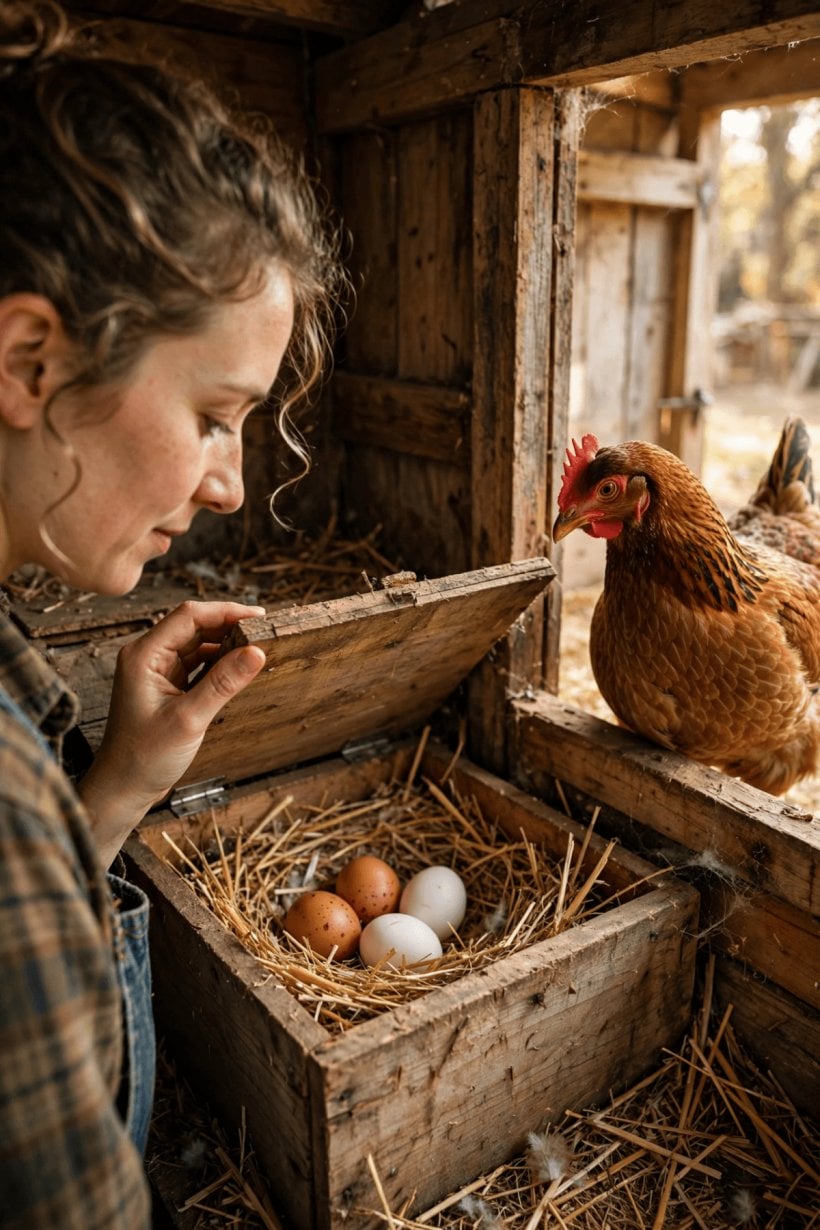
The laying flock settled in: clean nest boxes, a steady routine and eggs collected little and often are what turn point of lay into a daily harvest.
Collection is a small routine with large effects. Eggs gathered little and often stay clean, unbroken and uninteresting to any hen developing a taste for them; eggs left to accumulate get trodden on, soiled, hidden in corners by layers who have lost the nest-box habit, and found by every passing predator’s nose. Store collected eggs cool, unwashed where they are clean so their natural bloom keeps protecting them, and use them in the order they arrived. The laying breeds compared in the breed guide earn their reputations inside exactly this routine, because a hen’s laying is only ever as good as the collection and feeding that support it.
Expect the laying year to have a shape: a generous season when days are long and the flock is in full stride, quieter spells around the moult when feathers are remade instead of eggs, and pauses in the darkest or hottest stretches. None of this is failure. The keeper’s job is to feed and house through the quiet spells without resentment, because the same birds return to lay when their season turns, and a flock kept for years, not months, smooths the feast and the pause into an average every household can plan around.
9. Health, Predators and Everyday Troubleshooting
Predators are the fourth key factor, and the honest assumption is that everything local that eats chicken will eventually test your housing. Foxes, dogs, raccoons, mink, hawks and rats, the list varies by continent and county, but the defence does not: a coop that shuts securely at night, runs fenced with a respect for digging and climbing, feed stored so it does not feed the rat population that feeds everything else, and a closing round at dusk that is never skipped because it is raining. Prevention is a layout and a habit; there is no remedy chapter after a bad night.
Health keeping is mostly observation built into the routine. A healthy flock is busy, bright-eyed, comb-rich in colour, eating with enthusiasm and producing droppings that vary sensibly with diet. The daily round is where a drooping, silent or separated bird is noticed on the first day, isolated kindly, and considered with the simple questions first: water, feed, bullying, parasites, a fright, a coming moult. External parasites live in housing as much as on birds, so clean, dry, well-kept litter and dust-bathing ground are health measures, and new birds join a flock only after a period apart, the same caution that governs mixing species in can turkeys live with chickens and housing other poultry in the turkey coop ideas.
Troubleshooting follows a calm order: check the routine before the bird, the housing before the medicine, and the whole flock’s pattern before one bird’s odd day. Most beginner alarms end at a slipped drinker, an empty feeder, a bullying spell at a single feeding point or a bird beginning her moult. Keep a simple note of what was noticed and done. Patterns over weeks are what a vet, a mentor or your own older experience reads, and they are written by the keeper who looked every day.
10. Your First Year With the Flock
The first year teaches the flock’s calendar. Spring is for starting and growing; the long days are for laying and ranging at their best; the moult and the shortening days slow the eggs and ask for steady feeding instead of worry; winter is for deep litter, frost routines, wind-proofing and the patience to keep everything clean in the mud season. A keeper who has seen all four seasons with the same birds is a beginner no longer, because every surprise of the year has happened once and been survived.
Grow the enterprise only as fast as the routines stay easy. A second group added to a working system, with quarantine space ready and the ground to rest the first run, is a pleasure; doubling a flock whose routines already slip is how good hobbies turn into guilt. Manure and spent litter from the coop are the garden’s gain, composted and carried out on the same rounds the feed came in on, closing the loop drawn in the market garden layout, and a flock on a productive holding should end its first year visibly paying rent in eggs, fertility and pest control.
Finish the year by writing down what this guide cannot know: which breed suited your ground, which corner of the run drowned in November, which routine the household actually kept, and what you would build bigger. That page of notes is the real second edition of how to raise chickens for your holding, and it is the difference between a flock that is merely kept and one that gets better every year it is yours.
Final Considerations
Raising chickens well is not complicated; it is consistent. Safe, dry housing, a feeding and watering routine that never slips, ground that is rested, predators assumed rather than feared, and a keeper who looks at the flock properly every day: those five things, held for a year, will take a beginner further than any gadget or breed. Start small, start with the routines in this guide in the order they are given, and let the flock teach you the rest one season at a time.


0 Comments