

“What’s the best blender?” is the wrong first question, and every honest answer starts by replacing it. Best for soup is not best for smoothies, and best for a daily family batch is not best for a single morning shake. The right question is what to check — and that question has good, brand-free answers.
This guide works through the checks in order: what you actually blend, the jar’s shape and material and size, the base and motor in general terms, blades and the vortex, controls, noise and footprint, cleaning, and the seals, spares and paperwork that decide the machine’s second five years.
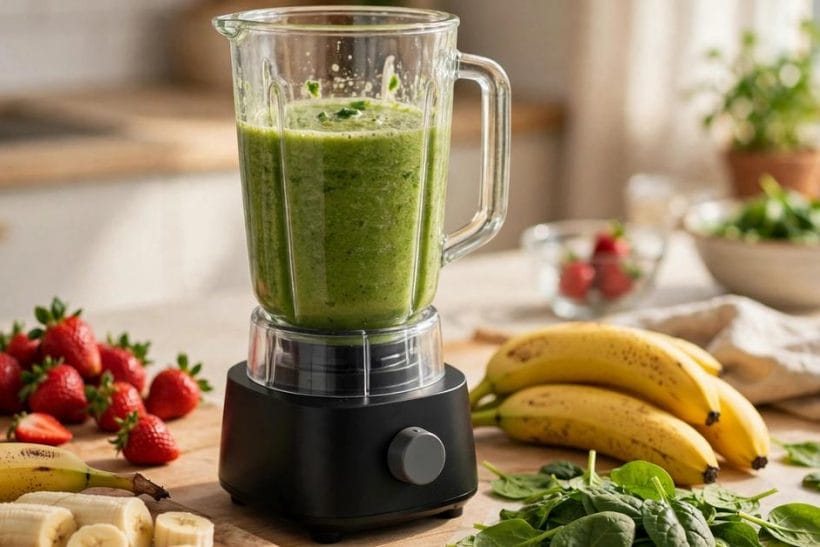
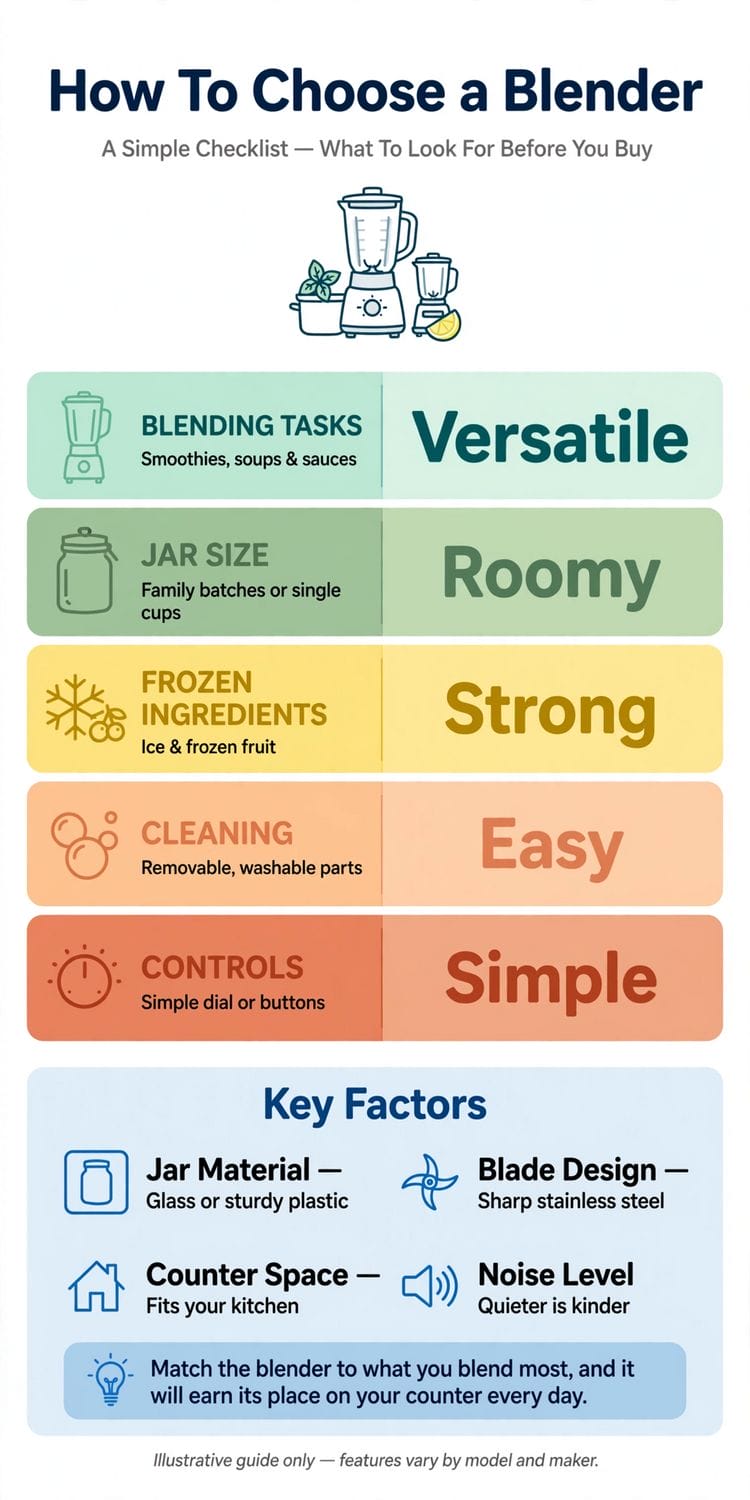
1. How to Choose a Blender at a Glance
Scope first. This guide owns the buying checks for a countertop blender, stated generally — no rankings, no winners, no prices. The kitchen around it is covered elsewhere on the site: the canon in kitchen ideas, small-space appliance planning in compact kitchen appliances for tiny houses, the detergent companion in how to choose dishwasher detergent, the microwave companion in the microwave buying guide, the worktop’s own storage logic in tiny kitchen storage hacks, and the construction-quality method this guide borrows in the furniture quality check guide. Here, everything serves the checks.
One rule governs the whole guide: a blender is a system of jar, blades, base and seals, and it blends exactly as well as its weakest part suits your ingredients. Read every section against your own counter and your own recipes, because the checks are universal but the answers are personal.
| Check | What to settle | Why it matters |
|---|---|---|
| Your blending | Smoothies, soups, ice, doughs | The job chooses the machine |
| The jar | Shape, material and size | Decides flow, weight and care |
| The base | Motor and drive, in general terms | Decides stamina under load |
| Controls | Dial, buttons or programmes | Decides daily ease |
| Ownership | Cleaning, seals and spares | Decides the second five years |
2. Start With What You Actually Blend
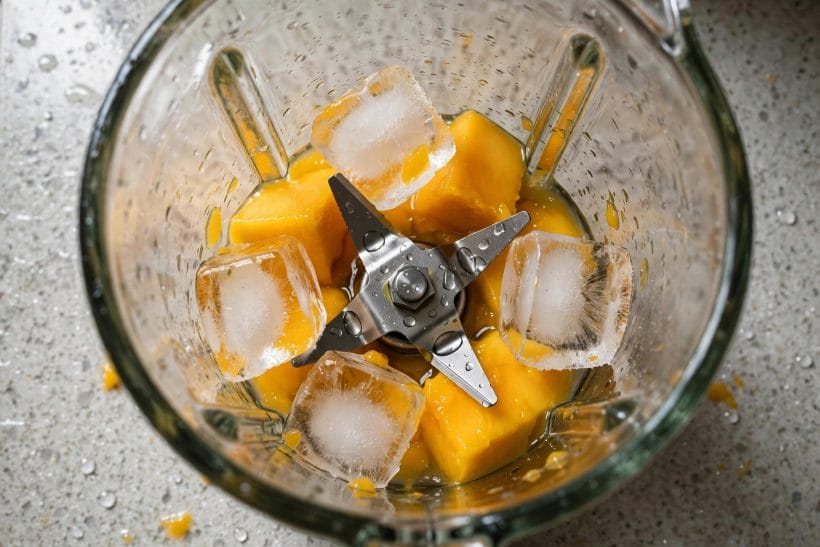
Every check in this guide is a question about your kitchen wearing a specification’s clothes. Begin with an honest week of your blending — not the cook you plan to become, but the one who actually stands at your counter.
Write the week down if it helps: the drinks, the soups, the sauces, the one ambitious dessert. Patterns appear quickly — most households blend two things constantly and everything else rarely, and a machine chosen for the constant two, checked against the hardest of them, is rarely the wrong machine.
1. Smoothies ask for flow and fine blending
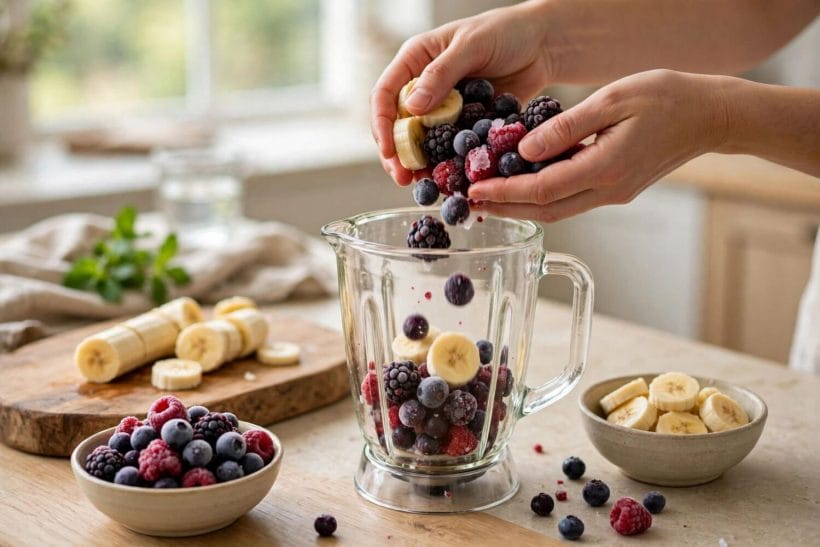
Fibrous greens, frozen fruit and seeds ask the jar to keep everything moving through the blades until nothing stringy survives. If smoothies are the daily job, jar shape and blade design outrank almost every other check.
2. Soups ask for capacity and heat sense
Hot liquids expand and push at lids, and a family soup is a full jar. If soup is your blender’s main work, capacity, a vented lid design and a jar material at ease with heat move to the top of the list.
3. Ice and frozen desserts ask for stamina
Crushing ice and grinding through fully frozen mixtures is the hardest work a blender does. Occasional ice in a drink is one thing; a nightly frozen dessert is another, and the base and blades should be chosen for the harder truth.
3. The Jar: Shape, Material and Size
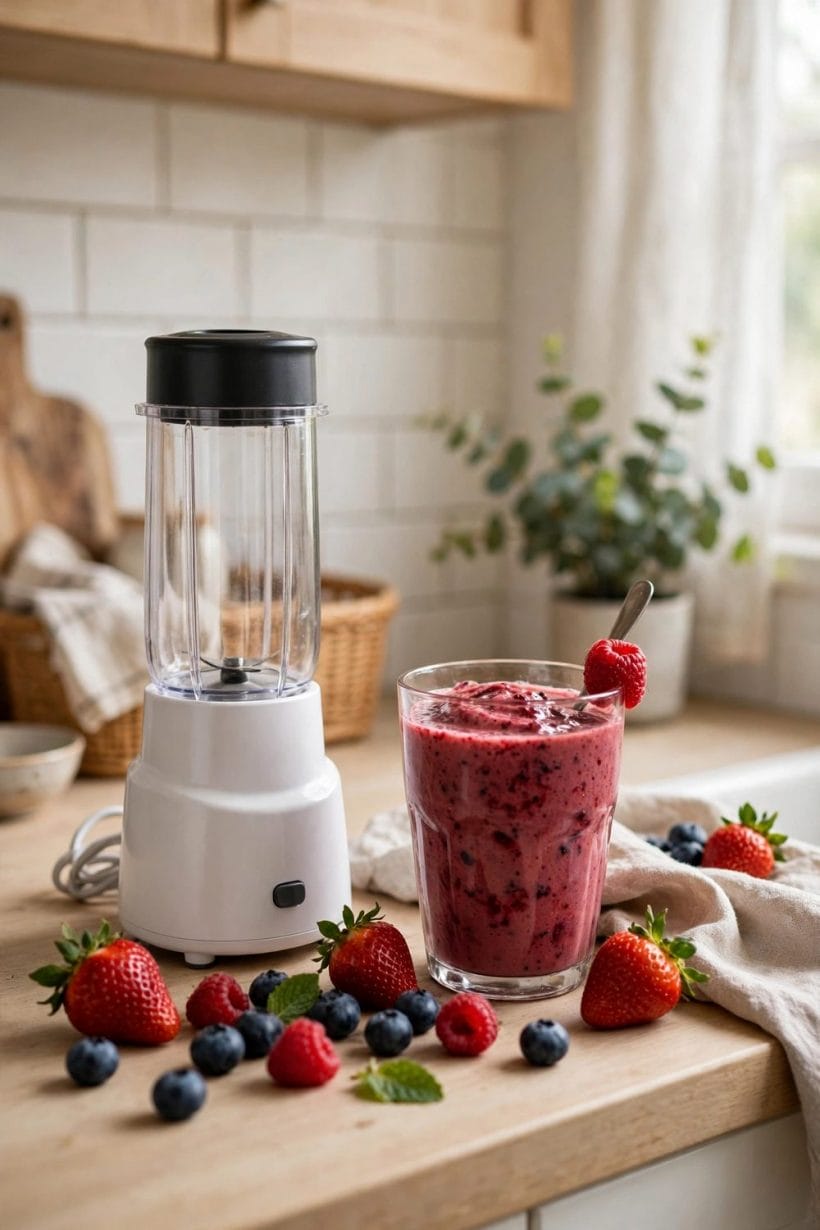
The jar is the part you handle, wash, store and watch every day, and its geometry is the machine’s real blending design. A jar is not a bucket with a lid; its shape is what feeds the blades.
Jar markings deserve a glance as well. Measures moulded into the wall stay legible for the machine’s life; printed measures wear with washing. It is a tiny specification that announces how carefully the whole jar was thought through.
4. Shape decides how ingredients circulate
Good jars fold their contents downward into the blades and back up the walls in a continuous roll. Wide bases suit big batches; narrower profiles often keep small quantities moving instead of splashing them up the sides.
5. Glass is heavy and inert, plastic is light and tough
Glass jars resist staining and smells and feel reassuringly solid, at the price of weight in the hand and at the sink. Modern plastic jars are far lighter and shrug off drops, and ask only for honest care against scratching and strong colours.
6. Size the jar to your real batch
A jar works best in its middle range — neither brimful nor barely covering the blades. Choose for your commonest batch, and remember that a household of smoothie drinkers and a household of soup makers need different middles.
4. The Base and Motor, in General Terms
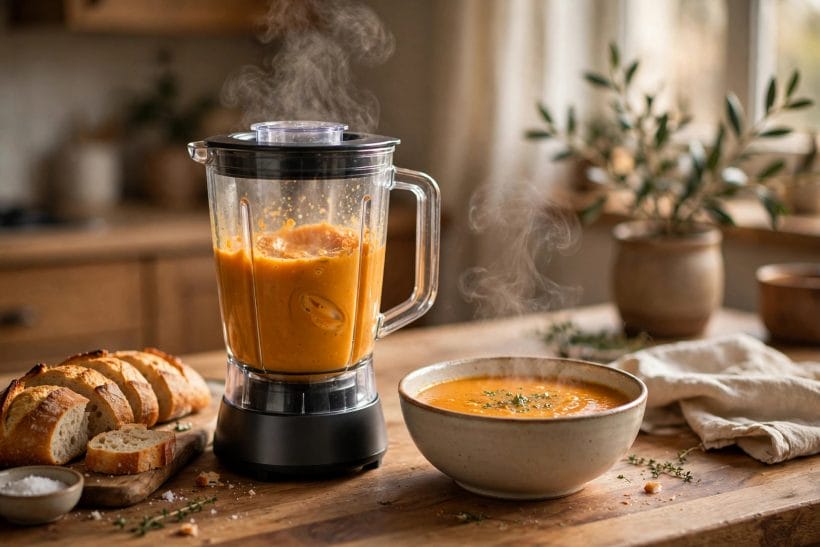
The base is the machine’s stamina. Makers print a power figure on every box, and it is worth treating the way this guide treats all single numbers: as one clue among several, meaningful only beside the job you described in section two.
Ventilation belongs in this section too. Motors cool themselves with air drawn through the base, and a machine used hard, back to back, needs its vents unobstructed and its duty respected. Makers state intended use plainly; a household blending for a cafe has left the domestic specification behind.
7. Judge stamina by the work, not the wattage
A printed power figure says little about gearing, blade design or how the machine behaves five minutes into a thick mixture. Reviews of endurance aside, the honest test is matching the machine’s intended class — occasional, daily or heavy — to your own.
8. The drive connection is a wear point
Jar meets base through a coupling that takes every start and stop. Metal drive components generally outlast plastic ones, and a coupling that can be replaced turns a common failure into a small repair.
9. Weight and feet decide whether it walks
A blender under load vibrates; a light base on smooth feet can travel across the counter mid-blend. Heft, a low centre of gravity and grippy feet are unglamorous specifications that you will appreciate weekly.
5. Blades and the Vortex
Blades are where marketing gets mystical, but their work is mechanical: they must pull the mixture down, cut it, and throw it back up the jar’s walls to come down again. Judge the assembly by the circulation it creates, not by the names of its angles.
Direction matters in the vortex as much as sharpness. The best assemblies throw the mixture outward and upward so it folds back down the middle continuously; a mixture that merely spins in a circle is being carried, not blended, and the texture will show it.
10. Fixed assemblies clean easier, removable ones clean deeper
A sealed, fixed blade unit never leaks at the base and rinses clean in seconds, but cannot be scrubbed around. A removable unit allows a full clean and a gasket change, and asks you to reassemble it correctly every time.
11. Blade material and mounting decide longevity
Stainless blades are the norm; what varies is the bearing and mounting beneath them. A blade assembly that spins freely by hand, without wobble or grit in its travel, is telling you its bearings are healthy.
12. The tamper is a feature, not an admission
Some designs include a tamper for pushing thick mixtures toward the blades. Far from signalling weakness, it suits the thickest work — nut butters, frozen desserts, hummus — where no jar shape alone keeps the mass moving.
6. Controls: Dials, Buttons and Programmes
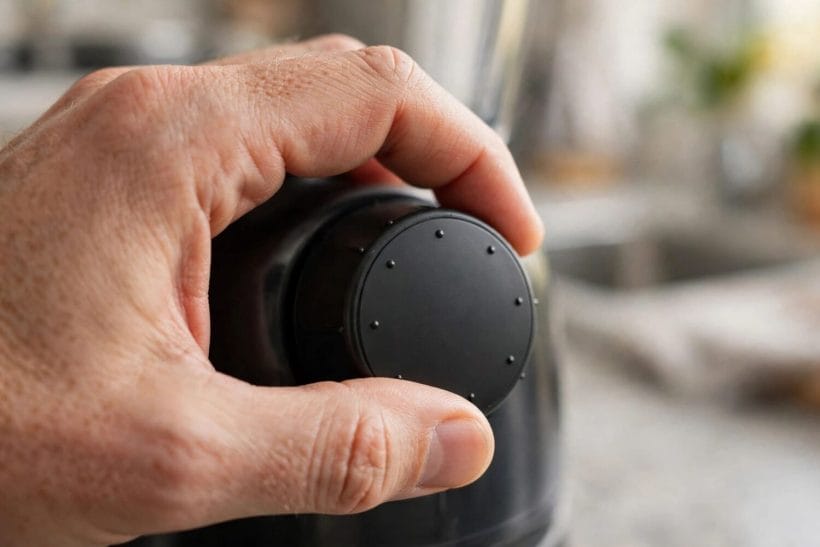
You will touch the controls with wet, floury, hurried hands for years. Their layout is a daily-use specification, and the best one is the one your household can operate half-asleep without a manual.
Cleanability hides in the control panel too. Flat touch panels wipe clean; raised buttons and dial skirts collect the sticky evidence of every recipe. In the shop, run a finger around the controls and imagine them after a smoothie overflow.
13. A dial gives you the blend in your hand
A simple variable dial lets you start slow — sparing the motor and the splashes — and climb to speed as the mixture starts to move. For cooks who blend by eye and ear, it is the most honest control there is.
14. Programmes trade attention for consistency
Preset cycles for smoothies, ice and soup run a timed pattern of speeds and pauses, then stop. They suit households that want the same result from whoever presses the button, and they are worth having only for the jobs you actually repeat.
15. Pulse is the small control that matters most
A responsive pulse lets you collapse an air pocket, chop without pureeing and restart a stalled vortex in short bursts. Whatever the panel’s other furniture, test the pulse first.
7. Noise, Vibration and Footprint
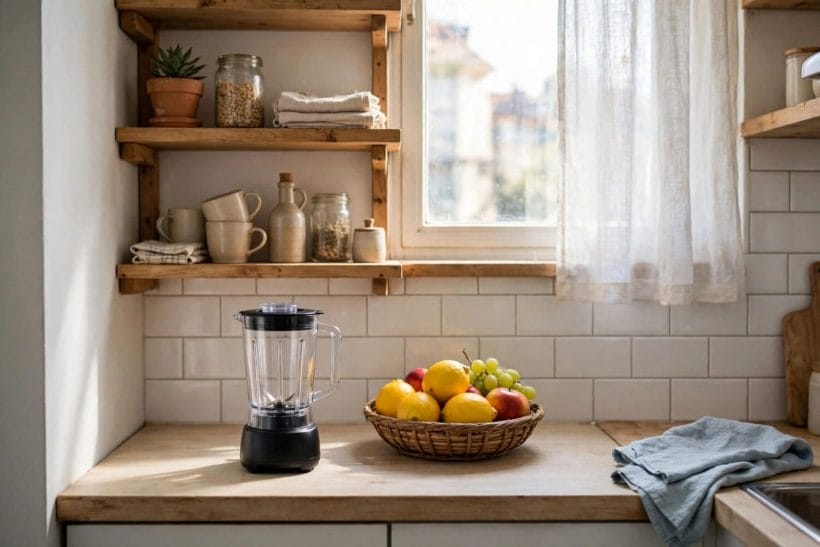
A blender lives in a real kitchen: under cabinets, beside a sleeping household’s wall, on a counter that also does everything else. Three measurements and one honest thought about noise decide whether it is a pleasure or an event.
Storage is the footprint’s second half. A machine that lives out gets used; one that must be fetched, assembled and re-shelved becomes a special-occasion appliance. Be honest about which yours will be, and let the answer argue for the size you can leave standing.
16. Measure the height with the jar on
Assembled height against your cabinet clearance is a pass-or-fail specification, not a detail. If the machine must be pulled out from under the cupboards for every use, it will be used less; measure before the box is opened.
17. Noise is a household decision
All blenders are loud; they differ in pitch and duration, and in how much enclosure or sound shielding the design carries. Early risers blending for a sleeping house should weight noise like a headline feature, because it is one.
18. Footprint includes the cord and the lid’s parking
The base’s square centimetres are only the start. Where the cord lives, where the lid rests mid-recipe and whether the jar stores on the base or in a cupboard complete the real estate the machine truly claims.
8. Cleaning and Care

More blenders are abandoned for cleaning than for power. The machine that rinses in a minute gets used daily; the one with a gasket puzzle and a blade hazard gets used at Christmas. Judge cleaning in the shop, imagining a tired evening.
Lids join jars in the cleaning verdict. Multi-part lids with removable caps and plugs offer venting and adding-ingredient access, and each part is one more piece to wash and one more seal to keep. Simple lids clean simply; choose with your patience in view.
19. The self-clean cycle is real, if you use it hot
Warm water, a drop of washing-up liquid and thirty seconds of blending cleans most jars genuinely well — if it happens immediately. The specification to value is a jar and lid with no crevices where the rinse cannot reach.
20. Dishwasher claims vary by part
Jar, lid, gasket and blade unit each carry their own washing rules, and heat ages gaskets and clouds some plastics. Read which parts the maker actually clears for the dishwasher before assuming the whole machine goes in.
21. Stains and smells are managed, not eliminated
Turmeric, berries and garlic mark every jar material eventually; sunlight, bicarbonate soaks and prompt rinsing manage them well. A jar whose material suits your most staining recipes saves the management entirely.
9. Seals, Spares and Paperwork

A blender’s fifth year is decided by its smallest parts: the gasket that seals the base, the lid that still fits, the jar that can still be bought. Ownership checks feel dull beside blades and dials, and they outlast them all.
Makers’ spares policies differ in kind, not just in price: some list every gasket, lid and jar openly, others route everything through service centres. The catalogue’s existence is the check — look for it before the purchase, while you still have a choice of maker.
22. Gaskets are consumables — ask their price and availability
The sealing ring flattens and perishes with age and washing. A machine whose gasket is listed, priced and stocked as a spare is a machine designed to be kept; one whose seal is unlisted is designed to be replaced.
23. A second jar can be the smartest accessory
For households blending daily, a spare jar ends the wash-between-batches bottleneck and insures against the day a jar is dropped. Check it exists for your model before purchase, not after the drop.
24. Keep the warranty and the model number together
Photograph the rating plate, keep the paperwork, and note which parts the warranty covers — motor warranties and jar warranties are often different lengths wearing one headline.
10. Questions to Ask Before You Buy
The final section gathers the checks into the conversation to have with the specification sheet and the seller. None of the questions has a universal right answer; each has a right answer for your counter, and the seller’s job is to help you find it.
Take the three questions to a seller who stocks more than one class of machine. A range forces honesty: the answer you want is the question matched to your week of blending, your counter’s measurements and your cleaning patience — not a steer toward the shelf that needs clearing.
25. Which of my jobs is this machine’s hardest?
Put your toughest regular blend to the seller plainly — the frozen dessert, the fibrous smoothie, the full jar of soup. The machine that is honestly matched to your hardest weekly job will find everything else easy.
26. What will wear out first, and can I buy it?
Gaskets, couplings, lids and jars, in some order, are every blender’s future. A model with a listed spares catalogue and a maker who stocks them is making you a promise the specification sheet can keep.
27. Can I clean it in one minute, tonight, tired?
The truest of all the checks. Picture the jar in the sink after the meal it helped make: warm water, a drop of soap, a short blend, a rinse. If any step snags in your imagination, it will snag in your kitchen.
Final Considerations
There is no best blender; there is a blender whose jar, base, controls and cleaning suit one household’s actual week. The checks in this guide are deliberately unglamorous — circulation, couplings, gaskets, assembled height — because those are the things still deciding your mornings in five years. Name your hardest job honestly, run the checks in order, and the machine you bring home will be the right one for the only kitchen it has to please.




0 Comments