

One appliance that reheats lunch and crisps toast sounds like the perfect answer for a small kitchen, until you start comparing doors, dials and dimensions.
This guide slows the decision down. It explains what a microwave toaster oven combo can and cannot do, what to measure before anything else, and which everyday checks separate a helpful appliance from a countertop ornament.
1. What a Combo Actually Is, in Plain Terms
A combo brings two familiar appliances together in one cabinet: a microwave for fast reheating, defrosting and cooking with steam-friendly speed, and a small oven section with heating elements for toasting, baking and browning. The honest way to judge one is not by its longest feature list but by your own week of meals. List the five things you would actually ask it to do: reheating leftovers, toasting bread, crisping frozen snacks, baking small portions, warming plates. If a function does not serve that list, it is decoration. The questions and checks in this table give you a fair starting frame before you look at any particular model.
| Question | What To Check |
|---|---|
| Is it one box or two in one? | Whether the microwave and oven share one cavity or sit as separate sections, and how the manual describes using each |
| Can both jobs happen at once? | Whether your chosen design lets you reheat and toast at the same time, or asks you to take turns |
| What fits inside? | Your largest everyday dish, a standard slice of bread and your usual mug, measured against the usable cavity, not the headline size |
| Where will it live? | Counter depth, door swing, and the clear space the maker asks for around vents |
| What should I measure first? | The counter footprint, the height under wall cabinets, and the dishes you reach for daily |
| What decides a fair price? | Build, controls you will use, cleaning effort and warranty support, judged qualitatively rather than by badges |
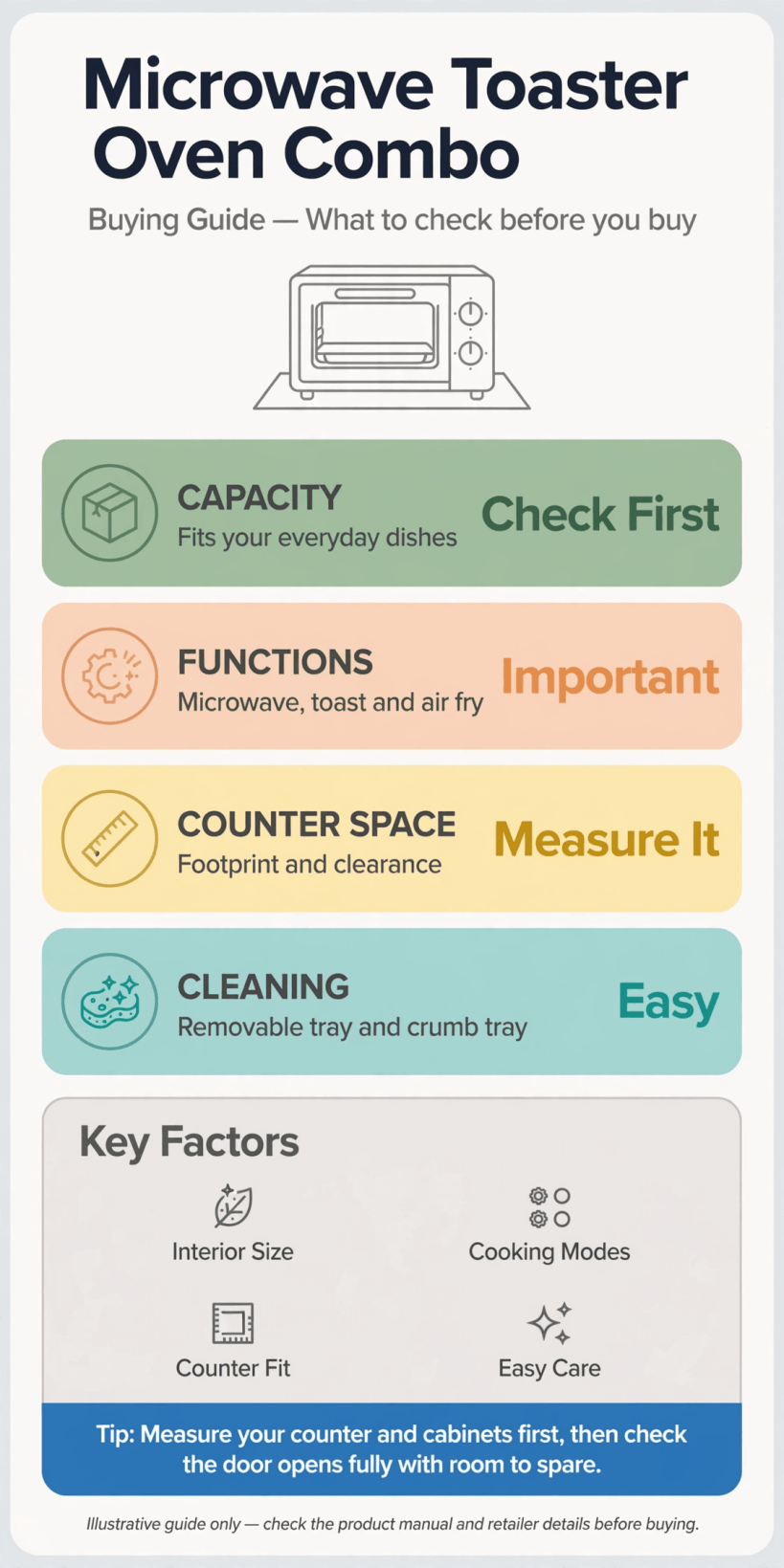
The core checks at a glance: fit, functions, controls, cleaning and placement.
Two fair warnings belong at the start. A combo is a compromise by design: it trades the spacious cavity of a standalone oven and the simplicity of a basic microwave for one smaller footprint. And headline numbers rarely tell the story; usable space, clear controls and easy cleaning shape daily satisfaction far more. Keep both warnings in mind and the rest of this guide becomes a calm checklist rather than a sales pitch.
2. Measure First: Counter, Cavity and Door Swing
Measuring is the least glamorous step and the one that saves the most regret. Start with the counter: width, depth and the height between the worktop and any wall cabinets or shelves above. Then measure the appliance space with its door fully open, because a door that cannot swing clear of a wall, a kettle or a fruit bowl will annoy you every single day. Note where the nearest socket sits, too; a cord stretched tight across a wet sink area is a poor plan, and trailing leads steal the very space the combo was meant to save.
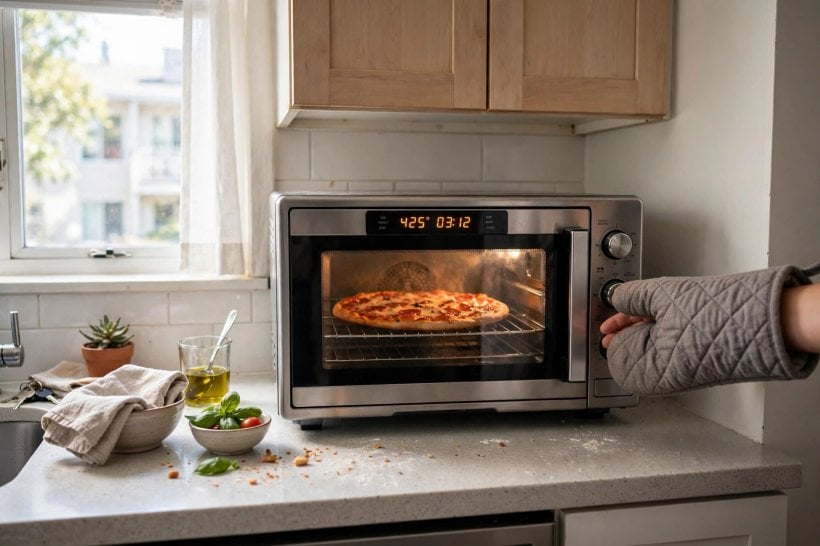
Next, measure your dishes, not the brochure. Take the plate, casserole dish and tall mug you use most, and check them against the cavity measurements with the tray or rack in its everyday position. A turntable needs room to rotate; a shelf needs room for hands. This habit of fitting the kitchen around real objects is the heart of good tiny house kitchen design, where guesswork has nowhere to hide. If your favourite dish only fits at an angle, treat that as a no: food should slide in and out level, with both hands free and no tilting of hot contents.
3. Functions: What Each Mode Is Really For
Microwave mode earns its keep on speed tasks: reheating portions evenly, defrosting ingredients you forgot to move to the fridge, melting butter, warming drinks. Oven mode earns its keep on texture: toast with colour, pastry that stays crisp, cheese that bubbles instead of sweating. Some designs add convection-style fan assistance or grill elements; treat these as helpers for browning and circulation rather than magic. The balanced question is not how many modes exist, but whether the two or three you need are easy to select, easy to time and consistent from one day to the next.
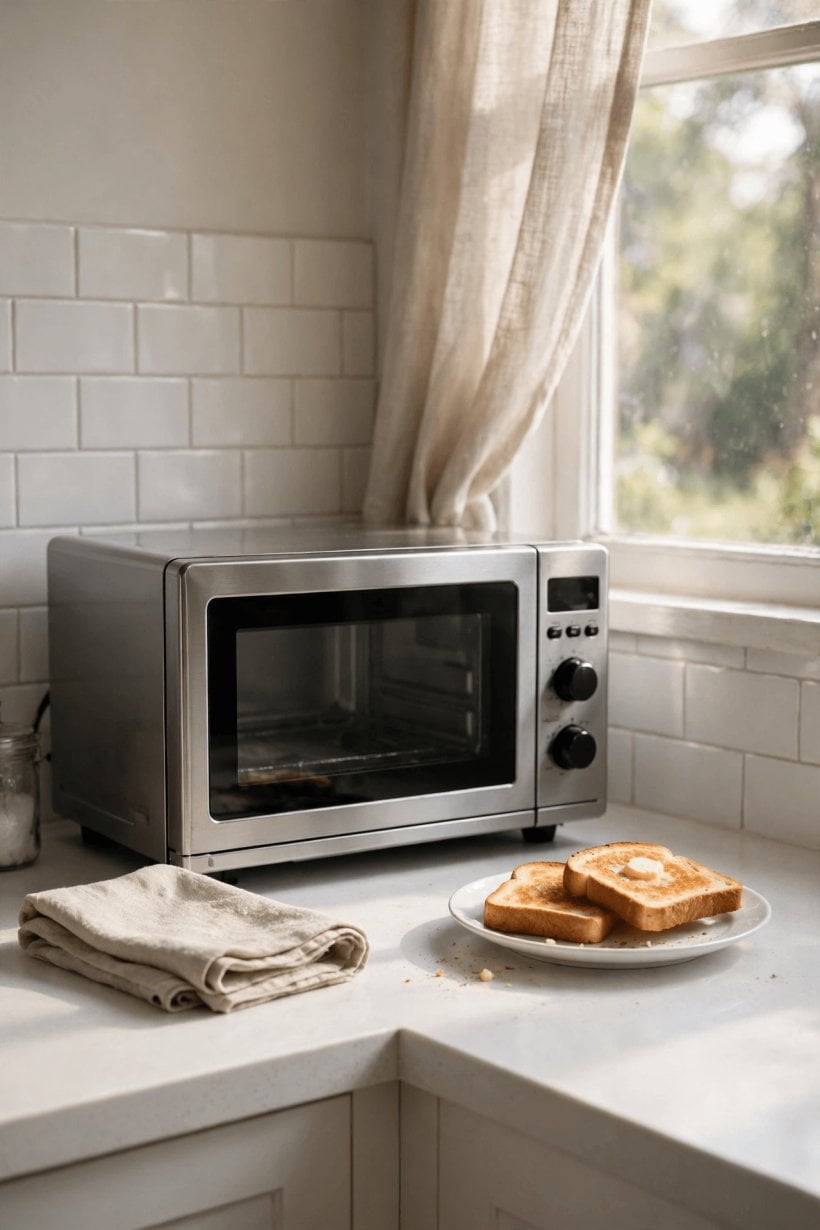
Be sceptical of long preset lists. A dozen named programmes you never touch add cost and clutter to the control panel, while clear power levels, a sensible timer range and a simple start and stop matter every day. If you cook from frozen often, check how defrosting is controlled and whether the oven section handles small frozen items without burning edges while centres stay cold; evenness matters more than raw speed here. Households that bake regularly should think honestly: a combo handles small batches and reheating beautifully, but a household that roasts for a crowd every weekend may still want a full-size oven as the main tool, with the combo as a weekday helper.
4. Power, Placement and Ventilation, Without the Jargon
Every countertop appliance that heats food needs two unglamorous things: a suitable power supply and room to breathe. Read the maker’s placement guidance and follow it literally: the clearances asked for above and beside the unit exist because hot air and steam need an escape route, and cabinets, curtains and stacked clutter should never crowd vents. Place the unit on a stable, level, heat-tolerant surface, within comfortable reach, and never wedged so tightly under a low cabinet that steam soaks the underside every time the door opens.
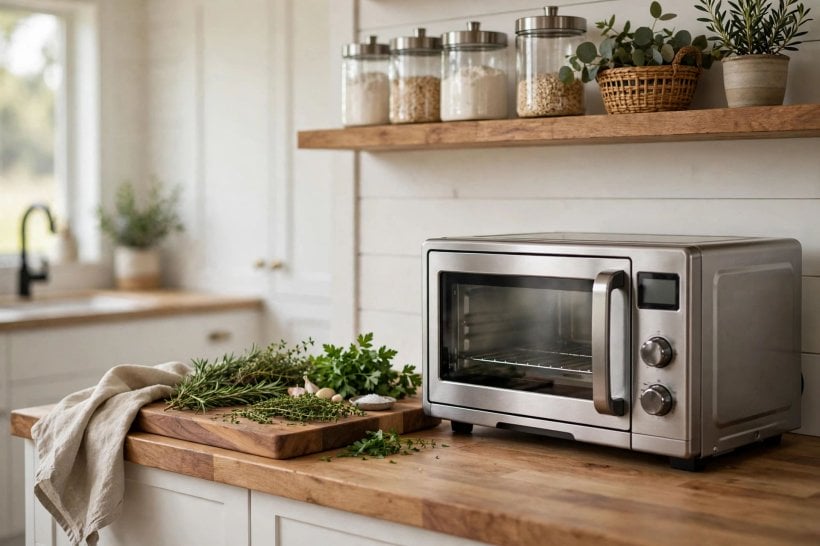
Think about the steam path in daily use. Opening a door after reheating soup releases a small cloud; if that cloud rises straight into a smoke alarm or a wooden cabinet base, move the unit. In open-plan homes, the same placement thinking used for seating and screens in tiny house living room ideas applies here: leave breathing room around anything that works hard, and daily life gets quieter. Finally, treat the supplied manual as part of the product. Keep it, read the safety pages properly once, and note which containers the maker allows in each mode; metal rules differ between microwave and oven sections, and guessing is how sparks and spoiled dinners happen.
5. Controls You Will Actually Use
Controls decide whether an appliance feels friendly at 7 in the morning. Dials are quick, forgiving and easy to nudge with wet hands; touch panels look sleek and wipe clean but can demand dry fingers and precise presses. Neither is automatically better. What matters is legibility: numbers you can read from a step away, a display that does not vanish under bright kitchen light, and a cancel button that stops everything without a puzzle of presses. If other people share your kitchen, imagine the least patient person in the house using it half asleep; that is the true usability test.
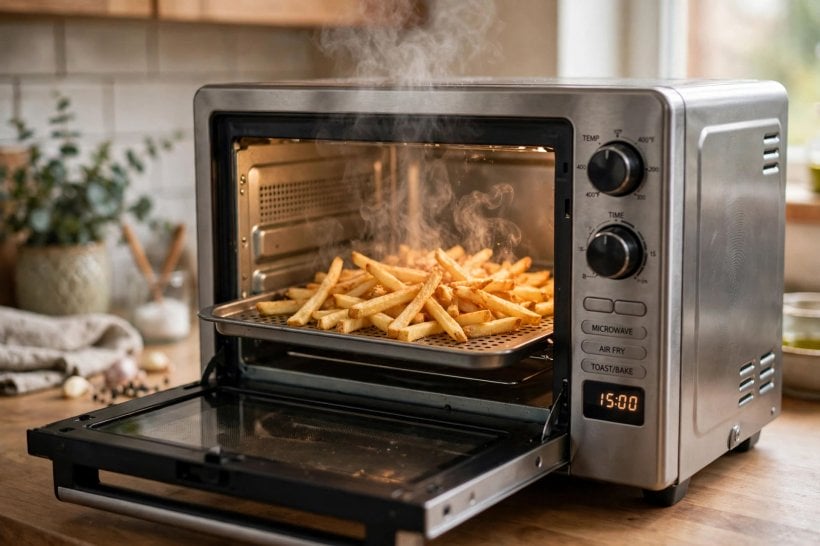
Small details separate thoughtful controls from theatre. A timer that can add short bursts without restarting the whole programme, a mute option for beeps in a quiet home, a clock that is easy to reset after a power cut, and buttons with clear labels rather than mystery icons all add up. So does memory: if the panel remembers nothing between uses, that is fine, as long as reaching your usual setting takes seconds. When comparing in a shop, run the same pretend task on each candidate: set a short reheat, then a toast cycle. The panel that explains itself without the salesperson’s help is usually the one you will still like in a year. Good compact kitchen planning always favours tools that need no manual after the first week.
6. Evenness and Everyday Results
Fair expectations make for happier kitchens. In microwave mode, evenness depends on the food itself as much as the appliance: stirring or turning portions partway, letting dishes stand briefly so heat settles, and covering food to hold steam all improve results in any unit. In oven mode, small cavities heat quickly and brown eagerly near elements, so the middle rack position and a watchful eye in the last minutes matter. Judge a combo by consistency on your five everyday tasks, not by a single showpiece dish cooked once under ideal conditions.
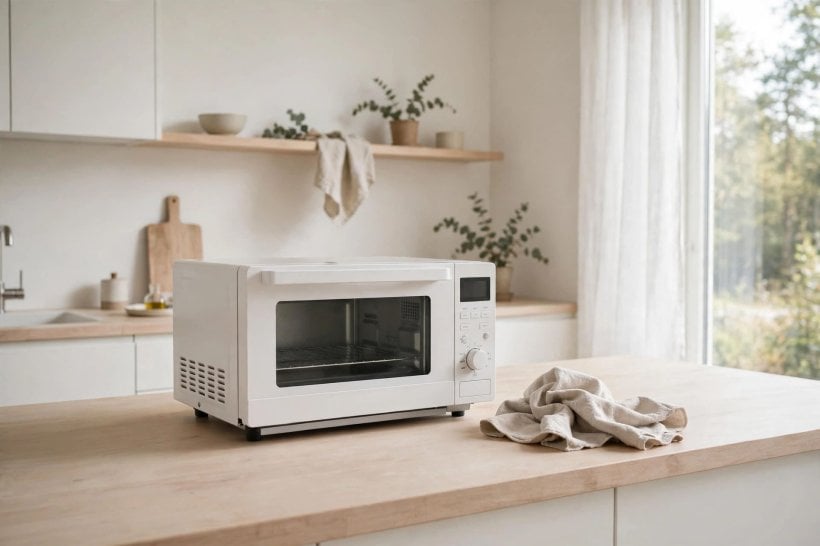
A few habits protect results in both modes. Preheat the oven section when browning matters, just as you would a big oven. Keep portions modest; an overfilled small cavity steams itself and resists crisping. Use the tray and rack supplied rather than improvising with containers meant for other jobs, and rotate trays if one side of your unit habitually runs hotter, a quirk small ovens often share. None of this requires special talent, only the same calm routine you would use with any cooker. If a seller promises restaurant-level performance from a countertop box, smile politely and return to your checklist; honest appliances do everyday food well, and that is the standard worth paying for.
7. Cleaning and Day-to-Day Upkeep
Ask how a combo cleans before you ask anything else about its looks, because the two are linked: the unit you can wipe in a minute is the unit that still looks smart in a year. Removable trays, racks and crumb drawers are worth more than decorative finishes. Interior surfaces that are smooth, with few seams and corners, release splashes willingly; textured or fiddly interiors hold onto them. Check whether the door’s inner side can be reached easily, and whether the area around the elements can be wiped without dismantling anything.
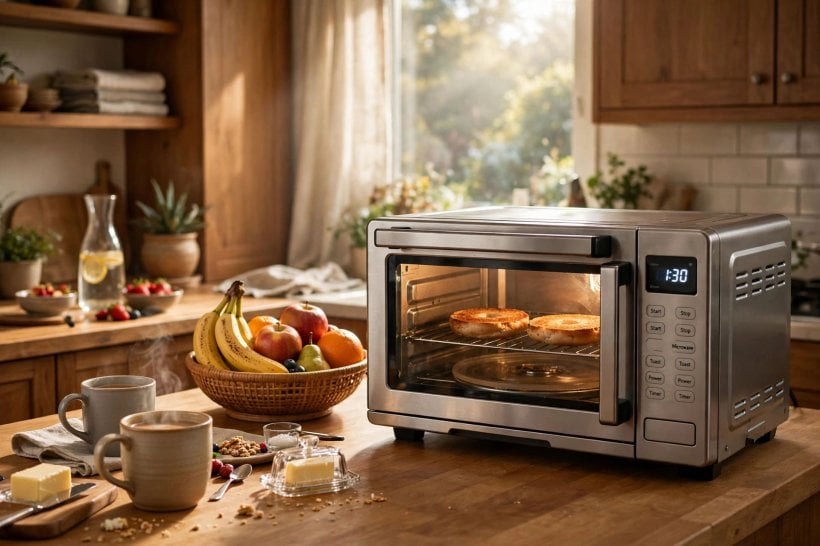
Daily upkeep is mostly rhythm. Cover reheating food, and most splashes never happen. Wipe the cavity while it is warm rather than hot after messy jobs, empty the crumb tray on a set day, and leave the door ajar briefly after steamy cooking so moisture escapes instead of settling. Avoid harsh scouring on any interior finish, and follow the maker’s cleaning guidance rather than internet folklore, especially around door seals and vents, which keep both heat and microwaves where they belong. A small appliance that is easy to clean gets cleaned; that simple loop is the difference between a helper and a chore, and it should weigh heavily in your final choice.
8. Small Kitchens, Rentals and Tiny Homes
The strongest case for a combo is a small kitchen, where one footprint replaces two appliances and frees a run of counter for actual cooking. In a tiny home or a rental, that reclaimed space can hold a chopping board permanently, which quietly changes how pleasant cooking feels. The trade is capacity: measure for your real household, not for imaginary dinner parties. A couple reheating, toasting and baking small portions is perfectly served; a family expecting to batch-cook for the week should plan the main oven first and treat any combo as support.
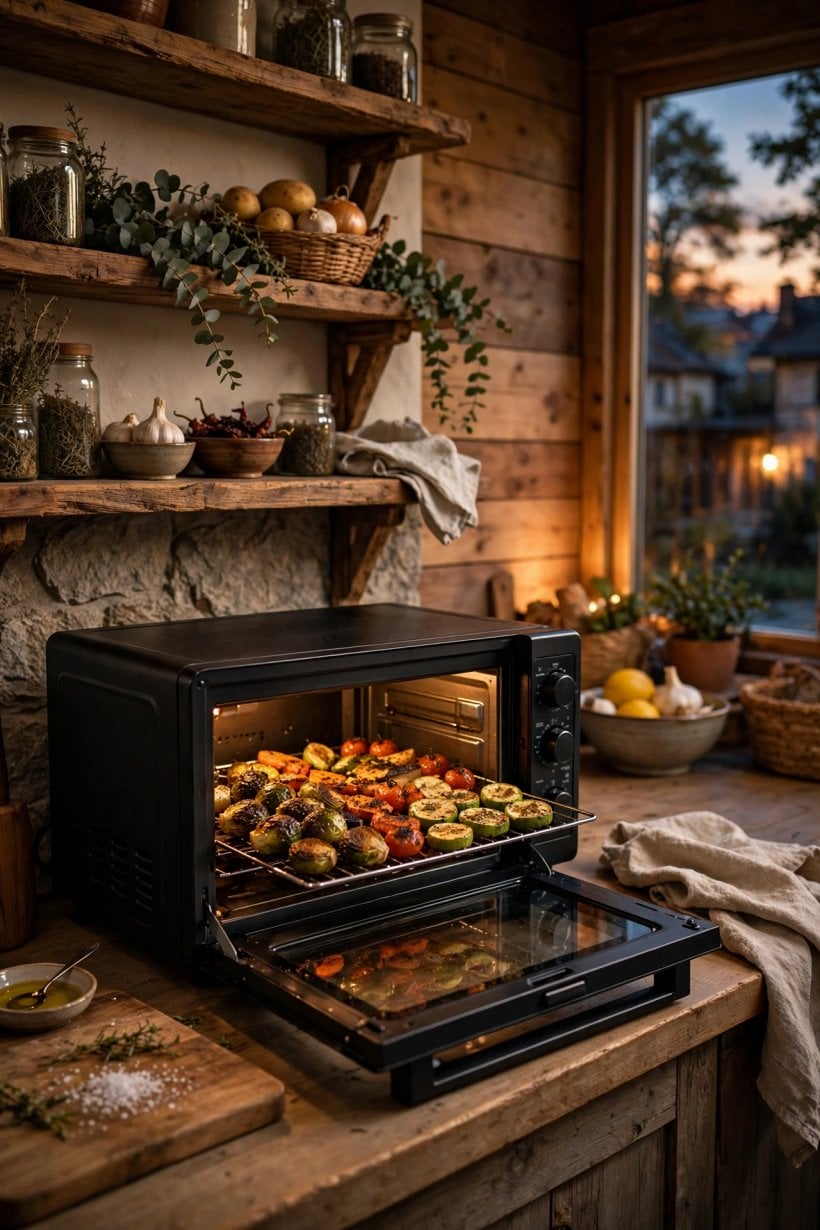
Renters should note the practical points: countertop units usually need no installation, no landlord negotiation and no rewiring, and they leave with you when you move. That flexibility echoes the spirit of how to make a cheap tiny house, where reversible, hard-working choices beat permanent compromises. Do check the weight and your shelving if you plan to store the unit away between uses; an appliance that is heavy to move will simply live on the counter, so plan its permanent home from the start and measure that spot twice. In the smallest kitchens, consider the vertical: a sturdy shelf or microwave stand at a safe, reachable height can give the combo a dedicated station and return your main worktop to cooking.
9. Costs in Plain, Qualitative Terms
Without quoting figures, the price pattern for combos is easy to read. You generally pay more for sturdier construction, clearer controls, easier cleaning and stronger after-sales support, and less for the longest list of novelty presets. A very cheap unit that is frustrating to clean or confusing to run is not a bargain; it is a slow leak of patience. Equally, the most expensive badge is not automatically the best fit; a mid-priced, well-made unit whose controls suit your household will out-serve a flagship whose features you never touch.
Think in whole-ownership terms. Energy use for small jobs is one reason combos appeal: heating a small cavity for two portions generally makes more sense than firing a full-size oven, though habits matter more than labels. Factor in the cost of replacing a unit that fails early against one with a repairable design and a warranty you have actually read. Buying once, carefully, is the same principle that keeps small bedrooms calm on a budget in our guide to tiny house bedroom ideas: spend on the parts you touch daily, save on the theatre. If budget is tight, prioritise fit, controls and cleaning over extra programmes; those three decide daily happiness long after the novelty of preset number nine has faded.
10. Your Pre-Buy Checklist
Run this final pass in order. One: measurements of counter, cabinet height, door swing and your three most-used dishes, all written down. Two: confirmation of how the two functions share the cavity and whether they can run together, in the maker’s own words. Three: a hands-on control test, setting a reheat and a toast cycle without help. Four: a cleaning inspection: removable tray, crumb access, smooth interior, reachable door. Five: placement and ventilation requirements read and matched against your actual spot, including the steam path and the nearest socket.
Six: warranty terms and returns read before, not after, purchase, so a unit that disappoints in week one is a simple exchange rather than an argument. Seven: an honest household vote on the five everyday tasks from section one; if a microwave toaster oven combo covers four of them well, it is probably the right tool, and if it covers two, keep looking or keep your separate appliances. Eight: a last look at the counter with fresh eyes, imagining the unit in place on an ordinary Tuesday, kettle beside it, post on the side, life happening. If that picture feels calm and workable, you have done the checks that matter and you can buy with a clear head.
Final Considerations
A combo is at its best when it disappears into your routine: breakfast toast without fuss, leftovers revived properly, small bakes handled without heating the whole kitchen. Choose fit over features, controls over chrome and cleaning over claims, and the appliance will repay you daily. Measure honestly, read the manual’s placement and safety pages, and let your own five everyday tasks be the judges. That steady, unspectacular approach is how small kitchens everywhere stay capable, and it will serve you far better than any headline ever printed on a box.




0 Comments