

A pink bedroom can feel calm, grown-up and deeply restful when the colour is handled with a light touch.
If you are gathering pink bedroom ideas for a small room, a spare room or a full refresh, this guide keeps things practical: layouts first, colour second, then storage and the soft finishing layers that make the room easy to live with.
1. Begin With the Mood: What Pink Does to a Bedroom
Before you choose a single cushion, decide how the room should feel at three moments of the day: bright morning, busy midday and the last quiet half hour before sleep. Pink is forgiving because it can lean warm or cool. Warm pinks with a hint of peach feel sunny and welcoming, while cooler pinks with a touch of grey feel still and modern. Write your chosen mood in one short sentence and keep it beside you while you shop; it stops impulse buys that fight the rest of the room. The table below sums up the whole approach, so you can check every later decision against it in seconds.
| Detail | At a Glance |
|---|---|
| Softest shades | Blush, pale rose and warm off-pink for walls and large textiles |
| Pairs well with | Warm white, light oak, rattan, brass and soft grey |
| Layout focus | Bed centred on the longest wall, clear walking space on both sides |
| Storage focus | Closed storage first, open shelves only for a few calm objects |
| Best light | Warm lamps at bed height, sheer curtains for soft daylight |
| Restful finish | Matte walls, layered bedding and one deeper accent tone |
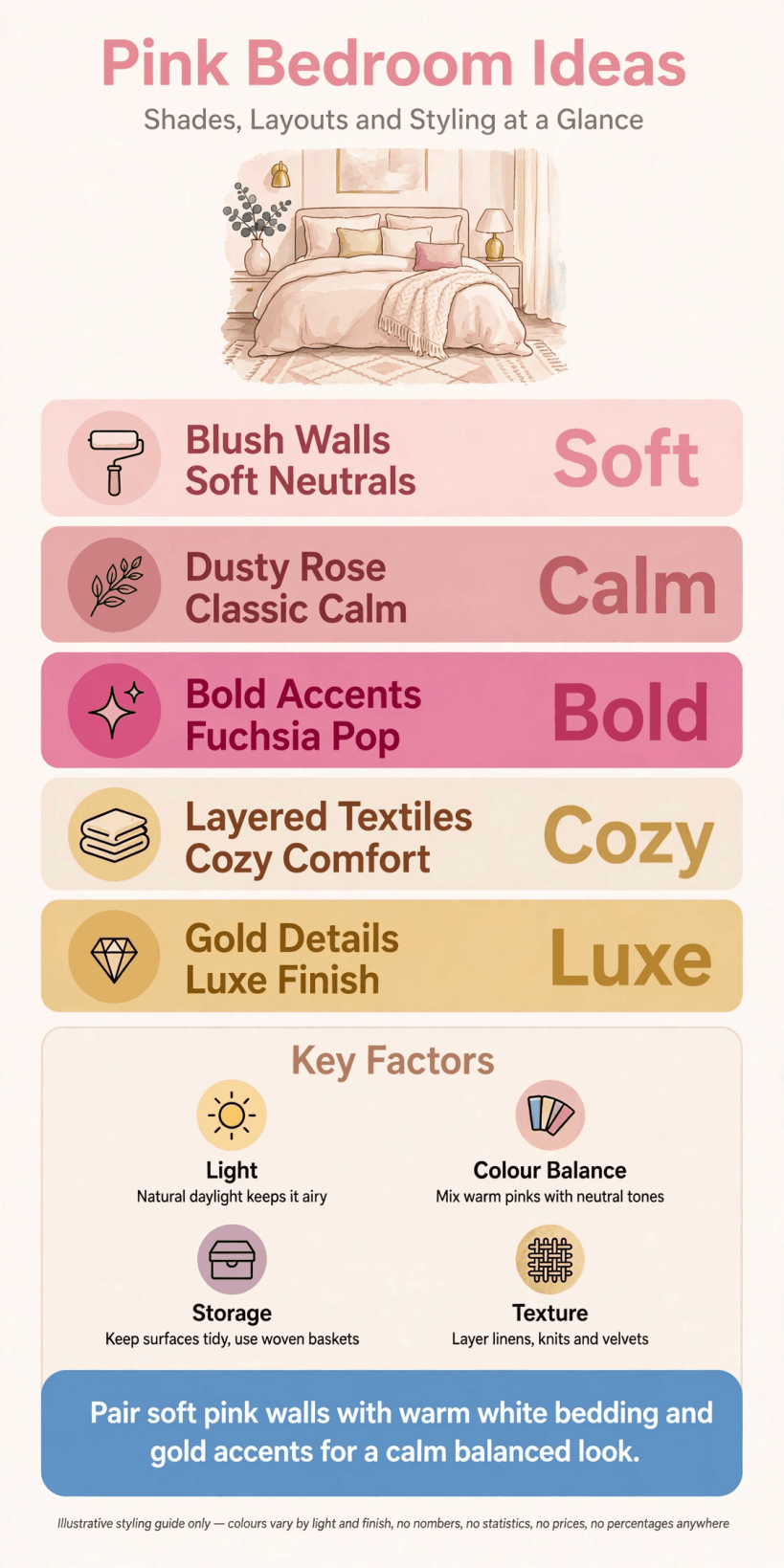
A quick visual summary of the shades, pairings and layout choices covered in this guide.
Notice that nothing in the table depends on a big budget or a big room. The same thinking scales down to a box room and up to a generous main bedroom. What changes is proportion: smaller rooms need fewer, larger pieces, while bigger rooms can carry an extra chair, a bench at the foot of the bed or a wider rug. Keep the palette tight either way. Two pinks, one neutral and one accent material will carry the whole scheme without ever feeling flat or repetitive.
2. Layouts That Keep the Room Breathing
Start with the bed, because every other decision hangs off its position. In most rooms the bed sits best against the longest unbroken wall, with the headboard centred where possible. Leave a comfortable gap on both sides so making the bed never becomes a squeeze, and so two sleepers can move without waking each other. If the room is narrow, push storage to the foot wall rather than the side walls; a low chest or a slim bench keeps the middle of the room open and makes the space feel longer. Wardrobes with sliding or curtain fronts save the swing space that hinged doors steal.
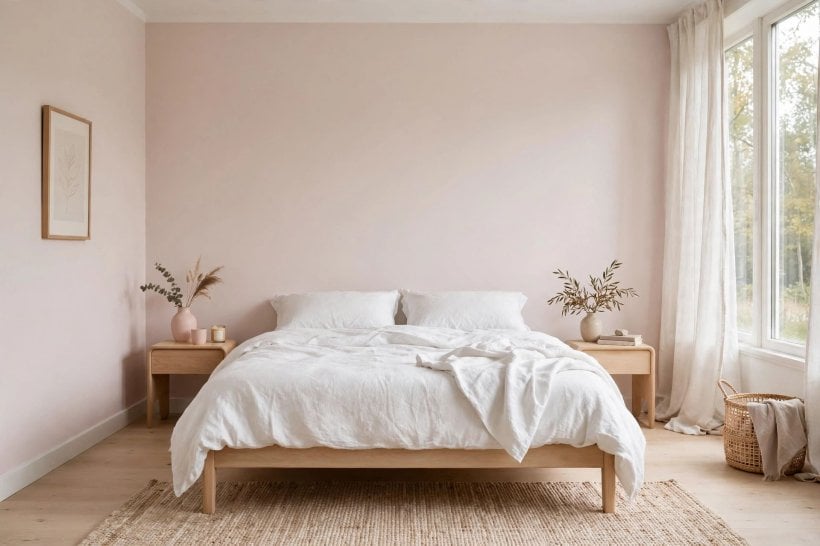
Work in zones rather than filling corners at random. A sleep zone around the bed, a dressing zone near the wardrobe and, if space allows, one small pause zone: a chair, a floor cushion or a window seat with a folded throw. Readers planning compact spaces will find the same zoning logic in our guide to tiny house bedroom ideas, where every centimetre has to earn its place. Keep walkways honest. If you have to turn sideways to pass the bed, the layout is asking too much of the room, and swapping one bulky piece for a slimmer one will fix the feeling faster than any new paint.
3. Choosing Your Pink: Blush, Dusty Rose and Deeper Tones
Pink is a family, not a single colour, and the differences matter most on large surfaces. Blush is the palest, warmest member and behaves almost like a neutral; it suits north-facing rooms that need warmth. Dusty rose carries more grey, which makes it feel calm and slightly vintage, and it hides the scuffs of daily life gracefully. Deeper tones such as raspberry or clay pink are best kept to one wall, a headboard or bedding, where they read as a deliberate accent rather than a flood. Always test shades on the wall itself, in a patch large enough to judge at arm’s length and across a full day of changing light.
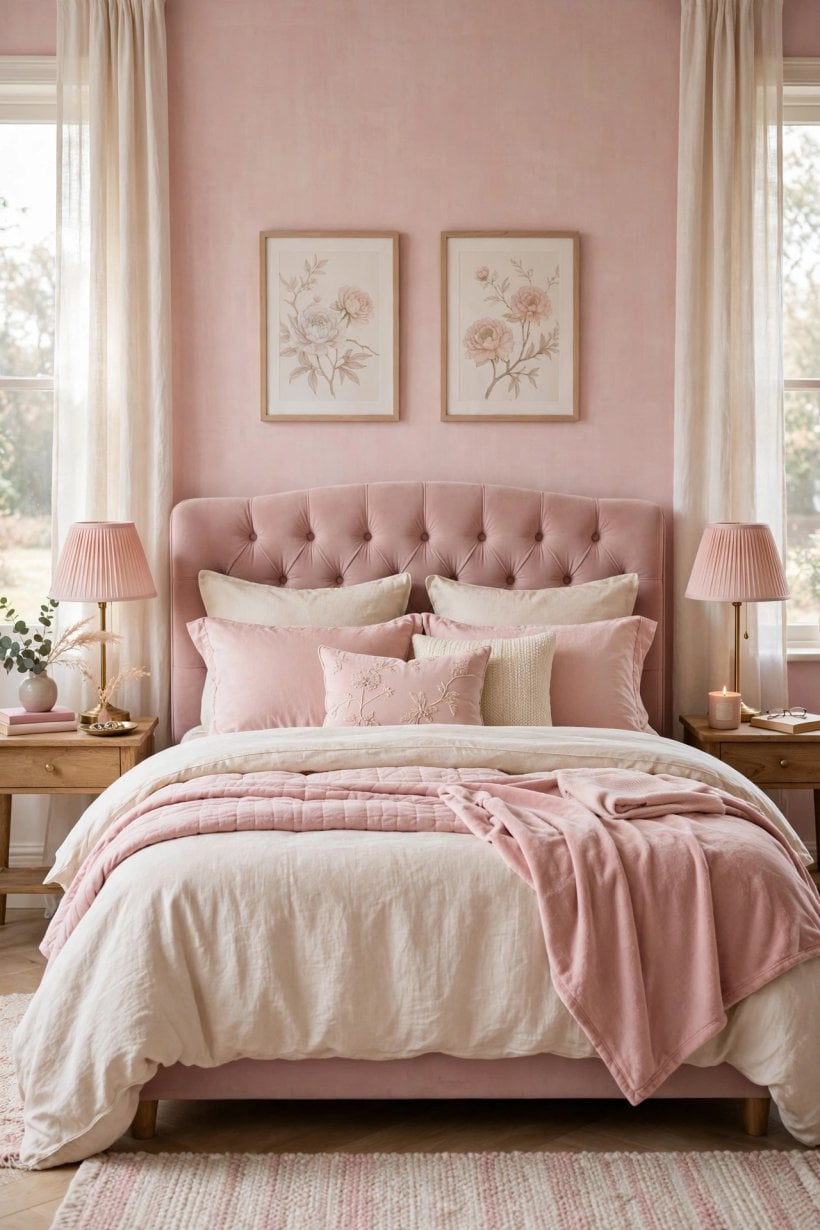
Build the palette in layers. Let the largest surface, usually the walls or the bedding, carry the palest tone. Let the middle layer, curtains, a rug and upholstered pieces, sit one step deeper. Save the strongest pink for the smallest layer: cushions, a lampshade, a framed print or a throw. This pale-to-deep staircase is what makes a pink room feel designed rather than matched. If you love a bold shade, use it in the small layer first and live with it for a week; you can always promote it to a wall later, but repainting a whole room because a strong colour tired quickly is a chore nobody enjoys.
4. Walls, Paint Finishes and One Accent Surface
Matte and eggshell finishes flatter pink walls because they soften reflections and let the colour read evenly from morning to evening. Save any sheen for woodwork, where a gentle contrast in finish, rather than colour, adds quiet structure: skirting, doors and window frames in warm white keep the walls feeling fresh. If painting every wall feels like too much commitment, paint one accent surface instead. The wall behind the headboard is the natural choice, because the bed frames it like a picture and the colour is mostly seen in soft, broken views rather than all at once.
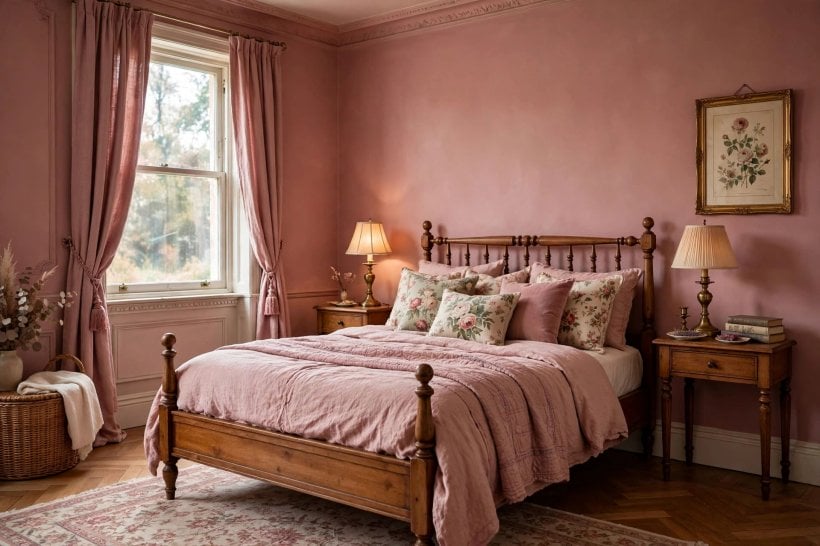
There are softer ways to bring pink onto walls. Limewash-style paints and colour-washed effects give a cloudy, gentle movement that suits bedrooms beautifully and forgives uneven plaster. Removable wallpaper in a small-scale print works for renters, and a half-painted wall, with pink rising to picture-rail height and warm white above, keeps a low-ceilinged room feeling tall. The same one-accent thinking appears in our tiny house living room ideas, where a single strong surface does the work of a whole scheme. Whatever route you choose, keep ceilings pale; a white or barely-pink ceiling lifts the room and stops the colour closing in overhead.
5. Bedding and Soft Layers That Invite Sleep
Bedding is where a pink bedroom earns its restful reputation. Choose the duvet cover in your palest pink or warm white, then layer depth on top: a folded throw in dusty rose, cushions in two tones rather than five, and one contrasting texture such as washed linen against smooth cotton. Natural fibres breathe better through the night and soften the colour story with their slight irregularity. Keep patterns small and sparse. A fine stripe, a tiny check or a faded floral in the same tonal family adds interest without turning the bed into the loudest thing in the room.
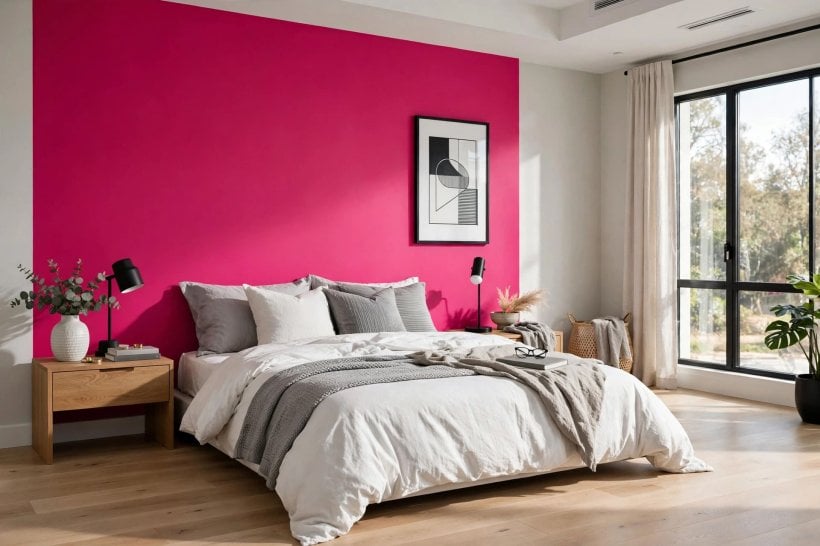
Think about the bed as it is actually used. A throw lives at the foot for cold feet and afternoon naps. Two sleeping pillows per person, propped or flat according to habit, look better than a mountain of decorative cushions that must be moved every night and replaced every morning. If you share the bed, let each side keep its own small comforts within reach: a carafe, a book, a lip balm in the drawer. Restful styling is mostly the absence of friction, and bedding that can be shaken straight in under a minute will always feel calmer than a complicated arrangement that only looks good in photographs.
6. Storage That Stays Quiet and Invisible
Bedrooms collect small things, and visible clutter is the fastest way to undo a gentle colour scheme. Favour closed storage: drawers rather than open shelves, boxes with lids on wardrobe tops, and a bedside drawer for the nightly tangle of chargers and glasses. Under-bed space is valuable in any room; low lidded boxes on castors keep spare bedding and out-of-season clothes dust-free yet reachable. A dressing table earns its footprint only if its surface can be cleared in seconds, so give every item a drawer or a tray and let the top stay mostly empty.
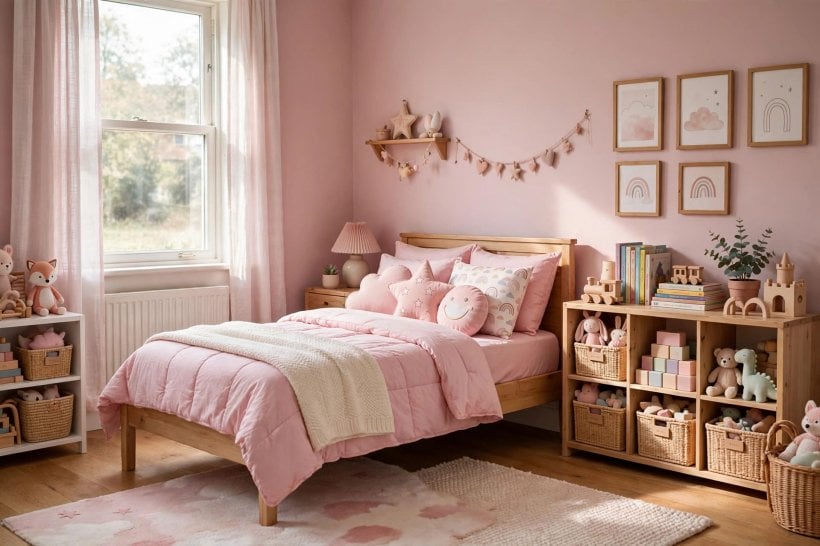
Small-space storage rewards the same discipline used in compact kitchens, where every shelf is planned; the principles in tiny house kitchen design translate surprisingly well to wardrobes and drawers. Label nothing, but zone everything: one drawer for nightwear, one for layers, one narrow tray for jewellery and watches. When each category has exactly one home, tidying becomes a two-minute habit instead of a weekend project. Finally, keep one completely empty surface in the room, even if it is only the top of a chest. Empty space is a styling tool; it tells the eye where to rest and makes the pink around it feel more deliberate.
7. Light: Soft Daylight and Warm Evenings
Light decides whether pink looks fresh or sugary. In daylight, sheer curtains in white or the palest blush filter glare while keeping the room bright, and they move gently with air, which adds life to a still room. Position the bed so morning light falls across it rather than directly into sleepers’ eyes where possible. For evenings, plan two low, warm light sources at roughly bed height: bedside lamps with fabric shades are the classic choice because they spread light sideways and flatter both faces and walls. Overhead light alone flattens pink into dullness, so treat the ceiling light as a utility for cleaning and dressing, not the main event.
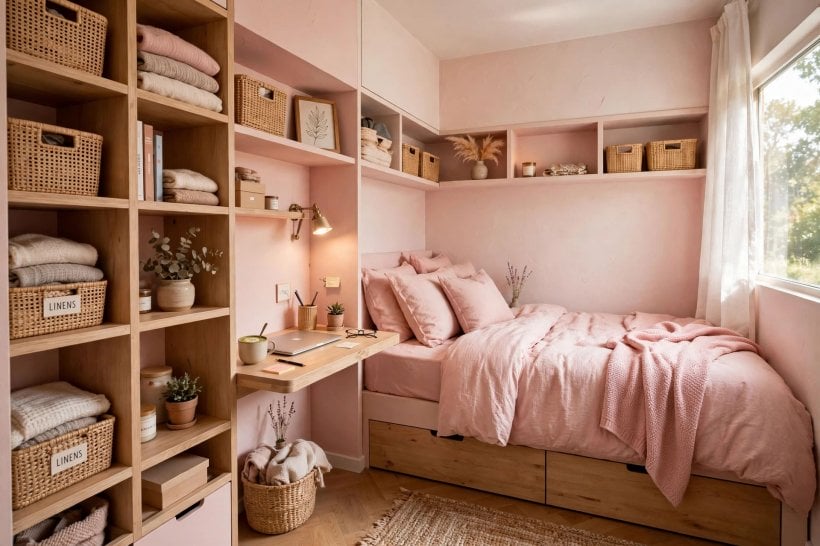
Mirrors help when they are placed with intent. A mirror opposite or beside a window doubles soft daylight and can make a small pink room feel twice as airy, but avoid reflecting the unmade bed straight back at the door if that view bothers you. Candlelight, real or battery-powered, suits pink rooms especially well for the last hour of the day, echoing the warmth in the colour. Dimming bedside lamps, even with simple in-line switches, lets one room serve reading, resting and winding down without changing a single object. The goal is a gentle gradient from bright morning to near-dark calm, and pink rewards that gradient more than almost any other colour.
8. Small Rooms, Rental Rooms and Tiny Footprints
A small room is not a problem for this colour; it is often where pink works hardest, wrapping the walls in warmth so the space feels held rather than cramped. Keep furniture pale and legs visible where you can, because seeing the floor running under pieces tricks the eye into reading more space. Choose one statement, perhaps a deeper pink headboard or a single generous artwork, and let everything else stay quiet. In rentals, lean on textiles: bedding, curtains and a rug can carry the entire scheme while the walls stay exactly as the landlord left them, and every piece leaves with you.
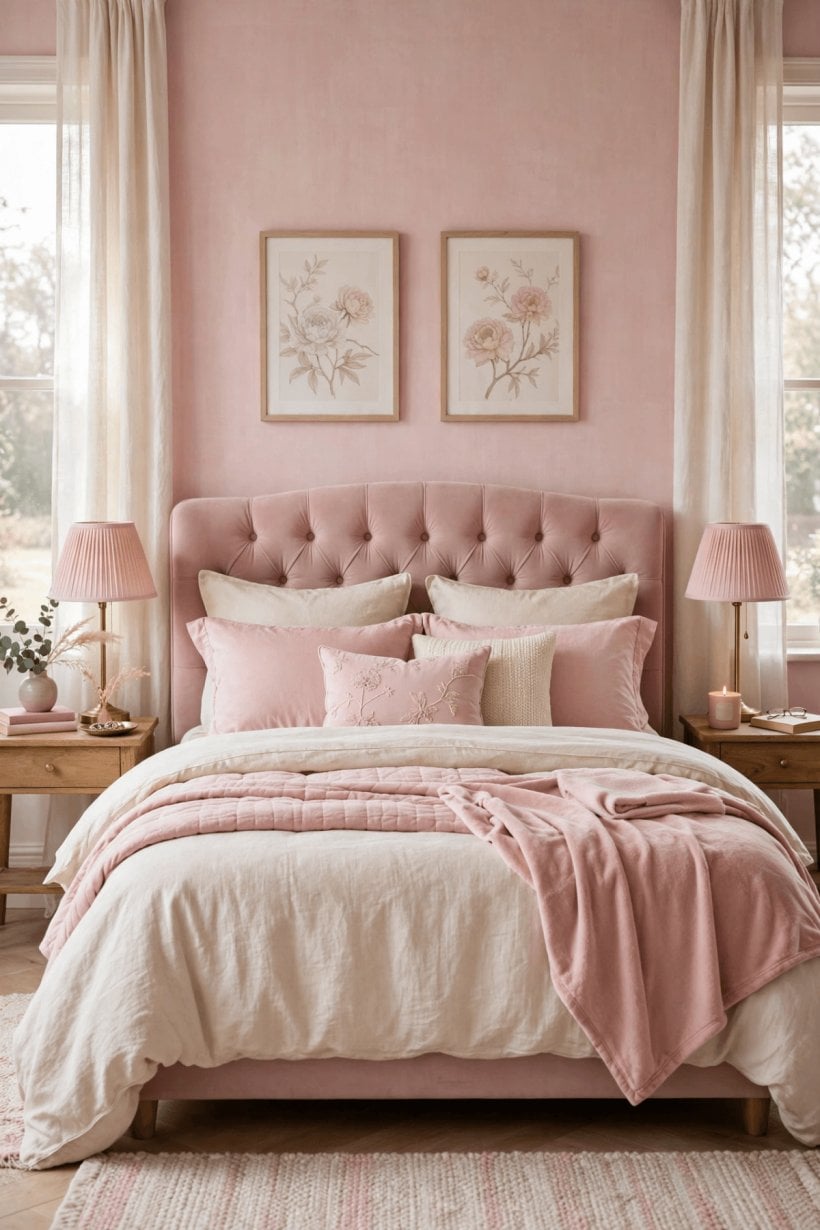
Budget-friendly changes follow a strict order: textiles first, paint second, furniture last and only if it truly fails. That order mirrors the thinking in how to make a cheap tiny house, where the cheapest layers are asked to do the most work. A second-hand wooden bedside table, sanded and painted warm white, will serve for years; a cheaply made new one in a clashing pink will not. Measure twice before buying anything for a small room, and tape the footprint of a proposed piece on the floor for a day. Living around the tape outline reveals pinch points that no measurement on paper ever quite shows.
9. Styling Details: Art, Plants and Honest Texture
Details finish a pink room, but they should whisper rather than shout. Artwork with plenty of white space, line drawings, soft landscapes or abstract washes in rose and clay, keeps walls calm while giving the eye somewhere to travel. Hang one larger piece rather than many small ones if the room is busy already. Plants are pink’s best friend: deep green leaves sharpen the colour and prove the room is alive, not staged. A trailing plant on a wardrobe top or a simple vase of branches on the dresser is enough; bedrooms do not need a jungle, and low-maintenance choices suit a space meant for rest.
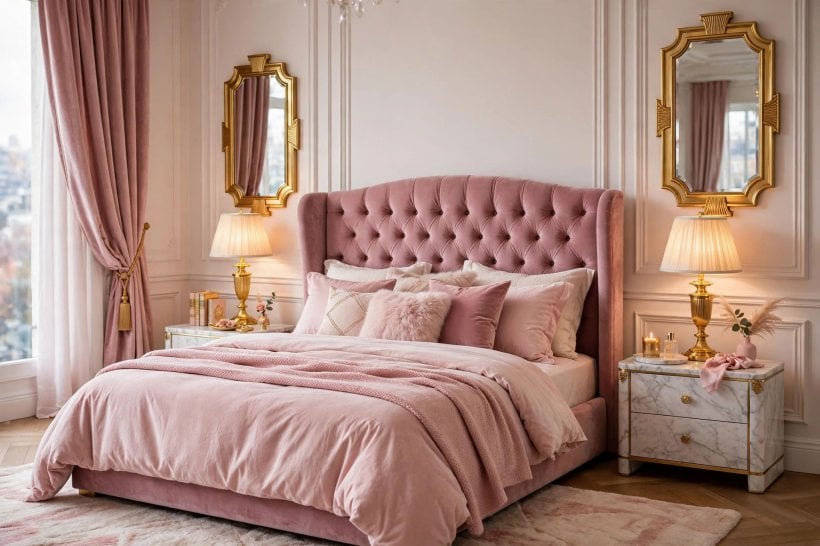
Texture is the quiet insurance policy against a room feeling sugary. Mix at least three honest materials: painted wood, woven cotton or linen, and something with grain or fibre such as rattan, jute or raw timber. Metals should be warm, brass, aged gold or blackened steel, rather than bright chrome, which can turn pink chilly. Books with cloth covers, a ceramic dish for rings, a small stack of well-loved paperbacks: these personal, slightly imperfect objects keep the scheme human. If a detail does not add comfort, beauty or a memory, it is probably clutter wearing a disguise, and the room will breathe easier without it.
10. Common Mistakes and Gentle Fixes
The most common mistake is using one pink everywhere at one strength, which flattens the room into a single note. The fix is the pale-to-deep staircase from earlier: break the colour into at least three depths and let neutrals carry the gaps. A second mistake is choosing pink under harsh shop lighting and being surprised at home; always judge samples in your own daylight and lamplight. A third is forgetting the floor. A cold, dark floor can fight soft walls, so warm it with a pale rug that covers the main walking and bedside areas, even a thin washable one.
Other traps are quieter. Too many sweet accessories, hearts, slogans and novelty shapes, tip a calm room into a theme; edit them down to one or two favourites. Curtains that stop awkwardly mid-wall shrink the room, so hang them high and let them reach the floor or the sill cleanly. And do not neglect the fifth wall of any bedroom: the view from the bed. What you see lying down, a calm picture, a tidy dresser, soft light, shapes how restful the room truly feels. Working through these pink bedroom ideas one fix at a time, rather than all at once, keeps the process enjoyable and the budget intact.
Final Considerations
A restful pink bedroom is built from ordinary decisions made in the right order: layout before colour, colour before decoration, and comfort before everything. Start with the mood sentence, test your shades honestly, and layer textiles until the bed looks like the calmest place in the house. Storage that hides the everyday tangle and light that softens as the day ends will do more for the room than any single statement purchase. If you are refreshing a compact space, revisit the zoning lessons in small bedroom layouts for tiny homes and borrow freely. Change one layer, live with it, then change the next. Rooms that grow gently, in step with the people sleeping in them, are the ones that stay loved the longest.


0 Comments