

The garage has quietly become the hardest-working room in the house. These modern garage ideas cover layouts, doors, floors, storage, colour and the practical details that turn a dusty parking box into a space you are proud to open.
Measure honestly, plan zones before you buy anything, and let the car, the clutter and your hobbies each claim their fair share.
1. Planning the Space: Size, Use and Honest Measuring
Every successful modern garage starts with a tape measure and a truthful list. Park the car, open all its doors, and mark the space that remains; that leftover territory is what your storage, benches and hobbies must share. Note where the door swings, where water creeps in, and which wall gets the sun. Decide the garage’s jobs in priority order — parking, storage, workshop, gym, laundry, play — and give each job a zone on paper before spending anything. If the plot outside matters too, our tiny house landscaping ideas will help the driveway and planting meet the new facade gracefully.
| At a Glance | Sensible Starting Point | Why It Matters |
|---|---|---|
| Parking clearance | Room to open doors and walk around | Daily comfort beats squeezing in one more shelf |
| Main storage wall | The longest uninterrupted wall | One calm storage wall keeps the rest feeling open |
| Floor finish | Sealed, light-reflective and easy to sweep | A bright floor makes every other upgrade look better |
| Lighting | Bright ceiling light plus task light at benches | Garages fail on gloom more than on size |
| Power | Sockets at bench height, planned early | Retrofitting electrics costs more and looks worse |
| Ventilation | A window, vent or extractor that actually opens | Fumes, damp and paint smells need an exit |
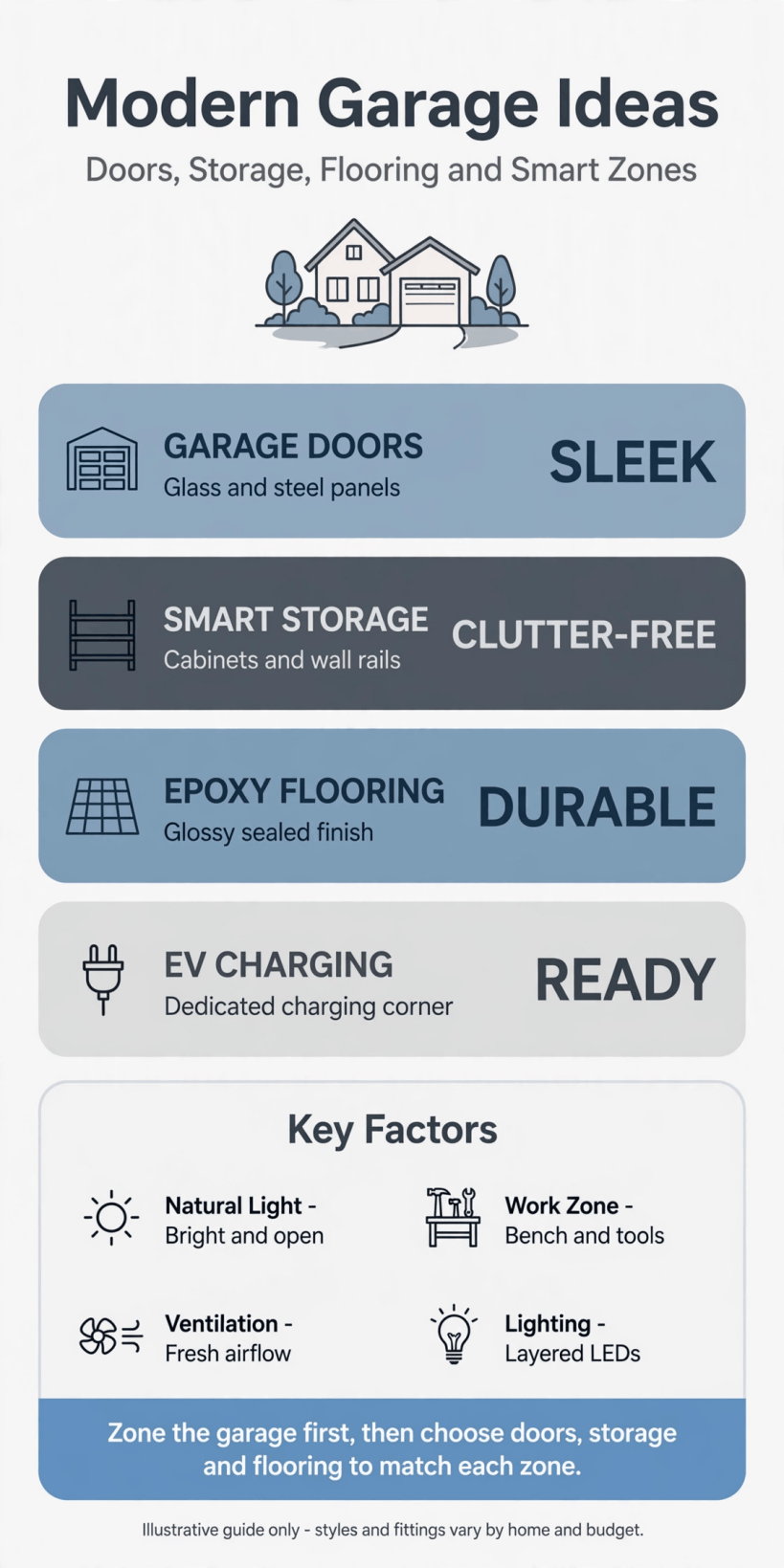
A quick visual planner for zones, finishes and the order to tackle a garage refresh.
2. Layouts That Fit Cars and Life
Layout is a negotiation between the car and everything else. These arrangements protect the parking first, then fit storage and hobbies into the margins without turning daily parking into an obstacle course.
1. One calm storage wall. Line a single wall floor-to-ceiling with storage and keep the others bare. The room reads as tidy at a glance, and the car still feels like the main event.
2. Parking-first centre. Keep the centre completely clear and push everything to the edges. It sounds obvious, yet most clutter creeps inward; painted floor lines can police the boundary kindly.
3. Tandem-friendly layout. In a long garage, park the daily car nearest the door and give the far end to the project car, bikes or a bench, so nothing has to shuffle daily.
4. Corner workshop triangle. A corner bench with tools on the two walls behind it keeps work close, bright and out of the door-swing zone, with shavings swept in seconds.
5. Split-level storage mezzanine. Where ceiling height allows, a small mezzanine shelf over the door end swallows suitcases and seasonal boxes that are light, bulky and rarely needed.
6. Drive-through potential. If the plot allows a rear door one day, keep the centre line clear now. Future you will thank present you when the mower no longer threads past the car.
7. Mudroom strip by the house door. A narrow strip of hooks, a bench and shoe trays beside the internal door catches family chaos before it migrates across the parking bay.
8. Seasonal rotation zone. Dedicate one labelled bay of shelving to whatever season is next: garden kit in spring, holiday boxes in winter, swapped in an hour twice a year.
9. Slimline single-garage plan. In a narrow single garage, wall-hung everything is the rule: folding bench, wall-mounted bikes, ceiling racks, and a strict nothing-on-the-floor policy except the car.
10. Flex bay for hobbies. Keep one parking bay deliberately multi-use with folding furniture, so it hosts a car all week and a band practice, gym session or market stall at weekends.
3. Doors, Facades and First Impressions
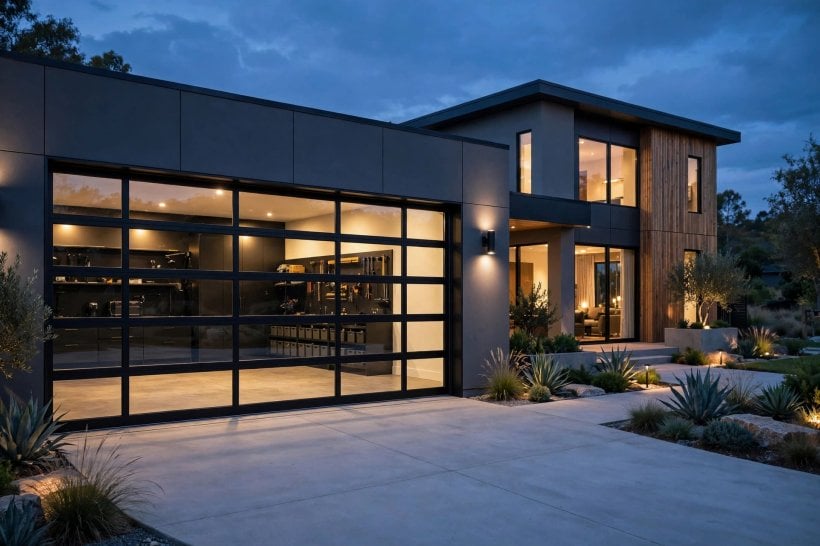
The garage door is often a third of the home’s front face, so its style quietly sets the tone for the whole property. Choose lines that agree with the house, then light and plant the approach.
11. Flush panel door. A flat, flush door in a colour matched to the house render gives a calm, architectural front that suits minimalist homes and small facades alike.
12. Glazed top section. A row of windows across the top of the door borrows daylight for the whole garage while keeping privacy and security at street level.
13. Side-hinged pair. Traditional side-hinged doors suit garages used more for hobbies than cars, opening like garden gates without machinery, tracks or ceiling clutter.
14. Sectional door in a bold colour. A sectional door in deep green, navy or black turns a plain facade into a deliberate design statement, especially with matching house numbers and lighting.
15. Timber-look finish. Wood-effect finishes warm up brick and render facades. Ask about fade resistance and upkeep honestly before choosing, since sunny fronts test every coating.
16. Framed by climbing plants. A trellis of climbers either side of the door softens a wide facade. Keep growth off the door’s moving parts and check local guidance near boundaries.
17. Symmetrical sconce lighting. A pair of wall lights flanking the door makes the front feel designed after dark and lights the keyhole, the step and the driveway edge kindly.
18. Smart opener with battery backup. An opener that works during a power cut, with a keypad or phone control, is the upgrade owners praise most on rainy nights. Keep the manual release reachable.
19. Weather-sealed threshold. A proper threshold seal stops driven rain, leaves and mice in one move, and makes every floor finish inside last longer. It is cheap, quick and unglamorous — install it first.

4. Floors, Walls and Ceiling Finishes
Finishes decide whether the garage feels like a room or a shed. Light, sealed, wipeable surfaces reflect the style of our favourite interiors; borrow the discipline from our modern tiny house interior ideas and treat this as a real room.
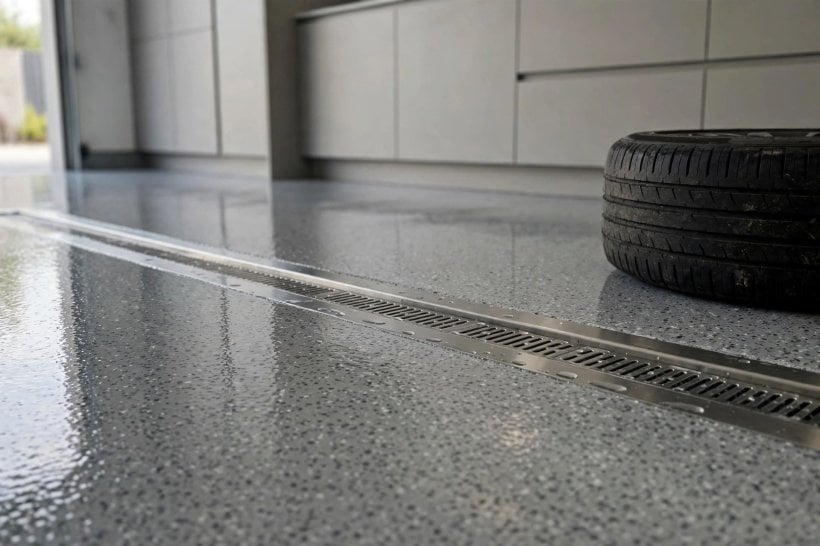
20. Sealed concrete, honestly finished. Ground, sealed concrete with a soft sheen is tough, honest and easy to sweep. It hides dust better than paint and suits almost every scheme.
21. Two-part floor coating. A quality floor coating resists hot tyres and oil better than ordinary paint. Preparation is everything: degrease, repair, and follow the maker’s curing times patiently.
22. Interlocking floor tiles. Clip-together tiles hide a tired slab, add a little insulation underfoot and let you replace a damaged square in minutes. Choose a pattern and stick to it.
23. Pale walls, darker wainscot. Pale upper walls bounce light; a darker band to waist height hides scuffs where bikes and bins pass. It is the oldest decorator’s trick and it still works.
24. Painted ceiling, brighter room. A white ceiling transforms garage light. While you are up there, seal gaps where dust and insects drift in from the roof space.
25. Insulated wall panels. Slim insulation behind lining boards takes the chill off a workshop corner and quietens the room. Check building guidance for your area before lining walls.
26. Pegboard as a finish. A full pegboard wall is both finish and storage: painted to match the room, it turns tools into the decoration and keeps benches clear.
27. Washable splash zone. Behind a utility sink or potting bench, a washable panel or tile splashback protects the wall from the two wettest jobs in the building.
28. Skirting and sealed edges. Sealing the wall-to-floor joint stops dust nests, puddle creep and insect highways, and makes sweeping the perimeter a one-pass job.
5. Storage That Swallows Clutter
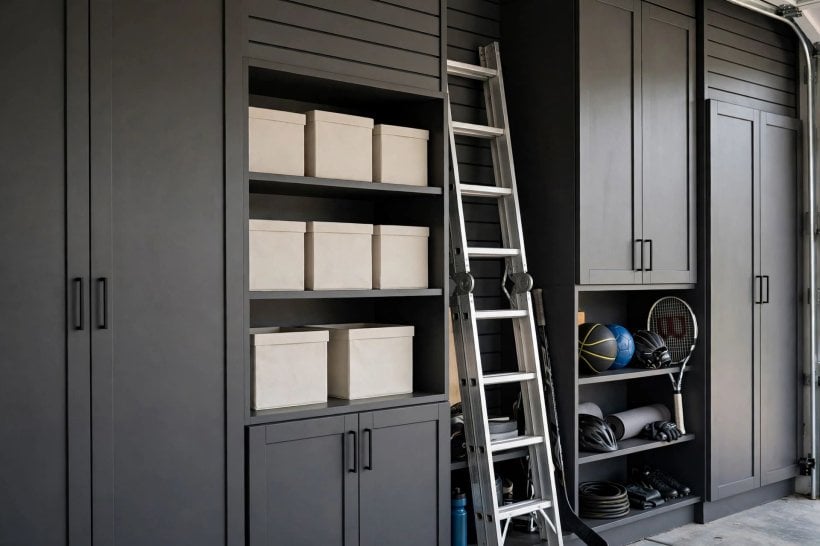
Good garage storage is boring in the best way: labelled, reachable and sized to real life. Build it around the things you own now, with one empty shelf reserved for the future.
29. Floor-to-ceiling shelving run. One deep shelving run along the storage wall, with the heaviest boxes at knee height, beats scattered cupboards for capacity and calm.
30. Clear boxes, big labels. Transparent boxes with large, honest labels end the annual archaeology dig. Label the shelf edge too, so empty slots announce where things belong.
31. Ceiling racks for the rarely used. Overhead racks suit light, bulky, seasonal things: camping kit, roof boxes, holiday decorations. Keep heavy items down low, always.
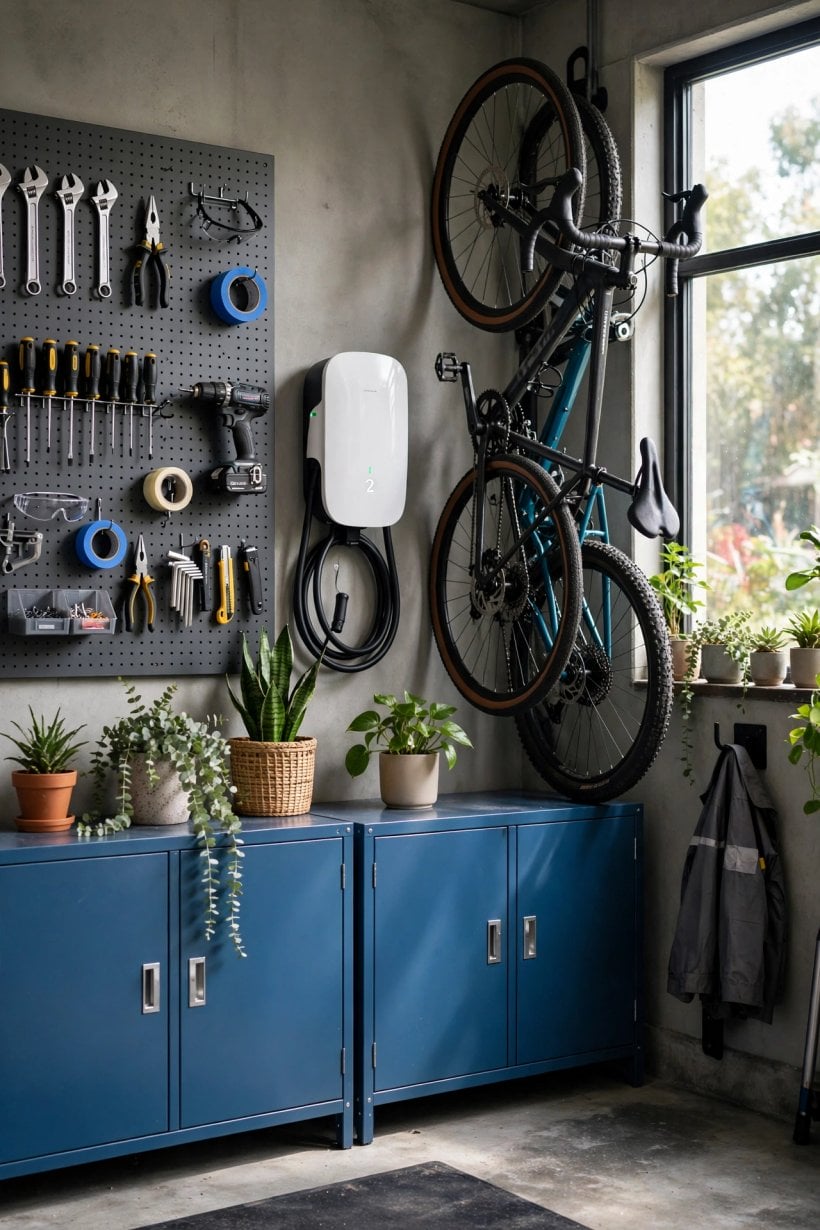
32. Wall tracks and hooks. Adjustable wall tracks let bikes, ladders, hoses and tools float off the floor, and they rearrange in minutes when life changes.
33. Tall cabinet for chemicals. Paints, oils and garden chemicals belong in one tall, ventilated, lockable cabinet, high away from small hands and clearly labelled.
34. Rolling tool chest. A wheeled chest rolls to the job — car, bench or garden — and rolls home again, turning one set of tools into a whole-house resource.
35. Sports corner with bins. Open bins for balls, a rack for bats and bikes parked nose-to-tail give children’s kit a home that does not colonise the parking bay.
36. Garden tool rail. A simple rail of hooks by the door keeps spades and brooms visible, dry and out from behind the paint tins where they used to hide.
37. The one-in-one-out shelf. Reserve a single shelf as the garage’s conscience: anything new must fit there or displace something to donation. It quietly caps the clutter forever.
6. Workshop, Hobby and DIY Zones
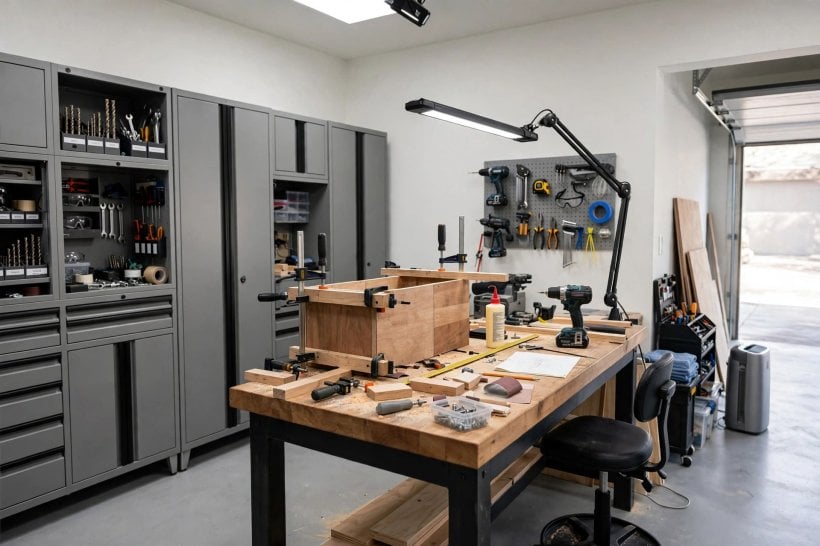
A bench, good light and tools within arm’s reach turn the garage into the house’s workshop. Plan dust, noise and power honestly, and even a corner can earn its keep.
38. Folding workbench. A wall-hung folding bench gives a full worktop on Saturday and full parking on Monday. Fit a vice to a removable board if space is tight.
39. Bench with a view of the door. Face the bench toward the opening where possible: daylight, breeze and a view of the street make long jobs pleasanter and safer.
40. Task lighting at the bench. A bright, adjustable lamp at the bench matters more than any other light in the building. Shadows hide mistakes; good light prevents them.
41. Dust-aware corner. Keep sawing and sanding in one corner with a sweepable floor, a bin within reach and a door or curtain that keeps dust off the car and storage.
42. Utility sink for messy jobs. A deep utility sink handles paint brushes, muddy boots and plant pots. If you are adding water or drainage, check with your city or county about permits first, and take layout cues from our tiny house kitchen design guide.
43. Charging station shelf. One shelf with sockets for drills, garden tools and bike lights ends the tangle of chargers and keeps batteries off cold concrete.
44. Project parking spot. Mark one floor rectangle as the project zone: the half-built bookshelf lives there, not everywhere, and the rest of the garage stays usable.
45. Craft and wrapping station. A shallow drawer unit and a roll holder turn a bench end into a gift-wrapping and craft station that children and grandparents both colonise happily.
46. Music and podcast corner. A shelf speaker, a stool and a kettle point make the workshop a place to linger. Long projects go better with company, even broadcast company.
7. Lighting, Power and Smart Touches
Brightness is the cheapest luxury in a garage. Layer light for parking, working and finding things, then add power and small smarts where they genuinely help.
47. Two rows of ceiling lights. Two rows beat one central fitting: they light under open doors and along shelves, and one row can stay off when you only need the bench.
48. Motion-sensor welcome. A sensor light over the pedestrian door means arms full of shopping never meet a dark garage. Aim sensors away from the street to avoid nuisance triggers.
49. Sockets at bench height. Plan sockets where work happens, at bench height, with a couple spare. Any new circuits belong to a qualified electrician and local rules, not optimism.
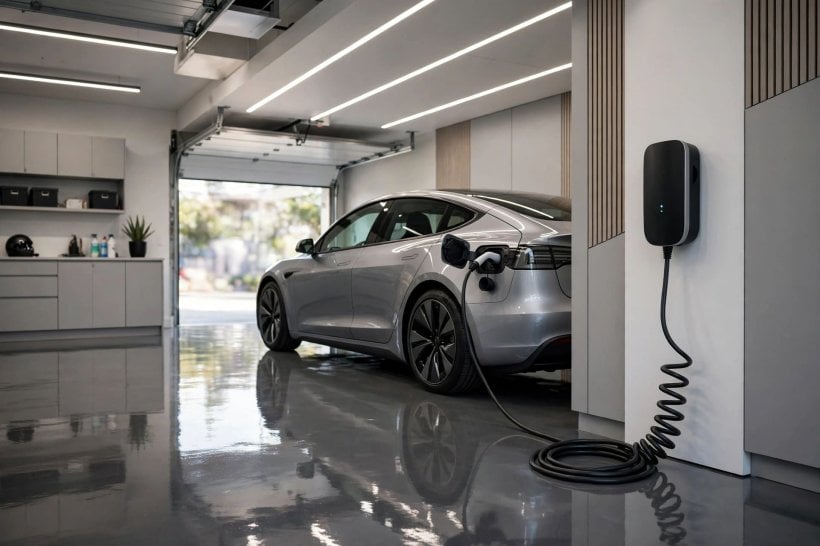
50. EV-ready planning. If an electric car is even a maybe, discuss cable routes and capacity with an electrician early; trenches and boards are cheaper before finishes go on.
51. Daylight from a rooflight. Where structure allows, a rooflight or sun tunnel transforms a windowless garage. It needs proper roofing work and local approvals, so plan it as a project, not a whim.
52. Heater for the workshop corner. A safe, wall-mounted heater sized for the corner — not the whole building — makes winter projects possible. Keep heaters clear of storage and follow maker guidance.
53. Dehumidifier for damp corners. In damp climates a small dehumidifier protects tools, bikes and stored paper. Empty it on a routine, or choose a model with a drain hose.
54. Smart door alerts. A simple sensor that reports the main door left open at bedtime prevents the classic overnight mistake and the neighbourhood cats’ favourite party.
55. Labelled consumer unit. If electrical work is done, label every circuit clearly. Future fault-finding becomes a five-minute job instead of a torch-lit guessing game.
8. Colour Schemes and Calm Styling
Colour is where the garage joins the house’s story. Borrow the home’s palette, keep big surfaces quiet, and let doors, cabinets and one or two objects carry the personality.
56. Match the house, inside and out. Repeating the home’s trim colour on the garage door and cabinets makes the whole property feel composed, a trick our tiny house bedroom decor ideas use indoors with equal success.
57. Graphite and oak scheme. Graphite cabinets, pale walls and warm wood shelves give a workshop that feels like a kitchen showroom — practical, calm and quietly expensive-looking.
58. Racing stripe, tastefully. One painted stripe at waist height along the storage wall nods to motoring heritage without turning the room into a theme park. Keep it to one wall.
59. All-white gallery bright. White walls, white ceiling and a pale floor make a small garage feel double-sized and flatter photography, collections and plants alike.
60. Deep green workshop. Deep green cabinets with brass hooks and warm light feel clubby and calm, and they hide workshop grime with uncommon grace.
61. Colour-zoned storage. Assign each activity a box colour — garden green, sport blue, holiday red — and finding things becomes a glance instead of a search.
62. Vintage signs, sparingly. One or two enamel-style signs add character; a wall of them adds visual noise. Choose pieces that mean something to the family.
63. Plants by the pedestrian door. A hardy plant or two softens the hardest-working doorway in the house and signals that this room is loved, not just used.
64. A rug where feet land. A washable runner by the bench or the house door catches grit, warms the feet and marks the pedestrian route through the room.
9. Conversions, Gyms and Small Garages
When the car can live outside, the garage becomes the cheapest extra room you will ever own. Convert thoughtfully, keep the building dry and legal, and small garages shine.
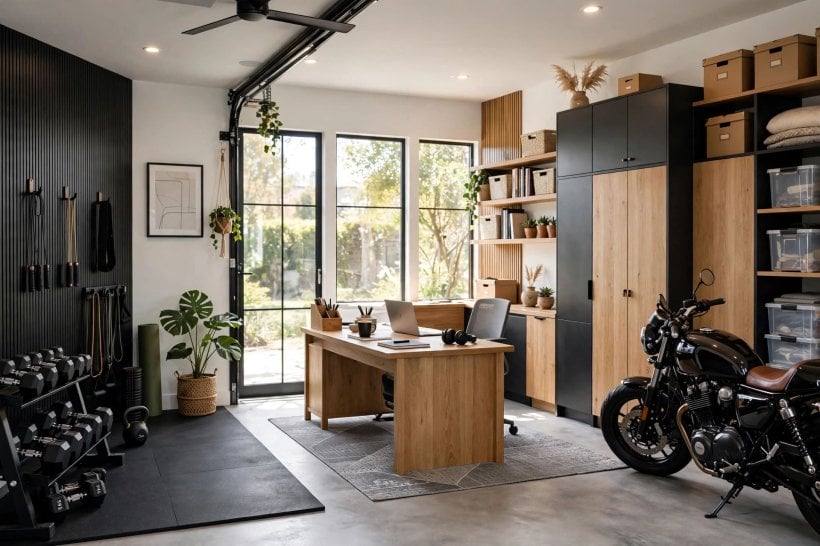
65. Half-and-half conversion. Convert the back half to a gym, office or studio and keep the front for storage and bikes, with a simple partition and its own door.
66. Home gym layout. Rubber mats, a mirror, wall-mounted storage and one multi-use rack beat a room of single-purpose machines. Leave a clear stretch for floor work and stretching.
67. Garden room studio. Facing the workspace to the garden, with the door glazed, makes a studio feel like a garden room. Our tiny house living room ideas show how one good view organises a small room.
68. Guest-ready flexibility. A sofa bed, blackout blind and a small heater make occasional guest space; for regular sleeping use, check local rules on conversions first, and borrow comfort ideas from our tiny house bedroom ideas.
69. Teen den with rules. A rug, seating, a small fridge and clear house rules turn the garage into the teen room that saves the rest of the house every Friday night.
70. Laundry and utility move. Moving laundry into the garage frees a kitchen corner and keeps muddy kit out of the house. Plumbing moves need proper planning and local approvals.
71. Pantry overflow wall. A cool, dark wall of shelving holds bulk buys, preserves and the freezer, turning weekly shops into monthly ones for organised households.
72. Bike room done properly. Vertical racks, a pump station, a repair stand and a washable floor make a bike room that riders actually maintain their machines in.
73. Small garage, tall thinking. In the smallest garage, think vertically: ceiling racks, tall cabinets, wall-hung everything, and a strict rule that the floor holds only wheels and feet.
74. Rental-friendly refresh. If you rent, stick to freestanding shelves, tiles that lift out, and lighting that plugs in. Leave the building better than you found it, without touching its bones.
75. The weekend reset ritual. Whatever scheme you choose, a twenty-minute weekend reset — floor swept, one box sorted, tools home — keeps the whole system honest all year.
10. Costs, Permits and Keeping It Working
Costs vary enormously with ambition, so think in tiers rather than totals: paint, seals and lighting first; storage systems second; doors, floors and conversions last. That order gives the biggest daily improvement per spend at every stage. Anything structural, electrical, or involving drainage, gas or a change of use needs proper advice — check with your city or county office about permits and rules before work begins, because requirements differ widely and conversions for sleeping have extra safety rules in many places. Keep receipts and photographs of what is behind linings and under floors; future owners and future you will both be grateful. For a final dose of small-space discipline, our modern tiny house bedroom guide shows the same plan-first thinking paying off in the smallest room of all.
Maintenance is light but regular: sweep weekly, wipe spills before they cure, oil the door mechanism as the maker advises, and walk the perimeter each season for damp, pests and peeling seals. A garage that is looked after in minutes rarely demands a rescue in weekends.
Final Considerations
A good garage is not a showroom; it is a working room that happens to look calm. Protect the parking, give every object a labelled home, light it like you mean it, and let colour tie it to the house it serves. Start with the seal, the light and one storage wall, live with the improvement for a season, and the next step will suggest itself. Few rooms repay modest, steady attention as generously as this one.


0 Comments