

A room can look finished in a photograph and still feel wrong once the furniture arrives. The sofa that looked generous in the picture crowds the walkway, the table that looked warm in tone turns cold under the room’s own light, and the drawer that slid smoothly in the showroom sticks the first week at home. None of that is bad luck. It is what happens when a piece is chosen by picture alone, before anyone has measured the room, handled the materials, or sat in the seat. A short, calm routine before buying prevents most of it, and it costs nothing but a little attention.
This guide sets out that routine for furniture and decor in general terms. It covers the piece itself: its size, its frame, its cushions, its fabric and finish, its moving parts, its scale in the room, and the way it sits with the decor around it. It names no maker and no retailer, and it states no policy, price, or availability claim about any seller, because those details belong to the individual seller’s own written terms at the time of buying, and they change. What it does give you is a way of looking, touching, and measuring that works for any piece, in any home, whether the room is large or a compact space shaped by the same thinking found in many interior design ideas.

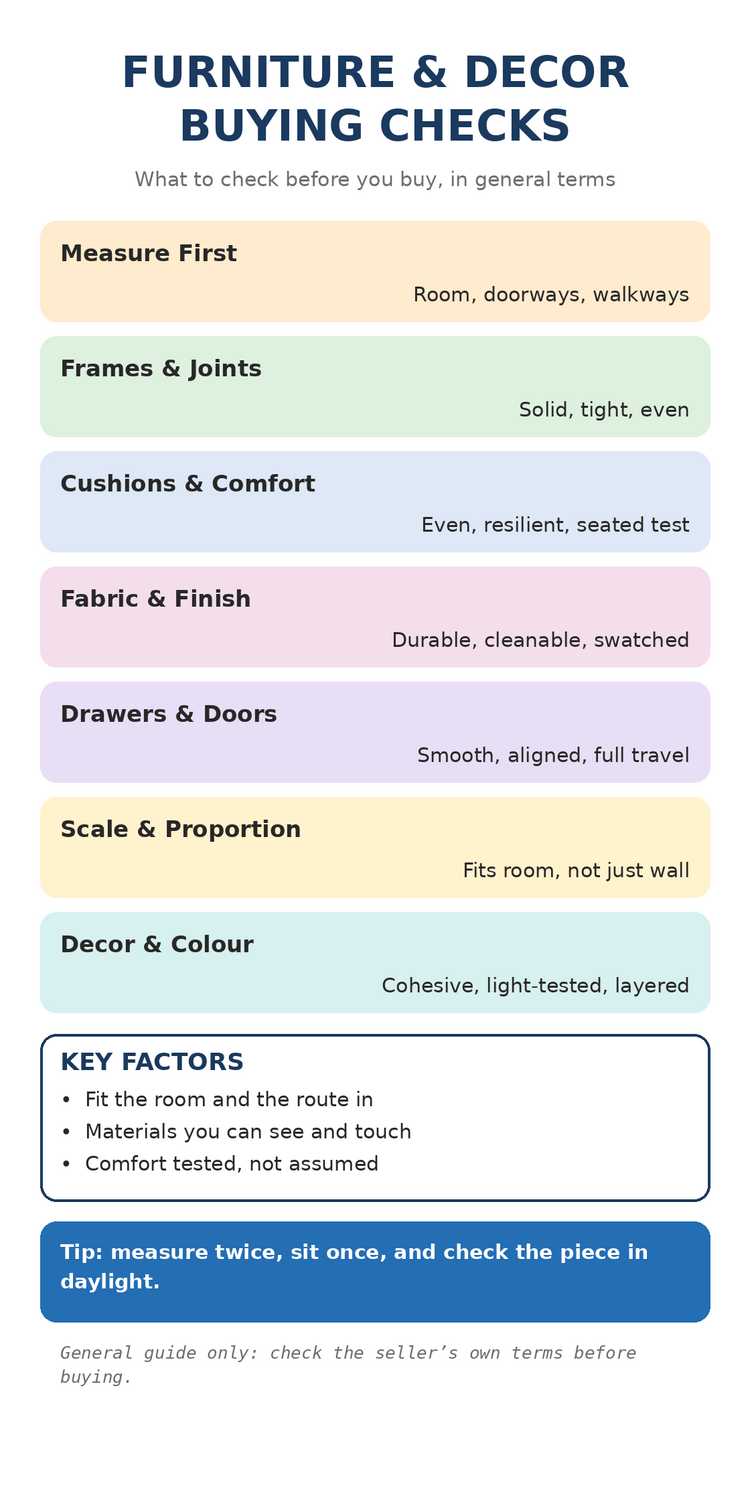
1. Measure the Room, the Route and the Doorways
Start with the room, not the catalogue. Measure the wall the piece will stand against, the floor area it will occupy, and the space that must stay clear around it for walking, for opening doors and drawers, and for pulling out a chair. A piece that fits its wall can still fail its room if it leaves no comfortable path past it, and a room that looks large when empty shrinks quickly once seating, tables, and storage are all in place. Sketch the footprint on paper, mark the clearances you want to keep, and carry those measurements with you. They are the first filter for every piece you consider, and they save you from falling for something that was never going to fit.
Then measure the route in. Doorways, hallways, stair turns, and lift doors all set a limit that the room itself does not, and a piece that passes the room test can still fail at the front door. Note the narrowest point on the way in, including any turn where a long piece must pivot, and compare it with the piece’s longest dimension and its packaging if it arrives boxed. Removable legs, detachable sections, and flat-packed forms change this calculation, so ask how the piece arrives and what comes apart, in general terms, before assuming it will pass. A few minutes with a tape measure at home beats a difficult afternoon at the threshold.
Finally, measure the piece itself wherever you can, rather than trusting a remembered impression of its size. Sit beside it, stand behind it, and look at it from the doorway you will actually enter through. Height matters as much as width: a tall bookcase can dominate a low room, and a low sideboard can disappear under a high window. When the measurements, the route, and the room all agree, the piece has passed its first and most practical test.
2. Check Frames and Joints Before Anything Else
The frame is the part you will live with longest, and it is the part most easily hidden by good upholstery. Where the construction is visible, look at the joints: they should sit tight and even, with no gaps opening at the corners and no wobble when the piece is gently rocked. Where the construction is covered, use your hands and your weight. A chair should feel steady when you sit and shift, a table should not rack from side to side when pressed at a corner, and a bed frame should hold its shape without creaking under ordinary use. These are simple, physical checks, and they tell you more than any description of the piece ever will.
Pay attention to weight and balance as well. A piece that is very light for its size may be built for looks rather than daily use, while a piece that is reassuringly solid may be difficult to move, to clean behind, or to carry upstairs. Neither quality is good or bad on its own; the question is whether it suits the life the piece will lead. A dining chair that is lifted daily needs a different build from a sideboard that will stand against one wall for years. The companion guide to furniture quality checks looks at frames and joints in greater depth, and it is worth reading alongside this section before you commit.
Look, too, at how the frame meets the floor. Feet should sit level, glides or pads should be present where the floor needs protection, and no leg should be shorter than its neighbours. An uneven piece will rock, wear unevenly, and draw the eye every time you cross the room. Levelling feet and adjustable glides can correct small differences, but a frame that is out of true from the start is a warning worth heeding, not a detail to explain away.
3. Test Cushions, Seats and Comfort in Person
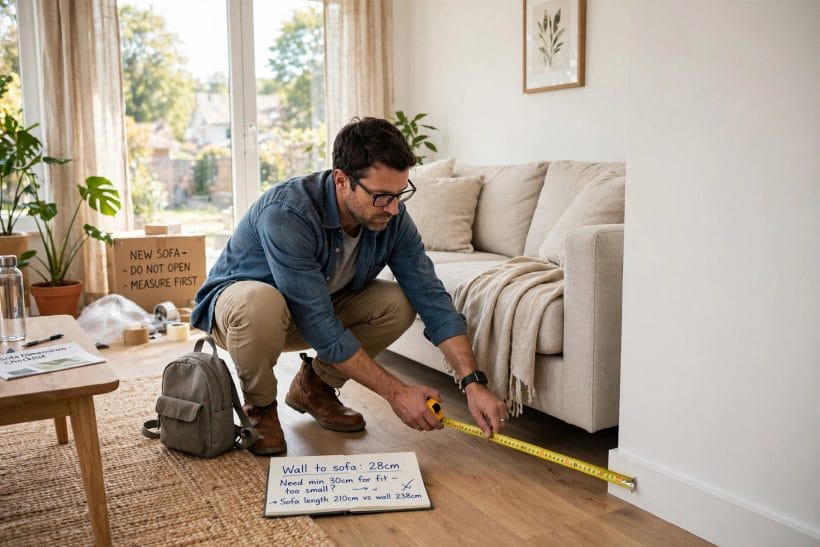
Comfort cannot be judged from a photograph, and it should never be bought on trust. Sit in the seat the way you will actually sit at home: upright for a dining chair, relaxed for a lounge chair, and stretched out for a sofa you will read on. Notice where your back is supported, whether your feet rest naturally on the floor, and whether the seat depth lets you sit back without perching on the edge. A seat that feels fine for a few seconds can grow uncomfortable over an evening, so take your time, change position, and sit again. If you share the home, let everyone who will use the piece try it too, because bodies differ and a household compromise chosen by one person is often regretted by another.
Press the cushions and watch how they recover. A cushion that springs back evenly, without lumps or thin spots, is doing its job, and a cushion that stays dented or feels uneven across its surface is telling you something about what lies inside. Lift loose cushions where you can and look beneath them: the platform, the webbing or springs, and the general tidiness of the work underneath all speak to how the piece was made. Zips, seams, and piping should run straight and lie flat, and removable covers should come off and go back on without a struggle, since washing and care will matter for as long as the piece is in use.
Think about the shape of comfort over time as well as on the day. Firm cushions soften with use, soft cushions settle, and a seat that is exactly right today may feel different after months of daily sitting. That is normal, and it is why the frame and the seat construction matter as much as the first impression of softness. The earlier guide to furniture buying checks covers frames, joints, cushions, and fit from a complementary angle, and reading the two together gives a fuller picture of what to test before you buy.
4. Read Fabrics and Finishes With Your Hands
Run your hand over the fabric or finish before you read anything about it. A fabric that looks smooth in a picture can feel coarse, slippery, or delicate in person, and a finish that looks even under showroom lights can show every mark under the light of your own room. Ask for a swatch where one is available, and take it home. Colours shift between rooms, between daylight and lamplight, and between a small sample and a large upholstered surface, so the only reliable test is the swatch in the room where the piece will live, seen at different times of day.
Consider the life the fabric or finish will actually lead. A pale, finely woven fabric may be beautiful in a quiet room and impractical where pets, children, or daily meals are part of the picture. A dark, heavily textured fabric may hide wear and show dust instead. Wood finishes vary in the same way: some welcome daily handling and grow richer with it, while others mark easily and need careful protection. There is no universally best choice here, only the choice that matches the room, the household, and the amount of care you are genuinely willing to give. Be honest about that last part, because a finish that demands more care than it will receive will disappoint no matter how good it looks on arrival.
Check the details of the finish closely. Seams should be straight, patterns should meet sensibly at joins where they are meant to match, and wood grain should run in a way that looks deliberate rather than accidental. Small flaws in these details are often the first sign of rushed work elsewhere, while careful finishing in the places nobody photographs is usually a sign of a maker who took the whole piece seriously. Trust your eyes and your fingertips together, and do not be hurried past them.

5. Open Every Drawer and Door
Moving parts reveal the quality of a piece faster than any other test. Open every drawer fully, close it again, and feel whether it travels smoothly, stays level, and stops where it should. Do the same with doors, lids, and folding or extending leaves. A drawer that sticks, drops, or rattles on its runners will annoy you every day, and a door that will not stay shut or will not sit flush with its neighbours will spoil the look of an otherwise fine piece. These faults are easy to check and hard to live with, so check them all, not just the first drawer you reach.
Look inside as well as outside. The interior of a drawer or cabinet should be clean, smooth, and finished well enough that it will not snag clothes, scratch dishes, or shed dust onto what it stores. Check that shelves sit level, that dividers and fittings are secure, and that the depth of the storage genuinely suits what you plan to put in it. A deep drawer that swallows small things and a shallow cabinet that cannot hold a dinner plate are both failures of fit, and both are discovered in seconds if you look before buying rather than after delivery.
Outdoor pieces deserve the same treatment, with weather in mind. Frames, finishes, and cushions that live outside face sun, rain, and temperature change, and the checks that matter there are about drainage, drying, and storage through the off-season. The guide to patio furniture checks applies this same routine to outdoor seating and tables, and it is a useful companion if any part of your purchase will live beyond the back door.

6. Judge Scale and Proportion in the Room
Scale is the quiet difference between a room that feels composed and a room that feels crowded or empty. A large sofa can be the right piece for a large room and the wrong piece for a room that only looks large when empty, while a small side table can vanish beside a deep armchair it was meant to serve. Stand back and judge the piece against its neighbours, not on its own. Seat heights should relate to table heights, lamp heights to the chairs they light, and the overall mass of the furniture to the volume of the room. When these relationships are right, the room feels calm; when they are wrong, no amount of styling quite fixes it.
Proportion matters inside a single piece too. Legs that are too slender for a heavy top, arms that are too wide for a small seat, or a back that rises too high for the room it stands in all create a sense of unease, even before anyone can name the cause. Step back, squint, and look at the silhouette. A well-proportioned piece reads as one shape, while a poorly proportioned one reads as parts that do not agree with each other. This is a matter of judgement rather than measurement, and your own eye, given a moment of quiet, is a reliable instrument for it.
Small rooms reward this attention most of all. In a compact home, every piece must earn its floor area, and a single oversized item can unbalance the whole plan. The thinking behind many tiny house designs applies here in miniature: choose fewer, better-fitting pieces, keep walkways genuinely clear, and let each item serve more than one purpose where it honestly can. Scale, judged in the real room rather than on a screen, is what makes that discipline work.

7. Check Decor, Colour and Light Together
Decor is not an afterthought to furniture; it is the layer that decides whether a good piece looks at home or looks stranded. A rug, a set of curtains, a lamp, or a row of shelves can tie separate pieces together, and they can also fight with them if their colours, textures, or styles pull in different directions. Before buying decor, hold it against the furniture it will live with, not against a blank wall. Check the colour in the room’s own light, feel the texture beside the fabric it will sit near, and look at the whole grouping from the doorway, which is how you will most often see it.
Light changes everything, and it changes through the day. A warm wood tone can turn orange under one lamp and grey under another, a pale fabric can glow at noon and look washed out by evening, and a bold accent that thrills in a bright showroom can overwhelm a dim corner at home. Test decor where it will live, at more than one time of day, and be patient with the result. If a colour only works under one kind of light, it is not yet the right colour for that room, and a calmer alternative that works in all of them is usually the wiser purchase.
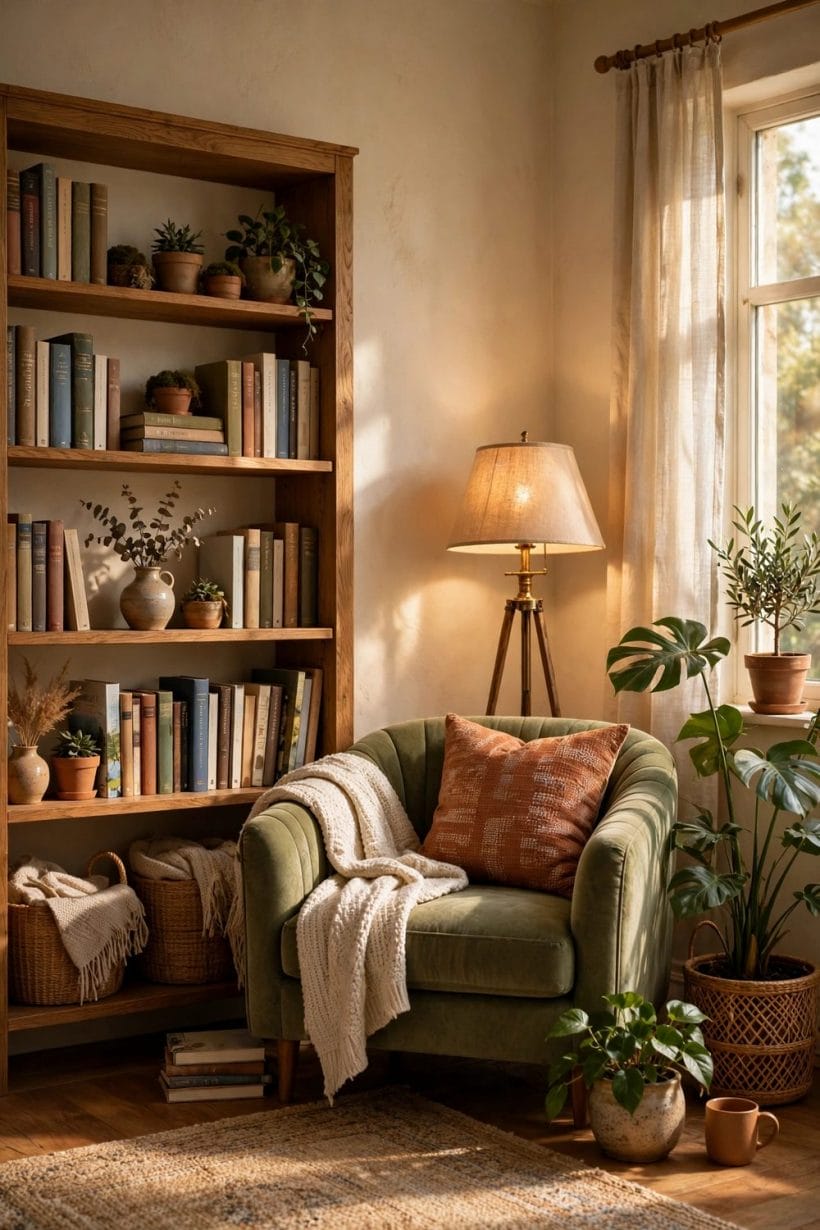
Think about storage and display as part of the decor decision, not separate from it. Shelving, bookcases, and cabinets shape a room as surely as a sofa does, and their proportions, finishes, and contents all contribute to the overall effect. Ideas for bookcase ideas show how shelving can anchor a wall, frame a seating group, or divide a space gently, and the same questions of scale, finish, and light apply to every one of them. Decor that earns its place does more than fill a gap; it helps the room make sense.

8. Look Underneath, Behind and Inside
The parts of a piece you rarely see are often the parts that tell the truth about it. Turn a chair over where you can, look underneath a table, and peer behind a cabinet. The underside should be tidy, secure, and finished well enough to last, with no loose staples, rough edges, or uncovered workings that will snag a floor or a hand. Dust panels, corner blocks, and the general tidiness of hidden work all indicate care, and their absence often indicates haste. A maker who finishes the hidden parts has usually finished the visible ones properly too.
Check the back and sides with the same honesty, especially for pieces that will not always stand against a wall. A cabinet that will be seen from behind, a bookcase that divides a room, or a sofa that floats in open space needs a presentable back, not a rough panel meant never to be seen. If the back is unfinished, decide now whether that matters in your room, rather than discovering it when the piece is rearranged. Rooms change, furniture moves, and a piece that only looks good from the front limits every future arrangement.
Inside, look for signs of honest construction rather than cosmetic cover. Joints should be tight, fixings should be secure, and materials should be consistent rather than patched together from offcuts in the places nobody inspects. None of this requires expertise; it requires only a willingness to look where the photograph never points. Ten minutes of looking underneath, behind, and inside will teach you more about a piece than any amount of admiring it from the front.

9. Plan Delivery, Assembly and the Way In
A piece is not truly yours until it is standing in its place, assembled, and working as it should, so plan that final stage as carefully as the choice itself. Confirm, in general terms, how the piece arrives: whether it comes assembled or in parts, what tools or help assembly needs, and how much packaging must be dealt with afterwards. A large assembled piece and a flat-packed equivalent are different purchases in practice, even when they look identical in pictures, and the right choice depends on your stairs, your doorways, your available help, and your patience for assembly.
Think about the space assembly itself will need. A piece that fits its final position may still need a larger clear area while it is being put together, and drawers, doors, and moving parts should be tested in that final position, not only in a showroom. Leave room to step back, to open everything fully, and to check that the piece sits level on your own floor, which may not be as even as a showroom floor. Small adjustments at this stage, such as levelling feet or protective pads, are easy; discovering a fundamental problem of fit after the packaging has gone is not.
Keep the checks of the piece and the checks of the sale in their proper places. This guide has dealt with the piece: its size, materials, comfort, and fit. The separate routine of checking who you are buying from, what written terms apply, and what happens if something arrives damaged belongs to a different guide, and it is covered in the companion piece on furniture seller checks. Keeping the two routines apart makes both of them easier to do well, and it stops a good piece from being spoiled by an unchecked purchase, or a careful purchase from being wasted on a piece that was never right.

10. Keep a Short List for Every Piece
When you have worked through the checks above, write them down as a short list and carry it with you, piece by piece. Room measurements and route measurements first, then frame and joints, then cushions and comfort, then fabric and finish, then drawers and doors, then scale, decor, and light, then the hidden parts, and finally delivery and assembly. A list turns a general intention into a habit, and a habit turns a rushed purchase into a considered one. It also gives you a fair way to compare two pieces that both look good: the one that passes more of the list, in the ways that matter most to your room, is usually the better buy.
Use the list honestly, and let it say no. A piece that fails on fit has failed, however beautiful it is, and a piece that fails on comfort will fail every day, however well it photographs. There will always be another piece, and there will always be another room arrangement that works better than a compromise forced into place. The list is not there to make buying joyless; it is there to protect the joy of living with the piece afterwards, when the novelty has faded and only the daily experience remains.
Share the list with anyone who shares the home. Different people notice different things: one will feel the seat, another will see the colour in evening light, and another will think of the doorway nobody else measured. A purchase checked by the household it will serve is a purchase that survives contact with real life, and that is the only test that ultimately counts. Keep the list, use it every time, and refine it as you learn what matters most in your own rooms.
Final Considerations
Buying furniture and decor well is less about expertise than about slowing down. Measure the room and the route, handle the frame and the fabric, sit in the seat, open every drawer, judge the scale in the real room, test colour under real light, look underneath and behind, and plan the arrival as carefully as the choice. Each check is small on its own, and together they form a routine that catches the mistakes a photograph cannot show. No single check guarantees a perfect purchase, but a purchase that passes them all is a purchase made with open eyes.
Remember, too, what this guide deliberately does not do. It names no maker or retailer, it offers no verdict on any source, and it states no policy, price, or availability claim, because those are matters for the individual seller’s own written terms at the time of buying, read carefully before money changes hands. The piece itself is yours to judge, with a tape measure, your hands, and your own eyes, and that judgement, made calmly and in the room where the piece will live, is the most reliable buying guide there is. Take your time, trust the checks, and choose the piece that fits your room, your household, and your daily life.




0 Comments