

An outdoor bar turns a plain patio into the place everyone drifts toward: drinks within reach, stools in the shade, and no trips back through the house. This roundup gathers twenty-five bar ideas — built-in, freestanding, fold-away and frankly tiny — so you can find the one that fits your garden, your budget and your idea of a good evening.
1. At a Glance: Choosing Your Outdoor Bar Style
| Style | Best For | Space Needed | Effort Level |
|---|---|---|---|
| Built-in masonry bar | Permanent entertaining zones | Generous patio corner | High — a planned project |
| Freestanding tiki or timber bar | Renters and seasonal setups | One flat patch of decking | Low — assemble and pour |
| Fold-down wall bar | Balconies and tiny yards | A single wall section | Low to medium |
| Bar cart or trolley | Moving the party around | Almost none | Minimal |
| Covered bar with roof | All-weather hosts | Room for posts and overhang | Medium to high |
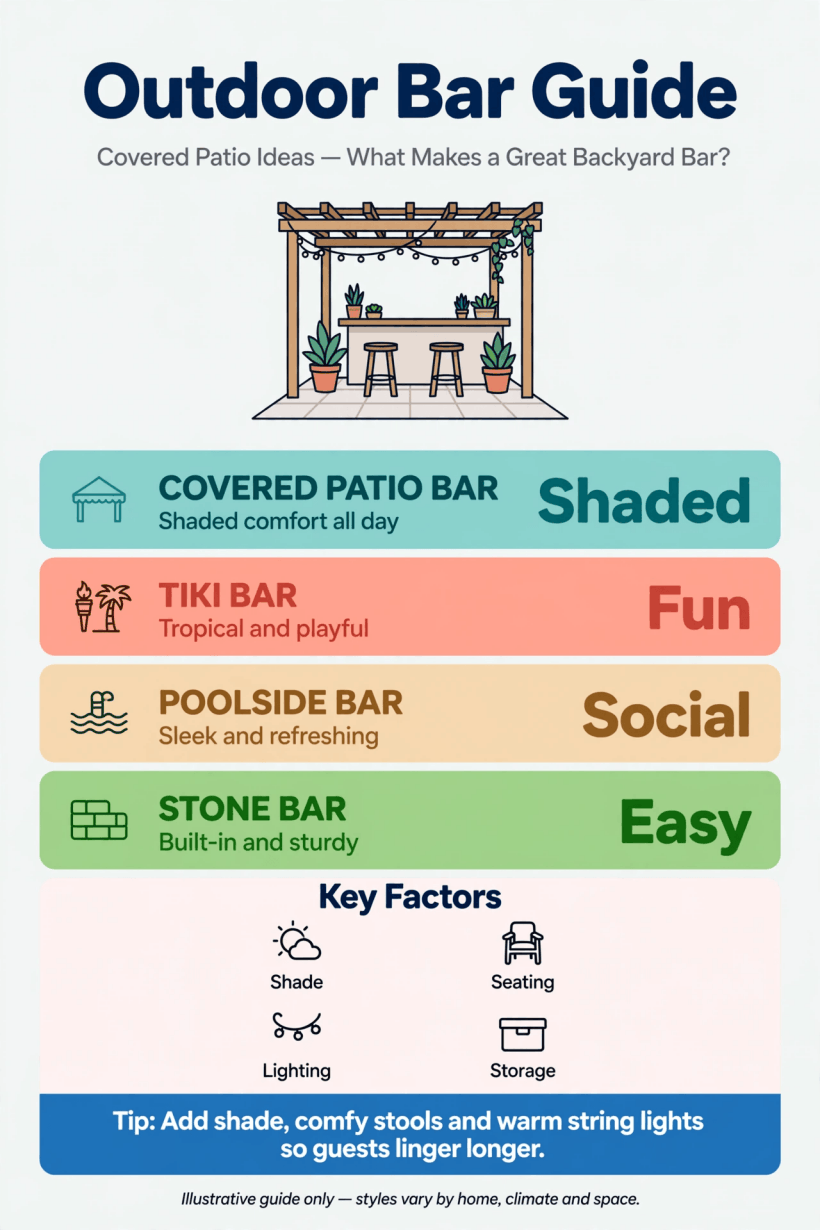
Twenty-five outdoor bars, five families of design: pick the footprint first, then the materials, then the fun details like lighting, shelving and shade.
Every idea below names its footprint honestly, because the best bar is the one that still leaves room to walk around it with a tray in your hands. Read the table as a shortcut: match your space to a family of designs first, then fall in love with a specific build inside that family, rather than the other way round.
2. Built-In Bars That Anchor the Patio
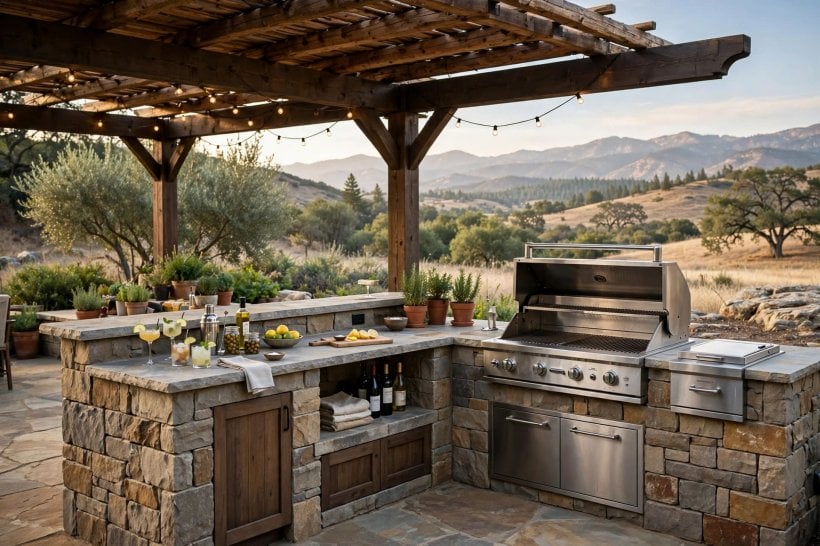
1. The Stone-Clad Corner Bar. A masonry counter wrapped around a patio corner gives you serving space on two sides and storage beneath. Stone or brick cladding shrugs off weather and spills, and the L-shape naturally separates the bartender’s workspace from the guests’ perch. Leave a knee recess on the guest side so stools tuck in properly, and run a slightly raised back edge to stop bottles migrating off the counter on busy nights.
2. The Concrete Block Bar with Timber Top. Rendered blockwork paired with a chunky wooden counter reads modern and stays forgiving. Seal the timber well, and this build handles a covered patio with bar duties all summer without complaint. The block base keeps drinks cool by thermal mass alone, and a rendered finish takes any colour, so the bar can match the house rather than fight it.
3. The Outdoor Kitchen Extension. If a grill station already lives outside, extend its counter into a bar ledge with stools on the garden side. One run of worktop, two jobs — cooking and pouring share plumbing, power and shade. The flow echoes the multi-use thinking in our tiny house living room ideas, where every surface earns its keep. Guests gather near the cook instead of drifting indoors, which keeps the whole party outside where it belongs.
3. Timber Bars with Character
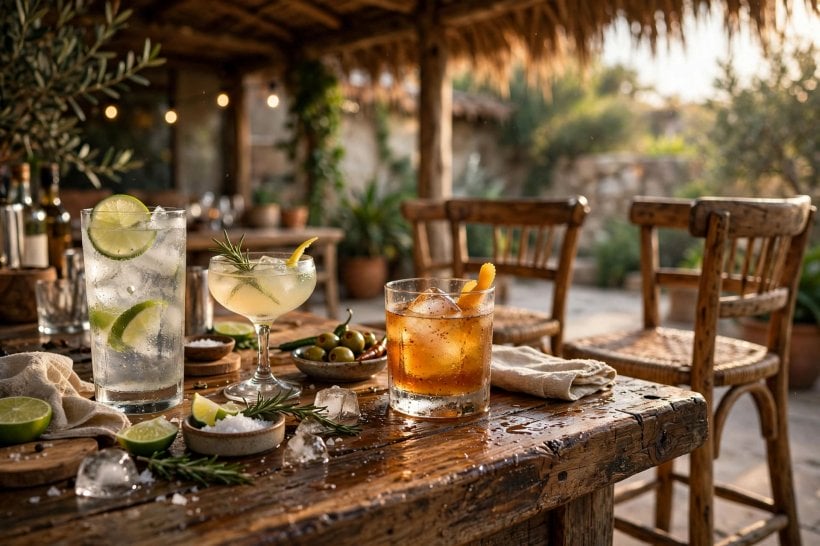
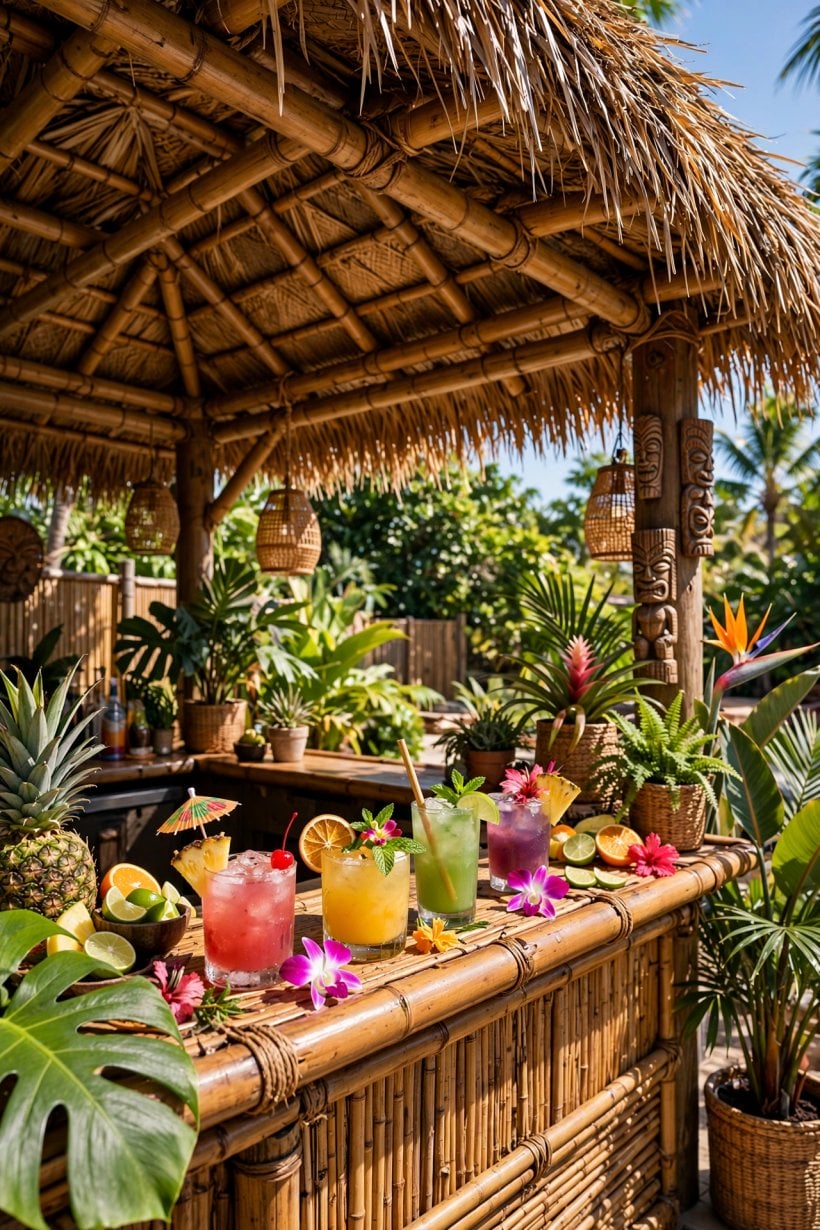
4. The Classic Tiki Bar. Bamboo screening, a thatched or palm-style roof and a deep counter for blenders and garnish tubs. Kitsch on purpose, and all the better for it — the roof throws real shade and the vibe does half the hosting. String lights under the eaves, keep a shelf for the loud shirts, and accept that this bar will star in every summer photograph.
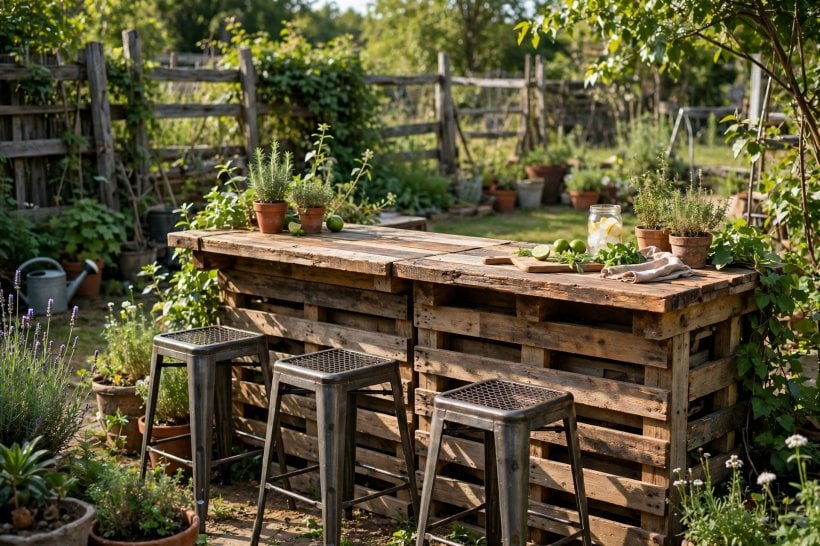
5. The Reclaimed Pallet Bar. Stacked and sanded pallets make a surprisingly sturdy front, with the gaps doubling as bottle storage. Keep it under cover, stain it dark, and top it with a single polished board for a finish that looks deliberate rather than improvised. Add locking castors and the whole bar can roll into the garage for winter, which extends its life by years.
6. The Whisky Barrel Bar. Two barrels, one broad top, instant pub garden. Barrels bring height and storage in a single object, and their curves suit the planted corners you will find in our tiny house landscaping ideas — tuck herbs around the base and the bar smells as good as it looks. A hinged section of the top lifts for access to the barrel interiors, where spare glasses and the good bottles can hide.
4. Covered Bars for All-Weather Hosts
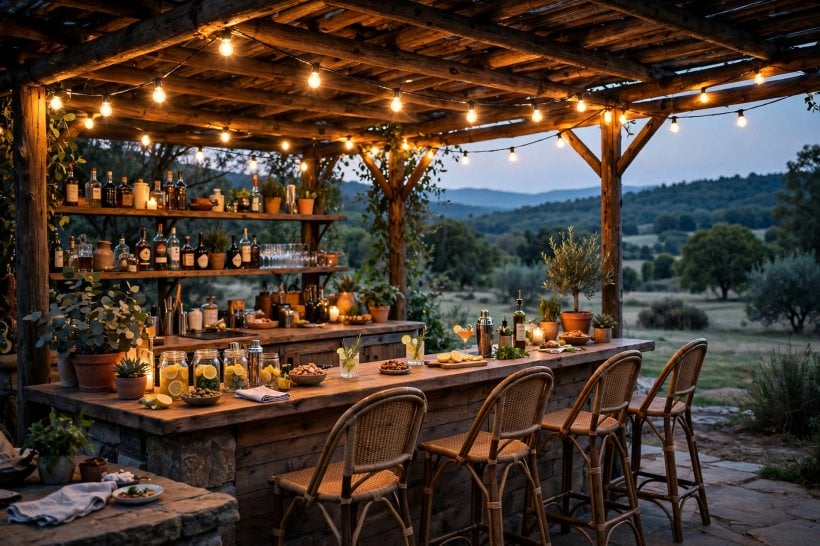
7. The Pergola Bar. Four posts, a slatted roof and a bar beneath: the pergola frames the scene and gives climbing plants a job. Add a waterproof sail or retractable canopy and the season stretches by weeks at both ends. Train a vine over the top and by the second summer the shade is dappled, cooler and free.
8. The Lean-To Bar. A simple sloped roof fixed to the house wall turns the strip beside the back door into a dry serving station. Gutters matter here — a drip line over the bartender ruins the magic quickly. Because it leans on the house, power and water are short runs away, making this the easiest covered bar to equip properly.
9. The Gazebo Bar. A round or hexagonal bar inside a gazebo becomes a destination at the end of the garden path. Run power if you can; a small fridge and proper lighting transform it from novelty to nightly habit, much like the destination corners in our tiny barn house interior tour. A path with low lights leads guests down after dark, and the walk itself becomes part of the ritual.
5. Small-Space Bars That Punch Above Their Size
10. The Fold-Down Wall Bar. A hinged counter on a fence or wall, with the bottle shelf hidden behind it when closed. Down for drinks, up for garden space — the neatest trick in this whole list for tight plots. Chains or folding brackets carry the load, and a chalkboard on the underside announces the evening’s offerings when the counter drops.
11. The Window Hatch Bar. A serving hatch from kitchen to patio, with a shelf and stools outside. Whoever is cooking becomes the bartender without leaving the stove, and everything washes up indoors. Fit a wide sill inside as the staging area, and orders pass through like a café — charming for guests, effortless for the host.
12. The Balcony Rail Bar. A narrow counter clamped along the railing, two stools, and the city as your backdrop. Check building rules, keep everything lightweight, and even the smallest balcony joins the roundup — proof that the compact thinking behind our tiny house bedroom ideas works outdoors too. A rail bar at standing height also doubles as a morning coffee perch, which may end up its most-used shift.
6. Mobile and Multi-Use Bars
13. The Rolling Bar Cart. A weatherproof trolley with bottle rails, an ice bucket shelf and big wheels for grass. It follows the sun, the shade or the party, then parks in the shed when storms threaten. Choose a cart with a handle at working height and brakes on two wheels; a runaway bar cart is comedy only once.
14. The Cooler Chest Bar. A lidded ice chest wearing a wooden serving top. Drinks stay cold inside, glasses live on top, and the whole thing reads as furniture rather than camping gear. Drainage is the detail to check — meltwater needs somewhere polite to go, ideally a tap at the back over a planted bed.
15. The Planter Bar. A raised planter whose end section is a counter: herbs for garnish grow at elbow height while guests lean on the other end. It softens hard landscaping and flavours the drinks in one move, a trick borrowed from the layered schemes in our colourful tiny house interior feature. Mint, basil and rosemary within arm’s reach means garnishes are picked, not bought, all season.
7. Bars with Fire, Water and Wow
16. The Fire-Pit Bar. A curved counter facing a fire bowl, stools on the warm side. Drinks and flames share the evening; keep clearances generous and a water source closer than the house. A stone or metal counter earns its keep here, since sparks and timber finishes are poor companions over a long season.
17. The Poolside Swim-Up Bar. A counter at water level with submerged stools on the pool side and a dry working side for the host. Specialist, yes — but unforgettable, and the shade structure above it earns its cost every sunny afternoon. Non-slip surfaces everywhere and plastic glassware only; the pool filter will thank you, and so will bare feet.
18. The Fountain-Side Bar. A slim bar along a water feature wall, where the sound of running water covers party noise for the neighbours and the air feels cooler. Position it like the focal points in our bedroom interior design for tiny houses guide — one strong feature, everything else quiet around it. Even a small wall fountain flattens the heat of a walled courtyard noticeably by evening.
8. Budget Bars and Clever DIY Builds
19. The Cinder Block and Plank Bar. Stacked blocks, two scaffold boards, done by lunch. Paint the blocks, oil the boards, and spend the savings on decent stools and glassware instead. The block cavities are not wasted space either — they store bottles upright and keep them surprisingly cool on hot days.
20. The Old Door Bar. A retired door on trestles or wall brackets becomes a characterful counter with panels that hide a multitude of beginner carpentry. Sand the edges, keep the handle for charm. Panelled doors give you ready-made sections for a menu board, a bottle shelf and the hooks for openers and towels.
21. The Cable Spool Bar. A large wooden cable reel stands as a round bar table with room for bottles in the hub. It suits the self-build spirit of how to build your own tiny house: honest materials, visible fixings, zero pretension. Sand the top well, seal it against rings and stains, and it will outlast bars costing ten times more.
9. Bars Styled by Mood
22. The Mediterranean Bar. White render, terracotta tiles, a blue-painted counter and olive trees in pots. Citrus in bowls, shade overhead, and every drink tastes like a holiday. A tiled splashback behind the working side is not just pretty — it wipes clean after the messiest sangria session without staining.
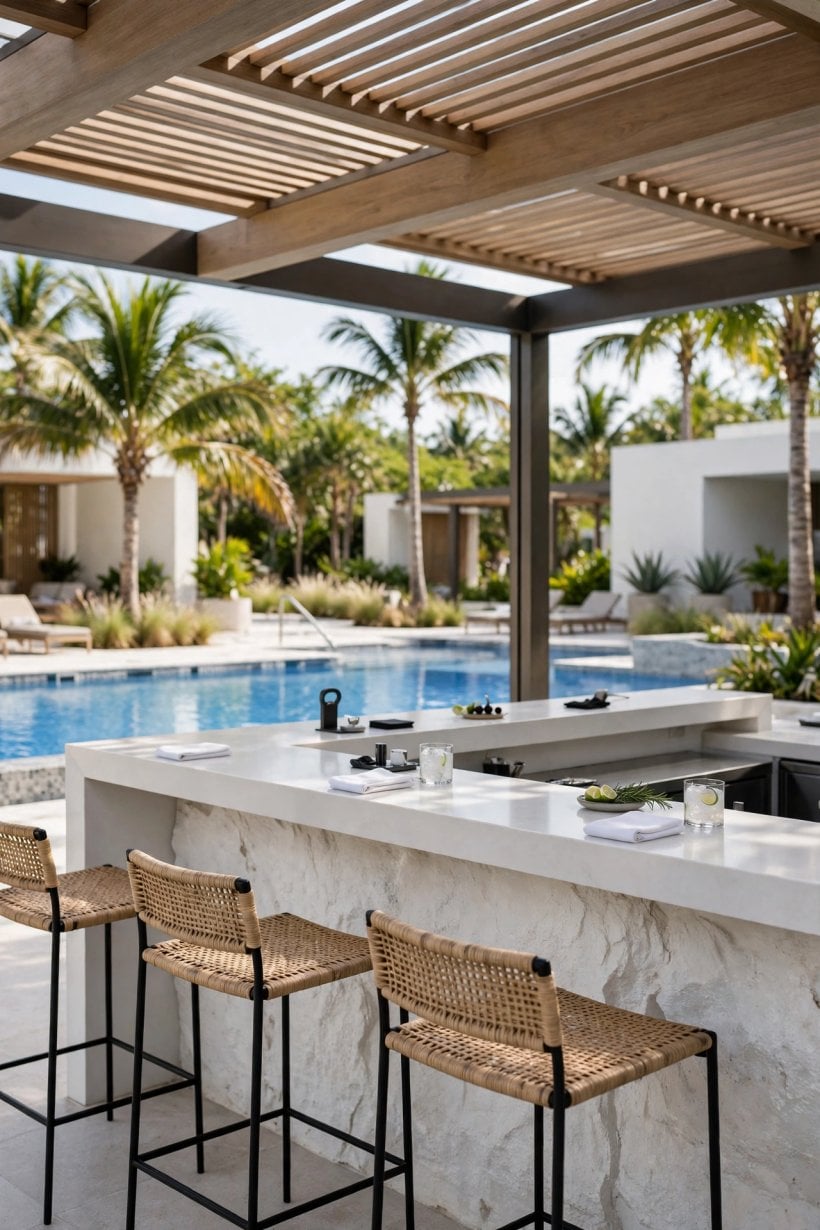
23. The Coastal Bar. Weathered grey timber, rope details and a pale stone top. It suits gardens near the sea and gardens that merely wish they were, and it pairs with the relaxed schemes in our tiny house bathroom ideas round-up more often than you would expect. Driftwood finds and lantern light finish the look without a single themed purchase.
24. The Evening Cocktail Bar. Dark timber, brass rails, low pendant lights and a back shelf that glows. This is the grown-up end of the list — build it where the last light lands and let dusk do the decorating. Keep glassware on the lit shelf and the workspace dim; drinks look better and spills hide longer.

10. The Finishing Touches Every Bar Needs
25. The Host’s Station. Whichever bar you choose, reserve one end as the working station: ice, water for rinsing, a towel rail, a bin within reach and a light that points at the worktop rather than the guests. This final entry is the difference between a bar that photographs well and one that hosts well. Add a small shelf beneath for the tools of the trade — opener, knife, board, spare towels — and the host stops making trips indoors entirely.
Across all twenty-five, the same practical bones apply. Level ground or a level base. Drainage that carries spills away from feet. Power and water planned before the first block is laid, not improvised after. And shade — a bar in full afternoon sun empties faster than any drinks cabinet.
Storage decides whether the bar gets used on weeknights or only at parties. Bottles, tools and glasses that live outside (secured and weather-safe) remove the ferrying that kills spontaneity. Build the cupboard space first and the counter second, and the bar will serve you far beyond its first summer.
Seating deserves the same thought as the bar itself. Stools at the right height for the counter — roughly a forearm’s length below the top — with a foot rail to rest on, turn a quick drink into a long conversation. Keep two more stools than you think you need; outdoor bars attract neighbours the way porches attract rocking chairs.
Final Considerations
Twenty-five bars, one lesson: the right design is the one that matches your space, your weather and your hosting style — not the biggest build on the list. Start with the footprint, choose honest materials, plan shade and storage before decoration, and your covered patio with bar will pull a crowd for years. Pick your number, sketch it tonight, and belly up by the weekend.

0 Comments