

An outdoor bar turns a garden from somewhere you sit into somewhere you gather. It does not need to be big, expensive or permanent; it needs to be in the right spot and easy to use.
These 75 ideas run from layouts and built-in bars through tiki themes, portable options, shelter, lighting and storage, with honest, qualitative cost notes and the practical details that decide whether a bar gets used every week or twice a year.
1. Plan the Bar Before You Build It
Every good garden bar starts with three decisions: where it stands, who it serves and how it survives the weather. Stand in your garden at the time you would actually use it, early evening for most people, and notice where the sun falls, where the wind comes from and how far the walk is from the kitchen. A bar that fights its setting loses; a bar that borrows shade, shelter and a view wins before a single board is cut. When people browse outside bar designs, the ones that work share this groundwork, plus a realistic view of effort: a simple bar you finish beats a palace abandoned at the framing stage.
| Bar type | Best for | Effort picture |
|---|---|---|
| Trolley or portable bar | Small spaces, renters, first attempts | Lowest; no building, ready in a weekend |
| Freestanding counter bar | Patios and decks with room to gather | Moderate; basic carpentry or a kit, check current options in store |
| Built-in bar | Long-term homes and keen hosts | Higher; foundations, worktops and weather detailing |
| Bar shed or garden pub | Big gardens, year-round use | Highest; a small building project — check local rules first |
| Pool or patio bar | Hot climates and outdoor kitchens | Moderate to high; water, shade and surfaces matter most |
| Window or hatch bar | Serving from a kitchen or shed window | Low to moderate; a ledge, stools and styling |
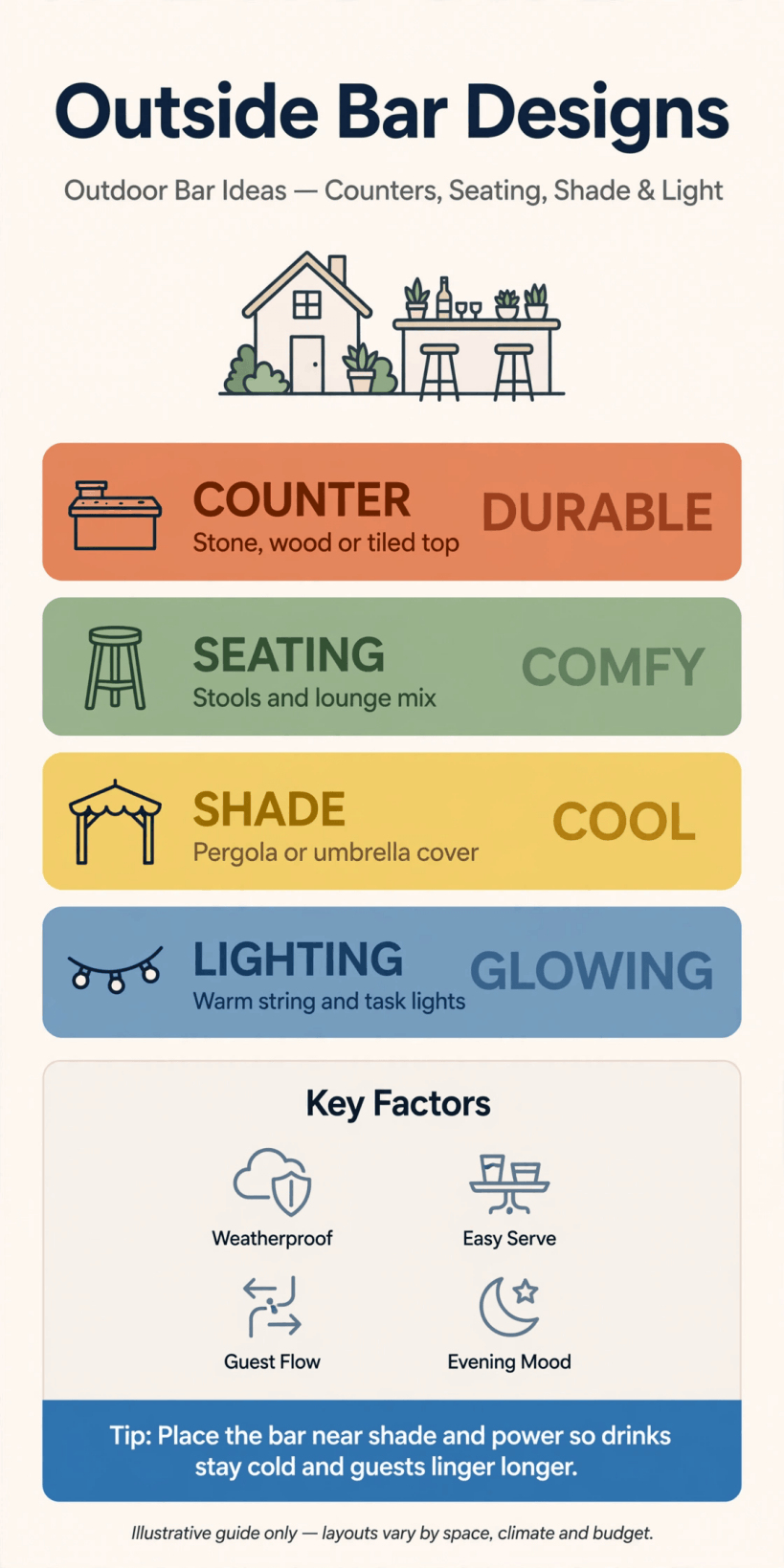
Bar types at a glance: what each suits and the level of effort to expect, so you can pick a project you will actually finish.
Two practical warnings before the ideas begin. First, anything involving electrics, gas for heaters or fridges, water supply or drainage outdoors belongs with qualified local trades and your city or county’s rules; check first, admire later. Second, keep cost thinking qualitative until you price your exact design locally, because materials, ground conditions and labour vary so widely that numbers quoted out of context mislead more than they help.
2. Layouts for Gardens Large and Small
Layout is the difference between a bar people cluster around and one they photograph once. Give guests a side to stand at, the host a side to work at, and keep both out of the main walkway through the garden. The zoning lessons in our tiny house landscaping ideas apply perfectly: paths, planting and levels should lead people to the bar and give them a reason to stay.
- Against-the-wall classic. Bar counter against a wall or fence, stools in front, shelves behind the host.
- Corner bar. An L-shaped counter tucked into a garden corner, claiming dead space beautifully.
- Island bar. A freestanding counter with gathering room on all sides, the sociable centrepiece.
- Bar under the pergola. Counter at one end of a pergola, dining at the other, shade over both.
- Deck-edge bar. A wide rail-top counter along the deck edge, stools on the lower level.
- Sunset-facing layout. Bar positioned so seated guests face the evening sun and the best view.
- Two-zone garden. Quiet seating at one end, bar and music at the other, planting between.
- Balcony micro-bar. A folding rail-mounted table and two stools, bar life at apartment scale.
Walk your layout with a drink in hand before building anything: kitchen to bar, bar to seat, seat to loo. If the route crosses flowerbeds, trampolines or the dog’s favourite hole, the layout, not the guests, needs to change.
3. Built-In Bars and Garden Pubs
A built-in bar is a small building project wearing a party hat, and it rewards the same discipline as any structure: a sound base, weather kept out, and services planned before surfaces. The project sequencing in our home coffee bar design ideas translates surprisingly well, because serving drinks indoors or out follows the same logic of worktop, storage, water and power in the right order.
- Brick-built classic. A masonry counter with a timber or stone top, permanent and handsome.
- Timber-clad bar hut. A small open-fronted hut with counter flap, sheltering host and bottles alike.
- Garden pub shed. A shed converted with a serving hatch, signage and a proper bar interior.
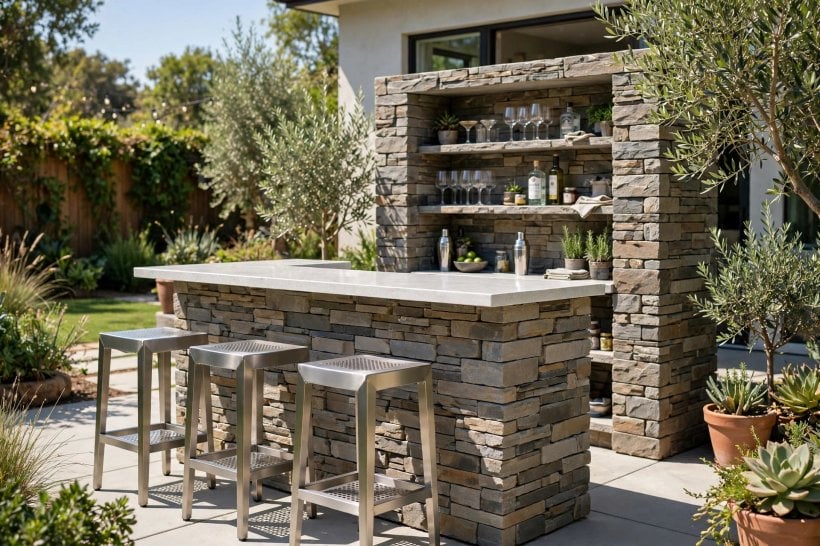
- Stone and slate rustic. Local stone base, slate top, built to look like it grew there.
- Modern rendered bar. Clean rendered blockwork in a pale colour with a hardwood top.
- Bar with pizza oven partner. Counter beside a wood-fired oven, food and drink in one destination.
- Split-level design. Host stands lower, guests sit higher at a raised counter, eye to eye.
- Bar and store combined. Counter in front, lockable storage behind for cushions, glasses and bottles.
Before committing to a permanent bar, check the rules that apply where you live: size, height, distance from boundaries and use can all be regulated, and a conversation with your local planning office now is far cheaper than a dispute later.
4. Tiki, Tropical and Themed Bars
A theme is a shortcut to atmosphere, and the outdoor bar wears themes happily because the garden already provides the scenery. The secret is commitment at the level of colour, material and planting, then restraint everywhere else. Pick one story, tell it clearly, and let guests fill in the rest with their imaginations and your playlist.
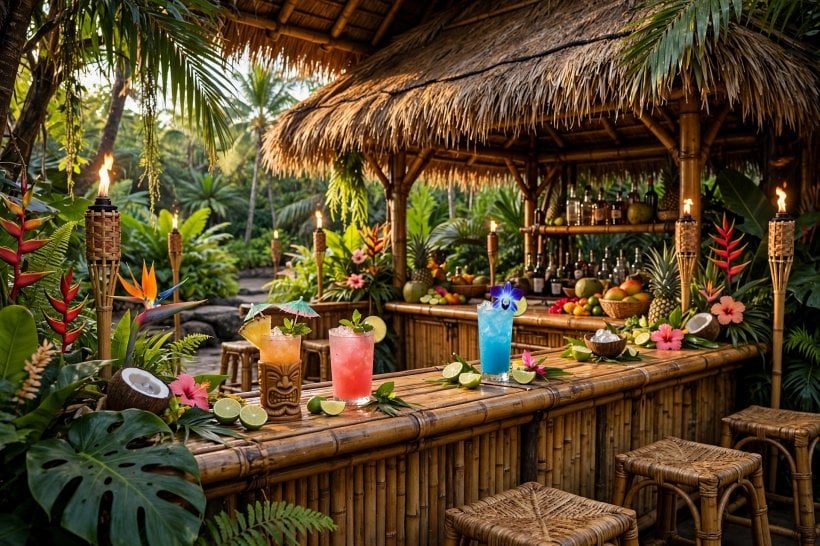
- Classic tiki. Bamboo, thatch-style roofing, carved details and lush planting in big pots.
- Beach shack. Weathered timber, pale blues and whites, rope details and a surf-side attitude.
- Mediterranean terrace. Terracotta, whitewash, olive trees and a tiled counter front.
- English country pub. Dark timber, hanging baskets, a chalkboard and proper pub garden benches.
- Tropical modern. Black framing, cane, huge leaves and one neon-bright accent colour.
- Desert cantina. Adobe tones, tiles, cactus in pots and shade sails against the sun.
- Nautical signal bar. Navy, white and brass, with lanterns and a ship’s bell for last orders.
- Festival corner. Festoon lights, bunting, crates for seats and a bar built for birthdays.
Themed bars live or die on planting. Real greenery, even in pots, sells the story better than any quantity of themed accessories, and it has the decency to grow more convincing every year.
5. Portable, Folding and Trolley Bars
Not every bar needs foundations. Portable bars suit renters, small gardens and sensible people who want to test the lifestyle before building it, and the best of them look deliberate rather than temporary. Small-space discipline, the kind collected in our tiny house and small-space interior design ideas, is exactly what makes a trolley bar feel like a destination instead of a tray on wheels.
- Classic drinks trolley. A two-tier trolley parked by the seating, stocked and styled for the evening.
- Folding pallet bar. A pallet-style counter that folds flat for winter storage in the shed.
- Trestle and board. A handsome board across trestles or barrels, dressed with linen for parties.
- Ice-bucket station. A planted trough or galvanised tub on a stand, the simplest bar of all.
- Window-ledge bar. A wide ledge outside the kitchen window, stools below, service through the hatch.
- Crate stack bar. Sturdy crates stacked as shelves and counter, reconfigurable for every party.
- Wheeled cart bar. A garden cart converted with a worktop, bottle rails and a handle for moving.
- Pop-up gazebo bar. A counter under a pop-up canopy, the renter’s and festival host’s friend.
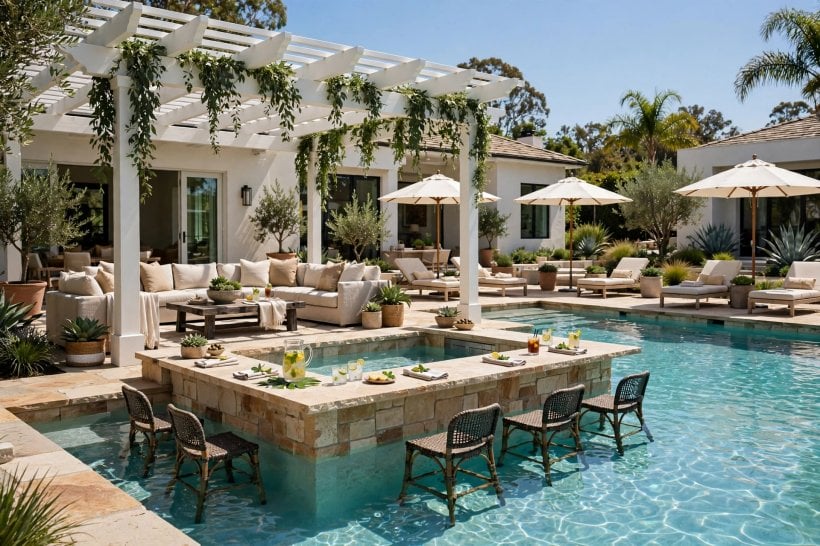
Portable bars have one great virtue beyond price: they let you audition positions. Live with the bar in two or three spots across a summer, and you will know exactly where the permanent one, if it ever comes, deserves to stand.
6. Counter Materials and Worktops
The worktop is where an outdoor bar earns its keep: it takes sun, rain, ice buckets, hot dishes and the occasional dropped bottle, and still has to look inviting. Choose for your climate, maintain as the maker directs, and be honest about whether you are a person who oils timber yearly or one who needs a fit-and-forget surface.
- Hardwood top. Dense timber, sealed and maintained, warming every other material around it.
- Polished concrete. Cast in place or as slabs, cool, heavy and quietly modern.
- Natural stone. Granite or slate offcuts for a top that shrugs off weather and hot pans.
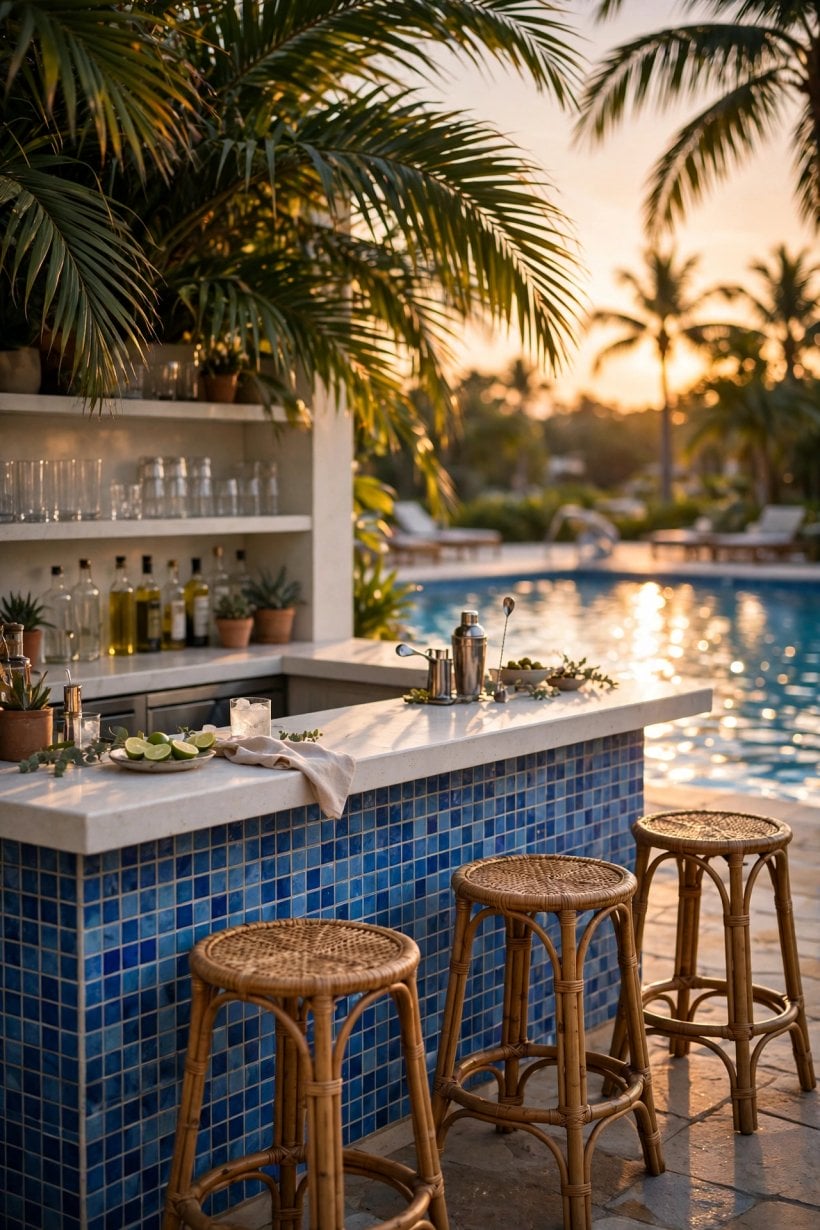
- Tile-topped counter. Outdoor-rated tiles bringing pattern and colour, grout kept sealed.
- Stainless steel. A professional, hygienic surface that suits modern schemes and keen mixologists.
- Reclaimed timber. Old scaffold boards or beams, sanded and sealed, character included free.
- Composite decking top. Boards matching the deck for a unified, low-maintenance surface.
- Mosaic moment. A small mosaic panel in the counter’s centre as the bar’s single artwork.
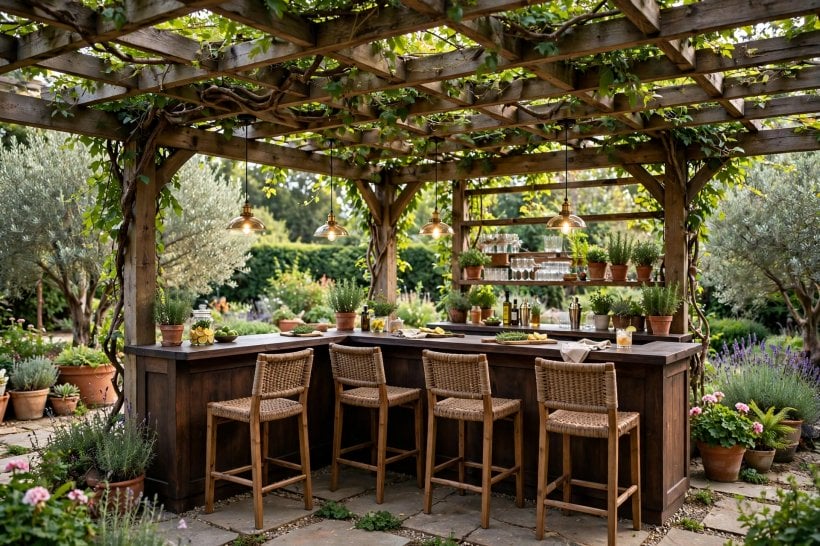
Whatever surface you choose, detail the edges and the drip: water should fall where you intend, not run back into joinery, and the front edge should be kind to forearms that will lean on it for entire evenings.
7. Shelter, Shade and Weatherproofing
An uncovered bar is a fair-weather friend. Shelter multiplies the evenings you can use it: a roof keeps the host and the bottles dry, shade keeps guests comfortable at six o’clock, and wind protection keeps candles lit and napkins on the table. Think of shelter as part of the bar itself, not an accessory, the same way a house build sequences structure before finishes in our how to build your own tiny house guide.
- Pergola roof. Open or covered pergola over the bar, with climbers softening the structure.
- Sail shade. A tensioned canopy for summer shade that comes down in an hour for winter.
- Bar hut roof. A proper little roof over a built-in bar, felted or shingled to match the house or shed.
- Retractable awning. Shade and shower protection that rolls away when the stars come out.
- Umbrella strategy. A large cantilever umbrella angled for the bar’s hours of use, weighted properly.
- Windbreak planting. Hedges, tall grasses or a trellis wall calming the prevailing breeze.
- Side screens. Roll-down or fixed screens on the weather side of a pergola or hut.
- Drainage thinking. Ground falling away from the bar, no puddle where the host stands.
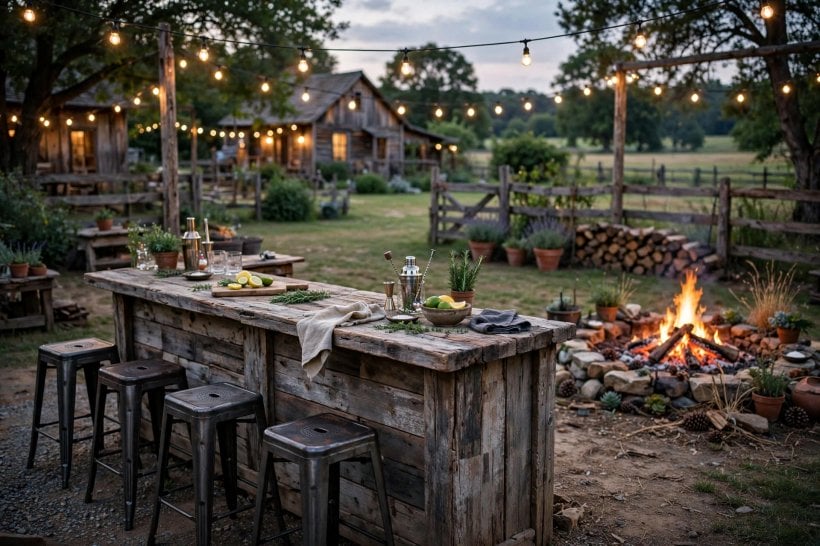
Weatherproofing is a system: roof, drainage, sealed surfaces, covered storage and furniture that can stay out or be put away in five minutes. Design all five together and autumn stops being the end of bar season.
8. Lighting, Colour and Styling
Evening is when an outdoor bar performs, and light is its stage manager. Layer it: practical light for the host’s worktop, warm glow at face height for guests, and sparkle overhead for magic. Colour then sets the mood, and the garden gives you a head start, because almost any palette looks good against green. Our tiny house interior paint colors guide’s testing discipline works outdoors too: paint a board, live with it at dusk, then commit.
- Festoon canopy. Strings of warm bulbs overhead, the single highest-impact bar purchase.
- Lantern clusters. Groups of lanterns at steps, corners and the bar’s ends for pools of glow.
- Worktop task light. A shaded light over the host’s station, bright enough to garnish by.
- Candle discipline. Real candles in jars on calm nights, quality flameless ones when it breezes.
- Dark and moody palette. Charcoal bar, warm wood top, brass details, planting in deep greens.
- Coastal pale palette. White and washed blue with natural rope, cane and bleached timber.
- Jewel garden palette. Emerald or navy bar front echoing evening planting and cushions.
- Signage with restraint. One good sign or chalkboard, lettered well, instead of a dozen novelties.
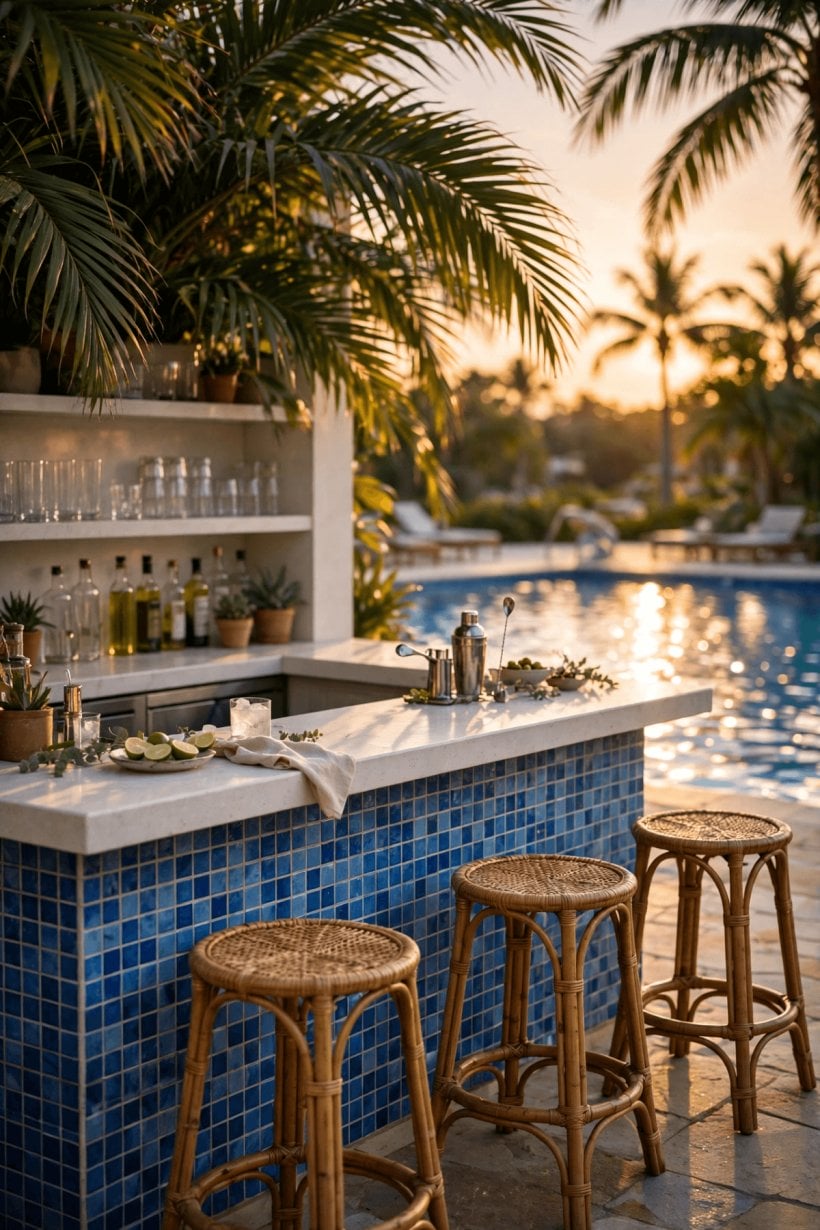
A styling rule borrowed from good pubs: everything visible should either be useful tonight or beautiful in the firelight. If it is neither, it belongs in the storage you planned in section three, not on the bar.
9. Seating, Serving and Storage
Guests judge a bar by whether they can sit comfortably, put a drink down safely and be served without a queue forming in the flowerbed. Plan seating perches at two heights, standing room that does not block paths, and storage that keeps the host at the bar instead of running to the kitchen every ten minutes. The serving logic in our tiny house kitchen design ideas, worktop, storage and flow in a small footprint, is precisely a bar’s logic too.
- Proper bar stools. Backed, foot-rested stools at the right height for the counter, weatherproof.
- Bench and table spill-over. A pub-style bench set near the bar for groups that outgrow the stools.
- Standing ledges. Slim shelves on fences or posts for drinks in the mingling zone.
- Glass storage at the bar. A weatherproof cabinet or box for glasses, so they live where they are used.
- Bottle display shelves. One or two shelves behind the host, stocked for the evening, locked away after.
- Ice and cold storage. A dedicated ice bucket routine or outdoor-rated cold box, planned not improvised.
- Bin and recycling point. A discreet bin at the bar’s end; parties generate packaging constantly.
- Cushion store. A waterproof box doubling as a side table, swallowing cushions at night.
- Tray discipline. Two good trays living at the bar for ferrying drinks and clearing glasses.
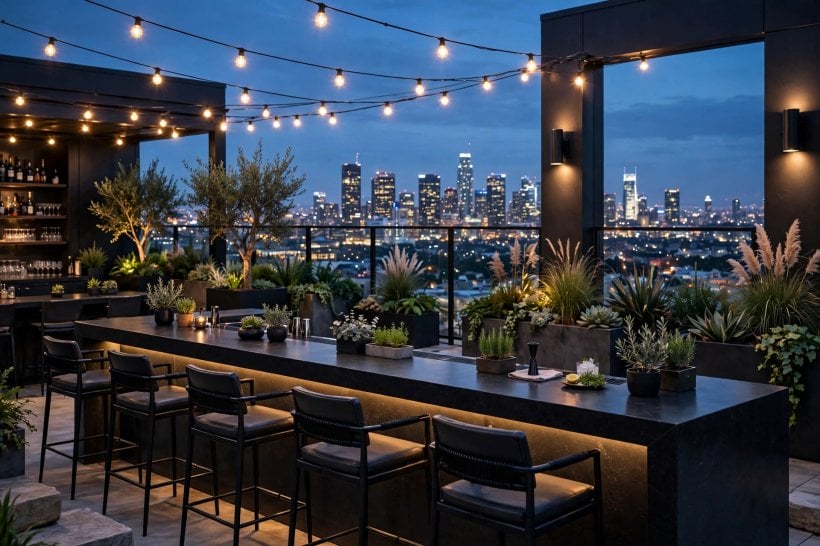
Count your regular crowd honestly and seat that number well, rather than squeezing double the people onto perches nobody enjoys. A bar for six happy regulars beats a bar for twelve uncomfortable occasional guests.
10. Costs and Practical Details
The final ten ideas are the checklist that keeps a joyful project joyful. Costs vary enormously with size, materials and whether trades are involved, so keep the money talk qualitative, price your exact design locally, and remember that the bar itself is often the cheap part; bases, shelter, lighting, services and seating are where budgets quietly grow, as anyone comparing with the tiny houses for sale and rent buyer’s guide approach to total project cost will recognise.
- Check local rules. Structures, heights and boundaries can be regulated; ask your city or county first.
- Power by professionals. Outdoor sockets, lights and fridges installed and certified by a qualified electrician.
- Water realism. A sink is lovely; a bucket, tap access and drainage plan may serve just as well.
- Level, solid base. Even a portable bar deserves firm, level, drained ground beneath it.
- Security for stock. Lockable storage for bottles and equipment; gardens are not safes.
- Neighbour kindness. Light aimed down, music aimed in, and hours that keep friendships intact.
- Winter routine. Drain, cover, oil and store by a written checklist each autumn.
- Maintenance honesty. Choose finishes whose upkeep fits the time you will truly give them.
- Phase the project. Counter this year, roof next, services last; a finished simple bar beats a stalled grand one.
- Safety basics. Stable stools, lit steps, no trailing cables, and heaters placed with clear space around them.
Keep a simple project notebook for the bar: measurements, the rules you checked, quotes, and what you would do differently. Garden projects evolve over years, and the notebook turns this year’s lessons into next year’s upgrades instead of next year’s repeated mistakes.
Final Considerations
An outdoor bar succeeds when it disappears into the life of the garden: the place where Friday lands, where birthdays gather, where a neighbour leans and stays for one more. Get the position right, build only as much as you will finish, shelter it, light it warmly and store things where they are used, and even the simplest trolley will outperform a neglected palace.
Choose from these 75 ideas the handful that fit your plot, your climate and your crowd. Then open the bar, literally or figuratively, as soon as the first stage is done. Gardens reward use, and a bar that is enjoyed weekly while it improves yearly is the best design of all.

0 Comments