

A brand-new sofa often sits like a park bench: tidy, supportive and about as forgiving as a plank. The good news is that firm cushions are usually a phase rather than a life sentence. This guide walks through the gentlest methods first, explains how long breaking-in honestly takes, and finishes with the fixes that keep a softened seat comfortable for years.
Work through the steps in order, give each one time to do its job, and your cushions should settle into the kind of seat you actually sink into.
1. At a Glance: Quick Answers Before You Start
| Question | Answer |
|---|---|
| Why do new cushions feel so firm? | Fresh foam has not yet been compressed by daily use, so its cells push back at full strength. Covers, piping and tight upholstery add to the board-like feel during the first weeks. |
| How long does breaking in take? | Most seat cushions feel noticeably kinder after a few weeks of regular sitting, and fully settled after a couple of months of normal use. |
| What is the fastest safe method? | Walking on the cushions on a clean floor, in socks, for a few minutes a day. It mimics months of sitting without sharp pressure points. |
| Will heat help? | Gentle warmth from a warm room or a low hairdryer pass can make foam more pliable short term, but never bake, soak or steam foam unless the maker allows it. |
| Can I soften cushions without removing the covers? | Yes. Walking, kneading through the cover, rotating and simply sitting more all work through the fabric. |
| What if only one cushion is too firm? | Rotate and swap positions so wear evens out, and give the firm one the most-used seat for a while. |
| When is softening the wrong fix? | If foam is crumbling, permanently dented or far firmer than its pair, replacement or a topper layer is the honest answer rather than more punishment. |
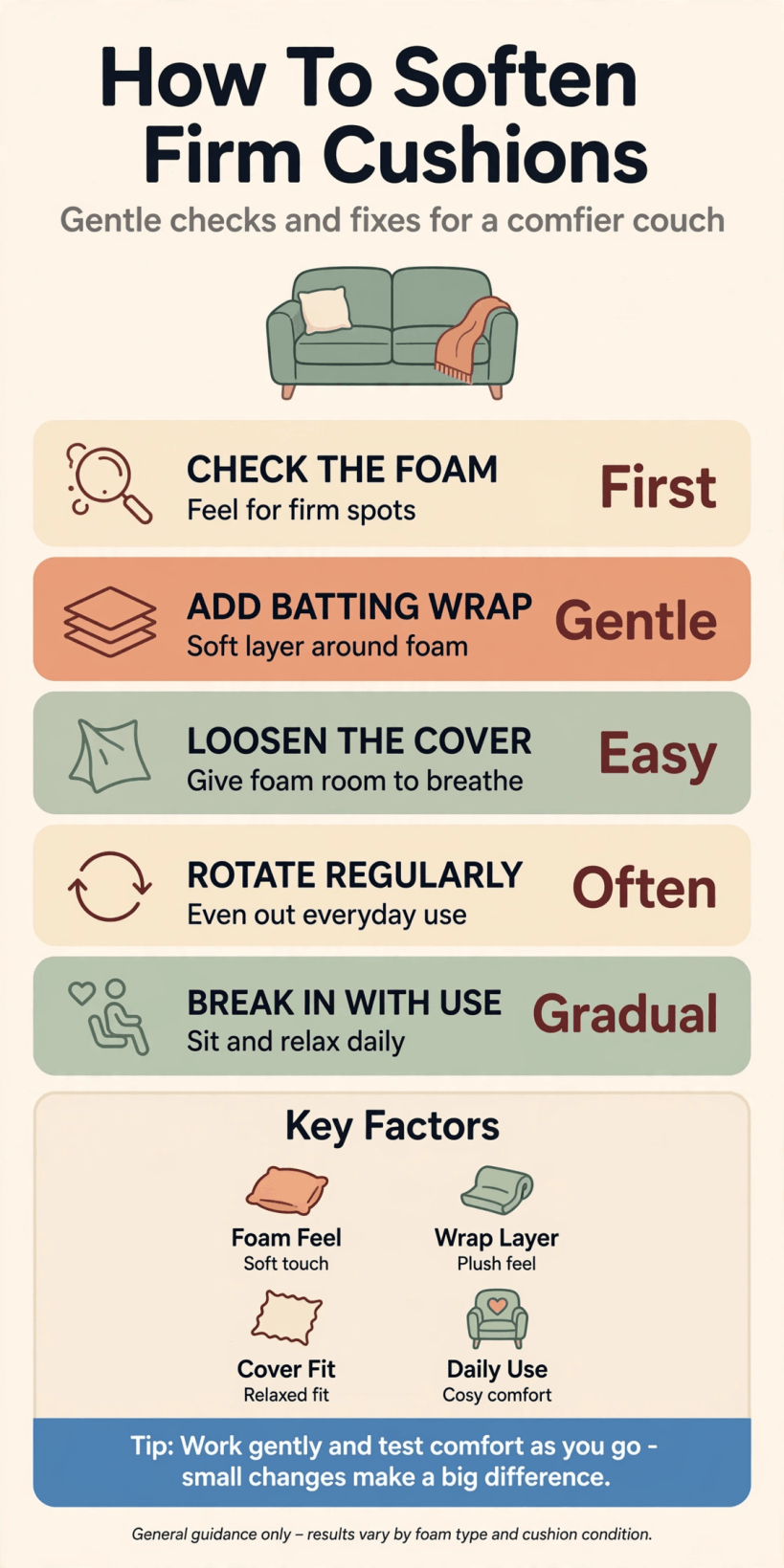
The quick route to softer seats: break the foam in gently, use the cushions daily, rotate them often, and add a comfort layer only if the foam itself refuses to relax.
Start with the table above if you are in a hurry; the sections that follow explain the reasoning, the order to try things, and the handful of mistakes that can damage foam instead of relaxing it.
2. Why New Cushions Feel Too Firm
Foam leaves the factory with its cell structure fully inflated and untested. Every sit squashes thousands of tiny air pockets; until they have been squashed a few thousand times, they spring back hard. Dense foams chosen for durability start firmer still, which is why a quality sofa can feel stricter than a cheap one on day one.
The cover plays a part too. New upholstery fabric is taut, piping holds its edge, and feather or fibre wraps have not yet moulded to the foam core. Even the room matters: foam feels firmer in a cold house than in a warm one. Choosing seating for a snug room follows the same logic as the layouts in our guide to tiny house living room ideas, where every piece has to earn its comfort quickly.
Knowing the firmness is mostly newness — not a defect — stops most people from attacking their cushions with methods that do real harm.
There is also a simple mismatch at play: showrooms. The display model you tested has survived hundreds of visitors, so it sits softer than the boxed twin delivered to your door. Your cushions are not wrong; they are just younger. Expect them to converge on the showroom feel gradually, and judge any method in this guide over weeks rather than evenings.
3. Break Them In: The Walking and Kneading Method
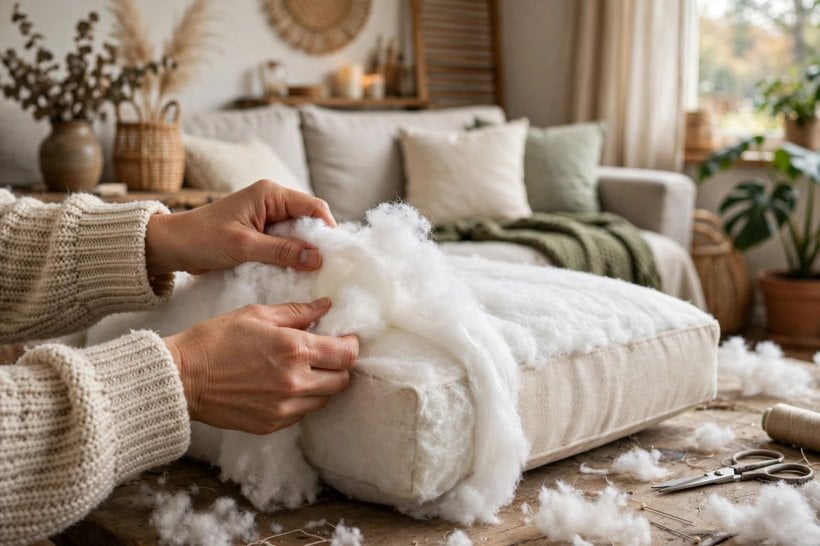
The most reliable technique in any guide on how to soften foam cushions is also the silliest to watch. Lay each cushion on a clean, hard floor, cover side up, and walk slowly across it in socks. Shuffle heel to toe, cover the whole surface, and give it three to five minutes per cushion. Your body weight compresses the foam evenly, without the point loads that heels, knees or elbows would create.
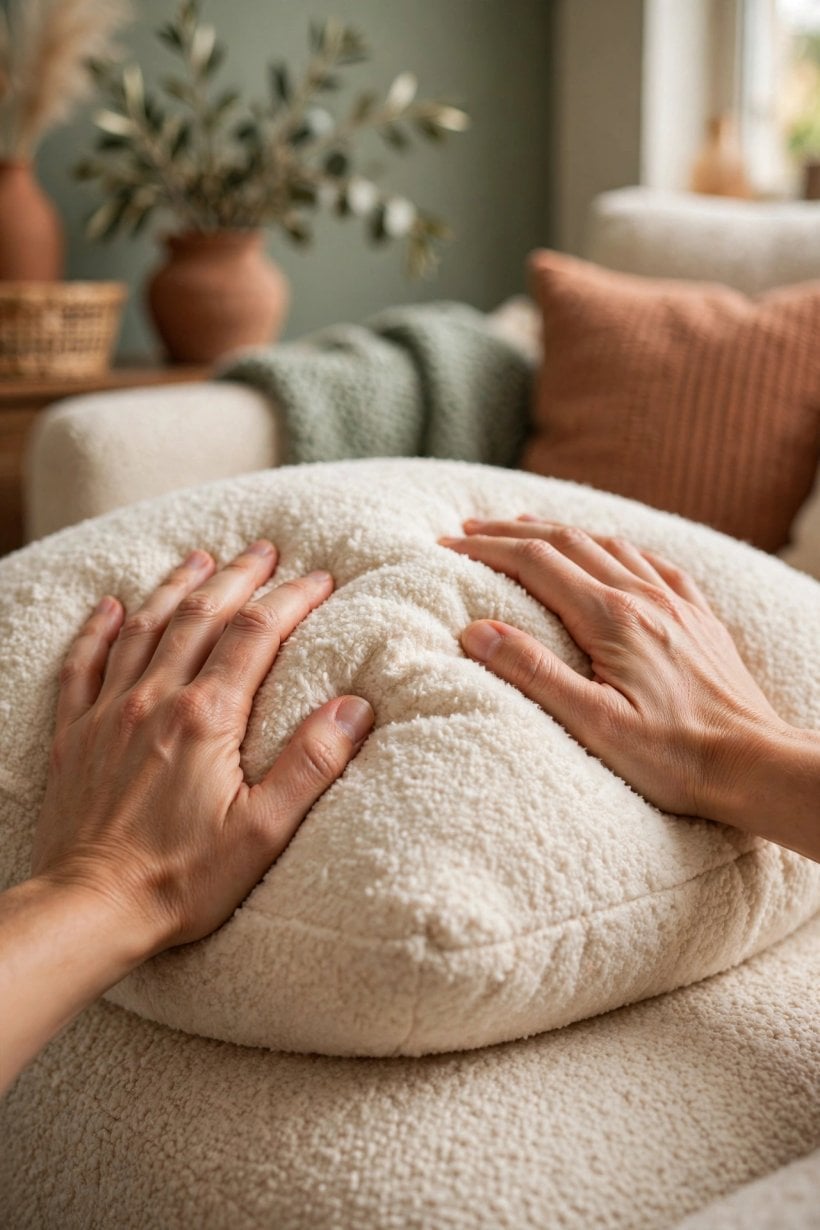
Follow up with kneading: work your palms across the cushion the way you would dough, pushing air out of the cells and loosening the surface. Pay extra attention to the front edge, which takes the most sitting pressure in real life and benefits from early attention.
Repeat daily for the first week or two. Most households notice a real difference within days, and the method costs nothing but a little dignity if the neighbours can see through the window.
A few ground rules keep the method safe. Clean socks only — grit on shoe soles can scar fabric. Work on a hard floor rather than carpet, which absorbs the pressure you are trying to apply. And never jump: a steady, rolling tread compresses cells evenly, while impact loads can tear the foam’s internal structure and leave weak spots that sag early.
4. Use the Sofa More, and Sit Smarter
Cushions soften where they are used, so the simplest prescription is occupation. Claim the firm seat yourself for a fortnight instead of perching on the comfortable end. Spread out rather than folding into one corner; a book, a laptop and sprawled legs distribute weight across more foam than a tidy upright pose.
Warmth helps quietly in the background. A cushion in regular use in a lived-in room stays more pliable than one in a chilly spare room, which is worth remembering in compact homes planned like those in our tiny house bedroom ideas guide, where the sofa often doubles as guest bed and reading nook.
If the sofa is in a second room that sits empty all week, consider swapping it into daily service for a month. Use is the one softener that never damages anything.
Households can share the work without thinking about it. Movie nights, homework sessions and long phone calls all count. If one seat hosts a regular reader while another only meets the occasional guest, swap the household’s habits rather than the furniture: move the reading lamp, and the traffic — and the softening — follows.
5. Rotate, Flip and Swap on a Schedule
Uneven softening is almost as annoying as firmness: one marshmallow seat beside one paving slab. Prevent it by rotating cushions weekly. Flip each one over, turn it front to back, and swap left and right positions if the shapes allow. In the first month, do it twice a week; after that, a weekly rhythm keeps wear honest.
Back cushions benefit too, even though they take less weight. A quarter turn stops the top edge — the part behind your shoulders — from staying ramrod straight while the middle slumps.
Treat it like the small regular jobs that keep a whole home pleasant, the same habit loop behind the room-by-room advice in our bedroom interior design for tiny houses feature: little and often beats occasional and heroic.
Tie the habit to something you already do — watering plants, changing bedding, the weekly clean — so it survives good intentions. A phone reminder for the first month helps too. Two minutes of flipping now prevents the lopsided look that makes a sofa feel older than it is, and it spreads the break-in across every cushion instead of concentrating it under one favourite sitter.
6. Add a Comfort Layer Instead of Fighting the Foam
Sometimes the foam is doing exactly what it was chosen to do — provide firm support — and the real problem is the surface feel. A comfort layer solves that without a fight. Options include a padded throw folded over the seat, a washable sofa topper, or a loose blanket with some loft. Even a sheepskin or a thick woven throw changes the first impression from board to welcome.
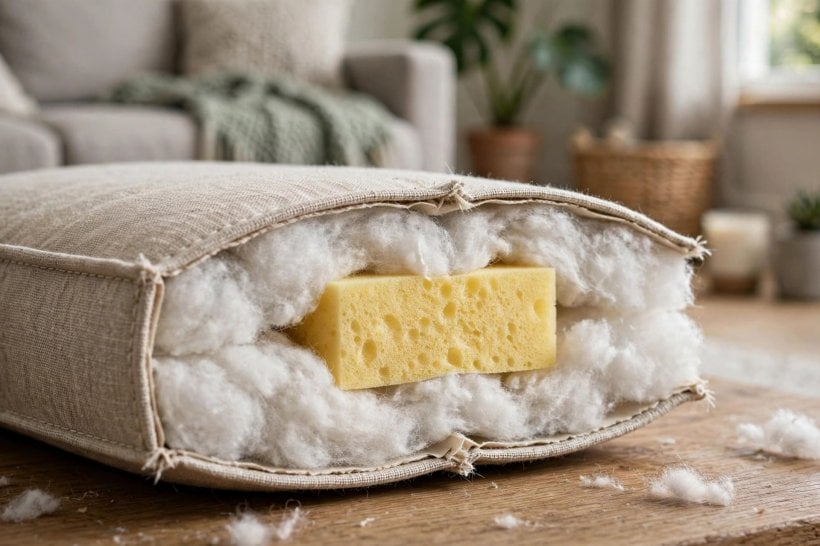
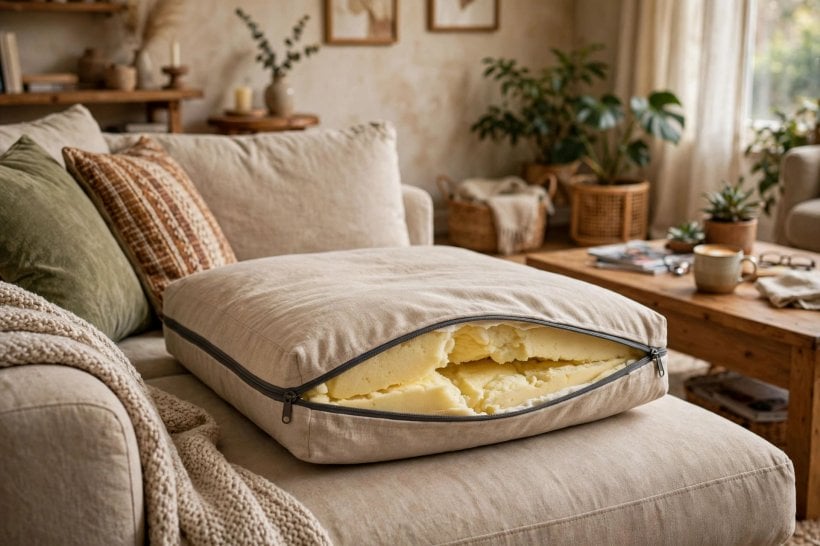
Inside a removable cover, a thin layer of soft wadding or a feather wrap over the foam core can transform the sit while the core keeps its supportive spine. Unzip carefully, note how the existing wrap sits, and keep any new layer thin so the cover still closes without straining the zip.
Layering textures this way borrows from the same thinking as the schemes in our colourful tiny house interior tour: comfort is built in layers, not bought in one piece.
7. Warmth, Steam and Other Tempting Shortcuts, Weighed Honestly
Heat makes foam temporarily more pliable, so a cushion in a sun-warmed room or given a gentle pass with a hairdryer on low will feel softer for an evening. That is a parlour trick, not a cure; the foam firms up again as it cools. Used occasionally before guests arrive, it is harmless. Used aggressively, heat can damage foam and covers alike.
Steam is riskier. Moisture driven into foam that cannot dry properly invites mildew, and some covers shrink or water-mark. Unless the manufacturer explicitly allows steaming, keep steam for the cover fabric only, removed and treated separately, and let everything dry fully before reassembly.
Skip the internet folklore: soaking, baking, freezing and driving over cushions all appear in forums, and all can wreck foam structure permanently. Gentle and boring wins this particular race.
The same caution applies to weights and heavy objects left overnight. A stack of books creates a narrow dent rather than overall softness, and can leave a lasting hollow if the foam is left pinned for days. Compression should always be broad, brief and moving — feet, palms and sitting bodies remain the best tools precisely because they never stay in one place for long.

8. Unzip and Loosen: Working Inside the Cover
If your covers unzip, you have extra options. Slide the foam out and walk on it directly — it softens faster without the cover resisting. While it is out, check the wrap: some cushions carry a tightly stitched polyester sleeve that keeps everything feeling drum-tight, and simply smoothing and re-seating it can release surprising tension.
You can also rotate the foam core itself end to end, moving the most-compressed zone to the back of the seat. And if the core is a sandwich of layers, the softer layer sometimes sits beneath the firmer one from the factory; flipping the sandwich puts the gentler side up, exactly as supplied, with nothing altered.
Photograph each stage as you dismantle so reassembly is guesswork-free, a habit worth keeping for any home project, from cushion surgery to the builds described in how to build your own tiny house.

9. When Softening Is Not Enough: Toppers, Refills and Replacement
Be honest about the endgame. Foam that crumbles at the edges, holds a permanent dent, or is simply the wrong density for your body will not knead its way to comfort. At that point the choices are a quality topper for surface relief, a refill — new foam cut to the cover’s size by an upholstery supplier — or replacement cushions from the original maker, who often sells them separately.
A refill also lets you drop one firmness grade while keeping the sofa you love, which is usually far cheaper and less wasteful than replacing the whole piece. Measure the cover’s internal dimensions carefully and take the old core along if you buy in person.
Furniture that fits a life gets kept; the same principle shapes the space-saving choices in our tiny house bathroom ideas round-up, where refitting one element beats ripping out the room.
Before ordering anything, sit on the bare foam core for an evening with the cover off and a blanket over it. That test separates cover tension from foam firmness: if the core alone still feels like a board, order a softer grade with confidence; if it feels fine, the cover or wrap was the culprit all along and a far cheaper fix will do.

10. Habits That Keep Cushions Comfortable
Once the seats feel right, small habits keep them that way. Plump cushions daily with a few firm pats to redistribute filling and air. Keep the weekly rotation going. Vacuum seams and surfaces so grit does not grind away at fibres, and deal with spills fast before they stiffen fabric.
Watch the room as well: cushions parked against radiators age faster, and constant direct sun dries covers until they feel papery and tight. A throw over the sunniest seat is cheap insurance. Even the approach to the garden matters for muddy paws and boots — the practical mindset in our tiny house landscaping ideas guide applies indoors too: design for the life you actually live.
Finally, re-walk any cushion that starts feeling stubborn after a holiday or a cold snap. Foam has a memory for neglect as well as use, and a few minutes of attention usually reminds it of its manners.
Guests are the final audit. If visitors choose the armchair over the sofa, or perch on the edge instead of settling back, the cushions are telling you something. A quick round of kneading and a fresh rotation usually fixes the message before the next visit — no purchases, no drama, just the routine doing its quiet work.
Final Considerations
Learning how to soften foam cushions is mostly learning patience with a plan: walk and knead first, sit more, rotate on schedule, and add a comfort layer before blaming the foam. Give the process a few weeks of honest effort before spending money, and reserve replacement for foam that is damaged or truly the wrong density. Keep notes as you go — which cushion softened first, which method helped most — because every sofa has its own temperament, and your notes turn the next new chair from a mystery into a routine. Do that, and the bench you bought becomes the sofa you meant to bring home.




0 Comments