
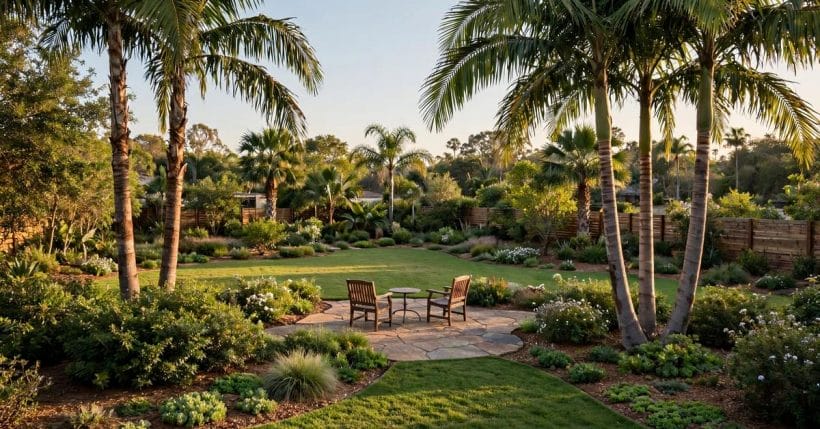
A backyard with palm trees has a mood all of its own. Even a single palm can change how a garden feels, drawing the eye upward, softening a fence line and giving a plain patch of lawn a sense of place. This gallery looks at landscaping with palm trees as a design subject: how palms sit in a layout, which colours and materials sit happily beside them, and which practical details are worth settling before anything is planted. It is a survey of ideas and photographs, not a planting manual, and it keeps its advice general on purpose, because palms that thrive in one climate and soil may sulk in another.
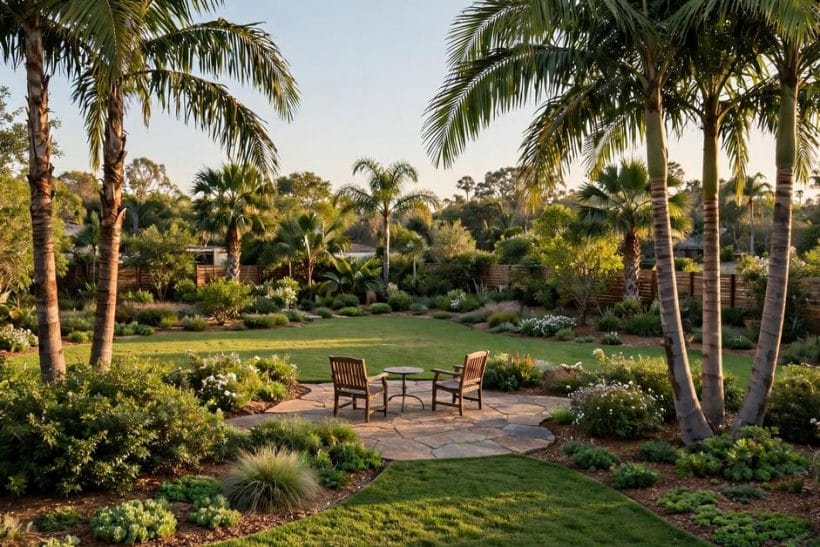
The photographs below move from the broad view to the small decisions. A wide shot shows what a palm-planted yard can feel like as a whole, while the closer views pick out the ground layer, the pots and edging, the shade and the sitting spots that make the planting feel finished. Where a neighbouring subject already has its own guide, this gallery points to it rather than repeating it, so the focus here stays firmly on the landscaping angle: arrangement, colour, paths, light and upkeep.
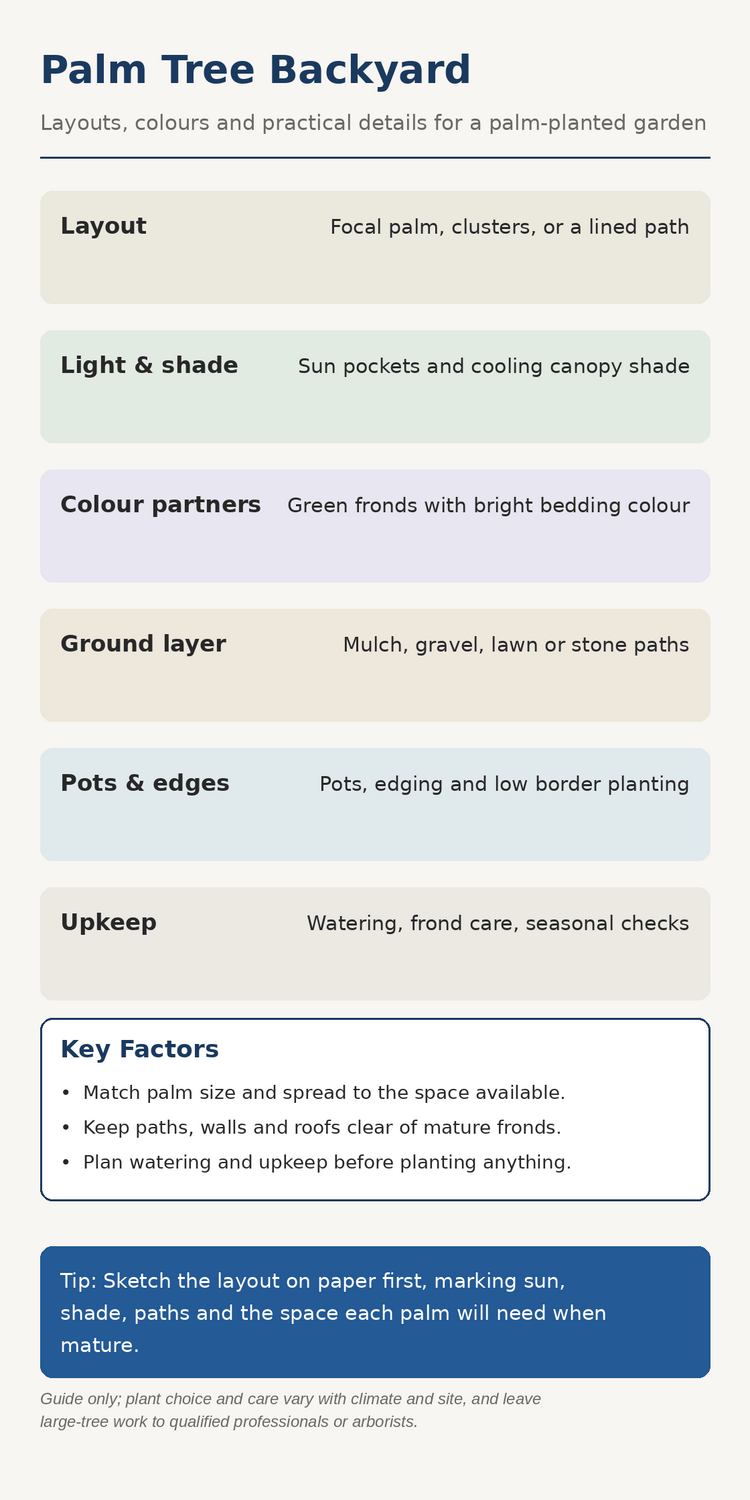
| Item | What it is |
|---|---|
| Reading the Yard Before Placing a Palm | Every yard has its own pattern of sun, shade, wind and damp corners, and palms respond to those patterns more than to any plan drawn on paper. |
| One Palm as a Focal Point | A single palm, well placed, can carry a whole backyard. |
| Lined Paths and Palm Avenues | Few garden features feel as welcoming as a path lined with palms. |
| Colour Partners for Green Fronds | Palm fronds bring a strong, clear green to the garden, and the colours planted beneath them can either deepen that calm or set it alight. |
| The Ground Layer Beneath the Palms | What grows, or lies, at the foot of a palm does much of the quiet work in a palm garden. |
| Pots, Planters and Small-Space Palms | Not every palm garden needs open ground. |
| Shade, Sitting Spots and Outdoor Living | One of the kindest things a palm gives a backyard is shade. |
| Palms in Small and Tiny Yards | Small yards suit palms better than many people expect, provided the palm is chosen for the space rather than for the photograph. |
| Living With Palms Through the Seasons | Palms change with the seasons more quietly than flowering trees, but the changes are there to enjoy. |
| Practical Details to Check First | Before any palm is bought, a short round of practical checks can save years of compromise. |
1. Reading the Yard Before Placing a Palm
Every yard has its own pattern of sun, shade, wind and damp corners, and palms respond to those patterns more than to any plan drawn on paper. Spend time watching where the light falls through the day, where rain gathers after a storm, and which corners stay sheltered when the wind picks up. A spot that looks perfect at noon may sit in deep shade by late afternoon, while a sheltered corner near a wall may hold warmth that a palm appreciates through cooler nights. These observations cost nothing and often decide whether a planting looks settled or strained.
Boundaries matter as much as light. Fences, walls, rooflines and overhead wires all set limits on how tall and wide a palm can grow before it starts to crowd its neighbours. A young palm may look modest beside a fence, yet its mature crown can spread well beyond the spot where it was planted, brushing roofs or blocking paths. Thinking in terms of the mature plant, rather than the young one in the pot, is the single most useful habit in palm landscaping. It keeps pruning to a light, occasional task instead of a constant battle, and it keeps the yard feeling generous rather than cramped.
Soil and drainage deserve the same early attention. Palms generally prefer ground that drains freely rather than ground that stays soggy, and a low corner that holds water after rain may need rethinking before it becomes a planting bed. None of this requires specialist knowledge to notice: a walk around the yard after heavy rain tells most of the story. Where the ground, the light or the space raises doubts, a local nursery or garden adviser can help match a palm type to the site, and that conversation is worth having before buying rather than after.
2. One Palm as a Focal Point
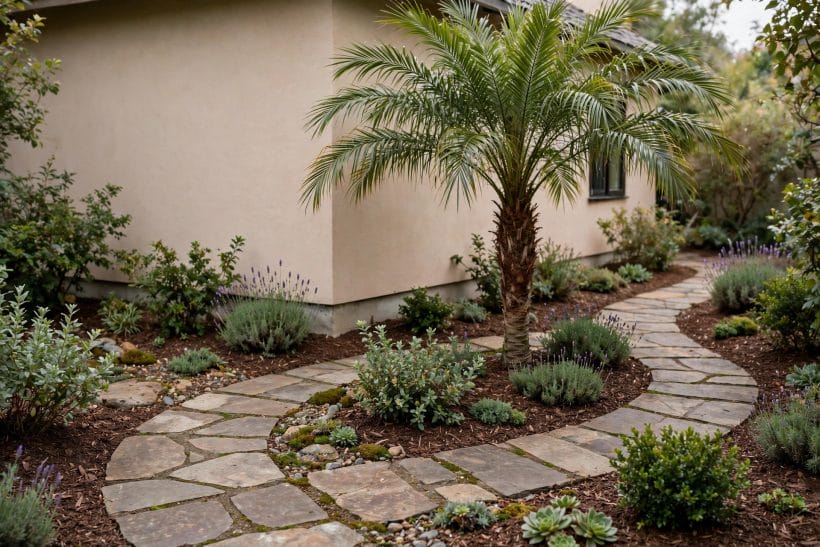
A single palm, well placed, can carry a whole backyard. The trick is to give it room to be looked at. Set against a plain wall, at the end of a path, or in the middle of a lawn, a lone palm becomes a landmark that organises everything around it: the seating turns toward it, the beds lead toward it, and the eye has somewhere to rest. The effect works in small yards as well as large ones, provided the palm chosen suits the scale of the space. A towering type in a tiny courtyard can feel overwhelming, while a compact type in a wide lawn can look lost, so scale is the decision that matters most here.
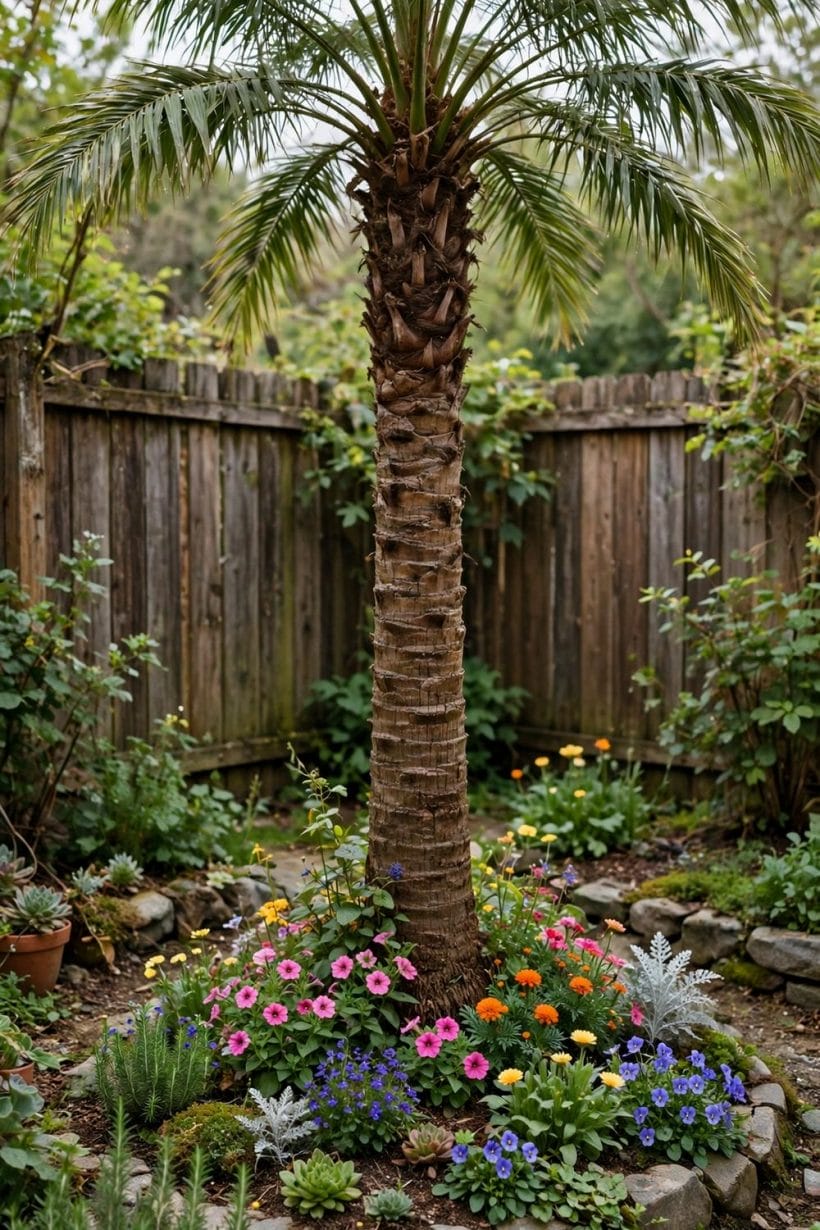
Underplanting around a focal palm should stay low and simple. A ring of groundcover, a few rounded shrubs or a mulch bed lets the trunk and crown do the talking, while taller companions can compete with the very feature the planting is meant to show off. Colour can come from foliage rather than flowers: silvery leaves, deep greens and warm bark tones all sit comfortably against a palm trunk. The aim is a calm base that makes the palm read clearly from the house, from the patio and from the far end of the garden alike.
A focal palm also earns its keep across the seasons. In summer its crown casts a pool of dappled shade that can make a nearby seat usable through the hottest part of the day, and in winter its evergreen shape keeps the garden from looking bare. That year-round presence is part of the appeal, and it is worth weighing when choosing between a palm and a flowering tree that gives its show for only a few weeks. The palm asks for patience in return, since it grows at its own pace, and a newly planted specimen may take a while to look like the picture in mind.
3. Lined Paths and Palm Avenues
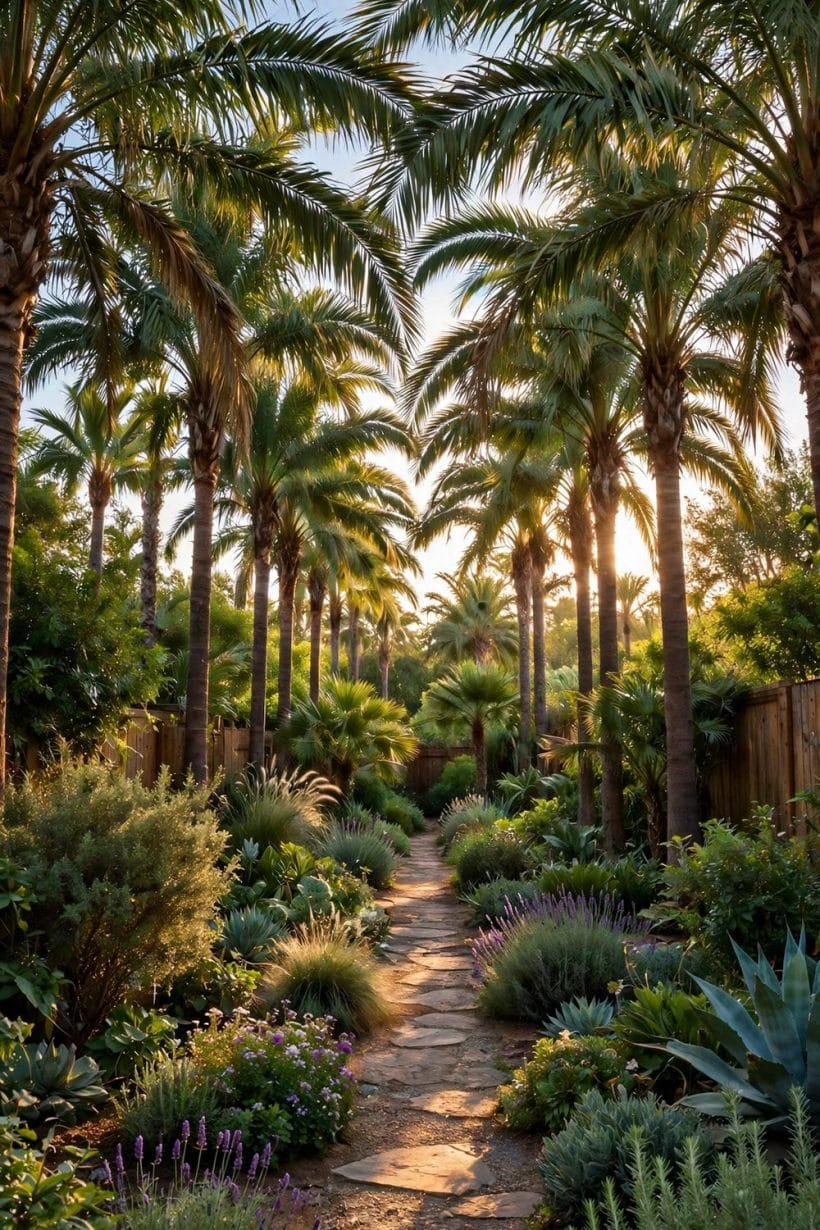
Few garden features feel as welcoming as a path lined with palms. The repeated trunks create rhythm, the crowns meet overhead to give a sense of enclosure, and the walk itself becomes part of the garden rather than just a way through it. A straight path with matching palms on both sides feels formal and calm, while a gently curving path with palms set at uneven intervals feels more relaxed and natural. Both approaches work; the choice depends on whether the rest of the garden leans tidy or loose.
Spacing is where a palm avenue succeeds or fails. Palms planted too closely will crowd each other as their crowns widen, while palms set too far apart can lose the sense of a line altogether. The right interval depends on the type chosen and the width of the path, and it is worth sketching on paper, at mature size, before digging. Paths themselves deserve thought too: a generous width lets two people walk side by side beneath the fronds, and a firm, even surface keeps the walk comfortable in wet weather. For ideas on shaping the walk itself, the garden steps ideas collection covers planting, paths and beds in the same spirit.
An avenue does not need to run the length of the property to work. Even a short run of palms along the path from a gate to a door can give a small garden a sense of arrival, and a pair of palms flanking a garden gate can frame the entrance beautifully. Lighting extends the effect into the evening: soft lights at ground level, kept clear of trunks and roots, can turn a palm walk into a gentle feature after dark. As with any planting near a path, mature fronds should be kept clear of the walkway so that nobody has to duck or brush past them.
4. Colour Partners for Green Fronds
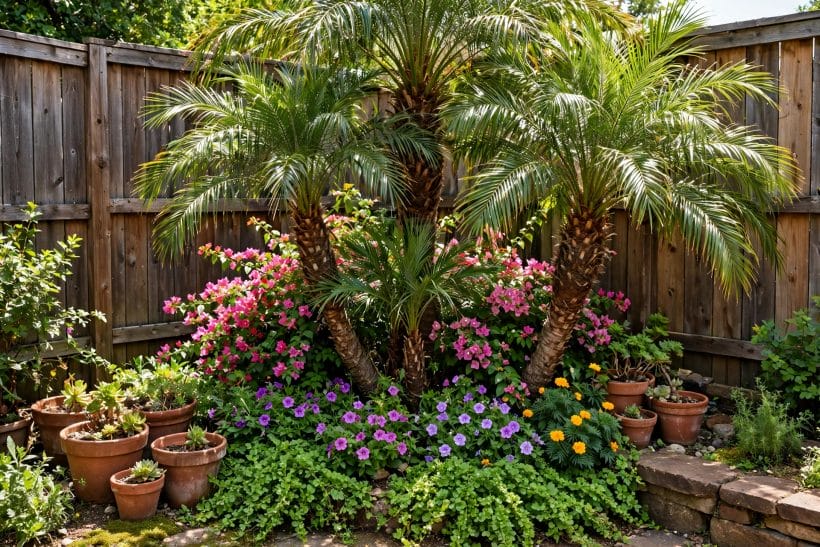
Palm fronds bring a strong, clear green to the garden, and the colours planted beneath them can either deepen that calm or set it alight. Hot bedding colours, from coral and magenta to warm gold, make a lively contrast that feels festive and tropical, while pale flowers and silvery foliage keep the mood quieter and more restful. Neither choice is right in itself; the question is what feeling the garden is meant to give. A seating area meant for lively gatherings can take bolder colour than a reading corner meant for quiet mornings.
Foliage colour often lasts longer than flower colour, so it is worth leaning on leaves as much as blooms. Plants with purple, bronze or variegated leaves hold their colour through the whole growing season, while flowers come and go in flushes. Pots are useful here, because they let colour be moved around with the seasons: a bright pot can sit near the patio in summer and move to a sheltered spot when the weather turns. Terracotta, stone and pale rendered pots all sit comfortably beside palms, while very glossy or brightly patterned containers can fight with the foliage for attention.
Colour also comes from the ground itself. Warm gravel, red-toned mulch, pale stone and timber decking each set a different backdrop for green fronds, and the choice changes how the whole garden reads. A pale surface bounces light around and can make a shady corner feel brighter, while a dark mulch makes green foliage stand out sharply. Trying a small patch of each material before committing to the whole yard is a modest step that can prevent a large regret, and it lets the household see the combination in their own light rather than in a photograph.
5. The Ground Layer Beneath the Palms
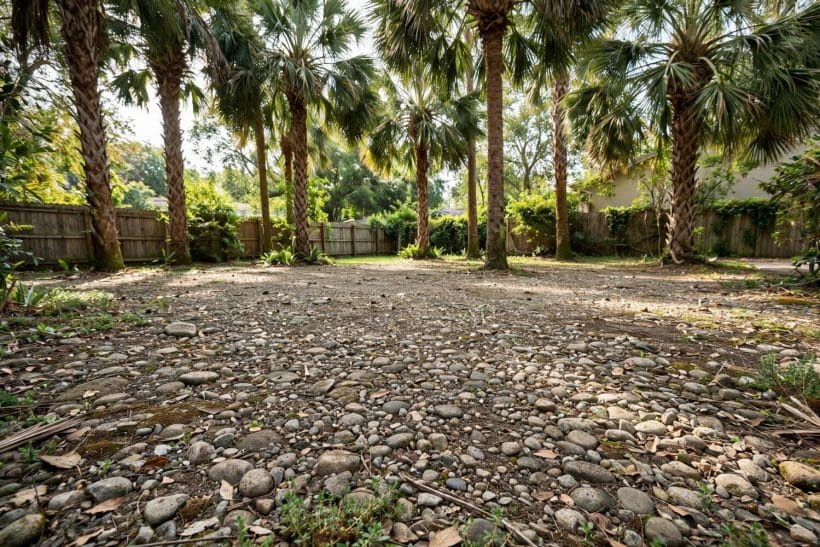
What grows, or lies, at the foot of a palm does much of the quiet work in a palm garden. A clean ground layer makes the trunks read clearly, keeps the beds looking cared for, and saves the gardener from constant weeding. Mulch is the most common choice, and it suits palms well: it holds moisture in the soil, keeps roots cooler in hot weather, and gives beds a finished look. Gravel suits drier gardens and paths, while lawn gives a soft, green carpet that suits family yards where children play. Each option has its own upkeep rhythm, and the honest choice is the one the household will actually maintain.
Groundcover plants offer a living alternative to mulch and gravel. Low, spreading plants can knit a bed together, soften the edges of a path, and add a second layer of foliage beneath the palms. The best groundcovers for a palm bed are those that tolerate the shade cast by the crowns and do not compete aggressively with the palm roots. Local advice is valuable here, since a groundcover that behaves politely in one region can spread eagerly in another. A mixed ground layer, with mulch near the trunks and groundcover toward the edges, often gives the tidiest result with the least fuss.
Edges finish the ground layer. A low stone, timber or metal edge keeps mulch and gravel where they belong, stops lawn from creeping into beds, and gives the whole planting a crisp outline. Edging also makes mowing and trimming simpler, since there is a clear line to work to. In a small yard, a simple edge can be the difference between a bed that looks intentional and one that looks like it happened by accident. Keep edges low enough to step over comfortably, and set them so that they do not trap water against the palm trunks.
6. Pots, Planters and Small-Space Palms
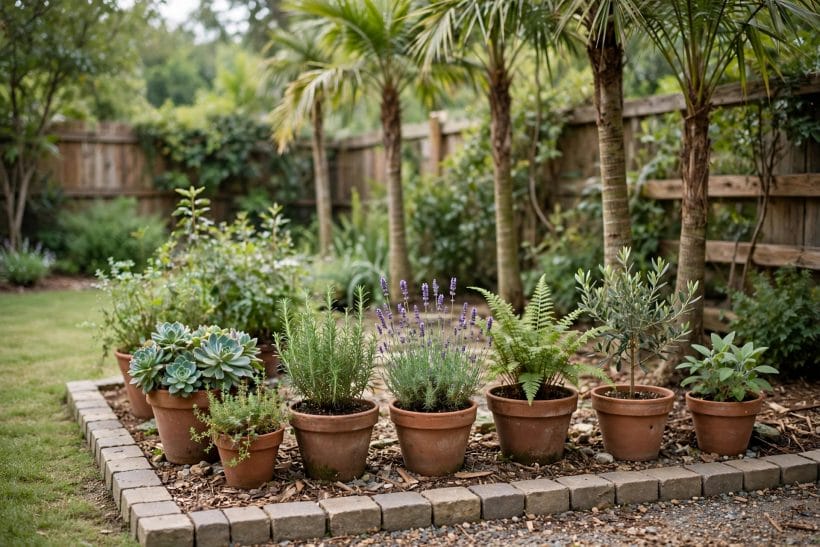
Not every palm garden needs open ground. Palms in pots can soften a patio, frame a doorway, or bring greenery to a balcony where planting in the soil is not possible. A large pot with a single palm makes a strong statement by an entrance, while a group of pots at different heights can build a layered corner on a terrace. Pots also give flexibility: a palm can be moved to catch the sun, sheltered when cold weather threatens, or rearranged when the patio layout changes. That mobility is a real advantage in rented homes and small spaces.
Choosing the pot matters almost as much as choosing the palm. A heavy, stable container suits a tall palm, since a light pot can topple in wind once the crown catches the breeze. Drainage holes are essential, since palms dislike sitting in water, and a pot feet or a raised base helps water escape freely. For a gentle guide to turning an everyday container into a planter, the wooden crate planter box guide covers liners, drainage and planting checks in the same practical spirit. Whatever the container, the palm inside will need regular watering and feeding through the growing season, since a pot holds far less soil, and far less moisture, than open ground.
Grouping pots takes a little judgement. Odd numbers of pots tend to look more natural than even rows, and mixing pot sizes keeps the group from looking like a shop display. Leave enough space between pots for air to move and for the gardener to reach each plant, and keep the group clear of walkways so that nobody trips over a pot edge in the dark. In time, a potted palm may outgrow its container and need a larger home; that move is best done while the plant is still manageable, and larger specimens are a job for experienced hands rather than a weekend experiment.
7. Shade, Sitting Spots and Outdoor Living
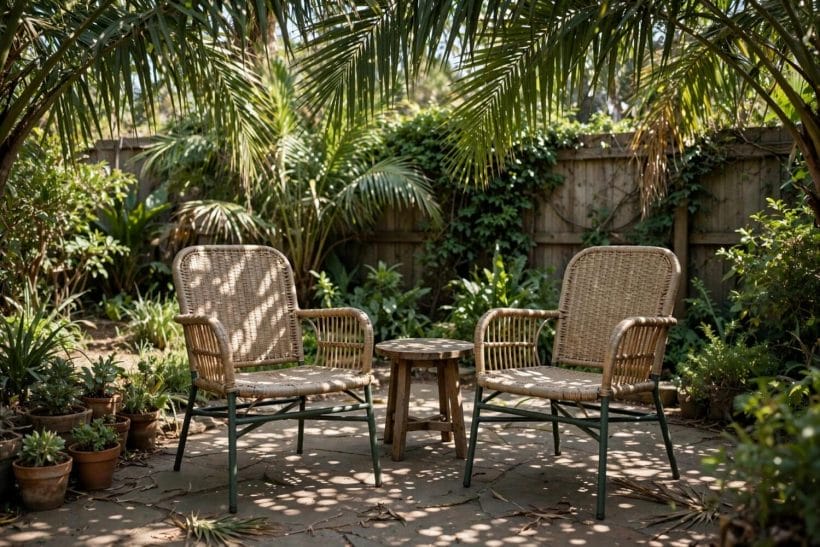
One of the kindest things a palm gives a backyard is shade. A crown overhead turns a patch of patio from an oven into a sitting spot, and a group of palms can shade a whole terrace through the afternoon. Placing seating where the shade actually falls, rather than where it looks tidy on a plan, makes the difference between a chair that gets used and one that does not. Watch the shade through a summer day before fixing furniture in place, and remember that the shaded patch moves with the sun and with the seasons.
Seating beneath palms suits simple, sturdy furniture. Timber, woven and metal pieces all sit well in a palm garden, and pale cushions keep the look cool and relaxed. A low table, a lantern or two, and a surface for drinks are enough; the palms themselves supply the decoration. For the patio that holds the furniture, the tiny house patio ideas collection shows how small outdoor rooms can be arranged, and the same thinking scales up to a larger yard. Keep furniture clear of falling fronds and fruit, and site it where dropped leaves can be swept up without a struggle.
Water nearby adds to the pleasure of a palm-shaded seat. A small bird bath, a shallow bowl or a simple fountain can bring birds into the garden and give the space a gentle sound, though any water feature needs its own care and should be kept clear of overhanging fronds that drop debris into it. Evening use extends the value of the space: soft, warm lights at ground level, a lantern on the table, and a clear path back to the house all make a palm garden welcoming after dark. The aim throughout is a space that invites lingering, not one that only looks good from indoors.
8. Palms in Small and Tiny Yards
Small yards suit palms better than many people expect, provided the palm is chosen for the space rather than for the photograph. Compact types, palms grown in pots, and single specimens used as focal points can all work where a large spreading type would overwhelm the garden. The discipline of a small yard is selection: one well-chosen palm, given room and light, will look better than several crowded ones competing for the same patch of sky. Vertical thinking helps too, since palms draw the eye upward and make a small garden feel taller than it is.
Boundaries need care in a tight space. A palm planted close to a fence will eventually lean toward the light or press against the boundary, so a little extra room at planting time saves trouble later. Overhanging neighbours deserve the same consideration: fronds that drop across a fence can strain a good relationship, and a quick check of where mature fronds will fall is a courtesy worth keeping. Where space is truly tight, a potted palm that can be moved, or a palm kept to a modest size, keeps the garden flexible and the neighbours happy.
Small yards also benefit from keeping the rest of the planting simple. A lawn or gravel ground layer, a few pots, and one or two shrubs let the palm stand out without clutter, and they keep upkeep within what a busy household can manage. Mirrors, pale walls and light-coloured paving can all make a small palm garden feel brighter and larger, though they should be used sparingly so the garden still reads as a garden. The reward for restraint is a small space that feels calm, green and complete rather than crowded.
9. Living With Palms Through the Seasons
Palms change with the seasons more quietly than flowering trees, but the changes are there to enjoy. Fresh fronds unfurl through the growing season, older fronds fade and drop, and the crown slowly reshapes itself through the year. A light seasonal check keeps the planting looking its best: clear fallen fronds from paths and beds, look over the crown from the ground, and note anything that looks damaged or out of place. Most routine care is gentle work at ground level, and anything involving height, heavy fronds or a tall trunk belongs to qualified professionals or arborists, never to a ladder and a hopeful afternoon.
Watering needs shift with the weather. Palms generally need more water through hot, dry spells and far less when the weather is cool and wet, and the soil itself is the best guide: dry to the touch a little below the surface usually means water is welcome, while soggy ground means waiting. Feeding follows the same seasonal rhythm, with any feeding kept general and moderate rather than heavy-handed, and always in line with the product label where a product is used at all. No recipe or mixture is offered here, deliberately, since soils and climates vary too widely for one prescription to suit every garden.
Cold weather is the season that tests palms most in cooler regions. A tender palm may need a sheltered corner, a wrapped pot, or a move indoors for the coldest weeks, depending on its type and the local climate. Watching how a palm comes through its first winter in a new garden teaches more than any guide, and it may suggest a different spot or a hardier type for the next planting. Patience is part of palm gardening: a palm that looks unremarkable in its first year may settle into a handsome specimen once its roots have found their place, and a garden that is given time usually rewards it.
10. Practical Details to Check First
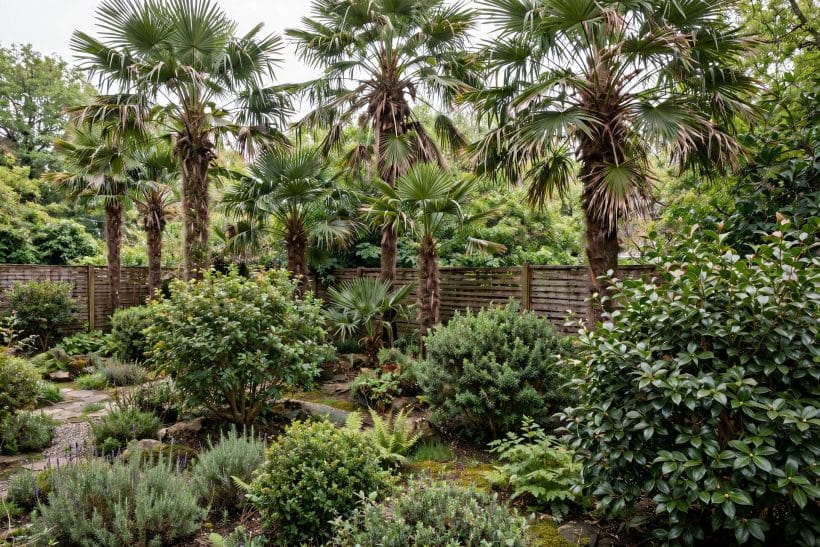
Before any palm is bought, a short round of practical checks can save years of compromise. Measure the space at mature size, not at nursery size, and mark the crown spread on the ground if it helps to see it. Check for overhead wires, underground services, drains and septic areas, and keep palms clear of them all, since roots and crowns do not respect plans drawn without them. Check local rules too, since some areas restrict certain plant types or set distances from boundaries, and a quick enquiry is far cheaper than a forced removal later.
Buying well matters as much as planting well. Look for a palm with healthy, evenly coloured fronds, a firm trunk and no signs of damage, and ask the seller about its expected size, its light needs and its cold tolerance in plain terms. Keep the label or note the type name, since knowing what is planted makes later care and advice far easier. Transport deserves care as well: fronds bruise easily, and a palm tied or bent roughly for the journey may carry the marks for a long time. For anything beyond a small, easily handled plant, professional help with moving and siting is the sensible choice.
One boundary deserves stating plainly, because this gallery is about landscaping rather than moving established palms. Moving a large, established palm is a different subject with its own risks, equipment and judgement calls, and it is covered separately in the transplanting a large sago palm guide, which weighs whether such a move is sensible at all and keeps heavy work with professionals. Nothing in this gallery re-teaches that move, and readers considering one should start there rather than improvising. The same professional-only rule covers any large-tree work in a palm garden: tall crowns, heavy fronds and climbing are not household tasks.
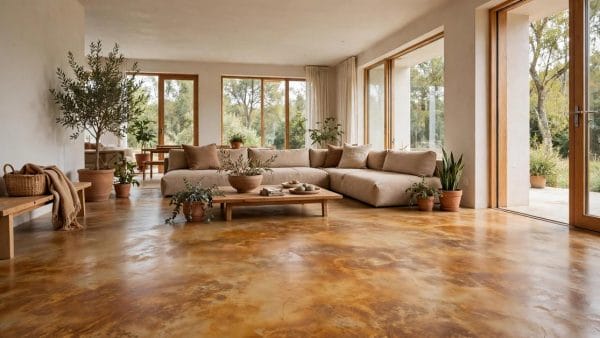
For the surfaces that surround a palm planting, two companion surveys are worth a look. The concrete patio ideas collection covers hard surfaces that sit well beside planting, while the stained concrete floors survey looks at coloured concrete for patios, paths and verandas. In dry regions, the desert southwest plants guide offers planting companions that suit sun and free-draining ground. Each of these keeps its own subject in focus, and together they sketch the setting a palm garden deserves.
Final Considerations
Landscaping with palm trees rewards a slow eye and a light hand. The gardens that look best are rarely the ones with the most palms; they are the ones where each palm has room, light and a reason to be where it stands, where the ground layer is calm, the colours sit easily together, and the seating falls where the shade actually lands. Start with the yard as it is, choose palms that suit the space at mature size, and let the planting settle before adding more. A palm garden is a long game, and the patience it asks for is repaid in shade, structure and a green presence that holds the garden together through every season.
Keep the hedged view in mind throughout. Palms may thrive or merely persist depending on climate, soil, water and care, and no outcome is guaranteed by any guide, including this one. Local advice, suited to the actual site, will always beat general guidance, and professional help is the right call for large specimens, tall work and anything that feels beyond comfortable reach. With those cautions observed, a palm-planted backyard can be a generous, calming place: a little wilder than a lawn, a little calmer than a flower garden, and unmistakably its own kind of outdoor room.

0 Comments