

Ask whether anyone regrets choosing one tub material over another and the honest answer is that most people do not regret the material — they regret the fit. The tub that was heavy to bring in, hard to clean, or the wrong shape for the room is the one that nags for years. Acrylic and cast iron are both excellent materials that suit different rooms, budgets and bodies, and the right choice is the one that matches your house rather than the one a stranger would pick.
This comparison keeps it fair and practical: weight and fitting, soak warmth, surface feel, repair, and daily care — all in general terms, because real weights and finishes vary by maker and model. Where work touches pipes or structure, a qualified plumbing professional makes the call, and this guide says where those moments are.
1. Acrylic vs Cast Iron Tub at a Glance
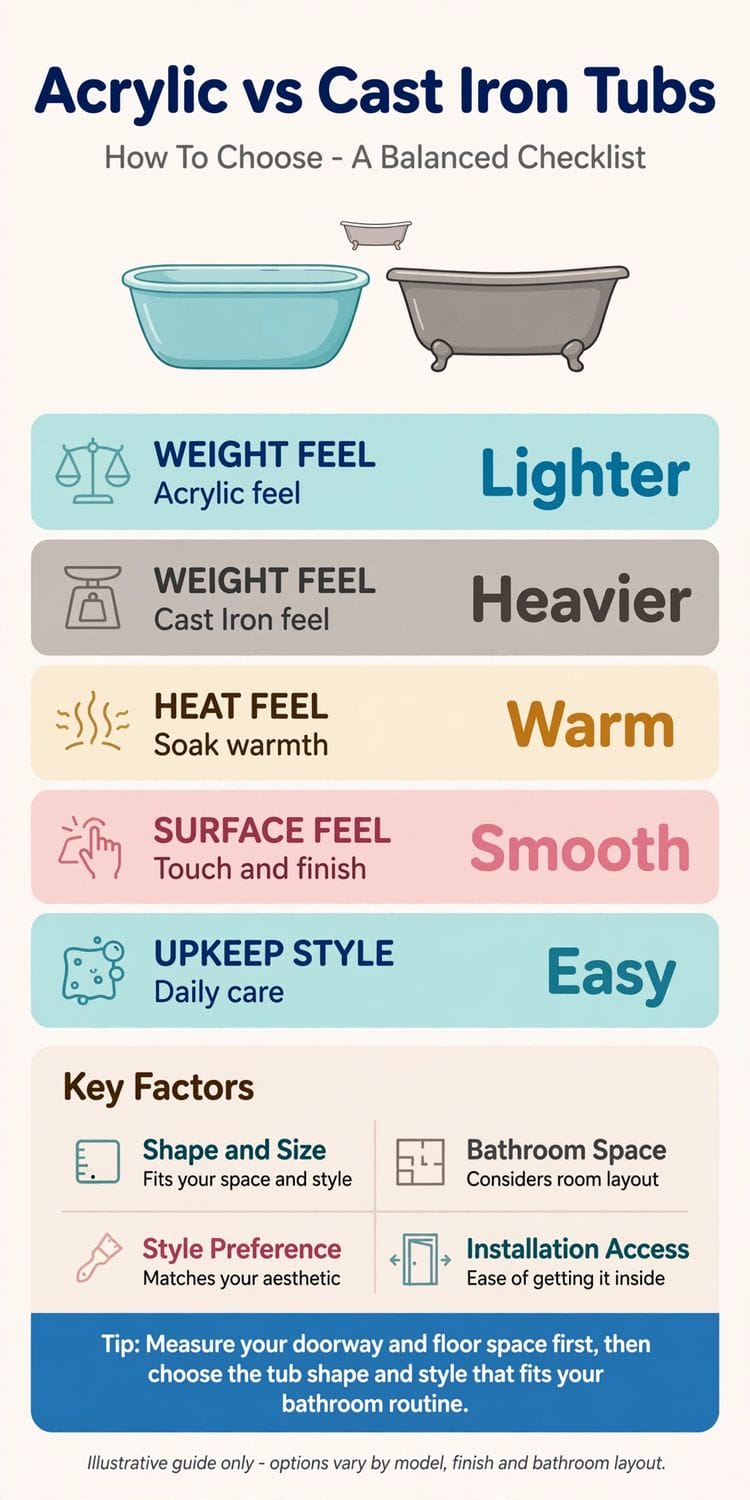
The two materials differ most in feel: one light and warm to the touch, the other heavy and famously steady. The table below is the whole comparison in one place, and the sections that follow unpack each row honestly — including where the conventional wisdom is overstated.
| The Check | What to Know | At a Glance |
|---|---|---|
| Weight Feel — Acrylic Feel | How the tub feels to lift and place | Lighter |
| Weight Feel — Cast Iron Feel | The heft of a traditional metal tub | Heavier |
| Heat Feel — Soak Warmth | How the bath water holds its warmth | Warm |
| Surface Feel — Touch and Finish | How the surface feels under hand | Smooth |
| Upkeep Style — Daily Care | The everyday wipe-down routine | Easy |
Measure your doorway and floor space first, then choose the tub shape and style that fits your bathroom routine. Four key factors frame the decision better than any headline claim: the shape and size, which must fit the space and the style you already live with; the bathroom space itself, and how the room’s layout absorbs a heavy or a wide tub; your style preference, because a tub you love looking at gets better care; and installation access — the ease, or difficulty, of getting it inside at all. The parent guide for the whole room is the bathroom ideas pillar.
2. First, What the Two Materials Are
An acrylic tub is a moulded shell, usually reinforced underneath, finished in a smooth glossy surface. It arrives in a huge range of shapes — alcove, freestanding, oval, corner — because moulding is flexible, and it is light enough for two people to move with care. A cast iron tub is cast metal, coated in enamel, and it is exactly what it sounds like: heavy, rigid, and made in a smaller range of classic shapes.
The weight difference changes everything downstream. A lighter tub is easier to deliver, easier to position, and easier on floors that were never designed for a great weight in one spot. A heavier tub needs a floor that can carry it and a route into the room that can take its bulk and its mass — doorways, stair turns, and hall corners all matter. Both are entirely normal choices; the question is only what your house can accommodate without fuss.
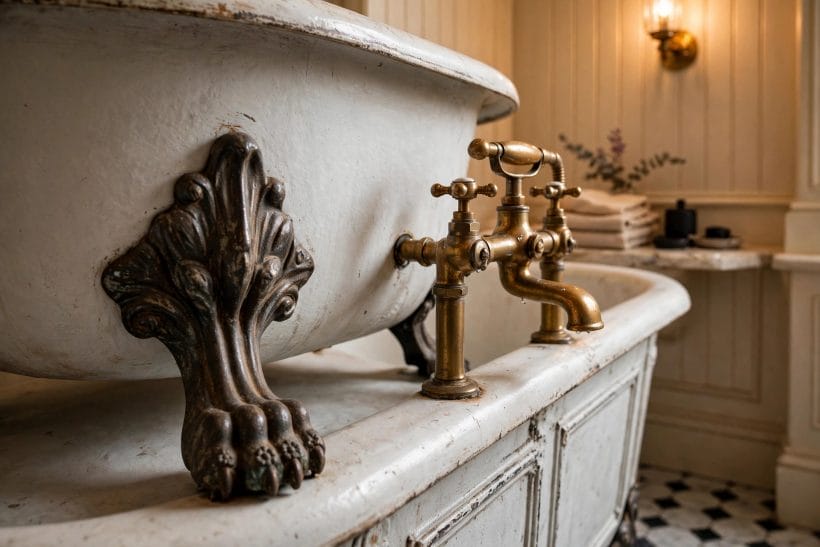
Style follows the material. Acrylic’s freedom of shape suits modern and curved designs; cast iron’s classic forms — the roll-top, the clawfoot — suit traditional rooms. Neither is more “real” than the other, and the best-looking room is usually the one where the tub’s shape agrees with everything else in it.

3. Weight and Getting It Into the Room
This is where the materials part company most clearly. Acrylic is light for its size: a delivery team can bring it through a standard doorway, up a stair turn, and into place without heroics. Cast iron is a different operation — a heavy, awkward object that needs enough hands, the right equipment, and a route planned in advance, especially to an upper floor.
Floor strength is the quieter half of the same question. A filled cast iron tub concentrates a great deal of weight on a small footprint, and an older timber floor may need reinforcement before it is installed. That is a structural judgement for a qualified professional, made before the tub is ordered, not after it arrives. An acrylic tub rarely raises the question, though the floor still deserves a level, sound base for any tub at all.
The practical test is simple and free: measure every doorway, stair turn and hall corner on the delivery route, and measure the space the tub will stand in. The classic regret in this comparison is not the material but the delivery that nobody measured for — and that one is avoidable in an afternoon with a tape measure.
Timing matters as much as measuring. Floor reinforcement, if the professional judges it necessary, is work done before the tub arrives and before the floor finish goes down — it is the cheapest moment in the whole project to strengthen a floor, and the most expensive moment to discover it was needed. Ask the question at the planning stage, when the answer is still cheap.
4. Heat: The Long Soak Question
Cast iron holds heat well, and soakers love it for exactly that reason: the metal warms through and gives the warmth back slowly, so a long bath stays comfortable longer. Acrylic, being thinner and lighter, does not store heat the same way — though it also does not steal heat from the water on first contact, so the first minutes feel warm immediately. Both can give a good soak; they simply get there differently.
In practice the difference is smaller than the reputation suggests, and other factors dominate: the temperature of the room, the depth of the tub, whether the water covers the shoulders, and how long you actually stay in. A draughty bathroom chills any tub, and a warm room flatters both. Insulation under an acrylic shell, where the maker provides it, narrows the gap further.
For buyers who take very long soaks and can carry the weight, heat retention is a genuine reason to lean toward cast iron. For everyone else, it is a nice-to-have rather than a dealbreaker — and worth less than the right shape and the right fit.
5. Surface Feel and Finish
Touch tells the story here. Acrylic is smooth, warm to the hand, and slightly giving — it never feels cold when you step in. Cast iron under enamel is smooth too, but harder and colder at first contact, warming up as the bath fills. Both finishes feel premium; they simply feel like different things, and a showroom visit is the honest way to learn which one you prefer.
Looks follow the same split. Acrylic’s moulding allows crisp modern lines, seamless aprons and integrated shelves; enamel over cast iron gives a deep, glassy finish that suits classic shapes and has been admired for a century. Gloss levels vary by maker, so the showroom — or a sample — matters more than any photograph.
One caution for both: abrasive cleaners and harsh pads dull any finish over time. The surface you buy is the surface you keep only if the cleaning stays gentle, which is a habit worth forming on day one regardless of material.

6. Chips, Scratches and Repair
Here the materials diverge in a way that matters. Acrylic can scratch and, in a hard knock, can crack — but scratches are usually repairable with a polishing kit, and the material’s flexibility absorbs small impacts that would chip a harder surface. Cast iron’s enamel is very hard and very resistant to everyday scratches, but a heavy object dropped on it can chip the enamel, and a chip exposes metal that needs prompt attention.
Repair stories differ accordingly. Acrylic repairs are usually a homeowner-level job with a kit, or a short visit from a specialist for deeper damage. Enamel repair is more specialised work: cosmetic kits exist, but a lasting, invisible repair on enamel is a professional’s job, and a badly chipped tub may need refinishing or replacement of the whole unit.
The household matters here. Homes with dropped toys, heavy bottles and a generally rugged routine may prefer the material that shrugs off the odd knock; homes where the tub is a calm adult space may never test either surface. Neither material is fragile in normal use — the difference is only in what happens on the worst day, and how it is fixed after.
If a chip does happen on enamel, the honest first aid is to dry the spot, keep it clean, and get a professional opinion promptly — exposed metal and water are a poor combination over time, and a quick assessment costs far less than a repair left until the finish around it has suffered too. Small acrylic scratches, meanwhile, can usually be polished out with the kit the maker recommends, which is worth buying with the tub rather than hunting for after the first mark.
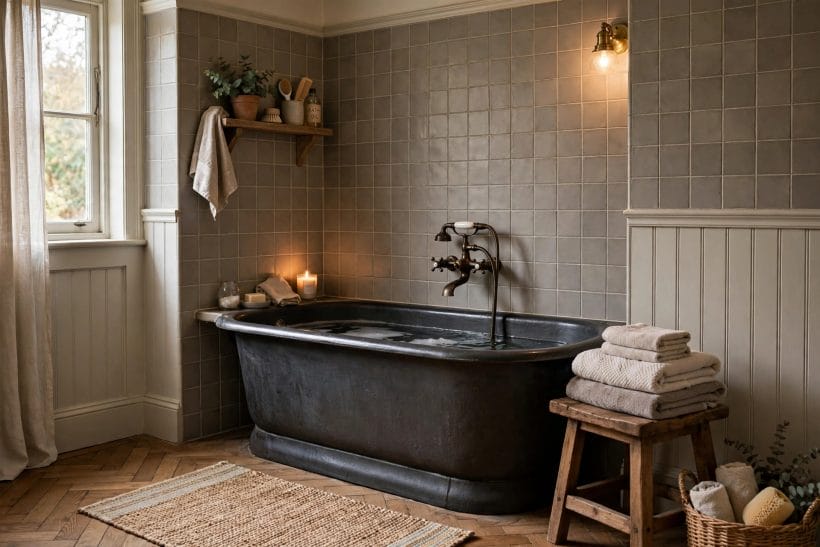
7. Taps, Fittings and the Plumbing
Fittings do not care which material you chose, but the installation does. A freestanding tub of either material needs its waste and supply brought to the right place in the floor before the tub arrives, and the plumber’s access to those pipes after fitting is worth discussing in advance — a beautiful tub with inaccessible pipework is a future bill waiting to happen.
Deck-mounted taps suit alcove and drop-in tubs; floor-standing fillers suit freestanding shapes of both materials. The weight of a cast iron tub matters again here, because once it is set, moving it for a repair is a serious job — so the plumbing beneath it should be finished, tested and photographed before the tub goes in. For an acrylic tub the same care applies, but repositioning later is at least feasible.
Everything in this section is plumbing work in the real sense: supply pressures, waste falls, seals and access. It belongs to a qualified plumbing professional, and the right time to involve one is when the tub is chosen, not when the bathroom is half tiled.
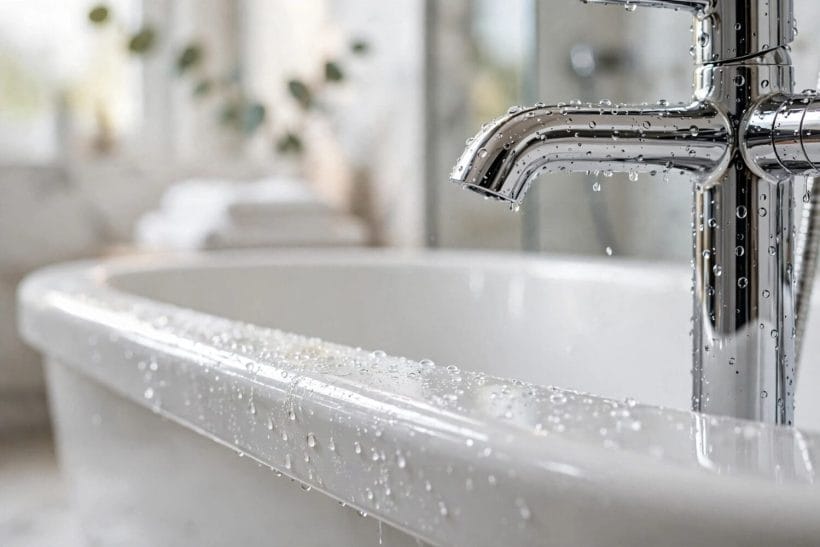
8. Daily Care and Cleaning
Both materials are easy to live with day to day. Acrylic wipes clean with a soft cloth and a mild cleaner, and its warm surface means limescale shows less on it. Enamel wipes clean the same way and tolerates a little more scrubbing, but it dislikes abrasive powders and harsh chemicals just as much, and its glossy surface shows water marks more readily.
The routine that protects either tub is short: rinse after use, wipe dry if you are inclined, clean with a non-abrasive product, and never use steel wool or a scouring pad on either surface. Stains that do appear — from bath oils, dyes or hard water — usually lift with a gentle soak and a soft cloth rather than with force.
For families, the day-to-day verdict is a draw with a lean: acrylic’s warmth and give are kinder to small feet and small accidents, while enamel’s hardness is kinder to a busy cleaning routine. Neither demands more than a few minutes a week, and both reward the gentle habit.
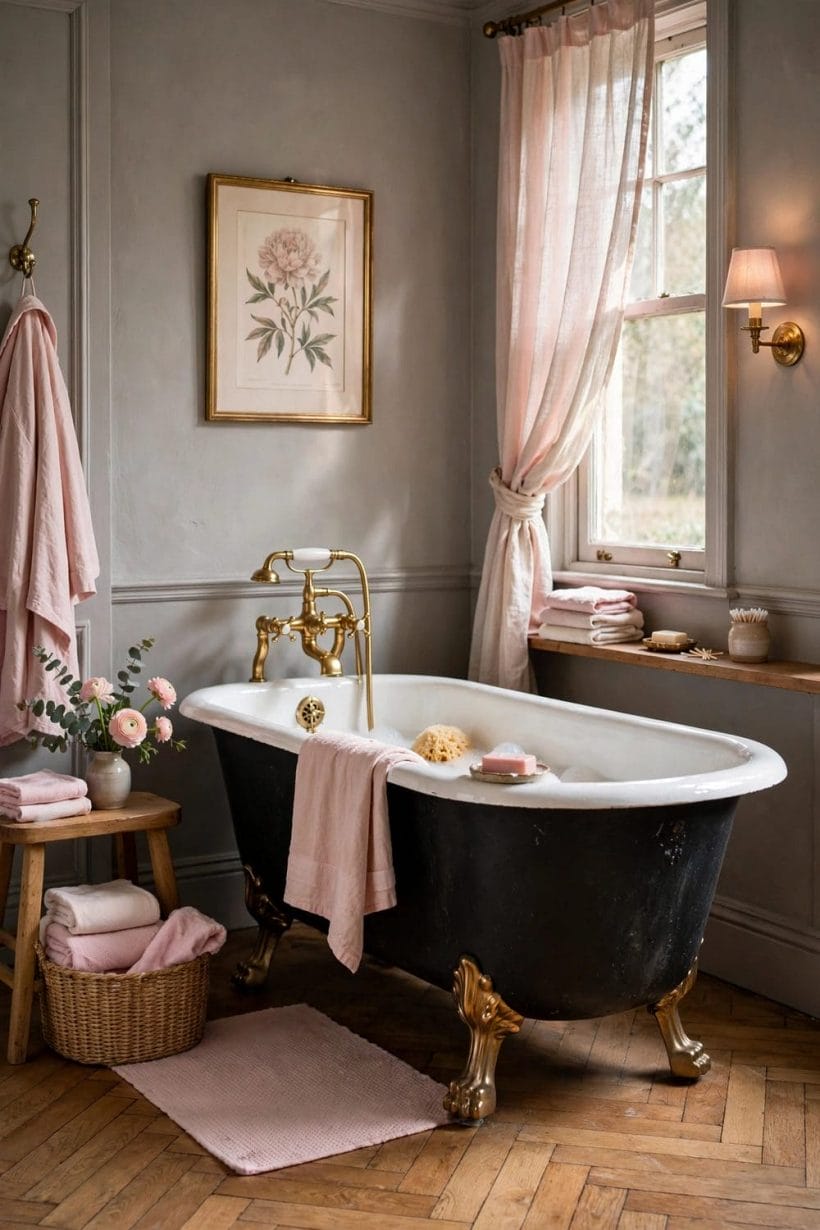
9. Who Each Material Suits
So who should pick which? Acrylic suits the upper-floor bathroom, the remodel on a tight schedule, the modern shape, the house where delivery routes are narrow, and anyone who wants the widest choice of designs at the most manageable weight. It is the pragmatic choice, and there is nothing second-class about it.
Cast iron suits the ground-floor bathroom with a sound floor, the traditional room where a clawfoot or roll-top is the centrepiece, the long-soak household that values heat retention, and the owner who wants a tub that will outlast the bathroom around it. It asks more of the house and gives back a feeling of permanence that is hard to fake.
Both suit the household that measures first, plans the plumbing with a professional, and chooses the shape that fits the room rather than the fashion of the month. The bathrooms with clawfoot tubs collection shows the cast iron tradition at its best, the alcove bathtub ideas guide covers the most common acrylic home, and the corner bathtub ideas collection handles the awkward corners both materials can fill.
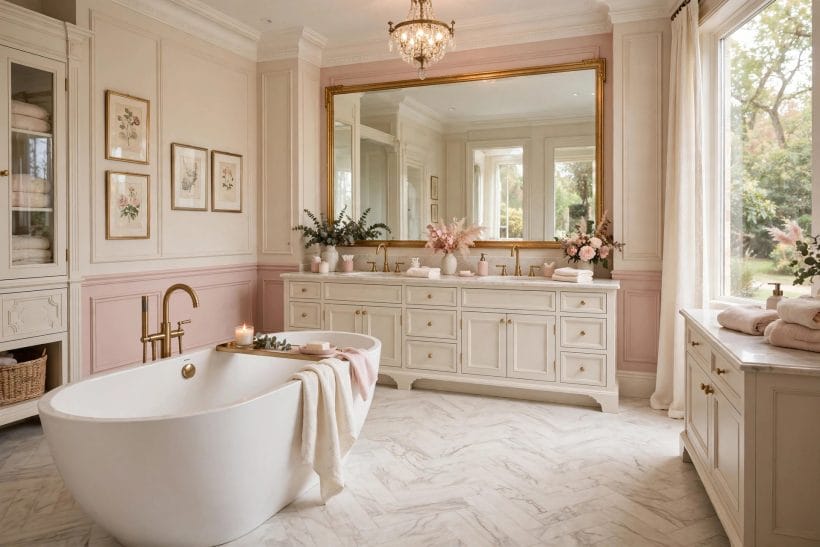
10. The Cost Picture in General Terms
Costs vary too much by maker, size and region to quote usefully, so think in relative terms. An acrylic tub is generally the lighter purchase — the unit itself, the delivery and the fitting all cost less effort, and the range of prices runs wide because the range of shapes is wide. A cast iron tub is generally the heavier investment in every sense: the unit, the delivery team, any floor reinforcement, and the plumber’s time all add up.
Installation can quietly double the difference. A straightforward swap in an alcove, where pipes already sit where they should, keeps both options reasonable; a new freestanding position, new pipe runs and a reinforced floor push the heavier material further ahead on cost. Get the full picture quoted — unit, delivery, plumbing, tiling, reinforcement — before choosing, and compare totals rather than tub prices.
Value is not the same as cheapness here. A cast iron tub that serves for decades in a house built to carry it is good value; an acrylic tub that fits a difficult upstairs room without any structural work is also good value. The expensive choice is the one that has to be redone — and the surround, tiles and floor that sit around either choice are covered in the tub surround ideas, bathtub tile ideas and bathroom flooring ideas guides.
Future buyers read a bathroom the way you read it now: by its fit, its condition and its calm. A tub that sits well in its room, with sound plumbing and a finish that has been cared for, adds to that reading whichever material it is — and a tub that was forced into a room it never suited subtracts from it, again whichever material it is. Choose for the house you live in, and the next owner will read the same good sense in it.
Final Considerations
Regret, when it comes, is almost never about the material in isolation. It is about a tub that was too heavy for its floor, too wide for its doorway, or the wrong shape for its room. Measure first, plan the plumbing with a professional, and choose by fit: acrylic for lightness, shape and ease; cast iron for weight, warmth and permanence. Either, chosen that way, is a tub you will still be glad of years later — and that is the whole comparison.



0 Comments