
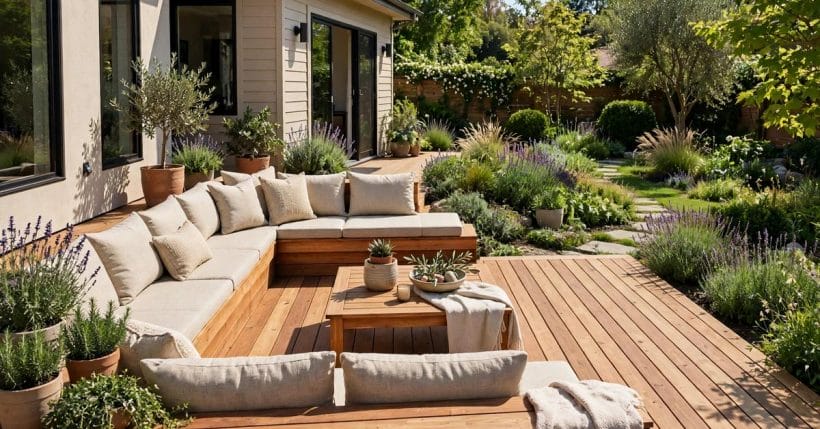
A deck without seating asks everyone to bring their own chair, and somehow there are never quite enough. A bench built into the deck itself answers that problem permanently: it is always there, always in the right place, and it shapes the deck around the way people actually gather.
This guide to wooden deck seating works through the main bench families: perimeter runs, corner layouts, storage seats, cushioned comfort, materials, styling, and the planning checks worth making before anyone builds.
1. Built-In Deck Benches at a Glance
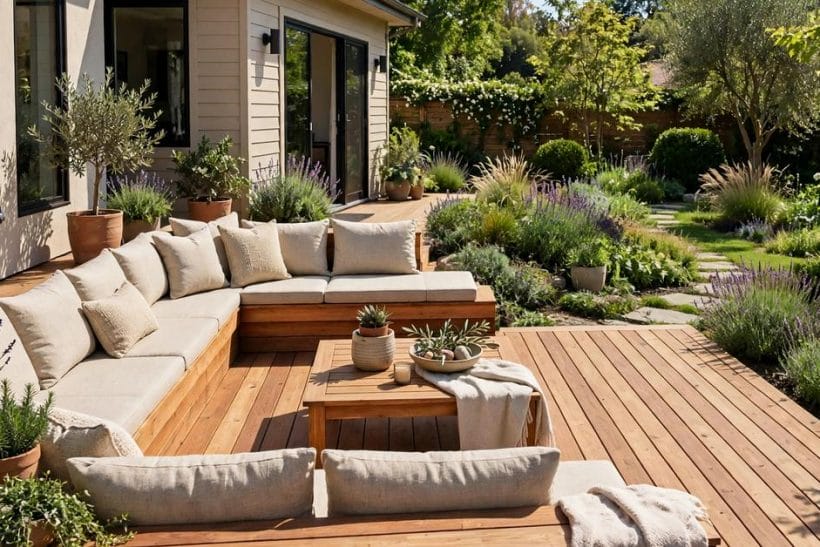
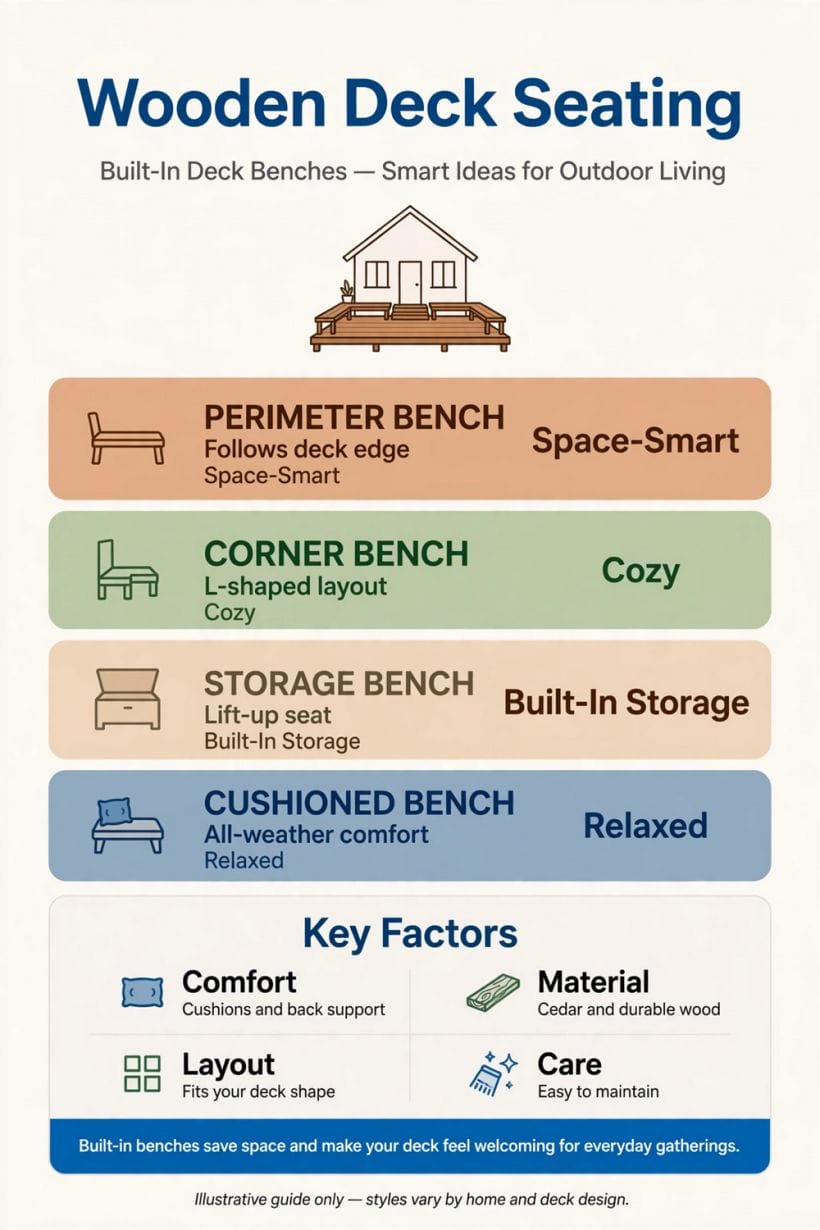
A built-in bench is seating planned with the deck rather than placed on it afterwards. Because it follows the deck shape, wooden deck seating of this kind uses edges and corners that loose chairs often waste, and it leaves the middle of the deck clear for tables, planting and movement. Four families cover most decks, and each suits a different household habit.
| Family | Character | What it means |
|---|---|---|
| Perimeter Bench | Follows deck edge | Space-Smart |
| Corner Bench | L-shaped layout | Cozy |
| Storage Bench | Lift-up seat | Built-In Storage |
| Cushioned Bench | All-weather comfort | Relaxed |
Where a bench runs along an edge, it sits inside the line that the deck railing ideas collection deals with, and the two elements are best thought about together at the planning stage, without the bench ever becoming a substitute guard. The supporting structure beneath any built-in bench is professional work, checked locally, and your craft as the homeowner is the brief.
2. Perimeter Benches
A perimeter bench follows the edge of the deck, turning a boundary into a seat. It is the most space-aware family of all, and the layouts gathered among tiny house deck ideas show how well an edge run suits even a modest footprint, because the seating borrows no floor from the centre.
1. A Straight Run Along the Long Edge
The simplest perimeter layout is one honest run along the longest edge, facing into the deck and toward the house or the garden, depending on the view worth having. It suits decks where people gather in a line for conversation across a table, and it keeps the opposite edge free for steps, doors and planting.
2. Benches on Two Edges for Larger Gatherings
When a household entertains often, benches on two adjoining edges give generous seating without a single extra chair being stored anywhere. Keep one edge open as the natural way in and out, so guests are not stepping over knees to reach the garden or the kitchen door.
3. A Low Bench That Keeps the View Open
On a deck that looks over a garden, fields or water, a low backless bench preserves the view that made the deck worth building. Sitters can face either way: inward for conversation, outward for the outlook. This is the kindest option where a high back would cut the horizon, and it doubles as a place to set down trays and books.
4. A Perimeter Bench Beside Planting
A bench that runs beside raised planting or a border of pots softens the hard edge of a deck beautifully. Lavender, grasses and herbs at shoulder height make sitting there a pleasure, and give the plainest run of timber a sense of place. Leave room between seat and pots so foliage is a backdrop rather than a tickle.
3. Corner and L-Shaped Benches
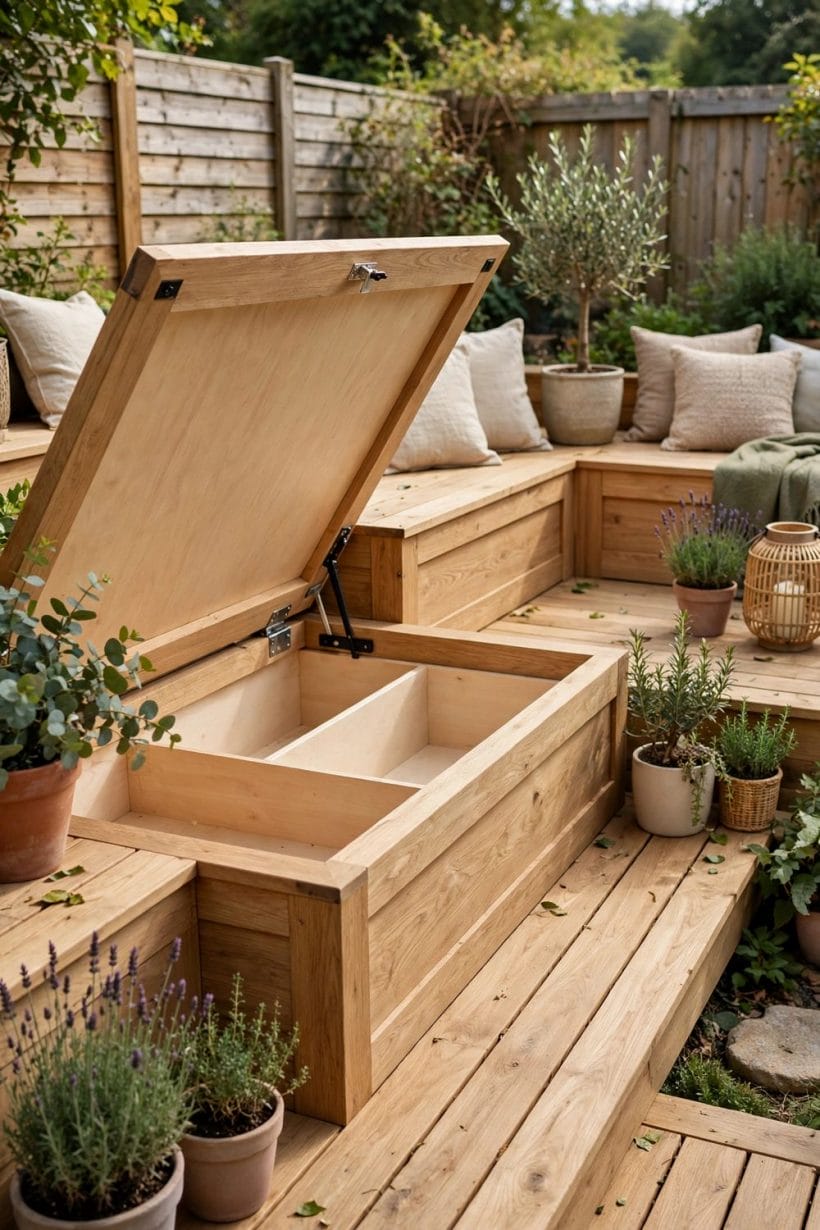
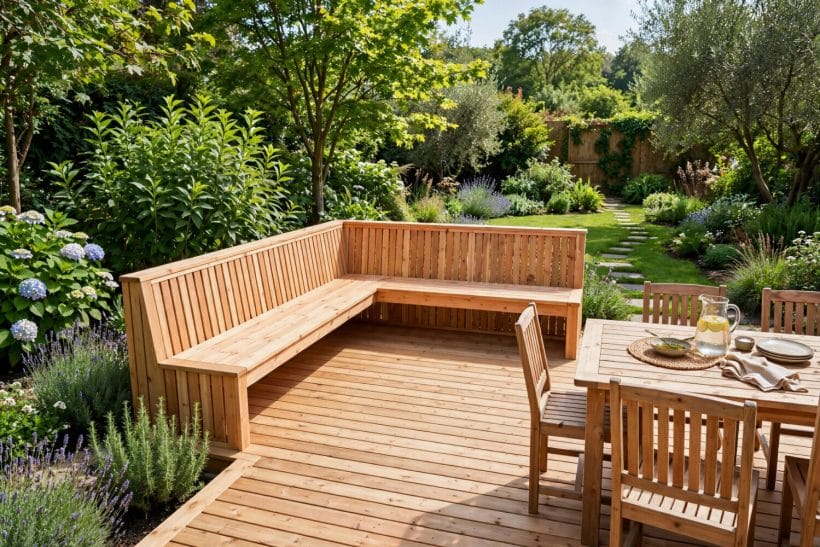
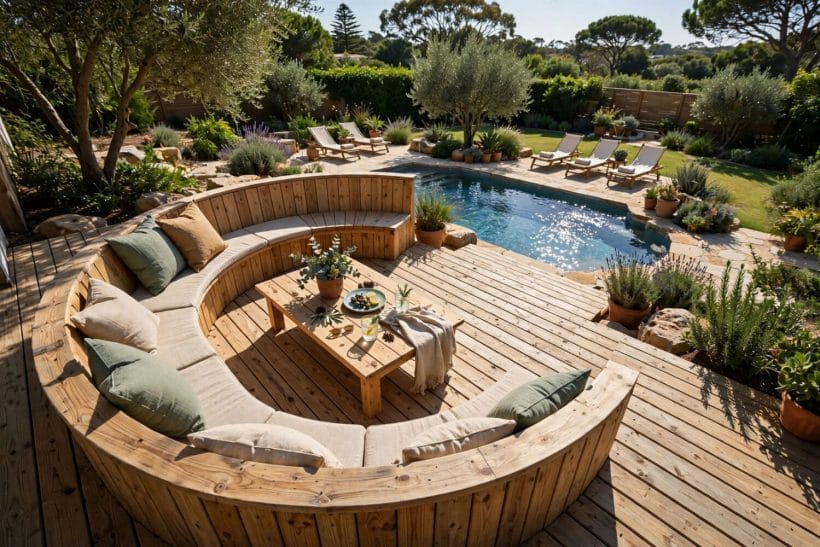
Corners are where decks waste the most space and where people, given the chance, most like to sit. An L-shaped bench claims that corner properly, turning two short edges into one sociable seat where sitters face each other as naturally as they face the garden.
5. The Classic L-Shape in a Quiet Corner
The classic corner bench joins two runs at a right angle in the quietest corner of the deck, away from doors and steps. It becomes the seat everyone chooses first: sheltered on two sides, out of the through route, and easy to dress with cushions. A small side table completes a spot that works from morning coffee to evening.
6. A Corner Bench Around a Dining Table
An L-shaped bench paired with a dining table gives outdoor meals a settled, booth-like feel, with the bench carrying the two sheltered sides and chairs completing the open sides. It suits families who eat outside often, because nobody is hunting for extra chairs when guests arrive. The table needs comfortable clearance from the seat edge, a point the later checks return to.
7. A Wrapped Corner for Conversation
Where two benches meet, people naturally angle toward one another, and a wrapped corner becomes the conversation heart of the deck. It suits households who host smaller, longer gatherings rather than large crowds. A low table within reach of both runs, a throw or two, and soft lighting nearby are all the styling this corner asks for.
8. A Small Corner Bench on a Compact Deck
Even the smallest deck usually has one underused corner, and a short L-shaped bench there can seat two or three people without crowding the rest of the space. The wider lesson from the tiny house patio ideas collection applies here too: fixed seating sized to the corner earns its floor area every single day, whereas a loose chair in the same spot mostly gets moved around.
4. Storage Benches
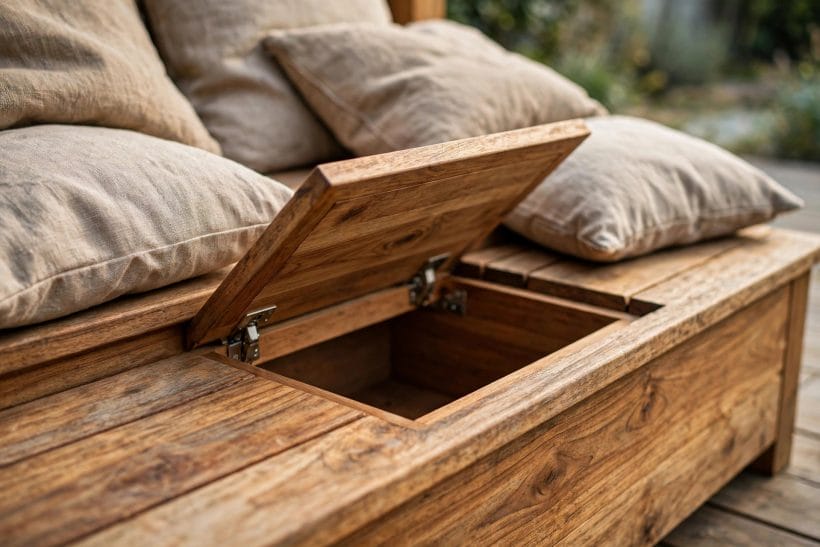
A storage bench earns its place twice: once as a seat, and again as the tidiest hiding place on the deck. The seat lifts to reveal a compartment beneath, and everything that usually clutters the boards gains a home out of sight.
9. A Lift-Up Seat for Cushions and Covers
The most natural contents for a storage bench are the cushions that belong on it. Keeping them beneath the seat makes the daily routine simple: lift, lift out, sit down, and reverse the order when rain threatens. Covers and throws live in the same space, so the corner can be set up or put away in minutes.
10. A Deep Bench for Garden Clutter
A deeper storage bench swallows the bulkier things a garden produces: folded loungers in winter, watering equipment, outdoor games and the miscellaneous clutter that otherwise migrates to the shed door. Sizing the compartment around the bulkiest item you genuinely own is the honest way to plan it. If it fits the largest thing, everything smaller looks after itself.
11. A Divided Storage Bench That Stays Tidy
A long storage bench stays useful when its inside is thought about as more than one space. A divided interior keeps cushions away from muddy boots and separates everyday items from seasonal ones, so the lid is not lifted into a muddle. Ask how the inside will be organised and kept dry and ventilated, because stored textiles punish a damp, airless box.
12. A Storage Bench Near the Door
Placing a storage bench near the door between house and deck makes it the deck equivalent of a hallway cupboard. Shoes, dog leads, gloves and things carried in and out daily all live within a step of where they are used. This position suits a smaller compartment used often, so plan the size around frequency of use.
5. Cushioned and Backed Benches
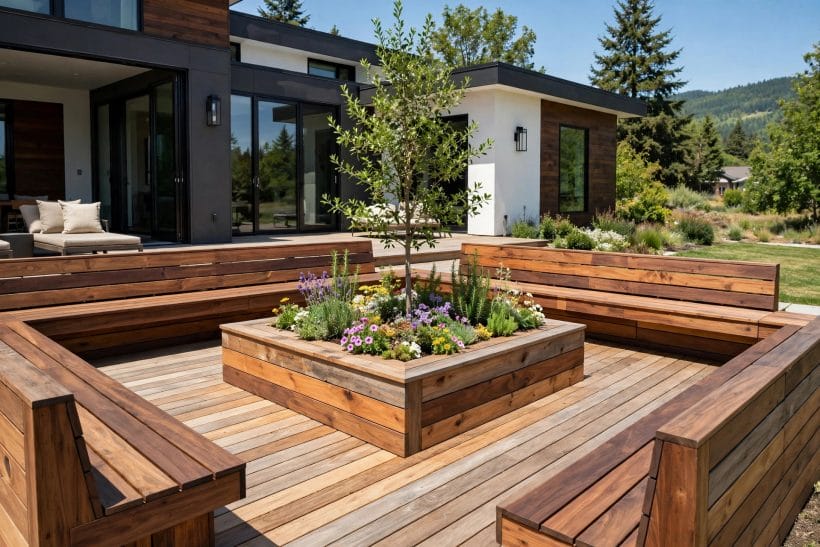
Timber alone is handsome, but comfort decides how long anyone stays seated. Cushions and backs turn a bench from a perch into a place to spend an afternoon, and they are the easiest part of the whole arrangement to change with the seasons.
13. A Backed Bench for Longer Sits
A bench with a back suits households who read, work or linger outside, because supported sitting stays comfortable far longer than perching. The back also gives the bench a finished, furniture-like presence against a wall, fence or planting. Where it backs onto open garden, keep it low enough to preserve the outlook, and let cushions provide the softness.
14. Deep Seat Cushions in Calm Colours
Deep seat cushions are where everyday comfort is won. Neutral, calm colours — stone, sage, soft cream — sit kindly against timber and planting, and they hide the small marks of outdoor life better than stark white. Outdoor fabrics shrug off showers and strong sun, and removable washable covers keep the arrangement feeling cared for rather than weather-beaten.
15. A Cushioned Bench in a Sheltered Spot
The most comfortable bench on the deck is usually the one placed out of the prevailing wind. A corner against the house wall, a spot beneath a pergola, or a seat tucked beside tall planting all stay pleasant on days when an exposed edge feels brisk. The sheltered corners in the tiny house porch ideas collection make the same point: comfort outdoors is mostly about placement, not padding.
16. Back Cushions That Soften a Timber Line
Loose back cushions soften the straight line of a timber back and let each sitter arrange their own support, which a fixed profile can never do. Mixed sizes work well: larger cushions behind, smaller ones for colour in front. Being loose, they are also the quickest element to bring indoors when heavy weather arrives.
6. Materials and Finishes
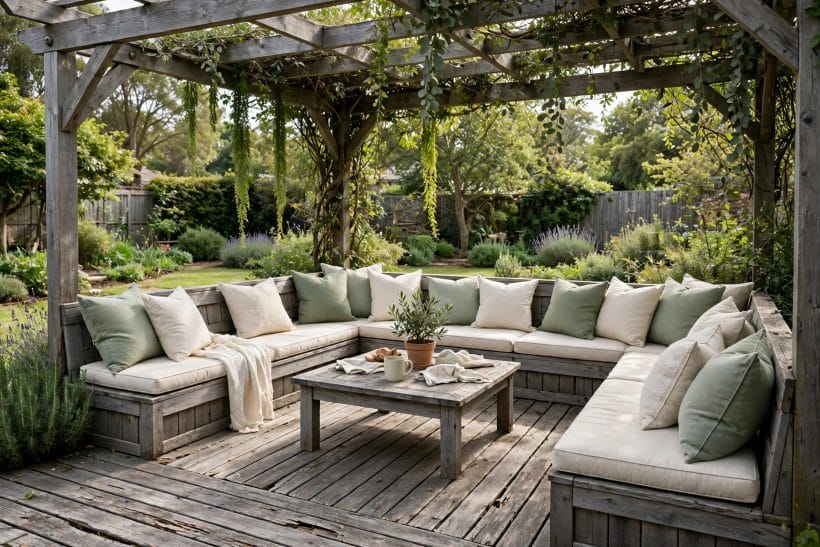
Material decides how a bench looks on the day it is finished and how gracefully it ages through sun, rain and frost. The choices below are described in general terms, because the right answer depends on your climate, your deck and the amount of upkeep you honestly enjoy.
17. Warm Natural Timber Tones
Natural timber in warm honey and cedar-like tones is the classic bench finish, echoing the deck boards and settling into planting without effort. It suits gardens with a relaxed, natural character and households who like the living grain of real wood. Natural timber asks for periodic care to hold its colour, since sun and rain gradually silver even the richest tone.
18. Weathered Grey Timber Finishes
Some households prefer to let timber weather to a soft silver-grey and simply keep it clean. The result is calm and forgiving: a weathered bench sits beautifully in coastal, rural and modern gardens alike. This is a deliberate finish rather than neglect, and it pairs well with pale cushions, grasses and stone-coloured planting.
19. A Painted Bench in a Soft Garden Colour
Paint opens the colour palette beyond timber tones entirely. A bench painted in a soft sage, a muted blue or a warm off-white can tie the deck to the house, echo a painted door, or pick up a favourite planting colour. The painted finishes seen across the front yard patio ideas collection show how cheerful a coloured seat looks against greenery. Paint asks for renewal as it weathers, so choose it with that upkeep in mind.
20. A Smooth Composite-Look Finish
A smooth, even finish with a composite look appeals to households who want a uniform colour and a surface that simply wipes clean. It suits contemporary decks with crisp lines, where natural grain would feel busy. Discuss with your builder what such a finish involves in your climate, how it behaves in strong sun, and what care it expects over the years.
7. Styling the Seat
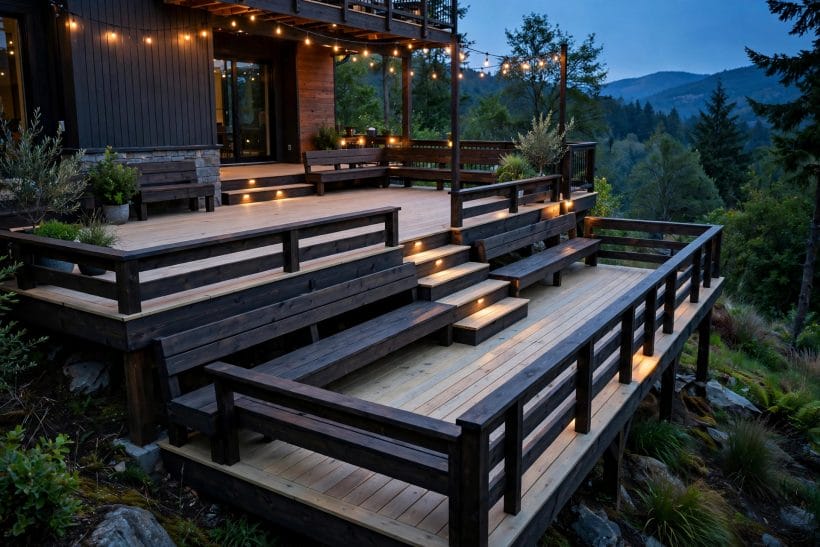
Styling is the lightest work in this guide and the part that makes a bench feel chosen rather than merely built. Cushions, shade, planting and a table within reach are enough; a bench crowded with ornaments stops being a seat.
21. Cushions and Throws Kept to a Simple Palette
A simple palette of two or three related colours keeps a long bench looking calm, however many cushions it carries. Add one patterned cushion or a striped throw if the seat needs a lift, rather than mixing many prints. Throws earn their place on cooler evenings and fold away into a storage bench during the day.
22. Shade Over the Seat on Bright Days
A bench in full afternoon sun sits empty on the brightest days, so shade is a styling decision as much as a comfort one. A pergola, a sail, a large parasol or a nearby tree can all temper the heat. Plan shade for the hours your household actually uses the deck, not for midday if everyone is out.
23. Planters That Frame the Bench Ends
Planters at the ends of a bench frame it like bookends and mark where the seat begins. Herbs suit a dining bench, grasses suit a quiet corner, and a small tree in a generous pot suits a larger deck. Keep planting just beyond elbow room, and choose pots steady enough that a crowded gathering will not tip them.
24. A Low Table Within Easy Reach
Every good bench wants a surface nearby: somewhere for drinks, books and a plate that is not the seat itself. A low table centred on a corner or perimeter run serves several sitters at once, while a small side table suits a single quiet seat. Leave passing room around it, because a table that traps knees turns a relaxed corner into an obstacle course.
8. Planning Checks
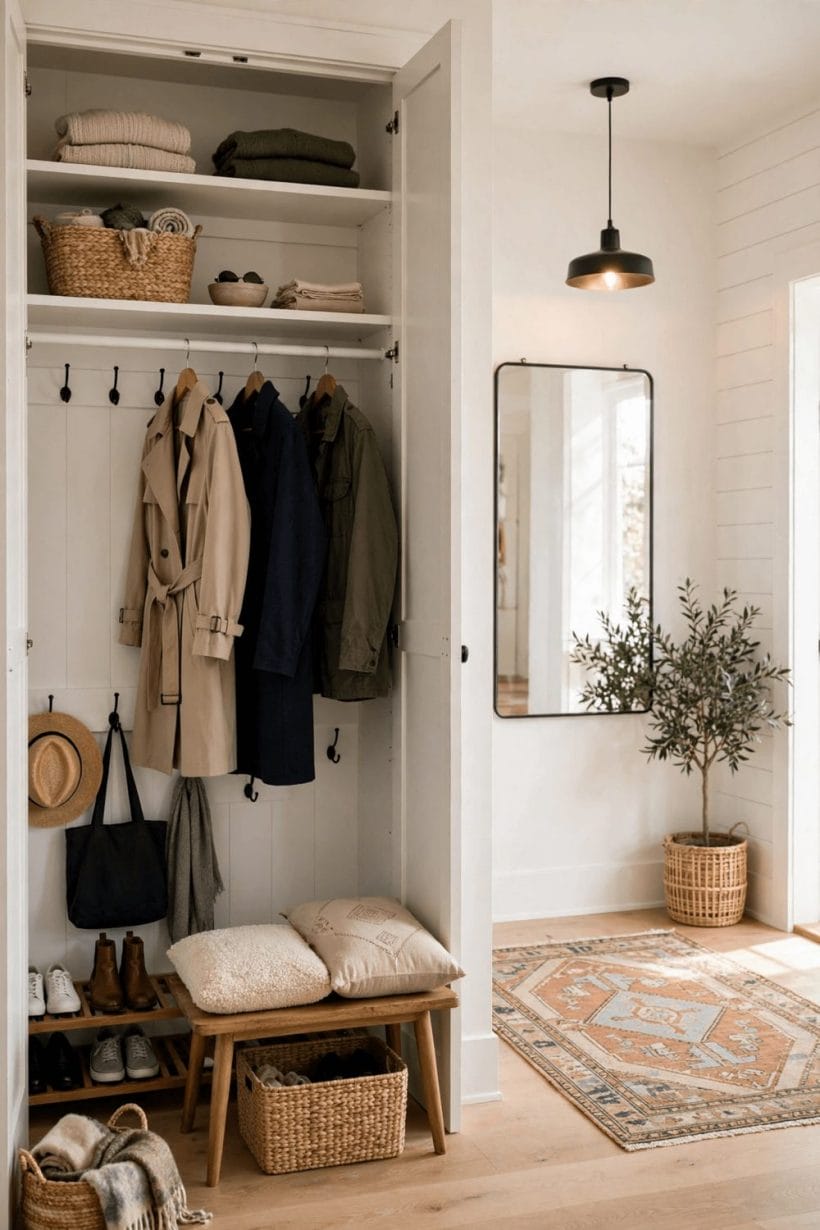
These checks are questions to settle on paper before building starts, stated in general terms. Where a deck needs to flex rather than stay fixed, the approach in the folding deck designs collection is a useful contrast, but a built-in bench is a settled commitment, and it rewards settled planning.
Seat Height, Depth and Legroom
A comfortable bench lets sitters place their feet on the deck with knees at ease, and gives enough depth to sit back rather than perch on an edge. Cushions change the feel of both height and depth, so judge comfort with the cushions in place, not on bare timber. Legroom matters most at dining benches, where sitters stay seated longest and need room to shift position through a meal.
Spacing and Walkways
Fixed seating must never steal the routes people walk. Doors need their swing, steps need a clear landing, and the path between house and garden should stay obvious and unobstructed even when every seat is taken. Walk the layout in your mind at its busiest: a barbecue evening, children passing, someone carrying a tray. If that evening feels cramped, the layout needs adjusting.
Structure and Fixings, Stated Generally
A built-in bench is part of the deck structure, not furniture placed upon it, and it must be supported as such by people who build decks professionally. How it is framed and secured depends on the deck beneath it, its height and local conditions, and those judgements belong to the builder, checked against local requirements. Your part is to ask what supports the bench, and to be satisfied with a clear, confident answer.
9. Care and Weathering
Outdoor timber lives a harder life than any indoor furniture, and a bench that is looked after little and often stays handsome for years. None of the care below is complicated; regularity matters far more than effort.
Everyday Cleaning and Seasonal Washing
Leaves, grit and fallen petals hold moisture against timber, so a regular sweep is the kindest care a bench receives. A seasonal wash with water and a soft brush clears the film that dulls the surface. Avoid harsh treatment that roughens timber, and let the bench dry fully before cushions go back on, because trapped damp is where musty smells begin.
Re-Oiling and Repainting in General Terms
Oiled timber is refreshed by re-oiling when the surface looks dry and tired, and painted timber by repainting when the coat wears thin or flakes. Both are renewal jobs rather than repairs when done in good time, and both are best tackled in dry, mild weather. Ask your builder what rhythm of renewal your chosen finish expects, and note the answer.
Storing Cushions Through Wet Weather
Cushions last longest when they spend wet weather somewhere dry: in the storage bench itself where it is designed to stay dry inside, in a deck box, or indoors in the worst of winter. Shake them out and let them air after a damp spell before they are shut away. Covers washed at the end of the season and stored clean come back in spring feeling like a small new start.
10. Who Builds It and What to Ask
A built-in bench sits at the join of carpentry and deck building, and the best results come from a tradesperson who does both regularly. The questions below help you choose that person and settle the project before work begins.
Choosing a Carpenter or Deck Builder
Ask to see earlier benches the builder has completed, ideally ones that have weathered a few seasons, because time is the honest reviewer of outdoor work. Ask who will carry out the structural work, how the bench will be supported, and how any storage compartment will be kept dry.
Checking Local Rules Before Work Starts
Decks and their structures can be subject to local rules that vary by area, height and proximity to boundaries, and a bench forming part of the structure belongs in that conversation. Ask your builder what needs checking locally, and who is responsible for those checks.
Guarantees and Warranties as Questions
Ask what guarantee covers the workmanship, what cover applies to the materials and finishes, and for how long each runs. Ask what happens if a storage lid warps, a finish fails early or a seat develops movement, and who returns to put it right. Written answers, kept with the quote, protect both sides.
Final Considerations
A built-in bench gives a deck its seating permanently and gracefully: a perimeter run for space, a corner for conversation, storage where clutter would otherwise live, and cushions where comfort matters most. Chosen in a material that suits your garden and your patience for upkeep, it becomes the most used seat in the house.
Bring honest measurements, a clear sense of how your household gathers, and good questions about structure, rules and guarantees to the brief. Let a professional carry the structural work, and the reward is daily and unshowy: a seat that is always there, in the right place, waiting in the sun.

0 Comments