

A shaded front porch can turn a brief pause at the door into a favourite part of the day. This guide explores a pergola front of house in practical terms: how to size it, furnish it, light it and finish it so the entrance feels calm, useful and genuinely welcoming.
Work through the ideas in order, from layout and structure to the small details that make people slow down, sit down and stay a little longer.
1. Porch with a Pergola at a Glance
Before choosing beams, cushions or lanterns, settle the basics. A front entrance has to keep working as a route in and out, a place for parcels, wet shoes and everyday comings and goings, even while it becomes a sitting spot. The table below is a quick planning snapshot. Use it to check that the structure, furniture and planting you love will still leave clear access to the door, a safe path from the street and enough room to open gates, bins and shutters without squeezing past a chair.
| Question | What to check first |
|---|---|
| Will it fit? | Measure the porch width, depth and door swing before choosing posts or furniture. |
| How will you use it? | Morning coffee, reading, chatting with neighbours, or a quiet swing seat for one or two. |
| What shade do you need? | Note where sun falls at the times you will actually sit there, not only at midday. |
| Which style suits the house? | Match beam colour and proportions to trim, door colour and existing exterior materials. |
| What about evenings? | Plan soft, warm lighting for steps and seating without glare into the street or windows. |
| How will you maintain it? | Choose outdoor fabrics, finishes and plants you can realistically clean, water and store. |
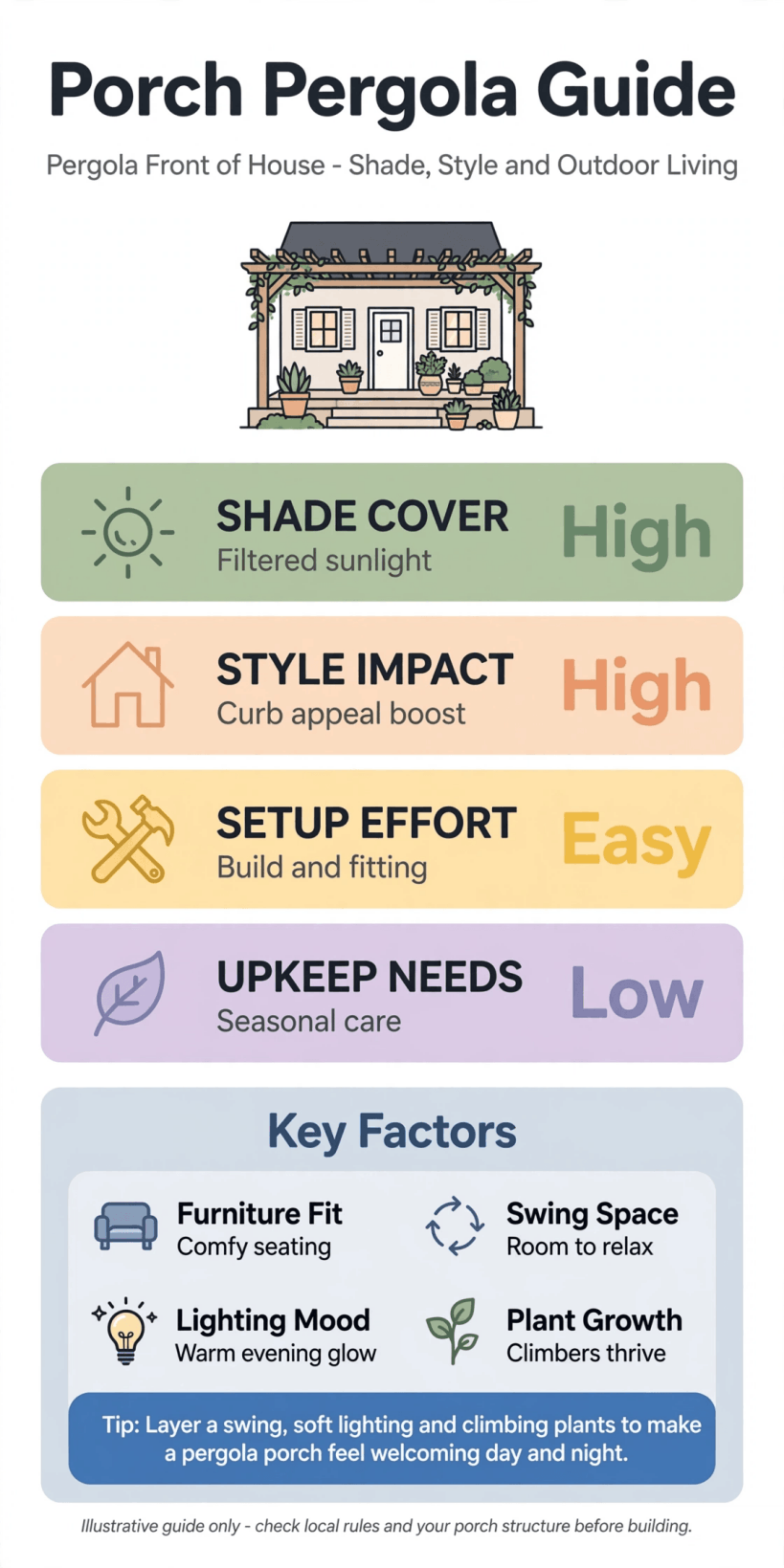
A quick visual summary of the planning checks, seating ideas and finishing touches covered in this guide.
Treat this first section as a filter for everything that follows. If an idea does not fit the measurements, the sun pattern or the way your household uses the entrance, adapt it rather than forcing it. A smaller bench that leaves the path clear will always feel better than a generous sofa that blocks the door. Likewise, a simple open roof that suits the facade will look more confident than an elaborate structure that fights the architecture. Good front porches feel inevitable, as if they were always meant to be there, and that feeling comes from these early, unglamorous checks.
2. Start With How You Will Actually Use the Porch
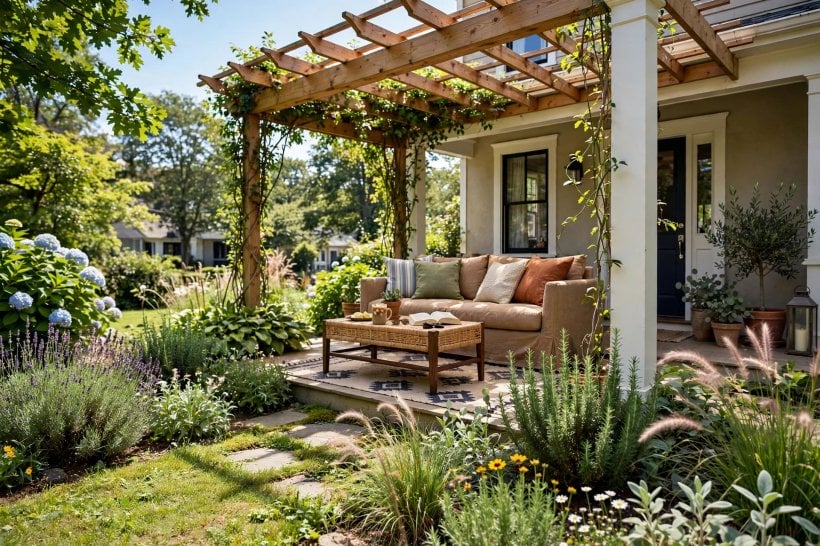
Walk the route from the street to the front door and notice where you naturally pause. Is there a sunny corner for a first coffee, a sheltered spot for a phone call, or a wide step where neighbours stop to chat? Let those habits set the layout. Place the main seat where the view is pleasant but the sitter does not feel on display, and keep the direct path to the door completely clear. If the porch is narrow, a single bench against the wall, a slim side table and a wall lantern may be all it needs.
Think in zones, even on a small porch. One zone is movement: the path, the door swing and space for deliveries. Another is sitting: a chair, bench or swing with a surface nearby for a drink or a book. A third, if space allows, is planting or storage tucked at the edges. When zones overlap too much, the porch feels cluttered; when each has its own corner, even a compact entrance feels generous. Readers planning the outdoor setting as a whole will also enjoy our guide to tiny house landscaping ideas, which shows how paths, planting and thresholds can work together.
Finally, test the layout before you commit. Mark post positions and furniture outlines with tape or chalk, live with them for a day, carry shopping through, open the door fully and sit where the seat would go. That simple rehearsal reveals pinch points no sketch can show.
3. Choose a Shape and Scale That Suit the House
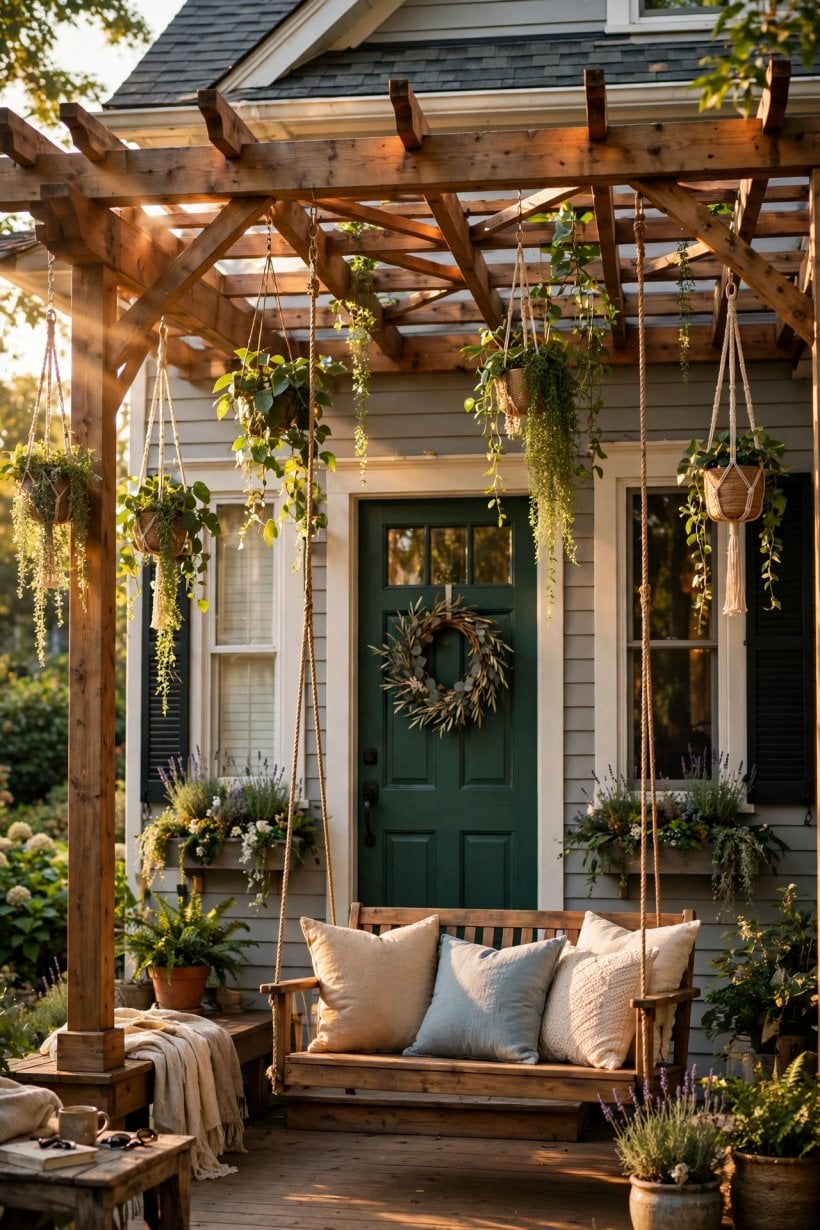
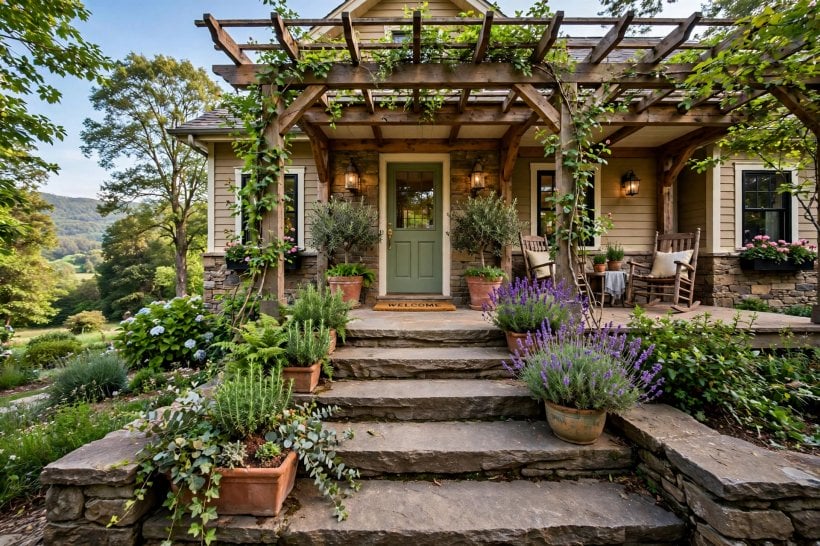
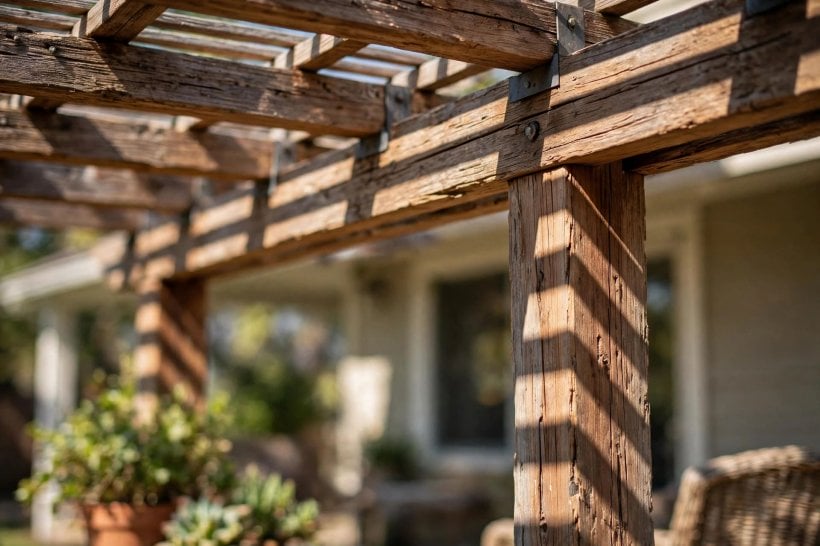
A pergola over a front porch is part architecture, part furniture. Its posts, beams and rafters should echo the proportions of the house: chunky timbers suit a sturdy, rustic facade, while slimmer profiles feel right on a crisp, modern exterior. Keep the structure visually lighter than the house itself. The goal is a frame for the entrance, not a second building competing with it. Align posts with windows, piers or the edges of the porch slab where you can, so the new lines look deliberate.
Height matters as much as footprint. A roof set too low makes the doorway feel heavy and can darken the hall inside; set too high, it stops giving shade or shelter and loses its sense of enclosure. Stand on the porch and picture the top beam against the facade, then check the view from the street. The structure should frame the door and a slice of sky, not hide the house number, a favourite window or decorative trim. If you are weighing a self-build against professional help, our overview of how to build your own tiny house is a useful reminder of how much planning, sequencing and checking any structural project deserves.
Roof treatment can stay open, carry climbing plants, or hold a removable shade cloth for the sunniest weeks. Open rafters give patterned light and keep the porch airy. A planted roof softens the frame over time but needs training and pruning. A fabric shade is flexible and forgiving. Choose the option you will happily maintain, because a neglected cover or an unruly climber quickly makes the whole entrance feel tired.
4. Furnish for Real Life, Not Just for Photographs
Start with the seat you will use most, then build around it. A deep bench suits lingering with a book; two armchairs angled toward each other invite conversation; a narrow rocking chair adds movement without taking much floor. Leave enough leg room and a clear route behind or beside the seating. Outdoor furniture for a front porch should be sturdy enough for daily use, light enough to move for cleaning, and finished for weather, because this is the most public, exposed seat in the home.
Surfaces matter more than extra seats. A small side table, a wide porch rail or a stool that doubles as a table keeps drinks, post and gardening gloves off the floor. If space is tight, choose one versatile piece instead of several small ones. Storage benches can hold cushions, a throw for cool evenings and a spare doormat, keeping the entrance tidy without indoor trips. The same people-first thinking that shapes our tiny house living room ideas applies outdoors: every piece should earn its place by being used weekly, not by looking charming once.
Soften hard edges with outdoor cushions and a washable rug that defines the sitting zone, but do not trap moisture against timber or block drainage. Choose fabrics you can shake out, spot clean and store dry. When the furniture plan works on an ordinary Tuesday, with school bags and muddy boots in the mix, it will also shine when guests arrive.
5. Add a Swing, Rocking Chair or Daybed Moment
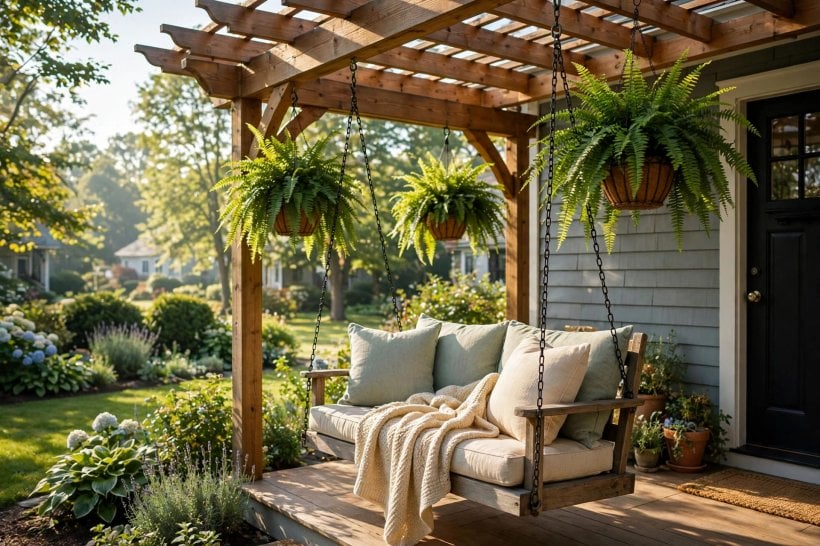
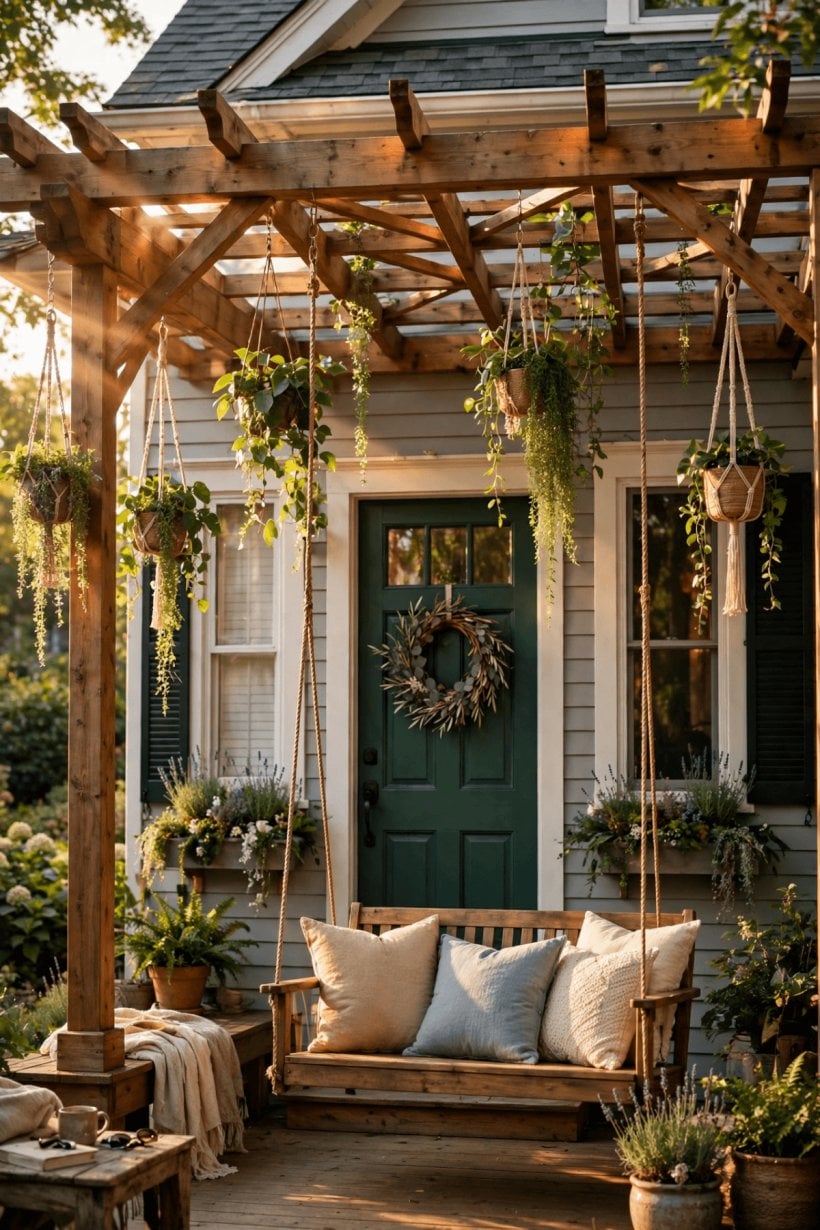
Few details say welcome like a gently moving seat. A porch swing suits a wide, sheltered frontage and becomes the spot everyone quietly hopes is free. Before falling for one, confirm the structure above can be assessed for the load, leave clearance in front and behind for the swing arc, and check that the seat height works for older visitors as well as children. Chains or ropes should read as part of the design, not an afterthought, and cushions should be removable for wet weather.
If a swing is too much for the space, a rocking chair or a glider bench gives the same soothing movement with a simpler footprint. A single rocker beside a small table can become a personal ritual: morning light, a hot drink, a few pages of a book before the day starts. On a deeper porch, a narrow daybed with an outdoor mattress creates a reading nook that echoes the restful mood explored in our tiny house bedroom ideas, while still belonging firmly outdoors.
Keep movement safe and calm. Seats should not drift into the walking route, creak loudly enough to annoy neighbours, or sit where a swinging door can strike them. Add a soft throw and one or two cushions rather than a pile that needs constant rearranging. The best moving seat is the one that invites you in passing, without becoming another chore to set up and pack away.
6. Balance Shade, Shelter and Privacy
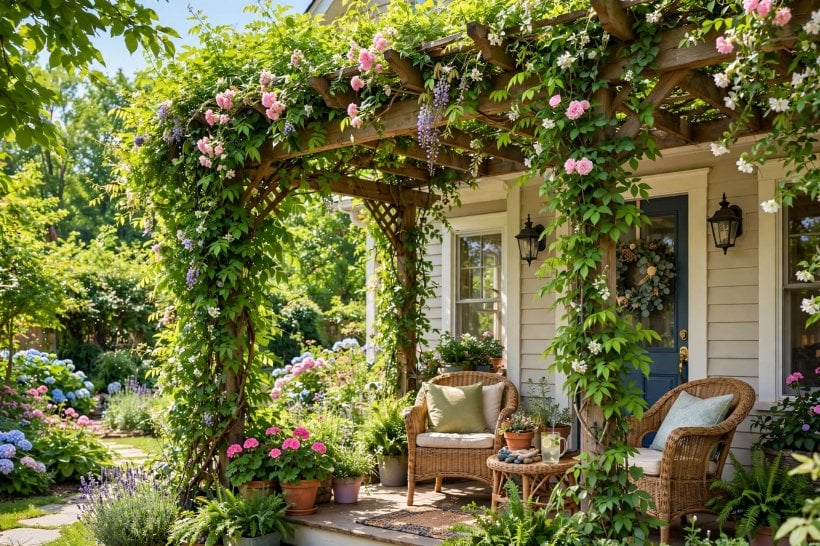
Shade is the reason many people add a pergola, yet the quality of shade matters more than the quantity. Dappled light through open rafters or a climber feels alive and keeps the porch bright. A solid cover gives deeper shelter but can make the entrance gloomy and may change how rain runs off the roof, so think about gutters, drips and where water lands before choosing it. Watch the porch across a day: morning glare, midday heat and low evening sun each ask for a slightly different answer.
Privacy works best in layers. A slim screen, a tall planter, a trellis with planting or a curtain panel for occasional use can soften the view from the street without building a wall. Keep sightlines to the path and door open enough that the house still feels friendly and visitors can find the entrance easily. In a small front garden, vertical planting gives shelter without eating floor space, a trick that also appears throughout our bedroom interior design for tiny houses coverage, where every layer has to earn its footprint.
Wind deserves a mention too. A breezy porch is pleasant in summer and miserable in shoulder seasons. Side planting, a half screen or the position of a bench can calm the worst gusts while keeping air moving. Test with a candle or a ribbon on a windy day if you are unsure; small adjustments to screen height and seat position can transform comfort without rebuilding anything.
7. Light the Entrance for Warmth and Safety
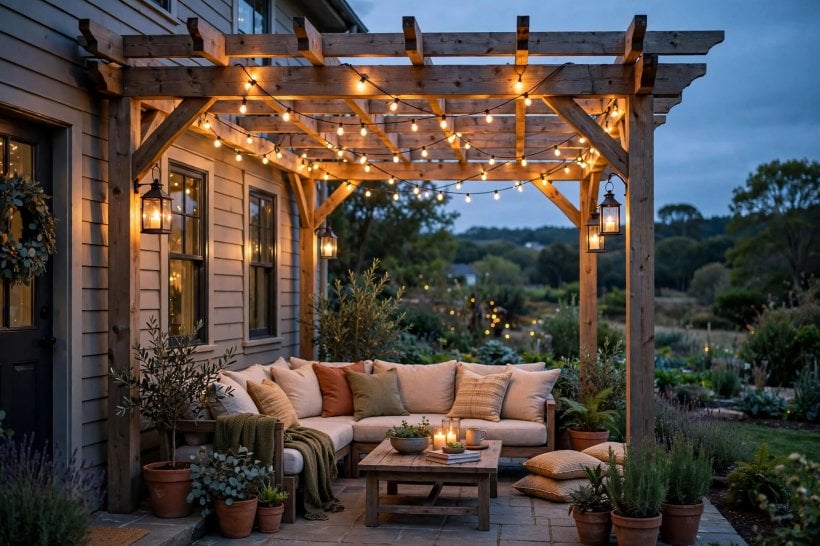
Good porch lighting does three jobs at once: it shows the steps and door lock clearly, it makes the seating glow invitingly, and it presents a friendly face to the street. Separate those jobs instead of asking one bright fitting to do everything. A wall lantern by the door handles arrival. Softer string lights, a shaded pendant under the beams or low lights along the path handle mood. Each layer can be modest on its own; together they feel generous.
Choose warm-toned light that flatters faces, timber and planting, and angle fittings so bulbs do not glare into the eyes of people approaching or sitting opposite. Keep step edges and changes of level clearly visible, especially where shadows from posts fall across the path. Solar options suit sunny spots and renters, while wired fittings give steadier control where an electrician is already involved. Whatever you choose, test it from the street and from the seat: a fitting that looks pretty in a catalogue can feel harsh at eye level.
Evening is also when a pergola front of house earns its keep as a neighbourhood gesture. A softly lit porch, a tidy path and a visible house number help visitors, delivery drivers and neighbours alike. Avoid lighting the whole facade like a stage. Restraint reads as confidence, and a calm pool of light around the door will always feel more welcoming than brightness everywhere.
8. Pick Colours and Materials That Tie the Look Together
Let the house lead the palette. Repeat the door colour in a cushion or a planter, echo the trim colour in the pergola paint, or let natural timber warm up a painted facade. Two or three linked colours are usually enough. If the exterior is busy with brick, stone and planting, keep furniture and fabrics quiet. If the facade is plain, a bolder seat cushion, a patterned outdoor rug or a painted bench can supply the character the architecture lacks.
Materials should suit both climate and upkeep. Timber brings warmth but needs periodic care. Metal frames feel crisp and light, and can be repainted when fashions change. Woven-look outdoor furniture softens hard lines, while masonry piers ground a design on a traditional home. Mix one warm material, one practical material and one living material, such as planting, and most porches find their balance. For more on using colour fearlessly in small spaces, see our feature on a colourful tiny house interior.
Sample before committing. Paint a spare offcut, drape the cushion fabric over the bench and live with both through a day of changing light. Colours that sing at noon can look flat at dusk, and glossy finishes can glare in direct sun. Matte and satin finishes usually settle more comfortably into a planted, lived-in entrance, and they forgive the small marks of daily use far better than perfection-seeking shine.
9. Plant the Edges for Softness Through the Seasons
Planting turns a structure into a place. Use pots where beds are paved, climbers where posts can carry them, and low planting where it will not spill across the path. Repeat a few plants rather than collecting one of everything; repetition looks calm from the street and makes care simpler. Mix evergreen structure for winter, seasonal flowers for welcome, and something scented near the seat or door, so arriving home has a small sensory reward built in.
Match plants to the light the pergola actually creates. Shade lovers belong under the densest cover, sun lovers at the bright edges, and drought-tolerant choices in pots that are easy to forget. Give climbers a clear support and a clear limit: a plant trained neatly along one post and beam looks intentional, while tendrils across the door, gutters and lights quickly read as neglect. Keep a watering can or outdoor tap routine realistic; the prettiest scheme fails if it depends on effort you will not sustain in a hot week.
Seasonal rotation keeps the entrance feeling loved without a redesign. Spring bulbs in pots, summer herbs by the seat, autumn colour in foliage and a simple winter arrangement of evergreens and lanterns can share the same containers and layout. That rhythm, borrowed from the way a tiny barn house interior layers natural materials through the year, keeps a front porch feeling current with very little cost or waste.
10. Finish With Storage, Care and Small Welcoming Details
The details closest to the door do the heaviest emotional work. A clean, readable house number, a doormat that actually traps dirt, a hook or small shelf for keys and post, and a boot tray in wet weather all tell visitors this home is looked after. Add one personal note, such as a wreath, a hand-painted sign or a bench cushion in a favourite colour, and stop there. Welcome comes from clarity and care, not from filling every surface.
Build a tiny maintenance rhythm into the design. Sweep the porch weekly, shake rugs and cushions, check fixings and finishes at the change of seasons, wash light fittings so they stay bright, and prune climbers before they reach gutters or block the door. Store spare cushions somewhere dry and close, or the seat will sit bare for half the year. Outdoor spaces that are easy to reset after rain or a busy weekend are the ones that stay inviting instead of becoming storage for good intentions.
Finally, keep the entrance honest to the household behind it. A family porch may need a basket for balls and a bench that tolerates muddy paws. A quiet household may prize a reading chair and scented planting. Neither is better; both succeed when the layout, structure and details match real routines. Review the porch twice a year with fresh eyes, remove what no longer earns its place, and let the space evolve gradually rather than in expensive bursts.
Final Considerations
A great front porch pergola is not the biggest, the most photographed or the most expensive one on the street. It is the one that fits the house, shades the seat you actually use, lights the steps safely and makes arriving home feel good in every season. Start with measurements and habits, choose a structure in proportion, furnish sparingly, layer light and planting, and keep the path to the door beautifully clear.
Take the project in stages if you need to: structure first, then seating, then lighting, then the finishing touches. Each stage should leave the porch usable and tidy. With that patient approach, even a modest entrance can become a daily pleasure and the most welcoming seat in the home.



0 Comments