

Laminate flooring has grown up. The best modern ranges copy timber so convincingly that guests bend down to touch them, yet the market is crowded and the labels are confusing.
This guide walks through the checks that actually matter before you buy, so the floor you choose suits your rooms, your routine and your budget.
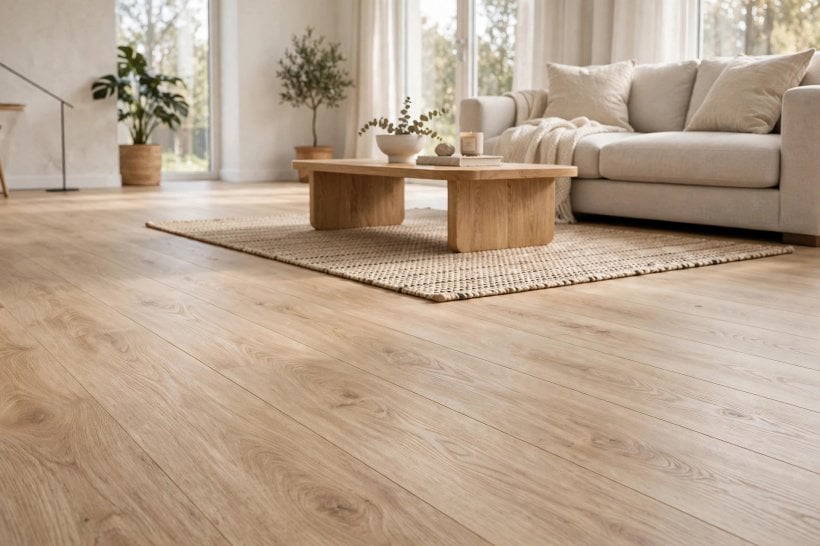
1. Premium Laminate Flooring at a Glance
Start with the short version. The questions below cover the points that separate a floor that still looks good in ten years from one that disappoints in ten months.
| Question | Short Answer |
|---|---|
| What makes laminate feel premium? | A convincing printed design, a textured surface that matches the grain, a dense stable core and a hard-wearing top layer. |
| What should I check first in a shop? | The wear rating for your room type, the board thickness and how the sample looks in natural light. |
| Is thicker always better? | Thicker boards usually feel solider and quieter underfoot, but core quality and correct installation matter just as much. |
| Can laminate go in kitchens and bathrooms? | Only ranges specifically made and warranted for moisture-prone rooms, installed exactly as their instructions describe. |
| What hides in the small print? | Conditions about subfloor preparation, expansion gaps, cleaning products and what the guarantee actually covers. |
| How do I avoid colour surprises? | Take samples home and view them morning and evening, against your walls, furniture and lighting. |
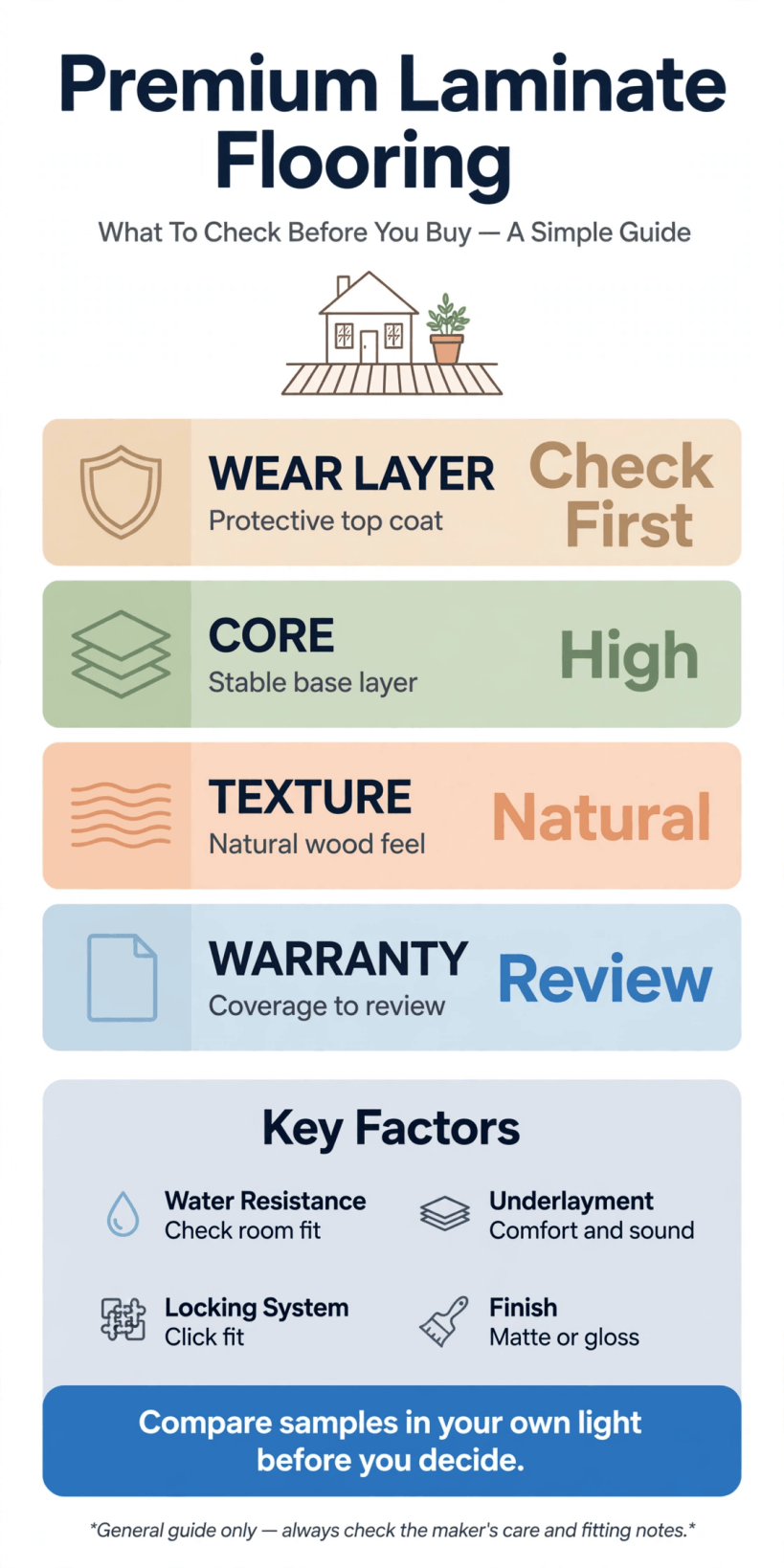
The pre-purchase checklist at a glance: wear rating, thickness, moisture suitability, joints, underlay and guarantee terms.
2. The Wear Layer and Abrasion Ratings
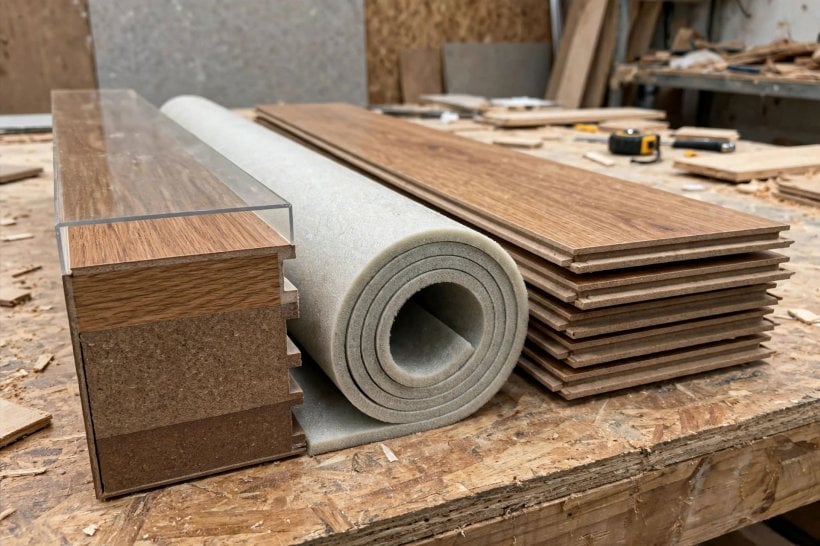
Every laminate board is a sandwich, and the top slice does the hardest job. The transparent wear layer protects the printed timber design from scratches, scuffs, chair legs and gritty shoes. When sellers describe a range as hard-wearing, this is the layer they are really talking about, so it deserves your first questions.
Laminate is commonly graded with abrasion classes that indicate whether a product is intended for lighter domestic use or for busy rooms and commercial spaces. You do not need to memorise the scale; you need to match it honestly to your life. A quiet bedroom walked on in slippers asks far less of a floor than a hallway carrying muddy boots, dog paws and a stream of visitors. Choosing a class aimed at heavier use for your busiest rooms is one of the most reliable ways to buy longevity.
Look at samples critically. Run a fingernail across the surface, check how the finish handles strong light, and ask how the range behaves with wheeled chairs and pet claws if those are part of your household. Honest retailers welcome these questions. Vague answers about durability, paired with no rating information on the packaging, are a fair reason to keep shopping.

3. Thickness, Core Quality and How a Floor Feels
Pick up two boards of different thicknesses and the difference is immediate. Thicker laminate generally feels more solid, sounds less hollow and can be a little more forgiving over minor subfloor unevenness. In a small home where every footstep carries through the space, that solidity contributes a lot to how premium the finished room feels.
The core beneath the surface is usually a dense fibreboard. Density and moisture treatment of that core influence how stable the floor stays across seasons and how well the joints resist swelling if water finds its way in. Ask what the core is made from and how it is protected, especially if the floor will serve a kitchen, hallway or entrance where wet shoes arrive daily.
Feel matters as much as figures. Walk on a laid display area in your usual footwear, not just in socks on a sample board. Listen for hollowness, notice any springiness, and press along a joint to see how flush the boards sit. Our living room ideas for tiny houses show how much a floor’s tone and finish shape the whole room, so it is worth choosing with your eyes and your feet at the same time.
4. Water Resistance: Reading the Claims Carefully
Few words on flooring packaging are stretched as far as waterproof. Some laminate ranges are designed to cope with everyday spills and damp mopping, others add treated cores and sealed joints for moisture-prone rooms, and standard ranges still expect to stay essentially dry. These are very different promises, and the guarantee documents, not the headline on the box, tell you which one you are buying.
Ask three plain questions. How long can standing water sit on the surface before it must be wiped up? Are the joints themselves treated or sealed against moisture? Is the range approved, in writing, for the specific room you have in mind? Kitchens forgive more than bathrooms, where splashes, steam and the occasional overflow are part of normal life; our tiny house bathroom design ideas explore materials chosen specifically for wet zones if you are weighing alternatives.
Installation details decide whether water resistance survives contact with reality. Perimeter sealing, correct expansion gaps and prompt attention to leaks matter as much as the board itself. A premium laminate flooring range installed carelessly can fail sooner than a modest one fitted exactly to its instructions, which is why the fitting guide deserves a read before, not after, purchase.
5. Plank Size, Texture and Getting the Look Right
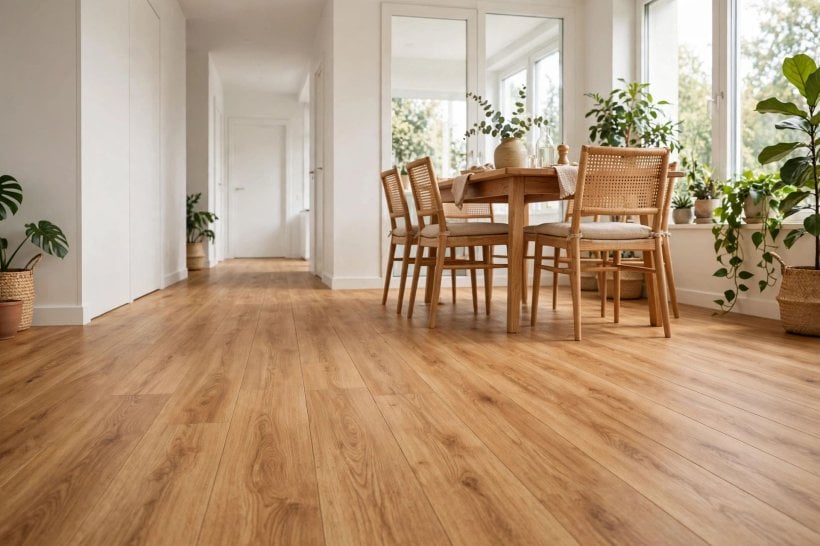
Proportion changes everything. Long, wide planks tend to make small rooms feel calmer and larger because there are fewer joints breaking up the surface, while narrower boards can suit compact or irregular layouts and traditional styles. In tiny homes especially, where the floor runs through several living zones at once, plank direction and size influence how spacious the whole interior feels.
Texture is the detail that separates convincing laminate from obvious imitation. Better ranges align the surface texture with the printed grain, so knots and grain lines feel as well as look right, and they repeat their patterns less often across boards. Lay several sample boards side by side and count how quickly the design repeats; frequent repeats are the giveaway your eye will keep catching at home.
Colour needs home testing. Showroom lighting flatters almost everything, while your own rooms mix daylight, warm bulbs and shadow. Borrow or buy samples, live with them for a few days, and view them beside your sofa, cabinets and wall colours. The planning approach in our home interior design ideas for tiny houses treats flooring as part of one palette rather than a standalone purchase, and that mindset prevents expensive mismatches.
6. Click Systems, Joints and Installation
Most modern laminate floats: boards click together and rest on underlay rather than being glued or nailed down. The quality of that click joint decides how tight, quiet and durable the finished floor feels. Well-engineered joints lock firmly, sit flush and resist the tiny movements that eventually open visible gaps.
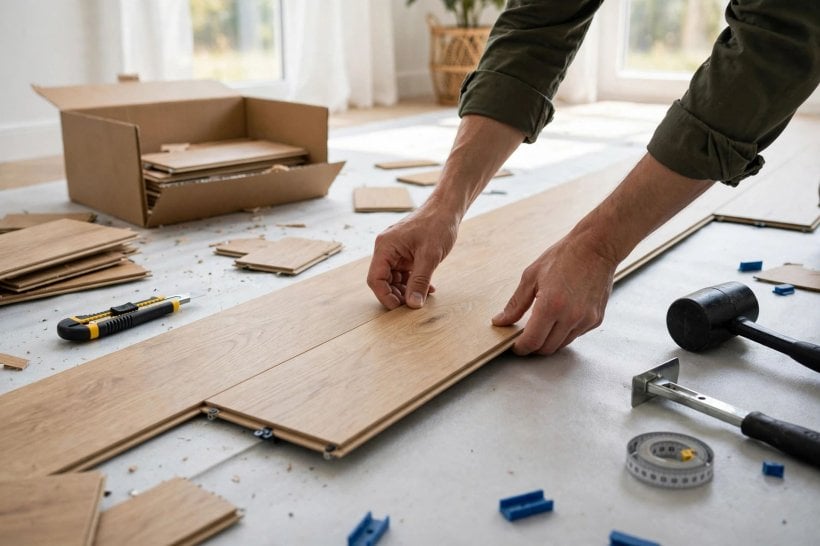
If you plan to fit the floor yourself, practise with offcuts before the real run. Check how the boards engage, how much force is reasonable, and how the system handles the fiddly cuts around door frames and pipes. Ask whether the range can be lifted and relaid, which matters in rented spaces and in tiny homes designed to evolve. Professional fitting is worth pricing too; an experienced installer works faster, handles transitions neatly and usually protects your guarantee.
Acclimatisation is the step impatient installers skip. Boards normally rest in the room, in their packs, for the period the manufacturer specifies, so they settle to the room’s temperature and humidity before fitting. Expansion gaps around the edges are equally non-negotiable, even when they feel counterintuitive. A floor that cannot expand has nowhere to go but up, and no wear layer, however premium, can compensate for that.
7. Underlay and Subfloor Preparation
Laminate is only ever as good as what lies beneath it. The subfloor must be clean, dry and level within the tolerance the manufacturer states. Bumps telegraph through the boards, hollows create flex and noise, and residual moisture in a new screed can quietly damage a floor from below for months before symptoms appear on top.
Underlay does several jobs at once: it cushions footsteps, softens sound, can add a moisture barrier and may contribute a little insulation. The right choice depends on your subfloor type and whether you have underfloor heating, which needs a compatible, heat-friendly product. Buying the underlay recommended for your specific range removes guesswork and keeps guarantee conditions simple.
Preparation is also the moment to think about levels at doorways and transitions to other floor finishes, so you do not inherit an awkward step between rooms. In compact homes, where the kitchen, living and sleeping zones often share one continuous floor, these transitions carry unusual weight; the layouts in our tiny house kitchen design guide show how continuous flooring ties open-plan spaces together when the preparation underneath is done properly.
8. Matching the Floor to Each Room
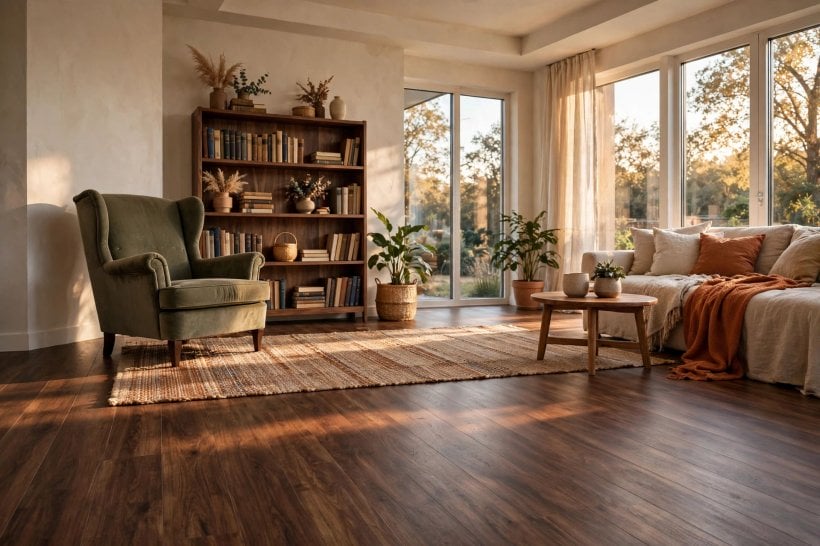
One floor rarely faces one job. Hallways and entrances take grit, moisture and the heaviest traffic, so they reward the toughest wear rating you can justify. Living rooms balance comfort, looks and durability, and they are where large samples and texture checks matter most because you will see the floor in raking evening light every day.
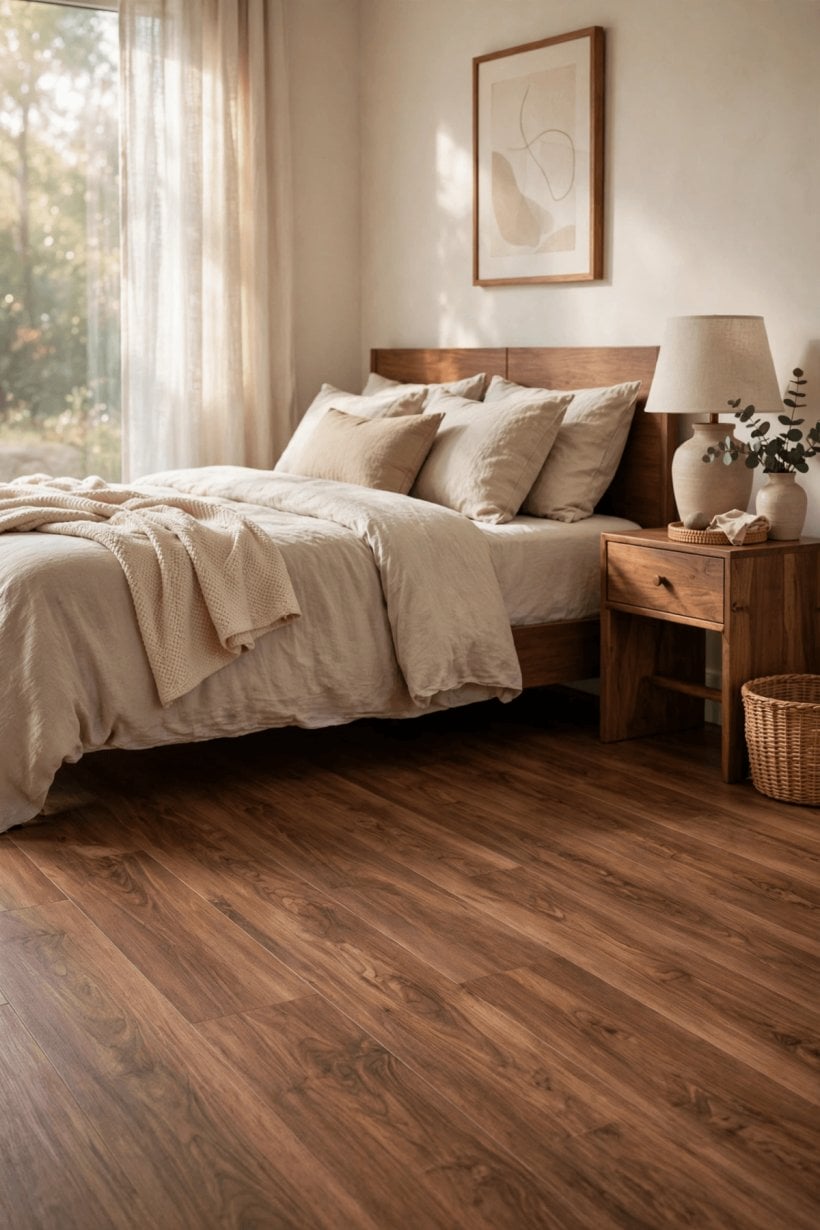
Bedrooms are gentler environments where warmth underfoot and a softer sound count more than extreme abrasion resistance. Children’s rooms and home offices sit in between: expect dropped toys, rolling chairs and concentrated wear in small patches, and consider chair mats where castors will work the same square metre all day.
Kitchens and bathrooms return to the moisture question, and honesty is essential. If your household produces puddles, steam and spills daily, choose only ranges warranted for those rooms, or pick a different material for the wettest zone and laminate elsewhere. Mixing materials thoughtfully is not a compromise; it is design. The strongest buying decisions treat the house as a set of rooms with different demands, not a single area multiplied, which is the same principle behind our guide to building your own tiny house, where every material earns its place room by room.
9. Guarantees, Care and Everyday Cleaning
A long guarantee sounds reassuring, but its value lives in the conditions. Read what is actually covered: surface wear is commonly included, while damage from flooding, incorrect cleaning products, missing felt pads or poor installation commonly is not. Note any requirements about approved cleaners, steam mops and moisture limits, because using the wrong product can quietly void the very cover you paid for.
Daily care is happily simple. Regular sweeping or vacuuming with a hard-floor setting removes the grit that does most damage, and a well-wrung mop with a suitable cleaner handles the rest. Felt pads under furniture, a good doormat and quick attention to spills prevent most of the wear that owners later blame on the product. Ask how repairs work too: whether single boards can be replaced, and whether the range is likely to remain available if you need matching boards later.
Keep a small stock of spare boards from the original batch if you can. Colours vary subtly between production runs, and a handful of stored boards turns a future accident into an afternoon repair instead of a full re-floor. That simple habit, like keeping paint codes after decorating, is one of the cheapest forms of home insurance there is.
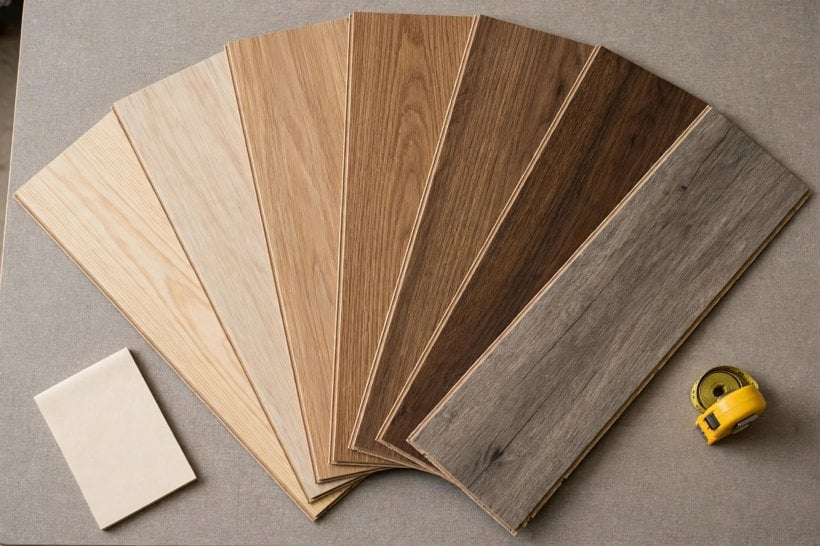
10. Samples, Measurements and Final Checks Before You Buy
Measure carefully, then add a sensible allowance for cuts, mistakes and spares, as your supplier recommends. Rooms are rarely perfectly square, and diagonal or herringbone-style layouts consume more material than straight runs. Confirm exactly what your quote includes: boards, underlay, moisture barrier, trims, thresholds, delivery and fitting are separate lines that are easy to assume and expensive to discover later.
Before paying, run a final checklist. Wear rating matched to the busiest room. Thickness and core suited to your subfloor. Moisture suitability confirmed in writing for kitchens or bathrooms. Samples approved at home in your own light. Underlay chosen for your heating setup. Guarantee conditions read, including cleaning rules. Batch consistency arranged so all packs for one area come from the same run where possible.
If a deal seems dramatically cheaper than every comparable range, ask which line of that checklist has been quietly dropped. Sometimes the answer is harmless, such as an end-of-range colour, and sometimes it is the underlay, the rating or the guarantee. Either way, the question costs nothing and protects everything. Buy the floor whose paperwork, samples and feel all tell the same story, and it will keep telling it for years.
Final Considerations
Choosing laminate well is less about hunting a single perfect product and more about matching honest specifications to the way your household actually lives. Wear rating, core quality, moisture suitability, joints and underlay form a chain, and the finished floor is only as strong as its weakest link.
Take samples home, read the small print, prepare the subfloor properly and keep a few spare boards. Do those unglamorous things, and the floor you choose will look after you every single day in return.



0 Comments