

Walk into any paint store and one brand will offer you three or four interior paints at three or four prices, all promising a beautiful room. The names sound like a ladder, but what actually changes as you climb it? This guide explains paint tiers in plain terms — coverage, scrubbability, primer claims and sheens — so you can choose by room and by job, not by adjectives.
1. At a Glance: What the Tiers Are (and Are Not)
Most paint brands organise their interior ranges into tiers: a value or standard line, one or two mid-range lines, and a premium flagship. Comparisons shoppers type, such as behr marquee vs premium plus ultra, are really tier questions — what does the top line claim over the mid line, and is the difference worth paying for in your room? This guide deliberately gives no brand winner, because tiers work similarly across brands, and because the right tier depends on the wall in front of you. The table below is the map.
| Question | What to understand |
|---|---|
| What is a tier? | A step within one brand’s range. Higher tiers usually mean more and better resin and pigment, plus extra features — not a different kind of paint altogether. |
| What improves as tiers rise? | Typically: hiding and coverage, durability and scrubbability, stain resistance, colour richness and how smoothly the paint applies and levels. |
| What does not automatically improve? | Your preparation. No tier fixes greasy, dusty, flaking or unprimed problem surfaces, and no tier makes a wrong sheen look right. |
| Do higher tiers always save money? | Not always. They can save coats on some jobs, but in easy rooms — light colour over light colour — a mid tier often reaches the same finish. |
| How should you decide? | By room demands: traffic, moisture, light, colour depth and how long you want the finish to last before repainting. |
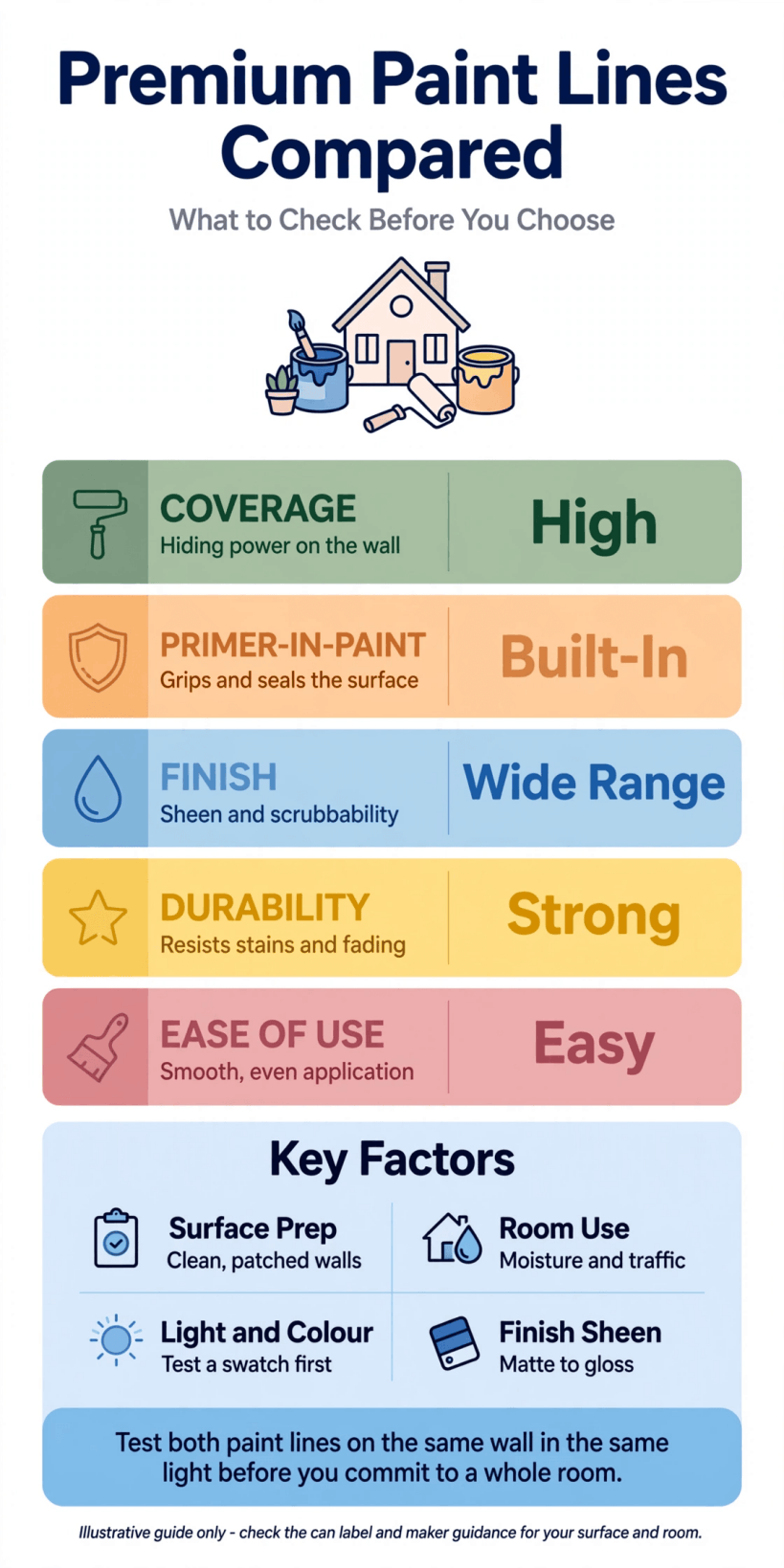
The tier ladder at a glance: what usually rises with price, and what stays your responsibility at every level.
The sections that follow unpack each row: what is actually in the tin, how coverage and scrub claims work in real rooms, when primer-in-one is honest help and when it is marketing, and how to pick a tier and a sheen for each space in your home.
2. Why Paint Lines Exist: Ingredients in Plain English
Every paint is a balance of the same few ingredients: pigment for colour and hiding, resin (the binder) that holds the film together once dry, a liquid carrier that evaporates, and additives that help the paint flow, level, resist mildew or avoid spatter. Tiers exist because those ingredients cost different amounts. A premium line can afford more resin and more or better pigment; a value line economises on both and leans harder on cheaper fillers.
That balance explains most real-world differences. More resin generally means a tougher, more flexible dried film that resists scuffs and scrubbing; more quality pigment means colour that hides the old colour beneath it instead of letting it ghost through. More filler can make a paint look thick in the tin yet dry to a weaker, chalkier film. None of this is visible when you stir the paint — it shows up over two coats and two years, which is exactly why tiers confuse buyers standing in the aisle.
It also explains why comparing across brands by name alone is unreliable: naming is marketing, formulation is fact, and the two are only loosely related. Judge a line by what its maker claims for it — hiding, scrub resistance, recommended uses — and by the job you are doing, the same evidence-based approach used when choosing finishes throughout these tiny house living room ideas, where small rooms punish weak paint faster than large ones do.
3. Coverage and Hiding: The Claim You Notice First
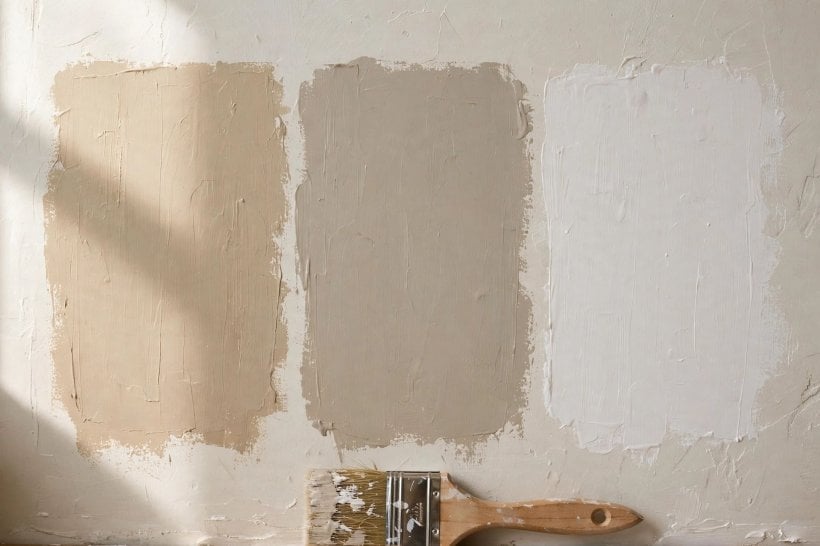
Coverage is the first difference tiers advertise, and the first you will notice. Hiding power — how completely a coat covers what is beneath — depends on pigment quality and quantity, the colour you are painting over, and the colour you are applying. Deep and vivid colours hide differently from pale ones, and a strong colour change (dark to light, or light to dark) challenges any paint. Premium lines generally hide better per coat, which is why they are marketed on fewer coats.
Be careful with one-coat promises. They usually assume a similar or lighter existing colour, a sound primed or previously painted surface, and the maker’s stated spreading rate applied evenly — conditions that describe some real rooms and flatter others. Honest planning still budgets two coats for most colour changes at any tier, treats a genuine one-coat result as a pleasant surprise, and remembers that a second coat is also what gives the dried film its full durability and even sheen. Skipping it to save money can cost the finish you paid a premium to get.
Test before committing a whole room. A sample pot, painted in a decent-sized patch over your actual old colour and viewed in morning and evening light, tells you more about hiding and hue than any label. It is the same try-before-you-commit logic behind the sample-friendly schemes in these colorful tiny house interior ideas: bold colour is wonderful, but it should be a tested decision, not a leap of faith from a printed swatch.
4. Scrubbability and Stain Resistance: Life With the Paint
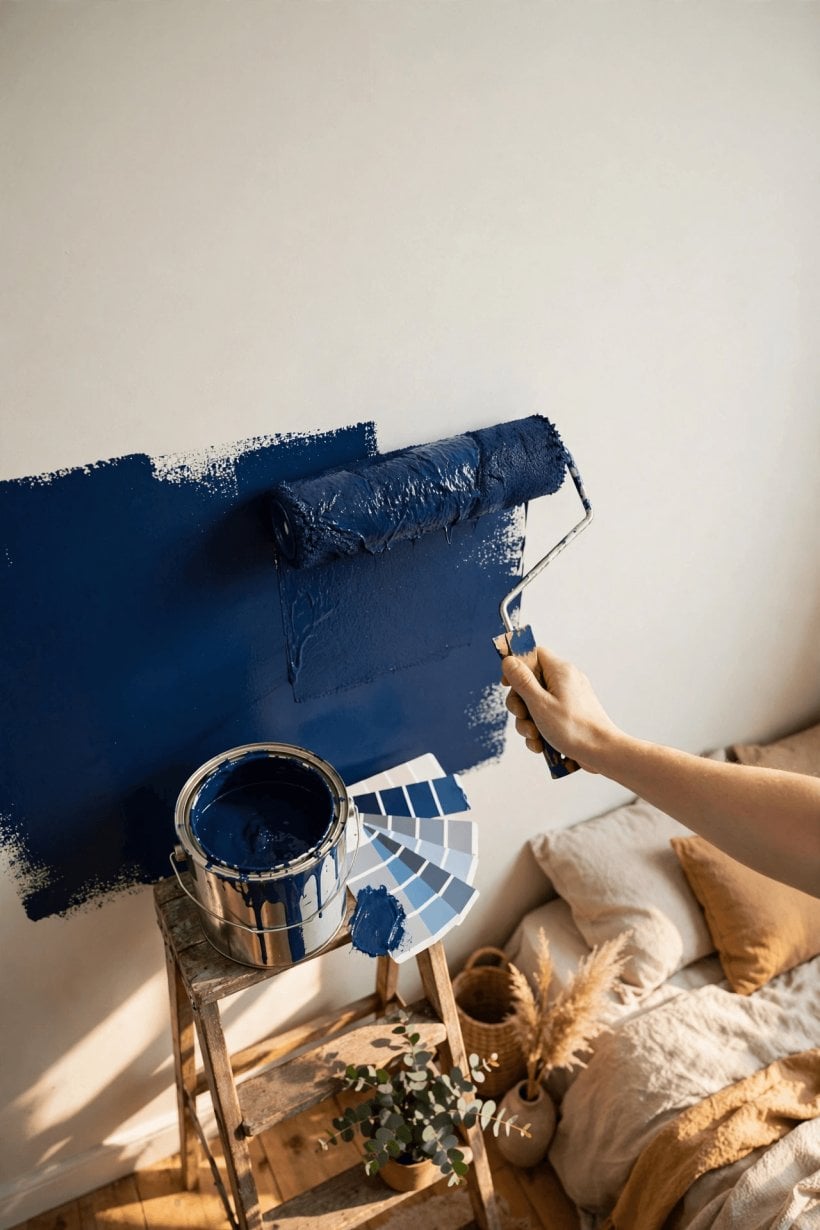
A painted wall is judged twice: on the day it dries, and on the day a toddler, a dog or a suitcase tests it. Scrubbability is the film’s ability to be washed repeatedly without the colour or sheen wearing away, and it tracks closely with resin quality — which is why it is one of the most honest tier differences. Higher tiers are generally formulated so everyday marks — crayon, shoe scuffs, splash marks — can be cleaned off more often before the wall starts to look tired and polished in patches.
Stain resistance is the companion quality: how much the dried film resists common household stains soaking in, and how completely they wash out. Kitchens, hallways, children’s rooms and the wall behind the bins are where this earns its keep. A mid-tier paint in a quiet bedroom may never be scrubbed in its life, while a premium paint in a busy hall can pay for itself simply by surviving cleanings that would force a repaint of a cheaper film.
Match the tier to the room’s actual punishment, as the hard-working schemes in these tiny house bathroom ideas do for moisture-prone spaces: steamy rooms, splash zones and daily-clean surfaces justify stronger formulations and suitable sheens, while spare rooms and ceilings rarely do. Note also that how you clean matters at every tier — soft cloth, mild cleaner, no scouring pads — because abuse can defeat any paint film eventually.
5. Primer-in-One Claims: When They Help and When to Prime Anyway
Paint-and-primer-in-one is the claim that sells the most tins, and it means something narrower than it sounds. On sound, previously painted walls in reasonable condition, a quality paint’s first coat does act as its own bonding and sealing layer for the second — and higher-tier lines, with more resin, generally do this self-priming job better. For the common repaint — same sheen family, no stains, no damage — primer-in-one products are a legitimate convenience at any sensible tier.
But primer is a specialist, and some jobs belong to it regardless of tier. Bare new plaster or drywall drinks paint unevenly and usually needs a proper primer or sealer coat for an even finish. Stains — water marks, smoke, tannin bleed from wood — can bleed through topcoats and call for a stain-blocking primer. Glossy, greasy or chalky old surfaces need cleaning, sanding and often a bonding primer. Drastic colour changes can benefit from a tinted primer that does part of the hiding work more cheaply than premium topcoat.
Think of it as sequence, not brand loyalty: surface first, primer where the surface demands it, topcoat for colour and durability. That is the order used on any careful build, including the self-managed projects described in this guide on how to build your own tiny house, where skipping preparation steps always billed the builder later. No premium label repeals that sequence; it only makes the topcoat part of it better.
6. Sheens From Flat to Gloss: The Other Half of the Choice
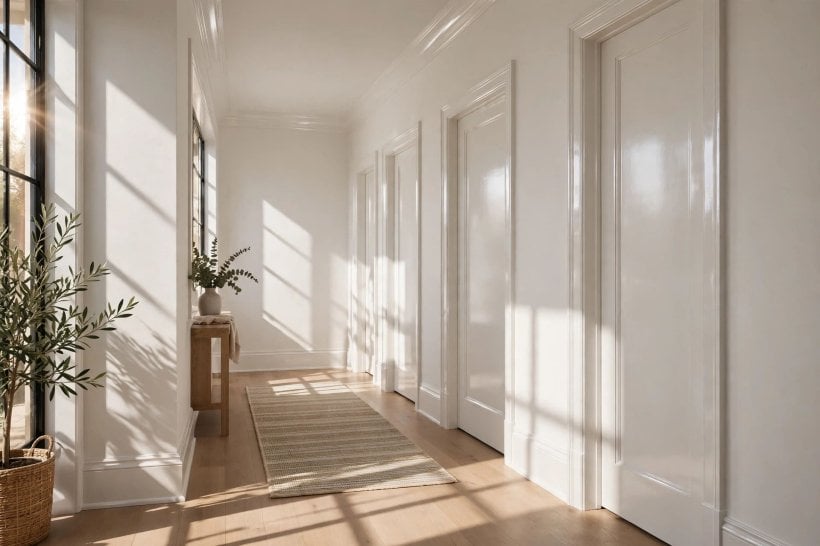
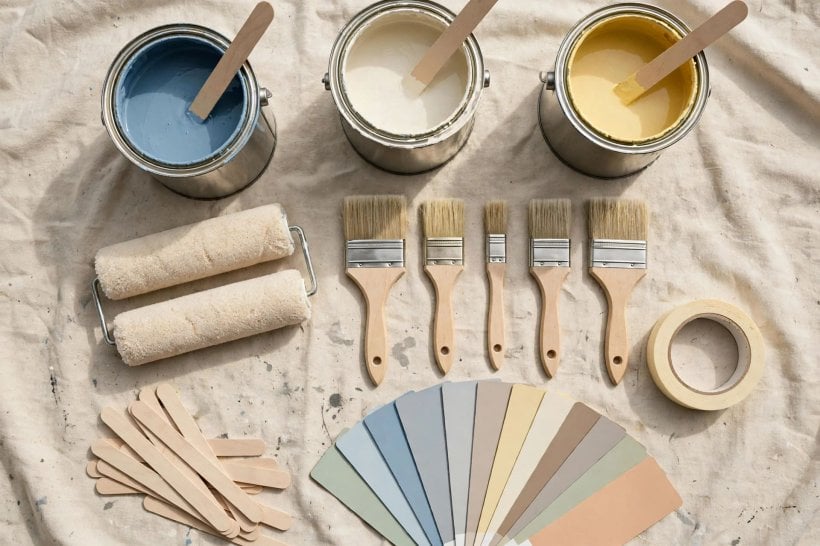
Tier decides what is in the tin; sheen decides what the room looks like, and the two choices are independent. Sheen names vary slightly between brands, but the ladder is consistent: flat or matte at the bottom, then eggshell, satin, semi-gloss and gloss, each step shinier, harder-wearing and less forgiving of wall flaws than the last. Higher sheens reflect more light, so they show bumps, patches and roller marks that matte finishes politely hide.
Workable general rules: matte and flat suit ceilings and low-traffic walls, and hide a multitude of sins; eggshell is the popular living-room and bedroom compromise, with a soft glow and moderate washability; satin handles family rooms, halls and children’s rooms with easier cleaning; semi-gloss earns its place on trim, doors and in kitchens and bathrooms where moisture and wiping are routine; full gloss is mostly for small accents and the very smoothest woodwork. Remember too that the same colour looks deeper and richer as sheen rises, which is worth a sample patch before a whole room is committed.
Sheen interacts with tier: a scrubbable matte in a premium line can out-clean a cheap satin, so do not assume shiny automatically means durable. The restful, low-sheen finishes favoured in these bedroom interior design tiny houses are a good model for sleeping spaces, while the washable mid-sheens in these tiny house bedroom ideas suit children’s rooms where walls work harder. Choose sheen by light and labour first, then tier by budget and lifespan.
7. Colour, Deep Shades and Touch-Ups
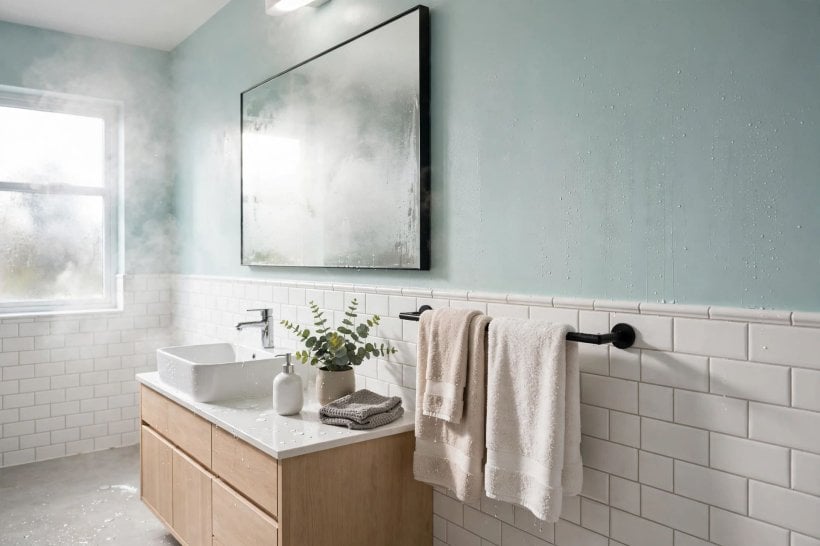
Colour behaves differently across tiers in ways that matter most with strong shades. Deep blues, greens, reds and near-blacks need more pigment and often a suitable base or tinted undercoat to reach their printed colour evenly; lines with better pigment loads generally reach depth with less patchiness, while any tier can look streaky if a deep colour is rushed in thin coats. If your heart is set on a dramatic wall, discuss the base and primer plan at the paint desk before the tin is tinted — that conversation is free and saves coats.
Touch-ups are the quiet test nobody thinks about in the shop. Paints touch up most invisibly in lower sheens and lighter colours; a scuff repaired in matte may vanish, while the same repair in satin can flash a slightly different sheen at glancing light whatever the tier. Premium lines sometimes level and blend a touch more kindly, but the reliable habits are universal: keep leftover paint, label it with room and date, stir well, feather the edges of any repair, and accept that a high-sheen or deep-colour wall may need a whole-section repaint to look truly whole again.
Lighting finishes the story, because colour is only ever what your light says it is. North-facing rooms cool every shade, warm bulbs flatter reds and punish some greens, and small samples lie at every tier. Paint the biggest sample you can bear, live with it for a day, and let the room vote — that is the process behind every successful scheme, premium tin or not.
8. Application Feel, Drying and Recoat Windows
Some tier differences you can feel through the roller. Better-formulated paints often spread more smoothly, spatter less, hold a wet edge longer (so lap marks are easier to avoid) and level out to a more even finish as they dry. None of that shows on a swatch card, and all of it matters on a big wall in warm weather, where a paint that sets too fast can punish a beginner. If you are new to painting, an easier-applying line is a genuine feature, not a luxury.
Drying language needs care. Paints are typically dry to touch quickly, recoat-able after a stated interval on the label, and fully cured — at their hardest and most washable — only after a longer period that labels and makers’ guides commonly measure in weeks rather than hours. Treat every tier gently during curing: no scrubbing, no tape, no furniture shoved hard against the wall, whatever the tin cost. Rushing a premium paint during curing wastes exactly the durability you bought it for.
Always follow your own tin’s label for recoat times, ventilation and temperature limits rather than general articles, this one included: formulations differ within tiers as well as between them. Work in the label’s conditions, keep the room ventilated, and plan the day so the second coat lands inside its proper window — decorators’ results owe as much to that patience as to any product tier.
9. Cost Per Room, Not Per Tin: Doing the Real Maths
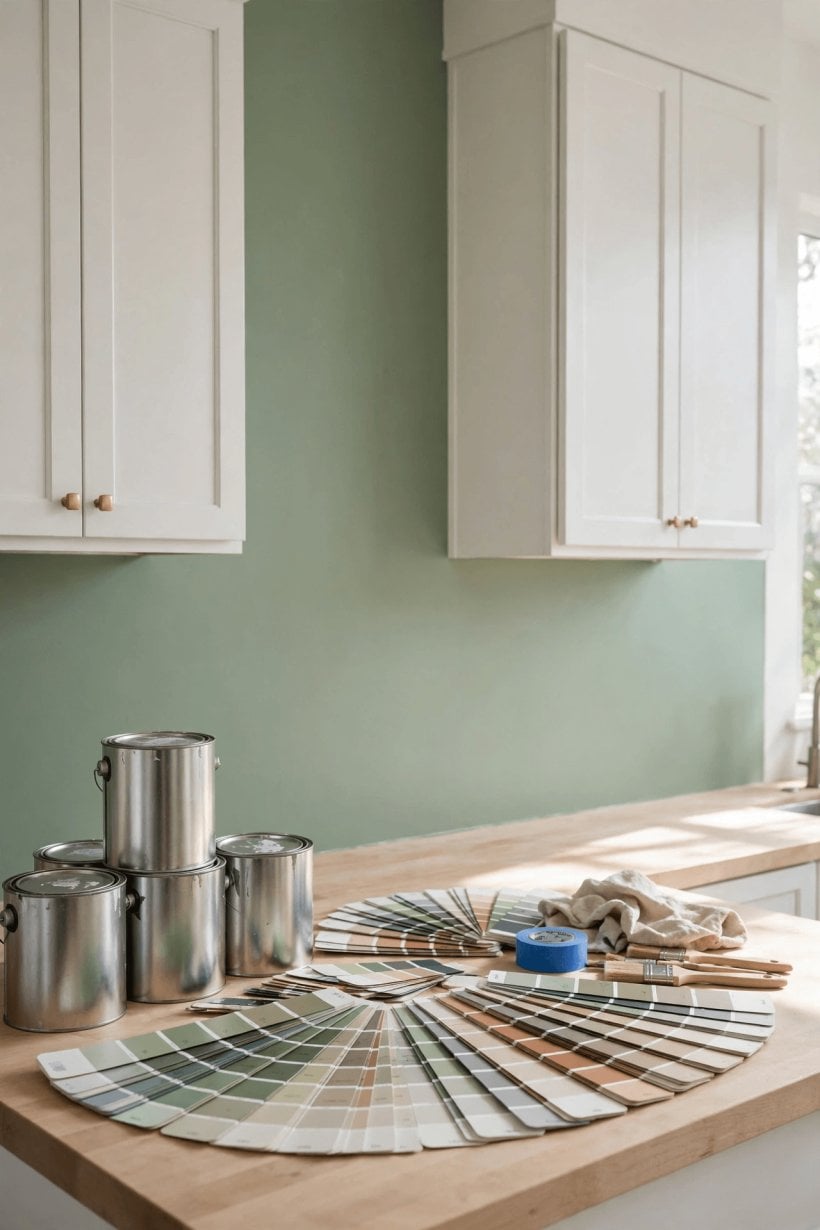
The shelf price misleads in both directions. A premium tin costs more per litre, undeniably — but the real figure is the cost of the finished room: how many tins, how many coats, how much primer, and how soon you will repaint. On a strong colour change, a better-hiding line that finishes in two coats can rival a cheaper line that needs three tins and a third day’s labour. On a gentle refresh, the arithmetic flips and the mid tier is simply the sensible spend.
Your own time is part of the maths, as is the room’s downtime. A hallway painted once in a durable finish and left alone for years is cheaper, in money and weekends, than a bargain finish repainted twice in the same period. Conversely, rooms that change often — children’s rooms on a two-year reinvention cycle, or a home being prepared for sale — gain little from maximum durability, because the paint will be replaced for fashion, not failure. Match the spend to the expected service life, not to the best story in the shop.
This value-first thinking is the same approach taken throughout these tiny barn house interior projects: spend where wear and daily use justify it, save where they do not, and never confuse the most expensive option with the most considered one. Paint rewards exactly that discrimination, room by room.
10. Which Tier for Which Room: A Simple Verdict
So, returning to comparisons like behr marquee vs premium plus ultra, here is the honest verdict this guide can give: there is no universal winner, there is a matching exercise. Premium tiers earn their price in high-traffic, high-cleaning, high-visibility places — halls, stairs, kitchens, family rooms and deep-colour feature walls — where hiding, scrub resistance and application ease are all tested at once. If a room will be washed, knocked and judged in daylight daily, buy the better film.
Mid tiers are the right answer more often than marketing admits: bedrooms, dining rooms, living rooms in gentle colours, and any space repainted regularly for pleasure. Value tiers have an honest place too — ceilings, inside cupboards, utility spaces, quick refreshes before a sale or a tenancy change — anywhere the finish is low-traffic, low-scrutiny or knowingly temporary. The waste is not buying cheap paint; it is buying the wrong paint for the room’s real life, in either direction.
Whatever tier you choose, the unglamorous multipliers apply equally: prepare the surface, prime where the surface demands it, apply two honest coats at the label’s spreading rate, and let the film cure. A mid-tier paint used that way will out-perform and out-last a premium paint slapped over dust and grease — the tier ladder matters, but it stands on preparation, and preparation is free.
Final Considerations
Read tiers as ingredient budgets, not insults or promises. More resin and pigment buy hiding, scrub resistance and a kinder application feel; they do not buy immunity from bad preparation, wrong sheen or impossible colour changes. Decide room by room — premium where life is hard on walls, mid where it is gentle, value where the finish is temporary — prime honestly, sample boldly and cure patiently. Do that, and whichever line you bring home will do the best work it is capable of, which is all any paint, at any price, can fairly be asked to do.



0 Comments