

A groundhog can empty a bean row in days and undermine a shed in a season, but the kindest effective response is usually a well-baited live trap, patience, and a plan made before the trap is set. This guide covers which baits groundhogs actually find tempting, where to put the trap, and how to handle the whole process calmly and legally.
1. At a Glance: Bait Choices and the Rules First
Before the bait itself, one non-negotiable step: check the rules where you live. Laws and local ordinances on trapping and relocating wildlife vary widely, and in some places relocation is restricted or not allowed at all. A quick call or website check with your local wildlife agency, extension office or animal control service tells you what is permitted, whether a permit is needed, and what alternatives they recommend. The table below then sums up the bait questions most gardeners ask.
| Question | Practical answer |
|---|---|
| What foods tempt groundhogs most? | Fresh plant foods they already eat: sweet fruit such as cantaloupe and apple, garden vegetables, beans, peas, lettuce and clover. Freshness matters more than novelty. |
| Does peanut butter work? | It is sometimes used as a sticky carrier and scent — a smear on a cracker or apple slice — but it is a supporting act, not a magic bait on its own. |
| Where should bait go in the trap? | A small trail leading in, with the main portion behind the trigger plate, so the animal steps fully onto the plate to reach it. |
| How often should bait be replaced? | Daily is a good habit. Wilted, dried or rain-soaked bait loses its scent and appeal quickly outdoors. |
| What matters more than bait? | Trap placement near an active burrow entrance or travel route, and pre-baiting so the animal learns the trap is safe. |
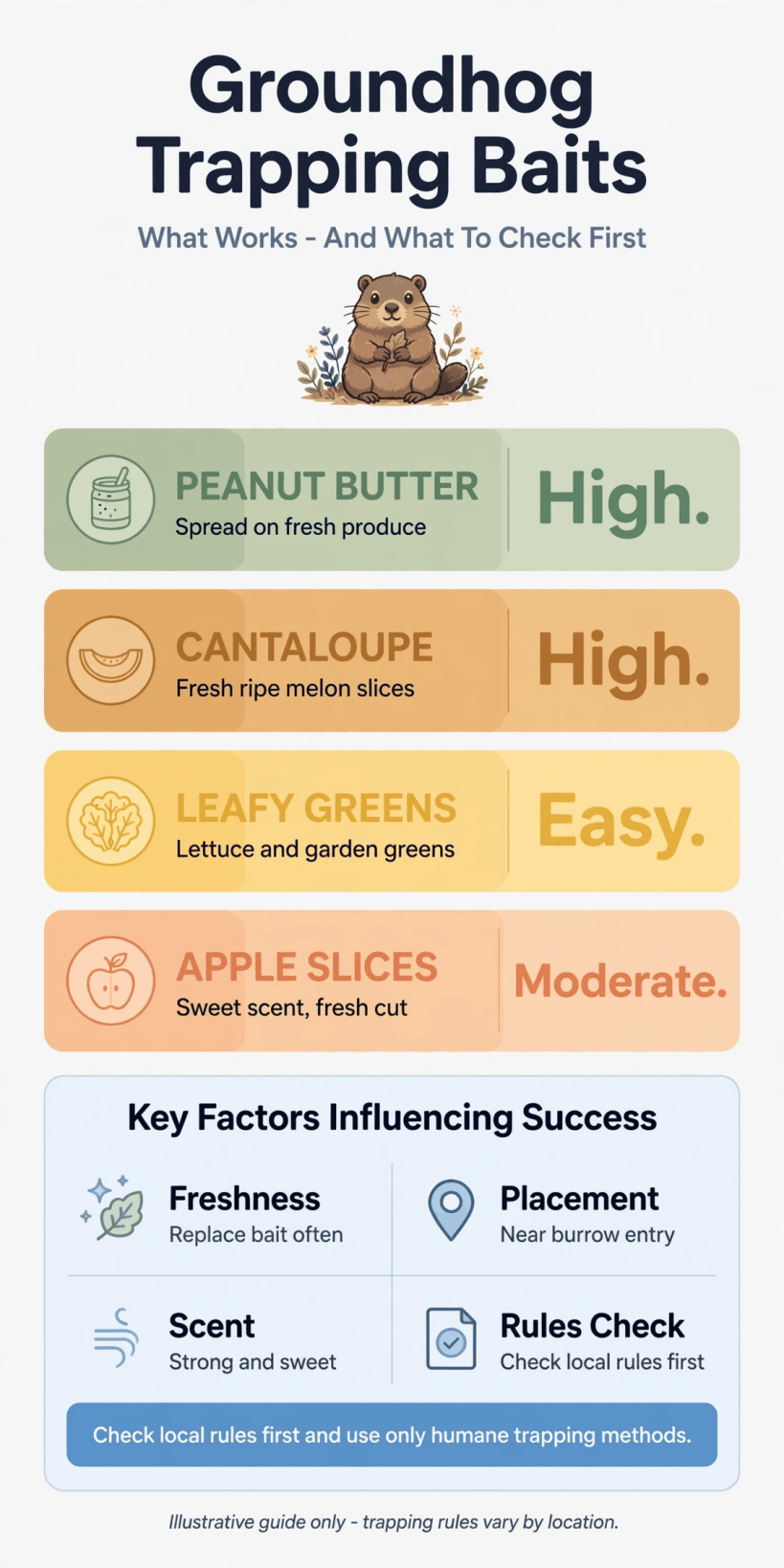
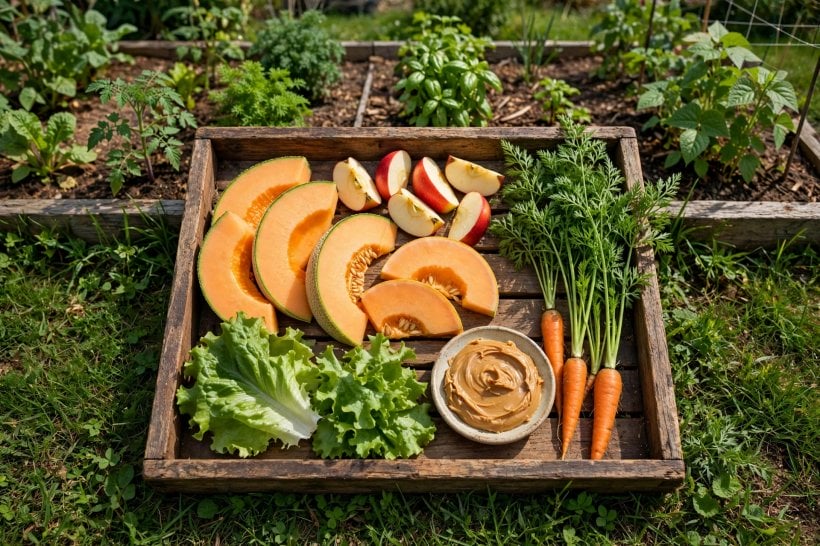
The essentials in one view: fresh familiar foods, smart placement, pre-baiting, frequent checks and local rules first.
Everything that follows expands those rows: how a groundhog eats, the bait line-up from melon to greens, where peanut butter genuinely fits, and the humane habits — placement, pre-baiting, checking and lawful release — that decide whether trapping works at all.
2. Know the Animal: What Groundhogs Actually Eat
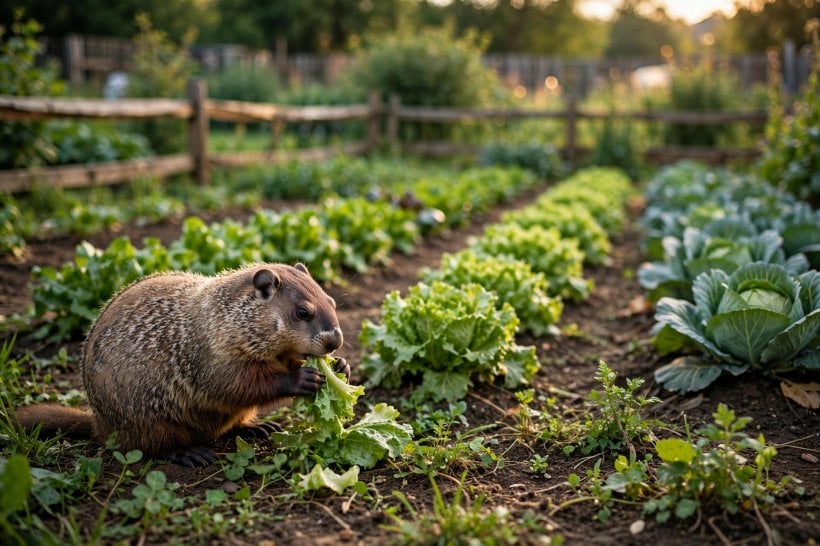
Groundhogs — also called woodchucks — are herbivores, and committed ones. Their natural diet is green vegetation: clover, alfalfa, dandelion, plantain and grasses, supplemented by garden produce they famously raid, from beans, peas and carrots to lettuce, sweetcorn and squash, plus fruit when it is within reach. A bait works when it smells like the food the animal already trusts, which is why the best bait is often whatever it has been eating in your own garden.
They are also creatures of routine. Groundhogs feed mainly in the morning and again towards evening, return to the same burrows, and use worn paths between burrow entrances, cover and food. Watching for a day before trapping is not wasted time: note which entrance is active (fresh soil, flies, worn edges), which crops are being taken, and when the animal appears. Those observations choose your trap site and your bait better than any product label can.
This is the same watch-first approach that good garden planning uses everywhere — the planting and layout thinking in these tiny house landscaping ideas starts from how a plot is actually used, and your trapping will work better for starting the same way. An animal following its own habits walks into a trap calmly; an animal faced with novelty in a strange place simply avoids it, however expensive the bait inside.
3. The Bait Line-Up: Fruit, Vegetables and Greens
Start with sweet, fragrant fruit. Cantaloupe is the bait most often recommended by wildlife and extension advisers, because its strong sweet scent carries and groundhogs find ripe melon hard to resist. Apple slices are a close second and are easier to keep on hand, and strawberries and other ripe, fragrant fruit can also tempt an animal that has been raiding a fruit patch. Cut fruit fresh, and replace it before it browns, ferments or dries out.
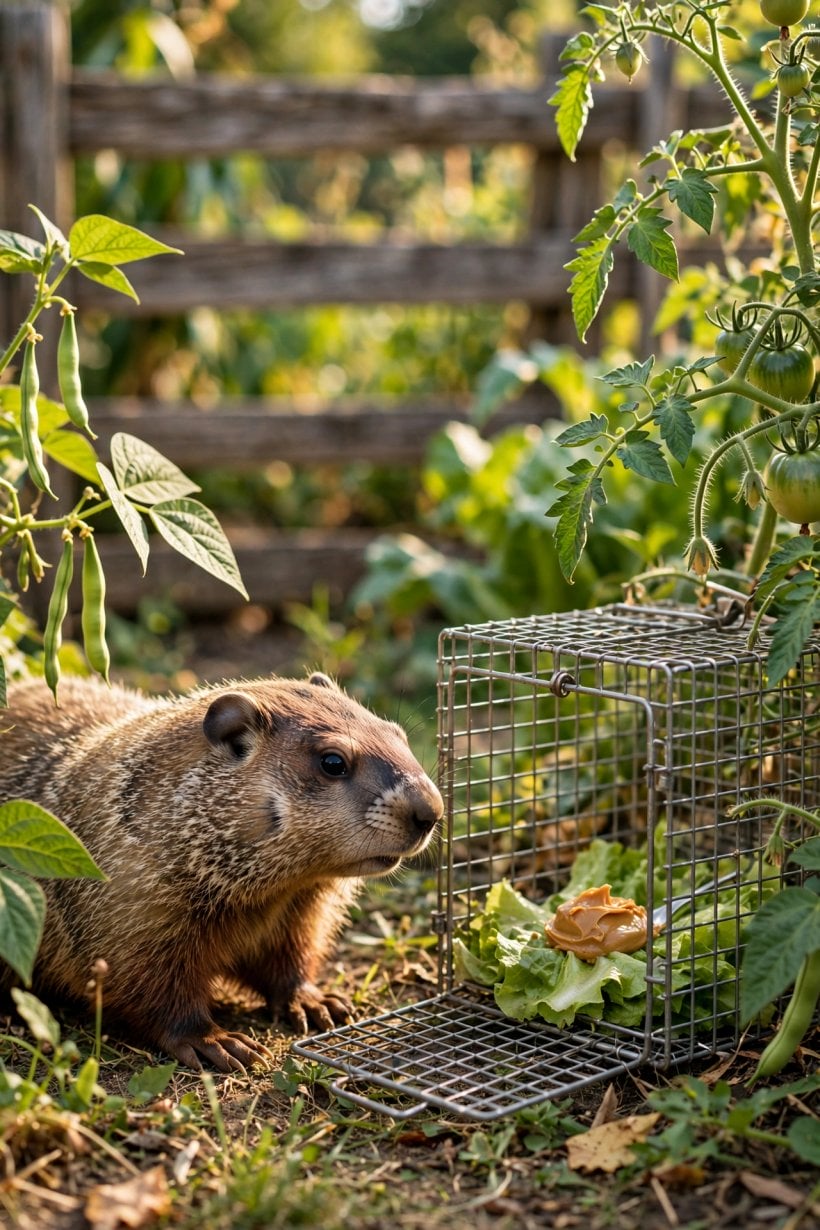
Vegetables come next, especially the ones disappearing from your rows: green beans, peas in the pod, sweetcorn pieces, carrot tops and chunks, and leafy lettuce. There is a particular logic to baiting with the exact crop being eaten — the animal has already decided that food is safe and worth a trip. A small mixed offering is fine, but keep portions modest: you want the animal to enter for the main bait behind the trigger, not to feast from a trail and leave satisfied.
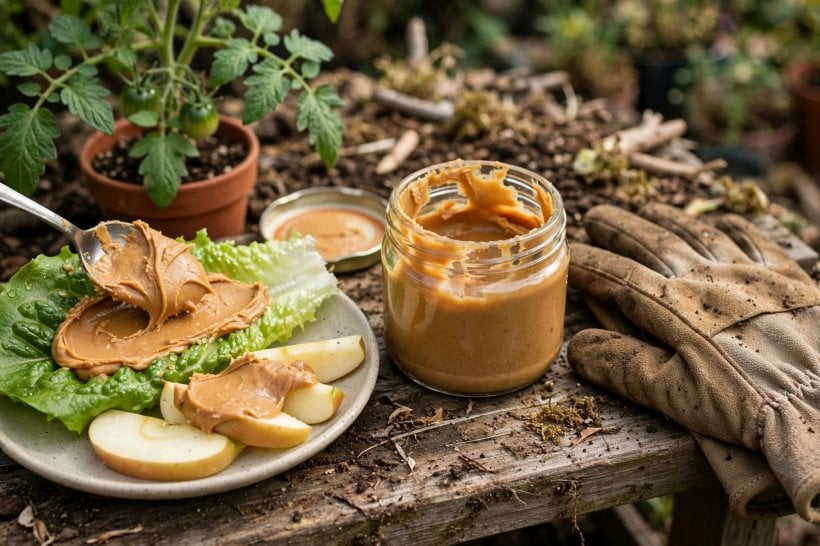
Greens gathered fresh — clover, dandelion leaves and other plants the groundhog grazes naturally — make excellent trail material and trap dressing. Line the trap floor with them, scatter a few leaves at the entrance, and let the main bait inside be the prize. Whatever you choose, refresh bait daily, handle it with gloves if you want to keep human scent low, and remember that no bait outperforms a bad location: the next sections on placement and pre-baiting are where captures are really decided.
4. Peanut Butter and Scent-Based Lures
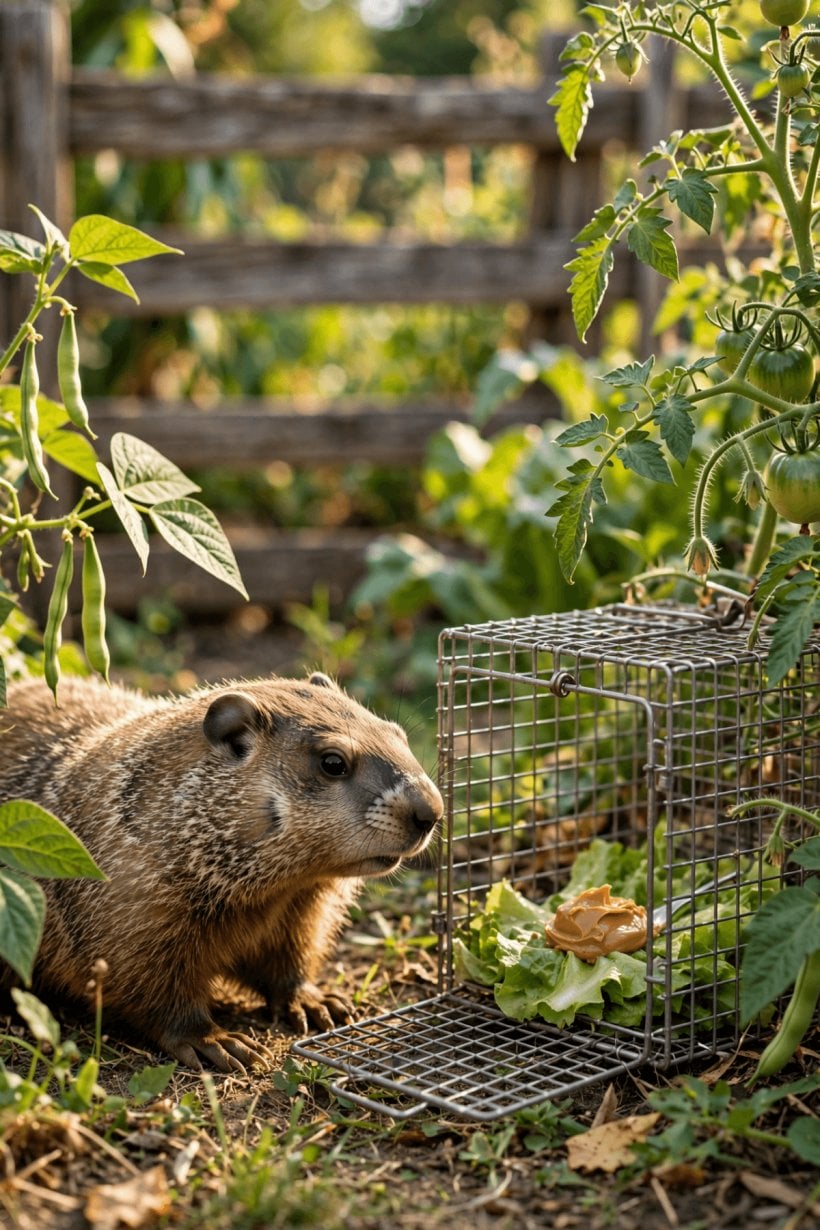
Peanut butter attracts plenty of wildlife, so it is fair to ask where it fits here. Used searches for groundhog bait peanut butter usually end with the same honest answer: peanut butter can help, mainly as a scent carrier, but it is rarely the star. A smear of peanut butter on a cracker, a piece of apple or a small corn cob gives a strong, lingering smell and holds the more attractive bait in place, and some gardeners use a dab on the trap’s back wall so the animal stretches across the trigger plate to reach it.
Used alone, though, peanut butter has drawbacks. It is not a natural groundhog food, it can melt and spoil in heat, and its rich scent may interest other animals — raccoons, skunks or neighbourhood dogs — more than the groundhog you are targeting. Non-target visitors complicate everything: they spring traps, eat bait and can turn a humane project into a stressful one. If you use peanut butter at all, use a little, paired with fresh fruit, and watch the trap so surprises are dealt with promptly and kindly.
The wider lesson applies to all scent lures, including commercial ones: scent draws attention, but familiarity closes the deal. A trap that smells faintly of melon and clover, sitting on the animal’s own path, dressed with the greens it eats daily, will usually outperform a trap scented with something novel and exciting placed where the groundhog never walks. Keep lures simple, keep bait fresh, and let placement do the persuading.
5. Choosing and Setting Up the Live Trap
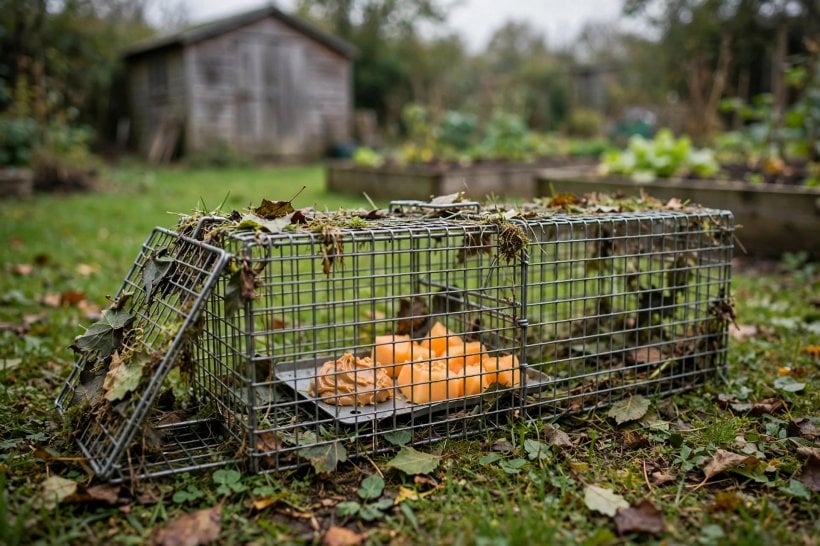
Choose a sturdy wire cage trap sized for the animal — large enough for a groundhog to enter fully and turn, with a trigger plate that a groundhog’s weight will trip reliably and a door that closes firmly without slamming on the animal. Many wildlife agencies and humane societies publish sizing guidance, and some lend or rent traps locally, which is worth asking about when you make your rules-check call. A borrowed trap plus local advice beats a bargain trap plus guesswork.
Before setting, wash a new or borrowed trap with plain water if it smells of manufacturing oils or previous captives, and let it weather outdoors for a day or two if time allows. Test the mechanism by pressing the plate with a stick until the door trips cleanly. Set the trap on firm, level ground where it cannot rock — a rocking trap spooks cautious animals and can injure a caught one — and stabilise it with a brick or stake if the ground is soft, without blocking the door’s fall.
Dress the trap to look ordinary. A light covering of grass, leaves or a piece of old sacking over the top (never blocking the door or mechanism) makes the cage read as shelter rather than machinery, and a scattering of greens through the wire floor hides the metal underfoot. The skills here are the same patient, measure-first habits used in any careful outdoor build, like the projects described in this guide on how to build your own tiny house: prepare properly once, then let the setup do its work.
6. Placement: Where the Trap Goes Matters More Than Bait
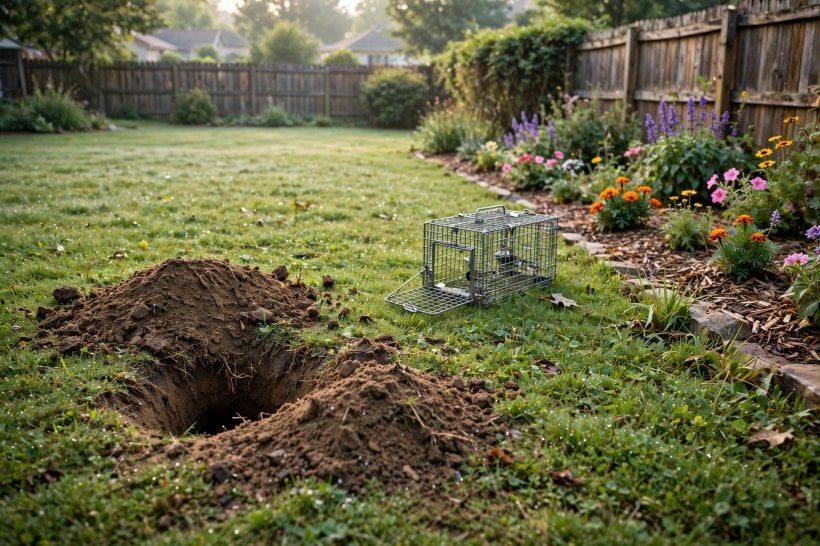
If forced to choose between perfect bait in a poor spot and plain bait in the perfect spot, experienced trappers choose the spot. The ideal site is on the groundhog’s existing route: a few feet from an active burrow entrance is the classic choice, or along a fence line, log or garden edge the animal uses as a covered runway between burrow and food. Your day of watching in section two tells you exactly where that is.
Set the trap entrance facing the direction the animal approaches from, on its path rather than beside it, so entering the trap is the natural continuation of its walk. Keep the site shaded or cover the trap, because a caught animal waiting in full sun is a welfare emergency, and avoid spots that flood, sit in an ant nest’s traffic, or are exposed to dogs. On sloping ground, level a small platform first; a trap that slides or tips when triggered helps no one.
Structures matter too. Groundhogs burrow under sheds, decks and barns, and the protection mindset in these tiny barn house interior projects — keep buildings sound, sealed and dry — pairs with trapping: there is little point catching an animal while leaving the burrow system under your outbuilding open for the next one. Note all entrances while you trap, because section ten’s prevention work starts with those holes in the ground.
7. Pre-Baiting and Patience: Teaching the Animal to Trust the Trap
Pre-baiting is the step beginners skip and the step that most improves results. For the first day or two, wire or secure the trap door open so it cannot spring, and bait the trap exactly as you plan to catch with it: trail of greens leading in, prize bait at the back. Let the groundhog walk in, eat and leave unharmed. You are buying trust with free meals, and an animal that has eaten calmly inside a trap once will usually return without suspicion.
Watch from a distance — from a window is ideal — and note whether the bait is taken, by what, and when. If birds or other animals are clearing the bait, adjust the offering, the timing or the trap dressing rather than abandoning the plan. When takes look consistent (often after a day or two of free meals, though shy animals take longer), set the door properly on a fresh baiting and begin your checking routine.
Patience applies after setting, too. Check the trap from a distance without hovering over it; constant human presence and scent around the site can keep a wary animal away during its normal feeding times. Early morning is a natural checking point, which suits anyone who enjoys the quiet start celebrated in these tiny house bedroom ideas — coffee first, trap check second, and the garden gets its answer before the day warms up and a caught animal could become uncomfortable.
8. Checking the Trap and Handling a Catch Kindly
A set live trap is a responsibility, not a set-and-forget device. Check it at least daily — more often in hot or cold weather — and have a rule that the trap is never left set when you go away, even overnight trips. An animal in a cage has no water, no shelter and no escape from weather or predators, so frequent checks are the core of humane trapping, not an optional extra.
If you find a groundhog caught, stay calm and move slowly. Cover the trap with an old blanket or sheet: darkness settles most animals. Wear heavy gloves, keep hands away from the door and bars (a frightened groundhog can bite), and keep children and pets indoors and away. Do not attempt to handle the animal itself. If the animal appears injured, or you caught a non-target animal, or you are unsure what to do next, call your local wildlife service or animal control for instructions rather than improvising — that call is part of humane practice, not an admission of failure.
Your watching point matters for this stage as well: being able to see the trap from the house, the way the seating in these tiny house living room ideas is arranged around a view, turns checking into a glance rather than an expedition, while still keeping your distance at the site itself. Release or relocation, if permitted where you live, follows the guidance in the next section — planned in advance, never decided in a panic beside a sprung trap.
9. Release, Relocation and the Law: Check Before You Move an Animal
Here is the part to arrange before you trap, not after: what happens to a caught groundhog. In some areas relocation is permitted with conditions; in others it is prohibited, because moving animals can spread disease, dump a problem on someone else’s land, or leave the animal in unfamiliar territory where it may not survive. Landowners’ permission is typically required for any release site, and releasing onto public land without authority is commonly an offence. This is general guidance only — your local rules are the ones that count, which is why section one began with that phone call.
If relocation is allowed and you have a permitted, suitable site — similar habitat, water and cover, away from other homes and gardens — transport the covered trap promptly, keep the journey short and quiet, and set the trap down, open the door from behind the cage, and step well back to let the animal leave in its own time. Never release beside roads, and never keep a wild animal in a trap longer than the journey requires. Wash hands and gloves afterwards, and clean the trap before its next use or storage.
If relocation is not permitted where you live, ask the wildlife service what they advise instead: options may include professional removal services, exclusion work on the burrow once it is confirmed empty (a job with its own rules and seasons, often best left to licensed professionals), or a fenced tolerance while a young family disperses. Handling these questions honestly is the difference between a humane project and a hopeful one.
10. Prevention: Making the Garden Less Inviting Next Time
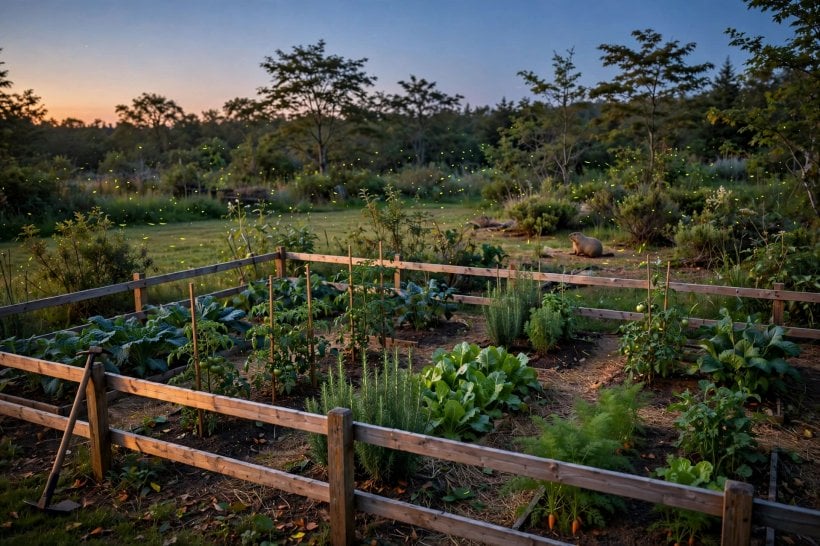
Trapping solves this season’s animal; prevention solves the pattern. Start with fencing done properly: a garden fence that a groundhog cannot climb or dig under is the single most reliable long-term protection for vegetables — hardware cloth or similar mesh, with the bottom buried or bent outward underground, is the style commonly recommended for burrowing animals. It is garden groundwork, planned once and built carefully, much like the staged approach in these tiny house landscaping ideas.
Then remove invitations. Clear brush piles, wood stacks and tall weeds near the garden and buildings, since groundhogs favour cover close to food. Protect sheds and decks by sealing gaps at ground level with suitable mesh once you are certain nothing is living underneath — confirming a burrow is empty before sealing it is essential and, in many places, regulated, so take advice if you are in any doubt. Harvest ripe produce promptly, tidy fallen fruit, and consider planting the most-raided crops inside the fenced area only.
Finally, keep the watching habit. A quick burrow check each spring, before planting, catches new digging while it is one hole rather than a system, and early, small responses — fencing a gap, moving a brush pile, one well-run trapping effort under local rules — are always kinder and cheaper than a summer-long battle. Your garden and the local groundhogs can share a landscape; they just cannot share your bean row.
Final Considerations
Work in this order: rules first, watching second, placement third, bait fourth. Choose fresh, familiar foods — melon, apple, the very vegetables being raided — use peanut butter sparingly as a scented carrier if at all, pre-bait with the door fixed open, check the trap faithfully, and have a lawful plan for a caught animal before the door ever springs. Bait matters, but kindness and preparation are what make bait work. A trapper who is patient, lawful and observant usually needs to trap once; everyone else traps all summer.


0 Comments