

Quartz countertops earn their popularity honestly — consistent colour, no sealing ritual and a surface that shrugs off everyday kitchen life. Owners who regret the choice usually ran into a limit they were never told about.
This balanced guide explains those limits — heat, stains, chips, seams and sun — how to prevent or manage each one, and the questions to ask before you buy.
1. Quartz Countertop Problems at a Glance
The central entity here is engineered quartz as a work surface, and its character is set by a small network of attributes: a stone-aggregate body bound with resin, a non-porous face, factory-controlled colour and pattern, and edges and seams finished by a fabricator. Almost every discussion of quartz countertop problems traces back to one of those attributes — the resin explains the heat and sun behaviour, the factory control explains both the uniformity owners love and the seam expectations they misjudge, and the hardness explains why the surface resists scratches yet can still chip at an edge. Judge quartz by that attribute network, not by showroom shine alone.
| What is quartz, exactly? | An engineered stone: crushed stone aggregate held together with a resin binder, formed into slabs — not a quarried natural stone. |
| Where is it genuinely strong? | Uniform colour and pattern, a non-porous surface that resists everyday staining, and no sealing routine to keep up with. |
| What catches owners out? | Heat on the resin binder, strong pigments left sitting, chips at edges and sink cut-outs, visible seams and fading in strong direct sun. |
| Can damage be repaired? | Small chips can sometimes be filled, but invisible repairs are harder to promise than with natural stone — prevention matters more. |
| Who suits quartz best? | Cooks who will use trivets, wipe spills promptly and value consistency and low routine maintenance over repairability. |
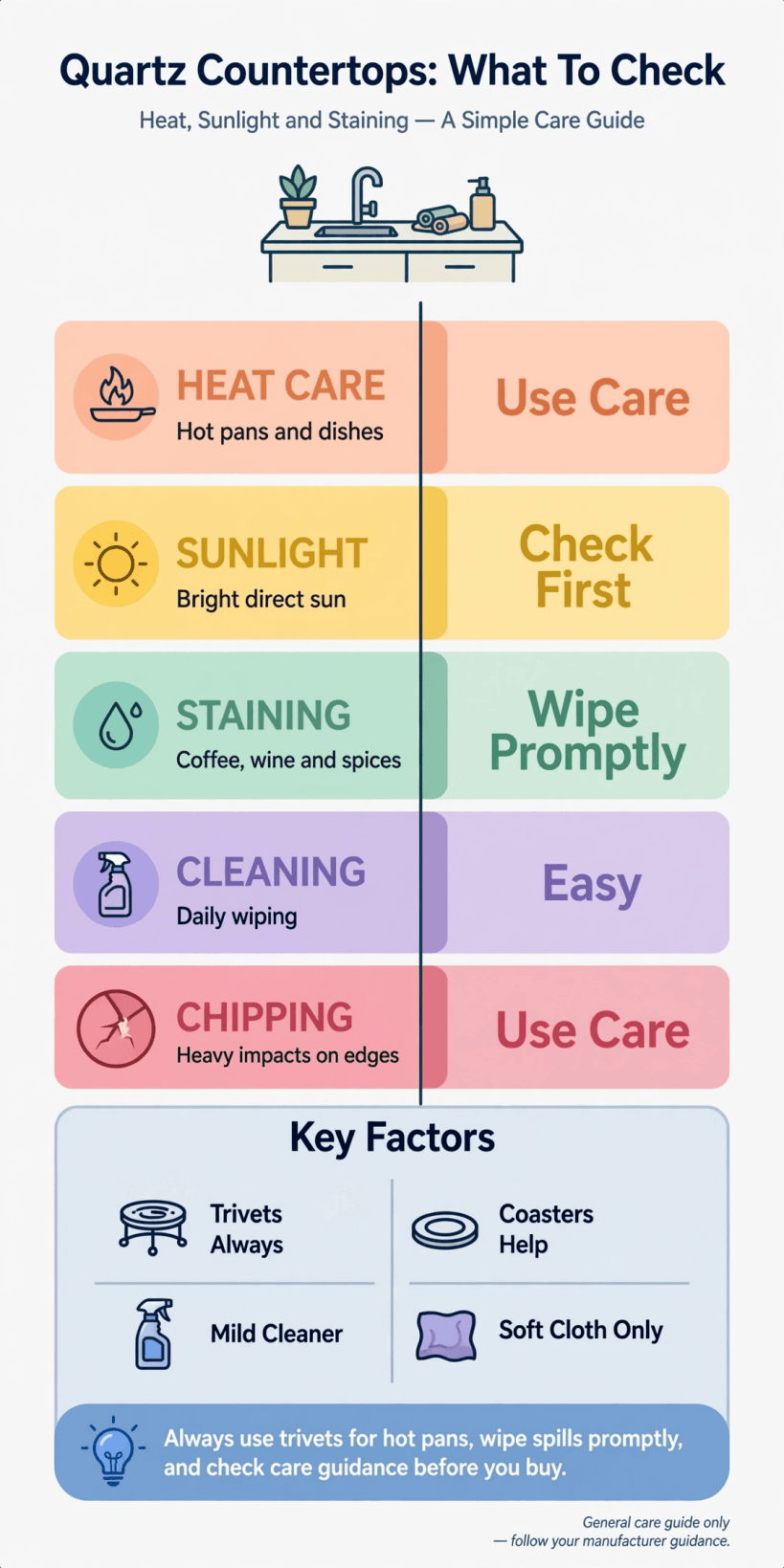
At a glance: quartz trades the upkeep of natural stone for a short list of habits — trivets, prompt wiping and sensible edge choices.
2. What Quartz Is: Engineered Stone, Not Quarried Stone
Start with what the slab actually is. Quartz worktops are manufactured: stone aggregate — mostly ground quartz mineral — is mixed with a resin binder and pigments, poured or pressed into slab moulds, cured and polished. The result is a dense, hard, non-porous surface whose colour and pattern were decided in a factory, not in a quarry. That one fact predicts nearly everything else in this guide, good and bad.
The strengths are real. Because the surface is non-porous, liquids sit on top rather than soaking in, so routine spills are far less threatening than they are on unsealed natural stone. Because production is controlled, the slab you approve in the showroom is very close to the slab that arrives — no surprise veining, no weak fissure running through the middle of your island. And because there is no pore structure to protect, there is no sealing ritual: no annual resealing calendar, no wondering whether last year’s coat has worn through. For a small, hard-working kitchen like those in these tiny house kitchen design ideas, that combination of predictability and low routine maintenance is a genuine, practical advantage.
The limits come from the same recipe. The resin that binds the aggregate is a polymer, and polymers behave differently from stone under heat and strong sunlight. The hardness that resists scratching also makes the material comparatively unforgiving at thin, exposed points — edges and cut-outs. And factory uniformity cuts both ways: a pattern designed to repeat calmly can look flat to someone who wanted natural movement, while a pattern designed to mimic marble veining can disappoint at the seam, where the printed-looking flow cannot continue the way real veining sometimes can. None of this makes quartz a poor choice. It makes it a specific choice, with a specific care profile — which is exactly what the next sections spell out.
3. Heat Behaviour: The Resin Binder Is the Weak Point
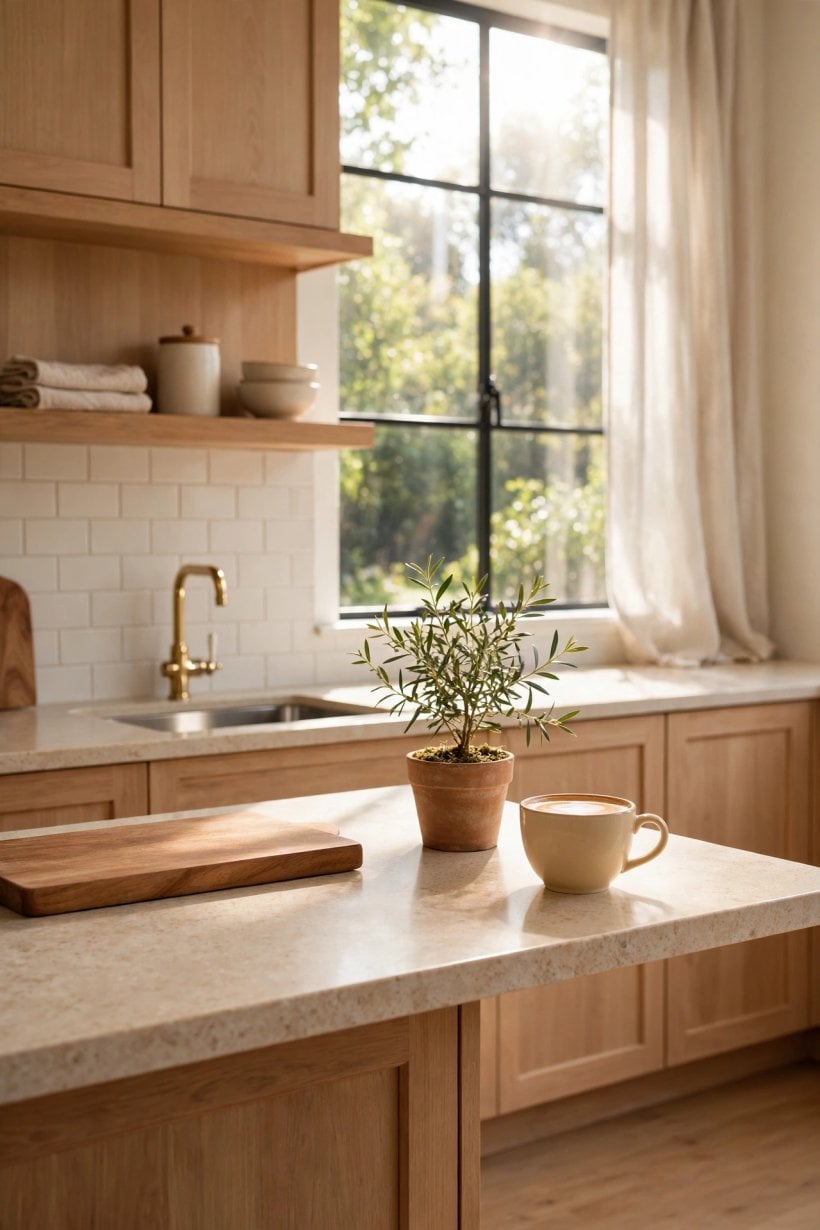
Heat is the limit owners mention most, and it follows directly from the construction. Stone aggregate tolerates heat well; the resin binder that holds it together is the sensitive part. A very hot pan set straight from the hob or oven onto the surface can stress that binder, and the damage owners describe is discolouration, a dull or whitened mark, or in worse cases cracking from sudden temperature change — thermal shock — rather than the surface simply getting hot.
How to manage heat risk
The management is simple and absolute: always use a trivet, hot pad or pan stand. Treat it as a rule of the kitchen, not a precaution for special occasions, because the risky moment is the distracted one — a roasting tin grabbed with both hands and put down wherever there is space. Slow cookers, air fryers and other countertop appliances that vent heat downwards or sit hot for hours deserve a board or mat underneath too, a point worth remembering when you are laying out the appliances in compact kitchen appliance guides for tiny houses. Be especially careful near seams and edges, where the material has less mass to absorb a sudden temperature swing.
Be honest with yourself about your cooking style before you buy. If your household routinely lands hot trays wherever they fit, and no trivet habit is realistically going to form, that is useful information — not a character flaw, but a mismatch between habit and material that section 10 returns to. If trivets are already second nature, heat is a managed non-issue for the life of the kitchen.
4. Stains and Discolouration: Non-Porous Is Not Stain-Proof
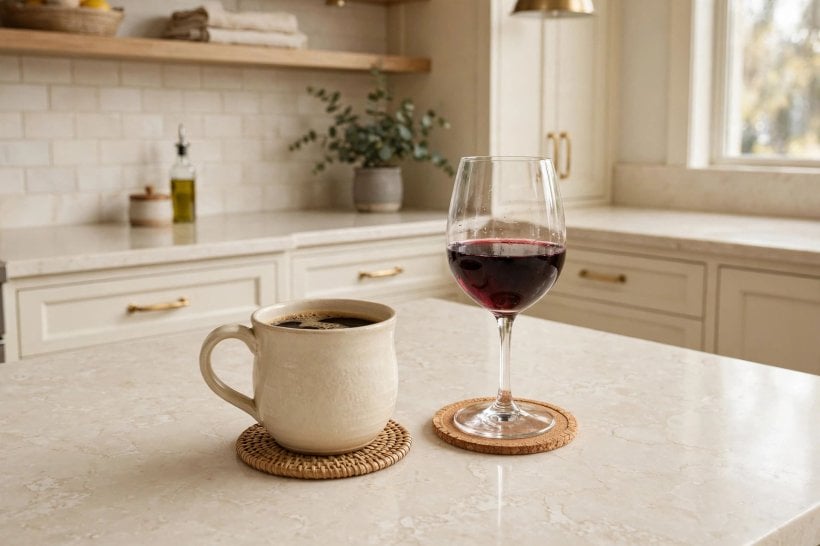
Quartz has a deserved reputation for stain resistance, and in everyday terms it holds up: coffee, wine, oil and fruit juice wiped up within a reasonable time normally leave nothing behind, precisely because the non-porous surface gives them nowhere to soak into. The problems start when the words “stain resistant” are heard as “stain proof” — and strong pigments are left sitting.
The repeat offenders in owner accounts are familiar kitchen substances with serious colour in them: turmeric and curry pastes, red wine left overnight, beetroot, dark berries, tea and coffee rings under a forgotten mug, and marker or ink transferred from packaging. Left long enough, pigments can mark the resin-rich surface layer, and light-coloured quartz shows any such mark far more cruelly than a dark or patterned slab. A second, quieter category is chemical discolouration: harsh or unsuitable cleaners can dull or yellow the finish over time, which is a care mistake rather than a spill — section 8 covers it in full.
The prompt-wipe habit
Prevention is one habit: wipe strong colours up when you see them, not at the end of the day. A soft cloth, warm water and a mild detergent handle routine spills; deal with a turmeric splash the way you would on a white shirt — immediately. If a faint mark does remain, do not escalate straight to aggressive chemicals or abrasive pads, which can make a small colour problem into a larger finish problem. Follow the care guidance supplied with your slab first, and ask your fabricator what they recommend for pigment marks on your specific colour before experimenting. In a compact layout like those in these tiny house kitchen floor plans, where the worktop is also the dining table and desk, that prompt-wipe habit matters even more, simply because the surface sees more kinds of use.
5. Chips, Cracks and Edges: Hard Does Not Mean Unbreakable
Quartz is hard, and hardness is a double-edged quality. The surface resists the scratches and knife-adjacent wear of daily prep very well, but a hard, rigid material does not flex or dent to absorb a blow — it chips. The vulnerable places are predictable: exposed edges, the corners of an island, and the thin bridges of material around sink and hob cut-outs, where a heavy cast-iron pan swinging against the rim or a dropped bottle landing on an edge concentrates force on very little stone.
Edge profiles are a practical choice
You can design much of this risk down before fabrication. A slightly rounded or bevelled edge profile sheds knocks far better than a sharp square arris, which presents a thin, brittle line to every passing pan. Ask the fabricator to ease edges around sink cut-outs as well as the outer perimeter, and think twice about very fine, delicate edge details on a busy family island — they look refined in a showroom and live dangerously in a real kitchen. Support matters too: long overhangs and cut-out areas need the support your fabricator specifies, because a crack that starts at an unsupported cut-out corner is a structural failure, not bad luck.
On repairs, set expectations honestly. A small edge chip can often be filled with a colour-matched resin by a professional, and a good fill can be hard to spot from standing height — but “filled” is not “never happened”, and larger cracks are not realistically repairable to invisible. That repair limit is one of the fair differences from natural stone in section 9, and one more reason the edge and support decisions at buying time carry so much weight.
6. Seams and Pattern Consistency: Managing Expectations
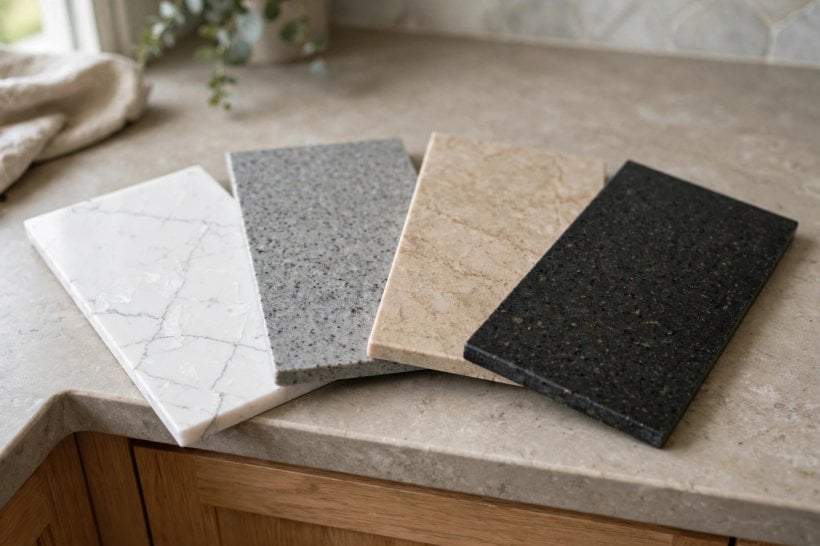
Any worktop run longer than a single slab needs a seam, and quartz seams are a workmanship story as much as a material one. A well-made seam is tight, level and colour-matched, and on a plain or finely patterned quartz it can be genuinely discreet. What a seam cannot do is make pattern disappear: on boldly veined, marble-look designs, the veining stops and restarts at the join, and the eye catches that interruption even when the joint itself is excellent.
Manage this at the planning stage, not on fitting day. Ask where seams will fall and argue for placement where the eye rarely rests — away from the centre of an island, away from the main prep zone, and ideally not running through a cut-out’s weakest point. For veined designs, ask whether the fabricator can book-match or at least sequence the pattern across the seam so the flow looks intentional rather than accidental. And calibrate expectations by colour: plain and mid-tone patterns hide seams best; dramatic veining shows them most. If a seamless sweep of marble drama is the whole point of your design, be aware you are asking quartz to imitate the one thing natural slabs — for all their variability, as explored in innovative kitchen ideas for elevating your home — sometimes do better. On consistency itself, quartz deserves clear credit: slab-to-slab colour control is one of its real strengths, and the sample-to-installation match is far more predictable than with quarried stone.
7. Sun, Fading and Outdoor Use: An Indoor Material
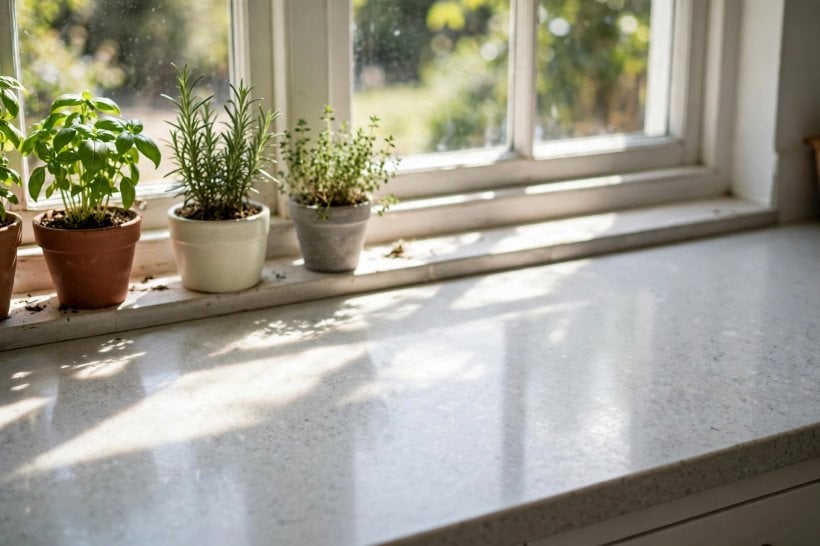
The resin binder explains this limit too. Prolonged, strong direct sunlight can fade or yellow quartz over time, with lighter colours and resin-rich finishes generally showing change most noticeably. In most kitchens this is a non-issue — ordinary window light at ordinary angles does not trouble the surface — but it deserves thought in the specific cases where sun is neither ordinary nor brief: a worktop run directly under a large south-facing expanse of glass, a sunroom kitchen, or a bright conservatory-style extension where the surface sits in direct sun for hours daily.
The outdoor conclusion is firmer: quartz is an indoor material. An outdoor kitchen exposes the surface to exactly the sustained ultraviolet load, temperature swings and weather it is least suited to, and fading or discolouration there should be expected rather than treated as a defect. If you are planning an outdoor cooking area, choose a surface specified for exterior use and let quartz do the job it is good at indoors. The same indoor-outdoor honesty applies to the small-space layouts in kitchen design for tiny houses and small spaces, where a single surface often has to serve in strong window light — in that setting, a mid-tone or patterned colour is a more forgiving choice than a brilliant white under constant sun.
If strong sun is unavoidable indoors, small mitigations help: window film or blinds that cut the harshest midday exposure, and choosing a colour and pattern that will age gracefully rather than showing every tonal shift. Raise the sun question with your fabricator before ordering — where the slab will sit is part of the specification, not small talk.
8. Cleaning and Care Mistakes: Gentle Is the Whole Routine
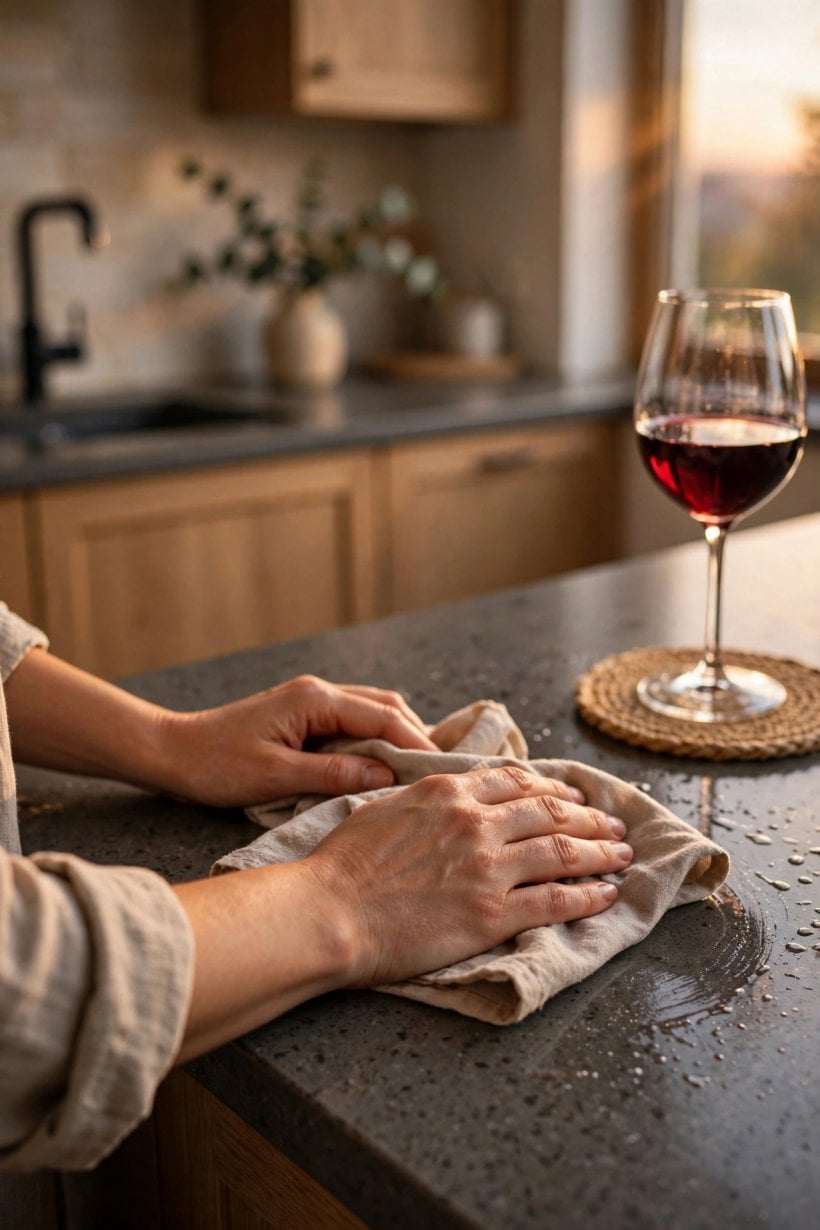
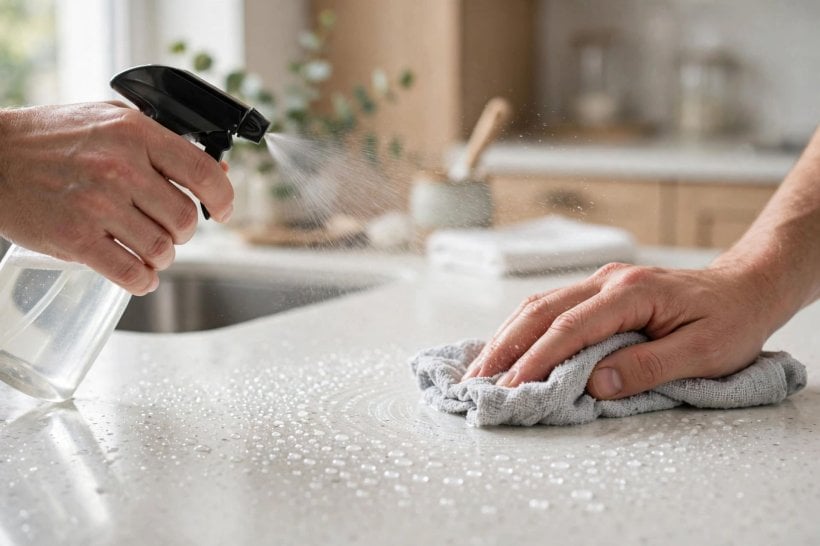
Daily care for quartz is genuinely easy — which is why most care damage comes from owners doing more, not less. The routine the surface actually wants is short: wipe with a soft cloth or non-abrasive sponge, warm water and a mild detergent; rinse away soapy residue so it does not dry to a film; dry with a soft cloth if you want the finish at its best. That is the entire ritual. There is no sealing schedule, no special feeding, no periodic treatment — a real and lasting advantage over several alternatives.
The mistakes are equally consistent. Abrasive pads and scouring powders can dull the polished finish in the exact spot you scrubbed hardest. Harsh chemicals — strong alkalis, oven cleaners, paint removers, aggressive solvents and highly acidic descalers left sitting — can attack the resin and discolour or etch the surface in ways that look like stains but are actually finish damage. Hot-plus-chemical combinations, like degreasing a still-warm area around the hob, compound the risk. And the classic slow mistake is letting a strongly pigmented or greasy spill dry in place day after day, then attacking the dried result with the harshest product under the sink.
Build the gentle routine into the kitchen itself: a cloth that lives by the sink, trivets that live by the hob, and one mild cleaner you trust rather than a cupboard of escalating chemicals. Households aiming for simpler, lower-chemical routines — the thinking behind zero-waste kitchen systems for minimalist homes — tend to find quartz’s short care list fits naturally. When in doubt about any product, test it in an inconspicuous spot or check the care guidance supplied with your slab; the surface rewards restraint.
9. How Quartz Compares — and the Fabricator Checks Before You Buy
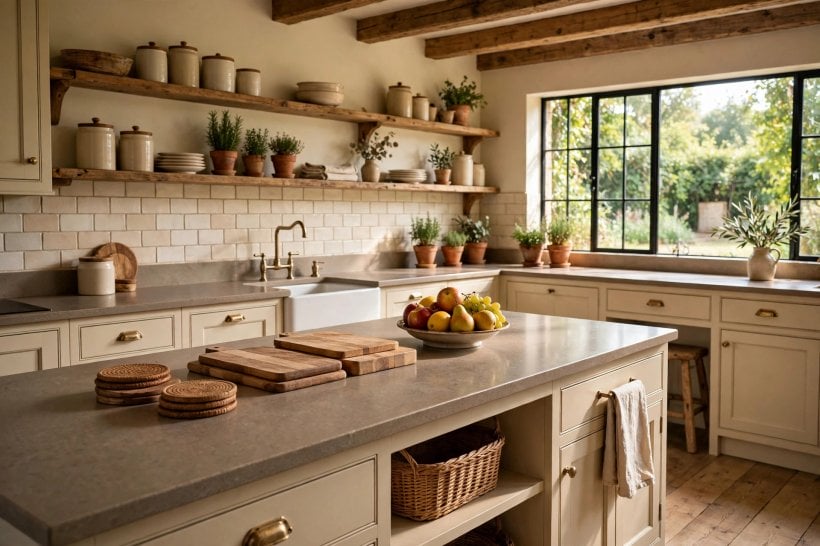
Honest comparison is where a buying decision gets made, so here is quartz against the usual alternatives on the axes this guide has covered. Granite handles hot pans with far more confidence and can often be repaired or re-polished by a stone professional, and every slab is unique — but it is porous, needs periodic sealing, and its natural patterning varies in ways you cannot fully control. Marble is the beauty benchmark and stays cool for pastry work, but it is softer, stains and etches readily with acids like lemon and vinegar, and asks for tolerant ownership. Laminate costs far less, is light and forgiving to install, and modern versions look convincing — but it can scorch, cut and swell at damaged joints, and repairs usually mean replacement. Solid surface materials offer seamless joins and genuinely renewable, sandable repairs, but are softer than quartz and less heat-tolerant. Quartz sits in a defensible middle: more stain-forgiving and consistent than the natural stones, harder and more substantial than laminate or solid surface, weaker than granite on heat and weaker than solid surface on repair.
Questions to ask your fabricator
Take these into the showroom and get the answers in writing. Heat guidance: what does the maker of this specific slab advise about hot pans, and is a trivet rule part of the written care terms? Warranty terms in general: what does the warranty cover — surface defects, staining, installation — how long does it run, and what actions or products would void it? Edge profiles: which profile do they recommend for your household’s use, and will cut-out edges be eased as well as outer edges? Seam placement: where exactly will seams fall, can the pattern be sequenced across them, and can you approve the plan before cutting? Sun exposure: given where your worktop will sit, is this colour a sensible choice? Care specifics: which cleaners do they endorse for this slab, and what do they advise for a pigment mark? A fabricator who answers all six clearly is telling you something good about the installation you will get — the surface in a finished kitchen like those in tiny house kitchen ideas that make space feel bigger is only ever as good as the planning behind it.
10. Verdict: Who Should Pick Quartz, and Who Should Pick Something Else
Pick quartz if you want a consistent, predictable surface whose sample matches your kitchen; you value a short care routine with no sealing; you cook properly but can make trivets and prompt wiping genuine habits; your kitchen is indoors with ordinary light; and you prefer a calm, uniform look — or a controlled pattern — over natural drama. For most busy households, and especially for compact kitchens where one surface works hard in full view, that is a strong and honest fit.
Pick something else if hot pans land directly on your worktop as a matter of settled habit — granite’s heat confidence suits you better. If you dream of dramatic natural veining flowing unbroken across a long run, look at real stone with open eyes about its sealing and staining care. If invisible repairability matters above all, solid surface’s renewable finish deserves a serious look. If the budget is the binding constraint, a good laminate chosen honestly will serve better than a quartz bought resentfully. And if the worktop is headed outdoors, rule quartz out entirely and choose an exterior-rated surface. None of these verdicts is a criticism of quartz — each is simply the material’s attribute network, from section 2, meeting a different household’s real life.
Final Considerations
Quartz is neither the carefree miracle of the brochure nor the regret purchase of the angriest forum thread. It is an engineered surface with a clear bargain: factory consistency, a non-porous face and no sealing ritual, in exchange for respecting its resin binder — trivets for heat, prompt wiping for strong pigments, eased edges against chips, sensible seam planning and an indoor life away from relentless sun.
Make that bargain knowingly and it is a very good one. See the actual slab, agree the seams and edges before cutting, get the heat, warranty and care answers in writing, and choose the colour for the light your kitchen really has. Owners who do those few things rarely join the regret threads — they are too busy enjoying a surface that asks little and gives a consistent, good-looking kitchen in return.


0 Comments