

A cactus garden asks for very little and gives back shape, colour and quiet drama in every season. Golden barrels catch the morning light, tall columns draw the eye upward, and a simple gravel path ties the whole scene together.
This guide walks through planning, planting, paths, beds and seasonal care for a cactus landscape, so you can build a garden that looks settled from the first year and grows more characterful with time.
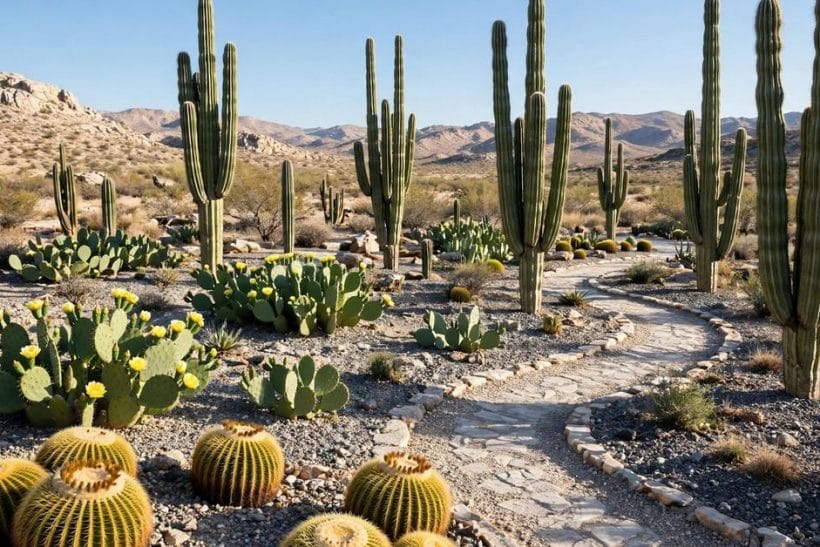
1. Planning a Cactus Landscape That Fits the Plot
Every good cactus garden starts with a walk around the plot rather than a shopping list. Notice where the sun falls through the day, where rain runs after a storm, and which corners stay damp long after the rest of the ground has dried. Cactus plants generally prefer the brightest, most open part of the garden, and they tend to struggle where water lingers around their roots. A spot that dries quickly after rain is worth more than a spot that merely looks pretty on a plan.
Sketch the garden in broad shapes before you think about individual plants. Mark the path first, then the beds, then the places where a tall plant could anchor a view without blocking a window or crowding a walkway. Leave generous gaps between beds and paths, because spiny plants need room for safe passage, and a garden that is comfortable to walk through is a garden that gets enjoyed. Think about how the garden will look from indoors too, since a cactus garden often earns its keep as a view from a window as much as a place to stroll.
| At a Glance | Cactus Garden Basics |
|---|---|
| Best setting | Bright, open and quick to dry after rain |
| Sunlight | Full sun for most of the day where possible |
| Ground | Loose, gritty and free-draining |
| Watering | Little and seldom, with long dry spells between |
| Paths | Firm, level and wide enough to pass safely |
| Seasonal rhythm | Light, regular tidying rather than heavy work |

Consider the neighbours of the bed as well. Desert southwest plants can offer ideas for companions that share a love of sun and sharp drainage, while softer foliage nearby can set off the bold shapes of cactus plants without competing for the same ground. Keep the palette simple at first: a few repeated forms often look calmer and more deliberate than a crowded collection of one of everything. You can always add a plant later, but removing an overgrown specimen from a tight bed is rarely a pleasure.
2. Choosing Plants for Shape, Height and Season
Shape is the real design tool in a cactus garden. Round barrel forms sit low and solid, like punctuation marks in gravel. Tall columns rise like green pillars and give a young garden instant structure. Flat-padded forms spread sideways and soften the edges of a bed, while small clustering forms fill gaps and reward close looking. Mixing these shapes, rather than collecting only one kind, is what makes a bed feel like a composed garden instead of a holding area.
Height matters as much as shape. Place the tallest plants where they will not shade smaller neighbours out of the sun, and keep spiny giants well back from paths, seating and places where children play. Low, spreading forms belong near path edges, where their detail can be admired without anyone brushing against spines. Think in layers: a tall backdrop, a middle band of medium forms, and a low foreground that leads the eye along the path.
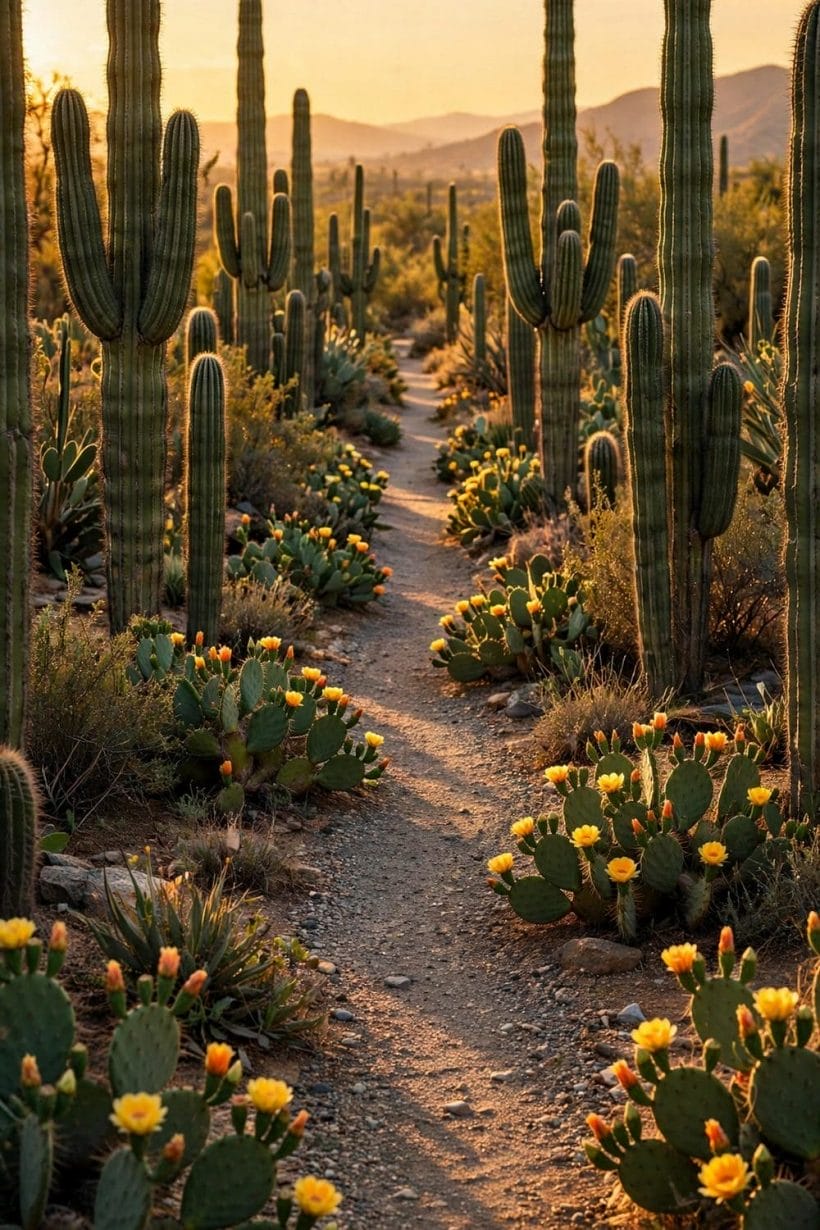
Season adds another layer of interest. Many cactus plants flower, often briefly and vividly, and the flowering season can transform a quiet gravel garden into a showpiece for a few weeks. Foliage colour varies too, from blue-green to deep green, and gravel, stone and pottery can echo those tones. Choose plants that suit your climate first and your colour scheme second, and check local advice about which forms are known to grow well outdoors in your area, since a plant that thrives in one region may need winter shelter in another.
3. Preparing the Ground for Drainage
Drainage is the single most important groundwork decision in a cactus garden, and it deserves more attention than any other preparation step. Cactus roots generally prefer ground that lets water pass through freely rather than holding it. Heavy, sticky soil that stays wet can spell trouble, so the goal is a loose, gritty growing medium with plenty of air around the roots. In many gardens this means working coarse grit and gravel into the top layer of the bed and shaping the surface so water runs away from plant crowns rather than pooling around them.
Raised beds are a practical answer where the natural soil is heavy or the plot sits low. Even a gentle rise helps water move away, and a low stone or timber edge keeps the gritty mix in place while giving the bed a finished outline. If you are building on a slope, work with the fall of the land rather than against it, and leave a clear route for runoff that does not wash gravel onto paths. Where the ground is already light and sandy, less work may be needed, and a simple check after rain will tell you how quickly the surface dries.
Before planting, take time to clear the bed of weeds and old roots, and firm the surface lightly so plants sit steadily. A top dressing of gravel, added after planting, can finish the look, keep the surface tidy, and help the ground dry between waterings. For bed-building ideas in general, raised garden bed ideas show how a defined edge and a lifted profile can shape a planting area, whatever the plants inside it may be.
4. Planting Cactus Plants Safely, Step by Step
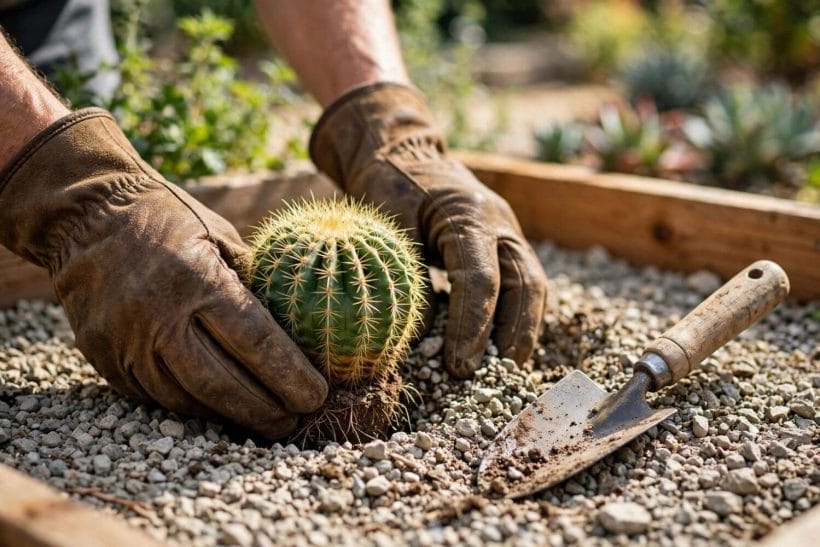
Planting cactus plants well is mostly a matter of handling them with respect and giving them a steady start. Always wear thick gloves, and for larger specimens use folded newspaper, towels or purpose-made handling aids to hold the plant without pressing spines into skin. Spines and fine bristles can be irritating, so long sleeves and eye protection are sensible when moving bigger plants, and children and pets are best kept at a distance until the plant is settled.
Set each plant at the same depth it grew before, neither buried deeper nor left perched above the surface, and firm the gritty mix gently around the roots so the plant stands upright without rocking. Space plants with their mature size in mind rather than their nursery size: a small plant in a pot may spread widely with time, and a bed planted too tightly soon becomes a thicket that is hard to tend. Step back often while you work and check the arrangement from the path, since a bed is usually viewed from one or two sides more than from above.
After planting, hold off on watering for a short while so any disturbed roots can settle, then water lightly and let the ground dry out again before the next watering. New plants often need a little more attention in their first season while roots establish, but the long-term habit should stay restrained: cactus plants are generally adapted to dry spells, and generous watering is more often a problem than a help. Watch how each plant responds through its first growing season, and adjust gently rather than changing everything at once.
5. Building Paths That Suit a Dry Garden
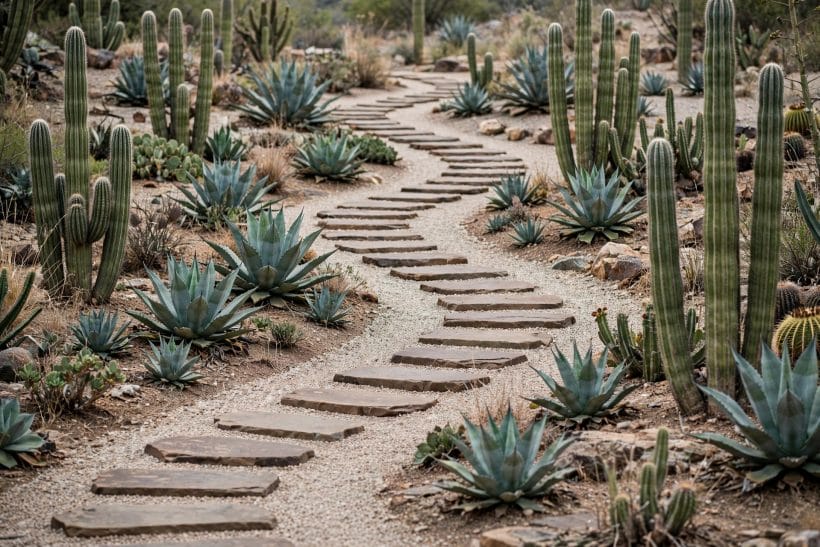
Paths do more work in a cactus garden than in most gardens, because they are the safe route through a spiny landscape. A good path is firm underfoot, level enough to walk without watching every step, and wide enough that a visitor never has to brush past a plant to pass. Stepping stones set in gravel are a classic answer: they give solid footing, let rain drain between them, and echo the stony character of the beds. Poured or paved surfaces suit a more formal garden, while a simple compacted gravel walk can suit a relaxed, naturalistic design.
Shape the path to the garden, not the other way around. A gentle curve slows the walk and opens up new views around each bend, while a straight path suits a small courtyard or a formal front garden. Keep the path clear of overhanging spines by trimming back growth that leans over the edge, and check the surface after storms for washed gravel or lifted stones. Edging, whether stone, timber or metal, keeps gravel where it belongs and gives the path a crisp line against the beds.
Materials should feel at home beside cactus plants. Warm-toned stone, pale gravel and weathered timber all sit comfortably in a dry garden, while very smooth or glossy surfaces can look out of place and may become slippery when wet. For walkway inspiration in general, paver walkways and flagstone walkway ideas show how different stones and laying patterns change the feel of a garden route, from rustic to refined.
6. Shaping Beds and Borders with Stone and Gravel
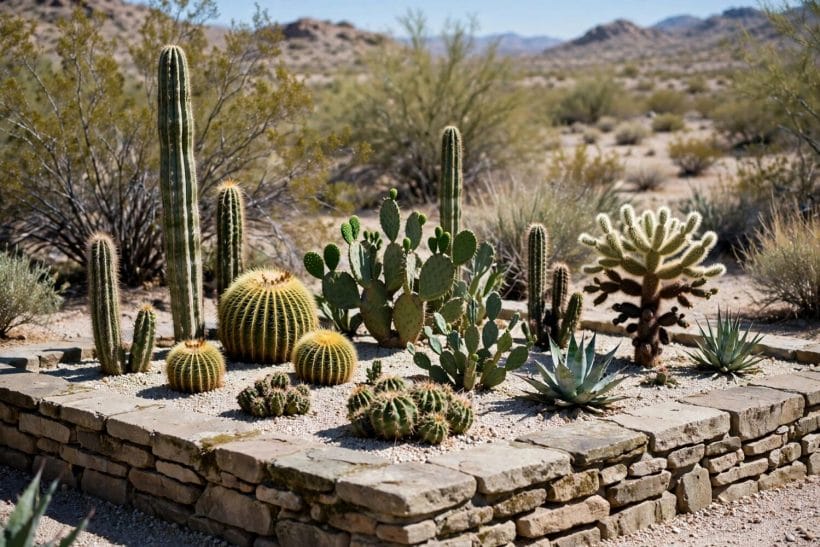
Stone and gravel are the quiet heroes of a cactus garden. They frame the plants, keep the surface tidy, and carry the design through seasons when few plants are in flower. A low stone wall or a simple row of boulders can edge a bed, hold back a raised profile, and give the garden a sense of permanence. Larger rocks, placed as if they belong rather than as decoration, can anchor a composition and give tall plants something to play against.
Gravel does several jobs at once. As a surface it suppresses weeds, keeps mud off paths, and helps the ground dry between waterings. As a design material it unifies beds of different shapes, letting the eye travel across the garden without interruption. Choose a gravel tone that complements the house and the plants: pale gravel brightens a shady corner and makes green forms stand out, while warmer tones suit terracotta pots and timber edges. Keep the layer even and top it up occasionally where foot traffic or rain has thinned it.
Borders deserve the same care as the beds themselves. A clean edge between gravel and lawn, or between a bed and a path, makes the whole garden look intentional, and it makes maintenance easier too, since weeds and stray gravel have a clear line to respect. Gravel landscaping ideas in general can help you picture how stone surfaces, edging and planting work together, and stone patios show how a paved sitting area can anchor the garden beside the beds.
7. Watering with Restraint Through the Year
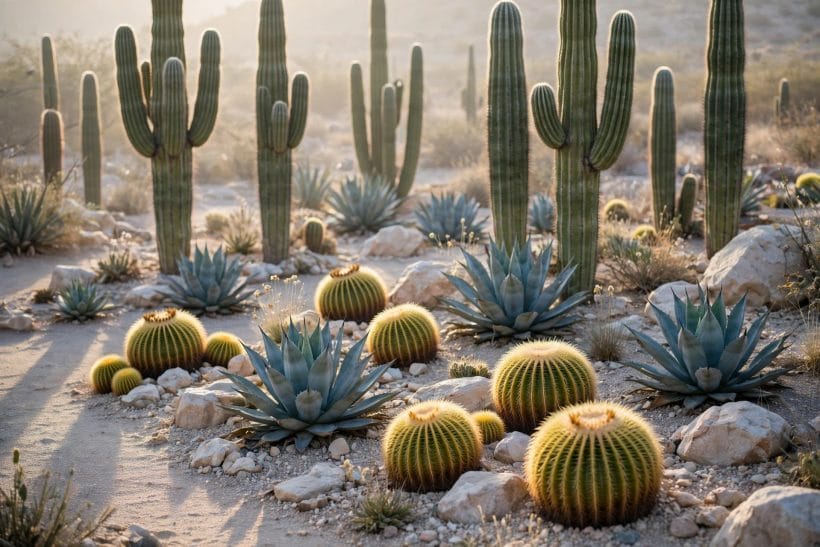
Watering a cactus garden is an exercise in restraint, and the most common mistake is kindness in excess. Most cactus plants are built for dry spells, storing moisture in their stems and slowing their growth when water is scarce. A deep, occasional watering that soaks the root zone and then lets the ground dry thoroughly is generally a better pattern than frequent light sprinkling, which wets only the surface and encourages shallow roots. Always check the ground before watering: if it still feels damp below the surface, wait.
The rhythm of watering should follow the seasons rather than the calendar. During active growth in warm weather, plants may appreciate water more often, while in cool or dormant periods they usually need very little. Rain changes the picture too, and a wet spell is a reason to put the watering can away rather than to stick to a routine. Pots dry faster than beds, and small pots faster than large ones, so container plants often need checking more often even though they need the same restrained approach.
Water at the base of the plant where possible, keeping stems as dry as practical, and water in the cooler part of the day so moisture reaches the roots before the sun dries the surface. Watch the plants rather than the clock: a plant that looks plump and steady is usually fine, while one that looks soft or discoloured may be telling you something about drainage or watering rather than thirst alone. When in doubt, waiting a day or two longer is often the safer choice, and local garden advice can help you judge what suits your climate.
8. Seasonal Care: Spring, Summer, Autumn and Winter
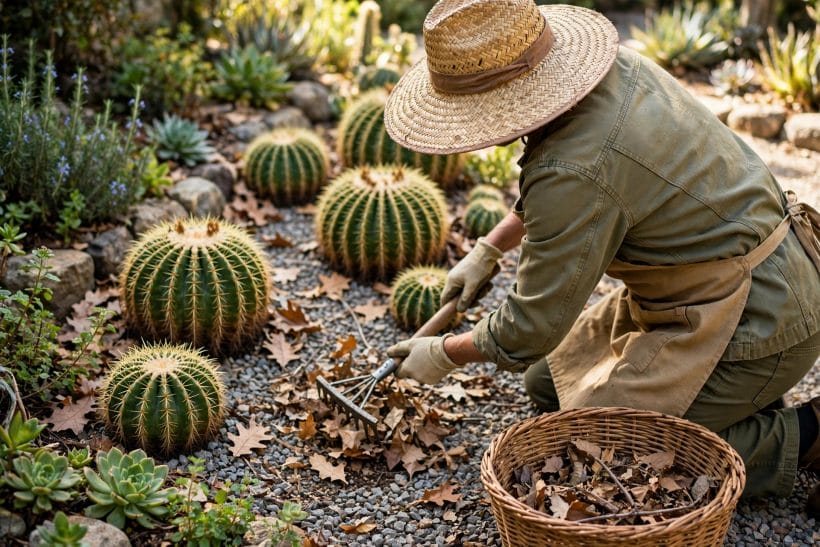
Spring is the season of waking up. As days lengthen and growth resumes, walk the garden and note anything that winter left behind: fallen leaves caught in gravel, stones shifted by frost, or plants leaning after storms. Clear debris gently, top up gravel where it has thinned, and check that paths are level and safe. Spring is also a good time to plan any new planting, since plants set out as warmth returns have a full growing season to establish before cooler weather.
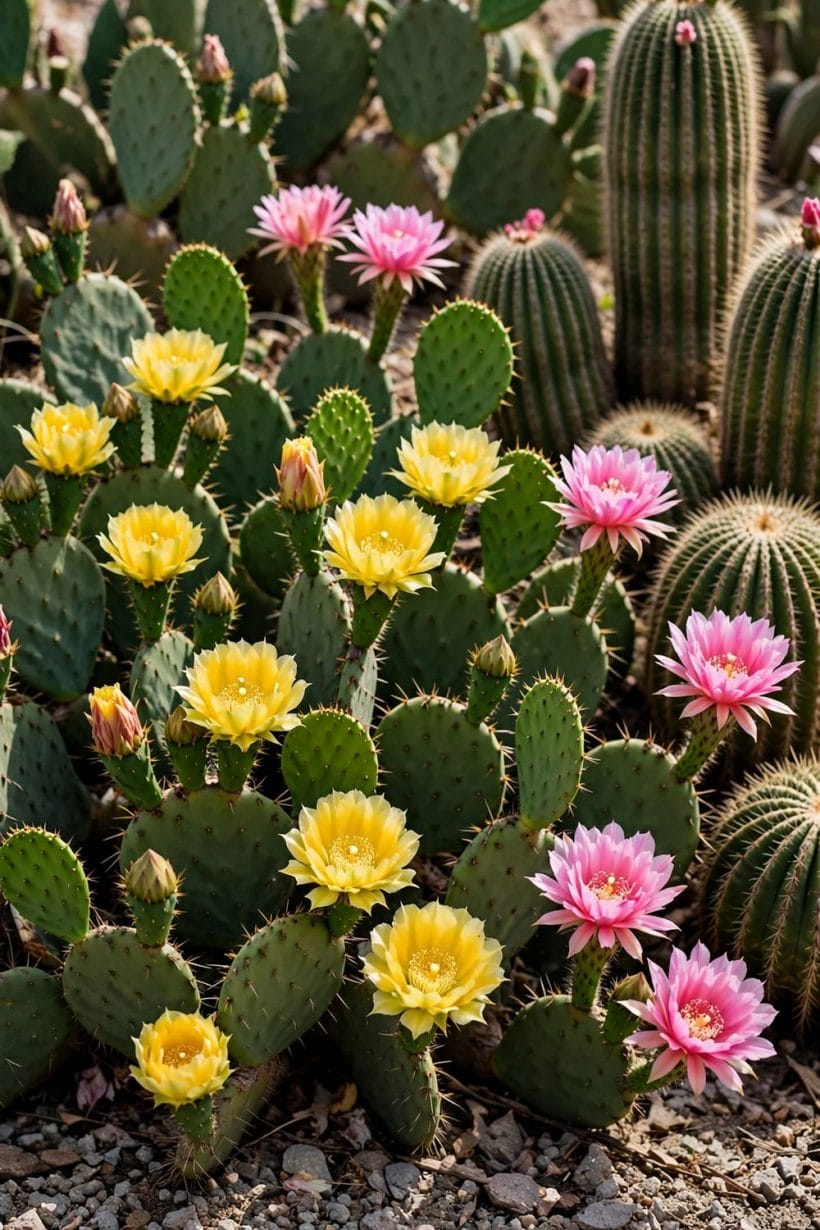
Summer is the season the cactus garden enjoys most, and care is usually light. Keep paths clear, watch watering with the restraint described above, and enjoy the flowering season, which can be brief and spectacular. Shade is rarely needed for established plants in a sunny garden, but newly planted specimens may appreciate a little shelter during extreme heat until their roots settle. Remove spent flowers and any damaged growth with gloved hands, keeping tools clean and cuts tidy.
Autumn is the season to prepare. Reduce watering as growth slows, clear fallen leaves from beds before they mat down over gravel, and check drainage routes so winter rain can run away freely. In cooler regions, autumn is the time to think about winter shelter for tender plants, whether that means moving pots to a sheltered spot or covering plants in the ground during cold snaps, following local advice for your area. A little preparation in autumn often saves difficult rescue work later.
Winter care depends heavily on climate. In mild regions the garden may need little more than occasional tidying and a watchful eye after storms. Where frosts are regular, tender plants need protection, and wet cold is generally harder on cactus plants than dry cold, so keeping rain off vulnerable specimens matters as much as keeping frost off them. Avoid working the garden when the ground is frozen or waterlogged, and save heavier jobs for a dry, mild spell.
9. Keeping Paths, Beds and Plants Tidy
A cactus garden stays beautiful with small, regular attention rather than occasional grand efforts. A short walk through the garden every week or two is enough to catch most jobs while they are still small: a weed seedling in gravel, a stone shifted onto a path, a fallen leaf settling against a plant crown. Raking gravel lightly restores an even surface, and sweeping paths keeps footing safe and the garden looking cared for.
Pruning in a cactus garden is usually minimal. Remove damaged or dead growth with clean, sharp tools and gloved hands, and take care not to leave cut surfaces where water can sit. Some plants produce offsets or side shoots that can be left to form natural clusters or removed to keep a specimen tidy; either choice can look good, and the decision is mostly a matter of the shape you want. Keep the workspace tidy as you go, since spines dropped on a path are a hazard for bare feet and paws alike.
Watch for signs that something needs attention, without expecting trouble. Plants that lean, discolour or soften may be reacting to drainage, watering or cold, and the remedy is often a simple adjustment to one of those factors rather than a dramatic intervention. Note what you observe through the seasons, since a garden diary, even a few lines a month, can reveal patterns that a single glance misses. Over time you will learn which plants thrive with almost no attention in your garden and which appreciate a little extra care.
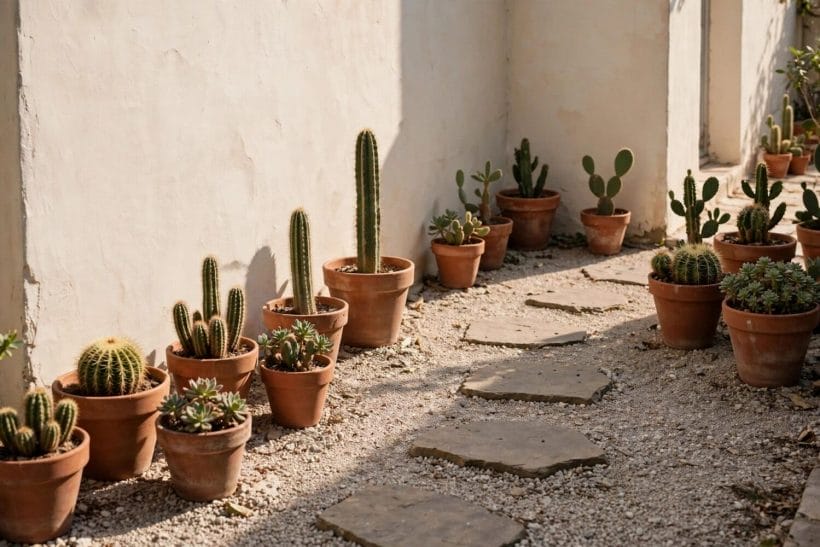
10. Designing Small Cactus Gardens for Patios and Courtyards
Small spaces suit cactus gardens remarkably well, because the plants themselves are sculptural and gravel is a forgiving ground cover. A courtyard or patio garden can be built almost entirely in pots, which brings welcome flexibility: pots can be moved for winter shelter, rearranged as plants grow, and grouped to form a composition that changes through the year. Choose pots with drainage holes and a free-draining mix, and raise pots slightly off the ground where possible so water never sits beneath them.
Composition matters even more at small scale. A single tall specimen in a generous pot can anchor a corner, while a group of smaller pots at different heights creates a layered display. Repeat a pot colour or material to unify the group, and leave enough space between pots for safe watering and tending. A small gravel bed beside the pots can tie the display together and give the eye a calm surface to rest on.
Courtyard gardens also benefit from contrast planting. Purple-leaf shrubs nearby can set off green cactus forms with a different colour and texture, though they belong in their own soil and watering regime rather than in the cactus bed itself. A bench, a stone seat or a simple water feature nearby can turn a planting display into a place to sit, and evening light on cactus forms is often the best show of the day. Keep the design simple, let the plants carry the interest, and resist the urge to fill every corner: breathing room is part of the beauty.
Final Considerations
A cactus garden rewards patience more than effort. The boldest gardens often start simply, with good drainage, a clear path and a few well-chosen plants, and grow richer as the gardener learns what thrives in that particular patch of ground. Resist the temptation to overwater, overcrowd or overwork the garden, and let the plants settle into their shapes at their own pace.
Before you begin, check local advice about which plants suit outdoor growing in your climate, and plan for winter shelter where frosts are a regular feature. Walk the finished garden in different lights and seasons, adjust spacing and gravel as needed, and enjoy the quiet structure that cactus plants bring to a garden. A well-planned cactus garden is not a shortcut or a novelty: it is a lasting, low-key landscape that asks little and offers form, texture and seasonal surprise in return.


0 Comments