

The bedrooms are comfortable, the living room is chilly, and the heating keeps switching off early — because the thermostat sits in a shaft of afternoon sun and thinks the whole house is warm. Sound familiar?
This guide weighs the real pros and cons of relocating a thermostat, shows where it should sense the air instead, and explains when a remote sensor solves the problem without moving anything at all.
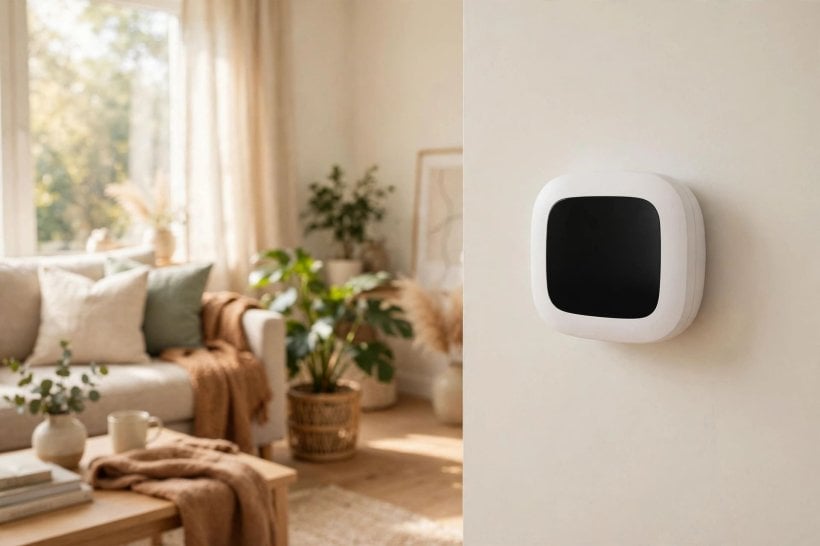
1. Moving a Thermostat to a Different Room at a Glance
A thermostat is the temperature sensor and control point for a heating and cooling system: it reads the air immediately around itself, compares that reading with your set temperature, and calls for heat or cooling until the air at its own location — not the air in your bedroom, kitchen or favourite chair — reaches the target. That is why moving a thermostat to a different room changes comfort so much, and why the full decision involves its placement, the rooms it represents, the wiring behind the wall, the type of system it controls, whether the home is single-zone or zoned, the alternatives offered by wireless and remote-sensor models, the practical work of moving and patching, and the checks that prove the new location is actually reading the home honestly.
| Why do people move a thermostat? | Usually because the original spot misreads the home — sun, draughts, a heat source nearby, or a room nobody really lives in. |
| What is the main benefit? | More honest readings, so the system runs for the rooms you actually use and stops short-cycling or overshooting. |
| What is the main drawback? | The wiring. If no suitable cable reaches the new wall, the move becomes a fishing-wires job rather than a simple swap. |
| Where should it go? | On an interior wall in the main living zone, away from sun, kitchens, lamps, radiators and draughts, at a comfortable standing height. |
| Is there an easier alternative? | Often, yes — a remote-sensor or wireless thermostat can sense the right room while the main unit stays where it is. |
At a glance: a thermostat only knows the air around itself — move the sensing point to honest air, or use a sensor to do it for you.
2. Why People Move a Thermostat in the First Place
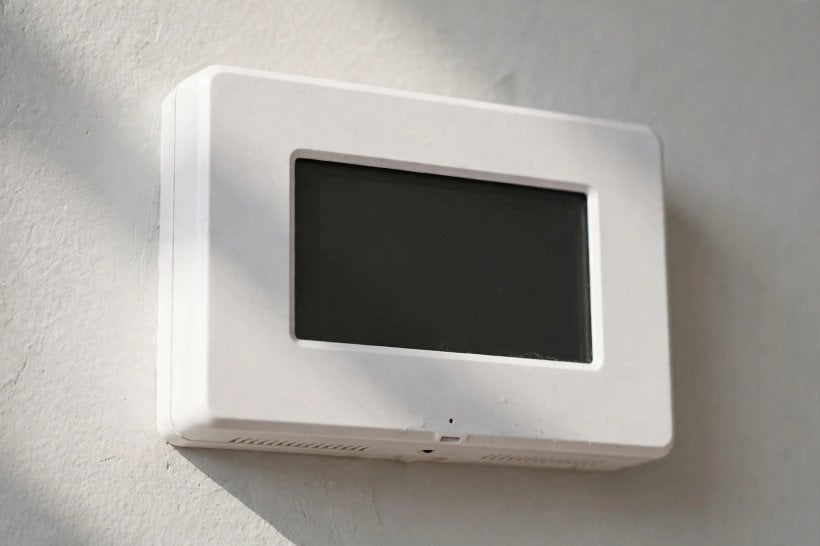
Almost nobody relocates a thermostat for fun. They do it because the existing location keeps lying to the system, and the household has been compensating for that lie — turning the setting up and down, overheating one room to warm another, or arguing about whether the house is actually cold.
Direct sun and nearby heat
The classic culprit is sunlight. A thermostat that catches afternoon sun reads several degrees warmer than the room around it, so the heating shuts down early in winter or the cooling runs far longer than needed in summer. The same distortion comes from anything warm nearby: a radiator or register blowing straight at it, a lamp, a television, an oven-heavy kitchen wall, or even a fireplace in the same room. The unit is not faulty — it is faithfully reporting a pocket of air that exists nowhere else in the home.
Draughts, cold spots and the wrong room
Draughts do the opposite damage. A thermostat in a hallway beside a leaky front door, near a stairwell where cold air pools, or on a poorly insulated exterior wall reads colder than the living spaces, so the system over-runs and the occupied rooms overheat. Then there is the simplest problem of all: the thermostat lives in a room the household barely uses — a formal dining room, a spare hallway, a converted space — while the family actually spends its evenings somewhere else entirely. In a small home the effect is magnified, because one bad reading steers the whole system, a point that comes up again and again in guides to how to heat a tiny house, where every heating choice has to serve the whole living space at once.
3. The Pros: What a Better Location Actually Buys You

The first benefit is comfort where you live. When the thermostat senses the main living zone, the temperature you set is the temperature that room genuinely reaches. Evenings stop swinging between too warm and too cool, and the bedroom-versus-living-room compromise — overheating one space to rescue another — usually softens or disappears.
The second benefit is steadier system behaviour. A thermostat in honest air calls for heat or cooling in longer, calmer cycles instead of reacting to every shaft of sun or gust from the front door. Short, frantic cycling is hard on equipment and poor at holding an even temperature; a well-sited unit lets the system settle into the rhythm it was designed for. That steadiness matters whether the heat comes from a furnace, a heat pump or a system like those covered in installing a mini-split in a tiny house, where sensor placement shapes how the unit judges the room.
The third benefit is energy used for a reason. A system that stops when the living zone is truly satisfied, rather than when a sunlit hallway is satisfied, stops wasting runs nobody needed. No honest guide can promise a specific saving — that depends on how bad the old spot was — but removing a false reading removes a built-in waste. Finally, there is a quieter gain: trust. When the number on the wall matches how the room feels, people stop fiddling with the setting all day, and constant fiddling is itself a source of waste and wear.
4. The Cons: Costs in Kind, Disruption and New Risks
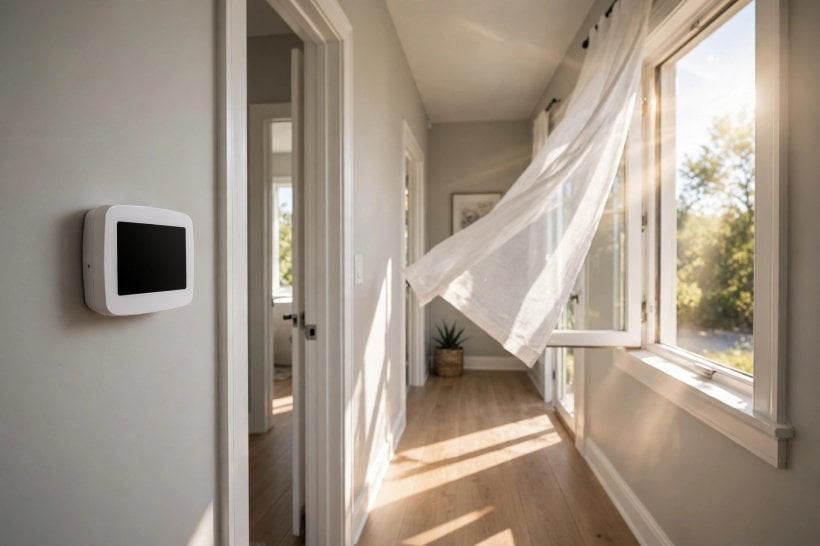
The honest counterweight starts with the wiring, not the unit. A thermostat is a small device, but it is tethered to the heating system by a cable inside the wall. If the new location is along the same wall or a short run away, the job may be modest. If it is across the house, the work becomes opening walls or ceilings, fishing cable through studs and insulation, and making good afterwards — a very different scale of disruption for the same small box.
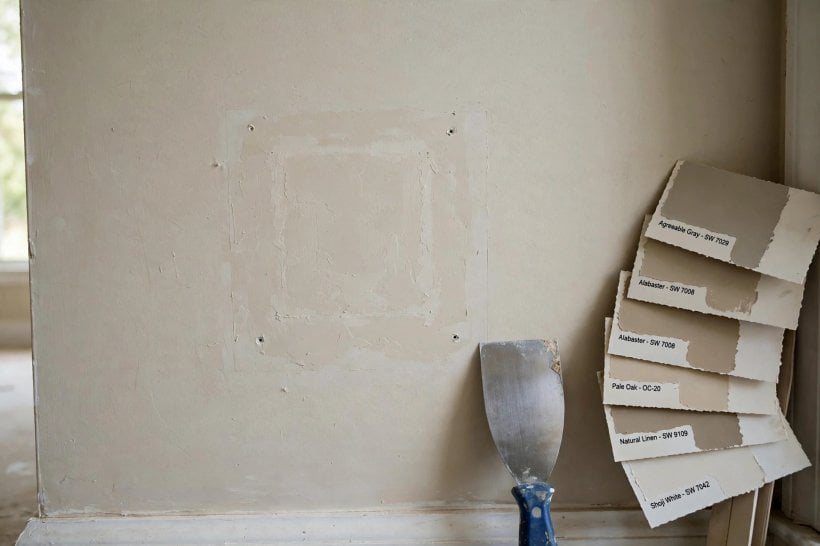
There is also the old hole and the new hole. The old position leaves a hole, screw marks and often a ghost rectangle of unfaded paint; the new position needs its own fixings and a clean, level mount. None of that is difficult, but it is real patching, filling and repainting, and on a rented home it may need a landlord’s permission before anyone picks up a drill.
The subtler risk is trading one bad spot for another. A rushed move can land the thermostat above a radiator, opposite a sunny window, or in the blast path of a supply vent — the same lie in a new accent. And in a multi-room home, one thermostat can only ever speak for one location: moving it improves the room it joins and can make an ignored room the new problem. That trade-off is worth naming before the work starts, especially in homes where, as how much energy a tiny house uses shows, heating and cooling dominate the energy picture and every control decision shows up in daily running costs.
5. Where a Thermostat Should Actually Sense
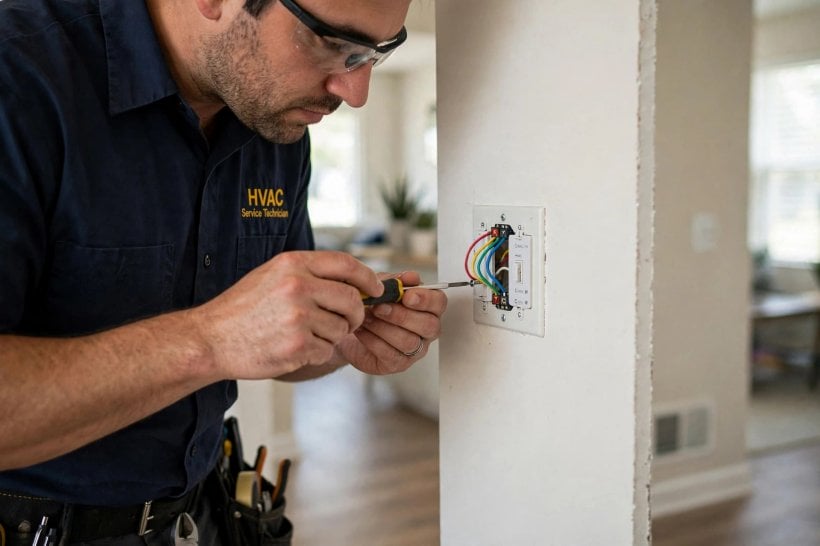
Good placement follows one principle: the thermostat should breathe the same air you breathe, in the room you live in most, under the most ordinary conditions in the house. Every rule below is just that principle applied.
The right wall
Choose an interior wall in the main living zone — the living room or the open-plan space where the household spends its waking hours. Interior walls hold a steadier temperature than exterior walls, which are cooled and heated by the weather outside and can drag the reading with them. Mount the unit at a comfortable standing height, roughly at eye level, where air circulates freely around it and furniture, curtains and doors cannot trap or block that air.
What to keep it away from
Keep clear of direct sunlight at any hour, kitchens and their cooking heat, lamps and televisions, radiators, registers and fireplaces, and draughts from doors, windows, stairwells and hallways that act as wind tunnels. Avoid bathrooms, where showers spike heat and humidity, and avoid hiding the unit behind a door that spends the day open against it. In compact homes these exclusions can rule out most walls — which is itself useful information, and one reason the ventilation and air-movement thinking in tiny house ventilation and HRV and ERV systems pairs naturally with thermostat thinking: still, representative air is what both systems need.
Before committing, stand at the candidate wall at different times of day. If sun patches cross it, if you feel a draught standing there, or if it warms noticeably when the oven is on, it is the wrong wall — however convenient the wiring would be.
6. Wiring Realities: The Part That Decides the Job

Everything about feasibility comes down to the cable. A conventional thermostat is wired back to the furnace, boiler or air handler with a multi-core, low-voltage cable. Moving the unit means that cable — every core of it — has to reach the new wall.
Extending and rerouting
Sometimes the existing cable has enough slack, or the new spot lies along the cable’s route, and the run can be extended or redirected with proper joints made in accessible places. Sometimes the route crosses finished ceilings, tiled walls or floors with no access, and a short move on paper becomes a long afternoon of fishing cable — or a job for surface trunking that not everyone wants to look at. Basements, crawl spaces and lofts, where present, are the friendly routes; solid floors and finished rooms above and below are the unfriendly ones. The same respect for what is already inside the walls applies to any electrical work in a small home, as the load and cable planning in tiny house electrical wiring for 30-amp versus 50-amp hookups makes clear.
The common wire question
Modern thermostats — especially smart models with screens and Wi-Fi — often need a common wire, usually called the C-wire, to power themselves continuously. Older installations sometimes lack one, because older thermostats ran on batteries or drew power in other ways. If a move is also an upgrade, check whether the cable at the new location will carry enough cores, or whether an extra core, an adapter at the equipment end, or a model that manages without one is part of the plan. Discovering a missing core after the wall is patched is the classic avoidable frustration of this whole project.
One safety note that is not optional: although thermostat wiring is low-voltage, the equipment it connects to is not. Power to the heating or cooling system should be switched off at the breaker before any wire is touched, and the connections at the equipment end belong to whoever is competent to work inside that equipment.
7. The Wireless and Remote-Sensor Alternative
Before moving anything, ask whether the problem is really the unit’s location — or only its sensing location. Many modern systems separate the two. A remote-sensor thermostat keeps its main unit and wiring exactly where they are, and takes its temperature reading — or part of it — from a small wireless sensor placed in the room that matters. A fully wireless thermostat goes further: the control unit itself communicates with the equipment by radio, so it can sit on the right wall, or even on a stand, with no cable run at all.
The advantages are obvious: no wall opening, no cable fishing, no patching, and the freedom to test a location before committing to it — live with the sensor in the living room for a week, try the bedroom, and let the house tell you which reading produces the comfort you wanted. Some systems can average several sensors or prioritise one room by time of day, which a single wired unit can never do.
The limits deserve equal honesty. Sensors run on batteries that eventually need changing, wireless links need to stay within reliable range of the main unit, and compatibility with your exact heating equipment has to be confirmed rather than assumed — particularly with older systems and with heat delivered by methods like those in underfloor heating in tiny houses, where control behaviour differs from forced-air systems. But where a compatible sensor system exists, it solves the sensing problem — the actual complaint in most homes — at a fraction of the disruption of a physical move.
8. The Move Itself: DIY or Professional, Step by Step in Outline

For a confident DIYer with a short, accessible cable run, this is a manageable job. For anyone facing a long run through finished walls, a missing common wire, or equipment they are unsure about, it is a sensible job to hand to a heating technician or electrician — the labour is mostly in the route, not the device, and a professional will have the cable-fishing tools and the experience of your exact system type.
The shape of the work
Whichever route you take, the sequence is the same. First, switch off power to the system and photograph the existing wiring before disconnecting anything — which wire lands on which terminal is information you cannot reconstruct from memory. Second, confirm the new location against the placement rules in section 5, at more than one time of day. Third, run or extend the cable to the new wall, keeping joints accessible and the cable protected where it passes through studs. Fourth, mount the new backplate level, connect each core to the matching terminal, and fit the unit. Fifth, patch the old position — fill the hole, sand, and repaint — ideally while you still remember exactly which paint is on that wall.
System type shapes the details. On a single-zone system, the moved thermostat speaks for the whole home, so its new room becomes the reference for every other room. On a zoned system, each zone has its own thermostat and its own job: moving one only changes that zone, and moving the wrong one — or moving one into a different zone’s territory — can set two controls arguing over the same air. Know which system you have before anyone drills, a distinction that matters just as much in cold-climate homes where, as tiny house living in cold climates describes, draughts and humidity already make honest temperature readings harder to get.
9. Checks After the Move: Proving the New Spot Works
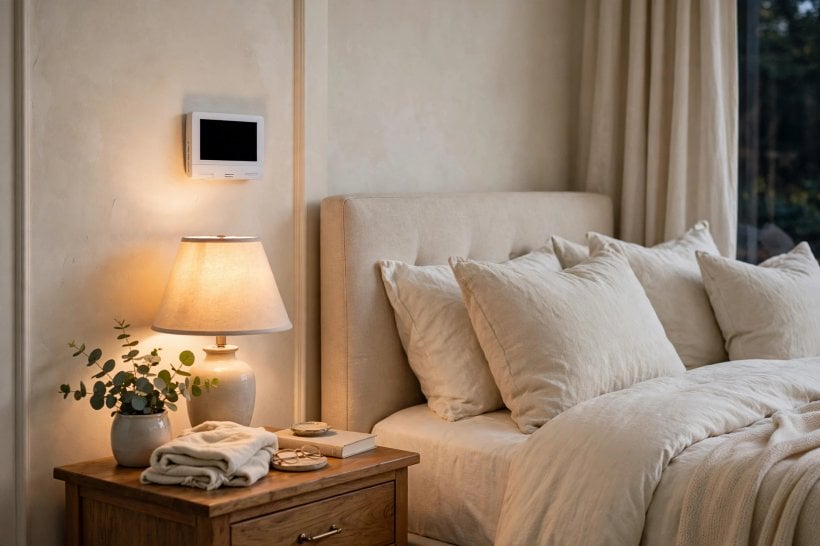
A relocation is not finished when the unit lights up. It is finished when the new location has proved, over several ordinary days, that it reads the home more honestly than the old one did.
Compare the reading. Place a simple room thermometer beside the thermostat for a day or two. The two will rarely agree to the last degree, but they should sit close and move together; a thermostat that climbs when the sun crosses the room while the thermometer barely stirs has moved from one sunny lie to another. Watch a full cycle. Set a normal temperature and observe: the system should run in steady cycles, reach the setting without overshooting far past it, and rest without immediately restarting. Check the other rooms. Walk the whole home at the end of a cycle — the goal was never one perfect room, it was a house where the reference room and the rest of the rooms are in a livable balance. Test both modes. If the system heats and cools, run each one briefly; a wiring slip can leave one mode working and the other silent, and it is far better discovered now than in the first heatwave or cold snap.
Finally, live with it before you judge it. One unusual day — a party filling the living room with warm bodies, a day of doors standing open — proves nothing either way. A week of ordinary life, with the setting left mostly alone, is the real test, and the households who pass it usually notice the same thing: they have stopped thinking about the thermostat at all.
10. When Not to Move It — and the Mistakes to Avoid
Sometimes the right answer is to leave the thermostat exactly where it is. Do not move it if the real problem is the system, not the sensor: rooms that are cold because of failed ductwork, blocked vents, poor insulation or an undersized system will still be cold, just cold with a better-located witness. Do not move it if the imbalance is between rooms on the same system and can be eased by adjusting vents or doors — a single thermostat can never give two rooms two different temperatures, wherever it hangs. And do not move it, yet, if a remote sensor would answer the same complaint this week, reversibly, while you learn what the house actually needs.
The common mistakes are all versions of rushing. Moving to the most convenient wall for wiring rather than the most honest wall for air. Forgetting the common-wire question until the new smart unit will not power up. Skipping the photograph of the old wiring. Patching the old hole before the new location has proved itself — live with the new spot first, then make good. And the subtlest mistake: expecting relocation to fix a house-wide problem. A thermostat move fixes a reading problem. Where the reading was the whole story — sun, draughts, a dead room in charge of the system — the improvement can feel out of all proportion to the small box on the wall. Where it was not, the honest outcome of this guide is to have found that out cheaply, before the drilling started.
Final Considerations
Moving a thermostat is worth it when the evidence points at the location itself: the unit bakes in sun, shivers in a draught, takes orders from a radiator, or governs the home from a room nobody lives in, while the rooms you do live in swing and suffer. In those homes, a well-chosen interior wall in the main living zone, with the wiring properly run and the old hole properly patched, turns the setting on the wall back into a promise the house can keep.
When the cable run would be brutal, the home is rented, the system is zoned, or you simply are not yet sure which room should rule — take the sensor route first. A remote-sensor or wireless setup buys the same honest reading with no holes and no commitment, and a week of living with it tells you whether a permanent move is even necessary. Either way, decide by the air, not by the wiring diagram: the best thermostat location is the one whose temperature is the temperature of your life at home.




0 Comments