
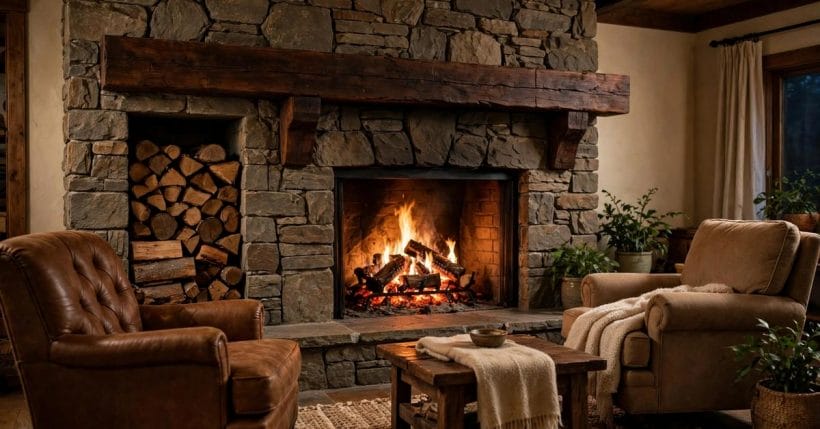
Every fireplace photograph is really three photographs: the fire, the surround that frames it, and the room that gathers around both. Read them separately and a pile of pretty pictures turns into a proper education in what to build, keep or copy.
This survey walks the styles in families — marble, stone, brick, tile, the modern line and the small corner — reading each photograph for the surround, the mantel and the styling rather than the flames. It invents nothing: no counts, no prices, no promises, just the pictures and what they teach.
1. Photos of Fireplaces at a Glance
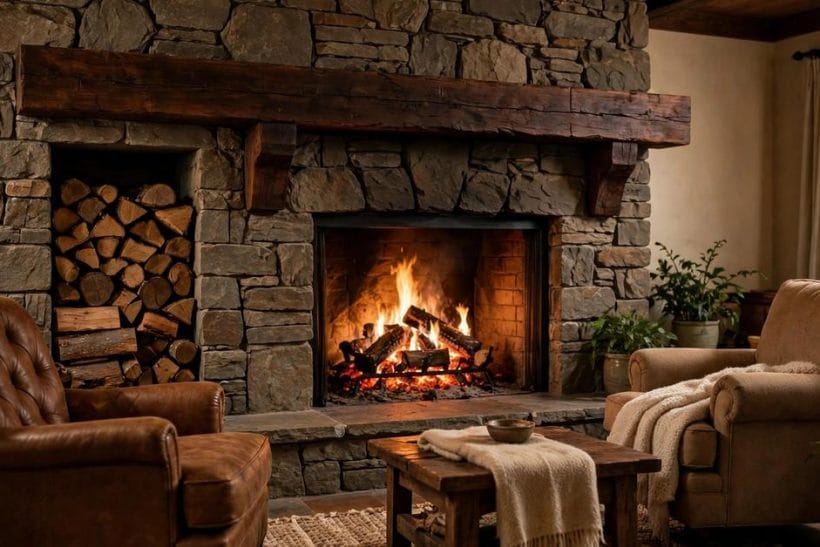
The central subject is the fireplace photograph itself: how real fireplaces are composed, surrounded and styled. The family pillar is our fireplace living room guide, which works the room around the fire; this post stays on the fireplace as pictured. It also keeps a deliberate boundary with our fireplace wall designs, where the whole wall is the subject — here, the fireplace is.
| Aspect | What to know | In a word |
|---|---|---|
| The Stone | Full breasts and rustic hearths | Grounded |
| The Marble | Formal surrounds, classic rooms | Formal |
| The Brick | Painted, limewashed or bare | Homely |
| The Modern | Linear flames, quiet walls | Minimal |
| The Tile | Pattern and colour at the hearth | Bright |
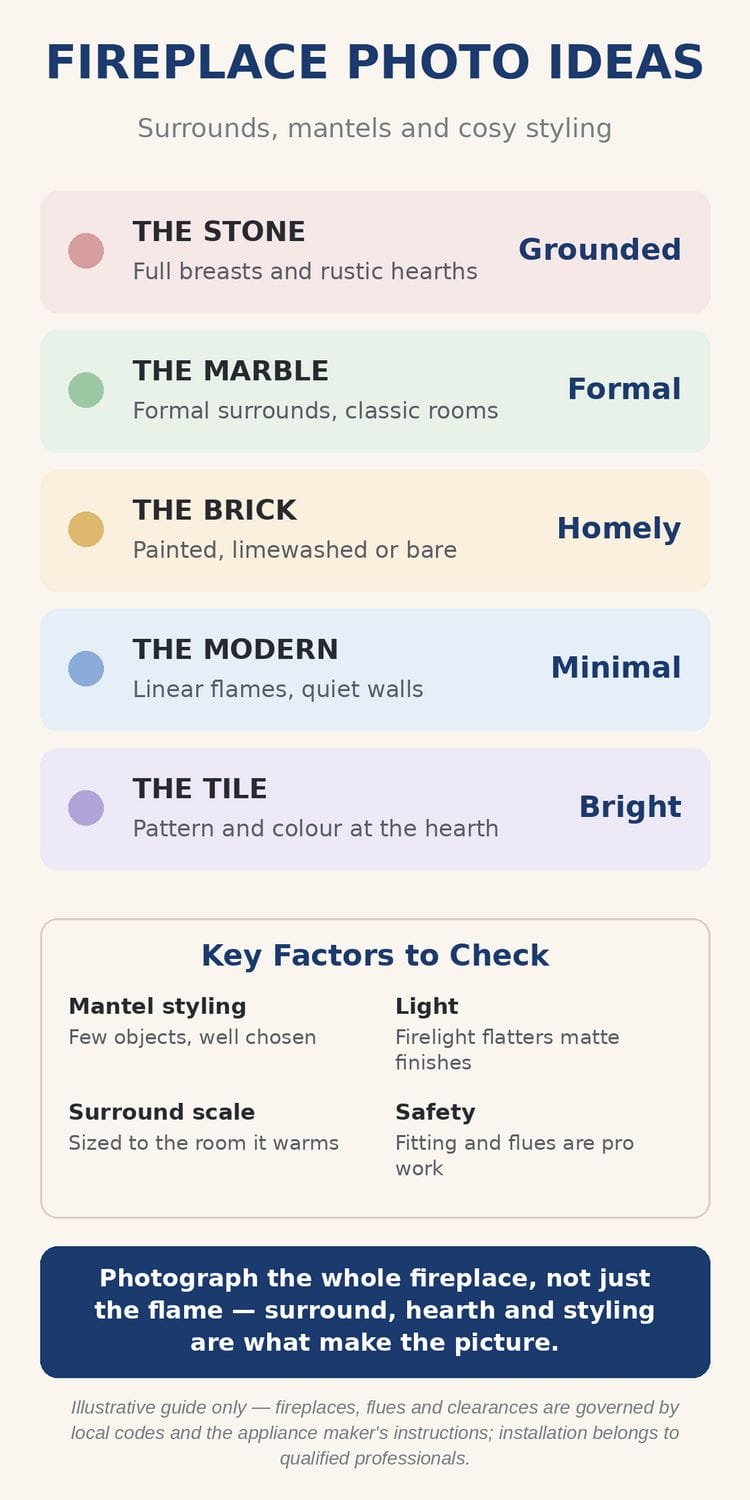
Photograph the whole fireplace, not just the flame — surround, hearth and styling are what make the picture. Four factors run through every family below: mantel styling, where a few well-chosen objects beat a crowded shelf; light, since firelight flatters matte finishes and punishes gloss; surround scale, sized to the room it warms rather than the photograph it stars in; and safety, because fitting and flues are professional work whatever the styling suggests.
The survey that follows is arranged the way a mantelpiece collects objects — by affinity. Stone with stone, tile with tile, and the small brave fireplaces of cottages and corners given a section of their own.
Read each family for its grammar. Marble speaks in symmetry and restraint, stone in mass and texture, brick in rhythm, tile in pattern, and the modern line in proportion alone. Once the grammar is familiar, new photographs stop being a flood and become a shelf of known books — you can place any fireplace you meet, including the one in your own room, and see both what it is and what it is quietly asking to become.
2. Marble and Classic Stone
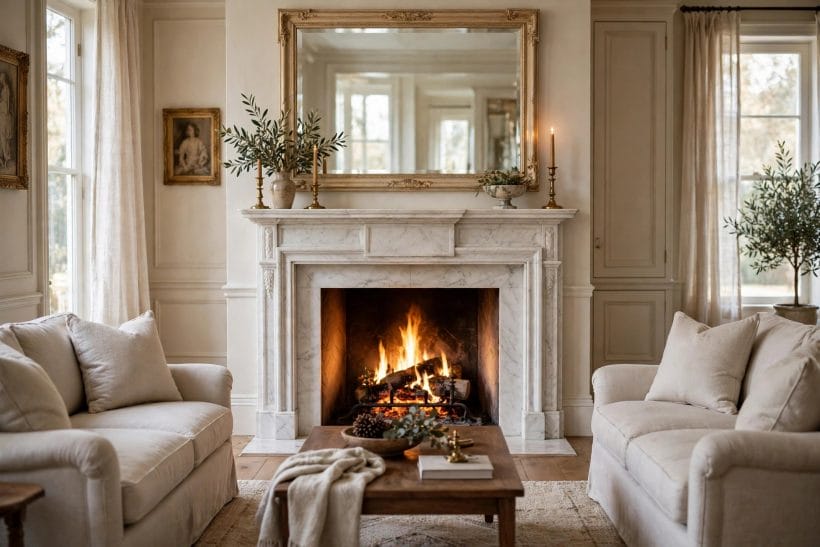
The pale marble surround in this photograph is the formal fireplace at rest: clean lines, a dark firebox for contrast, mantel objects placed like punctuation. Marble is the surround material that photographs most and forgives least — every vein is on display.
The White Marble Surround
Plain white or softly veined marble against panelled walls is the classic of classics. It suits rooms that dress formally and photographs that want calm; the styling rule is restraint — a clock, a pair of candlesticks, space between them.
Veined Stone as the Picture
Boldly veined marble turns the surround itself into the room’s artwork, chimney breast as canvas. Rooms that take this route keep everything else quiet and let the stone perform — the mantel styling our fireplace mantel ideas collect begins from exactly this judgement of how much is enough.
The Carved Chimneypiece
Period surrounds with carved detail belong to the houses built for them, and photographs of them are lessons in proportion: the opening, the shelf and the mirror above in settled relation. Copy the proportions, not the carving, and modern rooms can borrow the calm.
3. Stone, Full Height
The towering stone breast in this photograph climbs past the beams to the roof, and the room organises itself beneath it like a village under a hill. Full-height stone is the fireplace as architecture — the rest of the room is furniture.
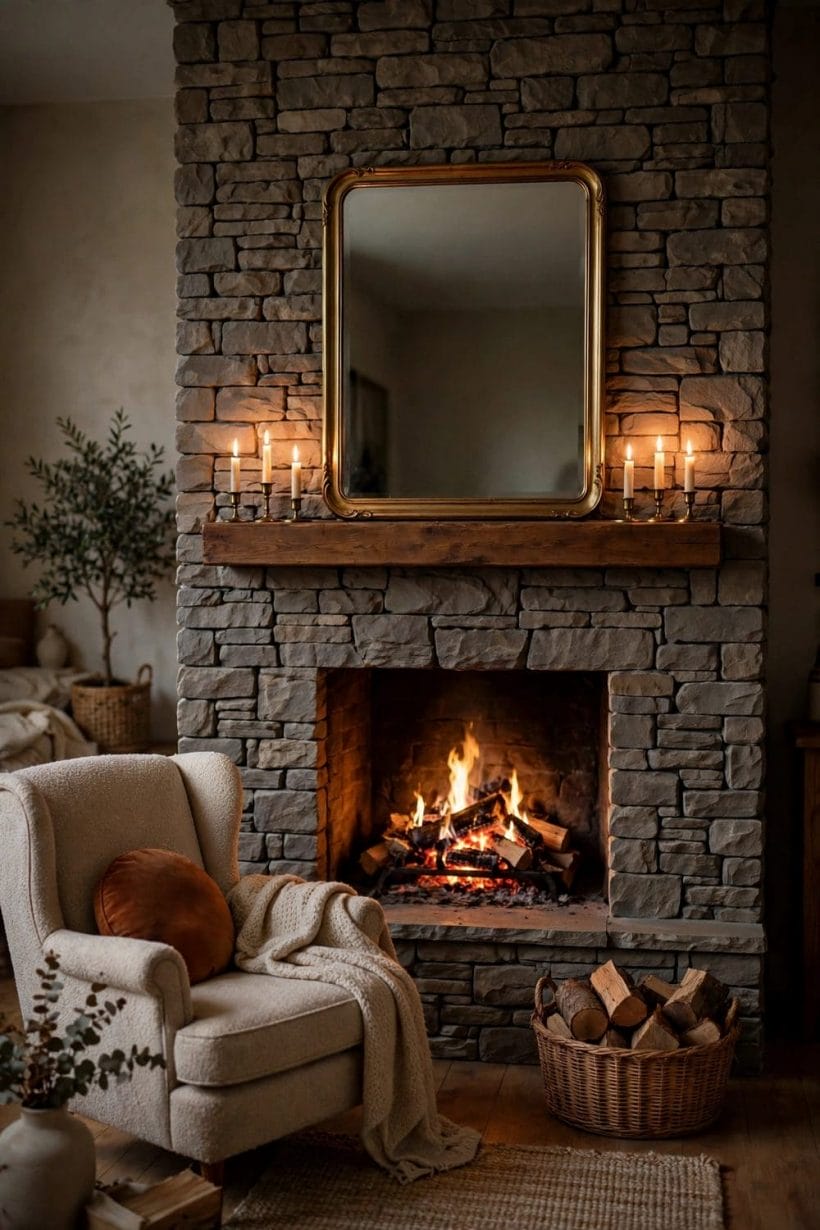
The Farmhouse Stone Breast
Random stone, a deep timber lintel and a hearth wide enough to sit on: the farmhouse formula. It is the centre of the family our rustic fireplace ideas gather, and its photographs always include the room’s life — dogs, boots, wood piles — because scale this big swallows styling that is merely pretty.
Dry Stone and Rough Texture
Unpolished, uneven stone catches firelight in a thousand small shadows, which is why these photographs glow even unlit. The texture does the decorating; mantels stay bare or carry one heavy object, and colour arrives through wood and wool.
The Painted Stone Compromise
Stone painted white or cream keeps the mass and loses the darkness — a common photograph in renovated farmhouses. Purists grieve; small north-facing rooms rejoice. The picture to study is the before-and-after pair, and the honest verdict is that light rooms usually win the argument.
4. Brick, Painted and Bare
The painted brick fireplace in this photograph — soft white, slouchy armchair pulled close — is the most copied fireplace picture of the renovation era. Brick is the democratic surround: already in the house, endlessly repaintable, and honest about it.
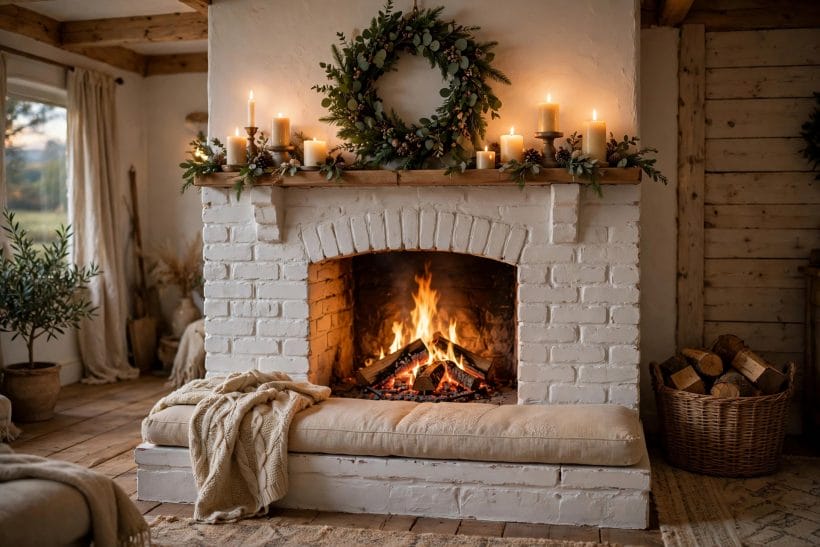
Painted Brick, Soft White
White or off-white paint over tired brick brightens chimney breasts that dominate small rooms. The brick’s texture survives as shadow, which is the whole charm — the many painted transformations in our fireplace makeovers begin with this single tin of paint.
Bare Brick, Honest
Cleaned and left bare, brick brings the warm red-brown that white rooms are furnished against. Photographs of bare brick reward real fires and real wood stacks; the styling is fuel, tools and one green plant doing its best.
Limewashed and German-Smeared
Between paint and bare sits the wash: limewash or a mortar smear that softens brick without erasing it. These photographs have a Mediterranean softness, and the finish has the renovation virtue of being reversible in spirit — another coat changes the mood again.
5. Modern and Linear
The wide linear fireplace in this photograph is all horizon: a ribbon of flame in a blackened recess, sofas squared to it like an audience. Modern fireplaces trade the mantel for the line, and their photographs are composed like cinema.
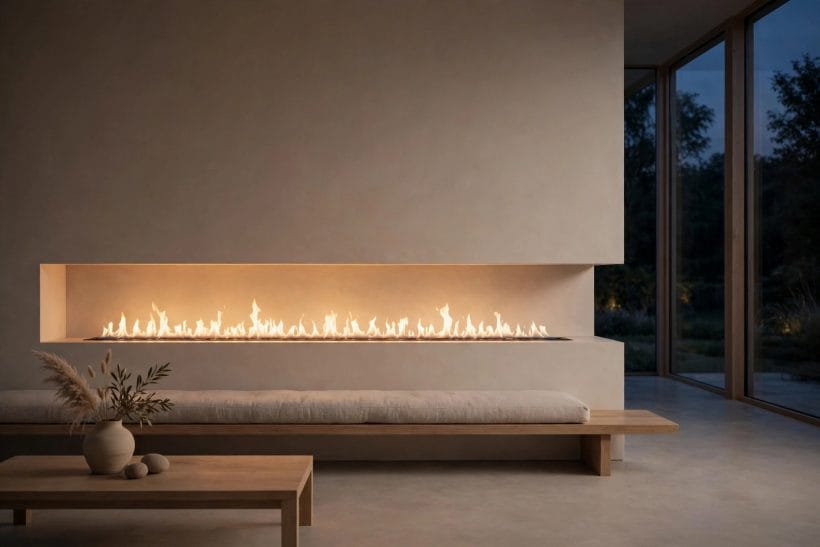
The Long Linear Flame
Length is the luxury here — a flame wider than the firebox tradition allows, set low in the wall. These installations are engineered appliances with engineered flues or none, specified and fitted professionally; the photograph shows the result, never the apparatus, which section ten addresses.
The Flush Black Box
A simple black rectangle of fire set flush into a pale wall is the minimalist’s fireplace photograph: no surround, no shelf, nothing to dust. It suits rooms of strong furniture and few objects, and it makes the fire itself the only ornament.
The Three-Sided and Corner Glass
Glass on two or three sides lets the fire join two zones of an open plan at once — sitting side and dining side sharing one flame. The photographs sell openness; the engineering that buys it is considerable, and entirely a professional’s province.
6. Tile and Colour
The tiled surround in this photograph wakes its whole room up: patterned faces, a wooden shelf, the fire framed like a picture in a gallery of colour. Tile is where fireplaces go to be joyful.
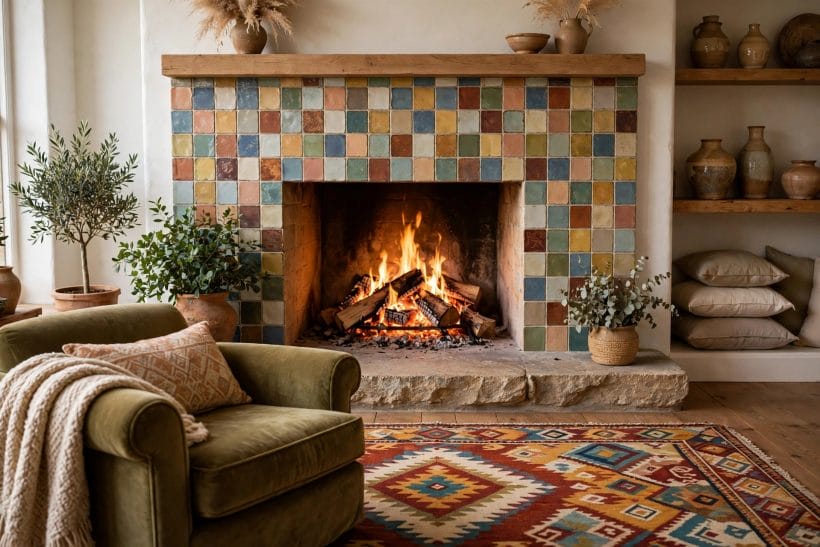
Patterned Tile Surrounds
Encaustic-look and hand-glazed patterns turn a small fireplace into the room’s patterned anchor, the way a rug anchors a floor. Photographs of these reward close cropping — the tile is the subject and the fire its lighting.
Deep Colour: Green, Blue, Ink
Glossy deep-green or ink-blue tile around a firebox is the current connoisseur’s photograph: firelight doubles in the glaze, and brass tools gleam against it. These surrounds carry plain rooms the way jewellery carries a plain dress.
The Tiled Hearth and Fender
Colour at floor level — a patterned hearth tile where stone usually goes — spreads the fireplace’s territory into the room and protects the floorboards in the bargain. Hearths have their own safety rules about materials and levels, which any tiler fitting one works to as a matter of course.
7. Small and Corner Fireplaces
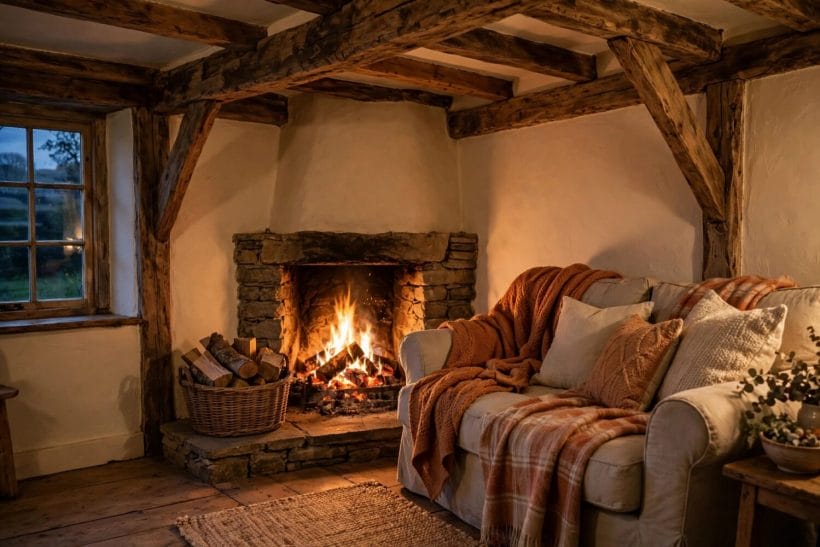
The cottage corner in this photograph — small arched fireplace, candles on the mantel, a garland over all — proves the survey’s kindest point: charm is not measured in width. Small fireplaces are the most lived-with of all.
The Corner Fireplace
Set diagonally into a corner, a small fireplace turns dead geometry into the room’s focus and lets furniture angle toward warmth. Corner photographs are lessons in arrangement: the chairs turn, the rug turns, the room’s compass resets to the fire. The hearths that ground these small fires fill our fireplace hearth ideas.
The Bedroom Fireplace
Small fireplaces in bedrooms — many now decorative, some still working — are photographed with candles, linen and restraint. A firebox dressed with birch logs or a candle cluster keeps the architecture’s promise without a flame.
The Tiny Stove Opening
Where a small stove stands in an old opening, the photograph gains a black jewel of a fire and a flue pipe for a chimney breast’s exclamation mark. Stoves and their fitting are certified work everywhere; the picture shows the cosiness, the paperwork stays with the installer.
8. The Fireside Seat
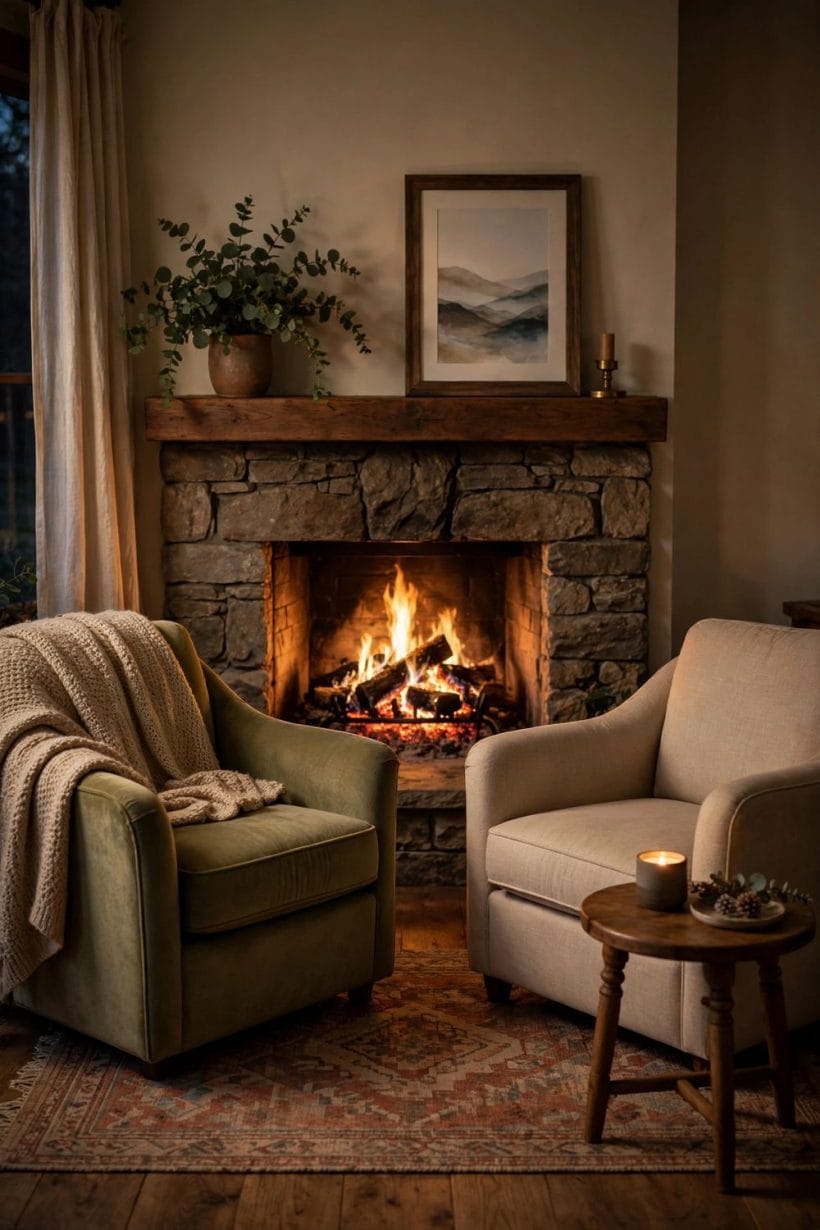
The two armchairs in this photograph face the tiled fireplace across a shared table, and nothing in the room pretends the fire is background. The fireside seat is the fireplace photograph’s human half — the reason the surround exists.
Chairs Drawn Close
Two chairs and a small table between them is the oldest floor plan in the world. Photographs arranged this way invite the viewer into the empty seat — which is precisely the feeling to copy at home, whatever the surround is made of.
The Fireside Sofa
A sofa square to the fire, feet toward the hearth, makes the fireplace the room’s television-shaped focus without a screen. In these photographs the mantel styling simplifies — the fire is watched, not the shelf.
Styling the Empty Fireplace
Half the year, the fireplace is unlit, and good photographs dress it for summer: log baskets in the opening, a plant, a stack of books, candles where the flames will be. A fireplace should earn its wall in July as honestly as in January.
9. Fireplaces After Dark
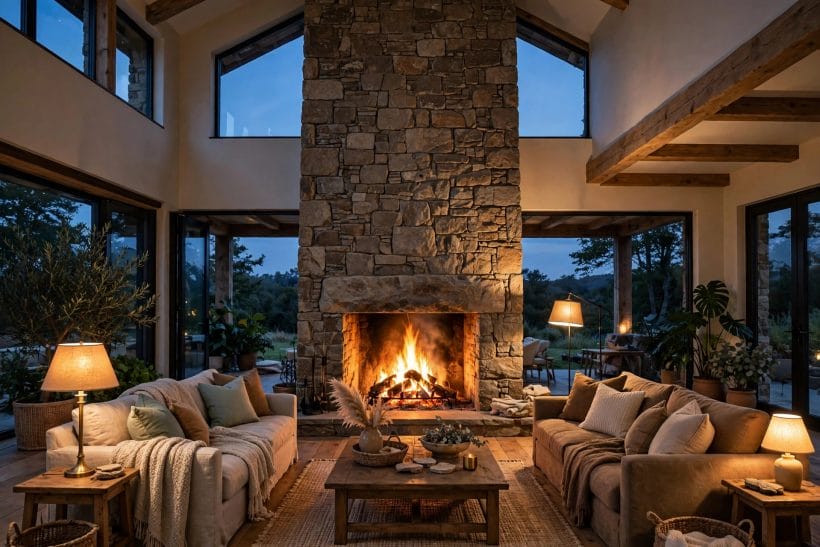
The double-height room in this photograph is lit by three sources in conversation: the fire, the lamps and the last of the daylight. Evening is the fireplace’s native hour, and its photographs change character completely.
Firelight and Lamplight
The best evening photographs balance flames with low lamps rather than overhead light — firelight flatters faces, timber and matte paint, and flattens nothing. At home the same rule applies: light the room low and let the fire do the high notes.
The Tall Room’s Hearth
In double-height spaces the fireplace anchors the human scale at the room’s base — a low, warm horizon under a tall cool volume. Photographs of these rooms always shoot from seated height; stand, and the magic of the proportion leaves the frame.
Candles When the Fire Is Out
A cluster of candles in an unlit firebox keeps the focal point alive through summer evenings and power cuts alike. It is the oldest trick in this survey and the one most likely to be in use at your house tonight.
10. Reading a Fireplace Photograph Honestly
Close with the cautions, because fireplace photographs are persuasive liars. They are taken with screens and guards set aside, fires built photogenically large, rooms styled for the hour of the shoot. The photograph is inspiration; it is never a specification.
Three honest checks before any pictured fireplace becomes a plan. Scale: judge the surround against doors, chairs and people in the frame, not against the wall alone — photographs widen rooms and shrink hearths. Safety: guards, clearances, hearth dimensions and flue arrangements are set by the appliance maker’s instructions and your local code, and the fitter who installs to them is not an optional extra. And condition: a pictured fireplace tells you nothing about the chimney behind it, which is why a professional inspects before anything is lit, bought or built.
One more reading skill deserves its own lines: mantel objects lie about scale. A clock that looks modest in a photograph may be the size of a suitcase; a slender candlestick may be a floor-standing torchère cropped by the frame. Before copying any styled shelf, measure its objects against the firebox opening — the one dimension in every photograph that the room’s own architecture fixes. Styling scales from the opening outward: objects a fraction of its height for calm, approaching it only when the room is grand enough to argue back.
None of this dims the survey’s pleasure. The wider family of rooms these fires warm is gathered in our home design ideas hub; this post’s pictures, read with clear eyes, are the best free design education the mantelpiece offers.
Final Considerations
Collect fireplace photographs the way this survey read them — by family, and by the surround rather than the flame. Marble for formality, stone for architecture, brick for honesty, tile for joy, the long black line for calm, and the small corner fire for charm. Then let professionals handle everything behind the picture — flue, fitting and clearance — while you handle what the photograph actually teaches: proportion, styling and a seat drawn close.

0 Comments