
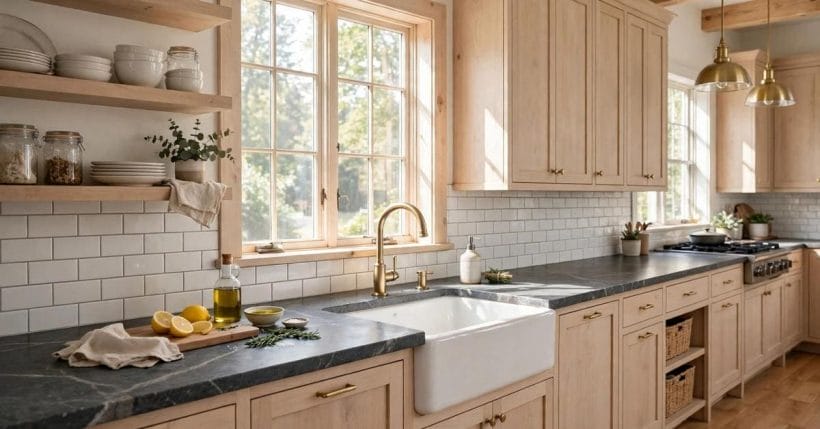
A soapstone counter brings a quiet, natural character to a kitchen or bath. Its surface is dark and soft to the touch, with gentle veining that moves across the slab like cloud. Because no two slabs look exactly alike, choosing soapstone is as much about looking at real stone as it is about reading descriptions, and a calm, unhurried selection process usually leads to the most satisfying result. This is a material that suits rooms where a matte, understated surface is wanted rather than a high shine, and where the owner is happy for the stone to change subtly with time.
For small homes, soapstone countertops earn their place by looking settled from the day they are fitted. The dark surface grounds pale cabinets, warms up white walls and gives a compact kitchen a sense of permanence without visual noise. The sections below cover the stone itself, its finishes, how it behaves in daily use, how to care for it, and how to pair it with cabinets, sinks and lighting, all in general terms that apply whether the room is large or small.
1. What Soapstone Is
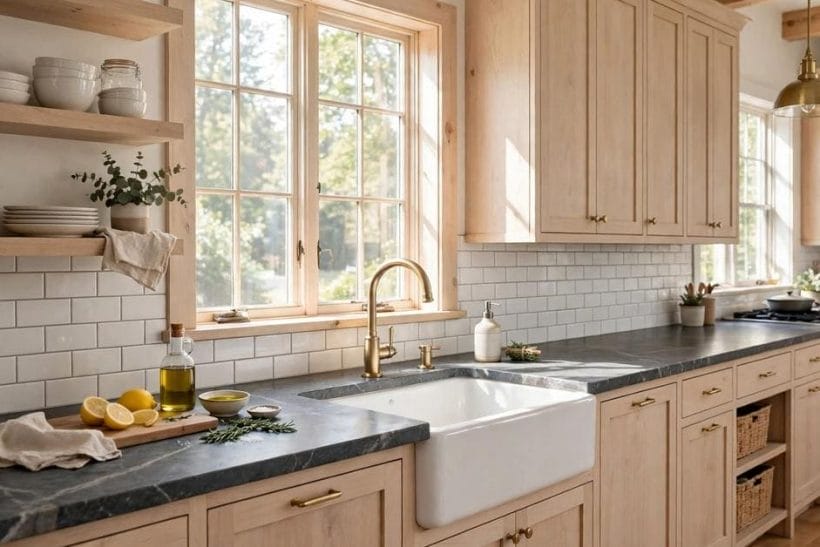
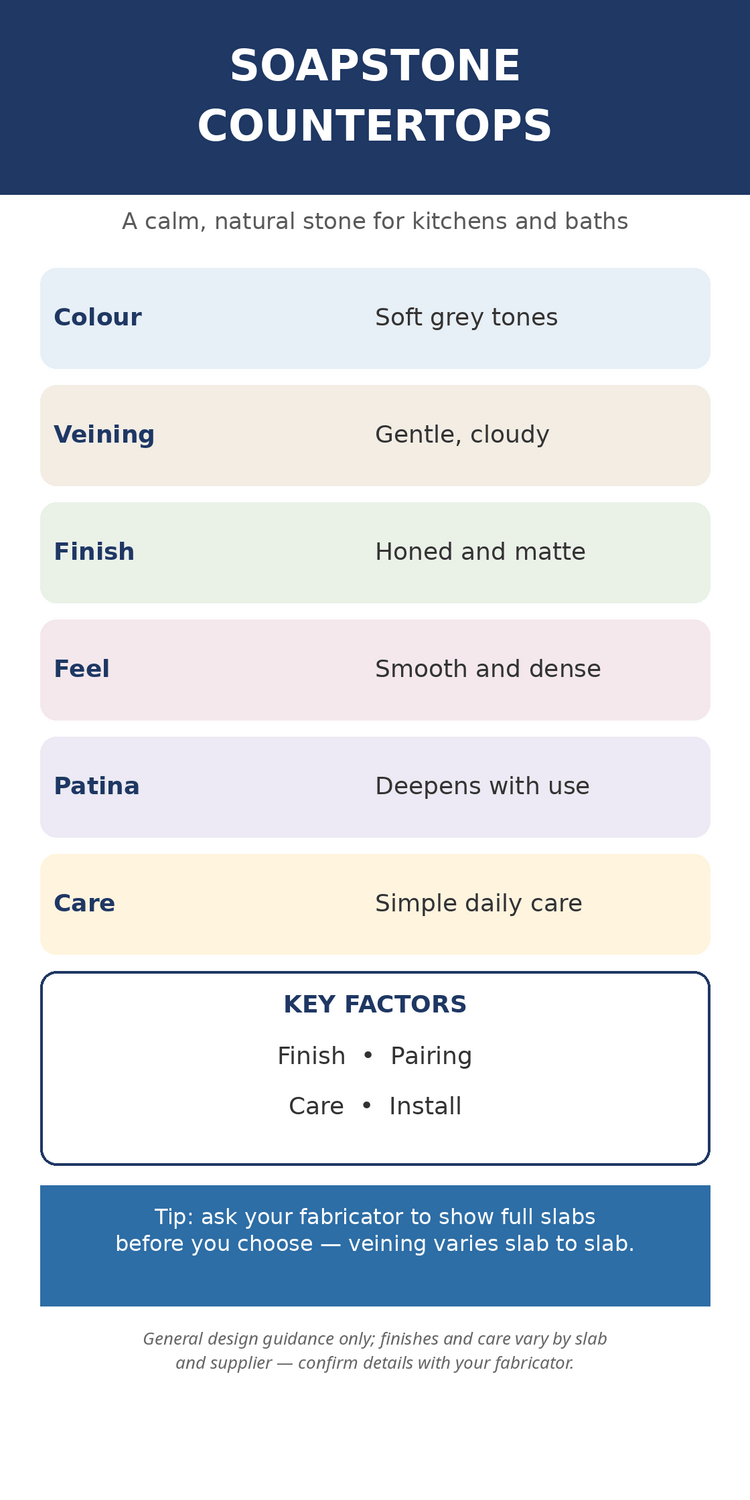
Soapstone is a natural stone quarried in blocks and cut into slabs for counters, vanity tops and hearths. Its name comes from the smooth, almost soapy feel of the surface when it is touched, a quality that sets it apart from harder-feeling stones at first contact. The stone is dense and close-grained, and its colour range sits mainly in greys, from soft dove tones through to deep charcoal, often with quiet veining in white, cream or pale green.
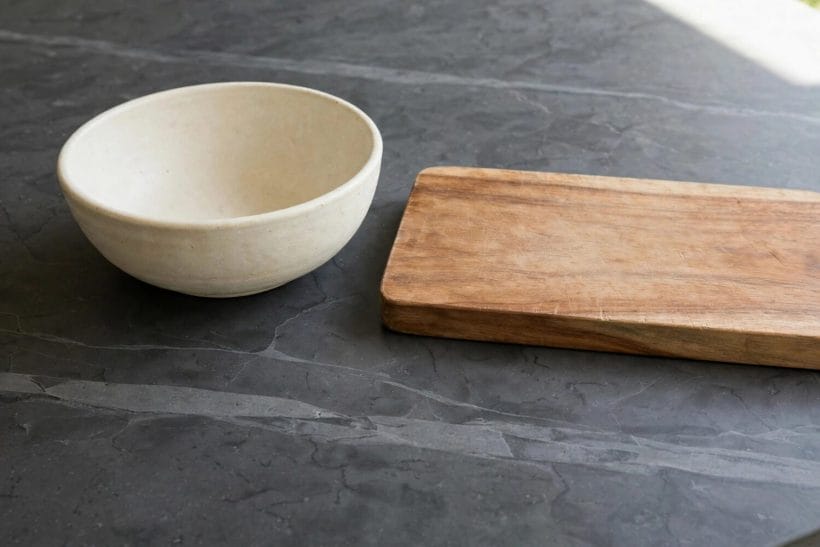
Each slab carries its own pattern. Some slabs are nearly plain, with only a faint movement of tone across the surface, while others show bolder veins that wander and branch. Neither kind is better in any absolute sense; the choice is a matter of taste and of how busy the rest of the room already is. A plain slab suits a room with patterned tile or figured wood, while a veined slab can carry a plainer room on its own.
Because soapstone is a natural material, small variations in tone and marking should be expected and welcomed. A sample chip shows only a fragment of the whole slab, so the most reliable way to judge a slab is to see it in full, in daylight, before any cutting begins. Fabricators generally expect this and will arrange a viewing when asked.
2. Colour and Veining
The colour of soapstone is one of its main attractions. The greys are soft rather than cold, and they sit comfortably beside timber, white, cream, black and muted colour alike. Over time and with use, the surface often deepens in tone, moving toward a darker, richer grey that many owners prefer to the lighter colour of a freshly cut slab.
Veining deserves attention at selection time because it cannot be changed afterwards. Veins may be fine and thread-like, or broad and cloudy, and they may run evenly across the slab or gather in one area. Think about where the veins will fall once the slab is cut: a strong vein across a sink cut-out may be lost, while one running along the front edge will be seen every day.
For a calm result, look for veining that feels balanced across the whole slab rather than dramatic in one corner and empty elsewhere. Photographs of finished kitchens can help here, but they never replace seeing the actual slab, since photography flattens tone and can make veins look stronger or weaker than they are in the room.
3. Finishes: Honed, Matte and Beyond
Most soapstone counters are finished honed, which means the surface is smooth but not polished to a shine. A honed finish suits the character of the stone: it keeps the colour soft, hides everyday marks better than a glossy surface would, and feels pleasant under the hand. It also matches the relaxed, crafted feeling of many kitchens where soapstone is chosen.
Some suppliers offer a slightly more refined honed surface or a soft leathered texture, and the difference between these is best judged by touch rather than by name. Run a hand across samples, look at them under the room’s own lighting, and notice how each finish catches light from a window. A finish that looks flat in a showroom may read quite differently beside a bright window at home.
Whatever finish is chosen, it should be consistent across all the pieces in one room. Ask that island, perimeter and vanity pieces come from the same batch and carry the same finish, so the room reads as one composition rather than as a collection of separate stones.
4. How Soapstone Behaves in Daily Use
In daily use, soapstone is a forgiving surface in some ways and a revealing one in others. Its matte finish means that water marks and fingerprints show less than they do on a polished stone, and the general patina that builds up over months tends to even out the look of the surface rather than spoil it. Many owners come to value this lived-in quality as part of the stone’s charm.
At the same time, soapstone is a softer stone than many counter materials, and it can show marks from heavy or sharp objects. A knife slipped across the surface, a heavy pan dragged along it, or a dropped utensil may leave a visible line. These marks are part of the material’s nature rather than a fault, and they are one reason why cutting boards and trivets belong in every soapstone kitchen as a matter of habit.
Heat and cold are best treated with the same everyday caution given to any counter. Hot pans are better placed on trivets, and very cold items are better kept off the surface directly, not because the stone is fragile in ordinary use but because steady, gentle treatment keeps any counter looking its best for longer. The habit costs nothing and protects the finish.
5. Sinks, Edges and Details
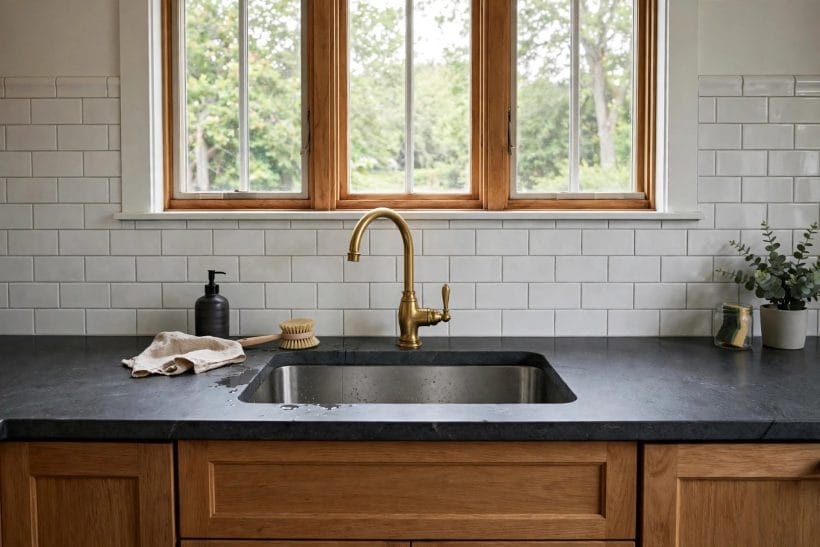
The sink area is where a counter is worked hardest, so its details matter. An undermount sink gives a clean line and lets crumbs and water be wiped straight into the basin, while a farmhouse sink makes a stronger visual statement and pairs well with the rustic, crafted character of soapstone. Either choice works with the stone; the decision rests on the look of the room and on how the sink will be used day to day.
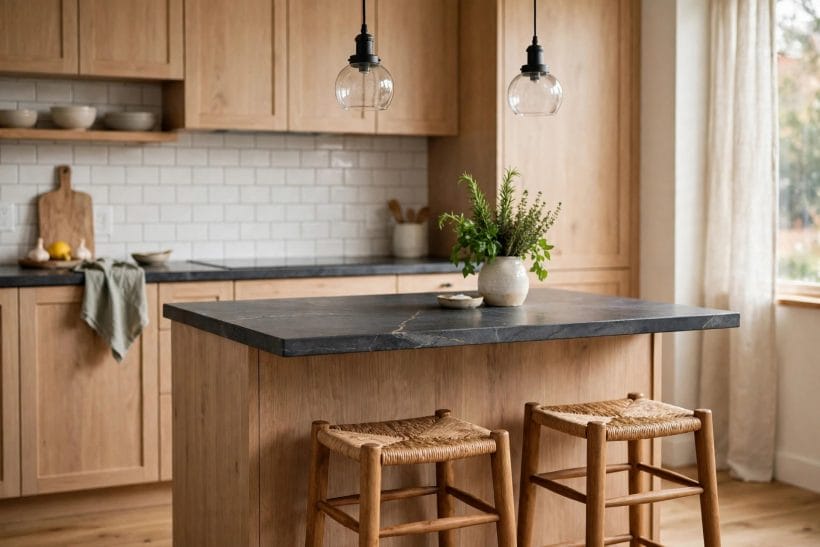
Edge profiles shape how the counter reads from across the room. A simple eased or slightly rounded edge keeps the look quiet and contemporary, while a thicker built-up edge gives a more substantial, furniture-like presence. In a small kitchen, a slimmer edge often suits the scale of the room better, since it keeps the counter from looking heavy against compact cabinets.
Small details repay attention: the way the counter meets the wall, the treatment of a windowsill that continues in stone, and the finish of any exposed end panel. A good fabricator will talk through these points at templating time, and it is worth settling them before cutting starts, since changes afterwards are difficult and costly in effort even when they are possible at all.
6. Pairing Soapstone with Cabinets
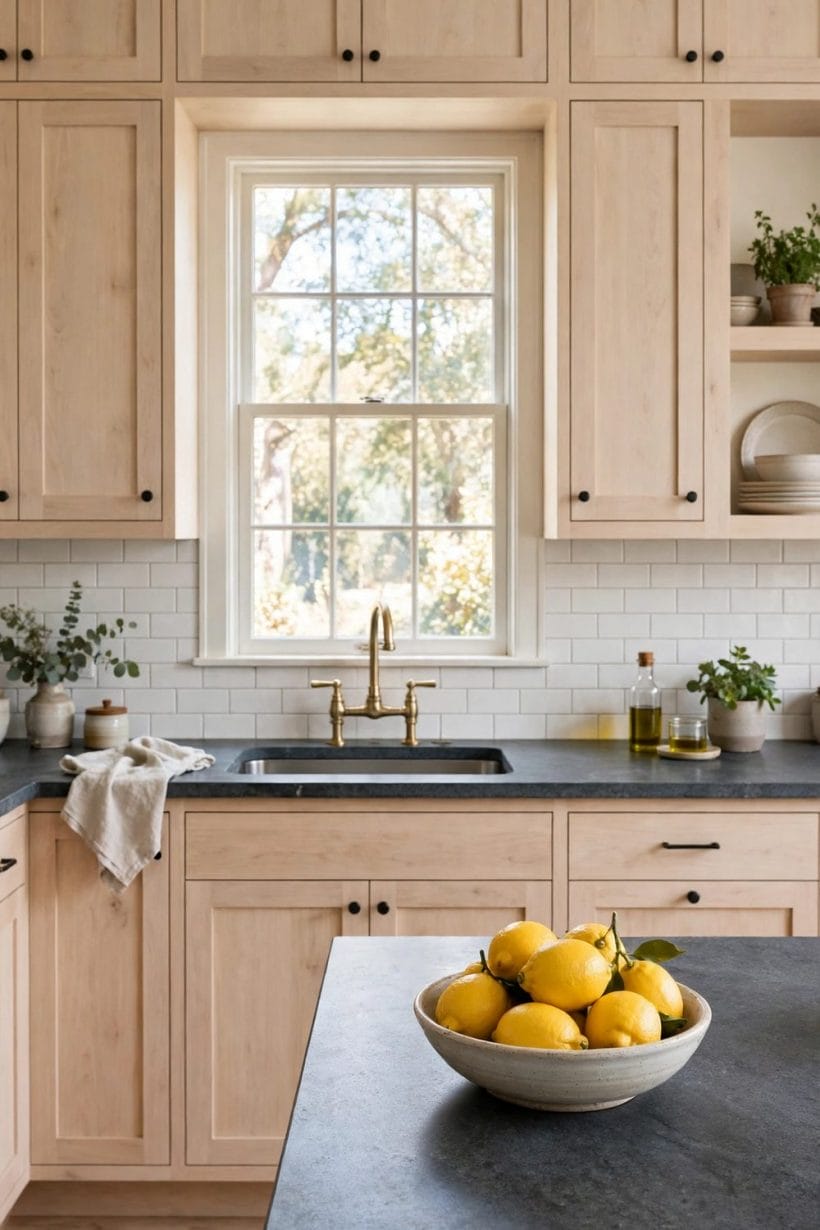
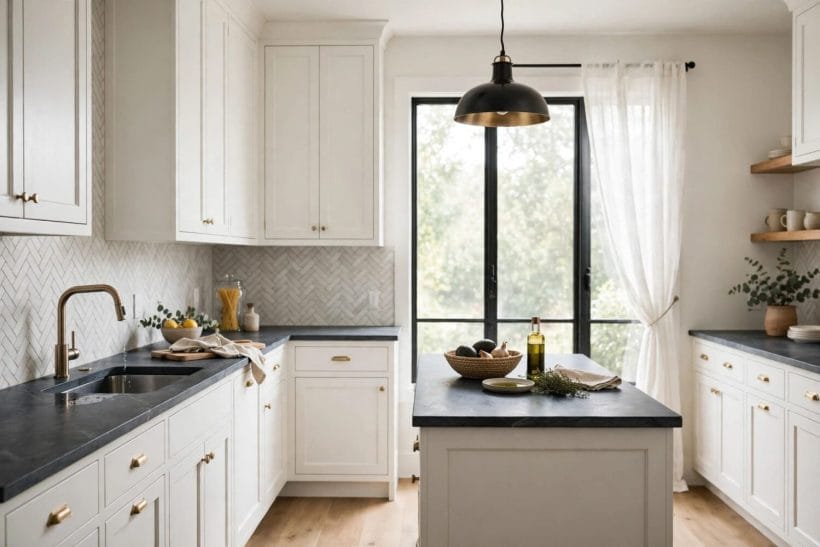
Soapstone’s soft grey tones pair happily with a wide range of cabinet finishes, which is part of its appeal. Pale wood cabinets bring warmth and keep the room light, letting the dark counter act as a grounding line through the space. White cabinets give a crisper, brighter contrast and suit rooms where daylight is limited, while deeper cabinet colours create a moodier, more enclosed feeling that suits larger kitchens.
When choosing cabinet colour, consider the room as a whole rather than the counter alone. Floor tone, wall colour, hardware finish and the amount of daylight all shift how the grey reads. A grey that looks soft beside pale oak may look darker beside walnut, and a north-facing room will show the stone differently from a sunlit one. Samples held together in the actual room, at different times of day, give a truer picture than any showroom display.
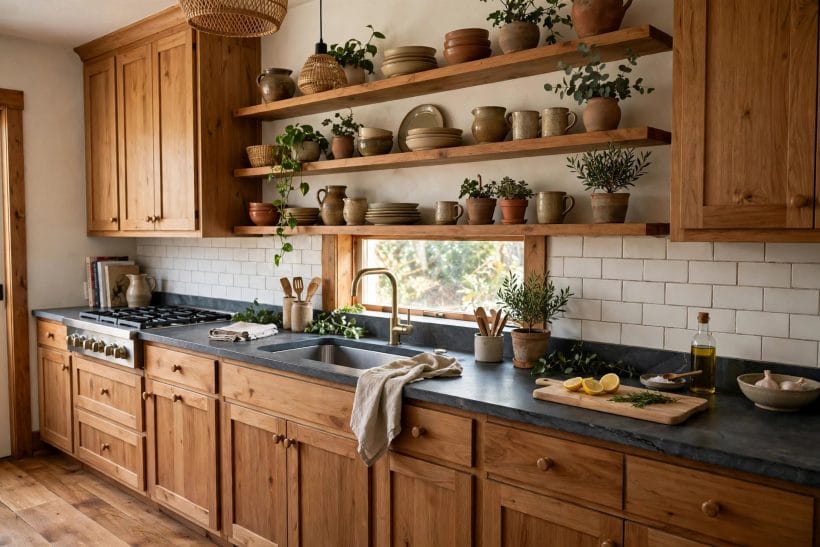
Hardware is a small decision with a large effect. Brushed brass or bronze warms the grey and suits traditional and farmhouse rooms, while black or pewter hardware keeps the look quiet and contemporary. Either way, keeping the hardware finish consistent across cabinets, faucet and lighting ties the room together and lets the stone itself remain the focus.
7. Backsplashes, Walls and Lighting
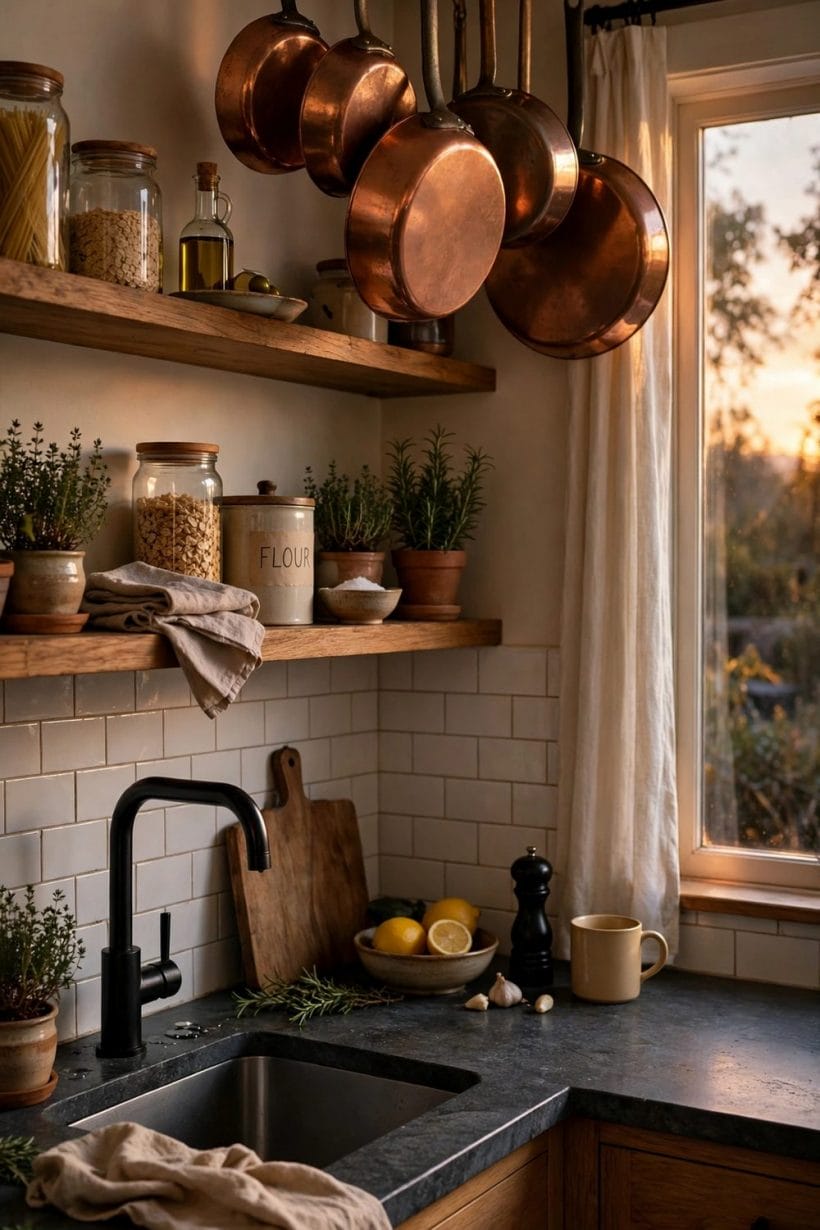
A backsplash sets the tone for the whole counter run. Plain subway tile in white or cream is a safe and popular partner for soapstone because it stays quiet and lets the stone carry the interest. Natural stone tiles, handmade tiles with slight variation, or a simple plastered wall can also work well, especially in rooms aiming for a crafted, old-house feeling.
Continuing the soapstone itself up the wall as a short backsplash is another option, and it gives a seamless, tailored look. This works best where the slab’s veining is calm, since a busy vein repeated across both counter and wall can overwhelm a small room. Where veining is strong, a plainer wall treatment usually balances the composition better.
Lighting changes everything about how soapstone is perceived. Under-cabinet lighting brings out the texture of a honed surface in the evening, while daylight shows the true colour and veining. When planning lighting, check the stone under the room’s own lights before finalising, and favour warm, even light that flatters both the stone and the food prepared on it.
8. Soapstone in Bathrooms
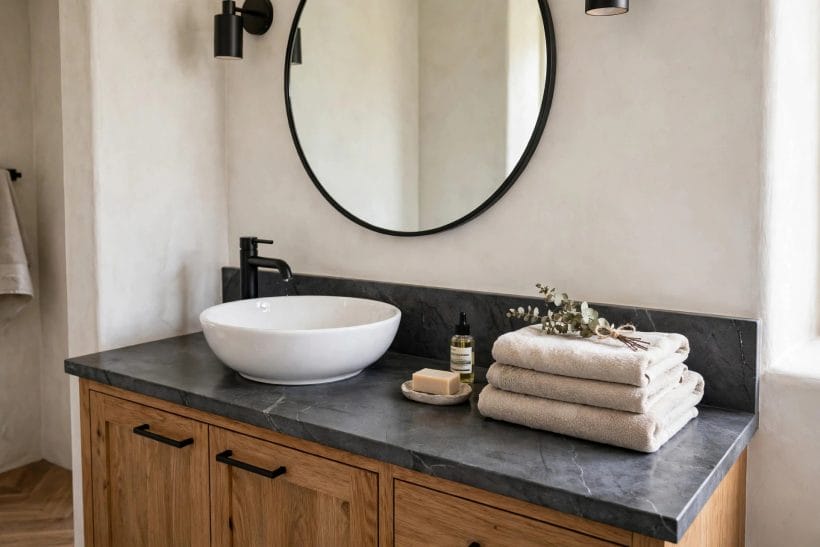
Soapstone also suits bathroom vanity tops, where its calm colour and matte finish bring a spa-like quiet to a small room. A vanity top sees gentler use than a kitchen counter, so the patina builds more slowly, and the stone’s soft feel suits a room meant for unhurried routines. Vessel sinks, undermount basins and simple wall-hung vanities all pair well with it.
In a bathroom, the same selection advice applies: see the slab in full, check the veining where the basin cut-out will fall, and keep the finish consistent with any other stone in the room. Because bathrooms are often lit artificially, check samples under the bathroom’s own lighting rather than daylight alone, since warm artificial light can shift the apparent grey.
Storage and accessories should be chosen with the same restraint as in the kitchen. Open shelving in timber, simple mirrors and plain textiles let the stone set the tone, while too many competing finishes can crowd a small bathroom. A few well-chosen pieces will always serve the room better than a crowded collection.
9. Everyday Care and Cleaning
Everyday care for soapstone is straightforward. Warm water with a little mild soap, applied with a soft cloth, handles most daily cleaning, and a wipe-down after cooking keeps the surface fresh. Harsh chemical cleaners and abrasive pads are best avoided, since they can dull the finish over time, and spills are best wiped up promptly rather than left to sit.
Some owners choose to apply mineral oil to the surface from time to time, a traditional practice that darkens the stone and evens out its tone. Oiling is entirely optional, and whether to oil is a matter of taste: an oiled surface looks darker and richer, while an unoiled surface keeps its lighter, natural grey and develops its patina more slowly. Neither approach is more correct, and the choice can be changed later if tastes change.
Marks that do appear can usually be lived with, and many owners find that small marks fade into the general patina over time. For deeper marks, a stone professional can advise on refreshing the surface, and this is work best left to experienced hands rather than attempted with household abrasives. A little patience with the stone’s changing appearance is part of enjoying it.
10. Choosing a Slab and Working with Professionals
Choosing a slab well is the single most important step in a soapstone project. Visit the supplier, look at full slabs rather than small samples, and take photographs and cabinet samples along for comparison. Note the slab number of any piece that appeals, and ask about its size, its veining pattern and whether matching pieces are available for an island or vanity in the same room.
Installation of stone counters is professional work from start to finish. Templating, cutting, transport and fitting all require specialist tools and experience, and stone is heavy, unforgiving of error and difficult to repair once cut wrongly. A reputable fabricator will measure the room, discuss seams and support, and explain the schedule in plain terms before any work begins.
Seams deserve a direct conversation. Long counter runs usually need at least one seam, and its position affects both appearance and strength. Ask where seams will fall, how they will be finished, and whether the veining can be matched across them. A fabricator who answers these questions clearly is showing the care that the rest of the job will receive.
Support and overhangs are structural questions, not decorative ones. Breakfast bars and island overhangs need proper support beneath the stone, and the fabricator or a structural professional should confirm what is needed for the chosen layout. Settling this early avoids awkward additions later and keeps the finished counter safe and solid.
For wider kitchen planning, small kitchen ideas show how dark counters sit within compact layouts, and interior design ideas place stone surfaces within whole-room schemes. Colour choices around the counter are easier with tiny house colour palettes at hand, while modern tiny house interiors show contemporary pairings. Whole-house context comes from tiny house designs and tiny house building and design ideas.
Although kitchens are the most common home for soapstone, the stone also appears in fireplaces, hearths and table tops, where its calm colour has long been valued. In these settings the same principles apply: see the slab, keep the finish consistent, and let professionals handle cutting and fitting. A fireplace surround in soapstone brings the same quiet presence to a living room that a counter brings to a kitchen.
Outdoor use calls for a separate conversation with the supplier, since exposure to weather and temperature change affects stone differently from indoor use. Not every slab is suited to every setting, and a supplier’s advice on the intended location should be sought before committing. Indoors, by contrast, soapstone is a well-proven choice with a long history in homes of every size.
Final Considerations
Soapstone suits owners who value natural character over uniform perfection. Its soft grey tones, gentle veining and matte finish bring calm to kitchens and baths, and its patina means the surface grows more personal with time rather than simply wearing out. The trade is an acceptance of marks and change: a soapstone surface will not stay looking brand new, and owners who want a pristine, unchanging counter may be happier with a different material.
For those who accept that trade, the rewards are real. A well-chosen slab, fitted by professionals and cared for with simple daily habits, gives decades of quiet service and a surface that feels as good as it looks. Take time over selection, keep the surrounding palette calm, and let the stone itself do the talking. Soapstone countertops reward patience at every stage, from the first slab viewing to the years of daily use that follow.



0 Comments