
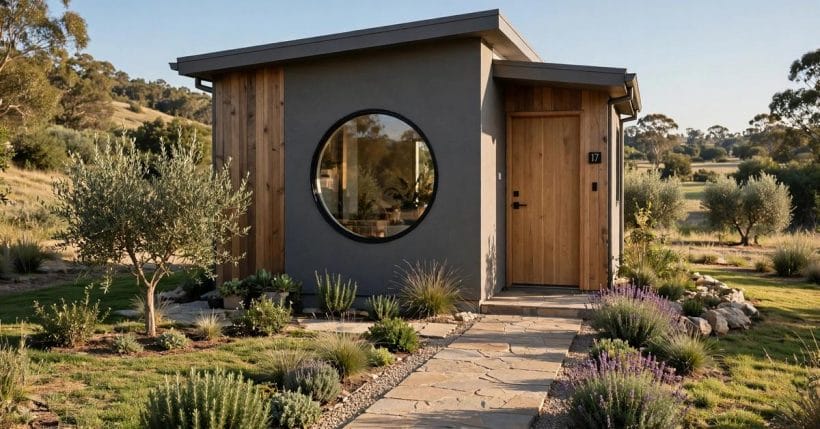
A round window changes a room in a way that a rectangular window rarely does. The eye goes to it first, because a circle breaks the straight lines of walls, doors, and ceilings, and gives the whole space a single calm focal point. In a small house, where every wall has to work hard, that one shape can carry a surprising amount of character, and it can do so without taking up much wall at all. This survey looks at round windows as a design form: where they sit well, how they handle light and privacy, what frames and finishes suit them, and what to leave entirely to a professional.
The ideas below are gathered in general terms, for looking and planning rather than for building. A round opening in a wall is structural work, and anything that affects weather sealing or the strength of a wall belongs to a qualified professional, from the first assessment to the finished job. Treat each section as a way to sharpen your eye, so that when you talk to a professional you can describe clearly what you like, where you would like it, and what matters most to you in the room.
1. What a Round Window Does to a Room
The first thing a round window does is organise the wall around it. Furniture, pictures, and shelving all find their place in relation to the circle, and a room that felt plain can suddenly feel composed. That is why round windows work so well as a single statement on an otherwise quiet wall: they give the eye somewhere to rest, and they give the room a centre, even when the room itself is modest in size. In a living space, a round window over a sofa or a reading chair can anchor the whole seating arrangement, while in a hallway it can turn a passage into a place worth pausing in.
The second effect is softer, and it has to do with light. A circle of glass throws a rounded patch of daylight across the floor or the opposite wall, and that patch moves slowly through the day, changing the mood of the room as it travels. Morning light through a round window feels different from evening light through the same glass, and that changing pattern is part of the charm. It is also a practical point worth noting when you choose a wall: a window that faces the morning sun will wake a room gently, while one that catches the later sun will warm a room towards the end of the day. For broader exterior planning ideas, see the tiny house exterior ideas collection, which shows how a single striking feature can lift the whole front of a small home.
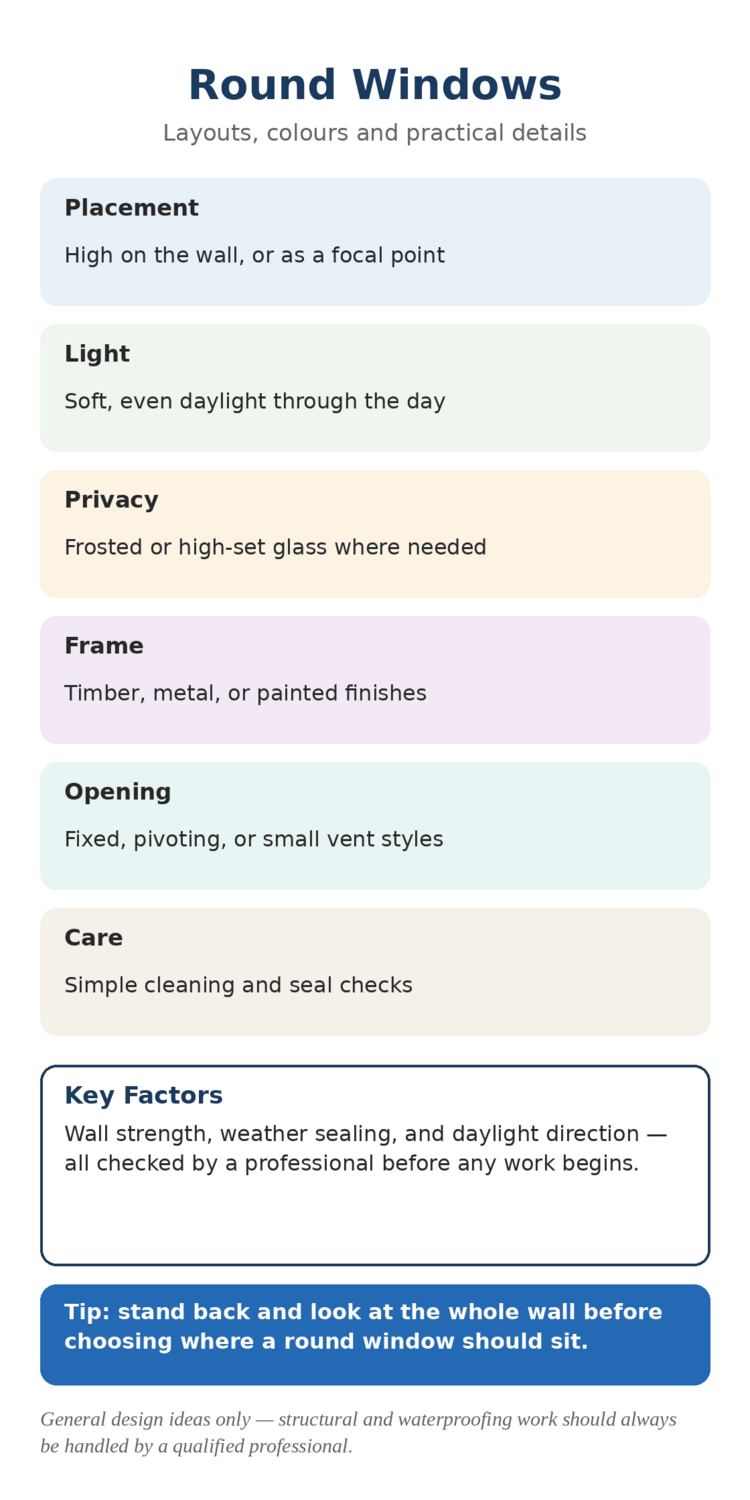
| Point | What to look for |
|---|---|
| Placement | High on the wall, or as a focal point |
| Light | Soft, even daylight through the day |
| Privacy | Frosted or high-set glass where needed |
| Frame | Timber, metal, or painted finishes |
| Opening | Fixed, pivoting, or small vent styles |
| Care | Simple cleaning and seal checks |
2. Placement: High, Low, or as a Focal Point
Where a round window sits on the wall matters as much as the window itself. Set high on a wall, it brings in daylight while keeping the lower wall free for furniture, shelving, or a bedhead, and it keeps the view private without needing curtains. Set at eye level, it becomes a picture in its own right, framing a garden, a tree, or a stretch of sky, and inviting you to stop and look out. Set low, beside a seat or a bath, it can make a small corner feel considered rather than leftover, though privacy and splash zones need careful thought in that position.
Centring also matters. A round window placed dead centre on a wall reads as formal and calm, while one placed off-centre, above a desk or beside a door, feels more relaxed and contemporary. Neither is right for every room, and the choice depends on what else shares the wall. If the wall already carries a fireplace, a bed, or a long shelf, the window should sit in conversation with that feature rather than competing with it. Sketching the wall on paper, with furniture marked in, is a simple way to test a position before discussing it with anyone, and it often reveals that the most pleasing spot is not the one first imagined. Good lighting follows the same logic of planning before acting, and the tiny house interior lighting ideas collection is a useful companion when you are thinking about how daylight and lamps work together in a small space.
3. Light Through the Day
Round windows are often chosen for the quality of their light rather than the quantity of it. The opening is compact, so the light it admits tends to be focused and gentle, pooling in a soft circle rather than flooding the room. That makes a round window a good partner for rooms that already have a larger rectangular window elsewhere, because the two kinds of light balance each other: one for brightness, one for atmosphere. In a bedroom, a round window can give just enough morning light to wake the room without glare, and in a bathroom it can brighten the space while keeping the room private.
Direction shapes everything. A window that faces the rising sun gives a bright, fresh start to the day, while one that faces the setting sun gives a warmer, quieter light in the evening. A window that faces away from direct sun altogether gives a steady, even light all day, which suits workrooms and reading corners. It is worth watching how sunlight moves across the room you have in mind, over a few days if you can, before settling on a position. Note where the light lands at breakfast, at midday, and in the evening, and think about which of those moments you most want the window to serve. A round window is a long-term feature, and a little patience at the planning stage pays for itself in daily pleasure.
4. Bedrooms and Lofts
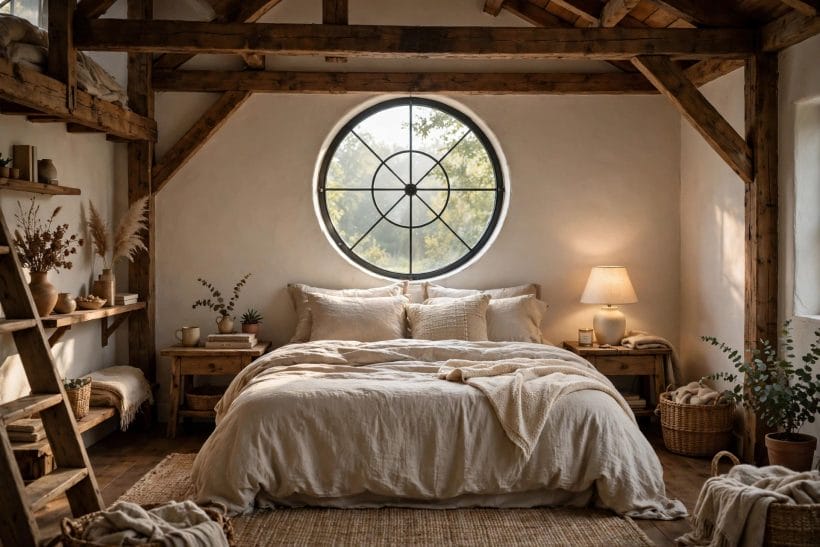
In a bedroom, a round window above the bed is one of the most satisfying placements of all. It gives the sleeper a view of the sky on waking, it centres the bed against the wall, and it leaves the side walls free for wardrobes, bedside tables, and reading lamps. In a loft, where the ceiling slopes and the walls are often awkward, a round window can sit neatly in a gable or a high wall that would otherwise be dead space, turning an awkward triangle of wall into the best seat in the house. The shape suits pitched ceilings particularly well, because the circle echoes the curve of an arch and softens the angles of the roof.
Privacy in a bedroom is usually simple to manage with a round window, because the window can sit high enough that no curtain is needed, or it can take a simple circular blind or a sheer covering that still lets light through. What matters most is the view from the bed: a glimpse of trees, sky, or open land makes the room feel larger than it is, while a view of a blank neighbouring wall does the opposite. If the outlook is poor, a round window can still work beautifully as a light source high on the wall, with the outlook left to another window elsewhere in the room. The interior design ideas collection has further examples of how a single strong shape can organise a bedroom without cluttering it.
5. Living Spaces and Reading Corners
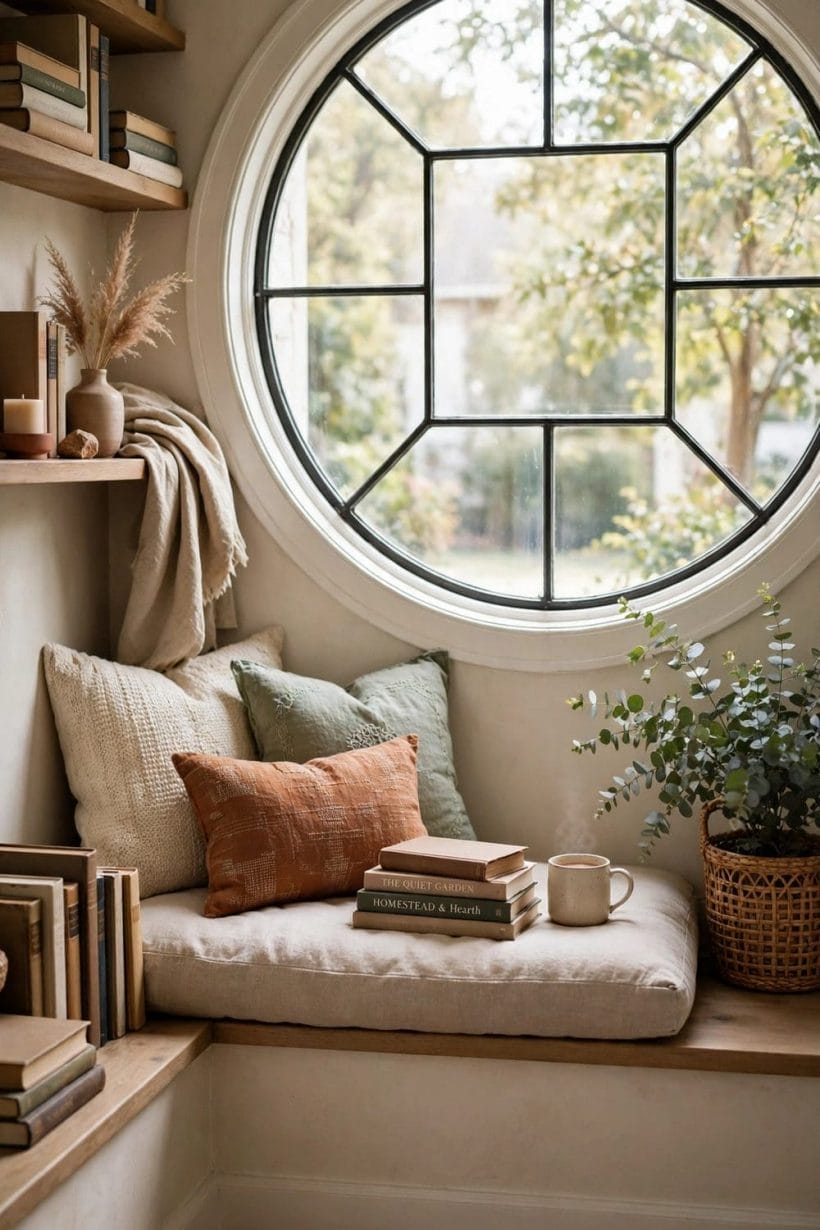
In a living room, a round window rewards a slower pace. Place a chair beside it, add a small table and a lamp, and you have a reading corner that needs no further decoration, because the window itself is the decoration. The circle frames the world outside like a picture, and that framed view changes with the seasons, so the corner never quite looks the same twice. In a small living space, this is a valuable trick: one well-placed feature does the work of several ornaments, and the room stays calm and uncluttered.
A round window also helps a living room feel balanced when the furniture is arranged around it. A sofa facing the window, or set at an angle to it, gains a natural focal point, and guests tend to gather near the light without quite knowing why. If the room has a fireplace, the round window can sit above it or to one side, but the two features should be given room to breathe, so that neither crowds the other. Keep the wall around the window fairly plain, and let the shape speak for itself. A busy pattern or a cluster of small frames next to a round window can fight with the circle, while a quiet wall lets it hold the room together.
6. Kitchens and Dining Nooks
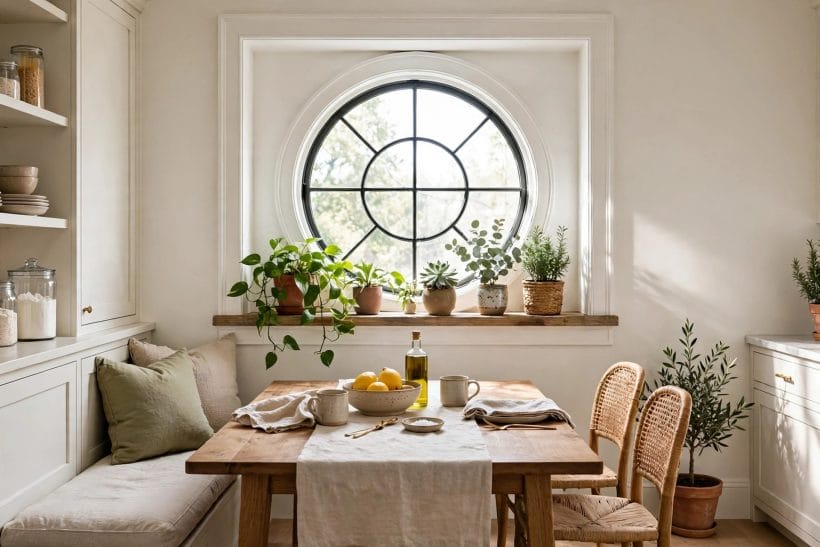
A round window over a kitchen table or a dining nook is a cheerful, practical choice. It brings daylight to the place where people eat, it gives the cook or the diner something pleasant to look at, and it suits the scale of a small kitchen, where a large rectangular window might dominate the wall. Plants on the sill, if the sill allows it, soften the frame further, and the round shape sits happily beside the straight lines of cupboards, shelves, and worktops, breaking up the grid without clashing with it.
In a kitchen, the practical questions are about steam, splashes, and cleaning. A window near a hob or a sink needs glass that is easy to wipe, and a frame that tolerates moisture, while a window over a dining table has fewer such worries and can be chosen more freely for looks. Ventilation is another point to discuss with a professional: some round windows open, some pivot, and some are fixed, and the right choice depends on the room, the climate, and how the rest of the kitchen is ventilated. Never assume that a window can simply be added to a kitchen wall, because the wall may carry services or structure that only a professional assessment can reveal. For small-room planning in general, the small living room ideas collection shows how compact spaces can still feel generous when each feature is given a clear job.
7. Bathrooms and Privacy
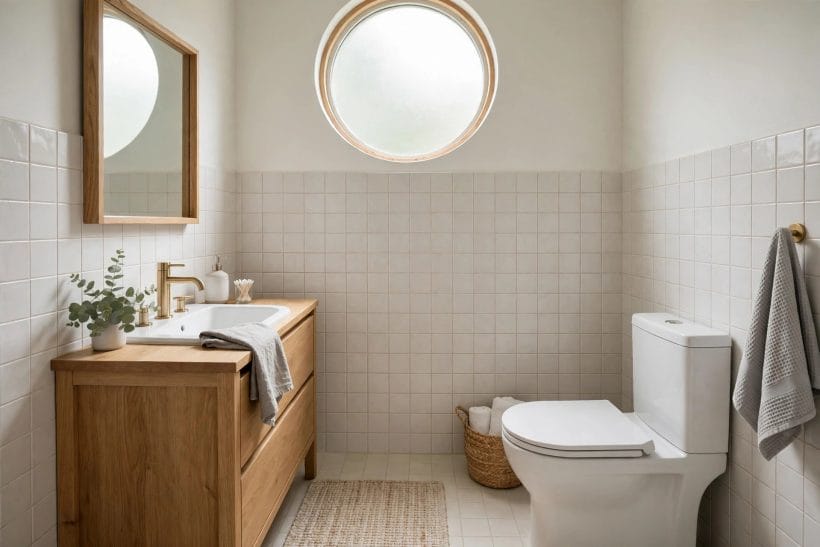
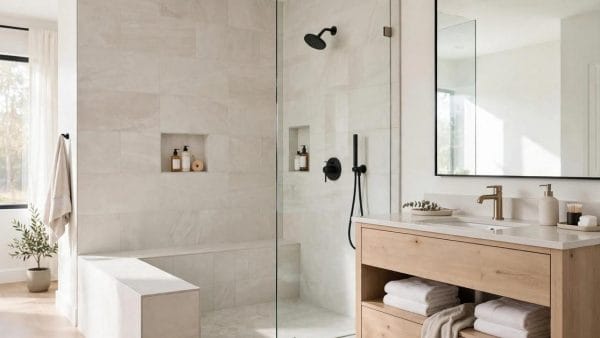
Bathrooms are a natural home for round windows, and the reason is privacy. A round window set high on the wall admits daylight and fresh air while keeping the room private, and frosted or textured glass adds a further layer of discretion without blocking the light. The result is a bathroom that feels bright and open during the day, without needing curtains or blinds that would trap moisture. The circular shape also suits the bathroom well, echoing mirrors, basins, and other rounded fittings, so the room feels coherent rather than patched together.
Moisture is the point to respect here. A bathroom window lives in a damp environment, so the frame, the seal, and the surrounding wall finish all need to be suited to that setting, and any work that touches waterproofing or the structure of the wall must be handled by a qualified professional. This is not a place for improvisation, because a poor seal in a wet room can cause damage that stays hidden until it is serious. Choose the glass and the finish with the room in mind, keep the design simple, and let a professional confirm that the wall, the seal, and the ventilation all work together before anything is changed.
8. Hallways, Stairs, and Small Walls
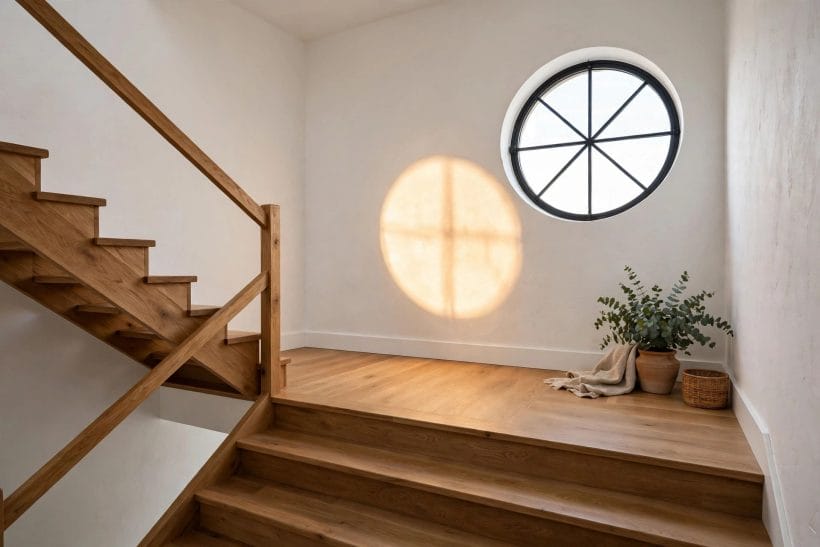
Hallways and stairwells are often the darkest parts of a house, and a round window can transform them. A circle of glass on a landing brings daylight deep into the centre of a home, and the round patch of sunlight it throws on the opposite wall becomes a moving decoration through the day. Because a hallway wall is usually narrow, the compact shape of a round window fits where a rectangular window might feel cramped, and it gives a plain passage a moment of interest without demanding floor space.
On a stairwell, the window should be positioned with the stairs in mind, so that the light falls where it is useful and the glass is not in a spot where it could be knocked or leaned on. A professional can advise on safe heights and on whether the wall in question can take an opening at all, since stairwell walls often carry structural loads. The same caution applies to any small wall: a round window looks effortless, but the work behind it is not, and the smaller the house, the more important it is that every opening is properly assessed. When it is done well, though, a stairwell window is one of the most rewarding features in a home, because it is seen many times a day, every day.
9. Frames, Colours, and Finishes
The frame of a round window sets its character. A timber frame feels warm and traditional, and it suits cottages, cabins, and houses with wooden cladding or beams. A slim metal frame feels crisp and contemporary, and it suits modern houses where the lines are clean and the palette is restrained. A painted frame, in white, black, or a soft colour, can either blend into the wall or stand out against it, and that choice changes the whole mood of the room. White frames disappear into a pale wall and let the glass do the talking, while a dark frame draws the eye and turns the window into a deliberate feature.
Colour inside the room matters too. A round window with a view of greenery brings a living colour into the room that changes with the seasons, so the surrounding palette can stay quiet and let the view provide the variety. Curtains and blinds, where they are wanted, should be simple: a circular blind, a sheer panel, or nothing at all usually suits a round window better than heavy drapes, which can hide the very shape that makes the window special. The tiny house designs collection shows many small homes where a restrained palette lets one strong feature, like a round window, carry the character of the whole house.
10. Exteriors, Gables, and Kerb Appeal
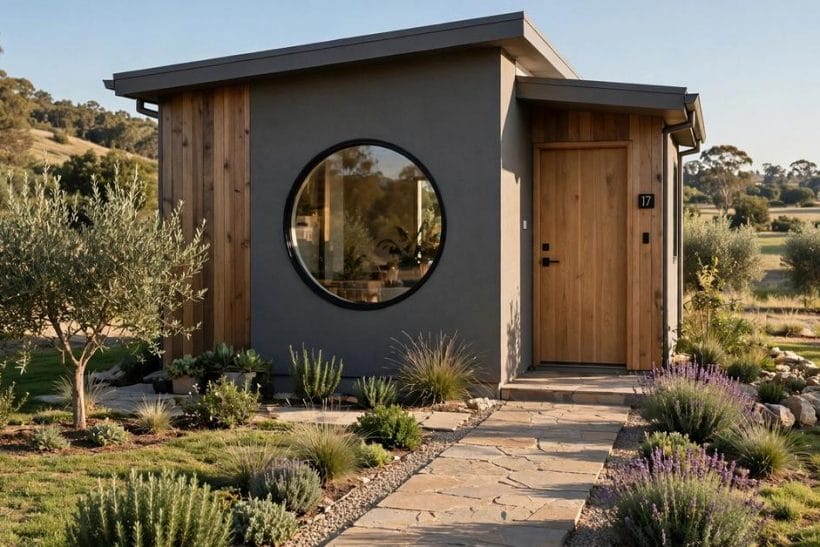
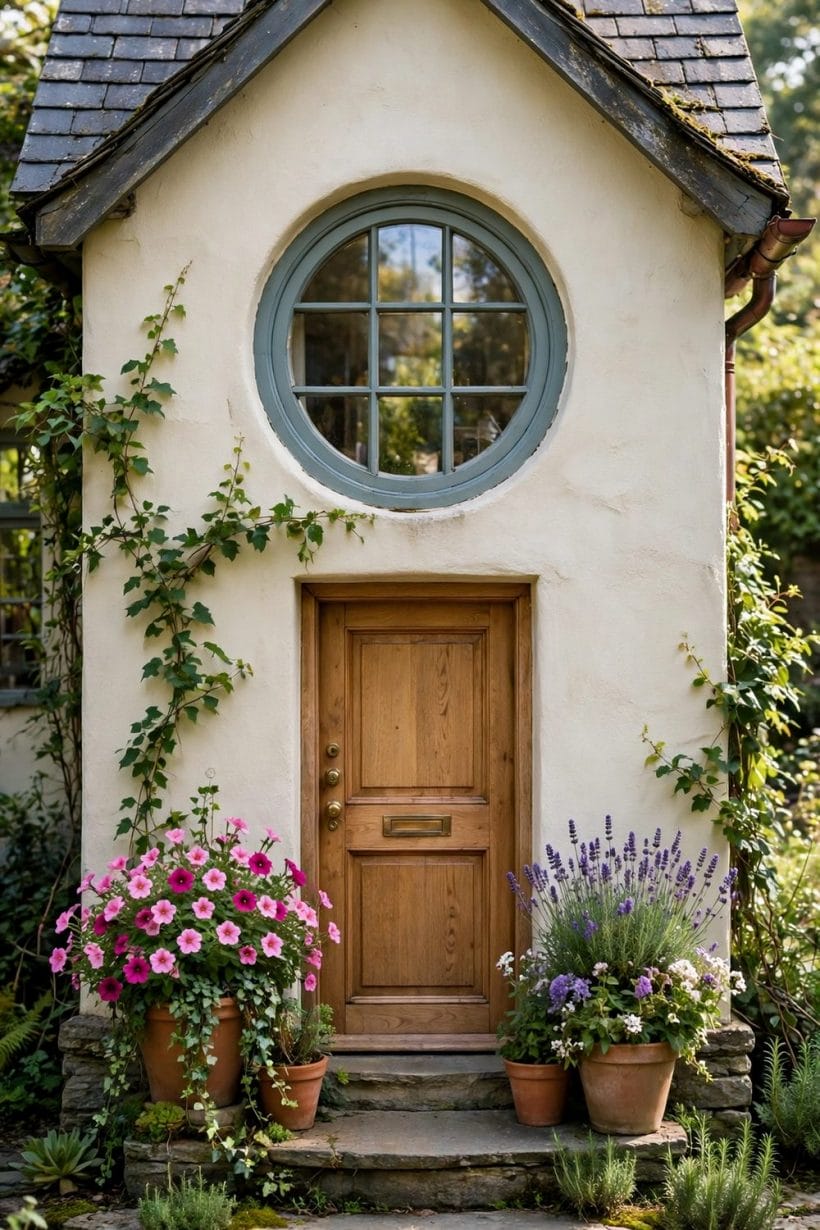
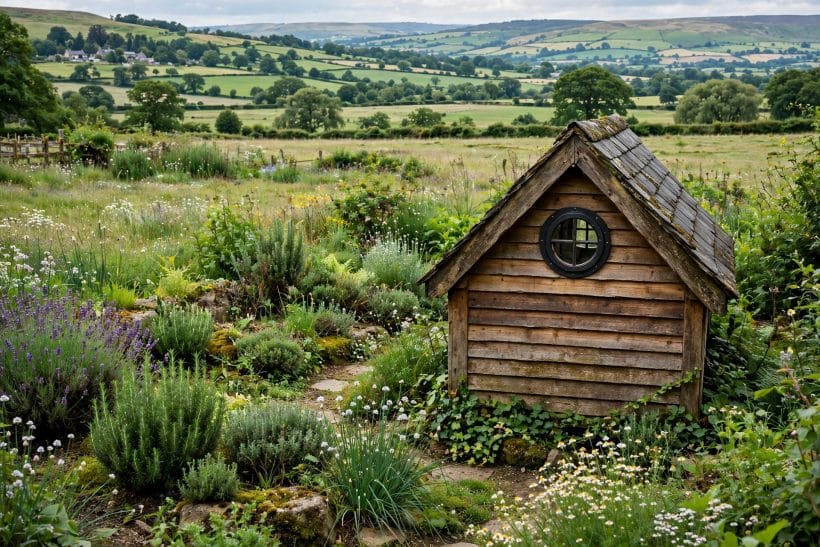
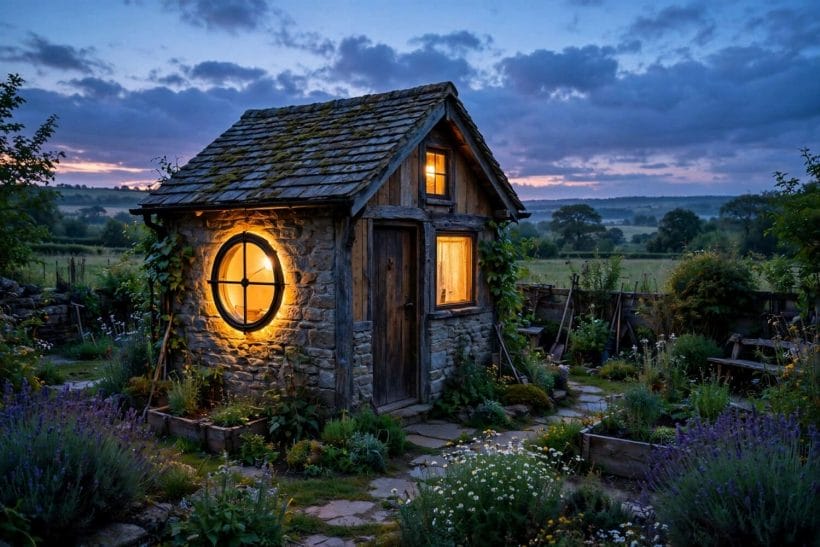
From outside, a round window gives a house a face. A single circle on a gable, above a door, or centred on a front wall makes a small house memorable, and it does so without elaborate decoration. That is why round windows appear so often on cottages, cabins, and tiny houses: they give a modest building a distinctive identity, and they photograph beautifully, which matters for anyone who takes pride in the front of their home. A small round window in a gable, sometimes called a porthole window, is a particularly charming version, because it suggests a ship or a storybook cottage while staying perfectly practical as a light source for the loft behind it.
From the street, balance is the key. One round window, well placed, is usually more effective than several competing circles, unless the house is large enough to carry a pair symmetrically. The window should relate to the door, the roofline, and any other openings, so that the front of the house reads as a composition rather than a collection of parts. Weather sealing matters here more than anywhere, because the front wall takes the full force of wind and rain, and any work on the exterior wall, its structure, or its waterproofing must be left to a qualified professional. For bedroom-focused exterior ideas, the tiny house bedroom ideas collection pairs well with the loft and gable placements discussed above, and for the wider picture, the home design ideas collection gathers the house-wide view in one place.
Final Considerations
Before settling on a round window, it helps to step back and consider the room as a whole. Ask what the window is for: is it there for light, for a view, for privacy, or simply for the pleasure of the shape itself? Each answer points to a different position, a different glass, and a different frame, and being clear about the purpose makes every later decision easier. A window chosen for light can sit high and be left unadorned, while a window chosen for a view deserves eye-level placement and a clear outlook. A window chosen for privacy can take frosted glass and sit where no curtain is needed, while a window chosen purely for looks can be placed where it composes the wall best.
Then consider the practical side, and be honest about it. Any opening in a wall affects structure and weather sealing, and in a wet room it affects waterproofing too, so the professional assessment is not a formality but the foundation of the whole project. Discuss the wall, the load it carries, the services that may run through it, and the sealing that will keep wind and rain out, and make sure you understand what the work involves before it begins. A round window that is well planned and well fitted will give pleasure for decades, while one that is rushed can cause trouble that is costly and disruptive to put right. Patience at this stage is not delay; it is part of doing the job properly.
Finally, keep the rest of the room quiet and let the circle do its work. A round window needs little help from decoration, and the rooms that show it best are usually the simplest ones: a plain wall, a comfortable chair, a plant or two, and the changing light through the glass. Whether it sits above a bed, over a table, high in a bathroom, or in the gable of a small house, a round window earns its place by being both useful and beautiful, and that combination is rare enough to be worth planning carefully. Look at plenty of examples, note what you like and why, and then talk to a qualified professional about turning the idea into a feature your home can carry with confidence.

0 Comments