
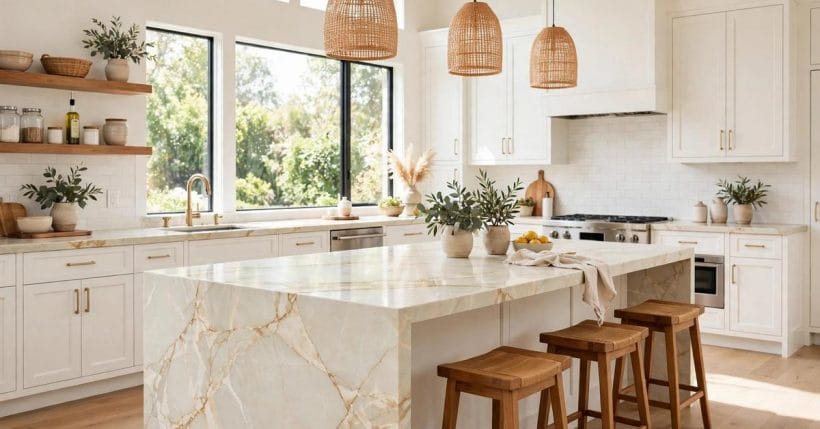
Some stones make a kitchen feel louder, and some make it feel calmer. The stone in this guide belongs firmly in the second group. It is a pale, creamy natural stone with soft beige veining that drifts across the surface rather than shouting from it, and it has become a familiar sight in kitchens where the owner wants warmth without a busy pattern. Seen across a whole island, it reads almost quiet from a distance, and only when you step closer do the veins, the faint gold threads and the gentle changes in tone come into view. This guide looks at taj mahal quartzite in general terms: what it looks like, where it works in a kitchen, how it pairs with cabinets and finishes, and what everyday care looks like, so you can decide whether its calm, warm character suits your own home.
One distinction matters before anything else, and it is worth getting right at the start. This stone is a natural stone, quarried and cut into slabs, while quartz — the surface most often confused with it — is an engineered surface made from crushed stone bound together. The two share part of a name and a similar place in the kitchen, but they are different materials with different characters, and advice written for one does not automatically apply to the other. If you are comparing surfaces, it helps to read about each one on its own terms, and to ask your supplier which material a particular slab or sample actually is. Throughout this guide, every point refers to the natural stone only, and anything involving cutting, fitting, plumbing, electrical work or gas connections belongs to qualified professionals, never to a weekend project.
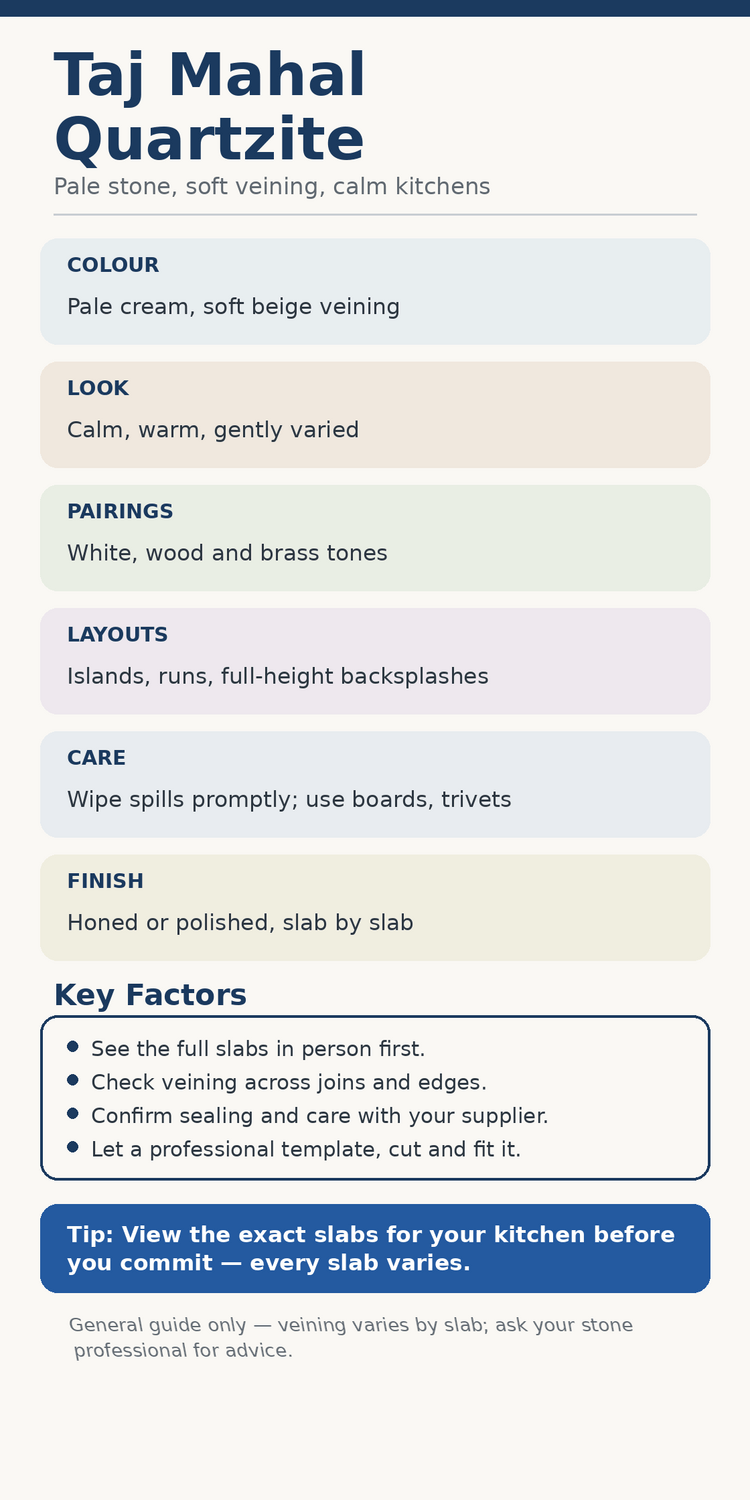
| Item | What it is |
|---|---|
| Islands: Where the Stone Shows Its Best Side | If there is one place where this stone earns its reputation, it is the kitchen island. |
| Runs, Peninsulas and Everyday Worktops | Beyond the island, the stone works just as well along the ordinary runs of a kitchen: the stretch beside the cooker, the length under the window, the return that turns a corner into a peninsula. |
| Full-Height Backsplashes and Short Upstands | A backsplash is where a worktop material either stops politely or carries on up the wall, and this stone suits both approaches. |
| Beyond the Kitchen: Vanities, Fireplaces and Other Uses | Although this guide focuses on kitchens, the same stone appears in other rooms of the house, and seeing it there can help you picture it in your own home. |
1. What the Stone Looks Like
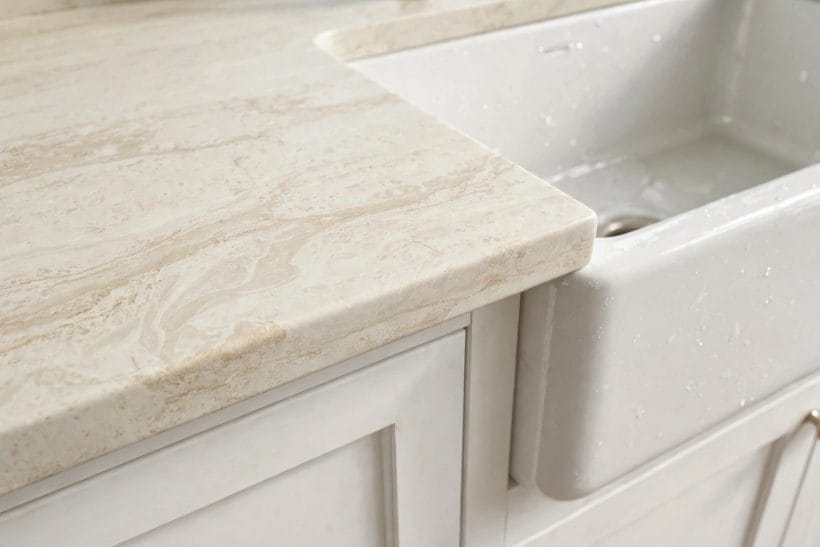
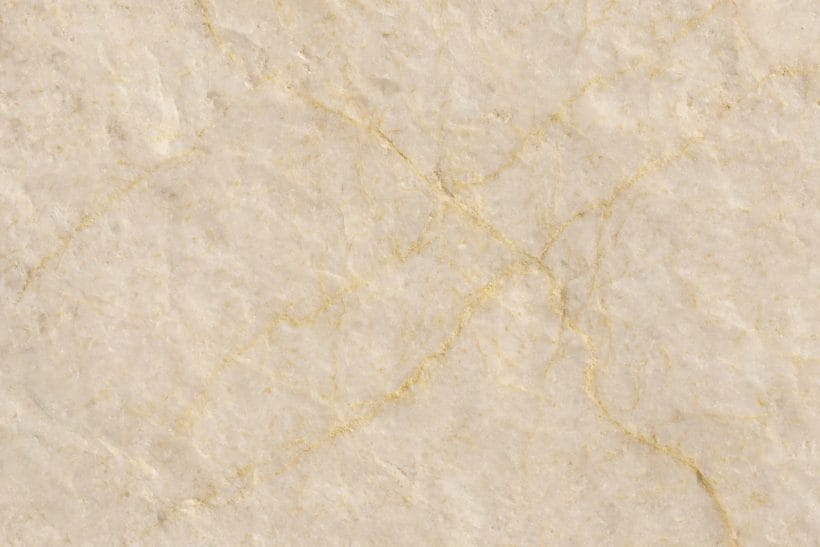
The first thing most people notice is the colour, or rather the lack of a single colour. The background is a soft, warm cream, sometimes leaning towards ivory and sometimes towards a pale beige, and the veining moves through it in gentle, irregular lines. Some slabs carry only a faint tracery, barely darker than the background, while others show broader ribbons of beige and the occasional thread of gold. No two slabs look alike, and that variation is part of the appeal, but it is also the reason photographs alone are never quite enough. A picture can show the general character, but it cannot show the exact slab that would end up in your kitchen.
Up close, the surface has a natural, stone-like depth that an engineered pattern rarely matches. Light moves across it softly, and the veins seem to sit within the stone rather than printed on top of it. From across the room, though, the overall impression is one of calm: a pale, warm surface that brightens a kitchen without dominating it. That balance is why it suits so many rooms. It brings warmth to a white kitchen, softness to a dark one, and a sense of quiet luxury to a small one, all without demanding attention the way a strongly patterned stone can.
2. Quartzite and Quartz: The Difference in Plain Terms
Because the names sound so alike, confusion between quartzite and quartz is common, and it is worth stating the difference simply. Quartzite is a natural stone formed over time and cut from the earth, so each slab carries its own pattern, its own veining and its own small variations. Quartz, by contrast, is manufactured: stone material is combined with binders to create slabs that are far more uniform from one piece to the next. Neither fact on its own makes one surface better than the other; they are simply different kinds of material, and they suit different priorities.
For a homeowner, the practical difference is mostly about character and choice. With a natural stone, you choose a particular slab, or at least a particular batch, and you accept — or celebrate — the variation that comes with it. With an engineered surface, you choose a pattern and you can expect the next slab to look very much like the sample. Care advice differs too, because a natural stone and a manufactured surface do not respond to spills, heat and cleaning in the same way. That is why it is worth reading a dedicated explainer on quartz alongside this guide, and then asking your supplier for care guidance that matches the exact material you buy. You can read more about how quartz is made and how it differs from natural stones in our quartz countertop explainer, which sets out the distinction in full.
3. Islands: Where the Stone Shows Its Best Side
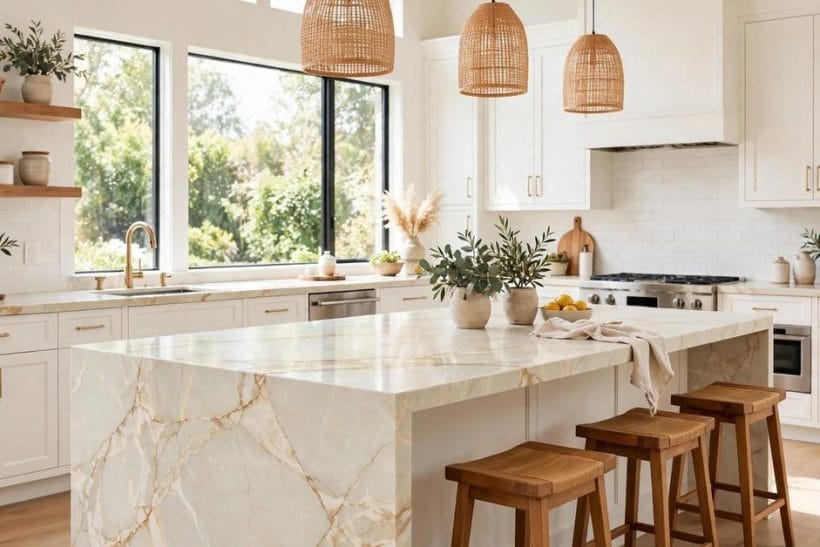
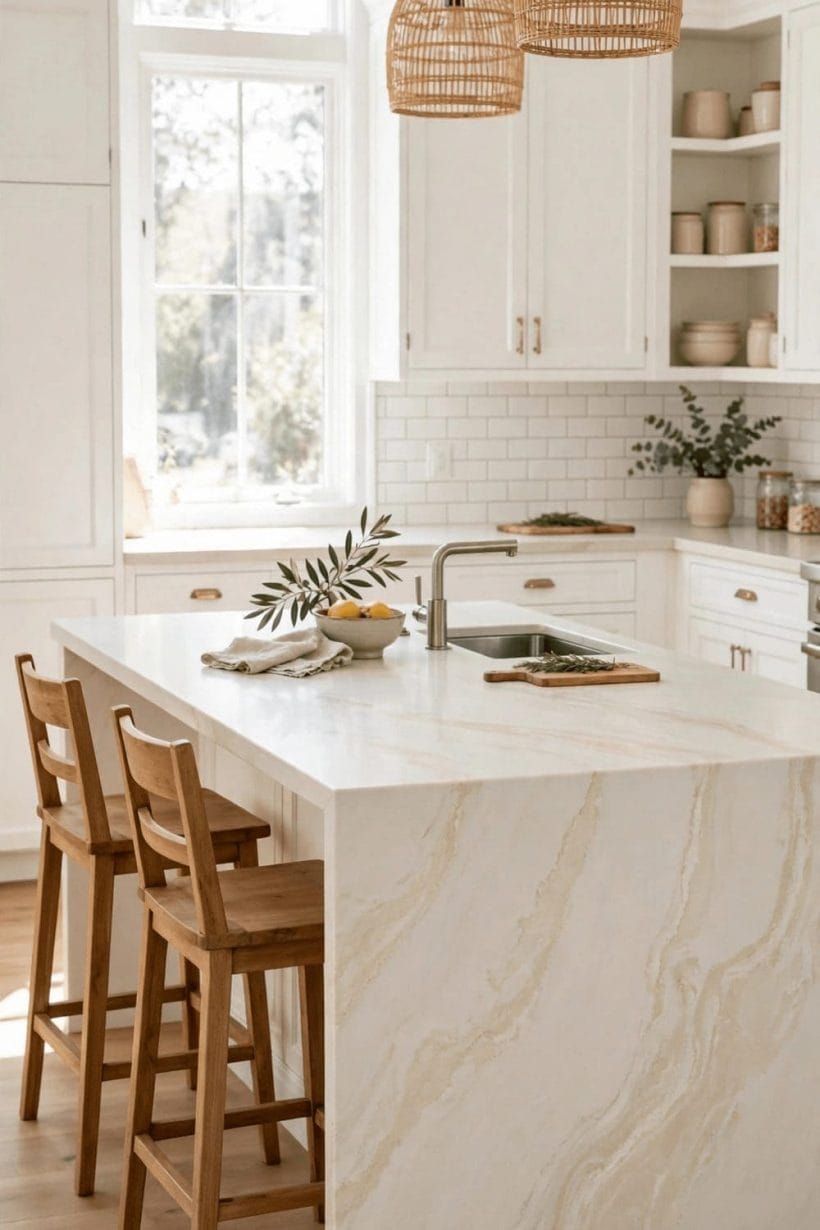
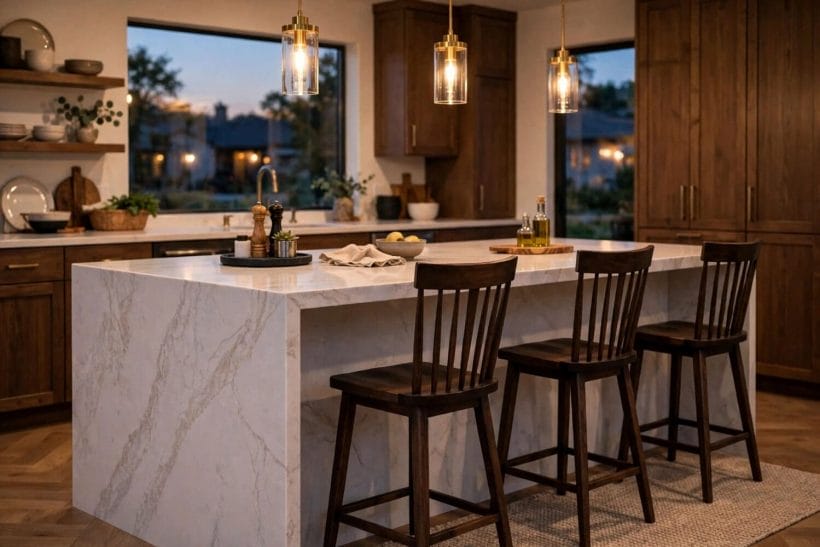
If there is one place where this stone earns its reputation, it is the kitchen island. An island gives the stone room to breathe: a wide, uninterrupted surface where the veining can run its course and where the pale colour can lift the whole room. A waterfall edge, where the stone turns down the side of the island to the floor, shows the pattern at its most dramatic, because the vein lines continue over the edge in one flowing movement. Even a simple straight-edged island, though, benefits from the same calm presence, and in a smaller kitchen a modest island in this stone can make the room feel lighter and more open than a darker surface would.
Seating matters as much as the stone itself when an island is planned. Wooden stools warm the pale surface, while upholstered seats soften it further, and the overhang that lets people sit comfortably is a matter for the professional who templates and fits the worktop. Joins matter too: where two pieces of stone meet, the veining will not match perfectly, because no two pieces are identical, so it is worth looking at where those joins would fall before the stone is ordered. A good supplier will walk you through the slab, show you how the pattern runs, and talk through where cuts and joins would sit, so there are no surprises on fitting day.
4. Runs, Peninsulas and Everyday Worktops
Beyond the island, the stone works just as well along the ordinary runs of a kitchen: the stretch beside the cooker, the length under the window, the return that turns a corner into a peninsula. In these positions its pale colour does quiet, useful work. It reflects light back into the room, it makes a narrow galley feel a little less enclosed, and it gives a calm background against which cooking, chopping and everyday clutter sit more easily. A run of this stone beside a sink or a cooker also ties the room together, because the same material can travel from the worktop up the wall as a backsplash, or across to the island, without a change of character.
Peninsulas deserve a special mention, because they sit halfway between a run and an island: attached at one end, open at the other, often carrying seating on the outer side. Here the stone’s soft pattern is an advantage, since the surface is seen from both the kitchen side and the room side, and a loud pattern would dominate both views. With a pale, gently veined surface, the peninsula reads as part of the room rather than as a barrier within it. As with any worktop, the fitting itself — cutting around sinks and hobs, supporting overhangs, sealing joins — is professional work, and any plumbing or electrical changes that go with it should be handled by qualified tradespeople at the same time.
5. Full-Height Backsplashes and Short Upstands
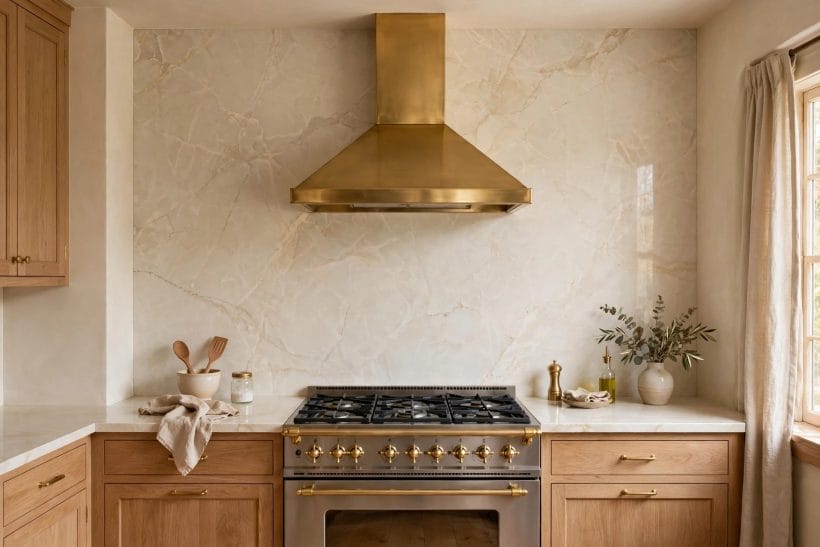
A backsplash is where a worktop material either stops politely or carries on up the wall, and this stone suits both approaches. A short upstand — a low strip of the same stone rising just above the worktop — gives a neat, finished edge that protects the wall directly behind the counter while keeping the wall above it free for paint, tile or open shelving. It is a quiet choice, and it works well in kitchens where the wall already carries colour or pattern that should not have to compete with more stone.
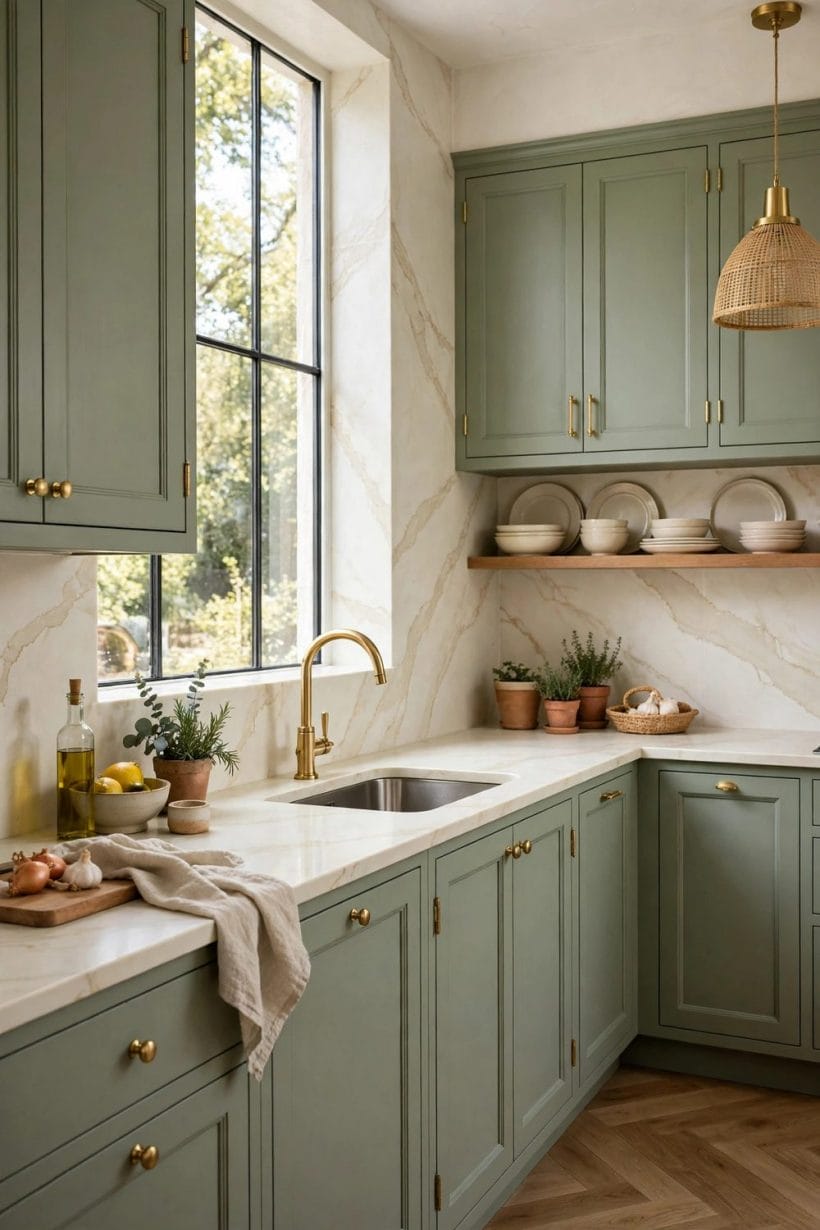
A full-height backsplash, where a single slab of stone runs from the worktop to the underside of the wall cabinets or even to the ceiling, is a bolder move, and it is one this stone handles gracefully. Because the pattern is soft, a whole wall of it does not overwhelm the room the way a strongly veined stone might, and the continuous surface makes the kitchen feel taller and more considered. It also removes the grout lines and joins that come with a tiled backsplash, giving a smooth, easy-to-wipe surface behind the cooker and sink. Our guide to quartz backsplash ideas shows how a related surface is used in the same positions, and the placement principles there — where a backsplash starts, how high it runs and where it stops — apply just as well when the material is natural stone. For the placement decisions themselves, our backsplash placement guide walks through the edges, corners and open ends that decide whether a backsplash looks deliberate or guessed.
6. Colours, Cabinets, Floors and Finishes
The stone’s pale, warm background makes it an easy neighbour. White is the most natural partner: white cabinets, white walls and white shelving all let the stone’s faint veining do the talking, and the combination reads clean, bright and timeless. Off-white and warm greige tones work in the same way, softening the contrast slightly and giving the room a warmer, more lived-in feel. In a kitchen with plenty of daylight, these pale-on-pale combinations can feel almost luminous, especially when the worktop catches sun from a window.
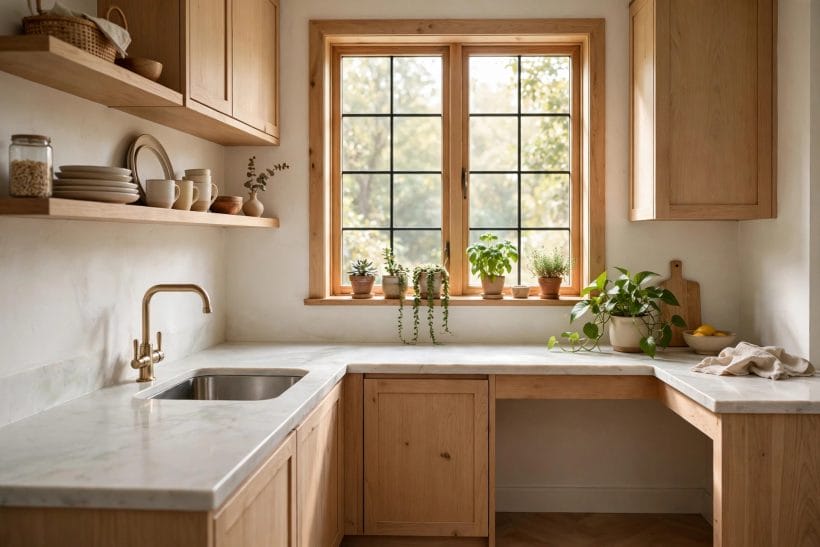
Wood brings out a different side of the stone. Light oak, warm walnut and natural beech all sit happily against the cream background, and the grain of the timber gives the room a texture that the smooth stone does not. Painted cabinets in soft sage, muted blue-grey or gentle green offer a third direction: the cool paint tones contrast with the stone’s warmth without clashing, and brass or brushed gold fittings bridge the two beautifully, picking up the faint gold threads in the veining. Darker cabinets — deep green, charcoal or navy — create the strongest contrast of all, turning the pale worktop into a bright line that runs through the room. Whatever direction you choose, it is worth holding a cabinet door sample and a stone sample together in your own kitchen light before deciding, because daylight changes both colours through the day.
Cabinets decide how the stone reads more than any other single element, because they occupy the largest area of wall and frame every stretch of worktop. Shaker-style doors in white or cream are the classic pairing, and they suit the stone’s quiet character: nothing competes, and the room feels orderly and calm. Wood cabinets tell a warmer story, and a kitchen that pairs this stone with natural timber — whether light pine, warm oak or a knotty grain — gains a rustic softness that suits country and farmhouse rooms especially well. Our wood kitchen cabinet ideas and our look at knotty pine cabinets both show how timber grain and pale stone balance each other, and they are worth browsing with a cabinet sample in hand.
Floors follow the same logic. Pale timber floors keep the room light and continuous, while mid-toned wood adds warmth underfoot and a gentle contrast with the worktop above. Stone or stone-look tiles in warm neutrals ground the room without introducing a competing pattern, and a simple, quiet floor lets the worktop remain the star. Fittings and fixtures complete the picture: brushed brass taps and handles echo the stone’s warm threads, matt black fittings give a sharper, more modern edge, and brushed nickel sits quietly between the two. The aim in every case is the same — let one element lead, and let the others support it, so the kitchen feels composed rather than crowded.
7. Small Kitchens, Tiny Homes and Compact Layouts
In a small kitchen, every surface works harder, and a pale stone earns its place by doing two jobs at once: it provides a practical work surface, and it helps the room feel larger than it is. Light colours reflect daylight and artificial light alike, and a continuous run of pale stone from one end of a galley to the other draws the eye along the room instead of stopping it at every change of material. In a tiny home, where the kitchen often opens directly into the living space, that continuity matters even more, because the worktop is visible from the sofa as well as from the sink.
Compact layouts do call for honest trade-offs. A single slab may need to cover the sink run, the cooker run and a small eating ledge, which means joins and cut-outs need careful thought, and the professional fitting the stone should be involved early, before cabinets are fixed in place. Storage also deserves attention in a small room: open shelving above a pale backsplash keeps the wall feeling open, while closed cabinets to the ceiling make the most of vertical space. Either way, the stone itself asks for nothing special in a small kitchen beyond the same care it gets in a large one — prompt wiping, boards for chopping and trivets for hot pans — and it rewards a small room with a sense of light that darker surfaces rarely match. For wider inspiration on how surfaces sit within current kitchen design, our trending kitchen countertops guide compares several surfaces side by side.
8. Everyday Care in General Terms
Day-to-day care for a natural stone worktop is mostly a matter of good habits rather than special products. Wiping up spills promptly is the single most useful habit, because liquids left sitting on any natural stone have more time to mark it than liquids wiped away straight away. Chopping boards protect the surface from knife marks and keep food preparation hygienic, and trivets or mats under hot pans protect both the stone and the finish, since sudden heat is unkind to most worktops. These habits are not chores invented for this stone alone; they are the same habits that keep any good kitchen surface looking its best for years.
Cleaning itself is best kept simple: a soft cloth, warm water and a mild cleaner of the kind your supplier recommends, with no harsh or abrasive products unless the supplier has specifically said they are suitable. Sealing is a question to raise with your supplier rather than to assume an answer to, because different slabs and finishes are treated differently, and the right advice depends on the exact stone you buy. The same goes for anything that looks like damage — a mark that will not shift, a chip at an edge, a join that has opened — which is a matter for a stone professional, not for a home remedy. And because heat is a common worry in any kitchen, it is worth reading our guide on whether a hot pan can go on quartz to see how heat advice differs between engineered and natural surfaces, and why a trivet is the safest habit whatever surface you own.
9. Beyond the Kitchen: Vanities, Fireplaces and Other Uses
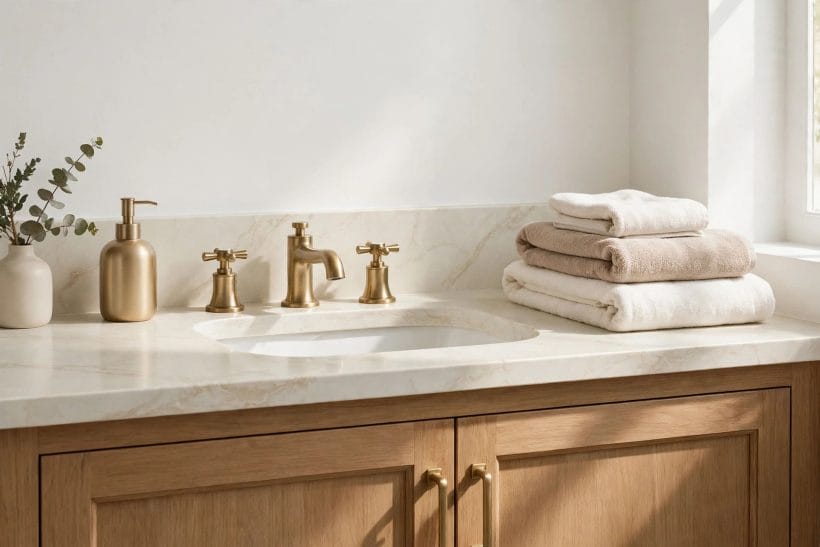
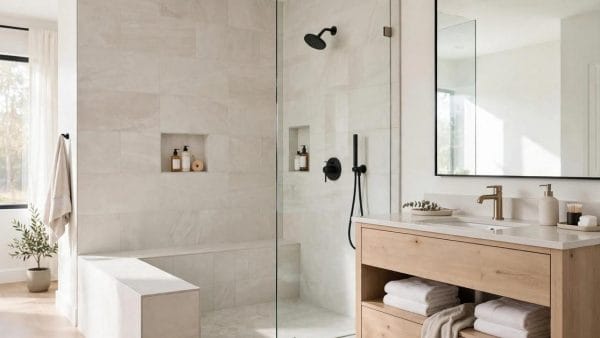
Although this guide focuses on kitchens, the same stone appears in other rooms of the house, and seeing it there can help you picture it in your own home. A bathroom vanity in this stone brings the same calm, pale character to a smaller space, where a single slab can cover the basin run and rise a short way up the wall as a backsplash, tying the room together without overwhelming it. The soft veining suits bathrooms especially well, because the room is usually viewed up close, and the gentle pattern rewards that close look without feeling busy.
Fireplace surrounds are another natural home for the stone, where a pale slab against a painted or panelled wall gives a focal point that is warm rather than stark, and where the stone’s natural variation stops the surround from looking flat or manufactured. Smaller uses — a laundry room worktop, a window sill, a shelf in a snug — all benefit from the same qualities, and offcuts from a kitchen project sometimes find their way into exactly these spots, though that is a conversation to have with your fabricator while the main project is still being planned. In every room, the same rules apply: see the actual slab, ask the supplier about care, and leave cutting and fitting to professionals. A stone that is handled well at the start will look after itself far more easily than one that was rushed into place.
10. Choosing a Slab and Layout Ideas to Take to Your Supplier
Choosing a slab is the most enjoyable part of the process, and also the part where patience pays off most. If you can, visit the supplier and look at full slabs rather than small samples, because a sample the size of a postcard cannot show how veining moves across a whole worktop, where the boldest lines fall, or how the colour shifts from one end of a slab to the other. Stand back from the slab, then step close to it, then look at it under light similar to your kitchen’s, because a slab viewed under warehouse lighting can look different once it is home.
While you are there, ask practical questions and note the answers. Ask how the veining will run across the joins in your particular layout, and whether the pieces for your kitchen can be cut from the same slab or from slabs that sit well together. Ask what finish the slab carries — a polished finish reflects more light and shows the pattern crisply, while a honed finish feels softer and more matt — and ask what care the supplier recommends for that finish. Ask, too, what happens if a slab is damaged during fitting, and who carries that responsibility, because a clear answer before work starts prevents an awkward conversation later. None of these questions has a single right answer; they simply help you choose with your eyes open, and a supplier who welcomes them is usually a supplier worth working with.
It helps to arrive at a supplier with a few layout ideas already in mind, even if the final plan changes once a professional is involved. One idea is the single-material kitchen, where the same stone covers the island, the runs and the backsplash, giving a calm, continuous look that suits open-plan rooms. Another is the mixed kitchen, where the stone covers the island while the perimeter runs use a quieter material — timber, for example, or a plain pale surface — so the island becomes a deliberate feature rather than one surface among many. A third idea is the statement backsplash, where the worktops stay simple and a full slab of this stone rises behind the cooker as the room’s focal point.
Colour ideas are worth sketching out too, even roughly. A white kitchen with this stone and brass fittings reads classic and bright; the same stone with sage cabinets and wood floors reads softer and more rural; with dark green or navy cabinets it reads bold and contemporary, the pale worktop cutting a bright line through the darker room. Take photographs of kitchens you like, note what you like about each one — the colour, the layout, the backsplash height — and show them to your supplier and your fitter. Professionals work best from pictures and preferences rather than from vague descriptions, and a short conversation with images in hand often settles in minutes what days of second-guessing cannot.
Final Considerations
If one idea should stay with you from this guide, it is to judge this stone by the slab in front of you, not by a photograph or a sample alone. Its charm lies in its variation: the pale cream background, the soft beige veining, the faint gold threads that appear in some slabs and not in others. That variation means two kitchens in this stone will never look identical, and that is a strength, provided you choose the slab yourself and you know where its joins and boldest veins will fall. Bring cabinet samples, look in your own light, ask about care and sealing, and let qualified professionals handle every part of the cutting, fitting, plumbing and electrical work.
Done that way, taj mahal quartzite gives a kitchen a rare combination: a surface that is practical enough for everyday cooking and calm enough to live with for years, in a colour that suits white cabinets, wood, sage paint and dark tones alike. It will not suit a room that wants a loud, dramatic pattern, and it will not suit a buyer who wants every slab to look exactly like the sample. But for a kitchen that should feel warm, bright and quietly considered — whether a large family kitchen, a compact galley or a tiny home — it is a stone well worth standing in front of, slab and sample side by side, before you decide.


0 Comments