
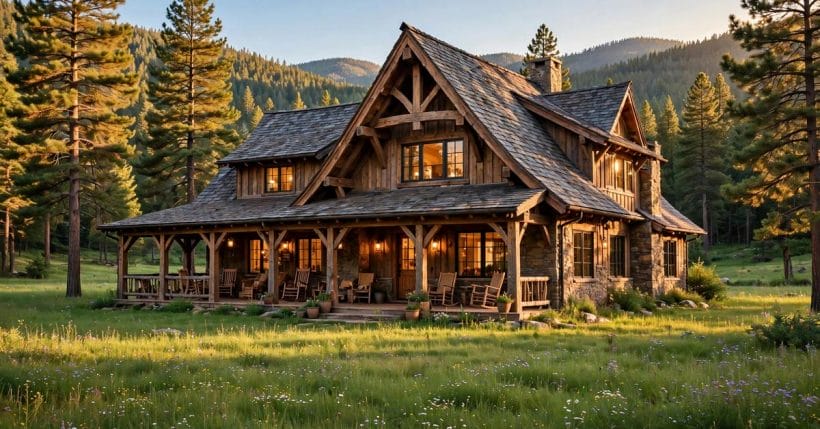
A rustic house does not pretend. Its beams are heavy because they hold the roof up, its stone is uneven because it came out of the ground that way, and its wood shows every year it has lived through.
These seventy-five ideas build that honesty into a whole home — shell, rooms, colour and detail. Among all the ways people chase rustic houses, the ones that last are built from real materials, plainly joined and left to age in the open.
1. Rustic Home Design Ideas at a Glance
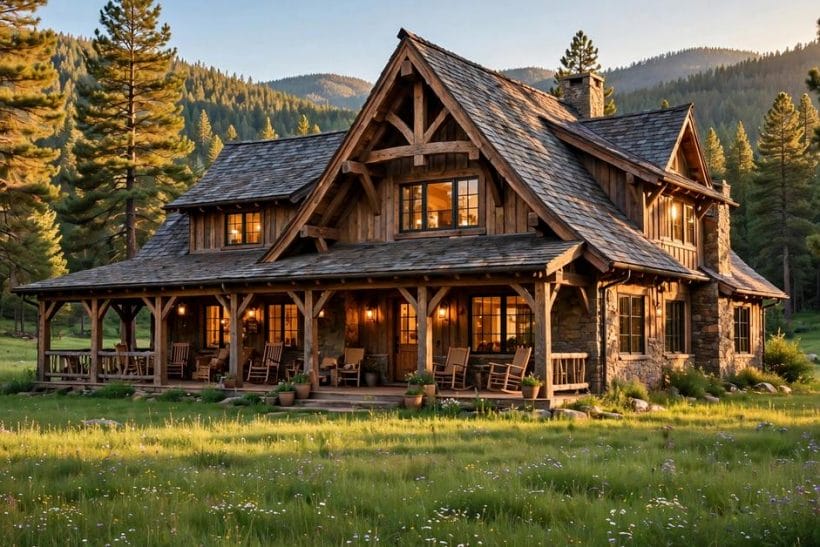
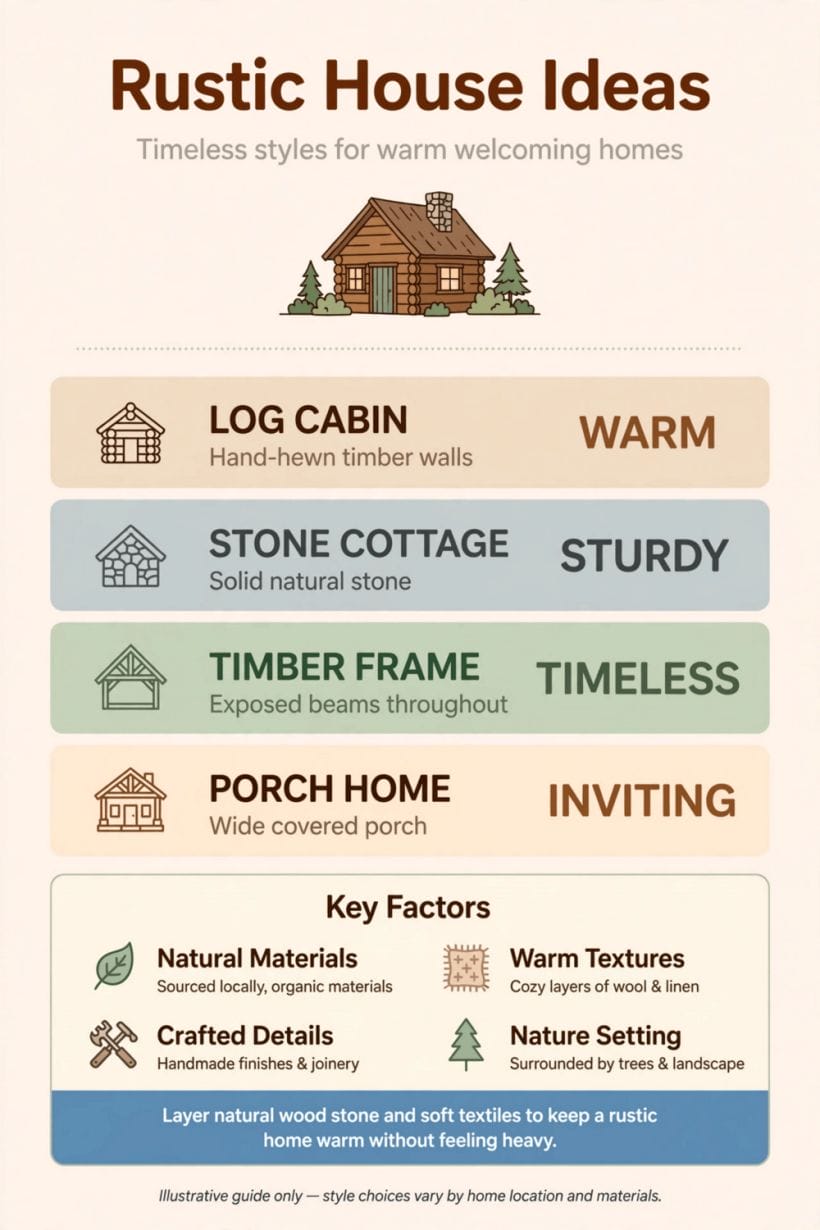
Rustic home design is a way of building and furnishing around natural, hard-wearing materials — timber, stone, brick, iron, leather and linen — handled plainly and left with their texture showing. It is the whole-home style behind the cabin, the farmhouse and the barn conversion, and it sits at the head of this site’s rustic family: the room-by-room slices, like the rustic living room, each take one room of the house this post designs entire.
| Question | Short answer |
|---|---|
| What makes a home read as rustic? | Real materials with their texture left in — sawn timber, rough stone, worn leather, matte iron — and joinery you can see |
| Does rustic mean rough or unfinished? | No — the craft is careful; it is the surfaces that stay honest rather than polished away |
| Can a new house be rustic? | Yes — reclaimed and new timber, stone and brick carry the style without a century of waiting |
| What is the classic failure? | Faux finishes and themed clutter — printed wood grain and antler everything read as costume, not character |
| Where does rustic meet modern? | In the mix — clean lines and modern comforts inside an honest shell, the ground the modern-led sibling covers from the other side |
2. The Rustic Shell: Timber, Stone and Honest Bones
Every rustic interior is decided before a single chair arrives, in the shell itself. Get the bones right and the rooms furnish themselves; get them wrong and no amount of plaid will save them.
Reading a rustic house starts with its weight. Old farmhouses, barns and cottages were built from what the land within a day’s carting offered — the oak from the parish wood, the stone from the field wall, the clay from the pit behind the yard — and that nearness is why their materials agree with each other and with the view from their windows. A modern rustic build earns the same agreement by choosing the same way: few materials, locally sensible, repeated through the house until the whole place feels quarried and felled rather than delivered. Where the structure is new, let it be honestly new in its joinery and traditionally heavy in its dimensions; where it is old, repair it in kind. The shell sections below are ordered the way a builder would walk the house — frame, walls, floors, fire — because in rustic design the architecture is not the backdrop to the style. It is the style, and everything after it is furnishing.
1. Expose the beams the house already has
Strip coverings back to the real structure wherever it survives. A beam that carries weight has a presence no applied decoration can fake, and its dents and saw marks are the room’s history written in wood.
2. Build a stone wall that earns its place
One wall of rough stone — around a fireplace, behind a stove, along an entry — anchors a whole floor. Keep the mortar plain and the stones varied; the irregularity is the point, not a problem to grout away.
3. Lay wide-plank floors with the grain showing
Broad boards, visible grain, a matte finish that lets feet polish the traffic lanes over time. Narrow, glossy strips belong to a different house; rustic floors are walked on, scuffed and loved for it.
4. Keep ceilings low where you can
Rustic rooms gather rather than soar. A lowered ceiling of boards or beams over a sitting area makes the fire feel nearer and the room feel held — save the height for one dramatic space.
5. Choose a fireplace as the house’s heart
Stone or brick, generously sized, with a timber mantel deep enough for a clock and a kettle. In a rustic home the hearth is not an appliance; it is the reason the room exists.
6. Let brick stay brick
Where brick walls survive, clean them and leave them. Painted brick can be lovely elsewhere, but bare brick’s colour variation and rough face are free texture most styles pay to imitate.
7. Frame openings in heavy timber
Lintels and posts a size larger than strict need give doorways their rustic gravity. The eye reads the thickness as strength, and the house feels built rather than assembled.
8. Board the walls in the rooms that work hardest
Vertical or horizontal boarding in entries, kitchens and utility spaces takes knocks that plaster cannot, and it can be scrubbed, repainted or left to silver. Practical first, beautiful as a consequence.
9. Put iron where hands touch
Handles, hinges, hooks and latches in blackened iron. Small, daily, tactile — the hardware is where a house proves its materials are real, because hands can tell the difference instantly.
10. Keep one wall of windows plain and deep-set
Thick walls and deep reveals frame the view like a picture and throw the light in shafts. Simple frames, no fussy trim: the landscape outside is the decoration.
11. Let the staircase be built, not fitted
Solid treads, a heavy handrail, open stringers or chunky newels. A rustic stair should feel hewn from the same forest as the beams, and sound solid under every foot.
3. Rustic Living Rooms: Firelight, Weight and Welcome
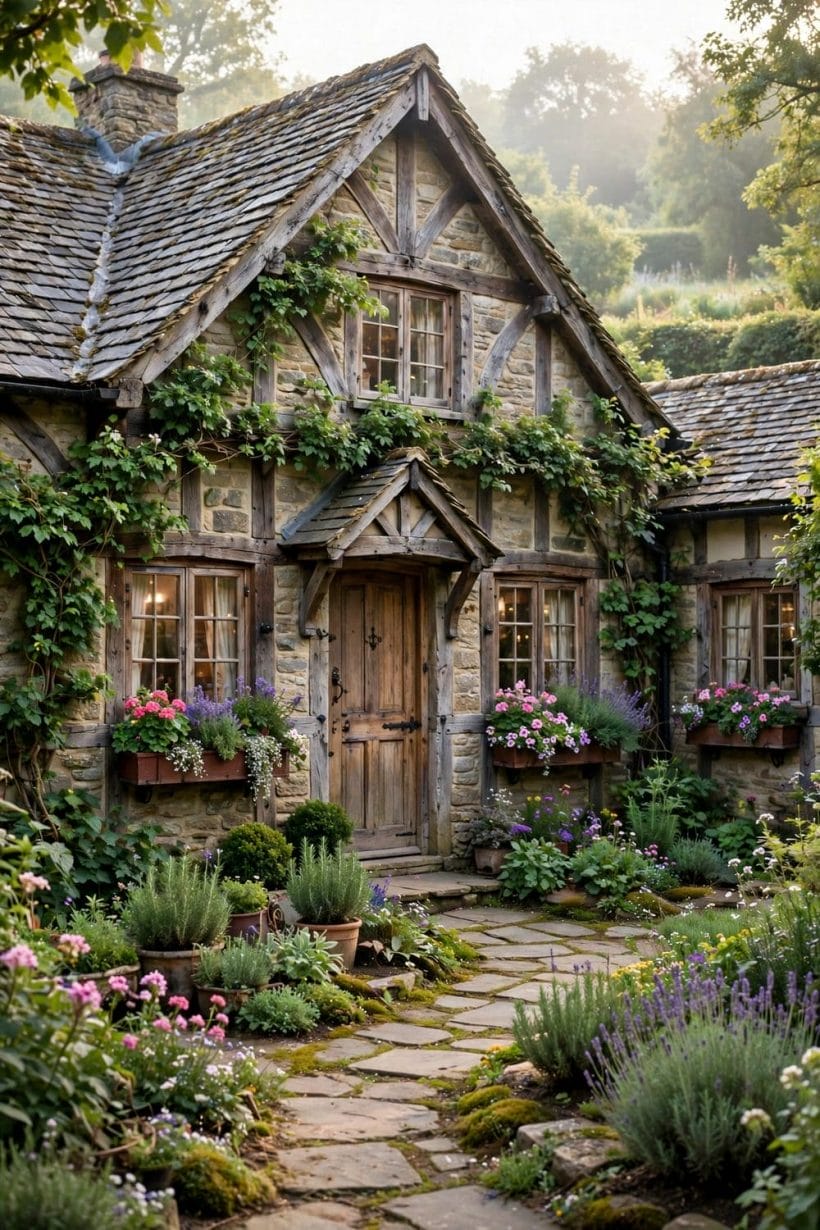
The living room is where the style is judged. Weight, warmth and wear are the tests — everything should look better in firelight and better in ten years than it does today.
12. Arrange the room around the fire, not the screen
Chairs turned to the hearth and to each other, the fire as the evening’s entertainment. Screens can visit on a stand or in a cabinet; the flames keep the permanent seat.
13. Choose a sofa built like a fence post
Deep, low, leather or heavy linen, with cushions that will slump gracefully. A rustic sofa is furniture you can fall into after a day outside — tailored slipcovers need not apply.
14. Anchor the seating with a rug that can take boots
Wool, jute or a worn flatweave in earth colours. The rug’s job is warmth underfoot and permission to come in from the garden without ceremony.
15. Use a trunk or a chest as the coffee table
Storage, footrest, table and story in one piece. Old wood with iron corners carries drinks, blankets and board games, and shrugs off the dents each one adds.
16. Light with lanterns, sconces and firelight
Warm, low, shaded light from the walls and the hearth. Overhead glare is the enemy of every rustic room; pools of lamplight are what make timber glow.
17. Keep a wood store as part of the furniture
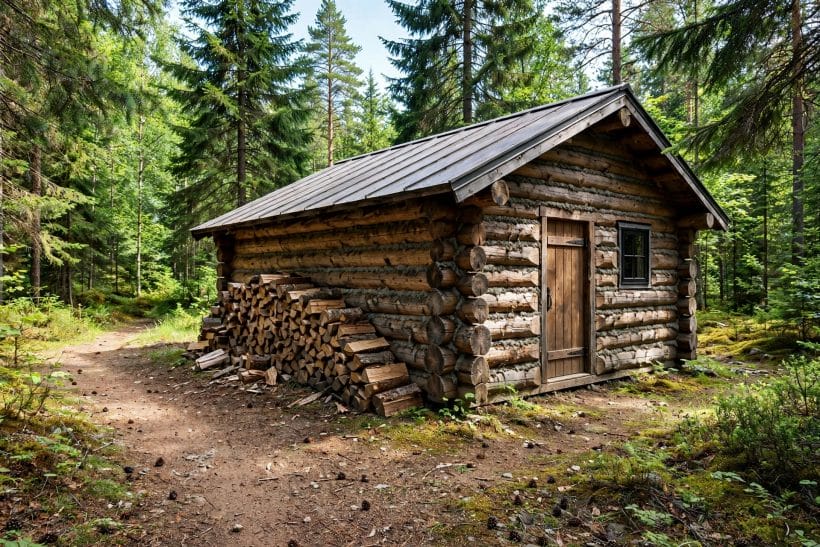
A stacked log niche or an iron basket by the fire is both fuel and ornament. The rhythm of split ends is the most rustic pattern there is, and it renews itself all winter.
18. Hang one large, simple piece of art
A landscape, a map, an antler-free piece of honest painting in a plain wood frame. Singly and large beats a gallery of small themed prints every time.
19. Let leather age where hands land
Armchairs and ottomans in full-grain leather that darkens at the arms and shines at the edges. Patina is the rustic finish — it cannot be bought, only earned, which is why it convinces.
20. Build window seats into the thick walls
The deep reveals rustic walls give you are seats waiting to happen. A board, a cushion and a blanket make the coldest window the most contested seat in the house.
21. Mix one modern piece without apology
A clean-lined lamp or a simple steel side table keeps the room awake. Rustic that admits nothing new becomes a museum; one crisp note makes the old wood sound louder.
22. Keep the palette to what the land gives
Bark brown, stone grey, moss, clay, cream. Colours taken from outside the window never fight the view, and the room feels grown rather than decorated.
4. Rustic Kitchens and Dining Rooms: Work, Wood and Gathering
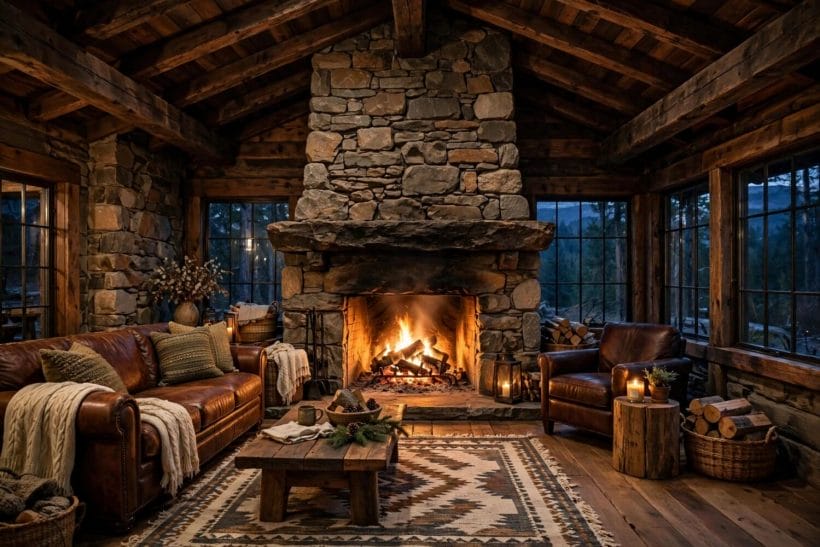
Rustic kitchens are workshops that feed people, and rustic dining rooms are built around one table and the hours spent at it. Shaker plainness, farmhouse generosity and surfaces that improve with use rule both.
23. Centre the kitchen on a table, not an island unit
A heavy farmhouse table does the island’s work — prep, homework, supper — while staying furniture rather than cabinetry. It can be scrubbed, oiled and handed down.
24. Hang pots where they can be reached
A rail or rack of iron and copper over the work zone. Tools on display are the rustic kitchen’s decoration, and they are honest decoration: every piece earns its place weekly.
25. Shelf the everyday dishes in the open
Open shelves of thick board for the plates and bowls used daily. Closed cupboards keep the best china; open shelves keep life moving and the wood working.
26. Choose a range with presence
A solid range cooker or a simple stove with an iron flue gives the kitchen its hearth. Around it, everything else can be plain — the fire, again, is the architecture.
27. Sink deep, in stone, steel or ceramic
A butler’s sink or a trough sink takes a roasting tin without negotiation. Rustic sinks are sized for real washing-up, with taps in unlacquered metal that ages alongside.
28. Seat the dining table with a bench
Benches squeeze in one more cousin, slide away under the table, and keep the room’s lines plain. Add two proper chairs at the ends for the elders, as every farmhouse does.
29. Store in crocks, jars and baskets
Utensils in a stoneware crock, onions in a basket, flour in a tin with its name worn soft. Containers you can see through or reach into beat a wall of matching canisters.
30. Keep a dresser rather than fitted units on one wall
A freestanding dresser or hutch gives storage with furniture’s warmth, and can move house when you do. Fitted cabinetry everywhere is how rustic kitchens turn into showrooms.
31. Light the table with one low pendant run
Enamel or iron shades hung low over the table make an island of light for eating and talking. Everything beyond the table’s edge can fall gently into shadow.
32. Let the floor be stone or brick where work happens
Cold, hard and handsome under the stove and sink runs — and honest about spills. Wood can take the eating end; the working end wants a floor that forgives.
33. Grow the kitchen’s garnish on the sill
Herbs in clay pots, a bowl of eggs, a bunch of something drying from a beam. The rustic kitchen decorates itself from its own work, changed with the seasons.
5. Rustic Bedrooms and Bathrooms: Rest in Rough Textures
Private rooms are where rustic softens. The palette of the dedicated rustic bedroom — wool, linen, worn wood and low light — scales up to the whole house’s sleeping and washing rooms without losing its calm.
34. Build the bed from beams
A frame of posts and rails thick enough to sit on the end of, headboard high or low. The bed is the bedroom’s architecture; in rustic rooms it should look grown, not bought flat.
35. Layer wool, linen and one old quilt
Texture does the decorating. Rumpled linen, a heavy wool throw, a quilt with a past — the bed looks slept in by design and feels better for it every night.
36. Keep bedside light low and warm
Small lamps, candle lanterns or wall sconces at pillow height. Rustic bedrooms are for the last hour of the day; light them like it.
37. Store clothes in chests and on pegs
A blanket chest at the bed’s foot, a peg rail for the week’s clothes, baskets for the rest. Wardrobe walls in matching laminate belong to another style’s bedroom.
38. Give the bathroom a trough or a barrel echo
A deep trough sink, a metal tub or timber-clad bath panel nods to the washhouse without cosplay. Keep fittings simple and the water hot; the romance is in the materials.
39. Tile plainly or not at all
Simple handmade-look tiles, limewash or boards where water allows. Patterned feature tiles fight the timber; rustic bathrooms get their interest from wood, stone and iron.
40. Heat the bathroom like a room, not a clinic
A towel rail with real towels in earth colours, a stool, a plant that likes steam. If the bathroom feels like part of the house rather than a laboratory, it is right.
41. Mirror in a frame with a past
Weathered wood or aged iron around plain glass. The mirror is the bathroom’s picture; its frame should have lived a little.
42. Keep floors warm where feet land bare
Wood, or stone with a woven runner where the bather steps out. Rustic luxury is a warm floor at midnight, not a heated gadget with a manual.
43. Sleep under the slope when you can
Eaves bedrooms are rustic’s natural habitat — low ceilings, a dormer for the morning, beams at head height to duck affectionately. Small and sloped beats large and square.
44. Let bedrooms hold almost nothing else
Bed, chest, chair, light. Rustic rest is emptiness plus texture; every extra object should have to argue its way in.
6. Rustic Exteriors, Entries and Porches: The Approach
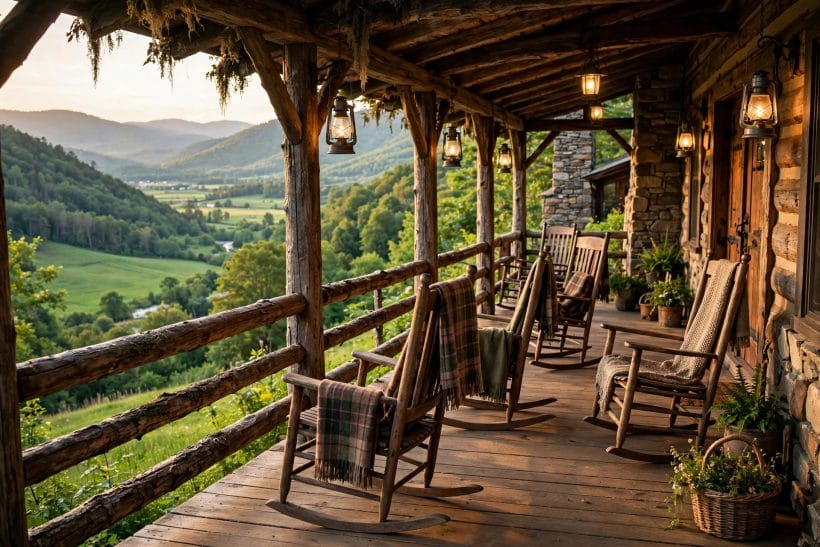
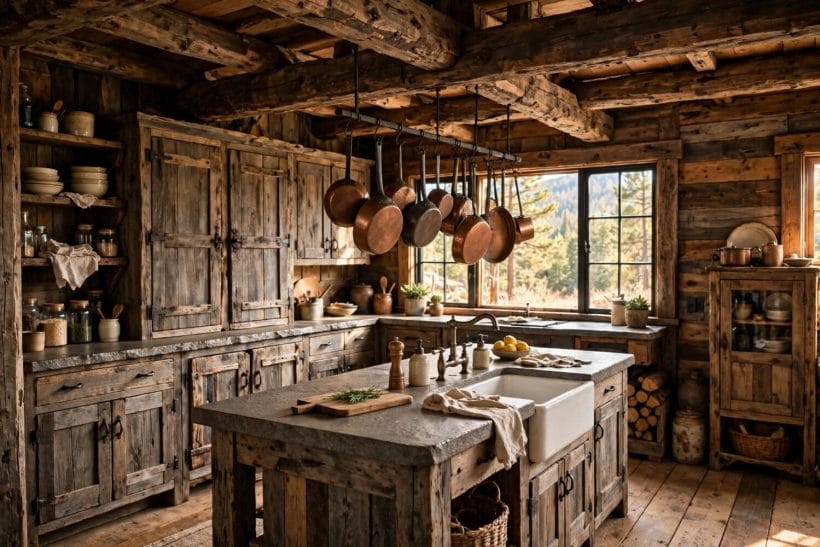
A rustic house announces itself from the lane: mass, shadow, smoke and a porch with chairs on it. The same instincts that shape converted barn homes shape any rustic exterior — big simple forms, materials from the land, and a welcome you can sit down in.
45. Give the house a porch with a purpose
Deep enough for chairs, a wood pile and a dog. A rustic porch is an outdoor room where the household actually lives in good weather, not a decorative doorstep.
46. Face the chimney proudly
Stone or brick, carried outside the wall and up past the roof without apology. The chimney is the exterior’s hearth-sign; hiding it inside is a modern shyness rustic skips.
47. Board-and-batten the gables
Vertical boarding with battens over the joints weathers into stripes of silver and shade. It is the farm building’s skin, and on a house it promises the inside will be honest too.
48. Roof in a material with weight
Slate, shingle, clay tile or standing-seam metal — anything with texture and a matte face. The roof is half the silhouette; give it a material that ages rather than fades.
49. Build the entry for mud
Stone flags, a boot scraper, hooks for coats and a bench for the unlacing ritual. Rustic houses expect weather and welcome it with a room designed for the evidence.
50. Light the approach with lanterns
Iron lanterns by the door and along the path, warm and low. A rustic house at dusk should glow like a hearth seen from the lane — that glow is the style’s signature.
51. Stack the wood where it can be seen
A neat log store against the wall or under the porch eaves is the facade’s texture and the winter’s promise. Few ornaments beat a well-built woodpile.
52. Keep planting loose and useful
Herbs by the door, climbers on the wall, a kitchen garden in view. Rustic planting feeds the house or scents the path; purely ornamental formality belongs to grander styles.
53. Gate and fence in split rails or rough posts
Boundaries built from the same timber as the house tie the plot together. A fence that could be mended with an axe and an afternoon is a rustic fence.
54. Let outbuildings join the conversation
A shed, store or small barn in matching board and stone makes the house a homestead. Rustic design thinks in settlements, not in single objects on lawns.
55. Weather the door and mean it
A plank door with iron strap hinges, ideally in a colour the land approves — deep green, oxblood, tar black. The handshake of the house should feel like the house.
7. Colour, Texture and Patina: The Rustic Palette
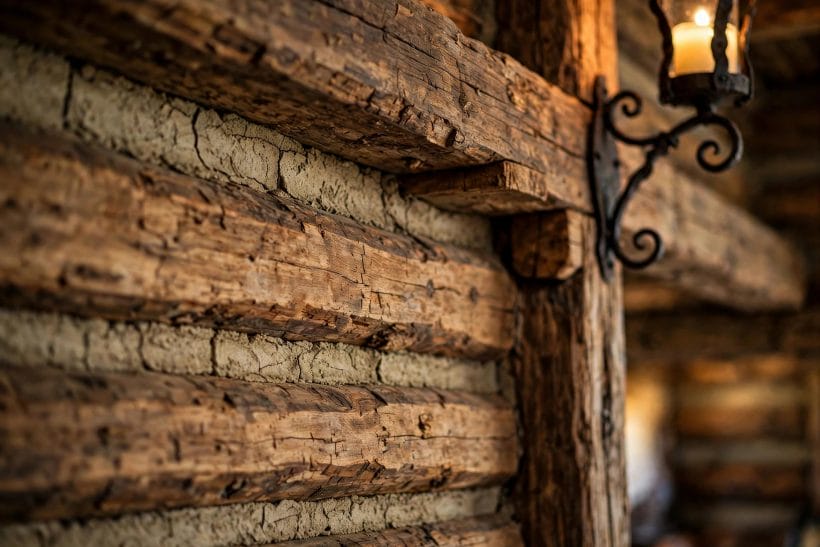
Rustic colour is not chosen from a chart; it is collected from the site. The palette discipline is simple — if the material does not grow, burn or weather within sight of the house, it needs a very good reason to be inside it.
56. Take colours from the view
Bark, bracken, stone, slate, moss, mud and cream. A palette gathered within a mile of the door will sit in the landscape like it grew there, because it did.
57. Let wood show its whole range
Honey oak, silvered pine, dark walnut, weathered grey — mixed, not matched. A house where every timber is stained the same shade smells of a showroom, not a forest.
58. Use limewash and clay paints on old walls
Soft, chalky, uneven in the kindest way — these finishes let old walls breathe and move, and their colour shifts with the light through the day like weather indoors.
59. Keep one deep colour for doors and joinery
Forest green, oxblood, indigo or tar black on doors, stairs and cupboards gives the pale walls and mid woods their contrast — the frame that makes the picture.
60. Weave the textiles from animal and plant
Wool throws, linen curtains, cotton quilts, jute underfoot, leather where hands land. If a fabric’s fibre cannot be named, it probably cannot be rustic either.
61. Treasure the worn spot
The shiny stair tread, the dipped threshold, the chair arm polished by sleeves — never restore these away. Wear in the right places is the house’s signature, and guests trust it instinctively.
62. Mix metals like a workshop does
Iron black, brass warmed, copper greening at the edges, tin dull and honest. A single matched metal throughout is a hotel trick; workshops accumulate.
63. Bring stone inside in small doses
A hearthstone, a stone sink, flags in the hall, a boulder of a doorstop. Stone indoors reminds every room that the house stands on the ground it was built from.
64. Let textiles carry the pattern
Checks, stripes and plain weaves in the blankets and cushions — pattern that can be folded away when seasons change, leaving the architecture calm beneath.
65. Age new wood honestly or not at all
Sun, use and oil will do the work in a few years. Wire-brushed, tea-stained fakery fools no one at touching distance, and rustic is always judged at touching distance.
8. Rustic in Town, in Small Homes and Mixed with Modern
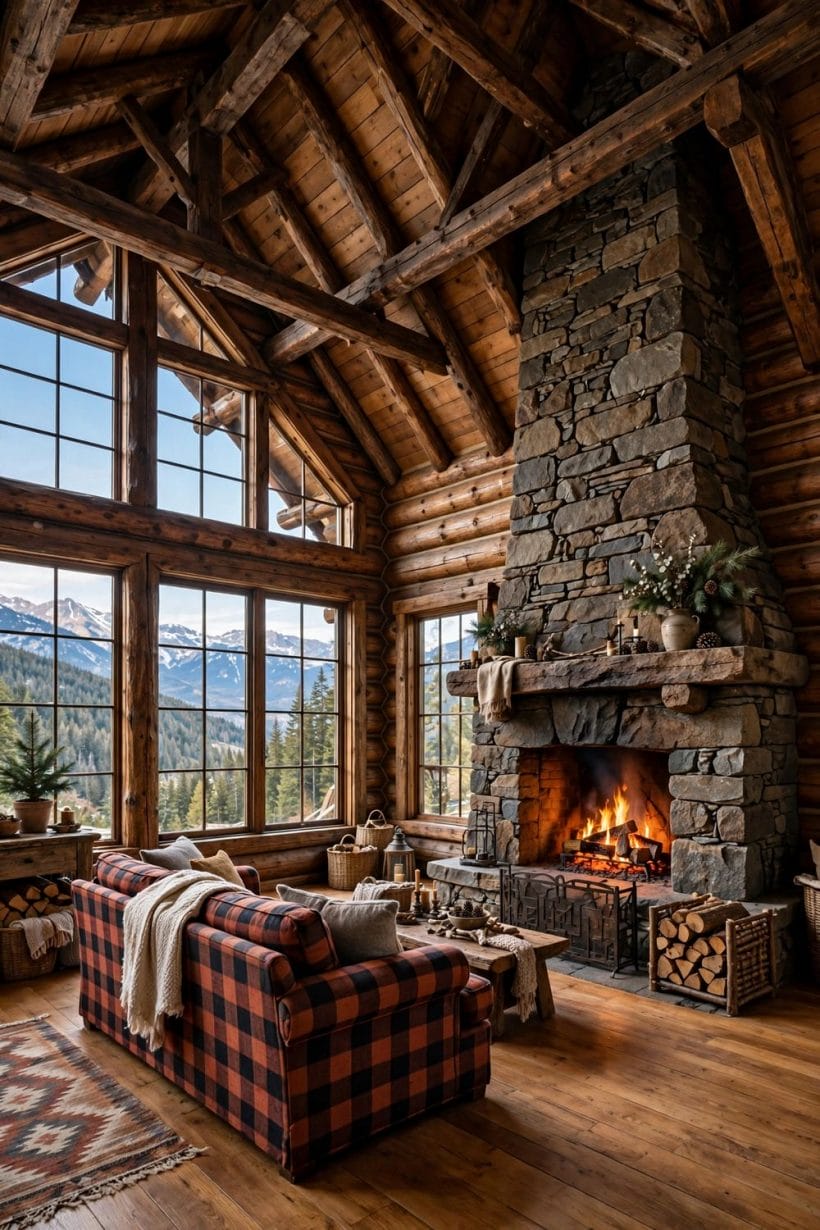
Rustic is a material discipline, not a postcode. It survives small footprints and city streets precisely because it asks for less — fewer, heavier, honester things. The modern-led treatment of the same family is the modern rustic post; this one keeps the old materials in charge and lets modern life move in quietly around them.
66. Start with one honest wall
In a flat or a small house, a single wall of boards, brick or stone sets the register for everything else. One true surface outweighs a room of rustic accessories.
67. Scale the furniture down, never the materials
A smaller oak table is still oak. Tiny rooms fail at rustic when the pieces turn dollhouse-delicate; keep the timber thick and the count low instead.
68. Take the tiny-house lesson
The rustic tiny house interior proves the style at its smallest: built-in timber furniture, a stove for a hearth, every object earning its volume. Small homes should copy its discipline, not its dimensions.
69. Hide the screens, keep the speakers honest
Modern life stays — in a cabinet, behind a door, under a cloth. Rustic rooms are not technology-free; they are technology-quiet, with the wood doing the talking.
70. Let modern kitchens wear rustic clothes
Plain slab doors in painted timber, a stone worktop, iron pulls: the fitted kitchen keeps its manners and gains the material palette. Appliances can be modern; their setting need not shout it.
71. Heat and light it like this century
Good insulation, discreet radiators or underfloor warmth, and warm modern lighting hidden in rustic shades. Comfort is not the enemy of character — cold and gloom are.
72. Carry rustic into the rental
Freestanding furniture, rugs over dull floors, a dresser instead of fitted units, textiles doing the colour work. Everything rustic that can leave with you should be bought like it will.
73. Mix in one family heirloom, whatever it is
A grandfather’s chair, a grandmother’s quilt, a tool chest doing duty as a sideboard. Rustic style is memory made visible; an inherited piece is its shortest route.
74. Keep the farmhouse cousin close
The neighbouring style — painted wood, gingham, a lighter hand — is the farmhouse home design treatment. The two share materials and manners; rustic simply leaves everything a shade rougher and a tone deeper.
75. Add slowly, and let the house finish itself
Buy the table this year, the dresser when the right one appears, the rug when the floor has earned it. Rustic houses assembled in a single shopping trip look like it; grown ones never do.
9. Checks and Mistakes: Where Rustic Goes Wrong
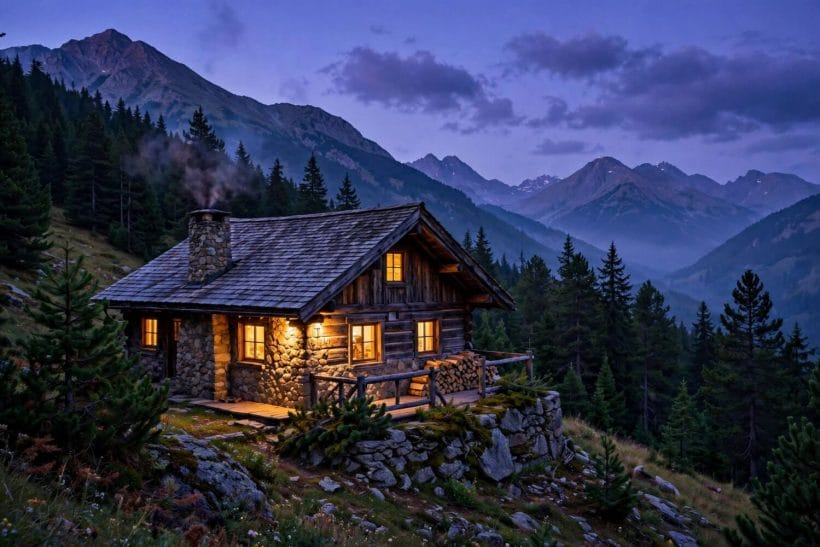
The failures are consistent. Theme-park rustic piles up antlers, horseshoes, wagon wheels and distressed signs until the house is a gift shop — motifs are not materials, and one genuine beam outweighs a wall of symbols. Faux finishes fail at touching distance: printed grain, plastic stone and foam beams ask the hand to believe what the eye half-accepted, and the hand always refuses. Over-darkening is the third trap — rustic is not brown-on-brown gloom; the old houses were limewashed pale inside precisely because their windows were small, and a rustic room should hold daylight as carefully as firelight. Finally, discomfort: benches no one can sit on for an evening, chairs like church pews, beds like boards. The style grew from working houses that rested working people; if it does not rest you, it is a costume of the thing rather than the thing.
10. Costs and Pulling It Together
The money ladder in rustic work is upside down compared with most styles. The expensive end is structural honesty — stone laid properly, timber framed by someone who knows joinery, a hearth built to draw. The saving end is everything after: second-hand furniture, reclaimed boards, freestanding pieces, textiles from the mill shop, and time. Reclaimed material is often the cheaper route as well as the truer one, and a house furnished slowly from sales, auctions and inheritance will out-rustic a container-load of new rustic-look furniture at a fraction of its cost. Spend on the shell and the hearth; let the rest accumulate.
Pull the design together by choosing the shell’s materials first, the hearth second and everything else third — and by refusing, at every step, the imitation of a material you could have had for real.
Final Considerations
A rustic house is a promise kept in wood and stone: that things here are what they appear to be. Build with real materials, furnish with things that age, and light it warm.
Do that, and the house will not need to be redecorated as fashions turn. It will simply keep becoming more itself — which is all rustic ever asked.

0 Comments