

A rustic living room does not try to look old. It simply refuses to pretend that wood, stone, leather and lamplight ever went out of date.
These rustic living room ideas build the style from its bones outward: one heavy material leading, seating deep enough to sink into, an evening lit by fire and lamps, and a keeping routine that protects the patina without letting it slide into neglect.
1. Rustic Living Room at a Glance
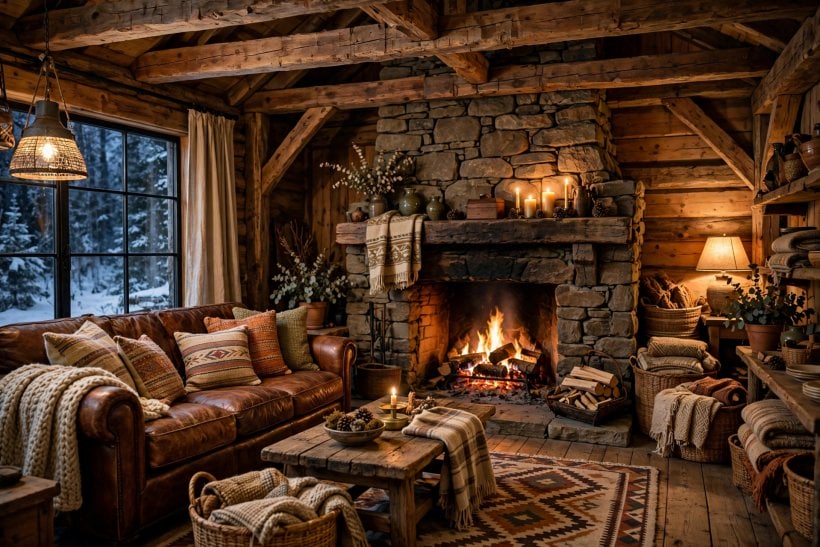
The central entity is the rustic living room: the house’s main sitting room styled by material honesty, in timber, stone, worn leather, wool and iron. Its attributes are the bones it exposes or borrows, the heavy material chosen to lead, seating built for long evenings, fire and low lamplight as its evening system, a palette borrowed from the land outside, and a keeping discipline that feeds wood and leather while letting honest wear show. It is one lane of the living room cluster, and its rule is that nothing in it should look newer, smoother or more delicate than the life it hosts.
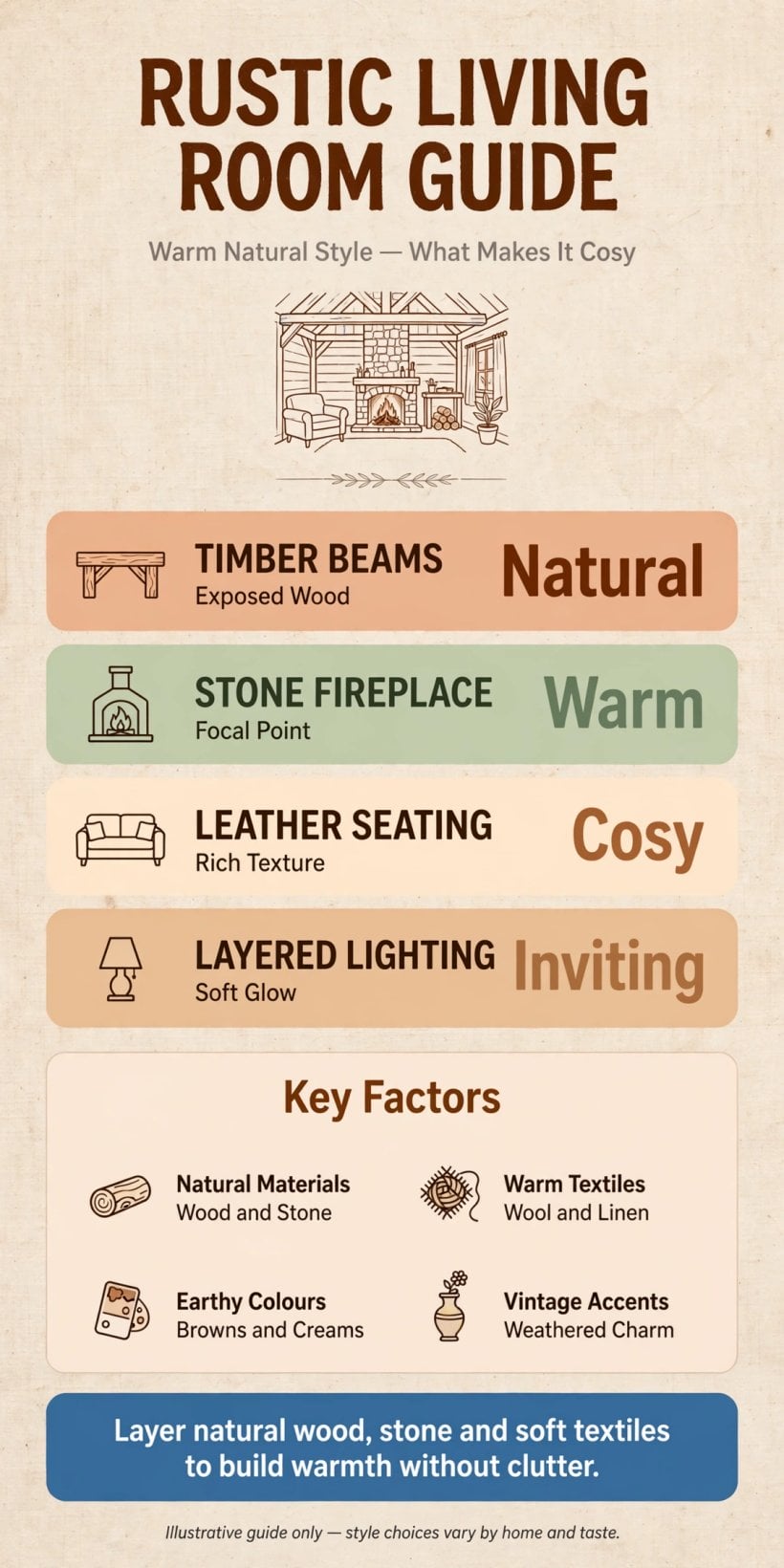
| Question | Short answer |
|---|---|
| What leads a rustic scheme? | One heavy material, timber or stone, with the other in support and everything else quieter. |
| What seating suits it? | Deep, heavy, worn-in: a leather sofa, armed chairs, a settle, and throws at every elbow. |
| How is it lit? | Low and warm: lamps at seated height, candles, and the fire as the evening’s main light. |
| What colours belong? | Cream, earth, rust, olive and weathered grey, carried by the large pieces and natural fibres. |
| How is it kept? | Patina protected, damage repaired: wood fed, leather conditioned, hearth swept, yearly edits. |
2. The Rustic Living Room Itself: Timber, Stone and Honest Wear
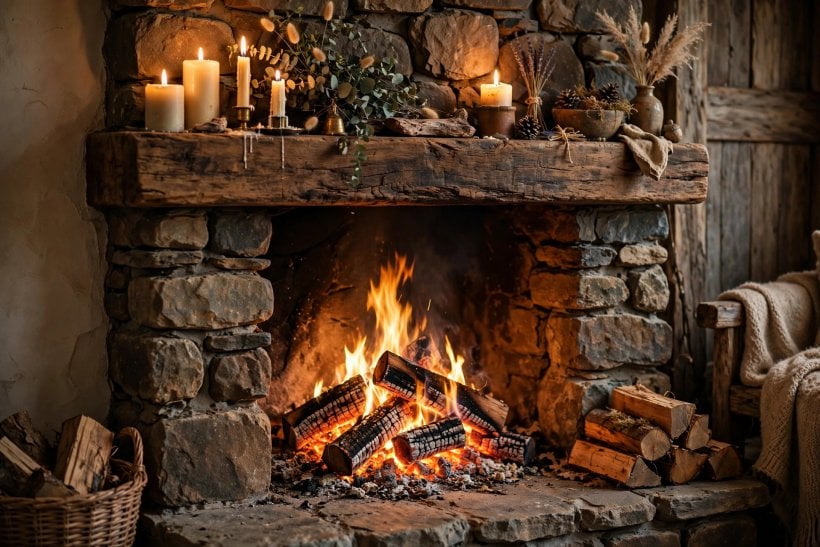
The rustic lane is one style among the living room’s many, and it stays in its lane here: this post is a child of the living room ideas pillar, which surveys the whole room, while everything below is timber, stone, worn leather and lamplight. Rustic done well is not a theme; it is a material honesty that a room either has in its bones or borrows gracefully through its furniture.
1. Start with the bones the room already has
Beams, brick, stone, old floorboards: whatever honest structure the room owns becomes the scheme’s foundation.
2. Choose the room’s one heavy material
Decide whether timber or stone leads, and let the other support.
3. Keep the layout conversational
Arrange seating to face itself around the hearth or table, not in a row facing a screen.
4. Let wear show where it is earned
Scuffed leather, a table ringed by years of cups, floorboards polished by feet: keep honest wear visible. Rustic is the one style where patina is wealth, and over-restoring a rustic room destroys the exact asset it was chosen for.
5. Anchor with one genuinely old piece
A single piece with real age, a farmhouse table, a worn settle, a grandmother’s rug, gives the room a centre of gravity new pieces can orbit.
6. Scale furniture to the material’s weight
Heavy materials demand furniture with presence: deep chairs, solid tables, nothing spindly. Delicate pieces in a rustic room look lost rather than contrasting, because the room’s visual weight crushes them; match the furniture’s heft to the walls’.
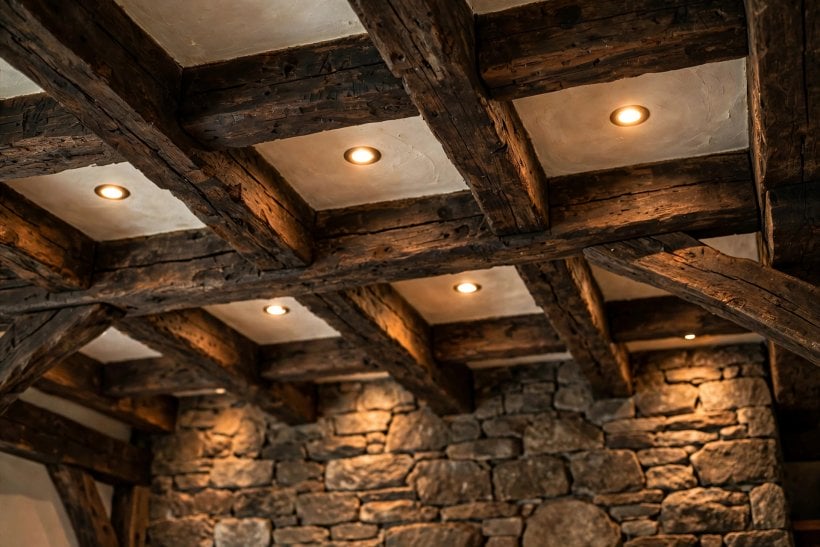
7. Leave the ceiling’s character alone
Beams, planks or plain limewash: the ceiling in a rustic room should feel structural, never decorated.
8. Plan for the fire’s choreography
Where a real fire exists, the room must hold its tools, its fuel and its seating arc without negotiation.
9. Give the room a working entrance
Boots, dogs, wood and weather arrive at a rustic living room’s door in real life.
10. Keep technology quiet, not banned
Screens and speakers live in rustic rooms too, but housed in wood, set low, or simply switched off and unlit for most of the day.
11. Decide the season the room is dressed for
Rustic rooms dress heaviest for winter: throws, rugs, firelight, drawn curtains. Plan the full winter dress deliberately, then let summer be its lighter edit, rather than furnishing a compromise that suits neither season completely.
3. Beams, Walls and the Room’s Bones
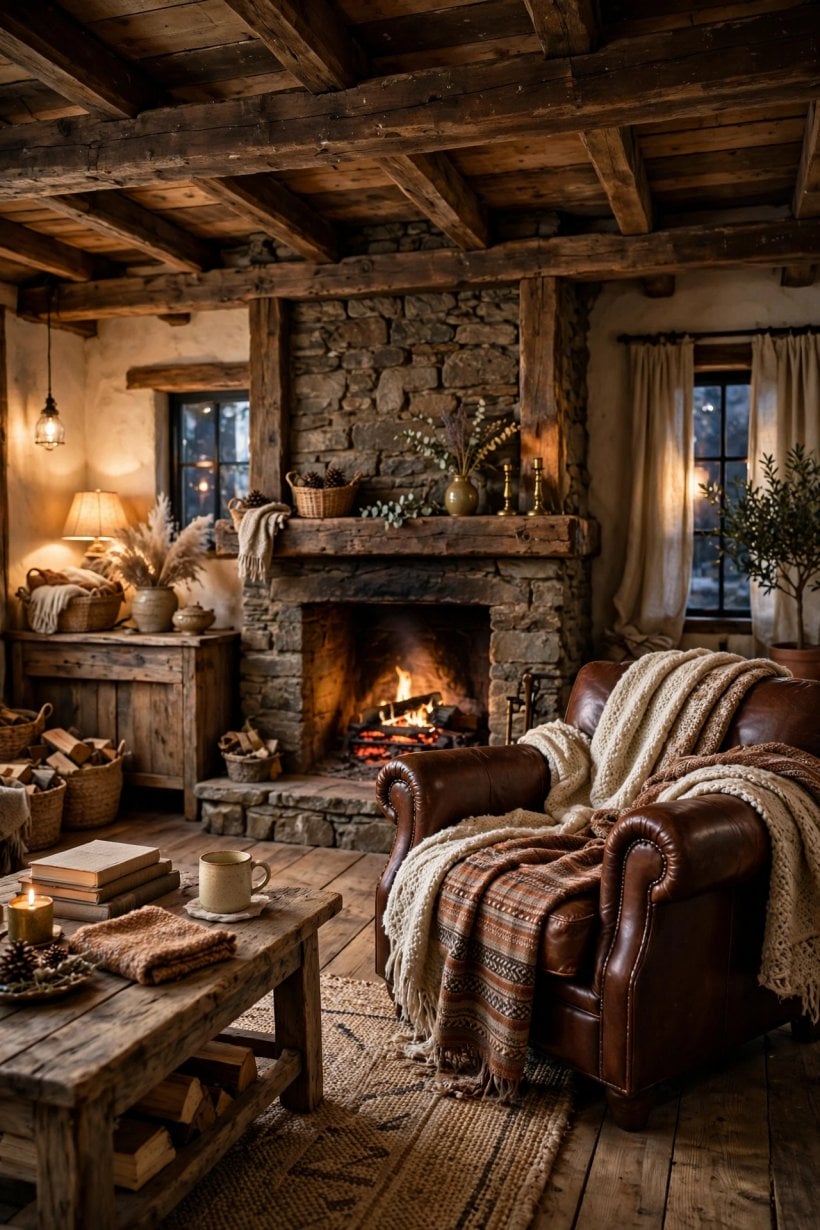
Structure is the rustic room’s first textile. The fire that usually anchors these bones gets its own design survey in the fireplace living room post; this section stays with the walls, beams and floors that surround it, treated as finishes in their own right.
12. Expose what is genuinely there
Where brick, stone or timber hides under plaster and the room’s age suggests it is sound, one careful test patch tells the truth cheaply.
13. Limewash and clay paints over brick and plaster
Soft, matte, mineral finishes sit on old walls without sealing them into plastic smoothness. Their slight unevenness is the point: a rustic wall should catch light like a landscape, not reflect it like a appliance.
14. Board and plank walls, used in one place
A single wall of horizontal or vertical boarding gives a plain room a rustic spine without turning it into a shed.
15. Stone kept to the hearth’s scale
Where stone is added, keep it where stone belongs structurally, the fireplace breast, a plinth, a threshold, rather than veneering whole walls. Stone used as structure convinces; stone used as wallpaper argues with itself across the whole room.
16. Floorboards wide, rugs on top
Wide boards, real or faithfully made, are the rustic floor; narrow strip flooring fights the style’s scale.
17. Wood tones mixed, never matched
Combine woods of different ages and tones as a farmhouse accumulates them, keeping the family warm rather than identical. Matched suites of furniture read as a showroom; a gathered family of honest pieces reads as a home with a history.
18. Iron and black metal as the punctuation
Hinges, handles, lamp bases and fire tools in black iron give rustic rooms their full stops. Metal is used sparingly and darkly; bright chrome in a rustic room is a sentence in the wrong language.
19. Repairs made visibly and well
A dutchman repair in a beam, a repointed patch in the breast, mended rather than replaced: rustic bones forgive honest repair and are diminished by disguise.
20. Keep one wall plain for rest
Among beams, stone and boarding, keep one wall quiet plaster in a warm neutral. The eye needs a resting place, art needs a ground, and the rustic materials read richer for having a calm neighbour to contrast against.
21. Ceiling height respected, not fought
Low rooms take low, wide furniture and horizontal lines; tall rooms can carry the great beams and tall dressers. Rustic styling that respects the room’s actual proportions feels inevitable; styling that imports a barn’s proportions into a cottage does not.
22. The hearth as the room’s altar, kept simple
Dress the mantel with few, large, useful things, a clock, candlesticks, one picture, rather than a crowd of small ornaments. Rustic rooms speak in a low, large vocabulary, and the mantel is where the room’s voice is heard clearest.
4. Seating: Leather, Linen and Chairs That Invite Sitting
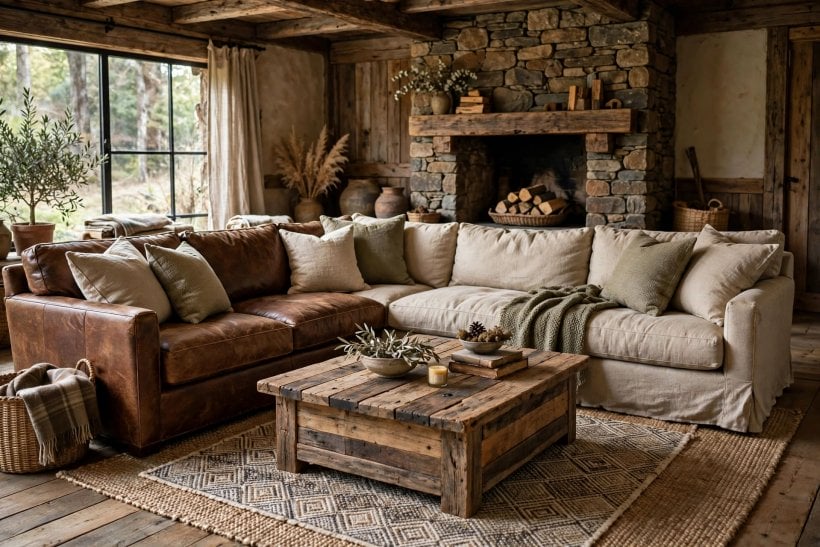
A rustic living room is judged by whether people sink into it and stay. The same seating questions in a smaller, plainer shell are worked in the tiny house living room ideas post; here the chairs grow deeper and the materials grow older, but the test is identical: nobody perches in a rustic room.
23. One deep leather sofa, worn in
A leather sofa that has softened with years of sitters is the rustic room’s throne.
24. Linen and wool against the leather
Balance leather’s weight with linen cushions, wool throws and a cotton rug underfoot. All-leather rustic rooms feel like clubs; the woven layer is what makes them homes, and it is the layer that changes with the seasons.
25. Chairs with arms and history
Armchairs in a rustic room should have arms worth the name, wide enough for a book or a mug. A pair of substantial chairs flanking the fire, matched or gathered, gives the room its conversational symmetry.
26. A settle or bench along one wall
A wooden settle, bench or church pew along a wall seats the overflow, holds cushions by day and reads as pure rustic grammar. Benches are the style’s most forgiving furniture: any age, any wood, always at home.
27. Footstools and poufs in hide and wool
Low stools and poufs give the seating circle its flexibility, feet up, extra seat, side table with a tray. In a rustic room they should be heavy enough not to skate on boards, in hide, wool or worn carpet.
28. Rocking and fireside chairs
A rocking chair near the hearth is the rustic room’s oldest technology and still its best seat for thinking. Where space allows one, it becomes the most contested chair in the house within a week.
29. Cushions few and large
Dress sofas with a small number of large cushions in ticking, wool and washed linen rather than a crowd of small ones. Rustic rooms speak in a large scale, and cushion herds in novelty fabrics break the sentence.
30. Throws where sitters actually are
Keep throws folded on chair arms and sofa backs, in wool and fleece weights for the season. A throw stored in a basket across the room is decoration; a throw at the elbow is hospitality.
31. Seating for the dog, honestly planned
Rustic households usually include a dog, and a planned dog bed in a warm corner keeps the sofas survivable. Pretending otherwise designs a room for a family that does not exist, and the dog wins the argument nightly anyway.
32. A reading chair with its own light
One chair, one lamp, one small table: the reading station is the rustic room’s private corner inside its public one. Place it where the fire’s warmth reaches but its glare does not fall on the page.
33. Spare seating stacked in the scheme
Keep two simple wooden chairs in the room’s corners as permanent residents, pulled in when the circle grows. Chairs that live in the room match it; chairs fetched from the kitchen announce that the gathering was not expected.
5. Fire, Lamplight and the Evening Room
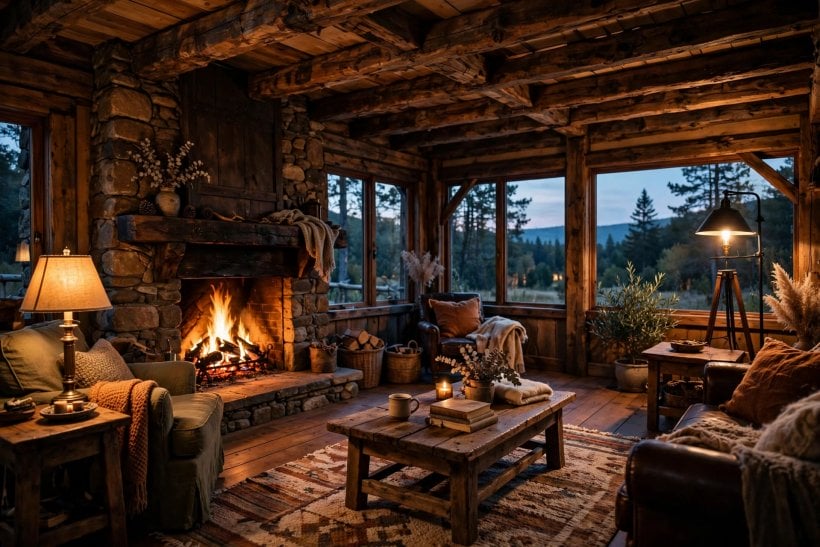
Rustic rooms are evening rooms, built for the hours when the fire and the lamps take over from the windows. The neighbouring formal end of the same room type is charted in the traditional living room post; the rustic evening is its rougher cousin, lit lower and warmer, with nothing bright enough to argue with the flames.
34. Layer lamps low and warm
Use table and floor lamps at seated height with warm bulbs and fabric or parchment shades.
35. Candles where they are safe and real
Candles on the mantel, the table and in storm lanterns give the moving light no bulb imitates. Place them where they cannot meet curtains or sleeves, in holders with weight, and the room gains its oldest lighting layer back.
36. The fire’s tools kept beautiful
Fireside tools, basket and bellows are in constant view, so choose them as furniture, in iron and wood, and keep them maintained. Ugly tools at the hearth tax the room every evening; handsome ones pay it rent.
37. Logs stored as part of the scheme
A log store built into the hearth’s side or a generous basket makes fuel part of the room’s composition.
38. Dim the screen’s claim at night
Where a television lives in the room, keep its standby lights and bright menus from ruling the evening. A rustic room after dark should be lit by fire and lamp, with the screen a guest that speaks when spoken to.
39. Window dressings that close the world out
Heavy curtains or lined shutters close the rustic room into itself at night, holding warmth and privacy together. Drawn across old glass in winter, they complete the room’s transformation into a den, which is its evening purpose.
40. A lamp by the door for arrivals
One welcoming lamp near the door lights the room’s entrance without waking its whole lighting scheme. Late arrivals and early leavers move by it, and the circle by the fire is never flooded for a door opening.
41. Scent of wood and wax
The rustic evening smells of woodsmoke, beeswax and wool, and a scented candle in chemical fruit fights the room’s own perfume. Let the fire and the materials scent the room; they have been composing that perfume for centuries.
42. Light switches and dimmers within the old logic
Where wiring is renewed, put the evening lamps on switches the room’s users can reach from the door and the sofa.
43. The hearth lit even when unlit
Dress an unlit summer hearth with candles, a plant or stacked logs so it never reads as a dead hole.
44. Keep one corner deliberately dark
Resist lighting every corner. A rustic room needs shadow at its edges for its lit centre to feel like a refuge, and darkness beyond the lamplight is not a flaw in the scheme but its frame.
6. Colour, Textiles and the Soft Layer
Rustic colour is borrowed from the land outside the door: earth, cream, moss, rust and weathered grey. Its bedroom counterpart runs the same palette at sleeping scale in the rustic bedroom ideas post; here the colour serves a room that must also host, work and receive daylight without losing its warmth. The cluster’s cool end, the gray living room ideas post, runs the opposite temperature over the same room type, and the contrast sharpens both: rustic colour warms, gray colour cools, and each borrows the other’s discipline about large pieces carrying the scheme.
45. Cream and warm white as the base
Warm whites and creams on the plain walls keep rustic rooms from gloom while staying true to the palette. Pure brilliant white argues with old wood; cream agrees with it, and the difference is visible from the doorway.
46. Earth tones in the large pieces
Sofas and rugs in tans, rusts, olive and faded red ground the scheme in its landscape.
47. One faded pattern, repeated quietly
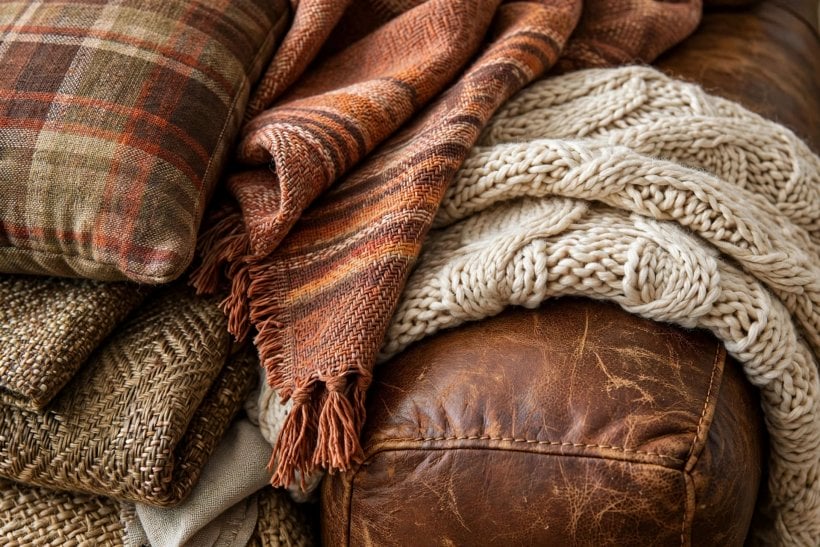
A single traditional pattern, a plaid, a stripe, a faded floral, repeated across cushions and curtains gives the room its textile rhythm. Multiple competing patterns turn rustic into clutter; one pattern, weathered, becomes the room’s signature.
48. Natural fibres only, where touch decides
Wool, linen, cotton and hide are the rustic textile family’s whole membership. Synthetics show at touch distance in a room built on material honesty, and the pieces handled daily, throws, cushions, rugs, are exactly where the fibres must be real.
49. Rugs layered over boards
Layer a large flat-weave rug with a smaller, softer one in the seating zone. Layering is the rustic room’s way of zoning without walls, and it lets worn treasures live on as the top layer of a working floor.
50. Curtains in linen, hung simply
Unlined or lightly lined linen curtains on iron poles dress rustic windows without formality. They move in draughts, filter light softly and can be washed like the working cloth they are, which suits a room that hosts real life.
51. Colour from books, baskets and pottery
Let the small colour arrive from objects with jobs: book spines, glazed pottery, enamelware, baskets. A rustic room decorated from its own useful possessions never looks staged, because it is not.
52. Green from plants that suit the light
A fern in the hearth’s summer dress, herbs on the sill, a fig in the bright corner: plants in rustic rooms should be the cottage kind, grown for use and resilience.
53. Art that belongs to the place
Hang the landscape outside the window, maps of the county, prints of its birds and beasts, family photographs in wooden frames. Rustic rooms are rooted rooms, and their walls should testify to the specific ground the house stands on.
54. Seasonal edits in the textile layer
Swap cushion covers and throws between winter weights and summer linens as the year turns. The rustic room’s furniture is permanent; its soft layer is the diary, and editing it seasonally keeps a heavy style breathing.
55. Grey as the weathered neutral
Where a cool note is needed, weathered grey, in wood, stone and wool, cools a rustic room without leaving its palette.
7. Tables, Dressers and the Room’s Working Furniture
Beyond the seating, a rustic room works through its tables, dressers and storage, and these pieces carry the style’s daily burden. They should be the plainest, strongest furniture in the house, chosen like tools and finished like heirlooms.
56. A coffee table you can put boots on
The central table should survive feet, mugs, books and the occasional board game without flinching: thick timber, a finish that forgives rings, and a lower shelf or stretcher for the day’s clutter.
57. Side tables at every seat’s elbow
Each chair and sofa end needs its own small table within reach, in wood or stone, sized for a mug and a book.
58. A dresser or sideboard as the room’s store
One substantial dresser holds the games, candles, blankets, remotes and seasonal things the room accumulates. Rustic rooms hide their modern clutter in old furniture, and a dresser with deep drawers is the style’s answer to the media unit.
59. Baskets as the room’s soft storage
Woven baskets hold logs, throws, wool, children’s things and the dog’s toys in every corner that needs a container. Baskets forgive irregular contents gracefully, can be carried to their point of use, and age into the scheme rather than against it.
60. A writing or work corner that belongs
Where the room doubles for letters, laptops or homework, give the work a small oak desk or table of its own rather than the coffee table’s compromise.
61. Bookshelves low and loaded
Low, deep shelves of real books give the rustic room its library wall without formality. Books are the room’s most honest decoration, their spines its most varied colour, and low shelves keep their weight where old floors carry it happiest.
62. Trunks and chests as tables with secrets
A blanket chest or old trunk serves as table and storage in one footprint, holding the winter throws at the centre of the room that uses them.
63. The bar or tea tray, kept ready
A tray station for drinks, on the dresser or its own small table, keeps gatherings self-serving and the kitchen out of the evening. Rustic hospitality is generous and informal, and a standing tray is its whole catering department.
64. Plant and lamp stands of plain wood
Simple stands raise lamps to reading height and plants into the light without introducing delicate furniture. In a rustic room even the stands should look hewn rather than manufactured, and their plainness is what lets the lamps and leaves star.
65. Nothing on castors, nothing folding
Rustic rooms distrust furniture that moves too easily; their pieces stay where they were put and gather the room around them.
8. Keeping the Rustic Room: Patina Without Neglect
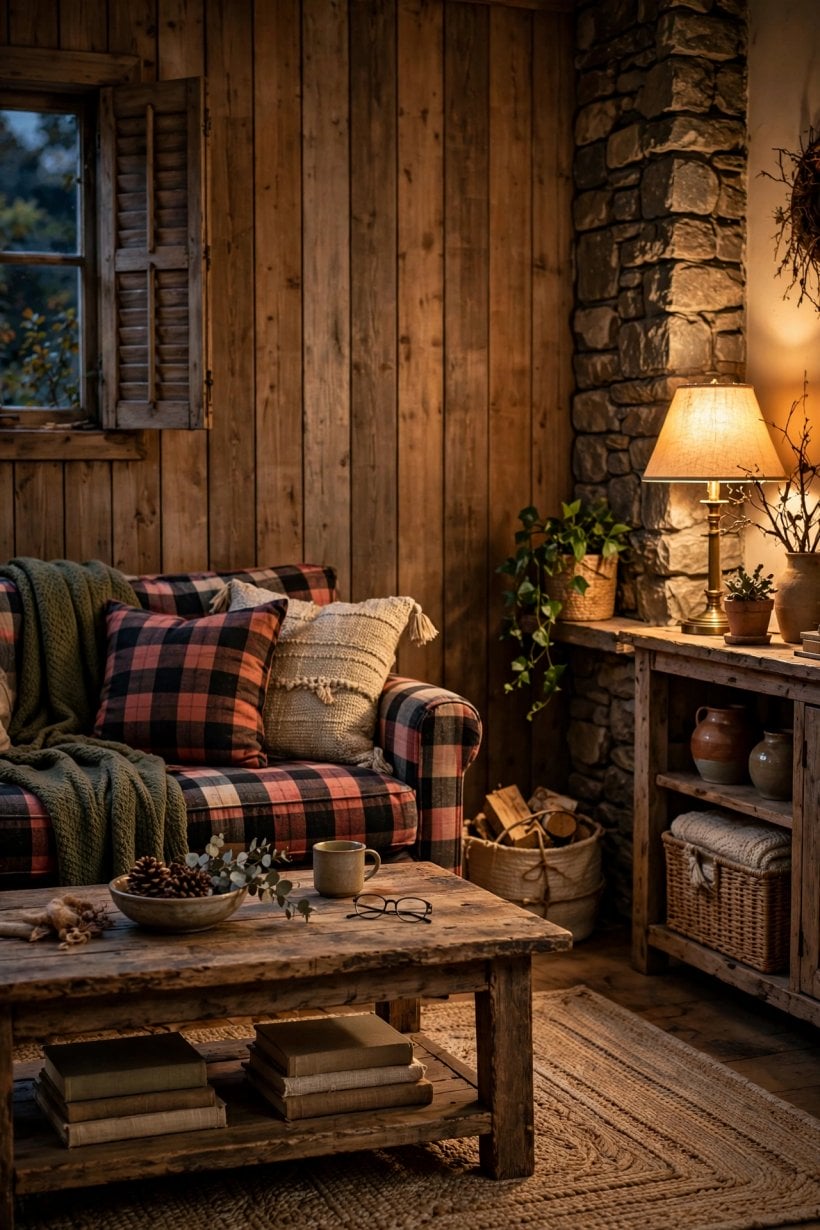
Rustic rooms age in public, and keeping one is the art of protecting its wear from becoming damage. The farmhouse cousin of this style is surveyed in the farmhouse living room ideas post; the keeping below is the rustic lane’s own, stricter about dirt and kinder about scars, because in this style the line between the two is the whole game.
66. Feed the wood, on a rhythm
Oil and wax wooden furniture and beams’ reachable wood on a seasonal rhythm rather than in rescue operations.
67. Leather conditioned before it cracks
Leather sofas and chairs take conditioner as regularly as the wood takes oil. Leather that is fed stays supple and darkens beautifully; leather left dry crazes into a network of cracks that no later kindness fully redeems.
68. Ash and hearth kept swept
A swept hearth and an emptied ash pan are the rustic room’s daily signature. The fire is the room’s glory and its main source of dust; ten minutes at the hearth keeps the whole room reading as cherished rather than feral.
69. Wool and linen aired, not just washed
Air throws, cushions and rugs outdoors on dry days through the year. Rustic textiles hold woodsmoke and dog and dinner in their fibres, and fresh air restores them more kindly than constant washing, which ages them faster than use does.
70. Rugs beaten and turned
Turn rugs seasonally so wear and firelight fall evenly, and beat them outside as their makers intended.
71. Chimney and stove serviced as calendar events
Fix the sweep and the service as annual appointments, not reactions to smoke in the room. A rustic room’s fire is its heart, and hearts are maintained on schedule; the cost is small beside one chimney fire or one ruined winter.
72. Repairs in character, promptly
Re-glue the chair, re-cane the seat, patch the rug’s worn corner while the damage is small and the repair can match the piece’s age. Rustic furniture forgives visible mending completely, but it does not forgive being left to wobble into kindling.
73. Protect the floor at its three battle points
Mats at the door, a hearth rug before the fire and felt under every chair leg defend the boards where they actually die.
74. Edit the accumulated, yearly
Rustic rooms attract objects, gifts of antlers, inherited tools, found stones, until the scheme drowns in memorabilia. One honest edit a year, keeping the loved and releasing the merely arrived, keeps the room a composition instead of a storage biography.
75. Let the room rest between gatherings
After the big evenings, restore the room fully the next morning: cushions plumped, throws folded, hearth swept, glasses gone. A rustic room that is always mid-gathering loses its calm; a room restored to order daily offers its welcome fresh every time.
9. Checks and Mistakes: Before the First Purchase or the First Stone
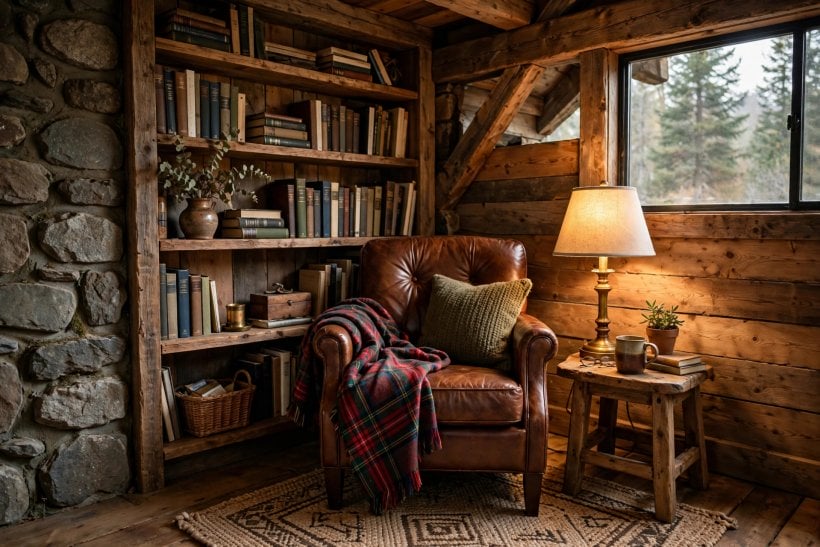
Check any real fire’s hearth, flue and clearances with the professionals who service them before the room is arranged around it, and keep soft furnishings at the distances the fire’s own guidance requires. Check also that heavy furniture stands on floors that can carry it, that beams are load-bearing fact rather than decoration before anything is hung from them, and that candles have weighted holders and clear space in every direction.
The commonest rustic mistake is buying the theme in a weekend: distressed everything, antlers everywhere, a room that smells of the shop rather than the woodpile. The second is darkness, rustic confused with dim, until the room can only be lived in after sunset. Build slowly from the bones, keep one wall plain and the daylight welcome, and let the room accumulate its age honestly.
Test the seating before committing to it, in the shop, for longer than politeness suggests. A rustic room’s chairs will host thousands of evenings, and a beautiful chair that nobody chooses is a sculpture the room did not need.
10. Costs and Pulling It Together
Costs in a rustic living room follow the big pieces and the bones: exposing sound structure and servicing the fire come first, then the sofa and chairs that will serve for decades, then the textile layer. Money is saved by the style’s own ethic, since worn, old and repaired are virtues here and secondhand furniture of real quality suits it better than new imitations. It is wasted on instant-ageing products and on structural theatre, false beams and veneer stone, that the room’s proportions cannot support.
Pull the room together in the order it is experienced: bones, hearth, seating circle, lamplight, colour in the large pieces, and the soft layer last. A rustic living room finished in that order feels inevitable from its first evening, because every layer was decided by the layer beneath it, which is how the originals were built too.
Final Considerations
A rustic living room is the house’s argument that comfort deepens with age: that a chair can be better in its twentieth year, a table richer for its rings and scars, a room warmer for everything it has hosted. Build it from honest materials, seat it deeply, light it low, and it will repay every winter it is given.
Start with the bones and the fire, add seating nobody wants to leave, and let time do the decorating it does best. The style asks only that you protect its wear from becoming damage, and keep the hearth swept for whoever comes in from the cold.


0 Comments