

A Scandinavian living room is an argument with winter, won on points: pale walls hoarding daylight, light timber underfoot, wool against the cold, and furniture so honest it seems to apologise for nothing. Nothing is there to impress. Everything is there to be used, in the light, together.
This survey works the Scandinavian style as its own lane within the living room ideas collection — light, timber, seating, warmth and restraint. It is the style lane only: the general living-room tour belongs to the pillar, and neighbouring tempers like the transitional living room and the French country living room keep their own surveys.
1. Scandinavian Living Room Ideas at a Glance
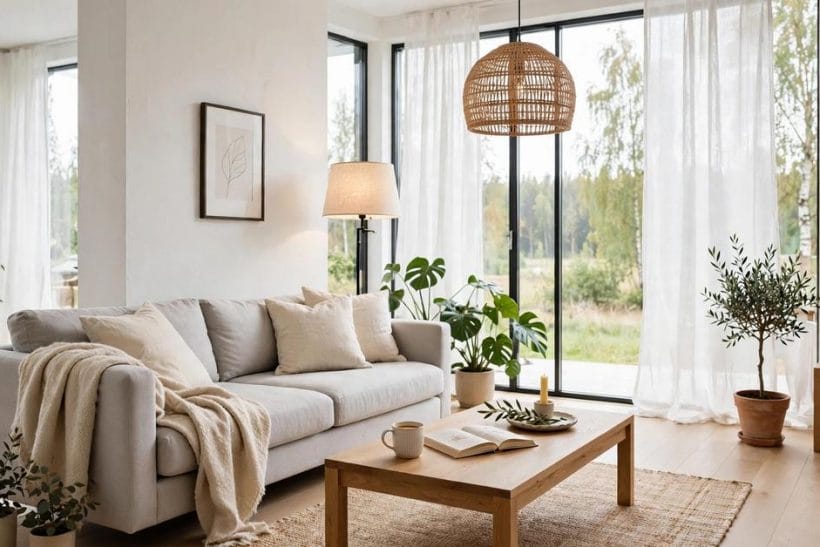
The Scandinavian living room is a sitting room in the Nordic design tradition, built for long dark winters and brief bright summers. Its governing attributes are maximised light (pale walls, bare or lightly dressed windows, reflective surfaces used gently), natural materials with their grain and weave left visible (pale timber — pine, ash, birch, light oak — wool, linen, leather, paper), functional furniture of clean, tapering, crafted form, and deliberate restraint: few objects, each useful or beautiful and preferably both. Over it all lies the quality Danes call hygge — the composed warmth of lamplight, candles, textiles and company — which is not a product but the style’s purpose: rooms that hold people comfortably through the dark half of the year. Where French country is faded and romantic and traditional is formal, Scandinavian is bright, plain and kind; its luxury is light and its ornament is texture.
| Question | Short answer |
|---|---|
| What separates Scandinavian from transitional and French country? | Intention and temperature. The transitional lane blends traditional and modern comforts eclectically; French country fades and romances its provincial furniture. Scandinavian is a discipline: pale, functional, craft-honest, with colour spent in small deliberate doses. A room that could shed half its objects and lose nothing is transitional; a Scandinavian room has already shed them. |
| Must a Scandinavian room be all white? | No — it must be light in feeling, which is different. Pale walls are the usual ground, but soft greys, warm off-whites and muted Nordic blues and sages all belong, and many real Nordic rooms carry a deep sofa, a black stove or a saturated cushion as their one warm weight. The rule is daylight first; white is merely its most obedient servant. |
| Is Scandinavian the same as minimalist? | They share restraint but not purpose. Minimalism removes for purity’s sake; Scandinavian keeps exactly what comfort and use require, then warms it with wool, wood and candlelight. A minimalist room can feel empty on purpose. A Scandinavian room should never feel empty at all — it should feel held. |
| Does the style suit small and rented rooms? | It may suit them best of all — it was largely invented in small northern homes. Pale surfaces, leggy furniture, layered lamps instead of one ceiling light, and textiles doing the decorating are all renter-friendly, reversible and cheap to begin. Section eight works the small-room case in full. |
2. The Bright Ground: Pale Walls, Light Floors and Daylight Kept
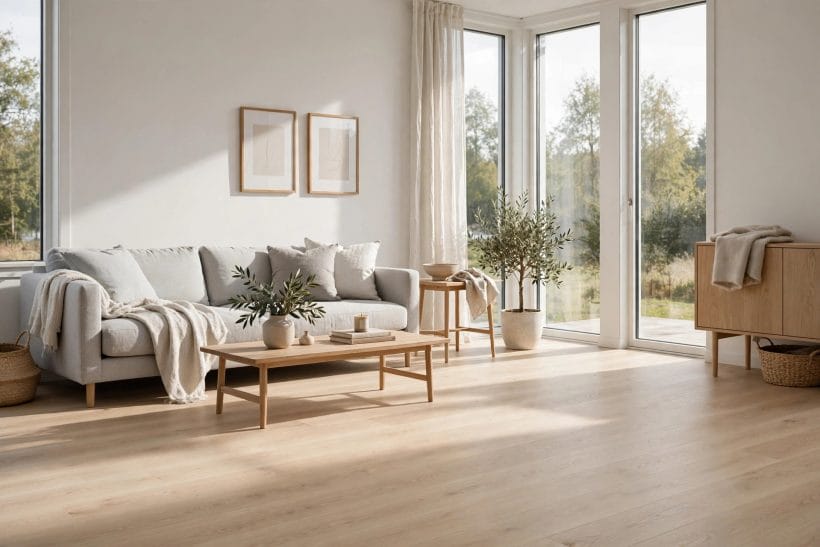
Light is the style’s first material, hoarded like firewood. These ideas build the bright shell every later choice depends on — the ground the white living room ideas survey approaches from its own angle.
1. Paint the walls a warm, daylight white
Not blue-white, which greys in northern light, but a white with a breath of warmth in it. The walls become the room’s largest lamp, bouncing window light deep into the plan.
2. Keep the ceiling the palest surface in the room
A clean pale ceiling lifts the light and the eye together. In low rooms it is the difference between a lid and a sky.
3. Choose pale timber floors, or lighten the ones you have
Pale boards, light oak tones and whitewashed finishes are the style’s floor signature. Dark floors can stay if the walls, rug and furniture lighten around them — balance, not dogma.
4. Lay one large pale rug over dark boards
A big flatweave or wool rug in undyed tones creates the light floor-field the seating sits on, warms the feet and defines the room’s centre without a single renovation.
5. Dress windows with the lightest hand possible
Sheer linen, a simple blind, or bare glass where privacy allows — the style treats daylight as too precious to filter through heavy curtains. Privacy is solved with plants and frosting before fabric.
6. Hang a mirror where it steals light, not attention
Opposite or beside a window, a plain mirror doubles the day’s ration and gives it to the room’s darker corner. Keep frames pale or frameless; the light is the picture.
7. Keep window sills almost empty
A plant, a small lamp, perhaps a candle — the sill is a light shelf, not a display case. Clutter at the glass taxes every other idea in this section.
8. Use pale wood tones consistently
Pine, ash, birch and light oak in one tonal family across floor, furniture and frames make the room feel carved from one forest. Mixed dark woods belong to other lanes.
9. Let one wall go a muted Nordic colour, if any
Soft sage, dusty blue or warm grey on a single wall gives the pale scheme its weather without spending its light. The other three walls stay pale and keep the peace.
10. Test whites in the room’s own north light
Northern daylight cools every paint. Sample large, judge at midday and dusk, and choose the white that stays warm at the greyest hour, not the one that sparkled in the shop.
11. Leave the skirting and trim the wall’s own pale
Contrasting trim chops a small room into stripes. Painting woodwork into the wall colour keeps the shell seamless and the light unbroken — the style’s quiet joinery rule.
3. Seating and Furniture: Low, Leggy and Honest
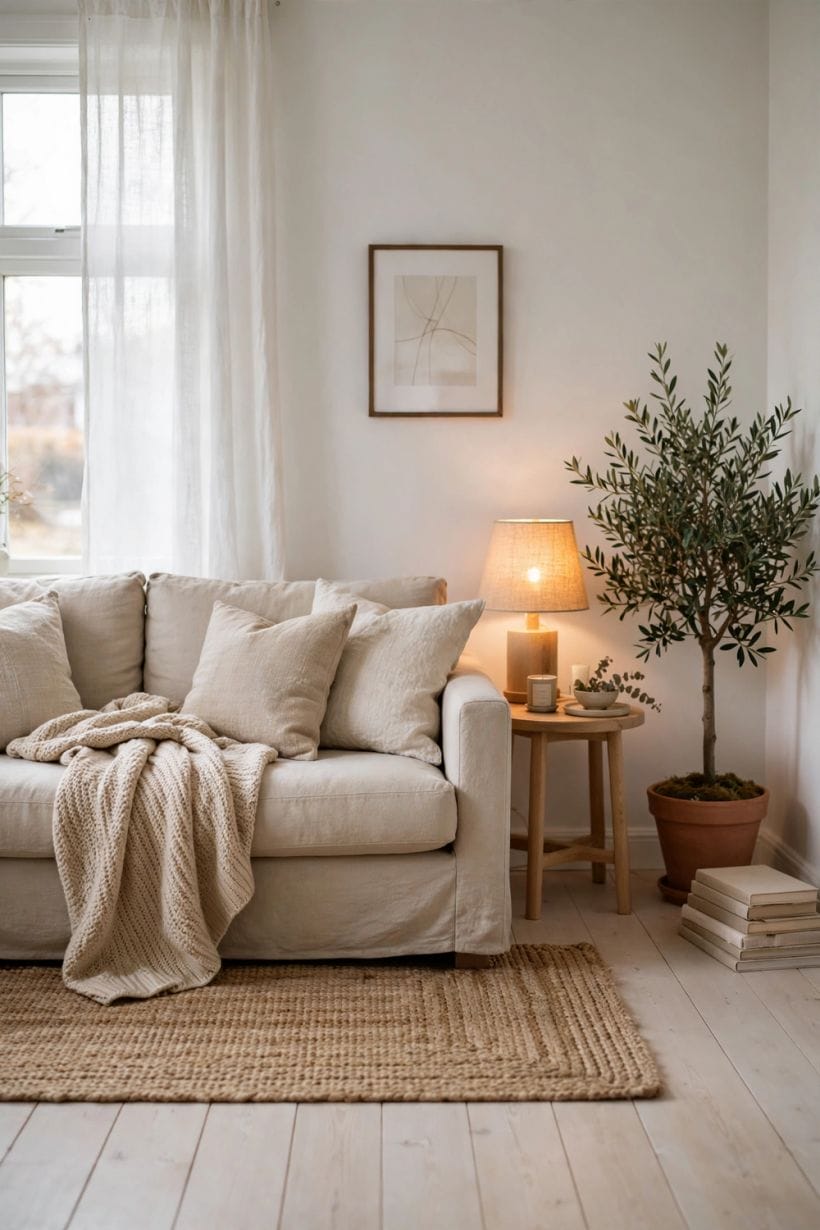
Nordic furniture is engineered kindness: forms that serve bodies, lift off the floor on tapered legs so light and air pass beneath, and ask to be kept for decades.
12. Choose a low, deep sofa in a natural fabric
The room’s anchor sits low and welcomes lengthwise lounging. Linen, wool blends and cotton in undyed, grey or muted tones are the upholstery family; shiny synthetics break the spell.
13. Raise furniture on legs and keep the floor visible
Leggy sofas, chairs and cabinets let light travel under them and make small rooms breathe. Skirted, floor-hugging pieces belong to plusher lanes; here the floor plane stays open.
14. Add one sculptural armchair as the room’s signature
A bentwood, wishbone-form or leather-and-timber chair is the style’s allowed sculpture — functional art the household actually sits in. One is a signature; three are a showroom.
15. Use a pale timber coffee table, sized to the sofa
Rectangular or round, plainly made, low enough for feet and books alike. The table is a working surface — trays, cups, knitting — not a plinth for objects.
16. Let a daybed or bench earn the window wall
A simple bench or daybed under the window gives reading light, extra seating and a guest’s bed in one honest piece. Dress it with the room’s wool and one cushion, no more.
17. Keep storage closed, pale and few
A single pale cabinet or low sideboard swallows the room’s necessary mess — remotes, chargers, games — so the visible room stays composed. Open shelving is rationed to the next section’s discipline.
18. Mix one vintage piece with a plain conscience
A worn leather chair, a grandmother’s pine chest — Scandinavian rooms treasure the inherited and the handmade. Patina is welcome here in a way stricter modern lanes refuse.
19. Choose nesting and folding pieces for small rooms
Nesting tables, a folding desk, stools that stack — the northern small-home tradition is full of furniture that multiplies for guests and vanishes after. Flexibility is a style feature, not a compromise.
20. Keep silhouettes tapered and details quiet
Splayed legs, softened corners, no applied ornament — form carries the beauty. When every piece whispers, the room can hold a conversation.
21. Face the seating to the light and to each other
Arrange chairs and sofa in a loose conversational arc that also catches the window’s light on faces and pages. The television, if present, joins the arrangement; it does not command it.
22. Let one deep colour anchor the seating
A sofa in deep forest, ink or rust among pale surroundings is thoroughly Nordic — the single warm weight the bright shell can carry. Echo it once, in a cushion or throw, and stop.
4. Timber, Texture and the Crafted Few Objects
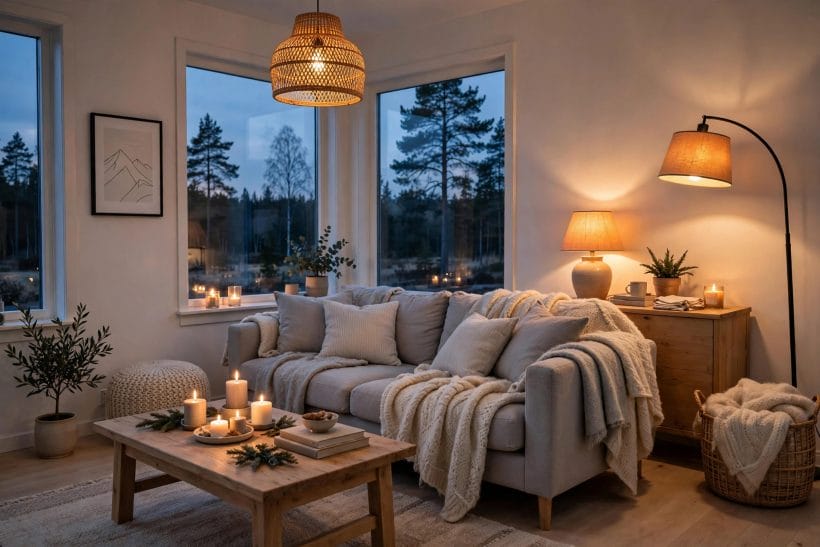
With objects rationed, each one must earn its place in grain, weave or making. The coastal living room lane shares the natural palette but spends it on a different story.
23. Show timber’s grain and never apologise for knots
Oiled and soap-finished wood, kept matte, is the style’s luxury surface. High gloss and dark stain hide the very quality the room exists to celebrate.
24. Layer wool as the primary texture
Throws, cushions and the rug in sheep’s wool — undyed, knitted, woven — give the pale room its warmth and its acoustic softness. Wool is this style’s wallpaper, applied by the armful.
25. Add linen and cotton in undyed tones
Cushions and curtains in flax, oatmeal and stone keep the textile family natural. The palette is the material’s own colours, which is why it never clashes.
26. Use paper and rattan for light, warm shades and screens
Paper lanterns and woven shades diffuse lamplight into the room’s evening glow. They cost little, weigh nothing and soften every corner they hang in.
27. Let ceramics be handmade-looking and few
A stoneware vase, a single bowl, mugs with their maker’s irregularity — the style’s pottery is quiet, matte and useful. Shelves of ornaments are other lanes’ pleasure.
28. Keep black as the drawing line
A black stove, a black floor lamp, black picture frames — a few drawn lines give the pale room its outline, the way ink gives a pencil sketch its form. Sparingly, always.
29. Bring plants as the room’s living green
A fig, a trailing pothos, herbs on the sill — green is the style’s main colour accent, arriving alive. It also keeps winter rooms from feeling preserved rather than lived in.
30. Display books by use, not by colour
A working stack by the reading chair, spines as they come, is honest Scandinavian. Rainbow-arranged shelves are a photograph’s trick; this lane decorates by living.
31. Choose one woven wall piece over many prints
A single textile, a pale print or a grouped few frames with generous pale mounts — walls in this style breathe. White space is a deliberate material, spent like timber.
32. Keep the wood stove or its honest substitute in view
Where a stove exists it is the room’s hearth-heart, black against the pale, chairs drawn to it. Where none exists, the candle cluster in the next section inherits its role.
33. Let children’s things be wooden and beautiful too
In family rooms the style asks toys and small furniture to join the material family — timber, wool, canvas — so the room stays composed at floor level, where children actually live.
5. Hygge in Practice: Lamplight, Candles and the Evening Room
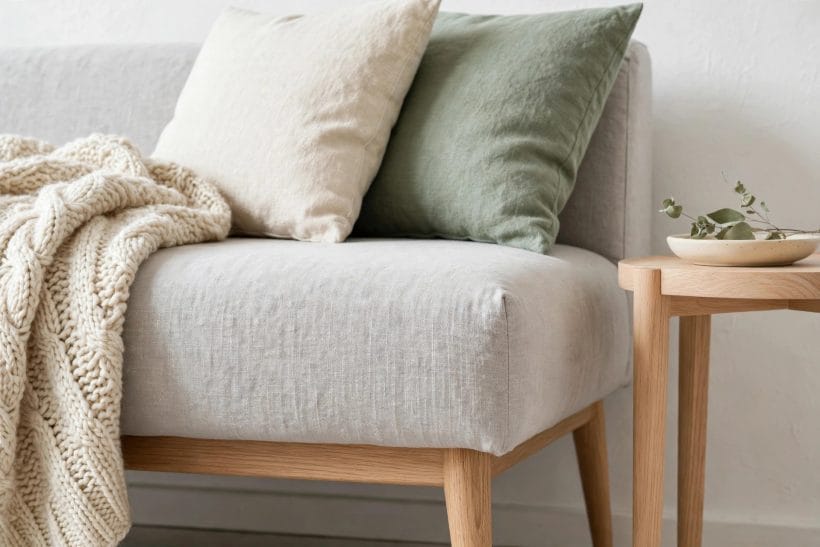
Hygge is the style’s purpose made visible after dark: pooled warm light, something hot to drink, people close. The family room ideas survey pursues the same togetherness by other means.
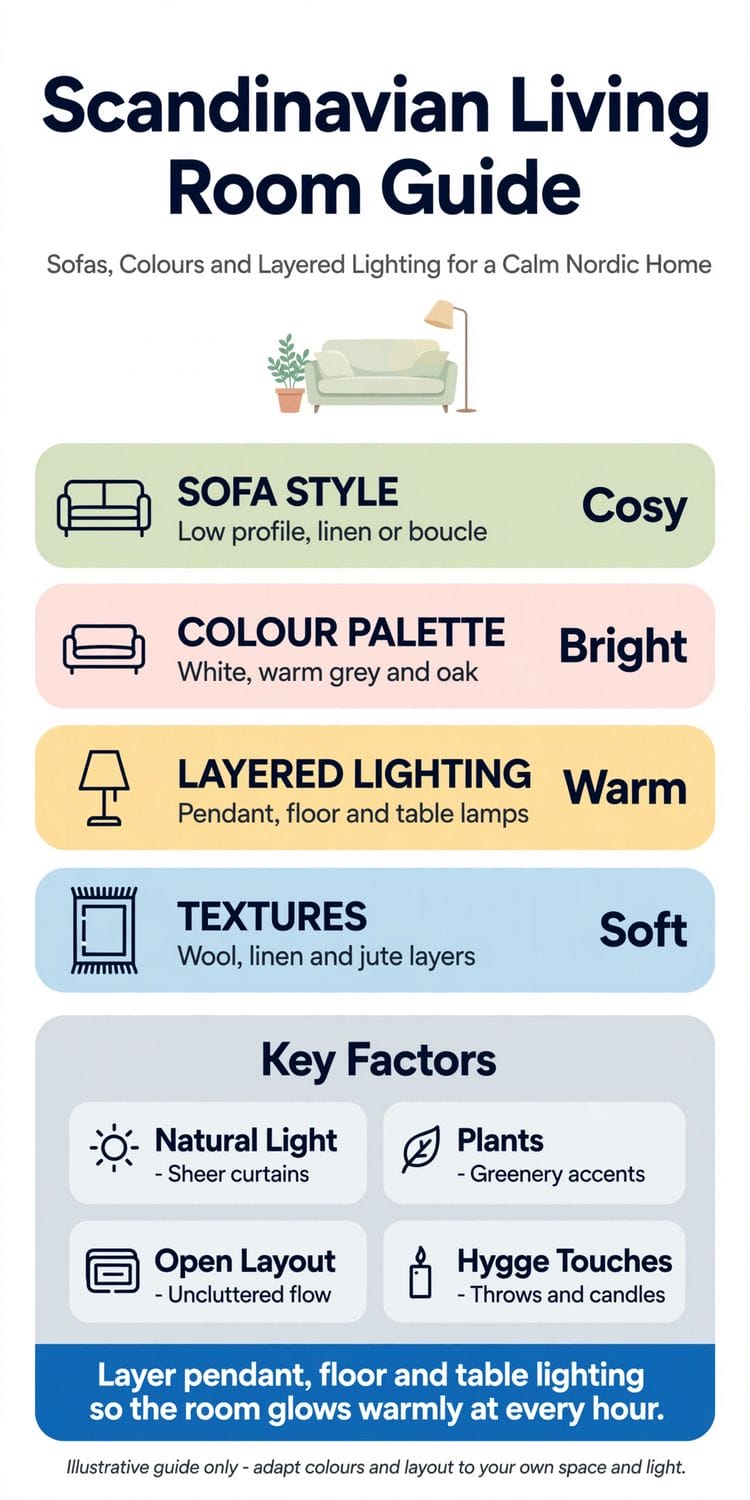
34. Replace the ceiling light with several small lamps
Table lamps, a floor lamp, a pendant lowered over the table — light at face and book height, in pools. The bright overhead glare is the evening style’s only true enemy.
35. Keep lamp light warm in tone, always
Warm bulbs flatter timber, wool and faces together. One cold bulb in a warm scheme reads like a dentist’s visit; consistency is the whole trick.
36. Burn real candles in clusters, safely placed
Groups of candles on the table, the sill, the stove’s hearth — the living flame is hygge’s emblem. Stable holders, away from textiles and traffic, tended like the small fires they are.
37. Build a reading corner and defend it
The best chair, the good lamp, a small table, the throw — a composed corner invites the room’s quietest pleasure and models it for the whole household.
38. Let the window seat become the evening’s prow
Cushions and wool on the window bench, a lamp behind, the dark garden or street beyond the glass — the style loves a lit interior held against the northern dark.
39. Serve the evening tray as a ritual
Tea, coffee or something stronger on a timber tray, carried in when the lamps go on. Rituals this small are how rooms acquire memories, and memories are hygge’s real substance.
40. Soften the floor for bare and stockinged feet
The rug field, a sheepskin over a chair, slippers by the door — the evening room is judged at foot level. Comfort you can feel through socks is a design specification here.
41. Draw the seating closer when company comes
Chairs pulled in, cushions shared, the circle tightened around the table and the candles. Scandinavian rooms are arranged for the average evening and re-arranged, nightly, for closeness.
42. Keep screens small, shared or absent after dark
A film watched together fits the room; five private glows do not. The style’s evenings are social technology older than electricity, and they still outperform it.
43. End the day with the room still composed
Throws folded, cups to the kitchen, candles out — the room rests tidy, so morning’s pale light meets order. Hygge includes the household’s care for its own room.
44. Keep the hearth corner, whatever the hearth is
Stove, fireplace, candle cluster or simply the best lamp and the two best chairs — every Scandinavian room keeps one warm pole the seating can gather to. Name yours and arrange for it.
6. Nordic Colour and Pattern, Spent Carefully
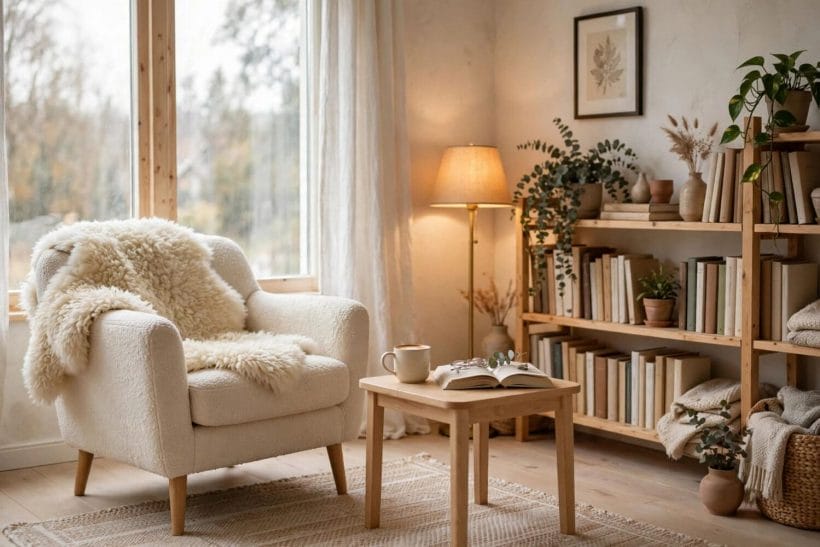
Colour in this lane is seasoning, not sauce — small, deliberate and usually drawn from the northern landscape itself.
45. Borrow colour from the landscape outside
Moss, stone, sea-grey, the blue of distance — Nordic accent colours are nature’s own, muted by northern light. A room coloured from its own view never jars.
46. Spend the strongest colour on the smallest textiles
Cushions, a throw, a lampshade carry saturation safely because they can be swapped in an afternoon. Walls and sofas in the same strength are decade-long arguments.
47. Use stripes and checks as the working patterns
Woven stripes, simple checks and plain knits are the pattern family’s core — geometric, calm and unembarrassed. Florals visit rarely and quietly, as guests from another lane.
48. Let one folk-patterned textile be the room’s story
A single woven blanket or cushion in a traditional Nordic pattern carries heritage the way one vintage chair carries history. Pattern, like patina, is rationed to what can be loved properly.
49. Pair muted blue with pale timber for the coastal register
Dusty sea-blue accents against ash and pine give the maritime Nordic mood without a single nautical prop. The colour does the whole reference on its own.
50. Use black and white pattern for graphic rooms
A monochrome cushion, a striped rug, one bold print — graphic contrast suits the style’s architectural end, especially in town flats. Keep the shapes simple and the count low.
51. Keep art pale, framed simply and hung low
Watercolours, prints and photographs in pale mounts and plain frames, hung at sitting eye level, belong to the room’s calm. A gallery wall can work if its palette obeys the room.
52. Dye nothing to match; let tones converse
Undyed wool, pale timber and muted accents harmonise by family, not by formula. Forced matching is the showroom’s habit; the Nordic room prefers relatives to twins.
53. Change the accent colour with the year, not the room
Households that tire of a scheme usually tire of its accent. Swap the cushions’ colour family seasonally and the pale room feels renewed while nothing structural has moved.
54. Welcome one warm metal, sparingly
A brass lamp or a copper bowl among the pale woods is the Nordic room’s small fire of metal — warm, singular and never matched into a set.
55. Stop one accent sooner than feels finished
The style’s colour discipline in one rule: when the room feels complete, remove the last accent added. The margin is where Scandinavian lives — in the colour not spent.
7. Small Rooms, Rentals and Living With the Style Daily
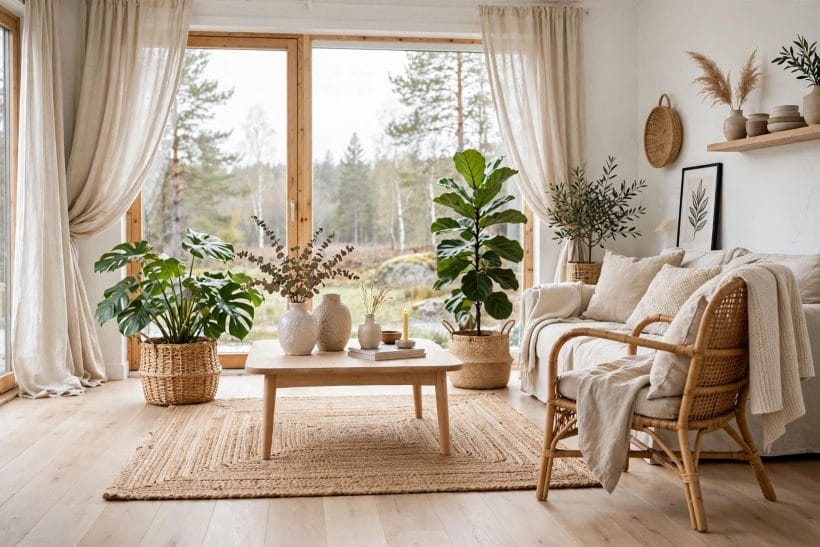
The style was born in small northern homes and survives contact with real life — children, dogs, budgets and landlords — better than most. This closing survey keeps it honest.
56. Begin with paint and textiles, not furniture
A rental transforms with a pale repaint where allowed, the big pale rug, linen curtains and wool. The expensive pieces can follow over years; the light arrives this weekend.
57. Choose the multifunctional without shame
The daybed that hosts guests, the table that seats two or six, the stool that is also a side table — northern design honours furniture that works twice, especially in small rooms.
58. Keep the palette tightest in the smallest rooms
The fewer square metres, the fewer colours and materials. One timber tone, one textile family, one accent — small Scandinavian rooms are essays, and essays are short.
59. Use the wall for light storage, sparingly
A pale shelf or two for books and the plant, mounted high, keeps floors clear. The moment shelving becomes a collection, the room’s calm is spent — edit like a Northerner moving house.
60. Let the style absorb family mess gracefully
Baskets for toys, a washable rug, covers that launder — the style’s natural materials forgive daily life. A Scandinavian room that cannot survive a toddler is a photograph, not a home.
61. Add colour seasonally through textiles alone
Spring’s pale green cushions, autumn’s rust throw, December’s red candle — the fixed room stays pale and the seasons visit by fabric. Cheap, joyful and reversible.
62. Keep one inherited or handmade thing in every room
The style’s soul is continuity — the stool from a grandfather, the cushion someone knitted. New rooms full of new things feel unpeopled; one old soul settles them.
63. Maintain timber kindly and rarely
Soap, oil and soft cloths on the household’s slow rhythm keep pale wood glowing. The style asks little maintenance but asks it gently — no harsh chemicals on natural finishes.
64. Edit twice a year, with the light
Spring and autumn, when northern households traditionally turn their rooms, remove what use has not justified. The style is maintained by subtraction as much as by buying.
65. Judge the room by a winter evening, not a summer photo
If the room holds its people warmly, brightly and together at the darkest hour of the year, the style is working. Everything in this survey is in service of that single test.
8. Keeping the Style: Decades, Not Seasons

The closing survey is about time — how a Scandinavian room stays itself through children, moves, trends and the household’s own changing life.
66. Buy the few big pieces as if for life
The sofa and the good chair are this style’s capital. Chosen well — frames sound, fabrics natural, forms quiet — they outlast every trend that will visit the room around them.
67. Let trends enter only as textiles
A fashionable colour in a cushion is a season’s amusement; in a sofa it is a decade’s sentence. The pale, plain bones of the room should never be asked to carry fashion.
68. Repair and re-cover rather than replace
Re-webbed chairs, re-covered cushions, re-oiled tables — maintenance is a Scandinavian pleasure, not a defeat. A room kept is worth more, in every sense, than a room refreshed.
69. Pass pieces between rooms before buying new
The armchair tired in the living room may be perfect in a bedroom. Northern households shop their own houses first, and rooms evolve by migration as much as by purchase.
70. Keep the plant population alive and unhurried
Plants that thrive stay; plants that sulk are composted without guilt. A few green survivors, growing slowly, suit the room better than a rotating jungle of novelties.
71. Record what the room has taught the household
Which chair everyone fights for, which corner the light loves, where guests always sit — a household that notices its rooms keeps the lessons when furniture changes.
72. Resist the second television, the extra sofa, the spare everything
Rooms fill by drift. The style’s long game is a standing gentle refusal: each addition must displace something or justify displacing nothing, out loud.
73. Let age show as the room’s final texture
Faded wool, polished armrests, a floor’s honest wear — time is the one decorator this style invites in permanently. Rooms that age visibly are rooms that were lived in visibly.
74. Hand the room on, in stories as much as things
Children leave with the stool, the blanket, the lamp — and with the standard those things taught: light, honesty, warmth, enough. The style reproduces itself through households, not shops.
75. End with the test the style sets itself
Pale walls, low chairs, lamplight on grain, people close and nothing in the room pretending to be anything else. If a living room can say that on its darkest evening, it is Scandinavian in the only sense that matters.
9. Checks and Mistakes: Before the First Purchase or the First Stone
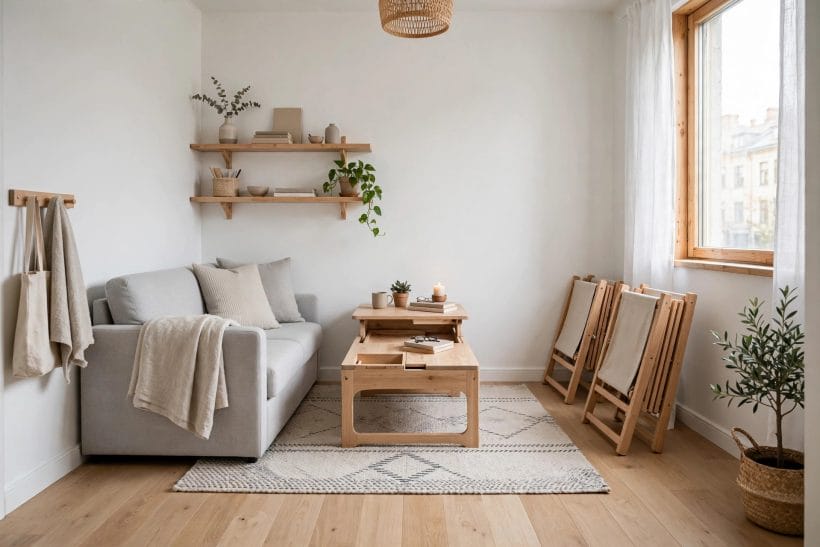
Audit the light before buying anything. Stand in the room at midday and at dusk and name its true problem: most rooms blamed on furniture are light-starved, cluttered at the glass, or lit by one harsh ceiling point. Pale paint, cleared sills, layered lamps and the big rug solve the majority of Scandinavian ambitions before a single chair is bought — and they are the cheapest items in this survey.
Respect the style’s two disciplines or do not claim its name. The first is subtraction: every object useful, beautiful or loved, and the courage to let the rest go. The second is warmth: wool, timber, flame and company in real quantities. The classic failures are the halves done separately — pale rooms with nothing warm in them, which read as waiting rooms, and cosy clutter painted white, which reads as a storeroom. Scandinavian is the marriage, not either partner.
Sample the whites and pale colours in the room’s own light, keep metal and timber tones in one family, and let colour enter in doses a cushion can carry. Households who hold those three habits can build the room gradually, piece by honest piece, for years without a wrong turn.
10. Costs and Pulling It Together
Costs in this style are famously front-loaded on very little. The transformation tier is paint, textiles, lamps and candles — the price of a careful weekend’s shopping, and mostly reversible. The furniture tier — the sofa, the crafted chair, pale timber pieces — is where money concentrates, and the style’s own teaching is to buy those few pieces well and keep them for decades rather than cheaply and often. Craft costs more per object and less per year than almost any other lane in the living-room cluster.
Pull a room together in the survey’s order: lighten the shell, clear the glass, lay the pale field, place the low leggy seating, ration the objects to the crafted and the loved, then light the evening in pools and keep a tray for it. Done in that order, the room passes the style’s only real examination — a dark evening, people you like, and nowhere anyone would rather be.
Final Considerations
Scandinavian design endures because it answers a permanent problem — how to live well through dark winters in small rooms — with permanent means: light, timber, wool, honesty and each other. Fashions visit it regularly and leave with its palette, but the discipline underneath is older and sturdier than fashion.
Build it slowly and keep it warmly. A pale room, a low chair, lamplight on wood grain and the people close — that is the whole of it, and it is enough for the longest winter.

0 Comments