

A front garden that faces north, or sits under big trees, is not a failed garden — it is a shade garden waiting to be designed on purpose. The houses that look best on shaded streets are the ones planted for the light they actually have.
These 75 shade landscaping ideas cover the shaded front of house end to end: foundation planting, groundcovers that replace struggling lawn, layered trees, colour, paths, seating and the finishing touches that make shade look deliberate.
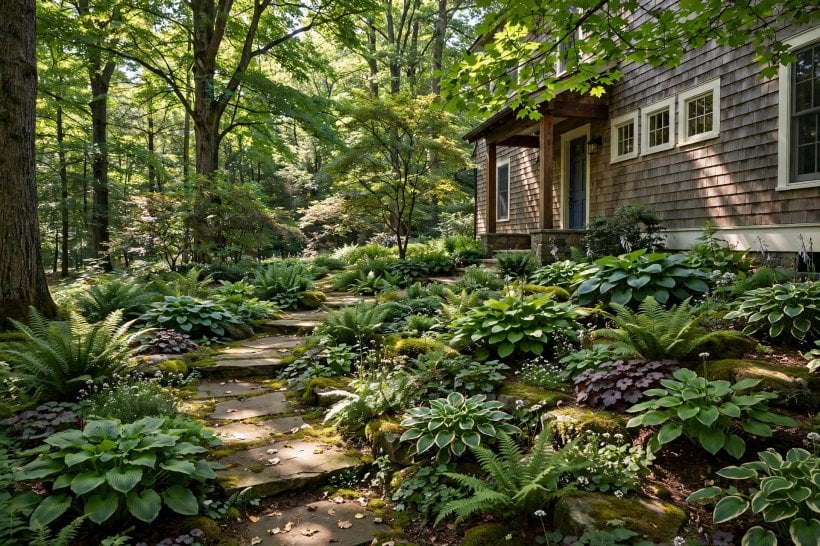
1. Shade Landscaping at a Glance
Shade is not one condition but three — light shade under high branches, partial shade that gets a few hours of sun, and deep shade where almost none arrives — and the front of a house often holds all three in a single bed. Good shade landscaping starts by reading which is which, then plants in layers: canopy, shrubs, perennials, groundcover, exactly as a woodland does.
| First step? | Watch the bed for a day and map where sun actually lands — most “full shade” fronts get more light than their owners think. |
| Biggest shade problem? | Dry shade under trees: roots take the water before plants get it, so soil improvement and mulch matter more than plant choice. |
| What replaces lawn? | Groundcovers, mulch, gravel and planted beds — grass is the weakest plant in shade and the first to give up. |
| How does a shade garden get colour? | From foliage first — variegated, gold and silver leaves — with flowers as the seasonal bonus. |
| Design rule? | Plant in drifts and layers, edge everything crisply, and the shade reads as a choice, not an apology. |
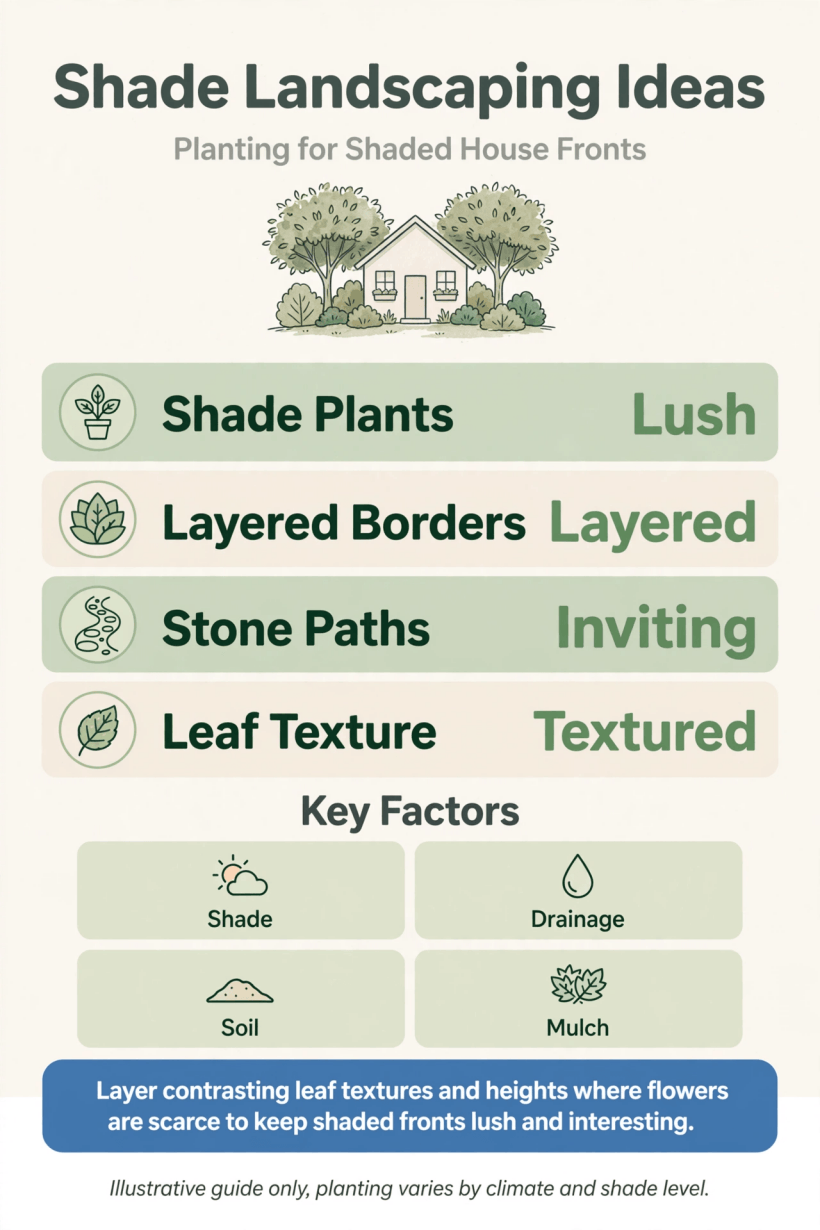
At a glance: read the light honestly, build soil under trees, plant in layers, and let foliage carry the colour.
2. Foundation Planting That Loves Shade
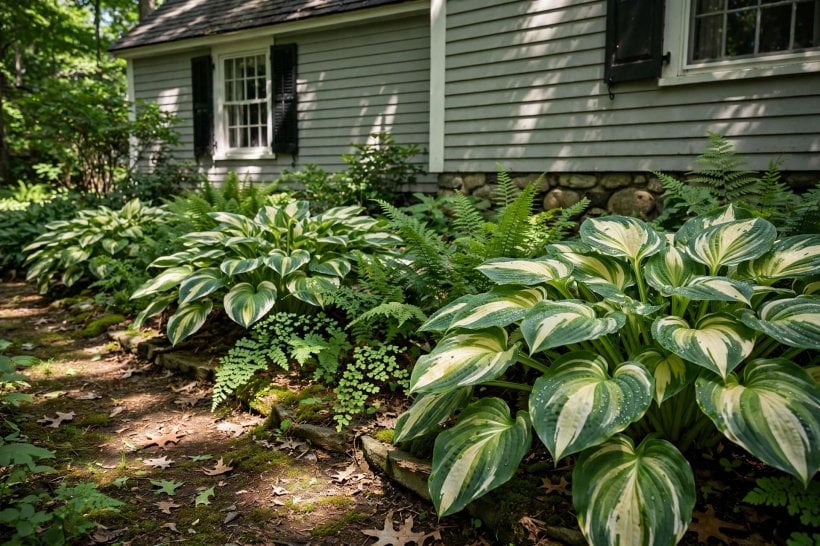
The foundation bed sets the house into its plot, and on a shaded front it should be built from plants that evolved for woodland edges — broad leaves, tolerance of root competition, and a calm, green presence all year. The layered approach mirrors the shade beds in our rock gardens and shade plants guide: structure first, flowers second.
1. Anchor With Shade-Tolerant Evergreen Shrubs
Yew, holly, mahonia and skimmia hold the front of the house in winter and ask nothing of the sun.
2. Add Hostas as the Workhorse Perennial
Big, bold leaves in drifts along the wall — choose several varieties so leaf size and colour vary down the bed.
3. Use Ferns for Soft Texture
Nothing says shade garden like ferns; their fronds soften hard walls and brickwork better than any flower.
4. Plant in Odd-Numbered Drifts
Threes and fives of one plant read as a design; single specimens dotted along a wall read as shopping.
5. Keep a Green Backbone All Year
Mix evergreen and deciduous so the bed never empties in winter, when the front of the house is most on show.
6. Improve the Soil Before Planting
Dig in generous organic matter — under trees, the soil is usually hungry, compacted and full of roots.
7. Mulch Deep, Every Year
A thick mulch conserves the moisture tree roots would otherwise steal and feeds the soil as it breaks down.
8. Step Plants Down From the Wall
Tallest at the back, shortest at the path — the layered slope that makes a bed look planted rather than lined up.
9. Repeat One Plant Down the Whole Bed
A single repeated perennial ties a long frontage together and is the cheapest design trick in this whole list.
3. The Front Door and Entry in Shade
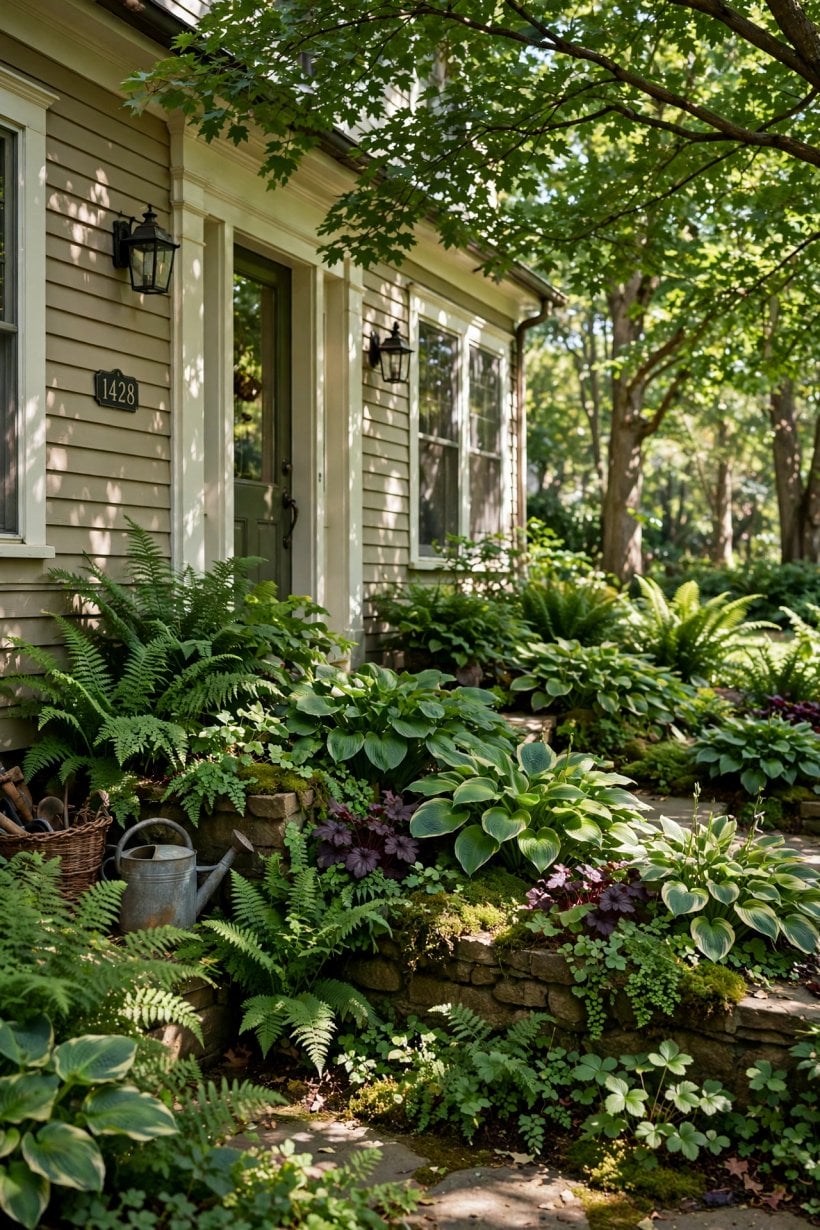
A shaded entrance can feel gloomy or feel like a cool, green welcome — the difference is light colours near the door and a clear, edged path to it. Treat the door zone as the garden’s front room, the way the best entrances in our front yard curb appeal guide are staged.
10. Frame the Door With a Pair of Pots
Matching containers of shade plants either side of the door give the entrance its punctuation.
11. Choose Pale Flowers Near the Door
White and cream blooms glow in low light and are visible from the street on grey days.
12. Add a Light-Coloured Gravel Apron
Pale gravel at the threshold bounces what light there is and keeps the entry mud-free.
13. Keep the Path Wide and Obvious
In shade, a clear, generous path reads as welcome; a narrow, mossy one reads as neglect.
14. Hang a Basket Where Light Reaches
Even shaded fronts have one brighter corner — a basket of trailing shade plants uses it.
15. Use Variegated Leaves by the Steps
Cream-edged foliage beside the path catches the eye and guides visitors in after dark.
16. Install Low Path Lighting
Shade plus dusk makes steps treacherous — low, warm lights are safety and atmosphere in one.
17. Keep One Evergreen Sentinel
A single upright evergreen by the door gives the entrance year-round structure and formality.
4. Groundcovers That Replace Struggling Lawn
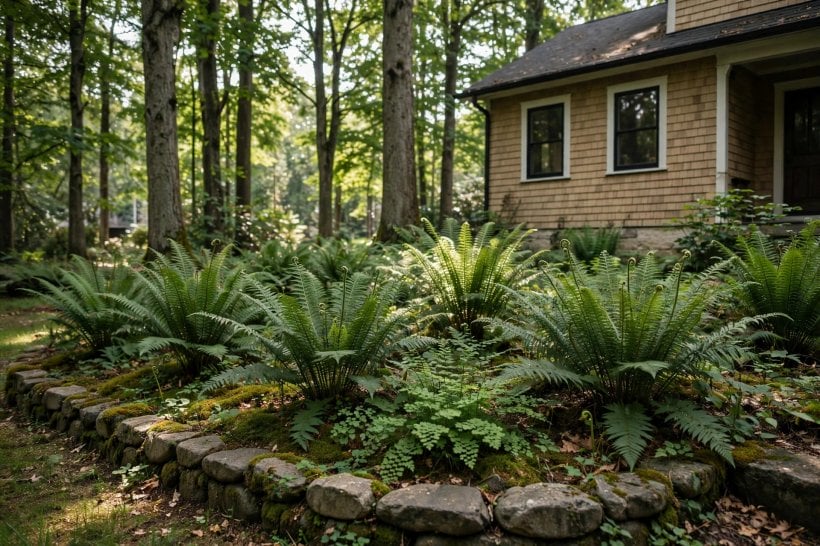
Thin, mossy grass is the signature of a shaded front fighting its conditions. Replacing it — partly or wholly — with groundcover is the single biggest upgrade most shaded houses can make, and it ends the mowing, feeding and reseeding cycle for good.
18. Commit to Groundcover Under Trees
Inside the drip line, stop fighting for grass: plant groundcover and let the tree win gracefully.
19. Use Pachysandra or Vinca for Evergreen Cover
Both carpet dry shade reliably; contain vinca where it could wander into beds or neighbours.
20. Try Sweet Woodruff for Fragrance
A delicate, scented carpet for partial shade that naturalises happily under shrubs.
21. Let Moss Be the Lawn Where It Wins
In deep, damp shade, a moss lawn is lush, green and mower-free — embrace it and edge it neatly.
22. Plant Ajuga for Spring Colour
Blue flower spikes over dark leaves in spring, tidy foliage the rest of the year.
23. Use Ferns as a Groundcover Mass
A drift of one fern species under trees looks like woodland floor because it is.
24. Edge Every Groundcover Bed
A crisp edge — metal, stone or a cut turf line — is what separates “designed” from “overgrown”.
25. Add Stepping Stones Through Planted Areas
Stones give access for weeding and make a planted front feel intentional and walkable.
26. Mulch New Plantings Until They Close
Groundcover takes a season or two to knit; mulch carries it through without weeds filling the gaps.
5. Trees and Layered Canopy
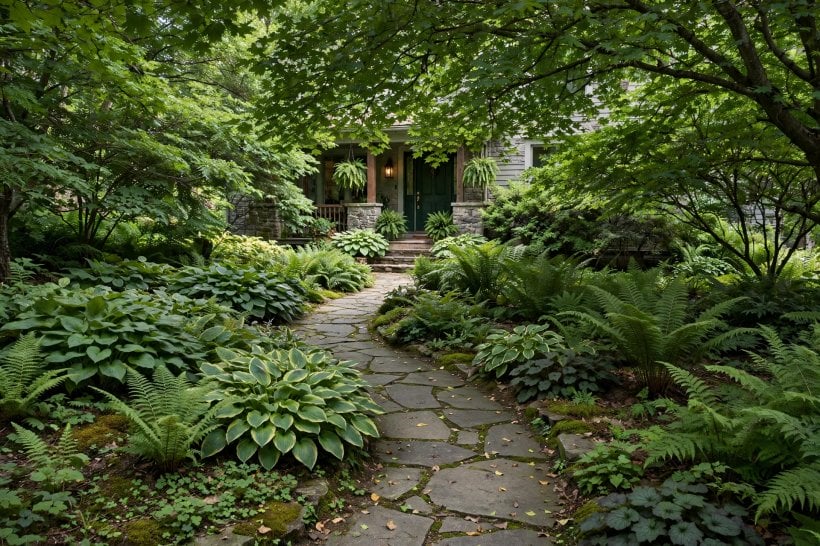
The trees causing the shade are also its greatest asset — mature canopy gives a plot privacy, coolth and presence that no new planting can buy. Work with them, lighten them carefully, and add a small second layer beneath.
27. Lift the Canopy, Lightly
Removing the lowest branches of big trees (crown lifting, done properly) admits slanting light without losing shade’s benefits.
28. Add a Small Flowering Tree at the Edge
Dogwood, serviceberry or Japanese maple at the sunnier boundary adds a flowering middle layer.
29. Underplant With Woodland Shrubs
Rhododendron, camellia, hydrangea and viburnum evolved for exactly this storey of the woodland.
30. Choose Hydrangeas for Summer Presence
The classic shade shrub: big leaves, long flower season, and happy in the light most fronts provide.
31. Protect Tree Roots When Planting
Plant between roots with a hand trowel, never by rotavating — damaged roots mean a declining tree.
32. Water New Plants, Not the Tree
Young plants under canopy need their own watering for the first season until their roots compete fairly.
33. Let One Specimen Tree Own the Corner
A single beautiful small tree in the front corner gives the whole plot a focal point.
34. Keep Suckers and Epicormic Growth Cleared
Tidy trunks make shade look managed; fuzzy, sprouting trunks make it look forgotten.
6. Colour in the Shade: Foliage First, Flowers Second
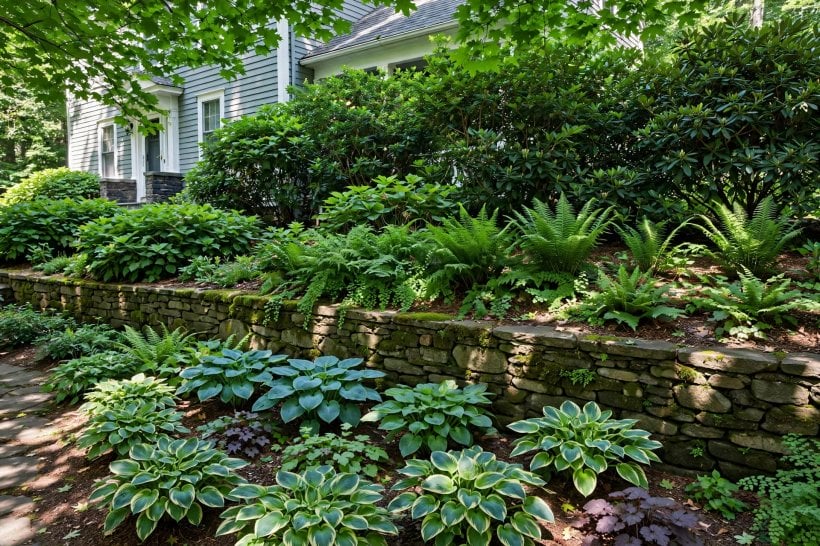
Shade gardens persuade with leaf colour because leaves last all season while flowers last weeks. Build the palette on foliage — gold, silver, variegated, purple — and let the flower seasons arrive as bonuses, the same foliage-first thinking used in our backyard landscaping ideas.
35. Use Gold Foliage as Lamplight
Golden hostas, hakone grass and gold-leaf shrubs glow in shade as if lit from inside.
36. Add Silver and Grey Leaves
Brunnera, pulmonaria and silvered ferns brighten the darkest corners of a bed.
37. Plant White-Flowered Varieties
White astilbe, white foxgloves and white impatiens hold their visibility long after coloured flowers fade into the gloom.
38. Sequence Spring Bulbs Under Trees
Snowdrops, wood anemones and bluebells flower before the canopy closes — a free spring display in “useless” shade.
39. Use Purple Foliage for Depth
Heuchera and dark-leaf plants give shade beds the contrast that stops green becoming monotonous.
40. Repeat One Accent Colour
One flower colour recurring down the front — white, say — reads as a scheme; six colours read as a queue.
41. Grow Impatiens or Begonias for Summer Mass
Where bedding is wanted, these are the reliable shade performers for pots and bed fronts.
42. Let Astilbe Carry Early Summer
Feathery plumes in pink, red and white over fern-like leaves — the shade bed’s showiest perennial.
43. Add Autumn Interest Deliberately
Japanese maples, berries and late sedums keep the shaded front performing after summer perennials fade.
7. Paths, Steps and Edges in Shade
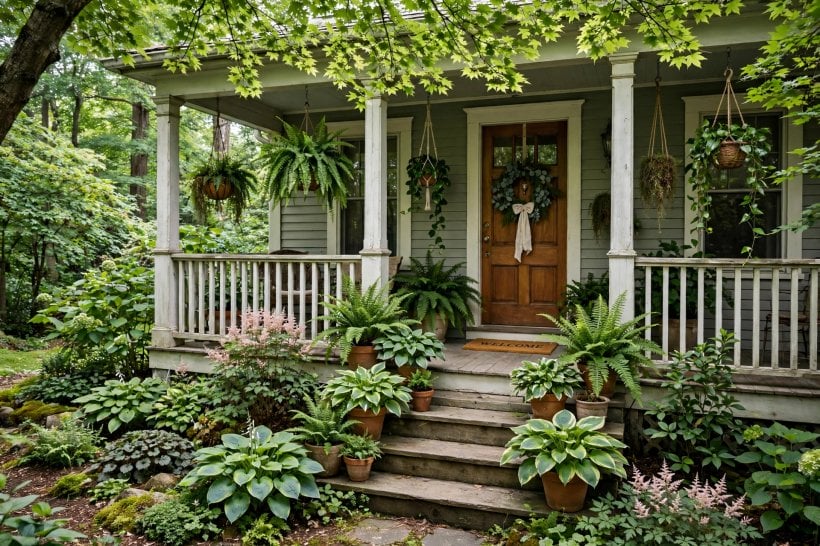
Shaded paths grow slippery and mossy, so materials and maintenance differ from sunny fronts. Stone, gravel and brick — detailed in our landscaping rock types guide — behave better than smooth paving, and texture underfoot is a safety feature, not a style choice.
44. Choose Textured Stone or Brick
Riven, rough surfaces grip in the wet; polished slabs in shade are a fall waiting to happen.
45. Lay Gravel Paths With a Firm Edge
Gravel suits shade gardens aesthetically and drains freely — contain it with steel or stone edging.
46. Sweep and Treat Paths Annually
An annual clean and algae treatment keeps shaded paving safe and looking cared for.
47. Widen the Path Where Planting Leans In
Lush shade planting crowds paths — build in the extra width rather than cutting plants back hard.
48. Use Logs or Sleepers as Informal Edging
Timber edging suits the woodland mood and is cheap to renew section by section.
49. Set Steps With a Nosing You Can See
A pale strip or contrasting edge on shaded steps is a small safety detail visitors’ feet will thank you for.
50. Keep One Dry Route to the Door
Whatever the garden scheme, guarantee a clean, non-slip route from street to door in all weathers.
51. Let Low Walls Double as Seating
A low retaining wall at the path’s edge tidies a slope and gives the front a place to sit.
8. Shade Structures and Places to Sit
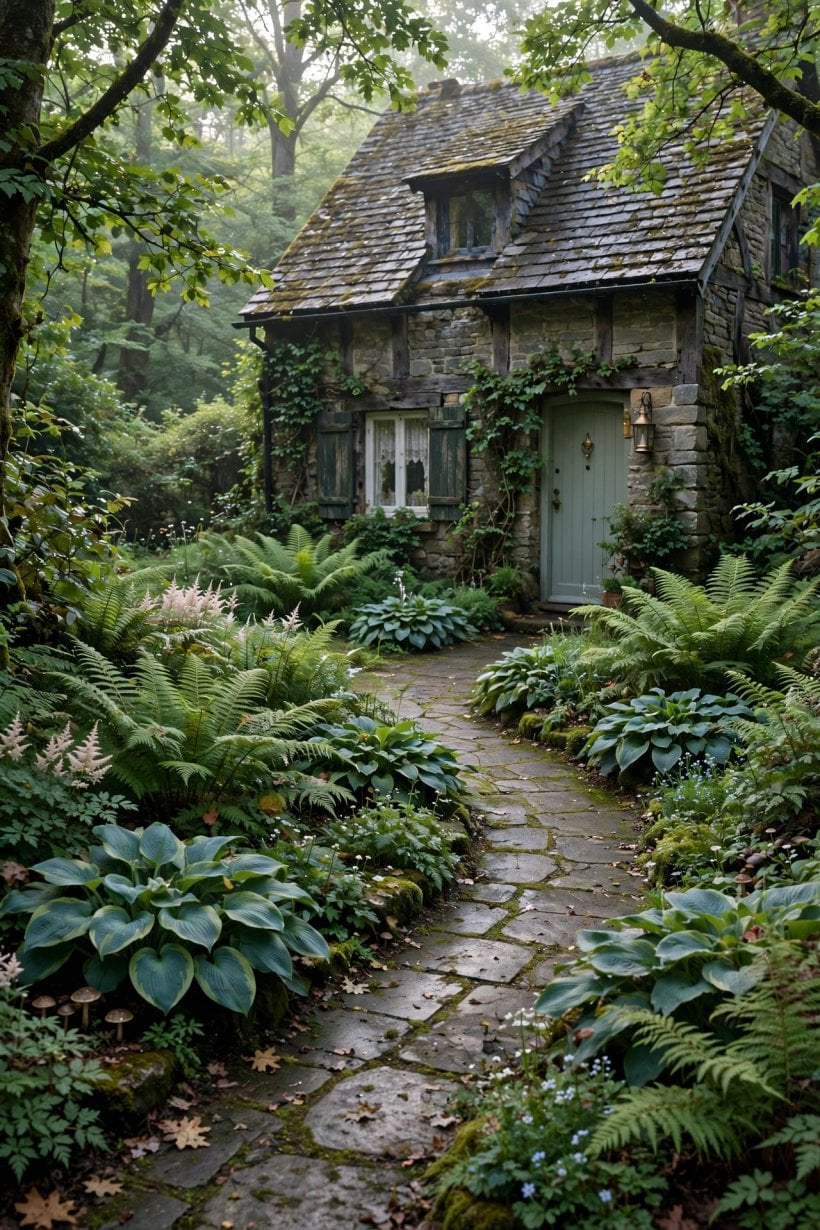
A bench in dappled shade at the front of the house is one of the pleasures a sunny plot cannot offer. Small structures — an arbour, a trellis, a bench alcove — give the front garden a destination and make the shade itself the feature, echoing the welcoming spaces in our tiny house landscaping ideas.
52. Place a Bench in the Best Dappled Light
Site it where sun flecks through at sitting times, facing the house or the street’s best view.
53. Build a Simple Arbour Over the Path
An arch at the gate or mid-path frames the entrance and carries a shade-tolerant climber.
54. Grow Climbers That Accept Shade
Climbing hydrangea, some clematis and ivy will clothe a shaded wall or fence where roses sulk.
55. Add a Small Water Feature
A bubbling stone or simple basin adds sound and movement — and shade keeps its water clear longer.
56. Use a Bird Bath as a Focal Point
In a quiet bed, one bird bath gives the eye a rest and the garden daily visitors.
57. Screen Bins and Utilities With Planting
Shade-tolerant hedging or a trellis panel hides the practical clutter every front plot holds.
58. Hang a Swing Seat Under the Big Tree
If one tree owns the shade, a swing beneath it turns the whole condition into the garden’s best seat.
59. Keep Furniture Light-Coloured
Pale furniture stays visible and cheerful in low light where dark pieces disappear.
9. Pots and Seasonal Colour in Shade
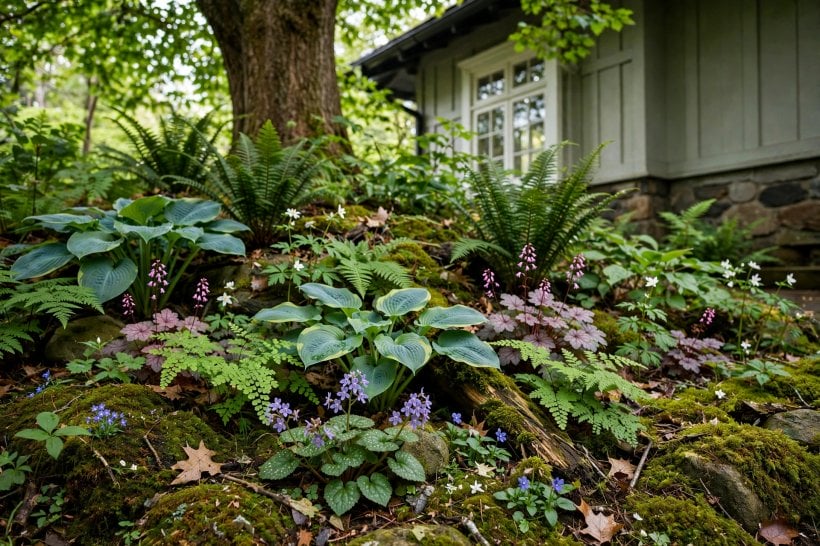
Containers are the shade gardener’s movable colour: they can sit where the in-ground soil is hopeless, be swapped seasonally, and cluster at the door where their effect counts most.
60. Cluster Pots in Threes at the Door
A large, medium and small pot of shade plants reads as one generous arrangement.
61. Fill Pots With Foliage, Not Just Flowers
Hostas, ferns and heuchera in pots give months of presence for one planting.
62. Rotate Seasonal Pots In and Out
Keep a nursery corner elsewhere; swap a flowering pot to the front at its peak, retire it after.
63. Use Big Pots — They Hold Moisture
Under-tree positions are dry even in pots; generous soil volume halves the watering chore.
64. Lift Pots on Feet
Pot feet prevent the damp, slug-friendly shadow patch beneath containers on shaded paving.
65. Plant Spring Bulbs in Pots for the Step
A pot of narcissus or hyacinths by the door announces spring on the darkest frontage.
66. Try a Fern Table or Plant Stand
Raising one fine fern to eye level makes a specimen of a plant that would vanish in a bed.
67. Keep a Watering Can by the Door
Shade pots dry slowly but they do dry — a can in sight is a chore remembered.
10. Water, Stone and the Finishing Touches
Shade gardens finish with texture: stone that stays handsome in the damp, water used sparingly, and maintenance habits that keep the whole front calm rather than wild — the same palette of stone and green that anchors the schemes in our rock landscaping ideas.
68. Use Boulders as Permanent Structure
One or two well-set stones anchor a shade bed for decades and suit the woodland register.
69. Build a Small Rock Cluster by the Path
Stone plus ferns plus a hosta is the shade garden’s most reliable three-part composition.
70. Accept and Design for Damp
Where shade is also wet, plant for it — rodgersia, primula and iris — instead of draining against nature.
71. Install a Simple Water Butt Discreetly
Shade gardens still need summer water for new planting; hide the butt behind the shrub layer.
72. Keep Slugs Under Observation
Hostas in shade are slug country: check at dusk, use barriers or traps, and choose thicker-leafed varieties.
73. Rake Leaves Into the Beds
Autumn leaves from your own canopy are free mulch — shred and spread them rather than bagging them away.
74. Photograph the Front in Every Season
Shade changes dramatically across the year; seasonal photos show you where the gaps really are.
75. Edit Once a Year, Firmly
One annual session — thinning, dividing, removing the thugs — keeps a lush shade garden lush instead of tangled.
Final Considerations
The shaded front of a house succeeds when it stops apologising: read the light honestly, fix the dry soil under trees, plant in layers, and let foliage do the colour work. Grass is the only plant that truly fails in shade — everything else is a design decision. The 75 ideas above — landscaping ideas for shaded front of house plots that work with the light rather than against it — all serve the same shift: from a front garden that is shaded by accident to one that is shaded on purpose.
Start with the ground — soil, mulch, edges — then plant the backbone, then add colour and detail season by season. A shade garden matures quietly, asks little, and gives its owner the coolest, calmest seat on the street.

0 Comments