
Burning your siding on purpose sounds like madness — until you see a cedar board charred black in the traditional Japanese way shrug off rain, sun and termites for decades. The visualizer below lets you test every char level on a virtual plank before you ever light a torch, so you can pick your finish with your eyes open.
1. At a Glance: The Four Char Levels in Brief
The whole technique turns on one dial: how hard you burn the board. The simulator below is built around a single Burn Intensity slider with four stops, and each stop changes not just the colour of the cedar but its UV resistance, its bug and fire resistance, and how often you will ever have to maintain it. Raw cedar sits at one extreme — beautiful, golden and completely unprotected — while the cracked, pitch-black Gator Skin finish sits at the other, asking for nothing for half a century. Here is every level, with the performance specs exactly as the tool rates them.
| Char level | Look | UV resistance | Bug resistance | Fire resistance | Maintenance |
|---|---|---|---|---|---|
| Level 0: Raw Wood | Natural golden cedar | Low | None | Low | Yearly (high) |
| Level 1: Light Char (Yakisugi) | Lightly toasted, grain showing | Medium | Low | Medium | Every 2–3 years |
| Level 2: Heavy Char (Suyaki) | Deep black, brushed | High | High | High | Every 10–15 years |
| Level 3: Gator Skin | Unbrushed, thick cracked scales | Maximum | Maximum | Maximum | None (50+ years) |

The trade in one picture: the deeper the char, the longer the finish goes between coats of oil — from yearly upkeep on raw wood to 50+ years on Gator Skin.
2. What Shou Sugi Ban (Yakisugi) Actually Is
Shou sugi ban — yakisugi in Japanese — is the ancient Japanese art of preserving wood with fire. Instead of coating cedar with a chemical preservative, you scorch the surface of the board itself. The heat transforms the outer layer of the wood into carbon, and that carbon layer becomes the protection: it is the sacrificial skin the weather, the sun and the insects have to get through before they ever reach sound timber. The technique was developed for cedar siding on homes exposed to harsh coastal weather, and it survives today because it works with nothing more exotic than fire, a brush, water and oil.
For a tiny house, the appeal is doubled. Cedar is already one of the classic lightweight cladding choices, and charring lets you keep a natural timber exterior without signing up for a lifetime of staining. If you are still weighing cedar against other cladding, our guide to tiny house siding options, from lightweight cedar to corrugated metal and composite, lays out the full field — charred cedar is what happens when the cedar option gets a suit of armour. Choosing shou sugi ban siding means choosing a finish you make yourself, on a sawhorse, one board at a time — and the rest of this guide walks through exactly what that involves.

3. The Four Char Levels, From Raw Cedar to Gator Skin
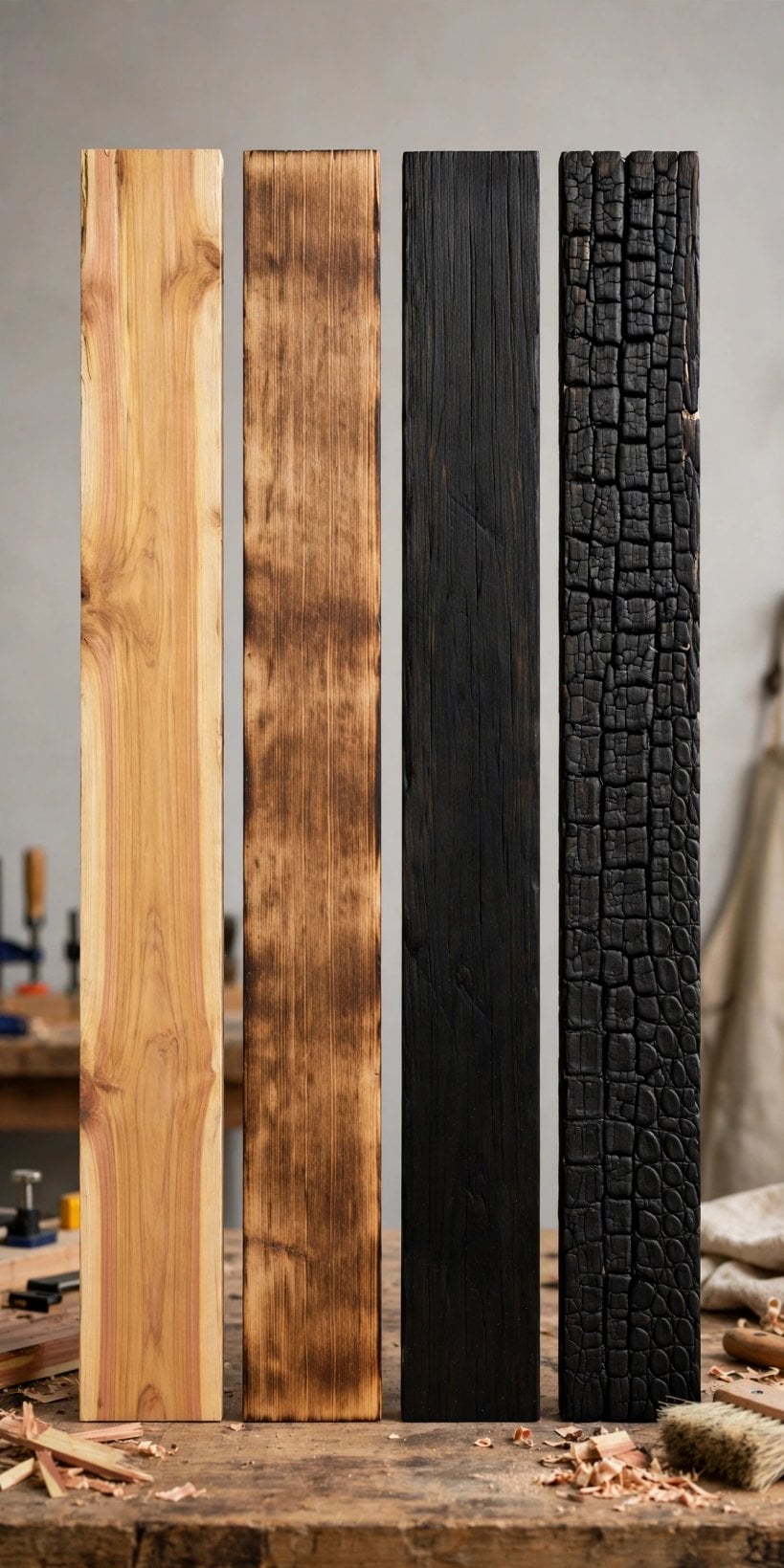
The slider’s first stop is not a finish at all. Level 0, Raw Wood, is unprotected cedar: vulnerable to UV, rot and insects, it will turn gray and rot without constant sealing, and the tool is blunt that it requires stain immediately. Every char level after that is a step away from that vulnerability. Level 1, the Light Char the tool labels Yakisugi, is lightly toasted — the surface browns, the grain stays clearly visible, and you get a warm, modern look with medium UV and fire resistance. It is the prettiest stop on the dial for many people, and the least protective of the three true chars.
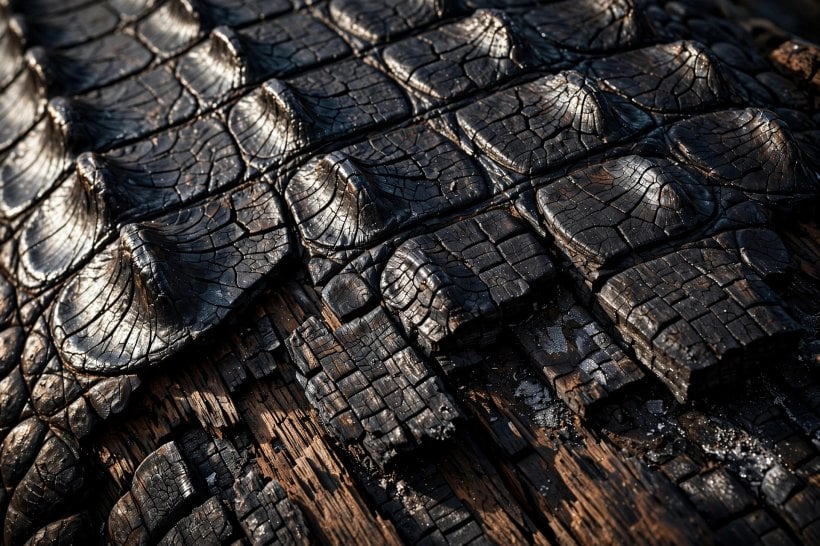
Level 2, Heavy Char or Suyaki, is the classic look: a deep black surface that is brushed after burning, so the carbon layer sits smooth and even. UV, bug and fire resistance all step up to High. Level 3, Gator Skin, pushes the burn until the surface cracks into thick, raised scales like the hide of an alligator — and then, crucially, you do not brush it. Left unbrushed, that thick scale is the ultimate protection in the tool’s ratings: the scales act as a fire shield and a bug barrier, and every resistance rating maxes out. Same board, same torch — the only difference is how long you let the fire work.

4. Why Fire Protects Wood: Cellulose, Carbon and Water
The protection is not magic; it is subtraction. Bugs and fungus eat the soft cellulose — the sugars — in wood, and fire burns the cellulose off. What remains on the surface is carbon, which has zero nutritional value to pests. There is simply nothing left for termites or rot organisms to eat, which is why the tool’s summary is so blunt: termites hate it. The deeper the char, the thicker that inedible layer, which is why bug resistance climbs from None on raw wood to Maximum on Gator Skin.
The second mechanism is water. The carbon layer naturally repels water, and when it is sealed with oil it creates a surface that sheds rain instantly, preventing the moisture uptake that causes warping and rot. Wood mostly fails from the outside in — sun breaks down the surface, water soaks in, the board swells, cracks and opens the door to decay. A charred, oiled surface interrupts that whole sequence at step one. It is the same moisture-first thinking behind a good vapor barrier placement strategy for a tiny house: keep water out of the assembly, and the materials inside it last. Fire, it turns out, is also a fire defence — a surface that has already burned has little left to give a flame, which is why fire resistance rises with char depth too.
5. Choosing Your Char Level: Looks vs. Upkeep
Every stop on the slider is a trade between appearance and maintenance, and the tool calls this out directly as the Maintenance Trade-off. A light char looks modern and brown — the grain glows through the toast — but it requires re-oiling every 2–3 years to keep its protection. A heavy brushed char stretches that interval to every 10–15 years. The deep black Gator Skin char can last 50+ years without maintenance at all. In other words, the finish that asks the most of the torch asks the least of you, forever after.
So the honest question is not “which level is best?” but “which rhythm suits this house?” A tiny house you live in full-time, where re-oiling a small wall area every couple of years is a pleasant afternoon’s work, can wear the lighter, grain-forward finish happily. A remote cabin, a rental, or any wall you cannot easily reach with a ladder argues for burning deeper and brushing less. Compare the candidates side by side, as in the planks below, and weigh charred cedar’s upkeep against the other cladding in our siding weight and durability comparator — few finishes anywhere on that chart offer a 50-year maintenance holiday.

6. The 4-Step Process: Burn, Brush, Wash, Oil
The tool distils the craft into a 4-step process, and the order matters. Step one, Burn: use a roofing torch and char the board until the surface cracks into the Gator pattern or turns black for a Suyaki finish. You are watching the surface, not a clock — colour and crackle are the gauges. Step two, Brush: wire-brush with the grain to remove soot and reveal the texture beneath. Brushing is what turns a heavy char from rough scale into the smooth, deep-black Suyaki look — and you skip this step entirely for Gator Skin, where the unbrushed scale is the whole point.
Step three, Wash: rinse the board with water to remove dust and stop the burning process completely — a charred board can hold heat longer than you expect, and the rinse also leaves a clean surface for the oil. Step four, Oil: seal with tung oil or linseed oil to lock in the char and prevent stains. The oil is not decoration; it binds the carbon layer, deepens the colour, and completes the water-shedding surface the protection depends on. Burn, brush, wash, oil — four steps, no chemicals, and a board that is ready to outlast the house it is nailed to.

7. Finishes and Oils: Tung Oil, Linseed Oil and the Brushing Choice
The tool names two oils — tung oil and linseed oil — and either will seal a charred board. What matters more than the brand on the can is understanding what the oil is doing: it soaks into the carbon layer, hardens there, and turns a dusty char surface into a coherent, water-shedding skin. On a brushed Suyaki board, oiling brings out the drama of the finish — the black deepens, the grain ridges catch the light, and the surface feels finished rather than scorched. On a light char, oil is what keeps that toasted brown tone rich instead of chalky as the seasons pass.
The brushing choice is really a finish choice made earlier, at the torch. Brush a heavy char and you get Suyaki: smooth, elegant, and sealed across its whole surface. Skip the brush and the Gator scales stand proud — more fragile to a careless knock, but self-protecting in a way no coating is. Either way, the oiled char should shed water on contact, beading and running off the hydrophobic carbon rather than soaking in. If your test board drinks water instead of shedding it, the answer is another coat of oil, not another round of fire.

8. Mistakes That Ruin a Charred Finish
The most common mistake is stopping the burn too early out of nervousness — a timid toast that looks the part on day one but carries the light char’s upkeep without even its full protection. The opposite error exists too: blasting a board you meant to brush smooth until the scales are so deep and brittle they crumble at a touch. Work test offcuts first; the slider below exists precisely so your experiments happen on a screen before they happen on expensive cedar. A second classic error is brushing against the grain or with a brush stiff enough to gouge, which tears the texture instead of cleaning it — the tool’s instruction is explicit: wire brush with the grain.
Skipping the wash is another quiet failure: soot and dust left on the surface block the oil from bonding, and the finish chalks and rubs off on everything that leans against the wall. And do not treat char as a substitute for choosing the right cladding in the first place — if your heart is set on fibre cement or engineered wood instead, the Hardie vs. LP SmartSide tiny house siding showdown and our notes on flawless metal siding and stopping oil canning cover those paths honestly. Charred cedar is a superb finish, but only when it is the finish you actually wanted, burned all the way to the level you chose.
9. Planning Shou Sugi Ban for a Tiny House
Plan the charring as a production run, not a per-board improvisation. Your tiny house needs every board burned to the same level, in the same session conditions, or the wall will read as a patchwork of near-matches. Set up a comfortable workstation — sawhorses, the torch, the brush, a water source for rinsing and a clear space for oiled boards to rest — and work through the pile in batches, checking each finished board against the first one you approved. Cedar’s light weight is a genuine asset here: siding weight feeds directly into a tiny house’s total, so run your cladding choice through our guide on how to calculate the weight of a tiny house before you commit the whole exterior.
Think about where each char level belongs, too — nothing says the whole house must wear one finish. Gator Skin’s maximum protection earns its keep on the weather-beaten gable end; a brushed Suyaki might suit the sheltered entry wall where its smooth black surface becomes part of the architecture. Charred cedar also plays beautifully with other materials — blackened boards beside warm natural timber trim or a metal roof is a combination that shows up again and again in our new home exterior design ideas for tiny houses. Decide the map of finishes before the first burn, and the house will look designed rather than decorated.

10. How to Use the Visualizer Below
The tool below is a Char Depth Simulator, and it takes ten seconds to learn. Drag the Burn Intensity slider from raw cedar toward Heavy Char and watch the plank transform: the cedar yellow browns into a light toast, blackens into brushed Suyaki, and finally cracks into the thick scales of Gator Skin. Beside the plank, the Performance Specs panel updates at every stop — UV Resistance, Bug Repellent, Fire Resistance and Maintenance — so you can watch each rating climb as the char deepens, and watch the maintenance interval stretch from yearly, to every 2–3 years, to every 10–15 years, to none for 50+ years.
Use it as a decision rehearsal. Park the slider on the finish your eye prefers, then read the maintenance line and ask whether you are truly willing to re-oil on that schedule — if not, slide one stop deeper and look again; the difference between Light Char and Heavy Char is a small step visually and a decade of upkeep in practice. The tool also recaps the 4-step process and why the technique works, so by the time you close this page you will know the look you want, the protection it carries, and the four steps that produce it. Then all that is left is a stack of cedar, a torch, and a free afternoon.
Final Considerations
Shou sugi ban endures because it asks so little and gives so much: fire does the preserving, carbon does the protecting, and a coat of oil does the finishing. The char level is the one real decision — light and grain-forward with regular re-oiling, or deep and crackled with a 50+ year maintenance holiday — and it is a decision you can make properly, with the specs in front of you, in the simulator below. Slide through the levels once more, settle on your finish, and burn your test board with confidence. That is the quiet magic of shou sugi ban siding: the fire was part of the plan all along.
Shou Sugi Ban Simulator
This tool teaches the ancient Japanese art of preserving wood with fire. It features a “Char Depth Simulator” that allows users to virtually burn a plank of cedar. As they increase the “Burn Intensity,” the wood transforms from raw timber to the highly durable “Gator Skin” texture.
It also calculates the Maintenance Trade-off: Showing that while a light char looks modern and brown, it requires re-oiling every 2 years, whereas a deep black char can last 50+ years without maintenance.
Shou Sugi Ban Simulator
Learn to char wood for 50-year durability.
1. Select Char Intensity
2. Performance Specs
The 4-Step Process
Burn
Use a roofing torch. Char until the surface cracks (Gator) or turns black (Suyaki).
Brush
Wire brush with the grain to remove soot and reveal texture. (Skip for Gator Skin).
Wash
Rinse with water to remove dust and stop the burning process completely.
Oil
Seal with Tung Oil or Linseed Oil to lock in the char and prevent stains.
Why It Works
1. Removing the Food Source: Bugs and fungus eat the soft cellulose (sugars) in wood. Fire burns off the cellulose and leaves behind carbon, which has zero nutritional value to pests. Termites hate it.
2. Hydrophobic Shield: The carbon layer naturally repels water. When sealed with oil, it creates a surface that sheds rain instantly, preventing the moisture uptake that causes warping and rot.


0 Comments