

Bottles on the floor, shampoo balanced on the tap, a razor lost behind the conditioner. A small shower gets messy fast when there is nowhere sensible to put anything.
These ten storage fixes change that without a full refit. Pick the corners, walls and ledges you already have, and give every bottle a proper home.
1. Start With a Corner Shelf That Uses Dead Space
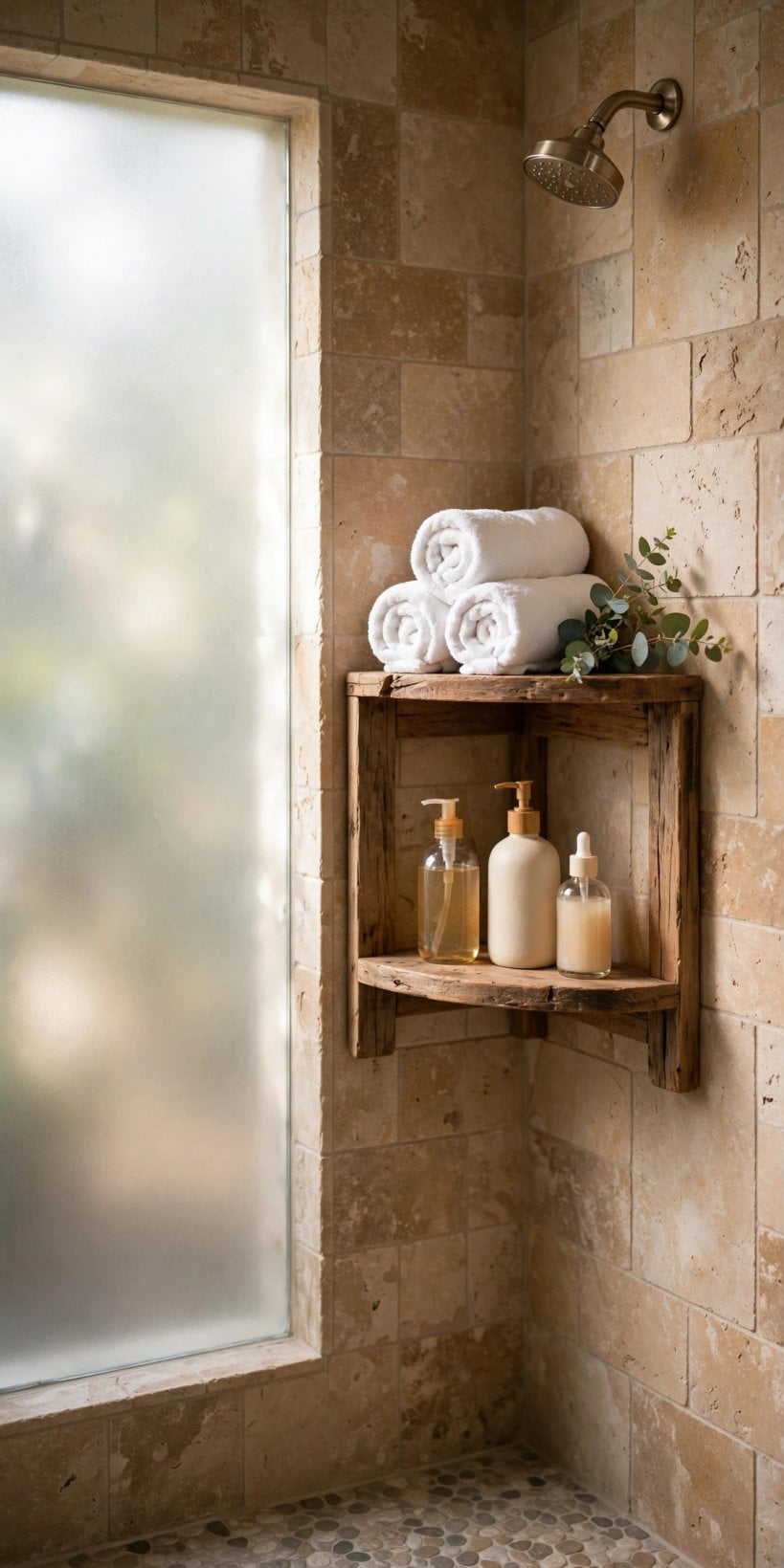
The corners of a shower are usually wasted, yet they are the easiest place to begin. A corner shelf turns that awkward triangle into storage for the bottles you reach for every day, and it keeps them off the floor where they collect water and slip underfoot. When you compare shower shelf ideas for a compact bathroom, the corner option almost always wins on footprint, because it adds storage without narrowing the space where you stand and turn.
Think about height before you fix anything in place. Put daily shampoo and body wash between waist and shoulder height, so you are not bending with wet hands or stretching while water runs into your eyes. Keep a lower corner free, if you can, for a foot rest while shaving legs or for a child stepping in with help, and keep razors higher and well away from small hands. If two people share the shower, a corner unit with two or three tiers lets each person claim a level, which stops the slow creep of bottles onto every other surface.
Material matters in a wet corner. Look for finishes that cope with constant splashing and warm, steamy air, and check with the supplier how the shelf should be fixed to your particular wall surface, because tile, panels and plasterboard all behave differently. Ventilation helps everything dry faster, so avoid packing bottles so tightly that air cannot move around them. Wipe the shelves weekly, lift every bottle, and rinse away the soapy film that builds up underneath. That small habit, borrowed from the calm routines in Zen interior design ideas for tiny houses, keeps a tiny shower feeling ordered rather than crowded, even when the shelf itself is working very hard for its size.
| Way | Best For | Watch Out For |
|---|---|---|
| 1. Corner shelf | Dead corners and daily bottles | Fixing method for your wall type |
| 2. Tension pole caddy | Renters and tall storage | Ceiling height and spring tension |
| 3. Over-the-showerhead caddy | Quick, no-fix storage | Sliding and swing when loaded |
| 4. Built-in niche | Planned refits and clean lines | Waterproofing and professional help |
| 5. Recessed ledge shelf | Narrow showers needing elbow room | Wall depth available |
| 6. Hanging baskets | Flexible, movable storage | Hook strength and drainage |
| 7. Teak-style bench shelf | Sitting, storage and spare bottles | Floor space and regular drying |
| 8. Door and wall rails | Very small enclosures | Door swing and clearance |
| 9. Slim rolling or stackable trays | Changing products and guests | Stability on wet floors |
| 10. Magnetic and strip storage | Small metal items and razors | Safe placement away from children |
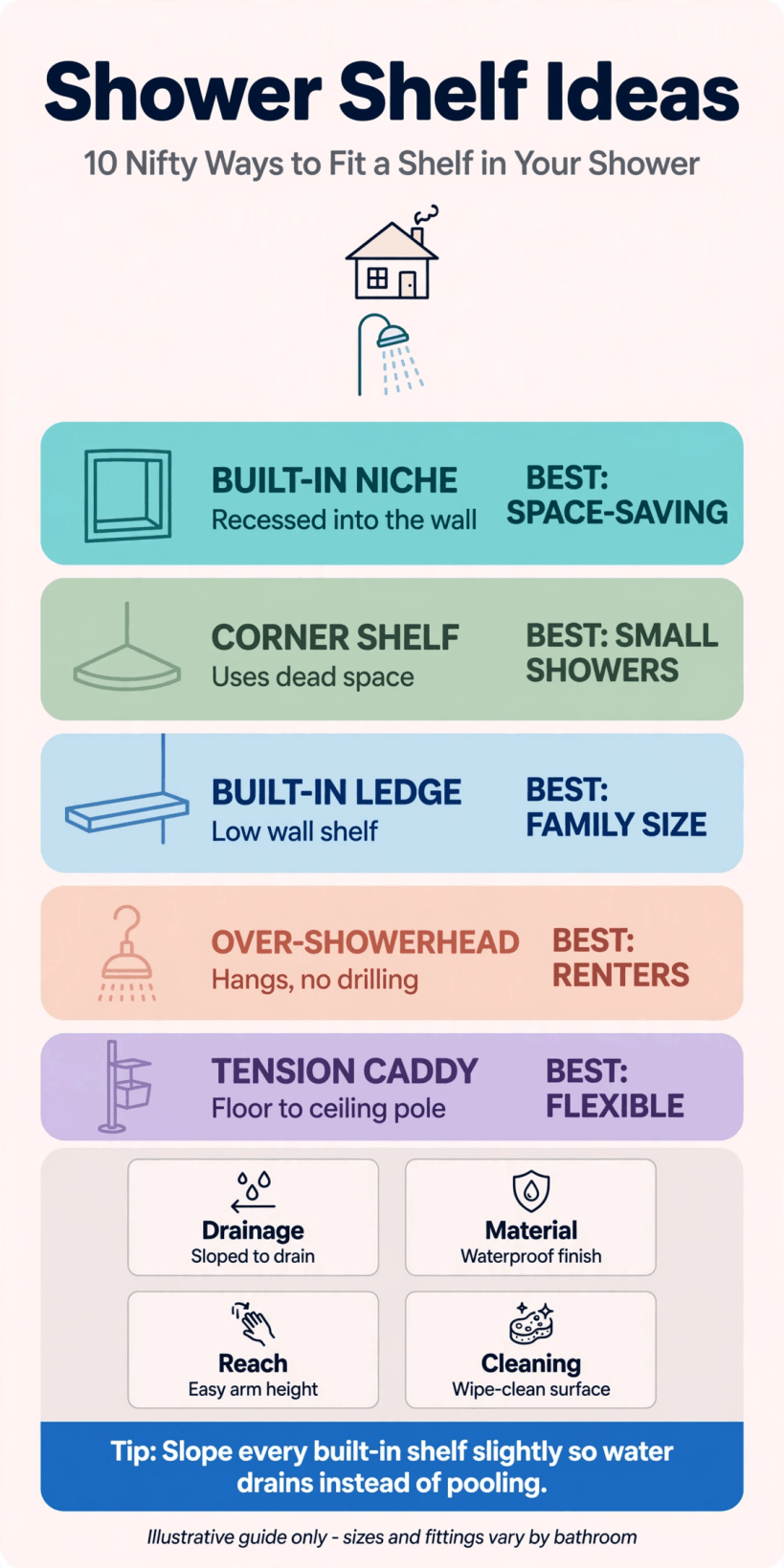
At a glance: ten ways to fit storage into a shower, from a simple corner shelf to a planned niche, matched to the space and fixing you can manage.
2. Add a Tension Pole Caddy From Floor to Ceiling
A tension pole caddy uses vertical space that most showers ignore. The pole braces between the bath edge or shower tray and the ceiling, and small baskets clip along its length, so shampoo, conditioner, body wash and a spare bar of soap all sit in one slim column. Because the footprint is tiny, it suits the kind of careful planning you see in tiny house kitchen design ideas to borrow, where every vertical inch is asked to earn its place.
Measure carefully before you order anything. Check the height from the tray to the ceiling, note any slope, coving or light fitting that could get in the way, and confirm the pole can be adjusted to that exact span. A pole that is too loose will wander and rattle; one forced too tight can mark surfaces, so follow the maker guidance for your ceiling type and ask the supplier if you are unsure. Place heavier bottles on the lowest basket to keep the whole thing stable, and leave the top basket for light items such as a sponge or a travel bottle.
Day to day, this style is easy to live with. Baskets with open bars let water drain straight through instead of pooling, and most can be unclipped for a proper clean. Turn bottles upside down as they run low, group products by person or by routine, and resist filling every basket just because it is there. A little empty space makes the shower feel calmer and makes cleaning faster. If the pole ever feels wobbly, empty it, dry the ends, and reset it properly rather than tightening it blindly while it is loaded with glass or heavy bottles.
3. Hang an Over-the-Showerhead Caddy for a No-Fix Fix
Sometimes you need storage today, not after a weekend of DIY. An over-the-showerhead caddy hooks over the pipe or the shower arm and hangs shelves down the wall, giving you two or three levels in minutes. It is a kind, forgiving option for renters, for guest bathrooms, and for anyone testing whether shelf storage will actually suit how they shower before committing to anything fixed or permanent.
The trick is stopping the swing. Look for a design with suction pads or a stabilising bar that rests against the wall, and arrange the load evenly, with the heaviest bottle low and close to the wall rather than high and at the front. Keep the spray path in mind too: a caddy hung directly under a powerful showerhead will take a constant soaking, which is fine for the bottles but can leave limescale building up faster on the frame. A quick rinse and wipe as part of your normal bathroom clean is usually enough, especially in softer water areas; in harder water areas, check with your local supplier which finishes cope best.
Use this caddy as the home for the current routine only. One shampoo, one conditioner, one body wash, a razor in its holder, and a hook for a washcloth is a sensible limit. Anything extra can live in a cupboard and rotate in when needed, an approach that mirrors the rotate-and-store habit in tiny house closet design ideas. When the caddy stays light, it stays still, it stays tidy, and getting in and out of the shower stops feeling like an obstacle course of bottles.
4. Plan a Built-In Niche When You Refit
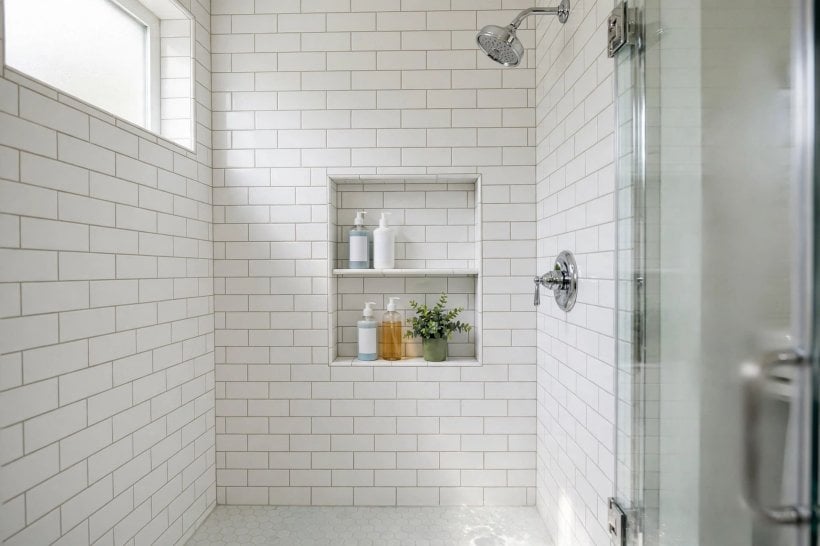
If you are already planning new tiles or a new enclosure, a built-in niche is the neatest answer of all. The storage is set into the wall itself, so bottles sit inside the thickness of the wall instead of sticking out into your elbow room. In a narrow shower that difference is huge: you gain a deep, permanent shelf and lose nothing from the space where you actually stand, wash and turn around.
Planning is everything here. Decide the height and width from the bottles you really use, including tall pump bottles, and talk to your installer early about framing, waterproofing and falls so water runs out of the niche rather than sitting in its corners. This is not a casual weekend cut into a finished wall; walls can hide pipes and cables, and a wet area needs proper sealing, so get professional advice for your home and follow local building guidance. A niche opposite the showerhead stays a little drier, while one on the same wall is closer to hand while you wash.
Finish the niche to feel intentional. A contrasting tile inside can make it a small feature, while matching tile makes it disappear into the wall for a calmer look like those in the tiny house and small-space interior design guide. Add a slim shelf halfway up if the opening is tall, so short jars do not waste the upper space. Once it is built, the discipline is simple: the niche is the limit. If a new bottle does not fit, an old one has to graduate to the cupboard.
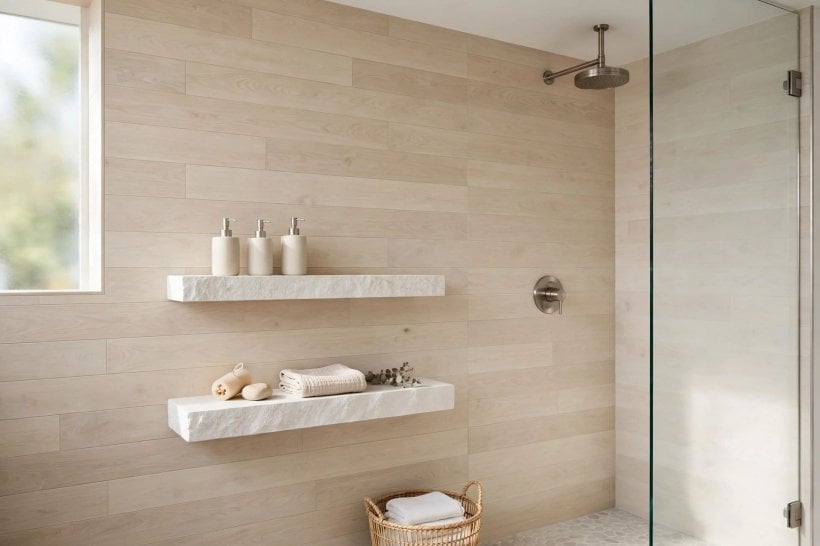
5. Use a Shallow Ledge Shelf Along One Wall
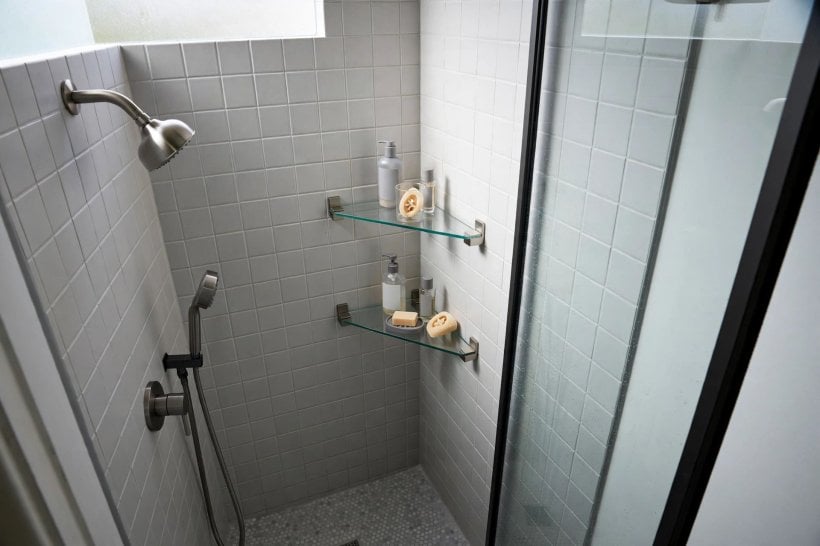
A shallow ledge running along one wall can hold far more than you expect, while taking up far less room than a deep shelf. Think of it as a long, narrow resting place for bottles in a single row, so nothing hides behind anything else and you can see every label at a glance. Single-row storage is quietly brilliant in a small shower, because the searching, knocking and rearranging all happen when bottles stand two or three deep.
Position the ledge where it will not catch elbows or hips as you turn. The wall opposite the main spray, or the back wall at about waist to chest height, often works well. Keep the profile slim and the edges smooth, and think about how water will behave on top: a very slight fall or a grooved surface helps water escape instead of sitting in puddles under bottles. If you are adding a ledge to an existing shower rather than building one in, check with the supplier which fixing and sealing approach suits your wall and tray, and allow any sealant its full setting time before the shower is used again.
Style the ledge lightly. Decanting daily products into matching, clearly labelled bottles can calm the visual noise of mixed packaging, but always keep original safety information somewhere you can refer to, and never decant anything for children without clear labelling. Leave breathing room between bottles, add one small plant that enjoys humidity only if light levels suit it, and let the ledge be what it is: a simple, honest line of storage that echoes the long, low lines in A-frame tiny house interior ideas.
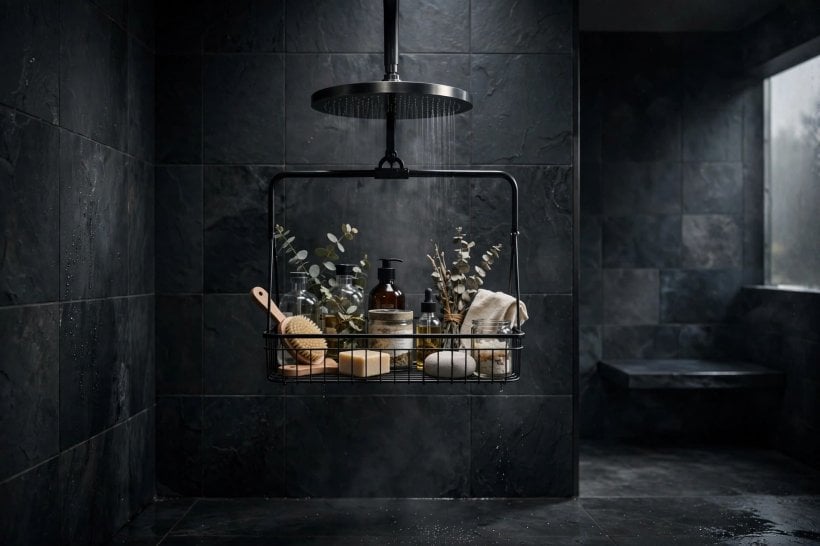
6. Try a Bench That Doubles as Shelving
A shower bench earns its place twice: once as a seat, and again as storage. A bench gives you somewhere to sit while you wash, rest a foot while shaving, or set down a child bath seat, and its top and the space beneath it can both hold products. In a slightly larger enclosure or a wet-room style layout, that double duty can remove the need for wall shelves altogether, which leaves the walls clean and uncluttered.
Choose the shape for the room you have. A corner bench tucks into the same dead space as a corner shelf, while a straight bench along the back wall suits a rectangular tray. Keep the top clear enough to sit on safely; a good rule is that the sitting half stays empty and the far half holds a small tray of bottles, or bottles live on a lower tier underneath while the top stays completely free. Any bench in a wet space needs a surface that is comfortable, not slippery when wet, and able to cope with constant water, so discuss materials and drainage with your supplier and check how the piece should be cleaned and dried.
Under-bench storage needs air. Open slats or an open front let water drain and air circulate, which helps prevent the musty corners that closed boxes in showers can develop. Keep spare, unopened products underneath rather than daily ones, and rotate stock so nothing sits forgotten for months. It is the same first-in, first-out habit that keeps any small home running smoothly, whether you learned it from a pantry, a van, or the storage pages of the how to build your own tiny house guide.
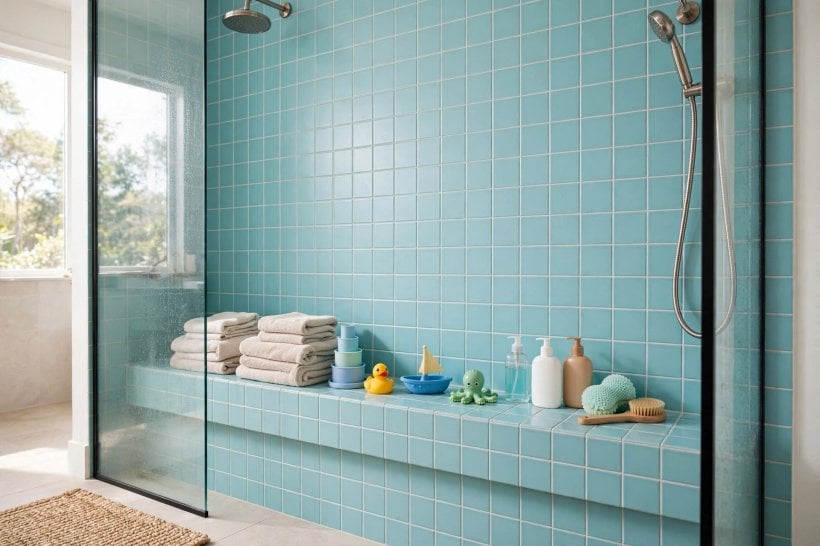
7. Hang Baskets and Caddies From Rails and Hooks
Not every shelf needs to be a shelf. Baskets hung from a rail, hooks over a screen, or a caddy hooked over the enclosure frame can all put storage exactly where you want it, and move when your routine changes. This flexible approach suits shared bathrooms especially well, because each person can have a basket, and a basket can leave the shower with its owner instead of spreading across every surface.
Look for baskets with open sides or plenty of holes, so water drains and air moves. Solid buckets in a shower quickly become small ponds of soapy water. Hang baskets at a height where their bases stay clear of the direct spray if you want contents a little drier, or in the spray if you prefer everything rinsed as you go. Check the weight your rail, screen or frame can comfortably take, keep glass containers out of hanging baskets altogether, and use unbreakable bottles where you can, particularly in family bathrooms.
Hooks deserve a plan of their own. One for a washcloth, one for a body brush, one for a squeegee, and suddenly the small tools of the shower stop living on the floor. A squeegee habit, in particular, pays you back: thirty seconds wiping glass and tiles after a shower keeps limescale and soap film from building up around all your storage, whatever style you chose. That kind of light, regular care is the same thinking behind the outdoor upkeep in tiny house landscaping ideas — little and often beats a big rescue clean.
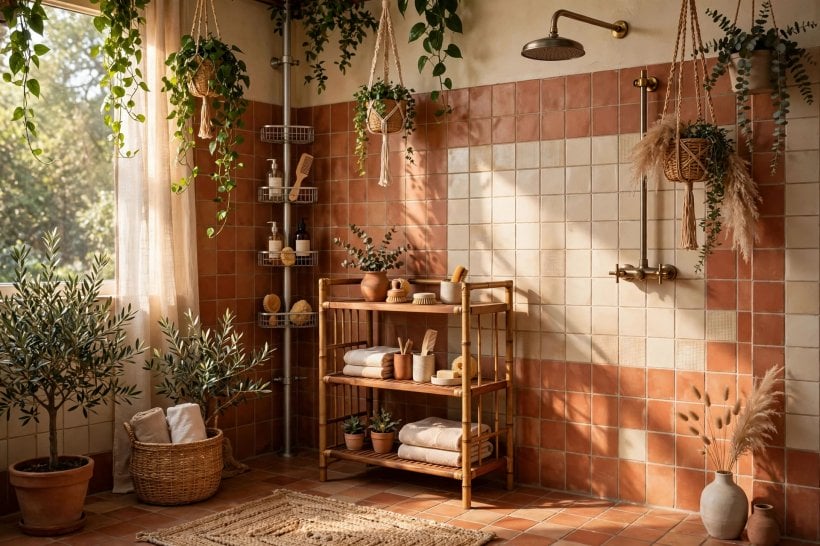
8. Make the Most of Doors, Screens and Slim Wall Strips
In the very smallest enclosures, the door and the screen are storage waiting to happen. Over-door hooks, slim racks that hang inside the screen, and narrow vertical strips beside the controls can hold the few things you truly need in the shower, without touching the walls at all. Used carefully, these spots hold a razor, a single bottle caddy, or a hanging organiser with pockets for each person.
Clearance is the golden rule. Open and close the door or screen fully with the storage in place, stand inside, and turn around slowly before you commit. Anything that rattles against glass, catches on a shoulder, or swings when the door moves will annoy you every single day, and anything that stresses a screen or its fittings should be removed. Follow the enclosure maker guidance on weight and hanging points for your specific door or screen, and ask if you cannot find it. Light, flat, unbreakable items only is a safe general principle for door storage.
Vertical wall strips are the quieter cousin of this idea. A narrow column of small shelves or holders fitted to a short return wall, beside the door or next to the controls, can take soap, a razor and a tube or two in almost no depth. Because the strip is narrow, it forces useful honesty about what belongs in the shower at all. Keep it to the daily handful, store the rest outside, and the whole enclosure will feel bigger every time you step in.
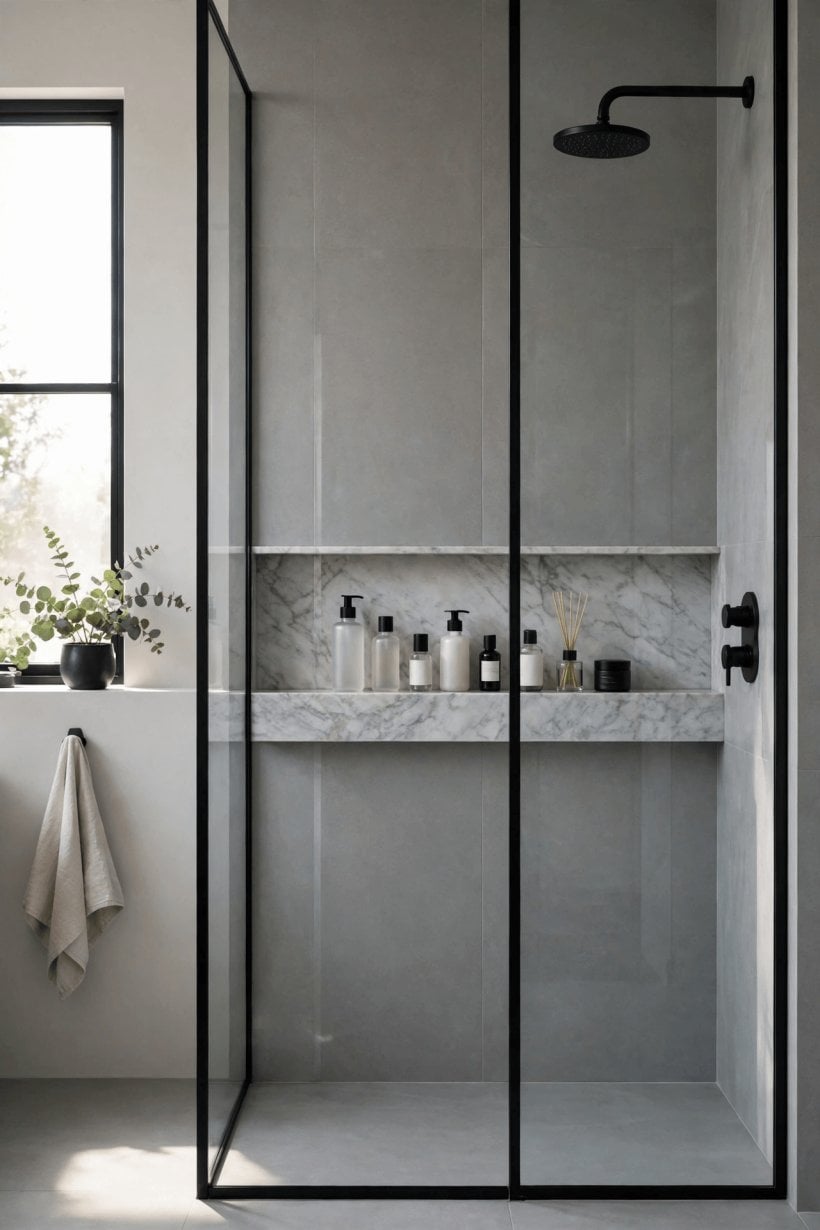
9. Stack, Roll and Tray: Flexible Storage That Moves With You
Fixed shelves suit a fixed routine, but many households are not fixed at all. Guest bottles, swimming kit, bath toys and seasonal products come and go, and flexible storage handles that flow better. Stackable trays that sit in a corner, a small caddy you carry in and out, or a tray that corrals bottles on an existing ledge all let the shower change its mind without new fixings or holes.
Stability is the thing to test. A tray or stack that feels steady on a dry floor can skate on a wet, soapy one, so look for designs with grippy bases, keep stacks low, and never stack heavy bottles high where they can topple onto feet. Trays should lift out easily for cleaning underneath, because the hidden film that grows under anything sitting in water is where smells and marks start. Rinse the tray, rinse the corner, let both dry when you can, and the system stays pleasant instead of becoming another chore.
This is also the kindest system for households that share with guests or older relatives who bring their own products. A spare tray appears for the visit and disappears afterwards, and nobody has to perform shelf surgery. Keep one empty tray or caddy in the cupboard ready, in the same spirit as the spare-bed thinking in tiny house kitchen and small-space design ideas: the home flexes for people, then settles back to its calm, everyday shape afterwards.
10. Finish With the Small Things: Soap, Razors and Labels
The last way is the smallest, and it makes all the others work better. Give the small things their own homes: a draining soap dish that lifts the bar out of standing water, a razor holder that keeps blades up, dry and safely out of the splash zone and away from children, and a simple label habit so everyone can tell shampoo from conditioner with wet eyes and steamed glasses.
Soap dishes with drainage holes or raised ridges help a bar last far longer than one sitting in a puddle, and they keep shelves cleaner too. Magnetic holders and suction holders can work well for light items, but test any suction fixing on your exact tile or panel surface, re-seat it regularly, and keep heavier or sharper items on a proper shelf rather than trusting suction alone. Razors deserve particular care: store them where they can dry, where nobody brushes against the blade, and where children cannot reach, and replace covers or guards as the maker advises.
Labels sound fussy until you have washed your hair with body wash twice in one week. Large, waterproof labels, a band of different coloured tape, or bottles of clearly different shapes all solve the problem without a word being said. Do a final five-minute audit once a month: empty bottles out, duplicates back to the cupboard, anything out of date disposed of responsibly following the guidance on its packaging. The shelf, whatever its style, goes back to holding only what earns its place in the water every day.
Final Considerations
Good shower storage is not about finding the cleverest product. It is about matching a simple system to your walls, your water, and the handful of things you actually use, then keeping that system light. Corners, poles, niches, ledges, benches, baskets, doors, trays and small holders can all work beautifully, and most showers need only one or two of them working together, not all ten at once.
Before you buy or fix anything, stand in the shower dry, mime your routine, and notice where your hands naturally go. Measure your tallest bottle, check your wall and ceiling types, and ask suppliers how their storage should be fitted to those surfaces. Start with the least permanent option that could work, live with it for a few weeks, and only then decide whether a built-in answer is worth planning. A tidy shower is a small daily pleasure, and it is well within reach of the space you already have.




0 Comments