

The living room is the tiny house’s heart — the room where the day gathers, unwinds and ends. In a few square metres it must seat friends, host movie nights, hold a reading corner and still feel calm at midnight. This guide designs it in order: layout, seating, focus, light — and the rituals that make a small room live large.
Living Room Interior Design Ideas: At a Glance
The best living room interior design ideas for a tiny house all serve one room with many lives: a layout arranged for conversation, seating scaled to fit, one focal point, hidden storage, layered light and textiles that soften everything it touches. This guide follows the room in its real order — the concept and the layout, the seating and the focal point, storage and light, palette and textiles, the commandments and the mistakes, the entertaining, the quiet corners, the plants and the art, the seasons — and the long, lived-in payoff at the end.
| Topic | What It Covers | Key Fact or Figure |
|---|---|---|
| The Concept and the Layout | A multi-use heart arranged for conversation | The layout comes first |
| Seating and the Focal Point | The scaled loveseat, flexible chairs, one anchor | One focal point per room |
| Storage and Light | Hidden storage; windows and layered lamps | The storage hides — the light glows |
| Palette and Textiles | A light airy base, bold accents, the defining rug | The textiles soften the living |
| Commandments and Mistakes | The ten rules — and the errors to avoid | 10 commandments |
| Entertaining, Games and Movie Night | Flexible seating, the projected screen, shared popcorn | Guests fit — the intimate is best |
| The Reading Corner and the Quiet Hours | The one perfect chair, the pool of lamplight | The corner is the soul |
| Plants, Art and Personality | Living green, one large statement, the curated story | The room tells your story |
| The Payoff, Seasons and Holidays | The daily gathering, the small tree, the layered winter | The holidays fit the small |
| The Heart at Home | Conversation, homecoming and the nightly reset | The goodnight restores the room |
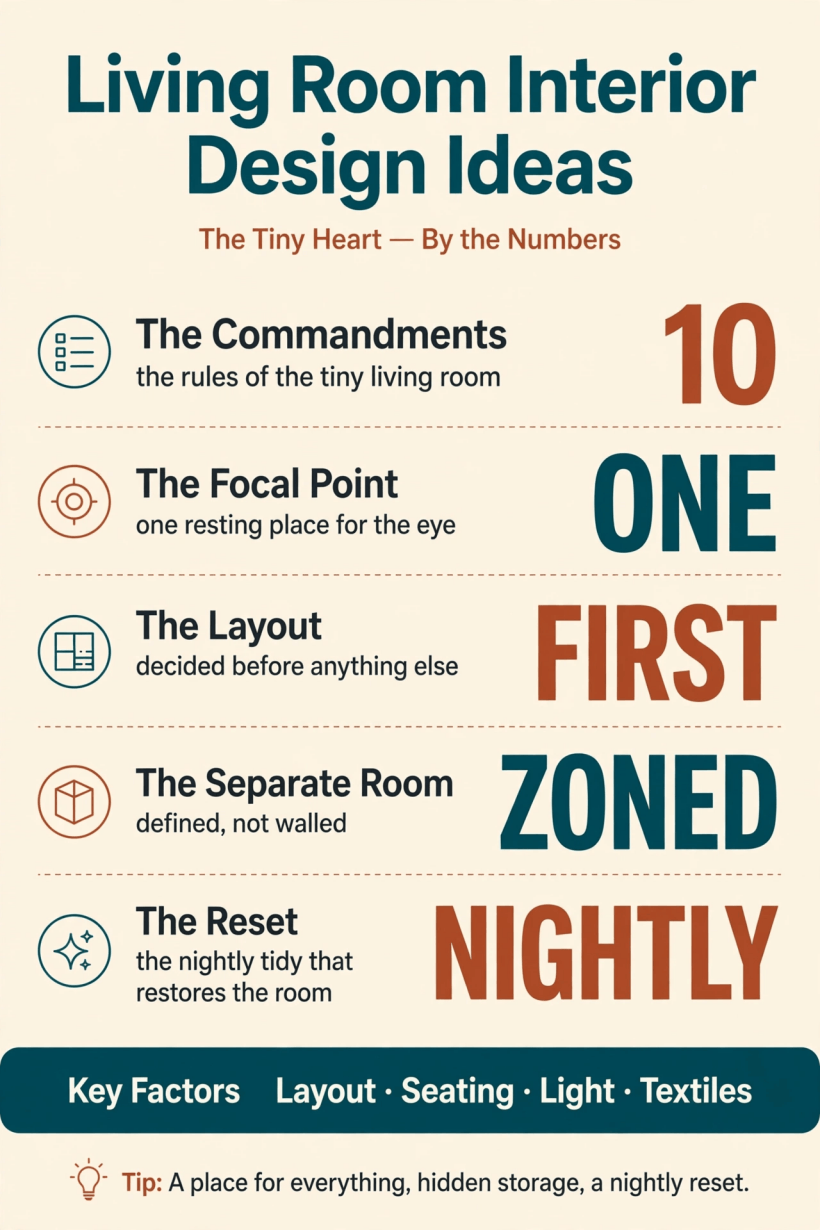
The tiny heart by the numbers: 10 commandments, one focal point, the layout decided first, a separate room that is zoned rather than walled — and a nightly reset that restores it all.
1. The Concept and the Layout
Start with what the room is. The living room is the home’s heart — the gathering place, the relaxing place, the living itself. It is also multi-use by necessity: the same few square metres are the day’s room and the night’s room, transformed between the two as the hours turn. The original states the rule plainly: the living room lives — large. Everything designed in this guide serves that single idea, and it is the same whole-home thinking that runs through small-space interior design for the whole tiny house.
So how do you design a tiny house living room? The original’s answer sets the order: the layout first, the seating second, the focal third. The living room is the planned room — comfort guides every choice, and the plan comes before any purchase. The layout itself is built on the conversation: seating arranged facing, so talk flows across the room rather than along a wall. The flow through the room stays through — unblocked from door to far end.
And how do you arrange the furniture once it arrives? The arranged is the tried: conversation first, flow second, focal third — tested before it is trusted. The original’s method is tape on the floor and the lived-in test: mark the layout, walk it, sit in it, and only then commit. The rule underneath every version of the plan is the same: the layout welcomes — always.
2. Seating and the Focal Point

Seating is where scale is proven. The loveseat is the tiny living room’s anchor piece — scaled to the room and comfortable without apology. Around it, the accent chairs do the flexible work: light enough to turn toward the conversation, shift for a guest, or clear for floor space. The rule: the seating fits — the small. What furniture fits a tiny living room, in the original’s own list? The scaled pieces: the loveseat, the accent chairs, the nesting tables that tuck away when the floor is needed.
Asked for the best sofa, the original answers the loveseat or the apartment sofa — scaled and comfortable. And the best is the sat-in: comfort is the tested thing, so sit in the piece before the room is built around it. Our room-by-room companion, the living room guide to tiny house design, works the same seating questions from the whole-house side.
Every arrangement then turns toward the focal point — the one place the eye rests. The original’s example is the fireplace: the electric one, chosen for coziness without a flue. One is the discipline: a second competing centre splits the room’s attention and shrinks it. The rule: the focal anchors — the room. Choose the one, arrange the seating to honour it, and let everything else support it quietly.
3. Storage and Light
A living room this hard-working survives on storage that disappears. The hidden is the principle: the ottoman, deep enough to swallow blankets, games and the day’s clutter. The vertical is the opportunity: shelves climbing the wall, the collection displayed where floor space never could. The rule: the storage hides — the living shows. A room whose working parts vanish reads as a room for living, not a room for storing.
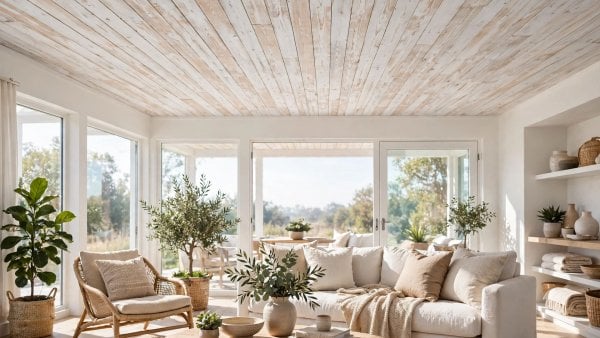
Light does the other half of the work. The windows are the first source: the many, the natural, the daylight the room is planned around. The second source is layered: the lamps that take over at evening, pooling warmth where people sit rather than flooding from a single ceiling point. The rule: the lit living glows — the home. Daylight for the day room, lamplight for the night room, and the transformation between them is the multi-use concept made visible.
4. Palette and Textiles

The palette starts light: the airy base that keeps the small room feeling open — walls, the loveseat, the large surfaces all in the quiet register. Against that calm, the accent goes bold: the pillows carry the colour, the pattern and the personality, and they can change with a season or a mood for the price of a cover. The rule: the palette soothes — the small. Colour confidence works the same way as choosing living room paint for a tiny house: quiet walls, fearless accents.
Textiles then soften everything the palette sets up. The rug is the zone-maker: the defined patch that tells everyone — residents and guests alike — this is the living room, distinct from the kitchen steps away. The throws are the layered comfort: folded over the loveseat’s arm, ready for the evening. The rule: the textiles soften — the living.
This is also the direct answer to how a tiny living room is made cozy: the textiles, the lighting, the focal, the personal. The cozy is the layered thing — warmth stacks, one soft layer at a time, until the small room holds people the way a much larger one wishes it could.
5. The 10 Commandments and the Mistakes

The original gathers the whole philosophy into ten commandments, and they are worth keeping entire: Layout the conversation. Scale the seating. Focus the one. Light the layered. Store the hidden. Soften the textiles. Unify the palette. Flow the through. Personalize the deeply. Gather the often. Read in order, they are the article in miniature — the plan, the pieces, the comfort, and the point of it all, which is the gathering.
The mistakes are the commandments read backwards. The oversized is the first: the sofa bought for a bigger life, against which everything else must squeeze — scale the seating instead. The blocked is the second: furniture drifted into the through-route until the room must be crossed like an obstacle course — keep the flow cleared. The dark is the third: the cave a tiny room becomes when windows are covered and lamps are few — keep it lit.
The original is forgiving about all of it: the living forgives. A small room recovers from a wrong piece faster than a large one, because every fix is close at hand. What it does not forgive is neglect of the ten — the room designed by the commandments can absorb a mistake; the room designed by accident collects them.
6. Entertaining, Game Night and Movie Night
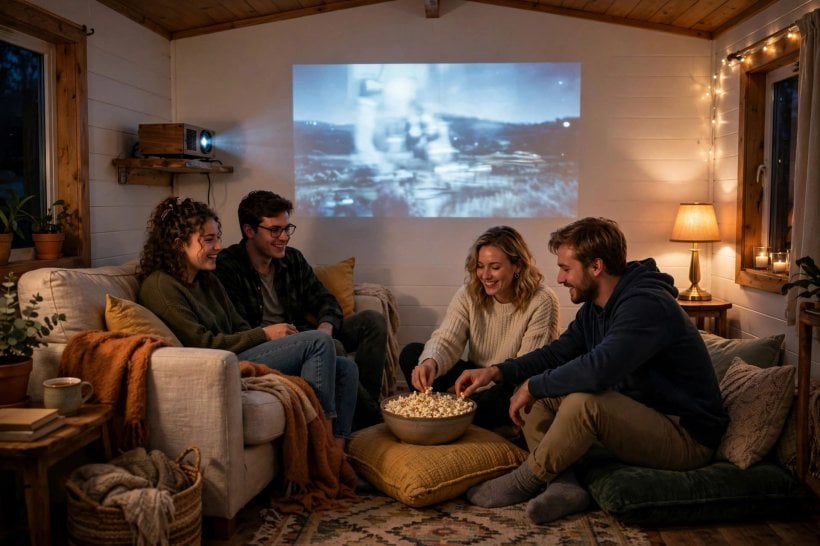
Can a tiny living room seat guests? The original’s answer is yes — the flexible seating, the floor cushions, the flow. The accent chairs turn, the cushions come out, and the room seats its few: the intimate gathering the original calls the best kind. Entertaining here runs on standing and mingling as much as sitting — the flow kept clear lets guests move, and the truth holds: the small entertains — warmly.
Game night is the flow’s examination. The table is cleared and played on; the laughter is loud in the small room, and the original’s verdict is that the game night is the best the tiny does. Movie night is its quieter twin and the room’s set-piece ritual: the screen projected on the wall — cinema scale with no cinema furniture — the popcorn shared from the couch. A dedicated tiny house home theater design takes the ritual further, but the living room version needs nothing but the wall.
Which raises the television question: where should the TV go? The original’s answer — the wall-mounted, the hidden, the considered. The TV is the placed thing: either it earns the focal role honestly, mounted where the seating already faces, or it vanishes — screened, cabineted, or projected and gone by daylight. What it must never be is an afterthought on a stand, eating the floor the flow needs.
And when the evening simply wants company rather than an event, the room becomes the tiny house lounge — the same seating, the same light, the tempo dropped.
7. The Reading Corner, Morning Coffee and the Quiet Hour

Every tiny living room deserves one chair that belongs to a single person at a time. The reading corner is built from three things: the chair — the one, the perfect; the light — the lamp and its pool; and the claim the original makes for it: the corner is the soul — the living. It asks for almost no floor — a corner, by definition, is space the layout was not using — and returns the room’s most loved seat.
The same chair starts the day. Morning coffee in the tiny living room is the chair at the window, the light arriving, the quiet savored before the house wakes. The original calls the morning the gift — the living at its gentlest. A room arranged for gathering that also protects this hour is doing both halves of its job.
The quiet hour completes the set: the afternoon, the light, the book; the stillness savored in the home. These are the hours the design decisions were really for — the layered lamp, the softened textiles, the unblocked calm. Rooms designed in the spirit of zen interior design for tiny houses chase the same stillness; here it arrives as a daily appointment rather than a style.
8. Plants, Art and Personality
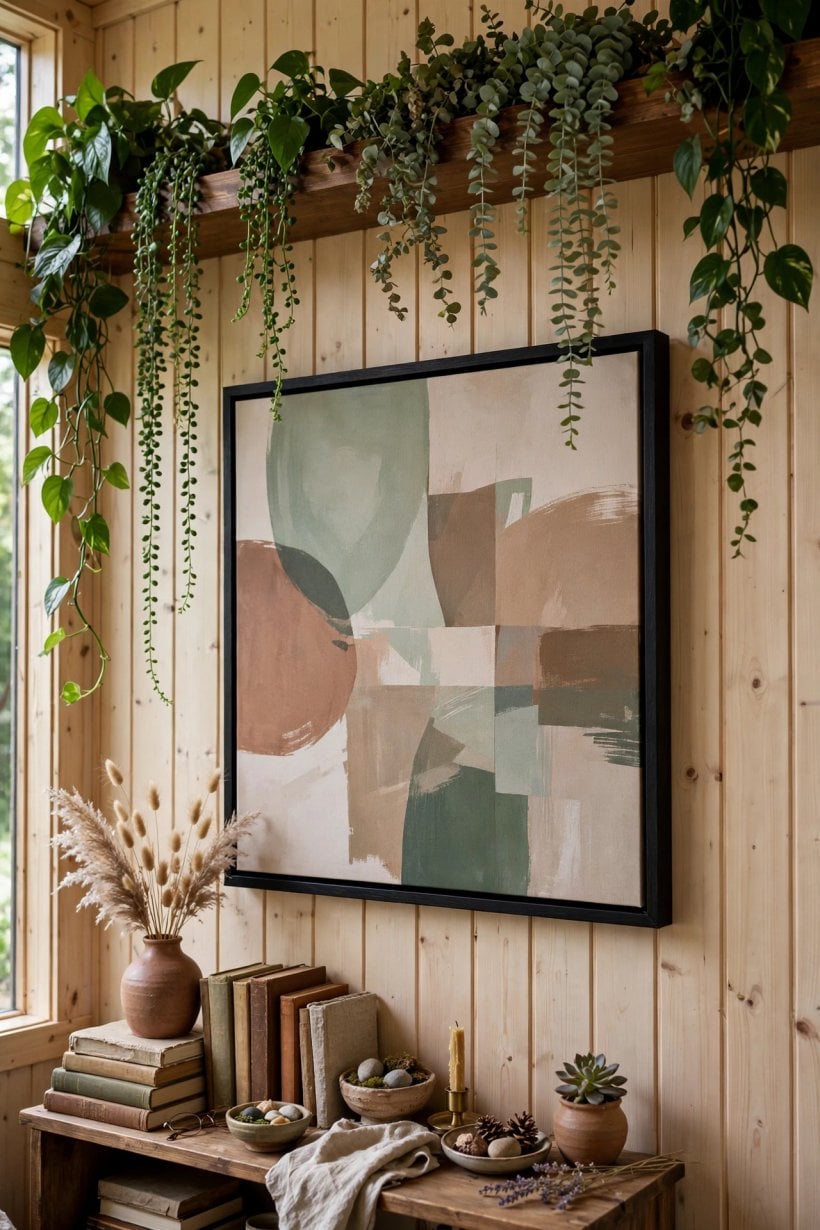
The plants bring the living into the living room. The green is kept the few and the alive — a small number, genuinely thriving, rather than a jungle the room must serve. The hanging is the vertical used again: trailing from the high shelf, taking the eye up and spending no floor. The truth: the plants breathe — the living breathes with them.
The art follows the focal discipline. The large is the one: a single statement piece rather than a scatter of small frames. The hung is the eye-level: placed where the seated eye actually rests, lived with rather than looked up at. The rule: the art is the soul — the walls.
So how is personality added to a tiny living room? The art, the books, the collected, the displayed. The personality is the curated: the room tells your story — which is also the answer to whether a tiny living room can feel luxurious. Yes: the quality pieces, the lighting, the uncluttered. The luxury is the curated thing — the small room, edited to the finest, out-luxuries the large room full of the ordinary.
9. The Payoff, the Seasons and the Holidays
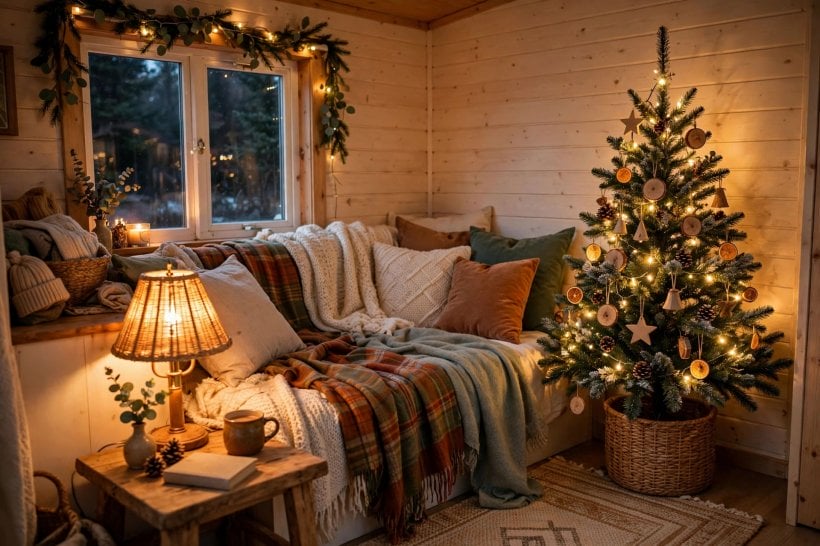
The payoff is not a feature; it is the accumulation. The gathered: the daily, the loved. The relaxed: the evening, the unwound. The home: the heart — the beating. The original’s truth: the payoff is the living — the fully. And its invitation closes the design half of this guide: arrange, soften, gather — the living awaits.
Should there be a separate living room in a tiny house at all? The original’s answer is the zoned yes — the defined, not the walled. The separate is the felt: the rug’s edge, the light’s pool and the arrangement’s turn give the room its purpose without a single partition. It is the same instinct that shapes the exterior and the outdoor room — the threshold felt, not built.
The seasons then edit the room on schedule. The spring is the fresh, the aired — textiles lightened, windows opened. The winter is the layered, the warm — throws doubled, lamps earlier. The truth: the seasons change — the living changes with them. The holidays are the joyful extreme: the tree — the small, the corner — and the joy, the full, the tiny. The original’s assurance stands: the holidays fit — the small.
10. The Heart at Home
What the room is finally for shows in its evenings. The conversation: the long talks on the couch, the deep ones under the night lamps — the truth is the conversation lives in the living. The laughter: the shared jokes, the close quarters, the loud small room full — the laughter fills the tiny. And the homecoming crowns the day: the entered door, the exhale, the sank-into-the-couch moment. The original calls the homecoming the sweetest — the living.
The evening wind-down is the room’s closing ritual: the lamps dimmed and warm, the day released, the rest begun — the wind-down is the ritual, the living turned down like a lamp. The goodnight living room follows: the tidied, the reset, the lamps off — and the truth that the goodnight is the loved, because it is given to the morning. That reset is also the practical answer to keeping a tiny living room organized: a place for everything, the hidden storage, the nightly reset. The organized is the maintained — the small room rewards the tidy.
Then the morning after: the woken light, the room loved again, the daily cycle resumed — the morning is the gift, again. Stretch the view and the original’s closing cadence says the rest: the designed once, lived for years; the daily gathered, the nightly unwound; the last word always the heart; the door opened on the welcome home; the story told in gatherings and remembered in laughter; the final gathering, the heart’s home, the endless living — and the last light, the dimmed evening lamps holding the warmth into the night. These are the years that designing the whole home as one journey is quietly aiming at.
Final Considerations
Living room interior design ideas for a tiny house finally come down to one discipline: the room serves the gathering. Lay it out for conversation, scale the seating, focus the one point, hide the storage, layer the light, soften it with textiles — and reset it nightly so the heart is ready again by morning. Design it warm, live it fully.

0 Comments