
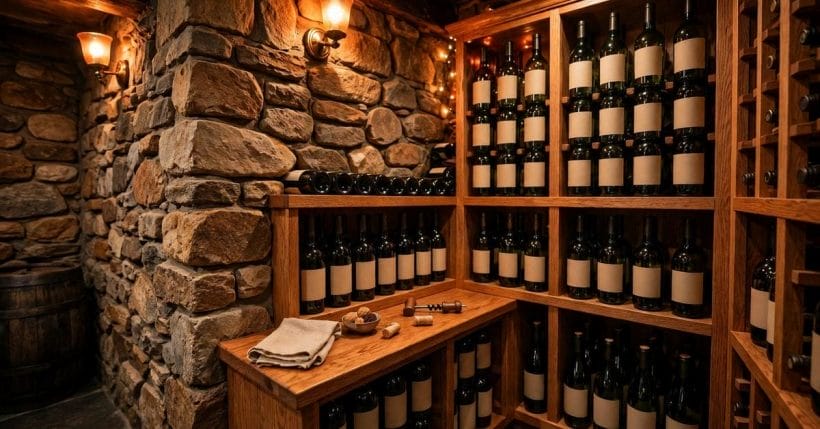
A wine cellar is not measured in square metres. It is measured in steadiness — a cool, dark, quiet place where bottles rest undisturbed — and that can be built into a corner, a cupboard or the dead space under a staircase as honestly as into a vaulted room.
These 75 small wine cellar ideas work through the whole decision in order: the layouts that fit small footprints, the racking, the cooling, the glass, the finishes, and the small tasting corner — every one of them scaled to a modest space and a real collection.
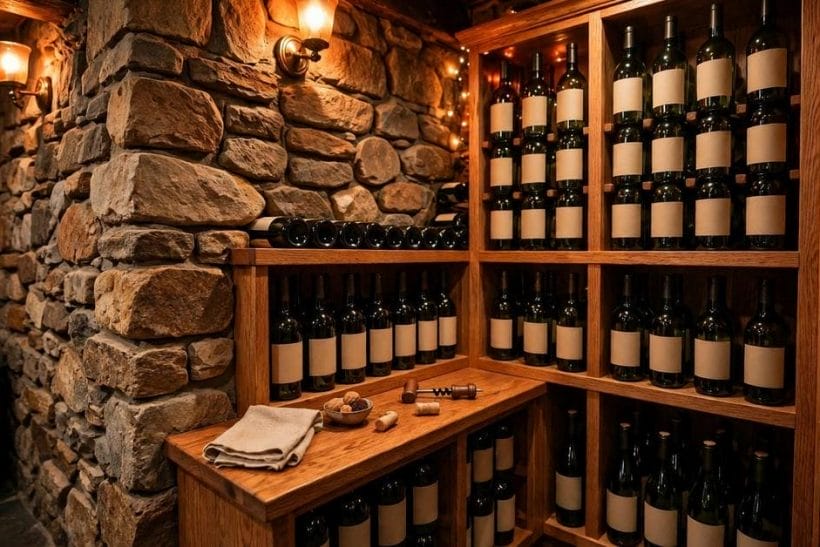
1. Small Wine Cellars at a Glance
The central entity is the small wine cellar: a dedicated storage space, usually borrowed from a larger room, whose whole job is to hold bottles cool, dark and still. Most live in basements and under-stair voids, which is why this post sits inside the wider family surveyed in our basement ideas — but the cellar itself is the subject here, and small is its defining condition, not its apology.
| Aspect | What to know | In a word |
|---|---|---|
| The Layout | Corners and under-stair runs | Flexible |
| The Racking | Cubes, shelves and display rows | Orderly |
| The Cooling | Steady coolth, fitted by pros | Steady |
| The Glass | Doors that show the bottles | Display |
| The Finish | Stone, timber, black metal | Character |
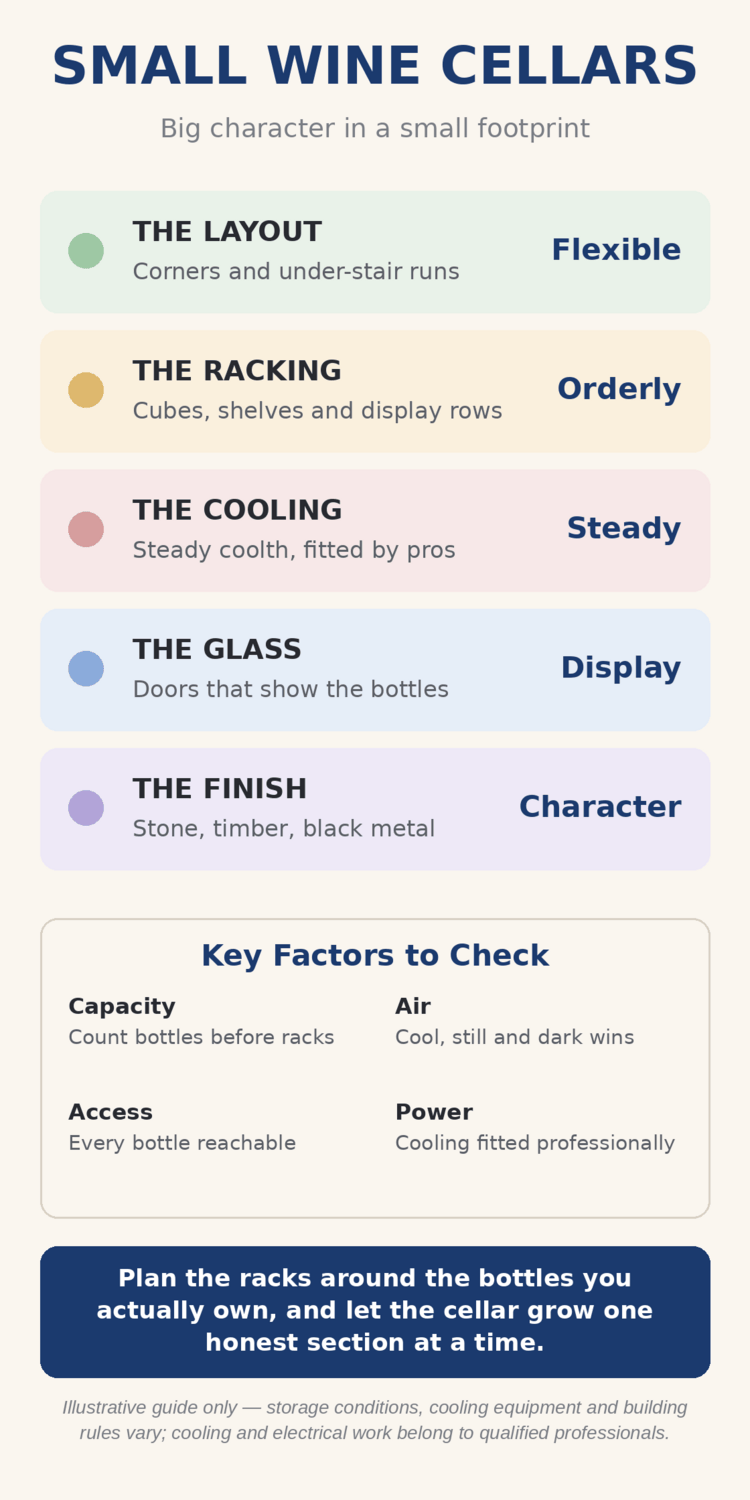
Plan the racks around the bottles you actually own, and let the cellar grow one honest section at a time. Four checks sit behind the table: capacity, because bottles should be counted before racks are ordered; air, since cool, still and dark wins over clever; access, with every bottle reachable without moving three others; and power, because cooling is fitted professionally or not at all.
Most readers arrive here from small wine cellar designs, and the photographs make every cellar look cavernous. They are not: the best small cellars are edited like good shelves, one decision at a time, and the 75 ideas below follow the order those decisions are actually made — space first, then storage, conditions, looks, and finally the corner where the bottles are opened.
2. Layouts for Small Spaces
The photograph shows the classic small-cellar move: the staircase void, racked diagonally where the slope falls and squared where it stands tall. Small layouts succeed by accepting the shape they are given.
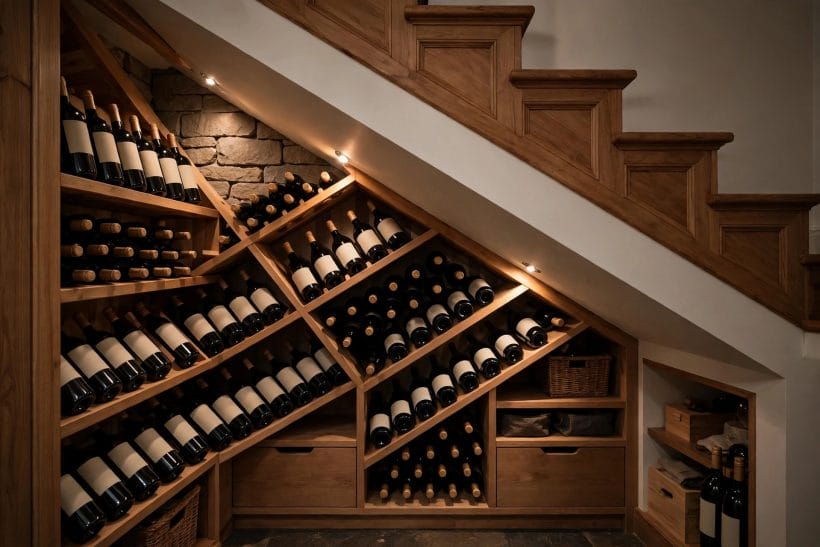
1. The Under-Stair Cellar
The slope that makes under-stair space useless for anything else suits bottles perfectly: tall racks at the high end, diagonal bins where the ceiling drops, a drawer run at the lowest point. It is the most borrowed footprint in this whole post, and often the coolest corner of the house.
2. The Alcove Conversion
A chimney alcove, a redundant airing cupboard, the deep recess beside a fireplace — alcoves need only a door, a rack run and darkness to become cellars. Their masonry thickness is a gift: it buffers the temperature swings that small above-ground spaces suffer.
3. The Corner Triangle
Two rack runs meeting in a corner store more than one long wall, because the corner itself takes a diagonal display bin. In a small room the corner layout also leaves the opposite walls free for the door swing and a tasting ledge.
4. The Single-Wall Cellar
One wall of racking, floor to ceiling, in a room that stays a room — a study, a dining room, a wide hall. The cellar reads as furniture rather than a separate space, which suits homes where no whole room can be spared.
5. The L-Shaped Run
An L of racking turns a corner productively and creates a natural break: everyday bottles on the short leg, the keepers on the long one. The inside corner takes a small counter, and the layout works in rooms barely wider than the door.
6. The Low-Ceiling Vault
Basements with low ceilings feel oppressive as living space and perfect as cellars, because nobody stands in a cellar for long. A shallow barrel or simply a lowered, dark-painted ceiling completes the vault feeling without structural work.
7. The Hallway-End Cellar
The dead end of a wide hallway, closed with a glazed door, becomes a cellar that the house walks past daily. It asks for the tidiest racking in this list, since it is always on show, and repays it by being the most visited cellar here.
8. The Split-Level Pair
Two small pockets — one under the stairs, one in a cool cupboard — can work as a single cellar in two places: drinking bottles near the kitchen, the resting collection in the steadier spot. The split suits collections that outgrow their first home.
9. The Cellar Behind a Door
Sometimes the layout is simply a door: an unremarkable cupboard door in a hall or utility room, behind which the cellar hides entire. It is the layout a speakeasy bar borrows its theatre from — the reveal is the design.
3. Racking and Bottle Storage
Down the aisle of a well-racked cellar, every bottle has an address. Racking is where a small cellar earns its keep, because the right system stores a third more bottles in the same footprint than shelves alone.
10. Classic Cubes and Bins
Square bins, each holding a loose stack of one wine, are the cellar’s workhorse: cheap to build, dense to fill, easy to read at a glance. They suit the bottles bought by the case and drunk over a season or two.
11. Label-Forward Display Rows
A few bottles stored upright-facing, labels out, on a shallow ledge — the display row is the cellar’s shop window. Keep it to a handful of bottles; the rest rest neck-down in the dark where they belong.
12. Single-Bottle Shelves
Individual horizontal slots, one bottle each, are the kindest storage for a mixed collection of single bottles and small purchases. They cost more racking per bottle than bins and repay it by making every bottle findable in seconds.
13. Diamond Bins for Steady Stock
Diagonal diamond compartments hold bottles securely and look quietly architectural. They are harder to clean and to label than cubes, so give them to the wines that turn over slowly and predictably.
14. Mixed-Depth Racking
Deep racks on one wall, shallow on another: the deep side takes case storage, the shallow side the ready bottles. Mixed depth is how a narrow cellar keeps an aisle wide enough to turn in with a case in hand.
15. Aisle Storage, Both Sides
In a cellar wide enough for two facing runs, the aisle becomes the room’s spine — bottles left and right, a step stool parked at the end, the tasting ledge by the door. It is the small cellar that feels most like a grand one.
16. Columns for the Big Bottles
Large-format bottles need their own wider, stronger slots, designed in from the start rather than improvised later. A single column of them, placed low where their weight is welcome, becomes a quiet feature of the racking wall.
17. Drawers for Loose Bottles
Shallow drawers under the main racks take the odds and ends — the single bottles, the gifts, the half-forgotten purchases — that otherwise colonise the floor. Lined and divided, they keep the cellar’s floor, and its temper, clear.
18. The Overflow Crate Corner
Every collection has a season of too much. A corner left deliberately plain, sized for two or three wooden crates, absorbs deliveries and party stock without disturbing the racked order of the rest.
4. Cooling Without the Fuss
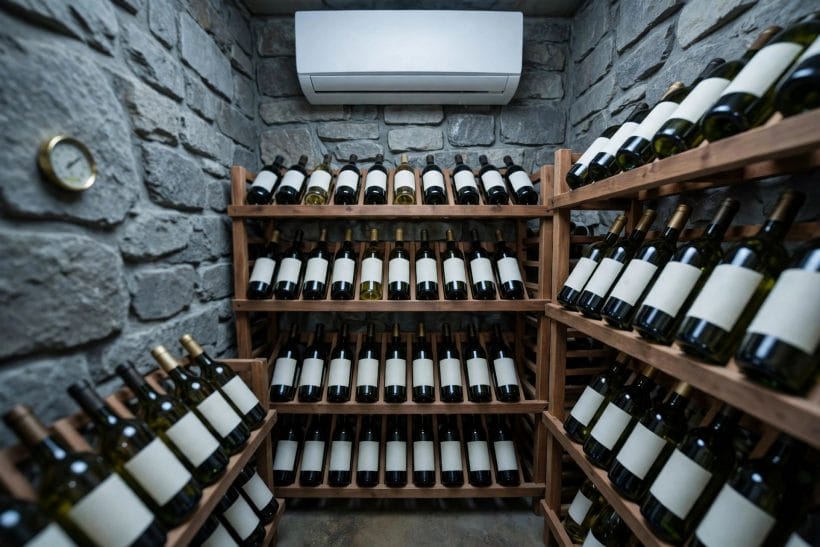
The cooling unit in this photograph is deliberately unremarkable — a plain box high on the wall, doing its steady work. Cooling is the cellar’s one piece of engineering, and it is professional work, sized and fitted by people who do it daily.
19. The Naturally Cool Room
Some small spaces — deep basements, earth-backed walls, the north side of the house — hold a steady coolness unaided for much of the year. A season of watching a simple gauge, before any equipment is bought, tells you whether yours is one of them.
20. A Wall-Mounted Cooling Unit
The commonest active answer: a self-contained unit fitted high on the wall, cooling the room as a whole. It must be sized to the space by its installer, vented where its maker directs, and serviced like any other piece of household plant.
21. Through-Wall Cooling, Vented Honestly
Through-wall units exhaust warm air into the space beyond the cellar wall, so that space needs its own ventilation and tolerance for warmth. Planned honestly, it works well; discovered later, it cooks the room next door.
22. Split Cooling for Awkward Shapes
Where no single wall can take a unit, a split system puts the quiet parts where they fit and the working parts elsewhere. It is the flexible, costlier route, and like all cooling here it is specified and fitted professionally.
23. Insulation Before Equipment
The cheapest cooling is the cooling never needed: walls, ceiling and floor insulated as a continuous wrapped box, so the room resists the house’s warmth instead of fighting it. Insulate first and the equipment, if any, shrinks a size.
24. The Sealed, Weather-Stripped Door
A cellar door is a fridge door in spirit: solid, close-fitting, sealed all round. A glazed display door earns its place only when its seals and glass are specified for the job by the maker — a draughty door defeats every other idea in this section.
25. Watching Temperature and Humidity
A simple gauge, read weekly and noted in the cellar book, is the whole monitoring system a small cellar needs. What matters is not a magic number but steadiness — slow, small swings that the bottles never notice.
26. When Bottles Travel Instead
If a home truly has no steady corner, the honest answer is a wine fridge in the kitchen for the drinking stock and patience for the rest. It is a compromise, stated plainly, and better than a warm cupboard calling itself a cellar.
5. Glass, Doors and Display
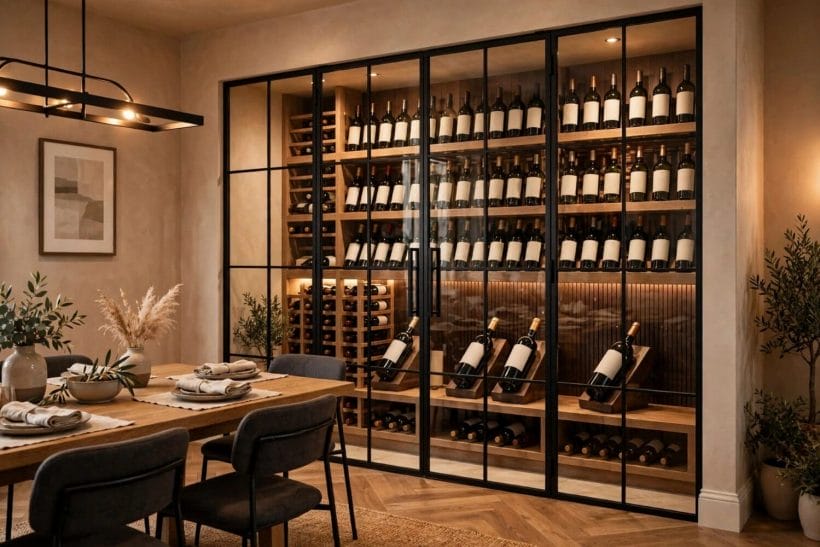
Seen from the dining room, this glass-fronted cellar is part storage, part picture. Glass is how a small cellar joins the life of the house instead of hiding from it — provided the conditions behind the glass stay cellar-honest.
27. The Full Glass Wall
A whole wall of framed glass between cellar and room turns storage into scenery. It belongs on internal walls, away from sunlight, and its seals and structure are joinery and glazing work to be specified properly, not improvised.
28. Framed Glass Doors
A pair of glazed doors in black steel or timber gives most of the glass wall’s pleasure at a fraction of its opening width. They suit the hallway-end and dining-room cellars that are looked at more than walked through.
29. The Cellar Window in a Wall
A single internal window — a picture-frame opening with fixed glass — lets a hidden cellar show one composed view of its racks. It is the modest version of the glass wall, and often the wiser one.
30. Display Rows at Eye Level
Behind any glass, arrange the eye-level row as the exhibit: a changing handful of bottles, labels forward, lit gently. The display row is merchandising, honestly admitted, and it keeps hands off the resting stock below.
31. A Serving Ledge Behind Glass
A narrow counter inside the glass line — for opening, pouring and resting a glass — keeps the working mess of tasting inside the cellar and off the dining table. In small cellars it replaces the tasting table entirely.
32. Black Steel Framing
Slim black steel frames give glass cellars their crisp, cellar-door look and suit the industrial edge of a basement. The same framing on doors, window and shelving ties a mixed-material cellar together.
33. Timber Doors With a Glass Panel
A solid timber door with one generous glass panel is the warm traditional answer — mostly door, a little theatre. It suits stone and brick cellars where full steel framing would feel imported.
34. The Open Arch
In a naturally cool basement, a cellar can open through a plain arch with no door at all, the racks set back from the light. It works only where the whole basement holds cellar conditions — the arch is a look, not a seal.
35. Lighting the Display
Display light should be warm, dim and off by default — a cellar lit for looking, dark for storing. Put the switch outside the door, use lamps that add no heat to the room, and let the glass do the showing.
6. Cupboards, Corners and Dead Space
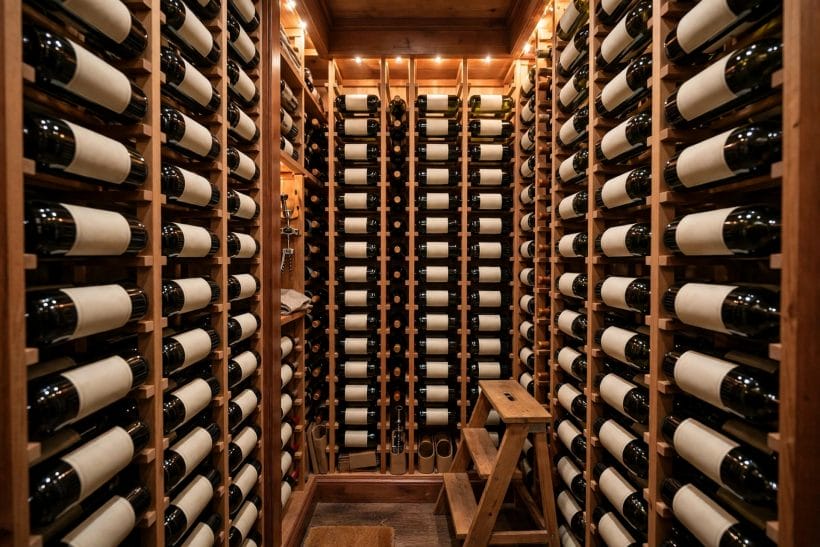
Floor-to-ceiling racks in a converted closet prove the point of this section: the cellar is wherever the bottles fit with the conditions right. Dead space is only dead until it is measured.
36. The Closet Cellar
A deep closet, lined with racking on three sides and a stool by the door, is the smallest complete cellar in this post. It usually cannot take cooling equipment, so it belongs in houses whose closets already sit cool — many do.
37. The Kitchen Cupboard Conversion
One run of kitchen cupboards, in the coolest corner away from the oven wall, can be racked for the drinking stock. It pairs naturally with the storage thinking in our kitchen ideas — everyday bottles live where everyday cooking happens.
38. The Pantry Partner
A cellar beside a pantry shares the house’s cool, dark, food-storage logic, and the two rooms borrow each other’s shelving ideas freely — the spirit of our butler’s pantry ideas, applied to bottles.
39. The Under-Counter Run
A single counter-depth run of racking under a worktop — in a utility room, a hall console, a dining-room sideboard — holds a respectable drinking collection at perfect reach. It is storage, not ageing space, and says so.
40. The Dead Corner, Racked Diagonally
The corner where two rack runs cannot meet squarely takes a diagonal bin or a turning display shelf. Racked honestly, the dead corner often becomes the cellar’s most characterful square metre.
41. The Boxing-In Trick
Pipes, ducts and meter boxes steal cellar corners; boxing them in with racking built around the boxing reclaims the look of the wall. Access panels stay reachable — the boxing is joinery, and services keep their rights.
42. The Cellar Under the Landing
Half-landings and the voids beneath them are under-stair space by another name, often with better headroom at the door. A short rack run and a low door make a cellar that guests never guess at.
43. Borrowed Coolth From a North Wall
In homes without basements, the inside of a shaded external wall is the steadiest surface available. Racking built against it, insulated from the room’s warmth rather than the wall’s cool, borrows the climate the cellar needs — a favourite trick in our basement man cave ideas too, where rooms borrow conditions from the ground.
7. Materials and Finishes
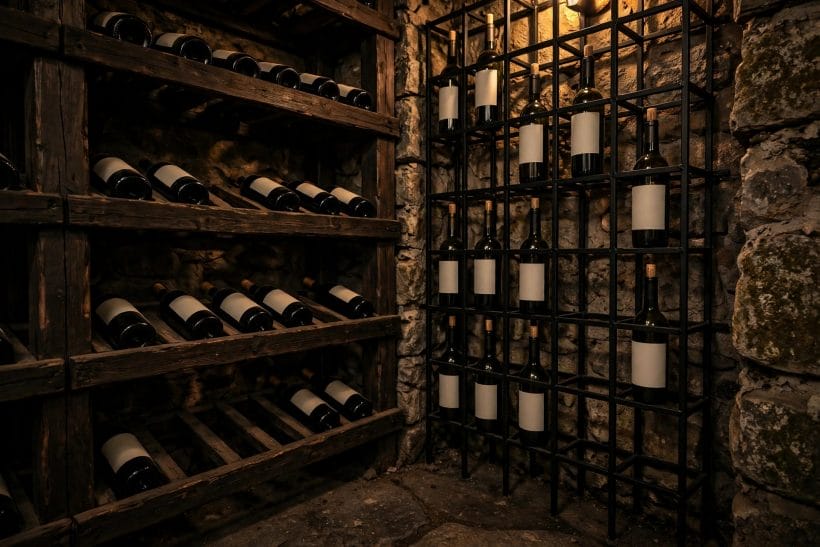
Dark timber against rough stone, a black metal grid beside it — this cellar wears its materials plainly. Finishes in a cellar are not decoration first; they are the surfaces that must live in cool, dim, slightly damp air without complaint.
44. Rough Stone Walls
Exposed stone is the cellar’s native finish: massive, cool, indifferent to humidity, and beautiful under low light. Where the house offers it, the design work is simply to clean it, light it and rack against it.
45. Dark-Stained Timber Racks
Dark stain on honest timber is the classic racking finish — it hides a decade of small scuffs, flatters bottle glass, and suits traditional and modern cellars alike. Keep the timber untreated by strong-smelling finishes near the bottles.
46. Black Metal Grids
Powder-coated steel grids store single bottles with almost no visual weight, and suit the smallest cellars where timber racking would crowd the walls. Mixed with one timber feature wall, they keep a small room feeling open.
47. Brick and Barrel Vaults
A brick-vaulted ceiling is the finish other cellars imitate. Real brick where the structure offers it, brick slips where it does not — either way the curve does the decorating, and everything below can stay plain.
48. Slate and Stone Floors
Cellar floors should shrug off the occasional broken bottle and the mop that follows. Slate, stone and sealed concrete all do; carpet and pale timber do not, and a cellar floor is no place to learn that twice.
49. Pale Plaster for Small Rooms
Not every cellar wants the grotto look. In above-ground cupboards and closet cellars, pale limewash or plaster keeps the little room feeling like part of the house, and makes labels easier to read in low light.
50. Cedar and Other Scented Timbers
Cedar racking smells wonderful and resists damp, and its scent is the one caution: keep strongly aromatic timber for the room’s trim rather than the bottle slots themselves, so nothing competes with what is in the glass.
51. Mixed Materials, One Palette
Stone, timber and metal together work when they share one temperature of colour — all warm, or all cool. The mixed cellar fails only when each material arrives in a different accent colour and starts arguing.
52. The Unfinished, Honest Look
Plain boards, visible fixings, no stain at all: the working cellar look suits collections that are drunk rather than displayed. It is also the easiest finish to extend, since new racking never has to match old paint.
8. Light, Labels and Finding Bottles
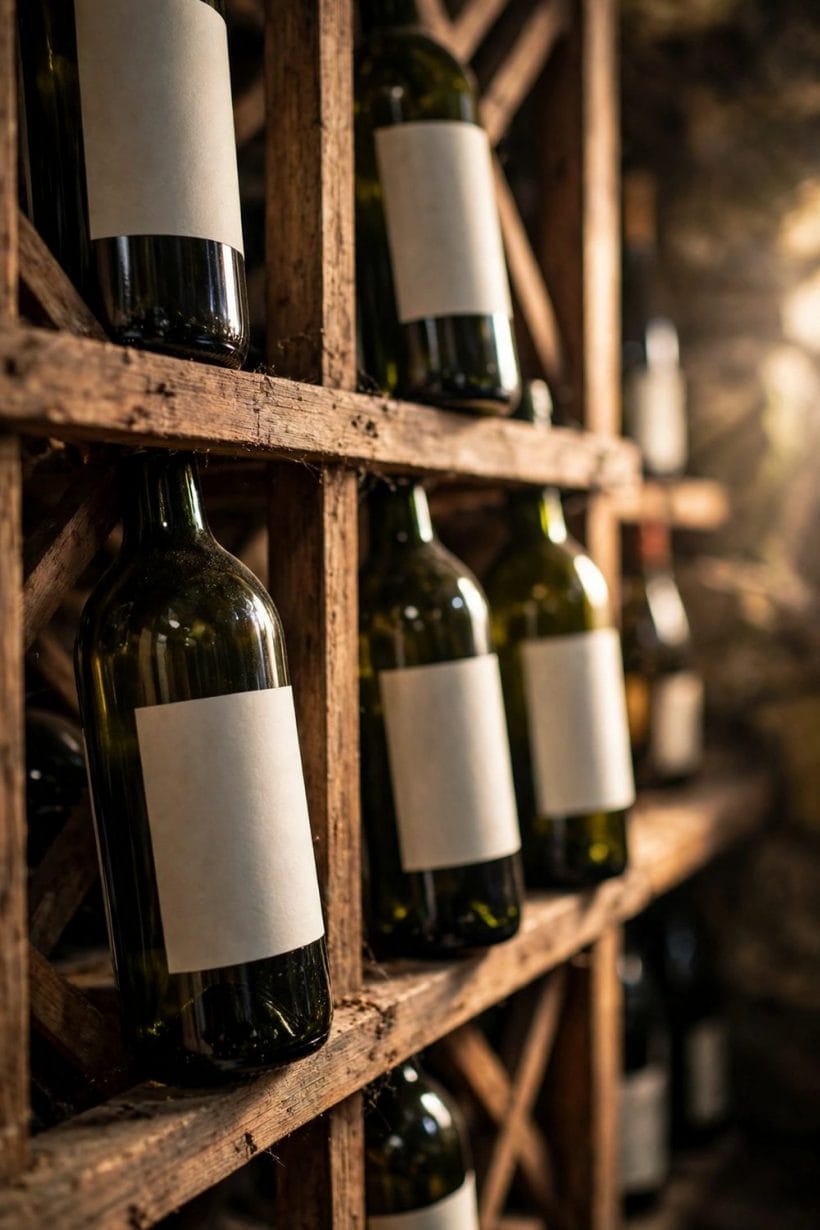
A close view of bottles resting in a timber lattice, labels blank to the camera — the cellar keeps its own records. This section is about the small systems that make a collection usable: light to see by, and order you can actually keep.
53. Low, Warm Light Only
Bottles rest in the dark; people visit in the light. Keep cellar lighting warm, low and on a switch by the door — enough to read a shelf position, never so much that the room warms or the labels fade.
54. Shelf-Edge Lighting
A soft strip of light under each shelf edge turns finding a bottle from a torch job into a glance. It is electrical work, fitted properly with the rest of the cellar’s wiring, and switched with the main light.
55. A Simple Cellar Book
A notebook — or its digital twin — that records what went in, where it sleeps and when it was opened beats every labelling gadget. The book lives in the cellar, the pencil with it, and the system survives because it is simple.
56. Neck Tags You Write Yourself
Plain card tags on bottle necks, written in pencil, are the cellar’s oldest filing system: no handling of resting bottles, no adhesive on glass, nothing to peel. One tag per bin for case stock, one per bottle for the singles.
57. Zones by Style, Not by Rank
Organise by what a bottle is for — everyday reds here, the whites there, the keepers at the back — rather than by prestige. Zones by purpose mean anyone can find a bottle for dinner without a guided tour.
58. The Ready-Now Shelf
One shelf, near the door, holding what is drinking well now. It is restocked from the deep racks monthly, and it protects the resting collection from hopeful browsing — the single most useful habit in this section.
59. Keeping Dust Off the Shoulders
Cellar dust is harmless and inevitable; a soft brush over bottle shoulders when a bin is opened keeps labels legible and hands clean. Bottles are wiped when they leave the cellar, not polished while they rest.
60. The Annual Honest Count
Once a year, count the cellar against the book. Bottles will have drifted — they always do — and the count is when the racks get re-planned, the ready shelf re-chosen, and the next section of racking, if any, decided.
9. The Tasting Corner
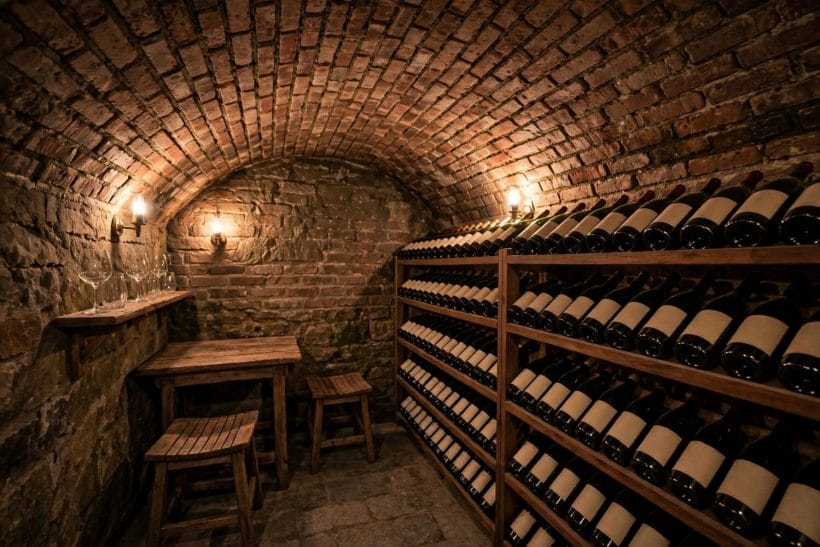
Under a brick vault, a small table and two stools wait beside the racks. A tasting corner is the cellar’s reward for all this order — and in a small cellar it must be planned as carefully as the storage it sits among.
61. A Ledge and Two Stools
The smallest honest tasting corner: a wall ledge at standing height, two stools beneath it, nothing more. It seats a decision — which bottle, tonight — better than most dining rooms seat dinner.
62. The Barrel Table
A barrel or a round offcut table gives the corner its centre and its theme in one piece of furniture. Keep it small enough to walk around with a bottle in hand; cellar corners fail by generosity.
63. Glasses on a High Shelf
Glassware stored high, near the corner and away from the racking traffic, stays clean and unchipped. A short rail or lip on the shelf edge is the difference between storage and a slow-motion accident.
64. A Ledge for Opening and Pouring
One clear, well-lit ledge reserved for opening bottles keeps corks, capsules and drips in a single wipeable place. It wants a small bin below it and the cellar book beside it — the corner’s whole ritual in arm’s reach.
65. Seating Built Into the Racking
A bench formed by the lowest rack run, topped with a cushion, seats tasters without spending floor space on chairs. It doubles as the step for the high shelves — small cellars love furniture that works twice.
66. The View Back to the Racks
Arrange the corner so the seated view is the collection itself, lit low. The racks are the cellar’s artwork; the tasting corner is simply the best seat in front of them.
67. A Corner for Two, Max
Small cellars seat two in comfort and four in a squeeze, and designing honestly for two keeps the corner intimate rather than apologetic. Larger tastings move upstairs; the corner keeps its purpose.
68. Tasting in the Next Room Instead
Sometimes the wisest tasting corner is not in the cellar at all — a chair and a side table in the room the cellar serves, in the spirit of the relaxed rooms in our luxury home interior ideas, with the cellar kept purely for keeping.
10. What It Costs, in General Terms
No figures appear in this section, because honest ones depend on your house, your joiner and your collection — but the shape of the spend is predictable, and knowing it in advance is most of budgeting.
69. Racking Is the First Cost
The largest share of most small cellars is the racking itself — timber and joinery, or metal systems — and it scales with bottle count. Deciding capacity honestly, per idea 60’s count, is the whole art of not overspending here.
70. Cooling Is the Second
Where cooling is needed, the unit, its fitting and its electrical work form the second block of cost, and the one never to economise on by buying undersized. A naturally cool room that needs no unit is the great saving of this post.
71. The Door Decides More Than You Think
A plain sealed door is modest; a glazed steel door is a statement with a statement’s price. Because the door is also the cellar’s seal and its face, it is the item where general terms most deserve a proper quote.
72. Finishes at Three Levels
Cellar finishes ladder predictably: paint and plain boards at the foot, timber and metal systems in the middle, stone, brick and glass at the top. All three levels store wine equally well — the ladder buys looks, not keeping quality.
73. Professional Fitting, Priced Once
Cooling, electrics and any structural alteration are priced once, done once, by professionals — the false economy of the cellar world is the cheap fitting that has to be redone with the racks full. Get the unglamorous work quoted first.
74. Running Costs Stay Modest
A small, well-insulated cellar asks little of the house: a small cooling load where fitted, a light that is mostly off. The running cost that matters is your own — an hour’s order-keeping a month, repaid every time a bottle is found in seconds.
75. The Grow-Later Plan
The wisest budget idea in this post: build the cellar in sections, racking one wall now and leaving the second wall’s space honestly empty. Collections grow; a cellar designed to grow with them never needs rebuilding — only extending.
Final Considerations
A small wine cellar succeeds on steadiness, not size: a cool dark corner, racking counted against the real collection, cooling and electrics fitted professionally where they are needed at all, and a ledge somewhere for the bottle that gets opened. Start with the layout your house already offers, grow the racking one honest section at a time, and let the cellar’s character come from the bottles and the materials — stone, timber, black metal and glass — rather than from square metres you do not have. The same borrow-a-corner thinking runs through our home design ideas, where small rooms are asked to do one job beautifully.

0 Comments