

The speakeasy is less a bar than a secret the house keeps: a door that gives nothing away, a room lowered into warm darkness, dark wood, worn leather and the glow of glassware on a back-lit shelf. Styled well, it is the most atmospheric room a home can hold, and it rewards the homes that commit to it completely.
These seventy-five ideas treat the speakeasy purely as design and styling — the concealed entry, the deep colours, the seating, the low layered light and the period details. No themes are borrowed halfway: the whole effect depends on commitment, and on editing out everything bright, modern and loud.
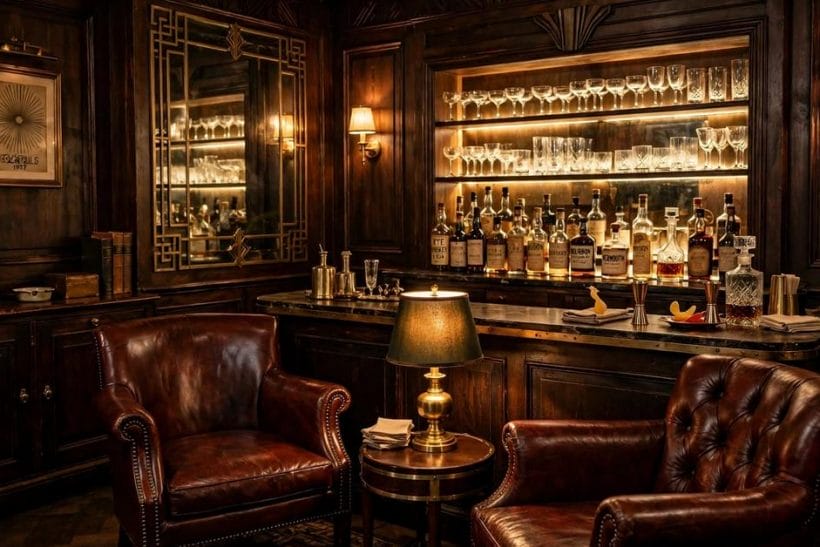
1. Speakeasy Bar Ideas at a Glance
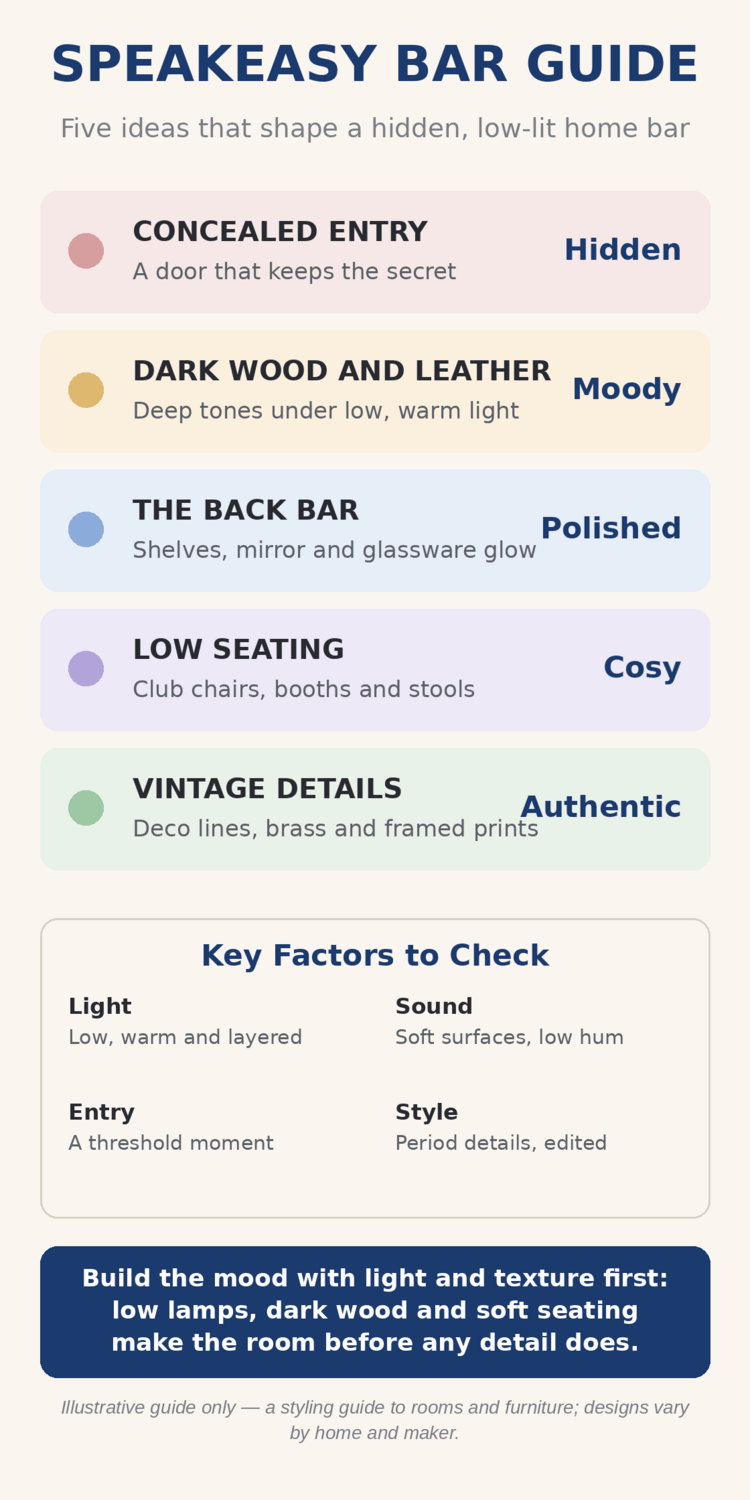
Five families build the speakeasy mood: a concealed entry that keeps the secret, dark wood and leather under low light, a back bar whose shelves and mirror glow, low seating arranged for conversation, and vintage details edited with a firm hand.
For home bars of every style, start with home bar ideas.
| Family | Character | What it means |
|---|---|---|
| Concealed Entry | A door that keeps the secret | Hidden |
| Dark Wood and Leather | Deep tones under low, warm light | Moody |
| The Back Bar | Shelves, mirror and glassware glow | Polished |
| Low Seating | Club chairs, booths and stools | Cosy |
| Vintage Details | Deco lines, brass and framed prints | Authentic |
Scope, so the lanes stay clear: this post is the speakeasy STYLE only — a way of dressing a home bar room, not a venue or a business. The neighbouring lanes dress bars differently: dry bar ideas covers the unplumbed styling corner, and the rustic lane linked later trades the speakeasy’s polish for farmhouse warmth. Choose the mood first; the furniture follows. Everything in this post is styling — furniture, paint, light and objects — for a room inside a private home.
2. The Concealed Entry
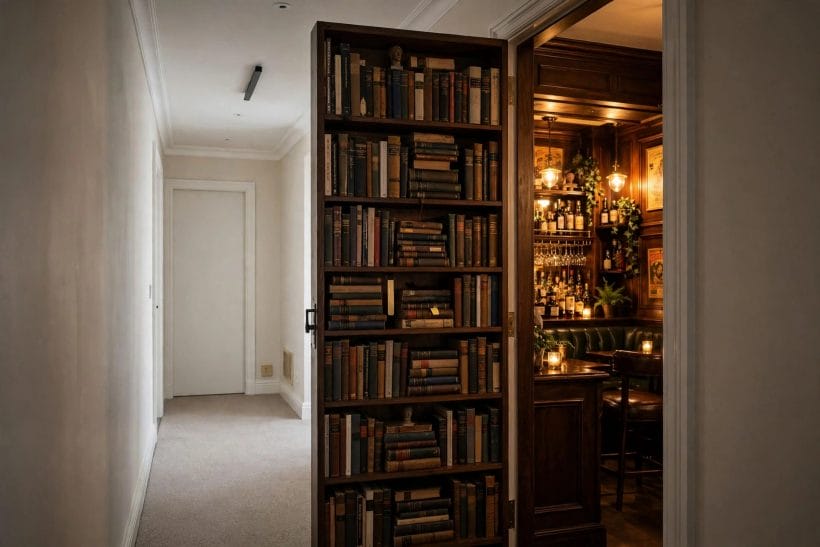
A speakeasy begins before the room: in the moment of arrival. The entry should delay the reveal, lower the voice and dim the light by degrees, so crossing the threshold feels like being let in on something. Get the entry right and the room beyond it needs to do far less work.
1. A Bookcase Door That Swings
The beloved classic: a bookcase on a hidden hinge, stocked with real books, opening into the bar. It works because it is furniture first and a door second — build it solidly, stock it heavily, and let the reveal stay silent.
2. An Ordinary Door, Perfectly Plain
Concealment by boredom: a plain panelled door matching every other door in the hall, no sign, no glass, nothing to suggest what glows behind it. The plainer the door, the better the room’s surprise lands.
3. A Curtain Across the Threshold
A heavy curtain in velvet or lined linen just inside the door softens the passage between the bright house and the dark room. It swallows light leaks, hushes sound, and makes every entrance a small performance.
4. A Hallway That Gives Nothing Away
Keep the approach neutral — ordinary pictures, ordinary light — so nothing prepares a guest for the turn. The contrast between the everyday corridor and the room beyond is half the speakeasy’s theatre.
5. A Low Arch Into the Bar Room
Where the plan allows, a low or arched opening instead of a full doorway changes how the body enters: slower, ducking slightly, arriving. Architecture that lowers the head lowers the voice with it.
6. No Clues Outside the Door
Discipline at the threshold: no themed signs, no novelty plaques, no rope and stanchions. A true speakeasy look trusts the secret. Let the only clue be the warm line of light beneath the door.
7. A Coat Stand by the Door
A hat stand or coat hooks just inside gives arrivals a ritual — coats off, day left behind — and a piece of period furniture to set the era. Choose dark timber and brass to match the room.
8. The Reveal: Light Spilling Out
Arrange the first view carefully: as the door opens, the back bar’s glow should be the first thing seen. Everything in the entry sequence serves this frame — darkness, pause, then the shelves shining like a stage.
3. Dark Wood, Leather and Deep Colour
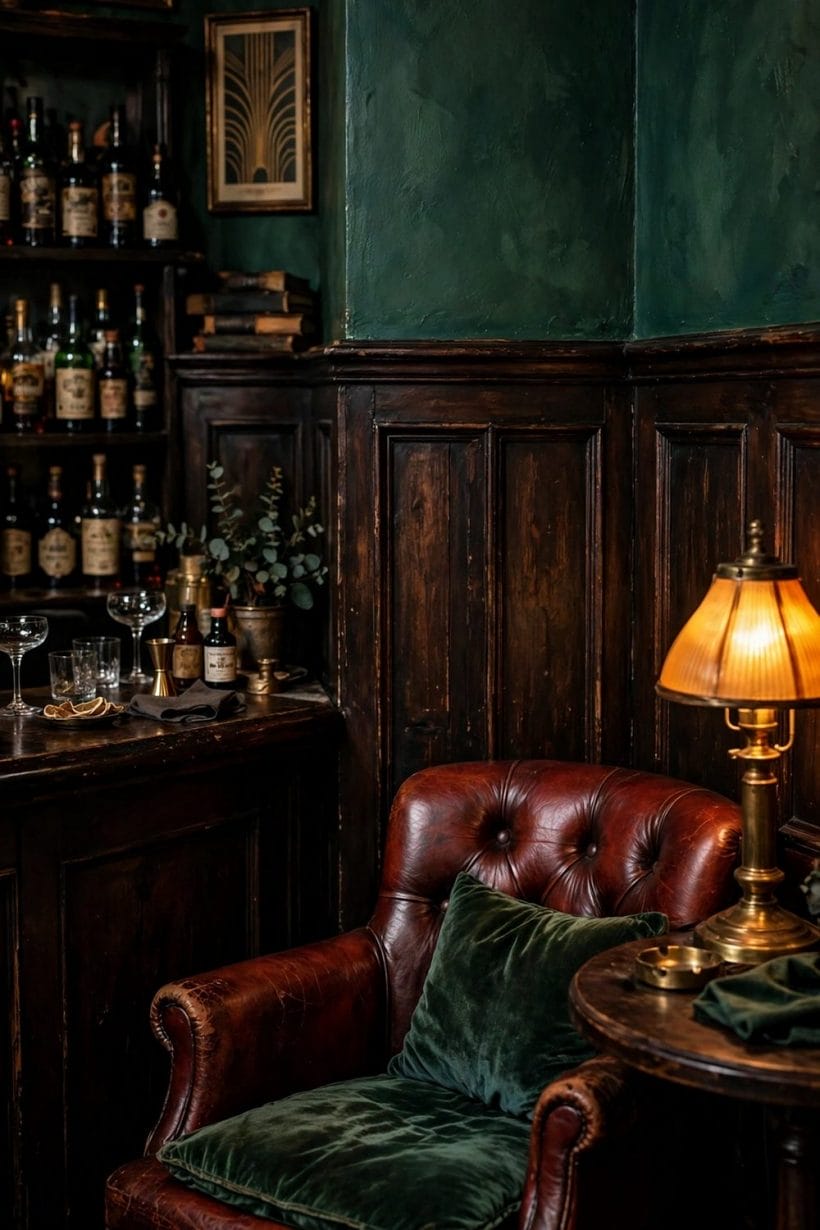
The material palette is the speakeasy’s signature: dark-stained timber, leather with some life in it, walls in ink and forest, brass catching what light there is. The moody end of the bar cluster lives in black home bar ideas; the speakeasy adds period softness to the darkness.
9. Dark-Stained Timber Panelling
Panel the walls — fully, or to dado height with deep colour above — in stained timber with a visible grain. Panelling gives the room its period bones, warms the acoustics, and makes pale imitations unnecessary elsewhere.
10. Leather in Oxblood, Tan and Bottle Green
Choose leather the colour of old libraries: oxblood, saddle tan, bottle green. New leather reads showroom; leather with grain, creases and a soft sheen reads speakeasy. One strong colour across the seating unifies the room.
11. Walls in Ink, Forest and Burgundy
Above the panelling, or where there is none, paint in the deep register: ink blue, forest green, burgundy, charcoal. These colours drink the light deliberately — the room should feel held, not lit.
12. A Ceiling Painted as Dark as the Walls
Take the colour over the ceiling and the room’s box dissolves into atmosphere. A pale ceiling would lid the space brightly; a dark one lets the eye forget the room’s edges entirely.
13. Brass and Smoked Mirror Accents
Brass rails, handles and lamp bases warm the darkness with small points of light, and smoked or antiqued mirror multiplies them softly. Shine should glint in a speakeasy, never glare.
14. Velvet in Jewel Tones
Velvet cushions, a velvet chair or curtains in emerald, garnet or sapphire give the room its plush note. Velvet eats light beautifully and photographs like midnight — use it where hands and eyes linger.
15. Dark Timber Floors and Deep Rugs
Floors stay in the same register: dark boards or a dark-stained finish, layered with a deep-patterned rug. A pale floor would bounce light upward and break the spell at ankle height.
16. A Dark Stone or Marble Bar Top
The counter top is the room’s one polished surface: dark marble, soapstone or stained timber with a honed finish. It catches the shelf light, grounds the bar, and wipes clean without shining like a kitchen.
4. The Back Bar: Shelves, Mirror and Display
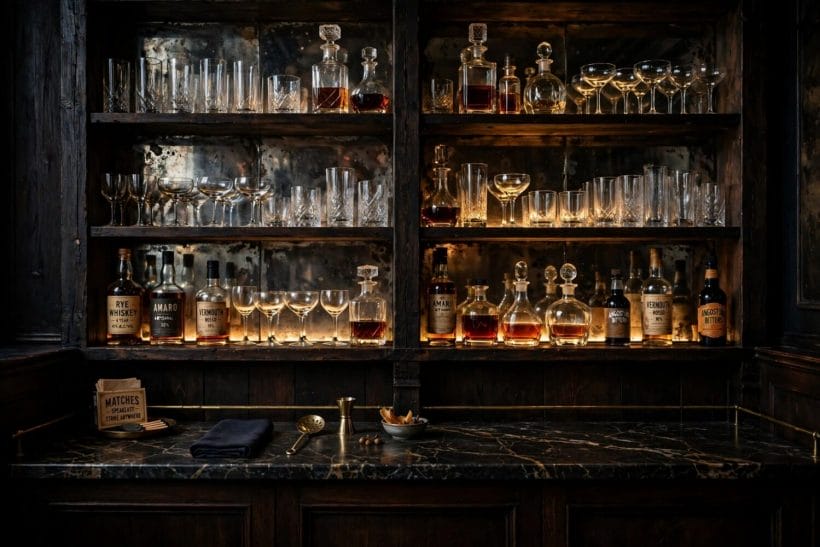
The back bar is the room’s altar wall: shelves of glassware glowing against mirror, everything arranged like a collection rather than a stockroom. For the lighter, floating version of the same wall, home bar ideas with floating shelves shows the modern contrast.
17. Shelves That Glow From Behind
A hidden strip of warm light behind or beneath each shelf turns glassware into lanterns. This single detail does more for the speakeasy mood than any purchase: the wall glows, the room borrows its light.
18. A Mirror Backing the Shelves
Mirror behind the shelves doubles every bottle shape and point of light, and deepens a shallow bar wall. Antiqued or smoked mirror keeps the reflection soft and period rather than bright and bathroom-clean.
19. Glassware Arranged Like a Collection
Group glasses by shape in deliberate rows — tumblers, stems, coupes — with space between the groups. Display is editing: fewer pieces, better lit, beats a crowded shelf of everything you own.
20. Decanters and Curios on the Top Shelf
Reserve the highest shelf for the beautiful silhouettes: decanters, a cocktail shaker collection, an old clock, a small sculpture. Backlit from below, the top shelf becomes the room’s skyline.
21. Floating Shelves for a Lighter Look
Thick timber floating shelves keep the back bar architectural and open, the bottles reading as a frieze along the wall. Keep brackets invisible and the lighting hidden, and the shelf itself disappears into the glow.
22. A Ladder Rail for High Shelves
Where shelves climb high, a brass rail and rolling ladder add period theatre and honest function. Even in a small bar, the rail alone — brass, at picture-rail height — suggests the library the room admires.
23. Closed Cabinets Below the Counter
Below the display, close the doors: spare stock, cleaning things and the working clutter belong behind timber. The speakeasy illusion depends on the visible layer staying composed at all times.
24. The Bar Counter Facing the Room
Set the counter so the host stands facing the seating, shelves glowing behind. A bar that turns its back on the room breaks the conversation; the classic arrangement keeps everyone in one warm circle of attention.
5. Low Seating: Booths, Club Chairs and Stools
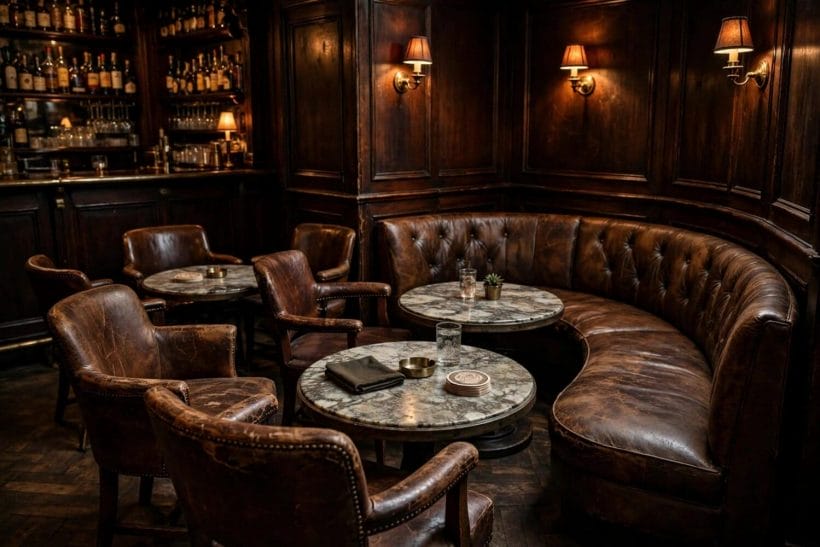
Speakeasy seating sits low, leans back and gathers close: booths in corners, club chairs in leather, stools at the counter. Nothing upright, nothing formal — the furniture should lower voices and lengthen evenings all by itself.
25. A Curved Booth in the Corner
A built-in curved booth is the speakeasy’s best seat: enveloping, sociable, impossible to leave. Upholster it in leather or velvet, add a small round table, and the corner becomes the reservation everyone hopes for.
26. Club Chairs in Worn Leather
Two deep club chairs angled toward each other carry the room’s conversation. Choose rounded arms, a low back and leather with character; pair them across a small table with room for glasses and a book.
27. Stools at the Counter
Counter stools in leather and dark timber, with a foot rail to rest on, complete the bar ritual. Backless stools tuck away and keep sightlines clean; a low back wins when evenings run long.
28. A Chaise for the Listener
One chaise or daybed seat — for the reader, the listener, the one who holds court — adds the speakeasy’s languid note. Place it at the room’s edge where the light is lowest and the music lands softly.
29. Low Tables at Knee Height
Tables should crouch: knee height, dark timber or marble tops, sized for glasses and small plates rather than dinners. Low tables keep the room’s horizon low, and low horizons are the whole aesthetic.
30. Seating in a Circle, Not Rows
Arrange seats to face each other — chairs angled in, the booth curving round — because the speakeasy is a conversation room. Rows belong to cinemas; circles belong to secrets and stories.
31. A Banquette Along the Long Wall
A fixed banquette with loose cushions seats many in little depth and hugs the wall elegantly. With small tables pulled up to it, the long wall becomes the room’s most flexible and sociable run.
32. One Statement Chair in Velvet
A single high-backed velvet chair — emerald or garnet — gives the room its portrait seat and its colour climax. Place it where the shelf light reaches, and let every other piece stay in leather’s browns.
6. Lighting for a Low, Warm Glow
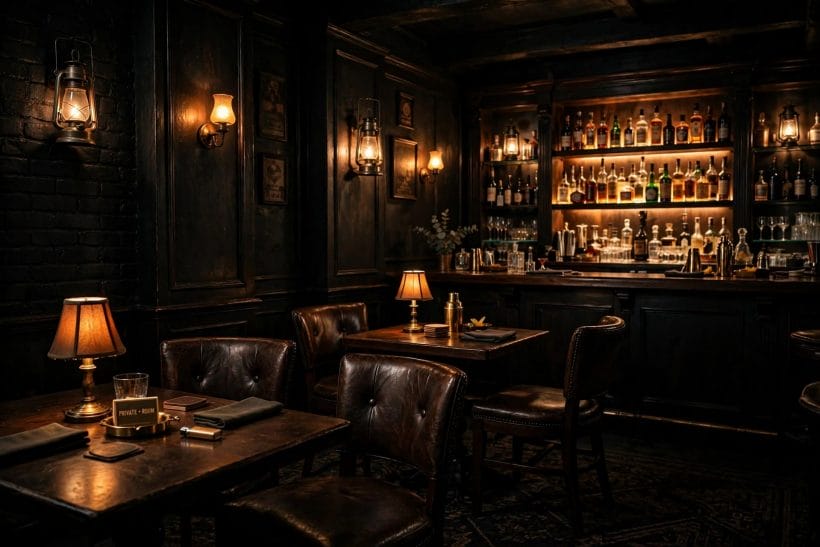
Light is the speakeasy’s true building material: low in height, warm in colour, pooled rather than spread. Overhead brightness is the enemy — every fitting should feel like it was chosen by candlelight, even when it runs on a dimmer. If the lighting fails, no quantity of vintage furniture will save the mood.
33. Light Low and Layered
Build three low layers — shelf glow, lamp light at seat height, a pendant over the bar — and skip the ceiling’s centre entirely. The room reads as pools of warmth with soft darkness resting between them.
34. Wall Sconces With Warm Shades
Sconces with fabric or amber glass shades wash the panelling with gentle light at head height. A matched pair flanking the back bar or the booth gives the room its classic, symmetrical glow.
35. A Pendant Over the Bar Counter
One low pendant — smoked glass, brass, or a small cluster — pools light on the counter where the work happens. Hung low, it becomes a lantern the whole room orientates around.
36. Candlelight on the Tables
Real candles in glass holders, or good flameless ones where fabrics crowd close, put living light at the conversation’s level. Nothing else flatters faces, leather and glassware in quite the same way.
37. Shelf Lighting as the Main Glow
Let the back bar do the lighting: when the shelves glow, the room rarely needs more. It is the speakeasy’s signature trick — the display is the lamp, and the light feels like it belongs to the era.
38. Dimmers for the Evening Shift
Every circuit dimmable means the room can travel from arrival-bright to late-evening ember without touching a fitting. Choose dimmable bulbs from the start and the mood becomes a dial, not a renovation.
39. Shaded Table Lamps in Corners
Small lamps with dark or amber shades rescue the corners the shelves cannot reach. Their light should pool on a side table and stop there — corners in a speakeasy are for glow, not illumination.
40. A Neon-Free Glow
Keep modern light out: no neon signs, no colour-changing strips, nothing that hums of a modern barcade. The period illusion is fragile, and warm, steady, amber light is its whole vocabulary.
41. Light Pools, Darkness Between
Resist filling every shadow. The darkness between pools of light is what makes the room feel deep, private and calm — a speakeasy lit evenly is just a dark room, and the difference is everything.
7. Vintage and Deco Details
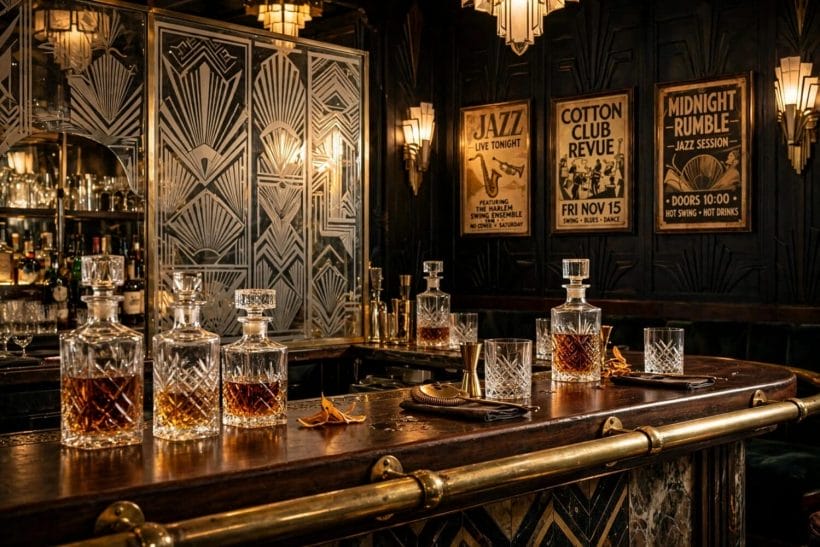
Period detail sells the era, but it must be edited like a film set: a few true notes, nothing novelty. The rustic home bar ideas lane gathers its charm from farmhouse salvage; the speakeasy’s details come from the city — brass, glass, geometry and print.
42. Deco Lines and Stepped Shapes
Stepped mouldings, sunburst shapes and clean geometry in the mirror frame, the shelf ends or the door glass quote the era without costume. One or two deco gestures, repeated, read as design rather than theme.
43. Framed Vintage Posters and Prints
Period-style posters, old advertisements and jazz-age prints in dark frames give the walls their stories. Group them salon-style on one wall and keep the rest of the room’s surfaces quiet by contrast.
44. A Speaker Hidden in Period Dress
Music matters more than equipment: hide modern sound in or behind a vintage-style cabinet or grille cloth. The room should sound like a gramophone era and behave like the present, invisibly.
45. Brass Rails, Hooks and Handles
A foot rail at the counter, brass hooks for coats, cupboard handles in aged brass: the touchpoints carry the period. Metal that warms with use suits the speakeasy better than anything chrome and new.
46. Cut Glass and Etched Details
Etched glass in the door, cut-glass decanter stoppers catching the shelf light, a patterned glass shade: small refractions that reward a close look. Glass is the speakeasy’s jewellery — wear it sparingly.
47. Old Suitcases and Trunks as Tables
A leather suitcase or steamer trunk as a side table brings travel, leather and age in one piece. Stack two for height beside the chaise, and let the straps and corners tell their stories.
48. A Vintage Telephone as a Prop
A period-style telephone on the side table is pure set dressing — and that is its charm. Props are allowed in a speakeasy precisely because the room is theatre; choose few, and choose them well.
49. Patterned Glass in the Door
Reeded, frosted or stained glass in the bar door glows when the room is lit and keeps the secret when it is not. It is the one place the hidden room advertises itself — softly, in light.
8. Small Speakeasies and Corner Bars
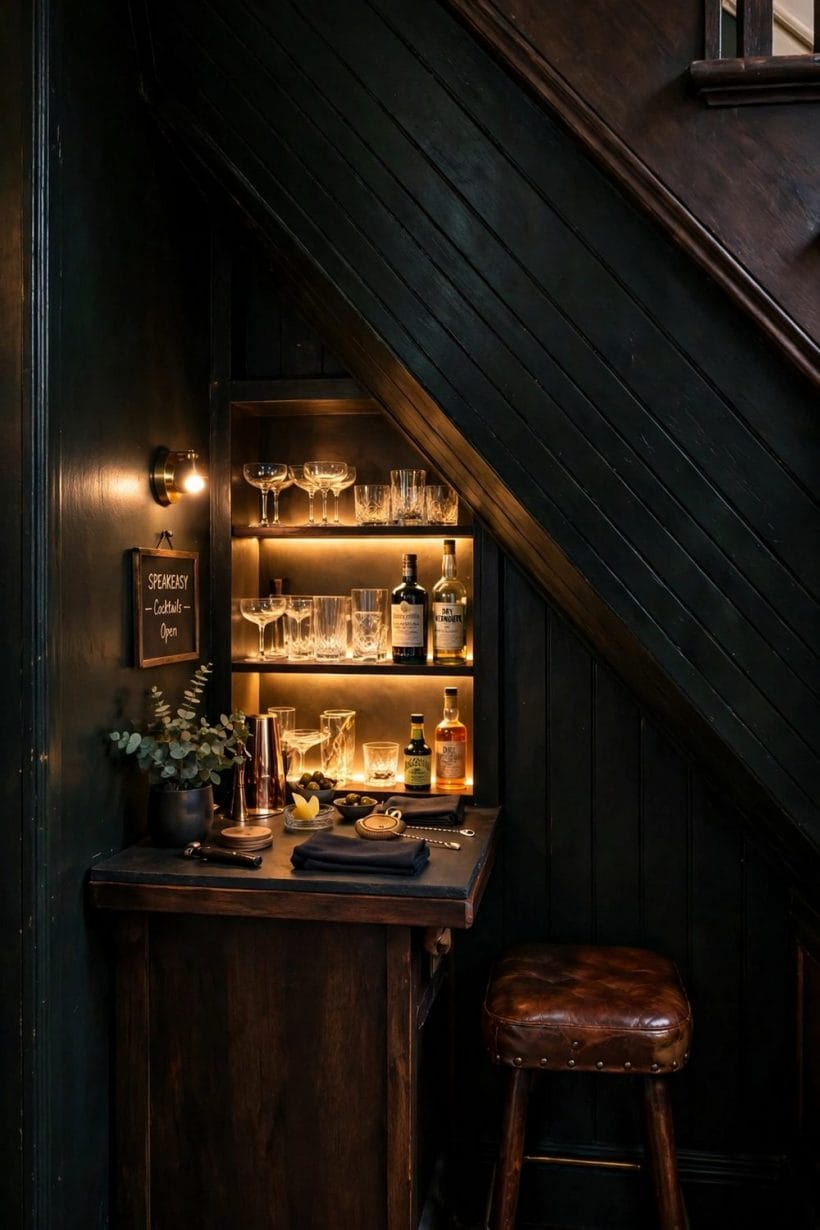
The speakeasy scales down beautifully — secrecy suits smallness. A cupboard, an under-stairs wedge or a basement corner can hold the whole mood, and the compact builds in small home bar ideas prove how little floor the ritual needs.
50. A Cupboard Bar Behind Doors
A tall cupboard or armoire fitted with shelves, a small counter and a light strip becomes a speakeasy that closes. Doors shut, the room is a drawing room; doors open, the glow spills and the evening changes.
51. The Under-Stairs Speakeasy
The wedge under the stairs was born for this: low, hidden, oddly shaped. A counter along the slope, shelves in the tall end, one stool — the smallest speakeasy in the house and often the best loved.
52. A Corner of the Basement
Basements and speakeasies share a temperament — dark, cool, apart — and basement bar ideas shows the corner working at room scale. Curtain the corner off and the concealment comes free.
53. Small Bars, Fully Styled
A small speakeasy must be styled completely or not at all: dark paint to the ceiling line, one shelf run glowing, two good chairs. Half-measures read as a dark corner; commitment reads as a destination.
54. A Bar Trolley as the Whole Bar
A brass-and-timber trolley, stocked and styled, parked against a dark wall with a lamp above, is a moveable speakeasy for rooms that cannot spare a corner. Wheel it in and the mood arrives with it.
55. One Wall Does Everything
In the smallest version, a single wall carries entry, shelves and seating cue: dark paint, glowing shelves, a banquette beneath. Stand back and the wall reads as a stage set — which is exactly the intention.
56. A Snug for Two
Two chairs, a tiny table, a curtain to draw: the snug is the speakeasy reduced to its essence. It asks for a metre of forgotten floor and gives back the most private seat in the house.
57. The Dining Room After Dark
Borrow a room that already exists: dark table linen, candles, the trolley rolled in, lamps lowered. A temporary speakeasy proves the styling before any paint is bought — and sometimes stays a beloved ritual.
9. Sound, Softness and Comfort
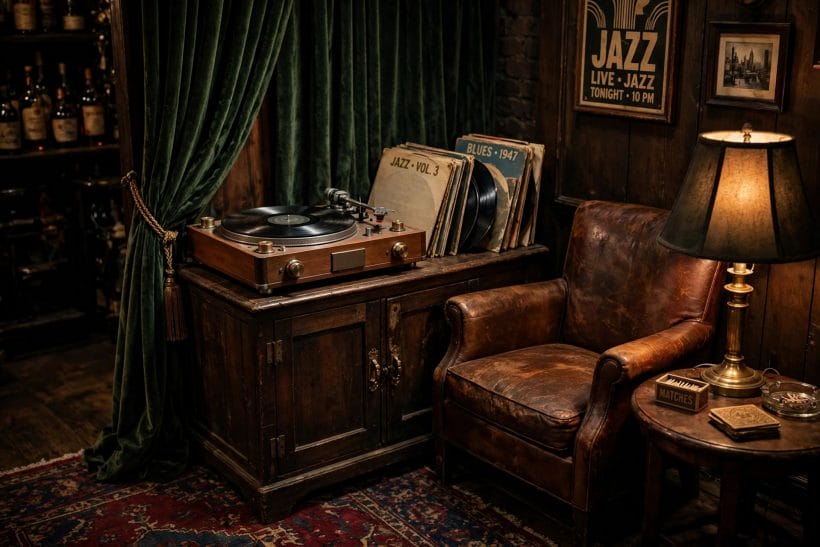
A speakeasy should sound like a secret too: voices low, music warm, the hard clink of the bright house world muffled by rugs, curtains and upholstery. Comfort is engineered in softness long before it is bought in furniture.
58. Soft Surfaces for a Low Hum
Line the room with absorption: rug over floor, curtains at the door, upholstered seating, cushions everywhere. Sound dies softly in a speakeasy, and conversation settles to the murmur the style is named for.
59. Curtains and Rugs Against Echo
Bare dark rooms ring; dressed ones purr. A heavy curtain and a deep rug are the two cheapest acoustic tools in the house, and both already belong to the speakeasy’s visual palette.
60. Music From One Good Speaker
One well-placed speaker at low volume fills a small room better than a scattered system turned up. Keep the source hidden, the playlist era-aware, and the volume below the conversation it accompanies.
61. A Record Player Corner
Vinyl suits the ritual: choosing a record, lowering the needle, turning it over at the interval. A small player on a timber cabinet adds movement, ceremony and a shelf of sleeves as wall colour.
62. Ventilation for a Windowless Mood
Hidden rooms still need fresh air: use the house’s existing ventilation, a quiet fan in the warm months, the door’s curtain gap. A speakeasy that feels stuffy loses its spell however good it looks.
63. A Fireside Note of Warmth
Where a fireplace exists, it becomes the room’s second glow; where none does, a small stove-style heater or simply warm textiles carry the feeling. Warmth is part of the lighting design in a dark room.
64. Scent: Wood, Leather and Candle Wax
The speakeasy smells of its materials — timber, leather, a little candle wax, perhaps cedar on the shelves. Keep scent as background, never perfume; the nose should register the room, not a product.
65. Seating You Can Sit In for Hours
Test every seat for the long evening: seat depth, back angle, a footrest or ottoman within reach. A speakeasy’s success is measured in hours stayed, and hours are a furniture specification.
66. The Room at Conversation Volume
Design the whole sensory mix — light, sound, softness — so nobody raises their voice. When a room holds people at conversation volume without effort, the styling has done its deepest work.
10. Costs and Practical Details
In general terms, a speakeasy look is one of the kinder styles to fund — none of it requires a big room or a big gesture: its power comes from paint, light and furniture rather than building work, and second-hand pieces suit the era better than new ones. The practical notes keep the mood safe, clean and easy to live with.
67. What Drives the Cost of the Look
In general terms: the seating first, then joinery for shelves and panelling, then lighting, then the inexpensive magic of paint. Because atmosphere does the heavy lifting, money spent on one great chair outperforms money spread thinly everywhere.
68. Furniture First, Building Work Second
A speakeasy can be achieved almost entirely with furniture, paint and light. Panelling and built-in booths deepen it later if the room earns them — style the room you have before rebuilding it.
69. Second-Hand Finds Suit the Era
Vintage and second-hand pieces are not a compromise here; they are the correct material. Leather with patina, old brass, framed prints and trunks arrive with the age the style imitates, usually for less than new.
70. Power and Plugs for Shelf Lighting
Plan sockets where the glow must live: behind shelves, inside the cupboard bar, beside the lamps. Any new electrical work belongs to a qualified electrician; the styling plan is yours to draw first.
71. Candles, Fabrics and Common Sense
Dark, soft rooms invite candles, so place them in glass, away from curtains and cushions, or choose good flameless versions near fabrics. The mood should smoulder metaphorically and in no other way.
72. Sound to the Rest of the House
The same softness that calms the room contains it: a closed door, a curtain, rugs above hard floors. A speakeasy considerate of the household’s sleep gets used every week of the year.
73. Cleaning a Dark Room
Dust shows on dark timber like snow on a roof, so the room asks a light, regular rhythm: shelves wiped, leather fed, glassware polished. Ten unhurried minutes weekly keeps the gloom glamorous rather than grubby.
74. Keeping It a Home Room
This styling serves a private room in a home — a place for the household and its guests to sit low and talk long. Planned as a home room from the first sketch, it asks nothing of the outside world but its furniture.
75. The Final Edit: Remove One Thing
When the room feels finished, take one object away. Speakeasy atmosphere is built as much by restraint as by purchase, and the piece you remove is usually the one that was explaining the theme too loudly.
Final Considerations
A speakeasy succeeds when every sense agrees: the door keeps the secret, the light stays low and warm, the leather and timber deepen, and the shelves glow like the room’s own sunset. Commit to the darkness, edit the details hard, and the smallest bar corner becomes the most storied room in the house. The style flatters patience, too: it is a room assembled over time, found piece by found piece.
Start with paint, light and one great chair; add the booth, the mirror and the brass as the room earns them. The neighbouring bar lanes linked through this post dress their rooms for daylight — this one belongs, always, to the evening.

0 Comments