
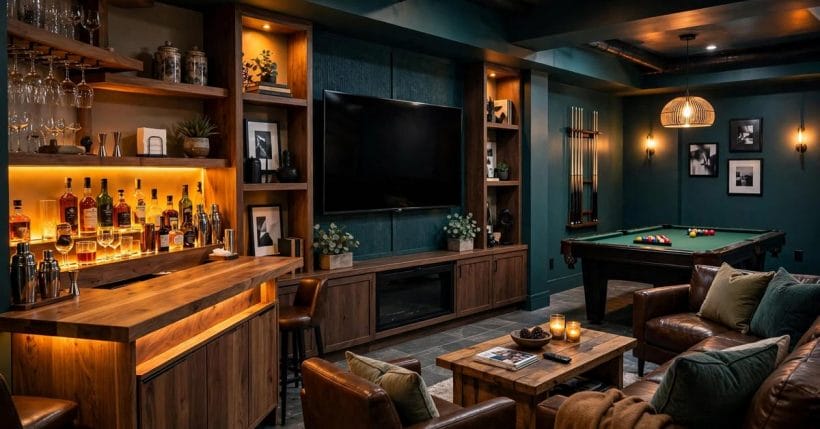
Every house has one room that asks nothing of you, and in many homes it hides below the stairs: the basement man cave. Down there the dress code is comfort, the lighting is warm, and the evening runs to screen time, games and long conversations in deep chairs.
These seventy-five ideas plan a small basement cave properly: layouts zoned for watching, playing and lounging, lighting that replaces the sun it lacks, flooring and finishes chosen to stay comfortable below grade, and the practical checks that keep a below-ground room cosy for years — everything stated in general terms, ready to fit your own room.
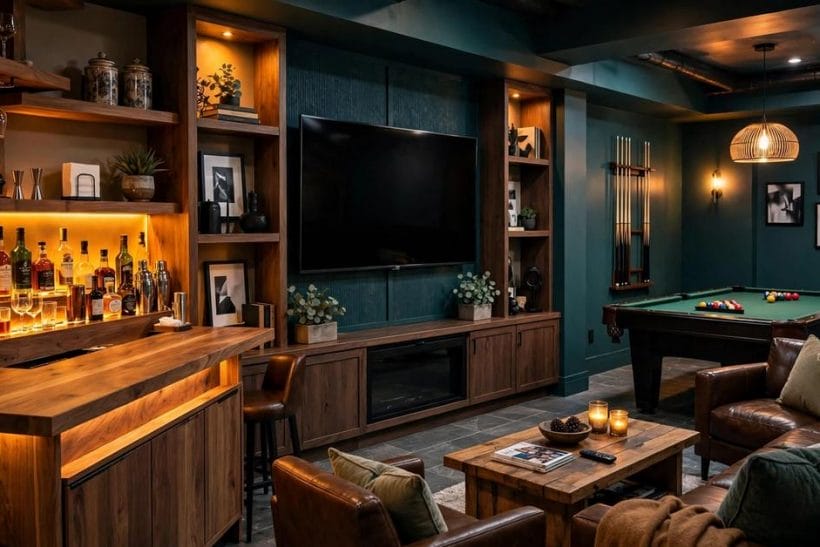
1. Small Basement Man Cave Ideas at a Glance
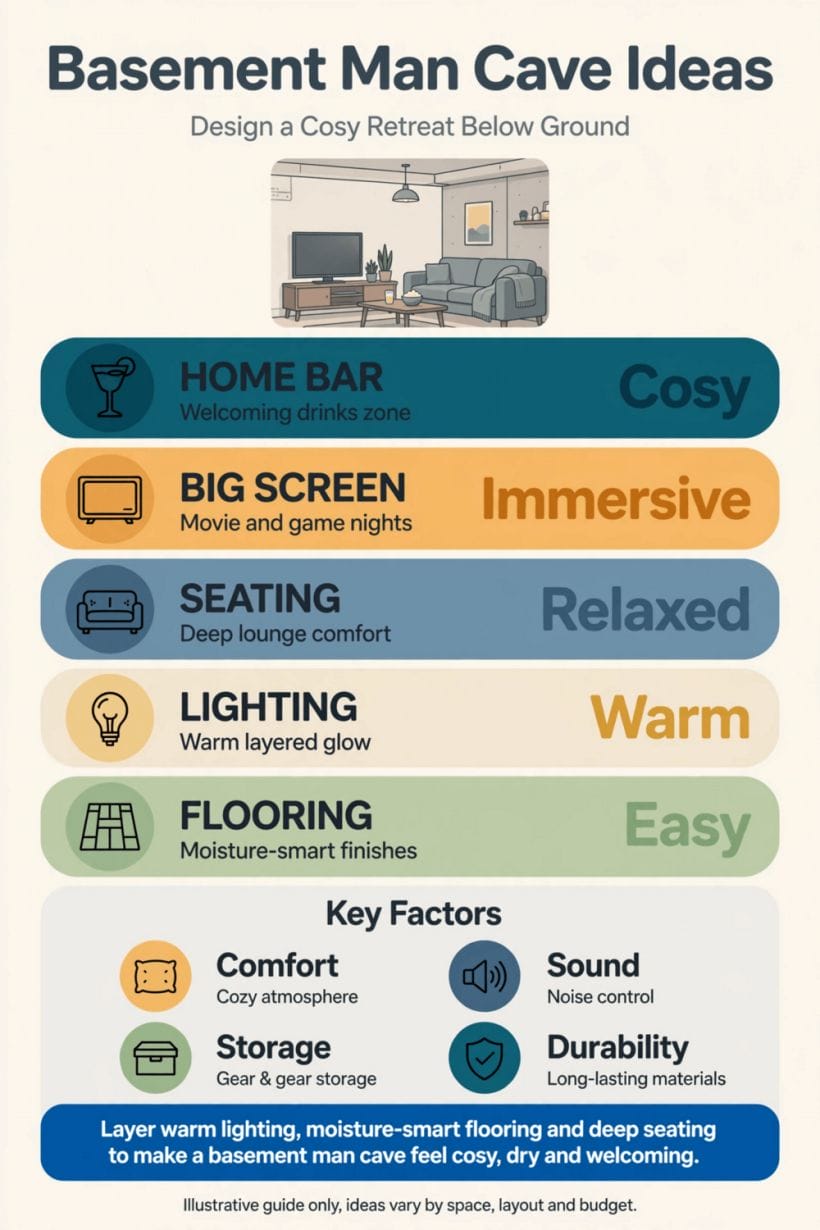
A basement cave works when five families pull together: a home bar corner for drinks and talk, a big screen for movie and game nights, deep seating nobody wants to leave, warm layered lighting, and moisture-smart flooring that keeps the room feeling dry and easy.
For the whole basement cluster, start with basement ideas.
| Family | Character | What it means |
|---|---|---|
| Home Bar | Welcoming drinks zone | Cosy |
| Big Screen | Movie and game nights | Immersive |
| Seating | Deep lounge comfort | Relaxed |
| Lighting | Warm layered glow | Warm |
| Flooring | Moisture-smart finishes | Easy |
Scope, so the lanes stay clear: man cave ideas covers caves anywhere in the house — garages, spare rooms, garden buildings — while this post is the basement location only, and a small one. Below-grade rooms live by their own rules of light, air and moisture, stated here in general terms; the rest of the basement cluster, from bathrooms to bars, links through the pillar above. The basement’s working lanes — laundry, storage and workshop conversions — sit outside this post entirely: the cave is a leisure room, planned for evenings.
2. Small Basement Layouts That Work
A small basement rewards zoning more than square footage: give the screen, the games and the lounging each a territory, keep the middle open, and the room feels planned rather than filled. The companion layouts in small basement ideas explore the same rooms from the whole-basement angle.
1. Zone the Room by Activity
Divide the basement into watching, playing and lounging zones, each with its own rug or lighting pool. Zoning lets a small room host a film, a card game and a quiet reader at once without anyone feeling crowded.
2. Keep the Centre Open
Push storage and tall pieces to the walls and leave the middle of the room clear. In a low-ceilinged basement, open floor is what stops the space feeling like a corridor with furniture in it.
3. Put the Bar Along the Short Wall
The short end wall is the natural bar spot: shelves above, a counter below, stools in front. It keeps drinks and glassware out of the games traffic and gives the room a destination to drift toward.
4. One Wall for the Screen, One for Seating
Fix the screen on the longest unbroken wall and face the main sofa straight at it. Everything else — bar, games, shelves — arranges around that axis, and the room’s purpose reads the moment you reach the stairs.
5. A Games End and a Quiet End
Pool and noise at one end, reading chairs and shelves at the other: the gradient lets competitive and quiet evenings share one small basement. A rug change or a lighting shift is all the boundary needs.
6. Use the Under-Stair Space
The wedge under the stairs swallows a fridge, a games cupboard, a wine rack or the dog’s bed. Fitted with doors or a curtain, dead space becomes the cave’s hardest-working storage.
7. Low Furniture for Low Ceilings
Choose sofas, units and tables with low profiles and the ceiling feels higher than it is. Tall bookcases crowd a basement; long, low shelving keeps sightlines open and the room calm.
8. A Clear Path From the Stair Door
Plan the route from the stairs to every zone before placing a single chair. A cave that flows is a cave people use; one you edge through sideways stays empty however good the screen is.
3. Layered Lighting Below Grade
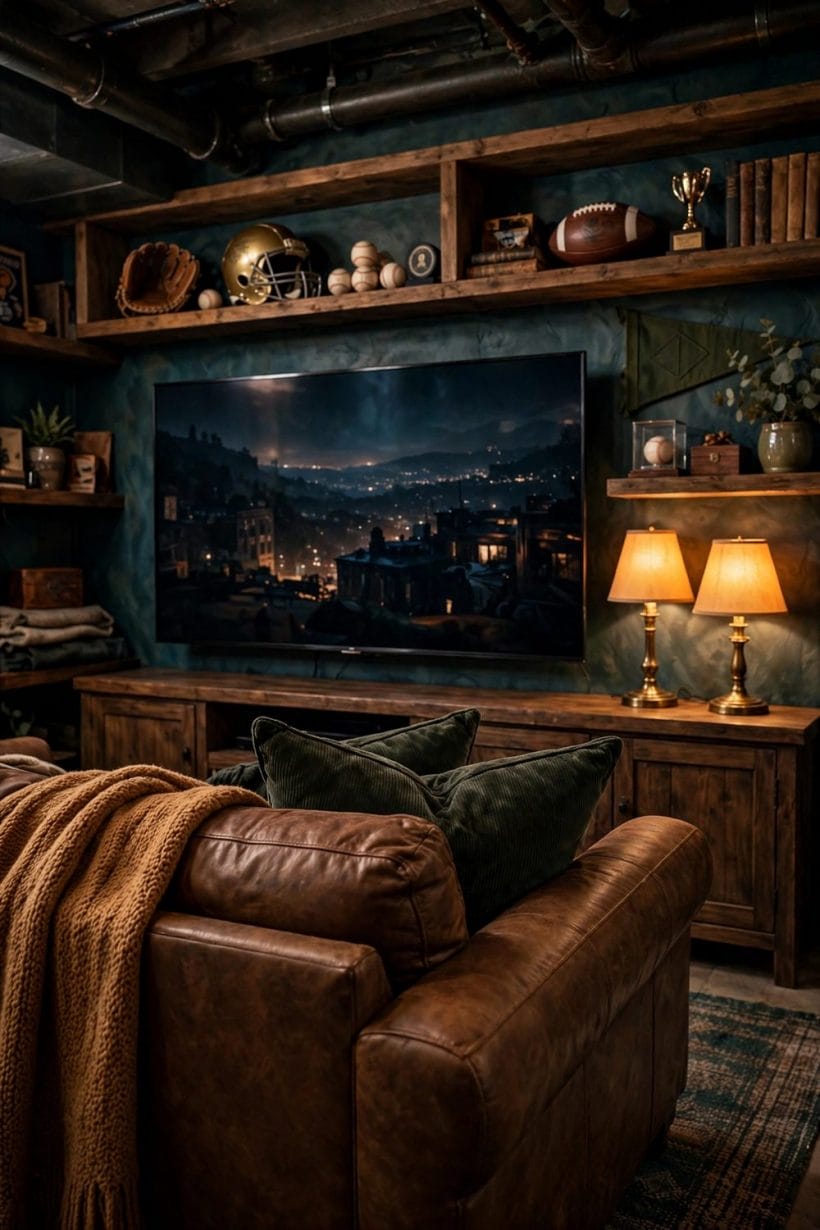
A basement’s one true shortage is daylight, and layered light is the cure: something for the whole room, something for the task, something for the mood. Warm tones throughout keep below-grade light feeling like evening in a good pub rather than noon in a car park.
9. Layer Ambient, Task and Accent Light
Ceiling light for arrival, lamps for reading and cards, low accent light for atmosphere: three layers, switched separately. Any one alone flattens a basement; together they let the room change mood with the evening.
10. Warm Bulbs Throughout
Keep every bulb in the warm range and the cave glows instead of glaring. Mixed colour temperatures make a small room feel unsettled; one warm family of light ties bar, screen and seating into a single place.
11. Dimmers for Movie Mode
Fittings you can dim turn the same room from games-bright to cinema-dark in seconds. Choose dimmable lamps and bulbs from the start, and the lighting follows the night instead of fighting it.
12. LED Strips Behind Shelves and Screens
A hidden strip behind the screen, the bar shelves or the ceiling edge washes the wall with glow and depth. It is the cheapest atmosphere in the basement and the detail guests always ask about.
13. Table and Floor Lamps at Seat Height
Light that lands beside the reader, not above them: table lamps on side units, a floor lamp behind the reading chair. Pools of local light make deep seating feel intimate and keep the ceiling’s darkness friendly.
14. Sconces Where Ceilings Are Low
Wall sconces spread light without eating headroom or demanding a statement pendant. A pair flanking the screen or the bar lifts the walls, softens shadows and suits the cave’s low, warm mood perfectly.
15. Light the Stairs Properly
The stair down deserves its own care: a fitting on the flight, a switch at both ends, no glare in the eyes. A cave that begins with a confident descent feels like a destination, not a cellar.
16. Blackout for the Screen Corner
Where a basement window or stairwell spills light across the screen, fit a blind or heavy curtain for film hours. Controlled darkness is what lets a modest projector or television perform like a cinema.
4. The Big Screen Corner
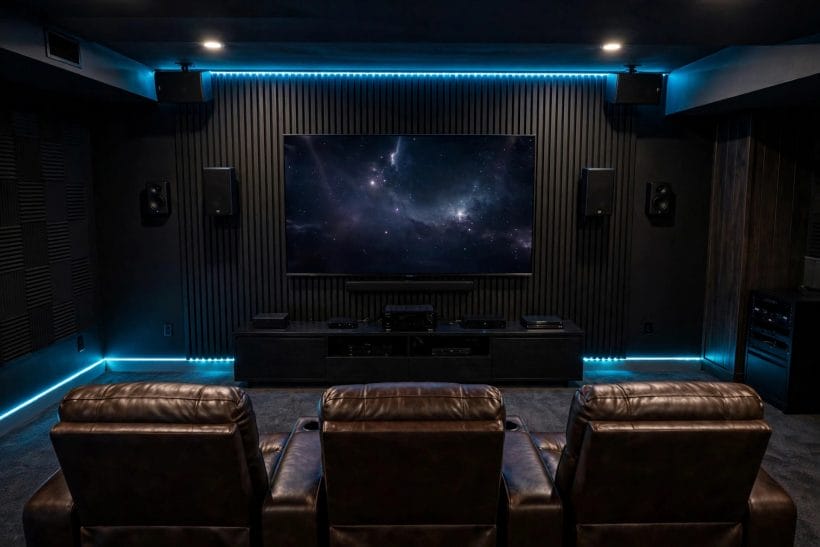
The screen is the cave’s altar, and it earns the best wall, the darkest paint and the most comfortable seats. The dedicated room layouts in basement home theater ideas go further into full cinema builds; here the screen shares the room gracefully with everything else.
17. Screen Size Matched to the Room
Choose the screen for the viewing distance your room actually offers, not the largest the wall accepts. A right-sized picture fills the view comfortably; an oversized one turns every film into a tennis match for the eyes.
18. Dark Paint Around the Screen
A deep colour on the screen wall — charcoal, ink blue, forest — kills reflections and makes the picture glow. In a basement the darkness reads as atmosphere everywhere else in the room too.
19. Sound-Softening Panels and Curtains
Soft surfaces calm a basement’s echo: fabric panels, heavy curtains, upholstered furniture, a thick rug. The film sounds warmer, voices stop bouncing, and the rooms above hear less of the action.
20. A Media Unit With Closed Storage
Consoles, players and the tangle that feeds them belong behind doors in a low media unit. Ventilation matters for warm kit; a slatted or open-backed unit keeps air moving while the front stays calm.
21. Tiered Seating From a Simple Platform
A low platform under the back row lifts sightlines over the front heads and makes even a small screen feel cinematic. Keep it simple, carpet it, and the second row becomes the seats everyone wants.
22. Recliners for Films, Sofas for Lounging
Recliners serve the screen; a deep sofa serves the conversation. If space forces a choice, a sofa with a chaise end splits the difference — upright for the match, stretched out for the film.
23. Keep Cables Hidden and Ventilated
Route cables in trunking or behind the unit so the screen wall stays clean and nothing trips a games night. Leave air around warm equipment, and label the plugs once — future you says thanks.
24. A Snack Shelf Behind the Seats
A narrow shelf or console behind the seating row holds drinks, snacks and remotes within reach. It keeps laps free, spills off the upholstery, and gives the back row the ledge every cinema seat deserves.
5. Games Tables and Play Space
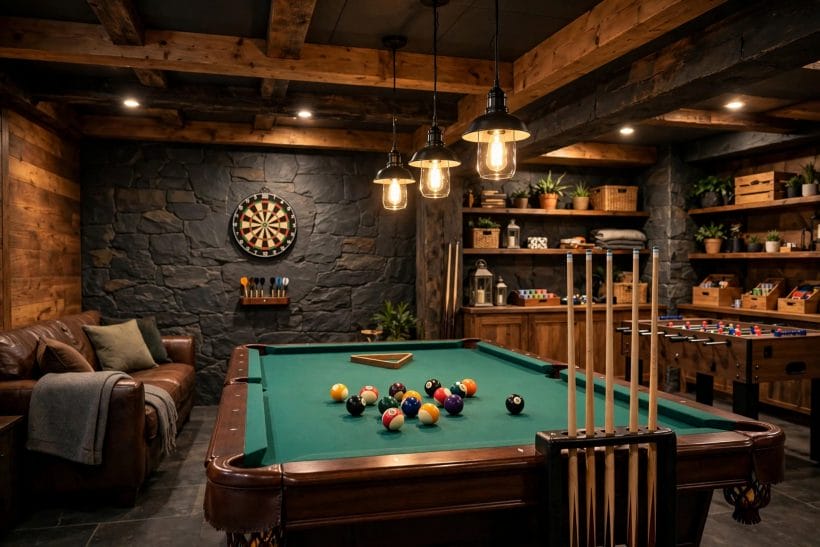
Games give the cave its second life: a table to gather around, a board on the wall, scores kept and argued over. The wider game room ideas cover dedicated rooms; in a small basement, choose fewer games and give each one proper room to be played.
25. A Pool Table With Room to Play
A pool table earns its place only if players can cue freely on every side; in a small basement, a smaller table played properly beats a full-size one played awkwardly. Centre it under its own light.
26. A Dartboard on a Protected Wall
Mount the board where stray darts meet a cabinet, cork or a plain painted wall — never a doorway’s swing. A cabinet with scoreboards inside the doors keeps the wall tidy and the rivalry official.
27. A Card and Board-Game Table
One honest table with comfortable chairs hosts poker nights, board games and jigsaws alike. A felt or timber top, a lamp above, and storage beneath for the games themselves: simple, social, endlessly used.
28. A Retro Arcade Corner
A single arcade cabinet or a small screen with classic games turns a spare corner into a magnet. Keep it to one or two machines — the corner should flavour the cave, not swallow it.
29. Table Football, Chosen Well
If a second table game calls, table football answers: compact, loud in the best way, and playable in minutes. One table game plus the pool table is plenty for a small basement’s floor.
30. A Scoreboard and League Wall
Chalkboard, whiteboard or a framed league table by the games end: the running record of who owes whom a rematch. It costs almost nothing and gives the room its mythology.
31. Storage for Cues, Balls and Boards
Cues on a wall rack, balls in a cabinet, board games on one labelled shelf. Games that live in the open get played; games in a mystery cupboard get forgotten — design the storage where you stand.
32. A Rug That Defines the Games Zone
A hard-wearing rug under the games area sets its boundary, softens dropped balls and chairs, and absorbs the noise of a close finish. Choose a flat weave that chairs and feet glide over.
6. Deep Seating and the Lounge Layer
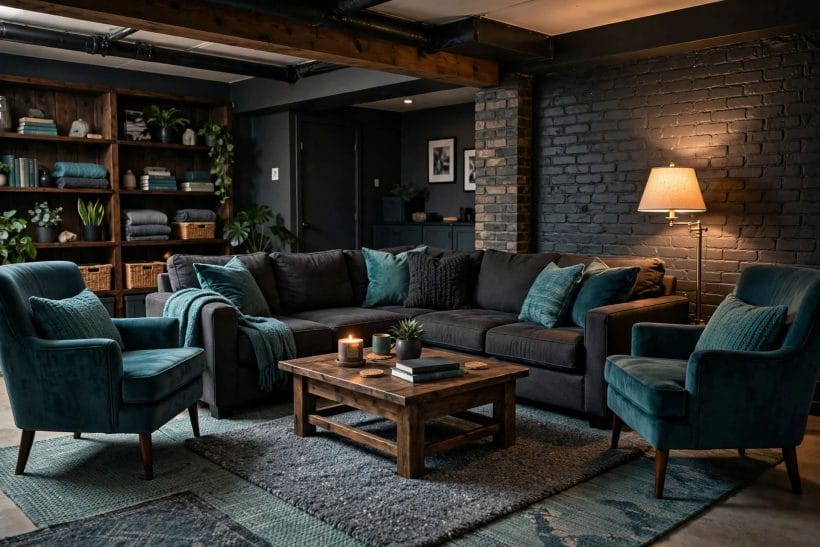
Comfort is the cave’s whole argument: seating deep enough to disappear into, fabrics that warm a below-grade room, and a layout that lets people talk as easily as watch. This is the layer that decides whether the basement is visited weekly or daily.
33. A Deep Sofa as the Anchor
Start with the deepest, softest sofa the budget and the stairwell allow, and arrange everything else around it. In a small cave one great sofa beats four clever chairs every evening of the week.
34. Leather That Ages Well
Leather suits the cave: warm to sit on, easy to wipe after snacks, and better-looking with every year of use. Brown and tan tones deepen the room’s glow and pair naturally with timber and stone.
35. Armchairs That Swivel to the Action
A pair of armchairs that turn between the screen, the games and the conversation keeps every seat in the room involved. Swivels earn special love in small spaces where furniture cannot keep moving.
36. A Chaise or Daybed Corner
One stretched-out seat — a chaise end, a daybed with cushions — gives the cave its nap position and its reading throne. Tuck it along a wall where the lamplight falls and it will rarely be empty.
37. Ottoman Footrests and Trays
A big ottoman serves feet, seats and trays in turn, and softens a room full of tables and edges. Choose one with storage inside and the blankets live exactly where they are needed.
38. Cushions and Throws for Warmth
Basements run cool, so layer the seating with cushions and throws in wool, fleece and heavy cotton. The layer is comfort, colour and acoustics in one — and it all washes when games night gets enthusiastic.
39. A Sofa Bed for Sleep-Overs
A decent sofa bed turns the cave into the house’s guest room of last resort — and first choice for teenagers. Keep spare bedding in the under-stair cupboard and the transformation takes two minutes.
40. Bean Bags and Floor Cushions for Overflow
For the nights the whole crowd descends, bean bags and big floor cushions multiply seating without furniture. They stack in a corner by day and scatter exactly where the action is by night.
41. Seating That Faces the Conversation
Angle some seats toward each other, not only at the screen. A cave arranged purely for viewing empties when the credits roll; one arranged for talk keeps its company till late.
7. Display, Memorabilia and Personal Themes
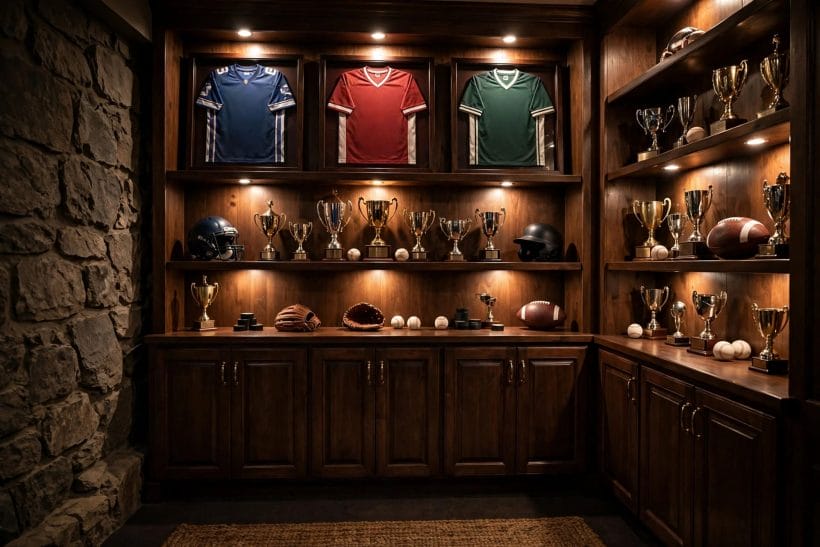
A man cave is a self-portrait: the teams followed, the trips taken, the collections built over years. Displayed well, the personal layer makes a small basement feel like a club room; displayed carelessly, it is clutter with good stories. Edit kindly and light what matters.
42. Framed Jerseys and Team Colours
Frame the shirts that matter and hang them as one composed group, lit like the gallery they deserve. Team colours can even set the room’s accent palette — worn with pride, applied with restraint.
43. Trophy and Memorabilia Shelves
Give trophies, medals and signed pieces a dedicated shelf run rather than scattering them across every surface. Grouped, they read as a collection; scattered, they read as storage that escaped.
44. A Gallery Wall of Posters and Prints
Film posters, gig prints and favourite photographs in matched frames make a wall that rewards a second look. Lay the arrangement on the floor first, keep frames consistent, and let the images vary.
45. Lit Cabinets for Collections
Glass-front cabinets with a strip of warm light turn models, bottles or figures into a museum corner. In a dim basement, lit display does double duty as the room’s most flattering accent lighting.
46. Vinyl, Books and Board-Game Shelves
Records by the player, books within reach of the reading chair, games where the table stands: shelving placed by use, not by leftover wall. The cave’s culture should be browsable from every seat.
47. Instruments on the Wall
Guitars and instruments hung properly are art that also gets played. Wall mounts keep them safe from games-night traffic, and a small amp corner turns the display into the evening’s second act.
48. Maps, Signs and Vintage Finds
Old maps, enamel signs, travel finds and family photographs give the cave a past. Mix them among the sports and screen pieces and the room feels collected over time rather than bought in a weekend.
49. One Theme, Edited Hard
Pick the room’s one strong theme — a team, an era, a hobby — and let everything else support it quietly. The caves that impress are edited; the ones that exhaust tried to say everything at once.
8. The Bar Corner and Drinks Station
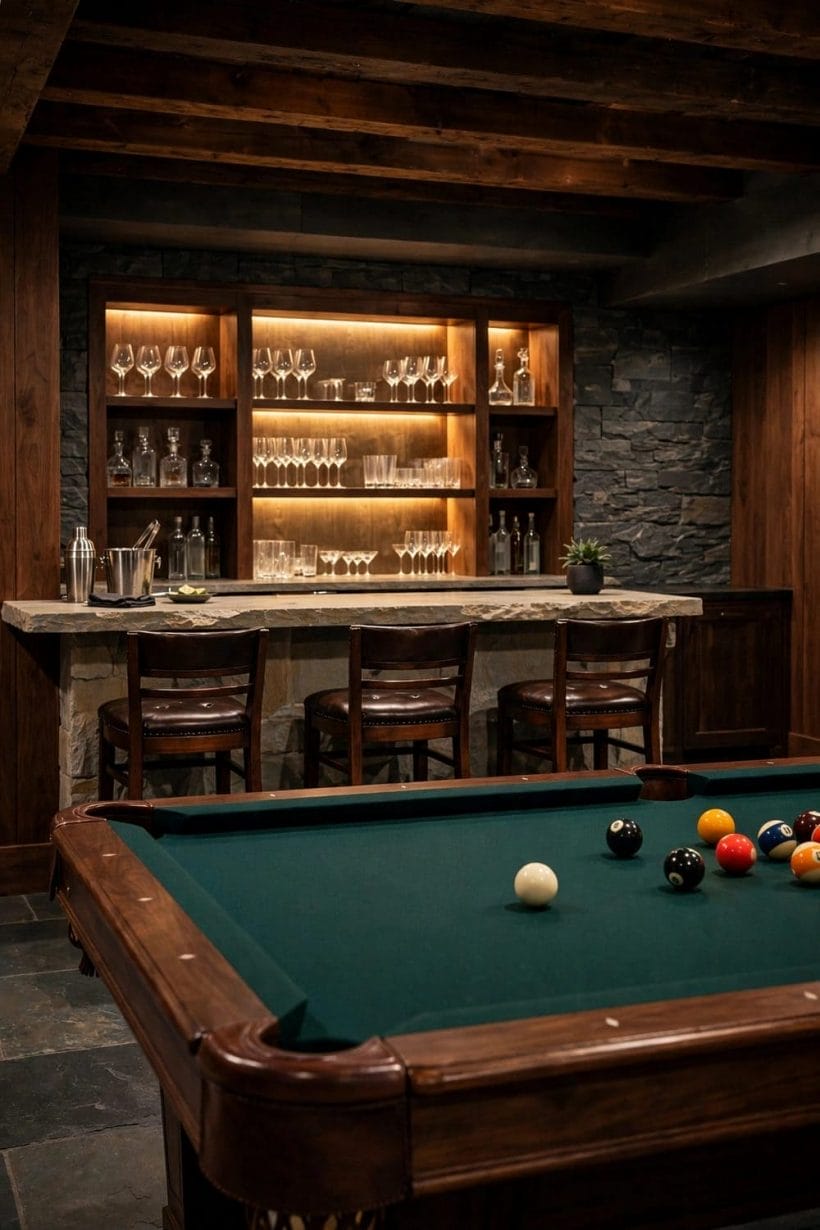
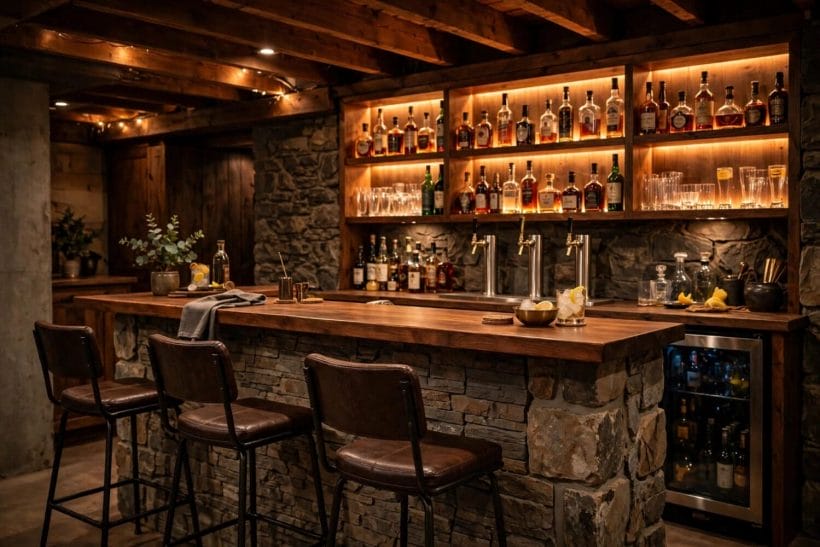
The bar corner is the cave’s social engine — a place to pour, lean and talk between games. The plumbed and unplumbed options in basement bar ideas cover dedicated builds; here the corner stays simple, stylish and mostly dry-barred.
50. A Dry Bar Along One Wall
No plumbing required: a counter, shelves above, a fridge below and everything within arm’s reach. A dry bar delivers the ritual and the look of a bar while keeping the project firmly in furniture territory.
51. Open Shelves With Backlighting
Glassware and bottles on open shelves, warmed by a hidden light strip, give the bar its glow. Keep everyday pieces low and the precious ones high, and dust becomes a small weekly ritual.
52. A Fridge Under the Counter
A compact fridge under the bar counter ends the trek upstairs for cold drinks. Leave the ventilation its maker specifies, and let it hold mixers and snacks as well as the obvious.
53. Stools That Tuck Away
Bar stools that slide fully under the counter keep the small room’s floor clear when the bar is closed. Backless reads sleeker; a low back wins on long evenings. Choose for your crowd.
54. A Coffee and Drinks Station
Not every round is a drink drink: a kettle or coffee maker, mugs on hooks and tea beside the glasses make the corner useful from morning matches to midnight films. One station, every hour.
55. Glassware on Display, the Rest Behind Doors
Show the beautiful glasses; store the everyday clutter behind the counter’s doors. The bar face stays composed for guests while the working mess keeps its own tidy territory out of sight.
56. A Serving Counter Between Zones
Where the bar sits between the games and the seating, a counter serves both sides — drinks one way, snacks the other. The host stands at the room’s crossroads and nobody queues in a doorway.
57. When a Sink Earns Its Place
A small sink helps a busy bar, but plumbing a basement is a bigger project than furniture — plan it with the whole layout, use qualified trades, and only add it if the corner truly hosts often.
9. Flooring and Moisture-Smart Finishes
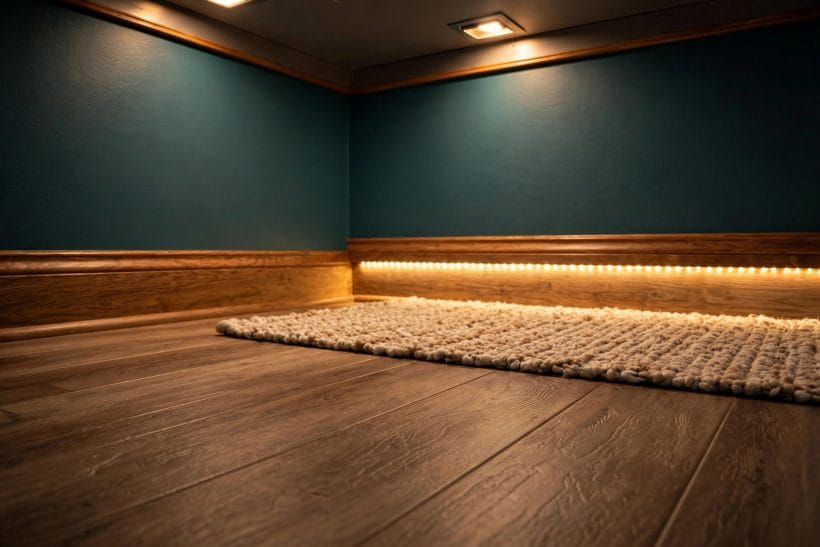
Below-grade rooms live closer to the ground’s moisture, so finishes are chosen for comfort and common sense: flooring made for basements, walls finished to suit the room, and air that keeps moving. Everything here is general principle — your own basement’s condition decides the specifics.
58. Flooring Made for Below-Grade Rooms
Vinyl planks, tiles and basement-rated laminates handle cool, occasionally damp floors with good grace, in general terms, and warm finishes mimic timber convincingly. Carpet tiles add softness and swap out individually if one gets marked.
59. The Layer Beneath Matters
What goes under basement flooring — a suitable underlay or membrane made for the purpose — does much of the comfort work: warmer underfoot, quieter, kinder to the finish above. Follow the flooring maker’s basement guidance.
60. Rugs for Warmth Over Hard Floors
A big rug over hard flooring gives the seating zone its warmth and its boundary. Choose washable or outdoor-tough weaves in the traffic lanes and the cave shrugs off muddy shoes and spilled drinks.
61. Walls Finished to Suit the Room
Paint and panelling made for interior walls in good condition suit most finished basements; where a wall feels cold, lined or panelled finishes add comfort. Anything beyond cosmetics belongs to a proper survey of the wall itself.
62. Ventilation That Keeps Air Moving
A basement that airs regularly stays fresh: use the windows and vents the room has, keep air paths unblocked by furniture, and let the heating and cooling the house has reach the room properly.
63. A Dehumidifier as Part of the Plan
In humid seasons a dehumidifier quietly keeps the cave’s air comfortable and its fabrics fresh, in general terms. Give it a planned spot with power and drainage rather than tripping over it nightly.
64. Keep Soft Furnishings Off the Floor
Store spare cushions, blankets and games on shelves or in lidded boxes rather than on the basement floor. The habit keeps the soft layer fresh and makes the seasonal clean-out a smaller job.
65. Watch the Corners: Seasonal Checks
A walk-around each season — corners, behind the big furniture, along the outside walls — catches small changes early while they are still small. It takes minutes and suits every basement ever built.
66. Ceiling Finishes That Keep Access
Where pipes and valves run overhead, a ceiling that allows access — panels or sections that lift — saves future grief. Paint beams and boards dark and the necessary hardware disappears into the cave’s mood.
10. Costs and Practical Details
A basement cave’s budget follows the room’s condition, the amount of building work versus furniture, and the finishes chosen — in general terms, the less the room needs structurally, the more the money shows on the screen and the sofa. A cave planned on paper first rarely wastes money twice. Final practical checks before the first film night.
67. What Drives the Cost of a Cave
In general terms: the state of the room at the start, flooring and wall finishes, electrical and lighting work, and then the visible layer of screen, seating and bar. Small rooms keep every driver modest — size is the budget’s friend.
68. Headroom and the Honest Layout
Measure the ceiling honestly and plan furniture, lights and the screen around the real height. Low beams and bulkheads become features when the layout respects them and hazards when it pretends they are elsewhere.
69. Stairs, Doors and Getting Furniture Down
Before ordering the great sofa, walk its route: stair turns, door widths, the angle at the bottom. Basement history is full of perfect furniture that lives in the garage — measure the journey, not just the room.
70. Heating and Cooling a Below-Grade Room
Basements hold a steadier temperature than the rooms above; in general terms, modest heating for winter evenings and the house’s existing cooling usually suffice. A rug, a door that closes and warm lighting do the rest.
71. Sound to the Rooms Above
Soft finishes, a closed door and sensible volume keep the peace with the household upstairs. The cave that respects bedtime gets used every night; plan the sound layer as part of the welcome.
72. Egress and Safety in General Terms
If the cave doubles as a sleeping space, check what your local rules ask of basement rooms used that way — windows, alarms and escape in general terms — and keep detectors fitted and tested like any other room.
73. Permits and Local Rules
Turning storage space into living space can come with local requirements that vary widely; a quick check with the local authority before building work starts keeps the project smooth. Furniture-only caves rarely trouble anyone.
74. Power Points Where the Zones Need Them
Screen wall, bar fridge, lamps, chargers: list the cave’s electrical appetites zone by zone before finishes close the walls. Any new wiring belongs to a qualified electrician — the plan is yours, the circuits are theirs.
75. A Cleaning and Airing Rhythm
Weekly: glasses, surfaces, the rug shaken out. Seasonally: air the room thoroughly, wash the throws, check the corners. A small cave kept on a light rhythm never needs a rescue mission.
Final Considerations
A small basement man cave succeeds on warmth: warm light, deep seating, a screen that glows and finishes chosen to keep the room comfortable below grade. Zone it clearly, light it in layers, and let the personal layer — teams, trips, collections — make it unmistakably yours. None of it needs a big basement: the smallest caves are often the most loved, because every corner in them was chosen on purpose.
Finish the practical layer once — flooring, air, power, the route down the stairs — and the room asks nothing more than company. If a bathroom joins the plan later, basement bathroom ideas covers that project; for now, pour something, dim the lamps, and start the film.

0 Comments