

Few features change a room like a fireplace faced in real stone. It brings weight, texture and a sense of permanence that paint and plaster cannot copy, and it suits everything from a farmhouse sitting room to a compact cabin corner. These ideas walk through surrounds, mantels, materials and cosy styling, so you can plan a hearth that fits your room, your budget and the way you actually live.
1. Stone Fireplace Ideas at a Glance
Start by deciding what job the fireplace does in the room. Is it the main heat source, a weekend pleasure, or mostly a visual anchor that happens to light on cold evenings? That answer shapes the size of the surround, the depth of the hearth and how much of the wall the stone should claim. A stone fireplace that runs floor to ceiling makes a tall room feel grounded, while a lower, wider surround suits a long, low space and leaves wall above for art or a mirror.
| Decision | Popular Directions | What To Think About |
|---|---|---|
| Stone type | Stacked stone, river rock, limestone, slate, fieldstone, stone veneer | Weight, cost, local availability and how formal you want the room to feel |
| Surround shape | Full-height chimney breast, simple framed opening, corner build | Ceiling height, room proportions and where furniture needs to sit |
| Mantel | Reclaimed timber beam, stone shelf, slim metal, no mantel at all | Heat clearances in your local code, styling space and cleaning |
| Hearth | Raised stone hearth, flush slab, extended bench hearth | Floor protection, seating value and trip hazards in busy rooms |
| Finish style | Flush mortar joints, over-grouted rustic joints, dry-stacked look | How much texture and shadow you want the wall to show |
| Styling | Layered textiles, wood storage, baskets, warm lighting | Balancing the visual weight of stone with softer elements |
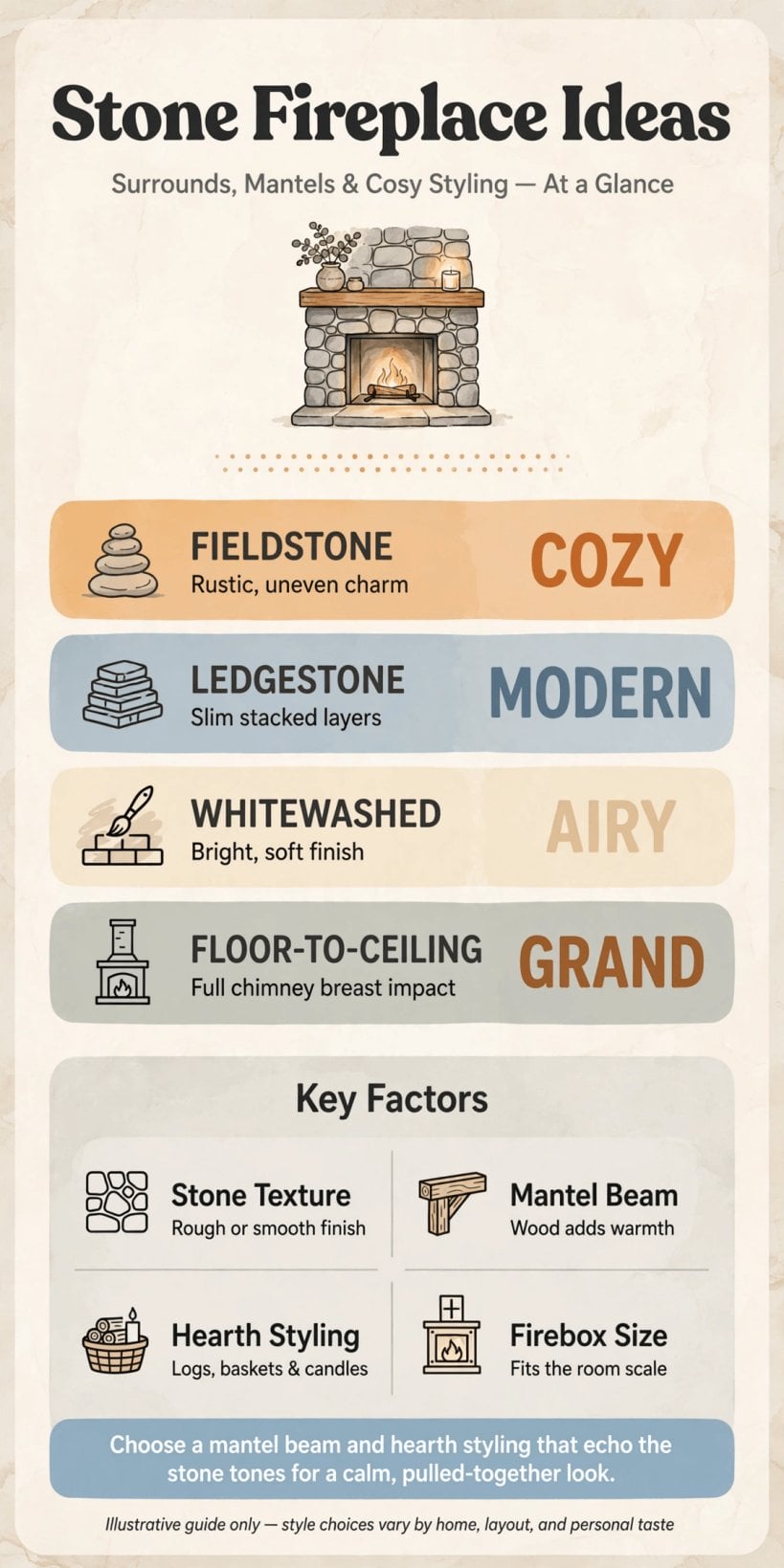
A quick visual guide to the main decisions in this post, from choosing a stone to styling the finished hearth.
2. Floor-to-Ceiling Stone for Maximum Impact
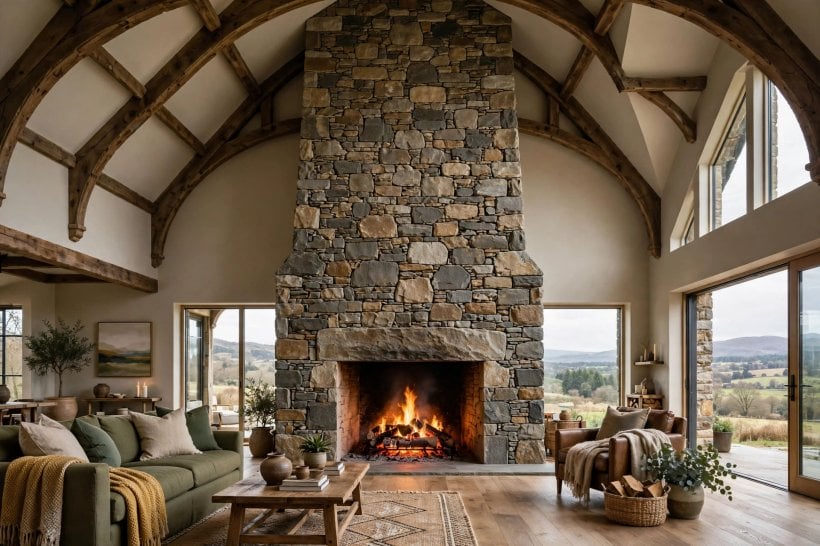
Running stone all the way to the ceiling is the boldest option, and in the right room it is also the most satisfying. The unbroken surface turns the chimney breast into architecture rather than decoration, drawing the eye upward and making ordinary ceiling heights feel grander. It works especially well where the breast already projects into the room, because the stone simply dresses a shape that is already there. Keep the rest of the wall treatment quiet so the stone owns its moment.
With a full-height build, mortar colour does a surprising amount of work. A mortar close in tone to the stone gives a calm, monolithic effect, while a lighter mortar outlines every piece and adds pattern. Decide with a sample panel if you can, because the same stone can look rustic or refined depending on that single choice. Lighting matters too: a pair of wall lights or a picture light washing down the face will pick out texture far better than a central ceiling light alone.
Furniture placement should respect the drama. Keep tall pieces away from the breast, let a low sofa face the fire, and leave breathing room at the sides. In compact homes this approach needs restraint elsewhere, much like the balanced layouts in tiny house living room ideas, where one strong feature carries the room and everything else supports it quietly.
3. Stacked Stone Surrounds With Clean Lines
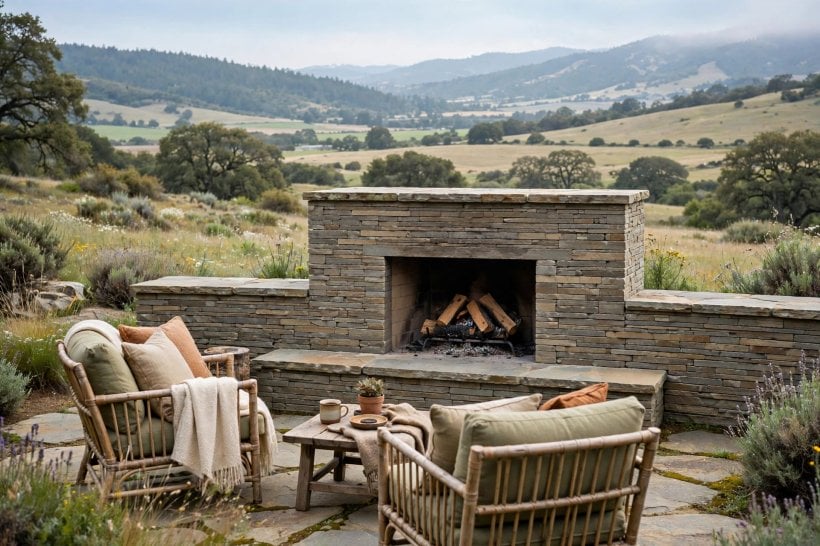
Stacked stone, cut into regular lengths and laid in tight horizontal courses, is the bridge between rustic material and modern room. The texture is unmistakably stone, yet the geometry reads crisp, which is why it pairs so well with simple furniture, plain rugs and uncluttered shelves. Choose narrower pieces for a finer, more tailored effect, or wider ledgestone for a bolder rhythm across the wall.
Because the courses are regular, stacked stone forgives a simple surround shape. Many designs skip a traditional mantel entirely and let the stone run straight past the opening, sometimes with a single floating shelf in dark wood or blackened metal for contrast. That shelf earns its place: it gives you somewhere for a clock, candles or seasonal greenery without breaking the clean lines. Keep styling objects few and fairly large, since small clutter disappears against a busy stone face.
Colour choice decides whether stacked stone feels warm or cool. Honey and rust tones pull a room towards the cosy, while grey and charcoal blends lean contemporary and sit happily with pale sofas and indoor greenery. Whichever direction you choose, carry a thread of the stone colour into another element, such as cushions or a hearth rug, so the fireplace feels connected to the room rather than applied to it.
4. River Rock and Rounded Stone for a Relaxed Feel
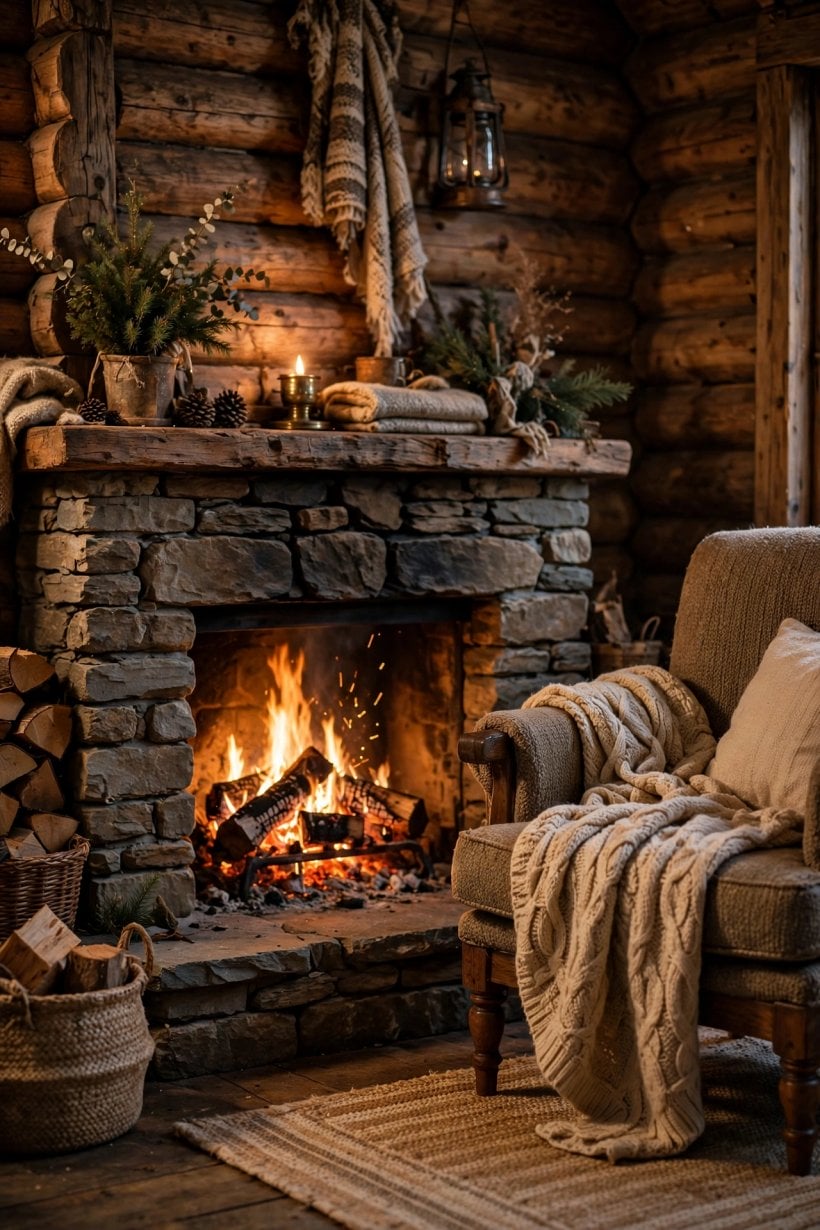
Rounded stones change the mood completely. River rock and softly tumbled fieldstone have no sharp geometry to follow, so the finished surround feels gathered rather than built, as if the stones were collected from the land around the house. That character suits cabins, lake houses, farmhouses and any room where straight lines are in short supply. It is also a forgiving style for irregular openings, because the organic shapes absorb small imperfections gracefully.
With rounded stone, jointing becomes the craft. Wider mortar joints in a warm, sandy tone give the classic cottage look and make the stones read individually, while tighter joints create a denser, more contemporary cobble effect. Think about scale before you commit: very large rounded stones need a big breast to look right, whereas smaller cobbles suit a modest fireplace in a smaller room and keep the proportions friendly.
Styling a rounded-stone hearth is about softness answering softness. A chunky woven throw, a basket of logs with the bark still on, and seating with rounded arms all echo the shapes in the wall. This is the same instinct that makes colorful tiny house interior schemes work, where texture and warmth do as much as colour, and it is why these fireplaces feel welcoming even when the fire is not lit.
5. Choosing and Placing the Mantel
The mantel is where stone meets the hand and the eye, and getting it right lifts the whole fireplace. A solid timber beam, especially one with saw marks, knots or an earlier life in another building, brings warmth and history against cool stone. A stone shelf keeps the palette tight and suits formal rooms, while a slim metal shelf adds a quiet industrial note. Some of the calmest designs have no mantel at all, and in a small room that absence can be a relief.
Proportion is the mantel’s first rule. It should be wide enough to balance the opening below it and deep enough to hold the objects you actually want there, but not so deep that it shadows the fire or crowds the room. Height matters just as much: hang it where art or a mirror above will sit comfortably, and always respect the clearance distances your local building code and the fire or stove manufacturer require between a combustible mantel and the heat source. Those clearances are not a styling choice, so check them before any timber is cut.
Once the mantel is up, style it in odd numbers and varied heights, then step back and remove one thing. A mantel that holds a mirror, two candlesticks and one plant nearly always beats a crowded shelf. Leave it breathing room, as the restful schemes in tiny house bedroom ideas do with surfaces, and the fireplace will look composed rather than collected.
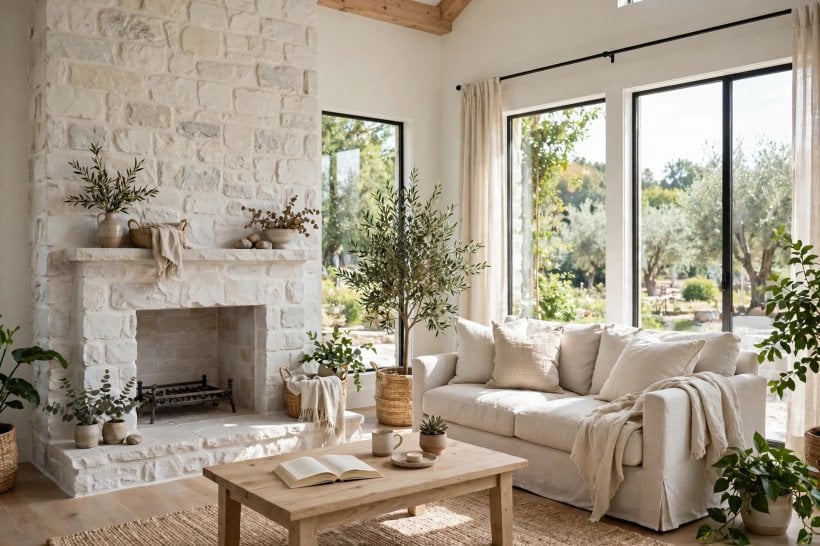
6. Hearths, Raised Benches and Floor Protection
The hearth is the fireplace’s foundation, visually and practically. A raised hearth in a single slab of slate, bluestone or a stone that tones with the surround gives the fire a stage, protects the floor from sparks and heat, and often becomes the most used seat in the house. An extended bench hearth, running wider than the surround on one or both sides, adds perch seating and a natural home for the log basket, which is genuinely useful in a room short on furniture space.
Flush hearths suit a sleeker brief. A slab set level with the surrounding floor keeps sightlines clean and removes any trip edge, which matters in open-plan rooms and homes where small children or unsteady feet move around the fire. Whichever height you pick, the hearth material must be non-combustible and sized to the requirements that apply to your appliance and local code, extending far enough in front and to the sides to do its protective job properly.
Think about the junction with the main floor, too. Stone hearths meet timber, tile and carpet differently, and a neat metal or stone trim strip can tidy the transition. If your floors are being planned alongside the fireplace, the practical thinking in how to build your own tiny house guides, where every junction is planned before work starts, is exactly the mindset a hearth deserves.
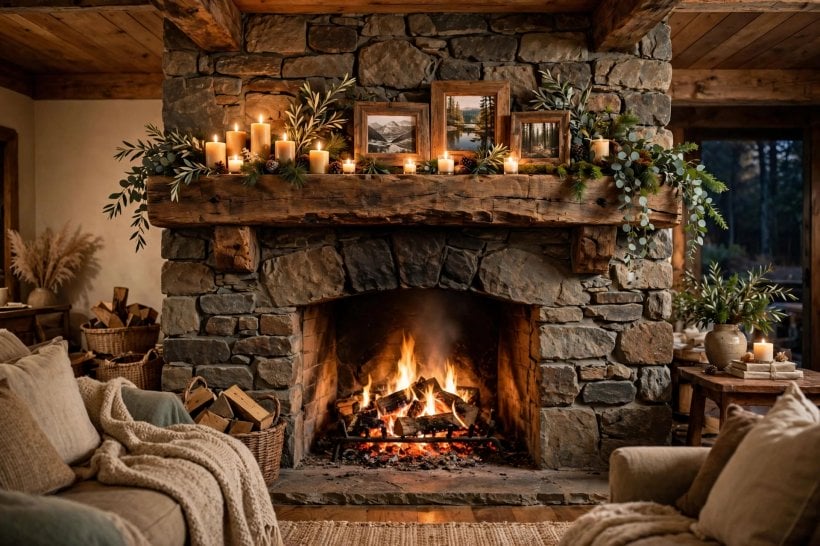
7. Stone Veneer and Lighter-Weight Options
Full-thickness stone is heavy, and not every wall, floor or budget can carry it. Stone veneer answers that problem in two forms: thin slices of real stone, and manufactured pieces moulded from casts of real stone. Both fix to a prepared backing rather than needing the footing and depth of a traditional masonry build, which opens up fireplaces on upper floors, in renovations where the breast is shallow, and around existing fireboxes that were never built for the weight of solid stone.
The quality of a veneer job lives in the details. Corners matter most, because wrapped corner pieces are what persuade the eye that the wall is solid. Mortar joints should be consistent, cuts should be hidden at edges where possible, and the backing must be prepared exactly as the veneer maker specifies, since adhesion is the whole structure. Around a working fire, also confirm that the product and its backing are rated for the heat in that position, and have the flue and firebox side of the work checked by a qualified installer.
Veneer is also a kind way to update a tired brick fireplace without demolition, a transformation as effective in its own way as the compact makeovers celebrated in tiny barn house interior projects. Choose the stone pattern first, live with a sample board against your wall for a few days of changing light, and only then commit to the full order.
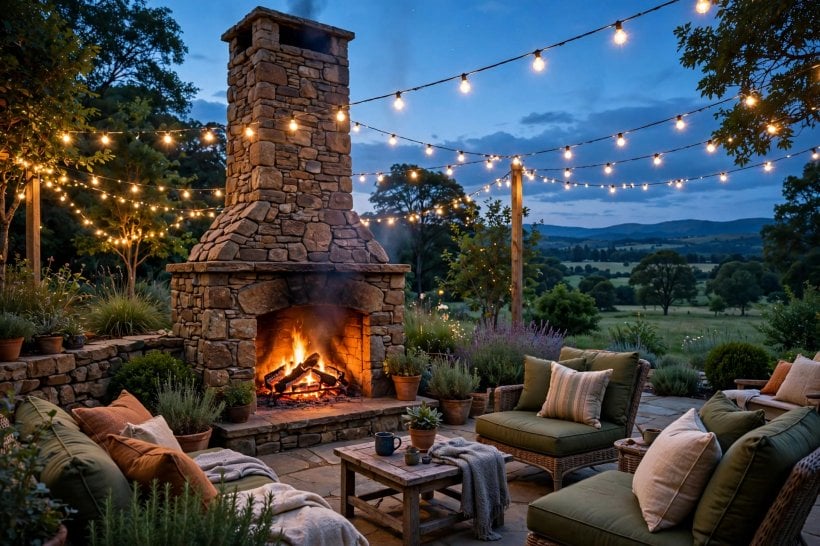
8. Corner Fireplaces and Small-Room Solutions
A corner fireplace earns its place where wall space is scarce or where the main wall is already spoken for by windows, doors or the television. Angling stone across a corner softens the room’s geometry, creates a natural gathering point and can make an awkward junction feel intentional. Keep the surround modest in depth so it does not steal floor area, and consider carrying the stone only partway up, finishing with a shelf that doubles as display space.
In small rooms, every decision doubles in importance. A lighter stone, tighter joints and a simple opening will keep the feature generous without overwhelming the space, while a dark, heavily textured build can swallow a small room whole. Mirrors above the mantel, pale walls beside the stone and furniture with legs that let the floor show through all help the room breathe. Seating should angle towards the fire rather than lining the walls, which makes conversation and warmth share the same centre.
Compact homes prove how much atmosphere a small hearth can hold. The snug, efficient planning behind bedroom interior design for tiny houses and the clever wet-room layouts in tiny house bathroom ideas apply here too: measure honestly, choose the smallest surround that still looks generous, and let one feature, the fire, be the room’s celebration.
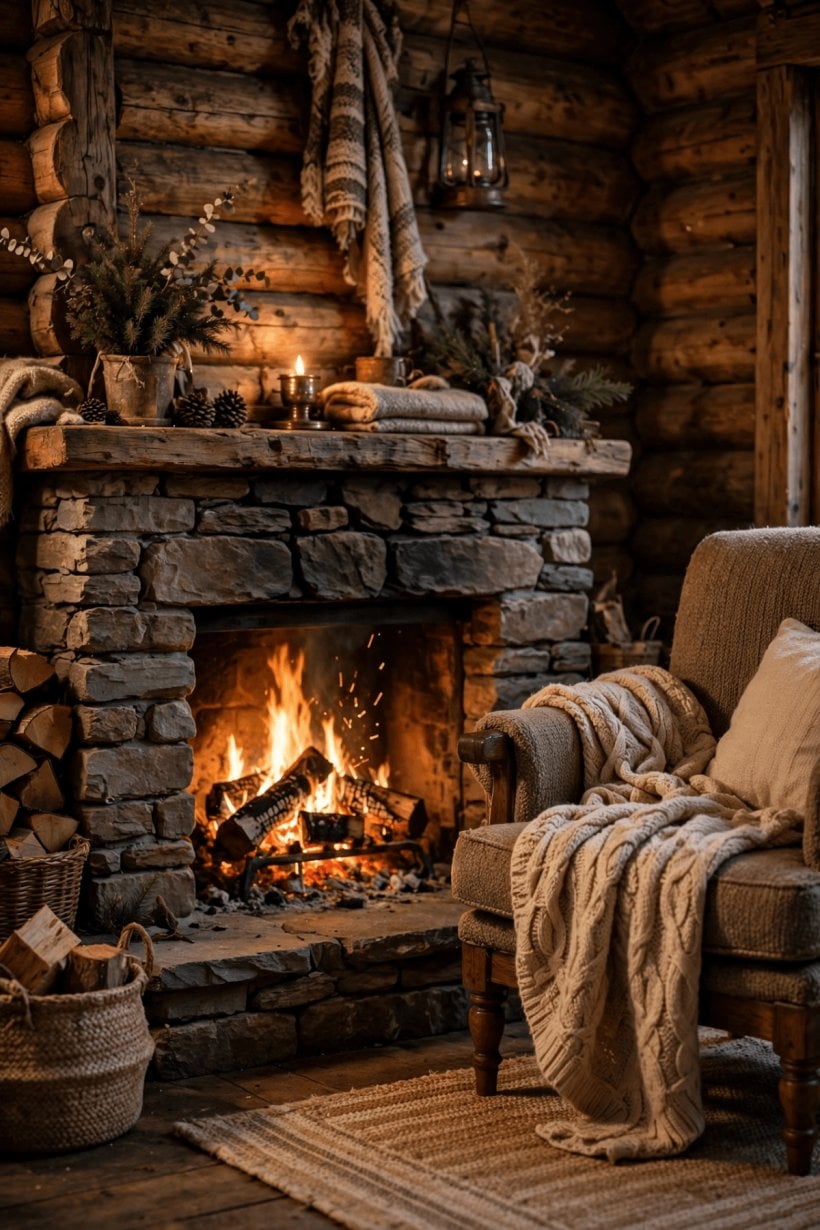
9. Cosy Styling Around Stone
Stone is cool, hard and visually heavy, so the styling around it should be warm, soft and light on its feet. Textiles do the heavy lifting: a deep-pile rug in front of the hearth, cushions in wool and linen, and a throw draped where a hand naturally falls will soften the whole composition. Keep colours drawn from the stone itself, picking out its warmer flecks in your fabrics so the scheme feels gathered from the wall rather than imposed on it.
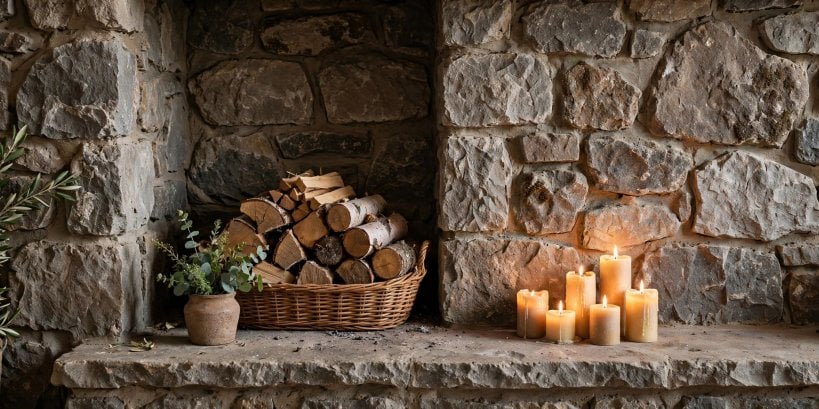
Wood is stone’s natural partner. A log store built into the side of the surround, a simple basket of split logs, or a timber coffee table all answer the mineral surface with something grown. Living green helps too: a trailing plant on the mantel or a tall branch in a floor vase breaks the masonry grid with organic lines. Lighting completes the mood. Low lamps at either side of the hearth, rather than one bright ceiling light, will flatter the stone’s texture and keep evenings feeling intimate.
Finally, style for the seasons without rebuilding anything. Greenery and candles in winter, a jug of garden flowers in summer, and a basket of pinecones or a stack of art books in between let the fireplace change character through the year. The exterior thinking in tiny house landscaping ideas makes the same point outdoors: a strong permanent structure, lightly and seasonally dressed, always looks intentional.
10. Costs, Installation and Care
Honest planning beats a hopeful guess, so think about cost in layers. The stone itself is only one part: backing materials, mortar, hearth material, the mantel, any flue or firebox work, and labour all belong in the budget, and professional installation is money well spent where fire, flues and structural weight are involved. Veneer and a modest surround sit at the gentler end of the scale; full-thickness stone, full-height builds and custom hearth slabs ask more of both budget and building. Get itemised quotes, confirm what preparation and making-good are included, and keep a contingency for what an opened-up chimney breast may reveal.
Care, happily, is simple. Dust stone with a soft brush or vacuum attachment, wipe spills promptly, and avoid harsh acidic cleaners that can mark some stones and mortar. Resealing is a periodic job on certain stones and hearth slabs, done to the product maker’s guidance. Have a working chimney swept and inspected on the schedule your local professionals advise, and check mortar joints now and then for cracks that deserve repointing.
Done well, this is a once-in-decades feature rather than a passing trend, so choose stone you will still enjoy when fashions move on. A surround that suits the house, the room and the way you sit in the evening will earn its place every single winter, fire lit or not.
Final Considerations
A great stone fireplace is a balance of material, proportion and restraint. Choose a stone with character you love, shape the surround to the room rather than to a photograph, respect the safety clearances and building requirements that come with any real fire, and then style softly around the strength of the stone. Keep the main keyword of your search, the hearth you gather around, at the centre of every decision, and the result will be a fireplace that anchors the room, warms the household and looks as if it was always meant to be there.

0 Comments