
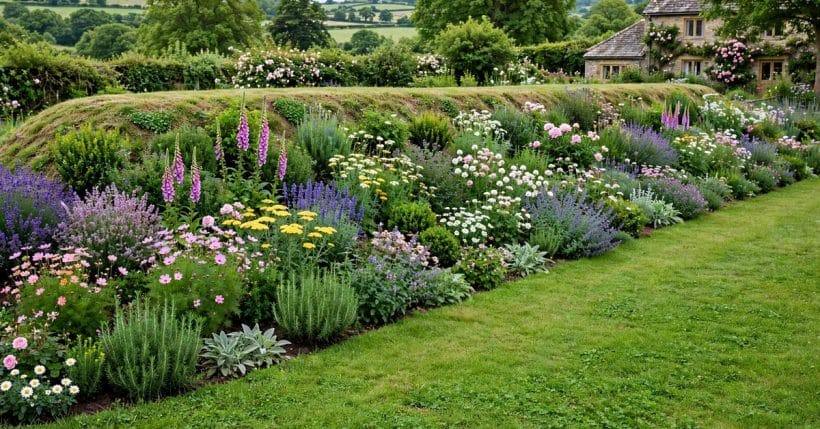
A berm is a raised bank of earth in a garden, shaped into a long, gentle mound and planted so that it reads as part of the landscape rather than as a pile of soil left behind by digging. Walk through a garden that uses one well and you may not notice it at first as a separate feature at all. You notice the effect instead: a border that rises softly above the lawn, a shrub that sits a little higher than its neighbours and catches the light, a view across the garden that feels layered rather than flat. That quiet effect is the whole point of a berm. It gives a flat garden a sense of shape and height without a wall, a fence or any hard structure, and it does so with soil and plants alone.
This guide explains the berm as a garden feature in its own right: what it is, the forms it can take, where it sits well, how it is planted, how it differs from related features such as raised beds and retaining walls, and how it is looked after through the seasons. It is written in general terms, as a way of understanding the feature and judging whether it suits a garden, rather than as instructions for building one. A berm that changes the level of a garden in any substantial way is work to discuss with a landscape professional, who can judge the ground, the setting and the planting for that particular place.
1. What a Berm Is
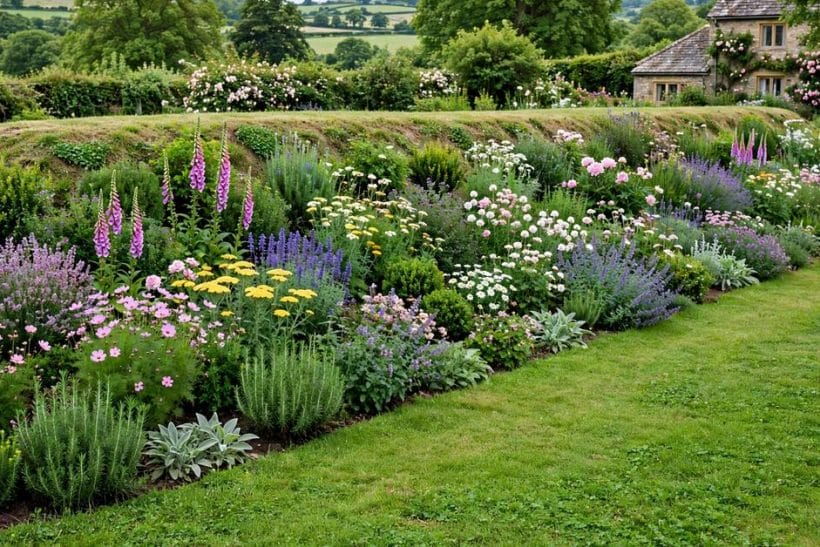
A berm is a raised area of ground formed from earth and finished with a soft, rounded profile. Its top is usually a broad, gentle crest rather than a sharp ridge, and its sides fall away in easy slopes that meet the surrounding ground without a hard edge. Once it is turfed or planted, the berm looks like a natural undulation in the garden, a place where the ground itself swells upward for a stretch and then settles back down again. That natural look is deliberate. A berm borrows its language from rolling countryside, where the ground rises and falls without straight lines or corners, and it brings a small piece of that rhythm into a garden that would otherwise be level from boundary to boundary.
The feature is defined by its shape and its planting rather than by its size. A berm can run along a boundary, curve through an open lawn, or form a soft backdrop behind a border. It can carry a single specimen shrub, a drift of grasses, a mixed planting of perennials, or a small tree with groundcover beneath it. What makes it a berm, rather than simply a raised patch of soil, is the way the ground is shaped into a continuous, flowing form and then treated as a planting bed in its own right, with plants chosen for the crest, the slopes and the base, each position offering slightly different conditions of light, exposure and moisture.
It is worth being clear about what a berm is not. It is not a wall, and it carries no structure. It is not a raised bed, which is contained by timber, stone or another edging material and holds its soil within a defined frame. It is not a terrace, which creates level platforms held by retaining edges. A berm is open ground, shaped and planted, and its edges are nothing more than the place where a slope meets the lawn or the path beside it. That openness is both its charm and its discipline: because there is no edging to hold the shape, the shape itself has to be gentle enough to sit comfortably in the garden and to stay planted and tidy with ordinary care.
2. The Forms a Berm Can Take
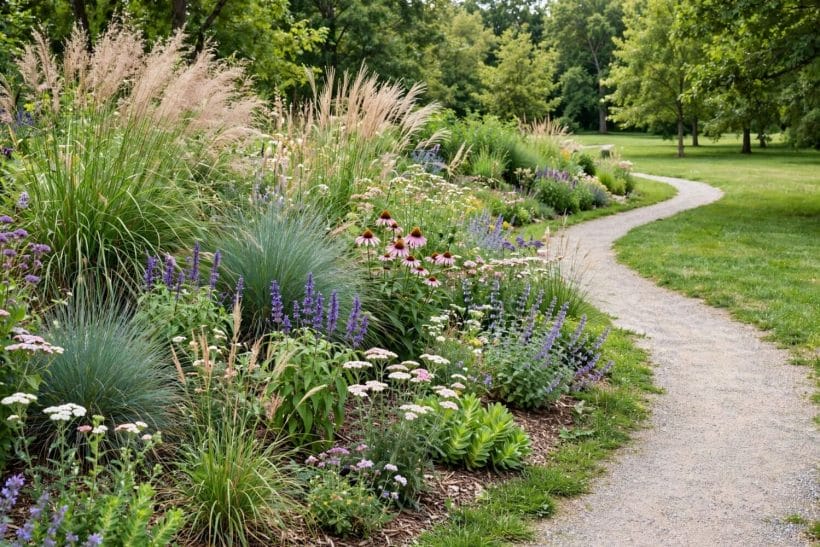
Berms take several recognisable forms, and the form chosen sets the mood of the whole garden. The simplest is the long, low border berm, a raised ribbon of ground that runs alongside a lawn or a path and lifts a planting border above the surrounding level. Seen from across the garden, the border gains presence: shrubs stand a little taller, flowers catch the eye sooner, and the planting reads as a deliberate composition rather than a flat strip against a fence. This is the form most often found in ordinary gardens, because it fits a boundary or a path without taking over the open space.
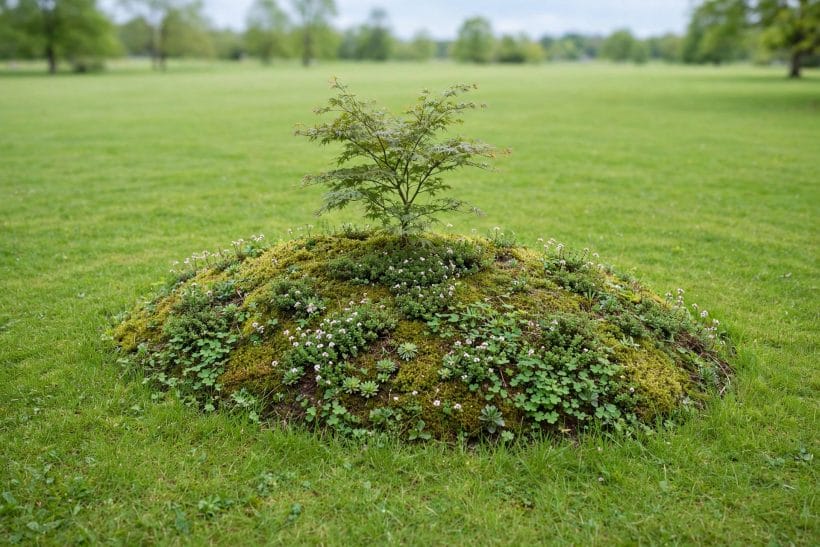
A second form is the island berm, a free-standing mound set within an open area of lawn. An island berm breaks up a large, flat expanse and gives the eye somewhere to rest, much as a group of trees or a specimen shrub would, but with the added interest of changing ground level. Planted with a small tree, a cluster of shrubs or a drift of ornamental grasses, it becomes a focal point that can be walked around and seen from every side. Because it stands alone, its shape matters more than in any other form: a soft, generous curve reads as natural, while a narrow or steep mound can look stranded in the middle of the lawn.
A third form is the screening berm, a longer bank placed where a garden needs a sense of enclosure or a softened view. Planted with shrubs or small trees, it lifts the planting above the surrounding ground so that the screen reads as taller and fuller than the same plants would at lawn level, and it gives the boundary a green, living character rather than a hard one. In larger gardens, berms may also appear as a series of gentle swells across open ground, echoing the roll of the wider landscape and giving a long view a sense of depth and movement. In every form, the same principles apply: a rounded crest, easy slopes, and planting that belongs to the shape rather than fighting it.
3. Where a Berm Sits Well in a Garden
A berm sits best where its raised shape answers something the garden already wants. Along a boundary, it gives a fence or hedge a planted foreground and lifts the border planting into view from the house and the main seating areas. Behind a patio or a seating area, a low planted bank can form a soft backdrop that makes the sitting space feel sheltered without enclosing it. In a long garden, a berm placed across the middle ground can break the view into two linked spaces, so that the far end of the garden is glimpsed rather than seen all at once, and the walk through the garden gains a sense of journey.
In a small garden, a berm needs more careful judgement, because raised ground takes up room that a level garden would give to lawn or path. Here the border berm is usually the wiser choice: a raised strip along one boundary adds shape and planting height while leaving the centre of the garden open and usable. A small island berm can still work in a modest garden if it is kept low and generous in outline, planted simply, and given enough lawn around it to breathe. What rarely works is a berm that crowds a path, pinches a seating area or blocks the view from the windows that matter most. A berm should frame the garden, not compete with it.
Aspect and outlook matter as much as position. A berm that faces the main windows of the house will be seen every day, in every season, so its planting deserves the most thought. A berm in a sunny corner will suit a different planting palette from one in dappled shade beneath trees, and a bank that catches the evening light can become one of the most rewarding views in the garden. Before settling on a position, it is worth standing at the windows and the seating areas and looking at the ground as it is, imagining the raised shape there in each season, and asking whether it adds to the view or merely fills it.
4. How a Berm Changes the Look of a Garden
The visual gift of a berm is layering. A flat garden presents everything at one height: lawn, border and fence in a single plane, with only the plants themselves providing variation. A berm introduces a second plane. Plants on the crest stand above those at the base, shrubs behind the crest appear taller, and the whole composition gains a foreground, a middle ground and a background. That layering is what makes a garden feel designed rather than merely planted, and it is achieved without any hard landscaping at all.
A berm also changes how light moves through a garden. A slope facing the sun catches light differently from flat ground, warming earlier in the day and holding a glow into the evening. Plants on a sunny slope can appear lit from below as well as from above, and the shadows cast by shrubs on a bank give the planting a depth that flat borders struggle to match. In the low light of autumn and winter, when the garden has fewer flowers to offer, the shape of a planted bank carries the composition on its own: the curve of the crest against the sky, the tracery of bare stems, the texture of evergreen foliage on a slope.
There is a practical visual benefit too. A berm can soften the parts of a garden that are hard to love: the base of a fence, the line where a garden meets a neighbouring plot, the long straight edge of a driveway or a path. By lifting the planting and curving the ground line, it replaces a hard, straight junction with a soft, planted transition. The eye follows the curve rather than stopping at the boundary, and the garden feels larger because its edges have been given depth. This is why berms appear so often in gardens that aim for a natural, landscape character rather than a formal one: they blur edges instead of drawing them.
5. Planting a Berm
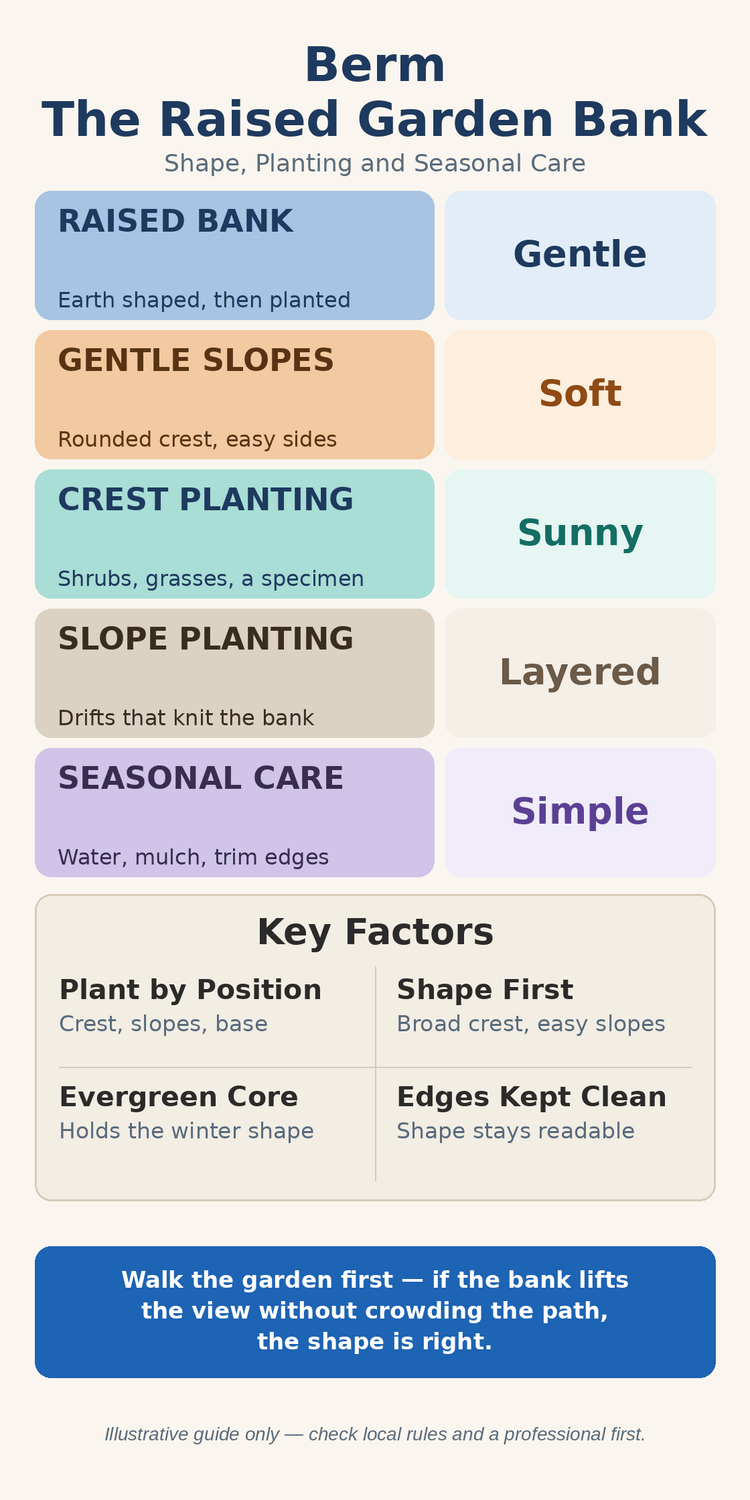
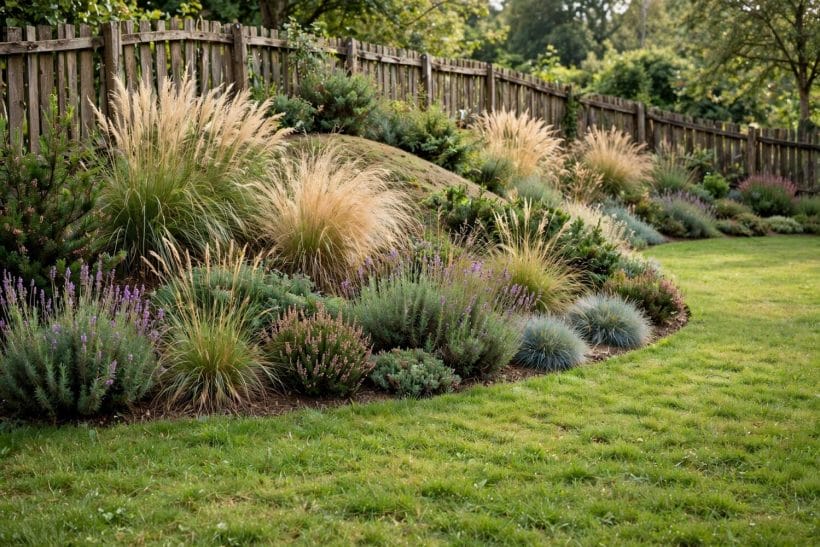
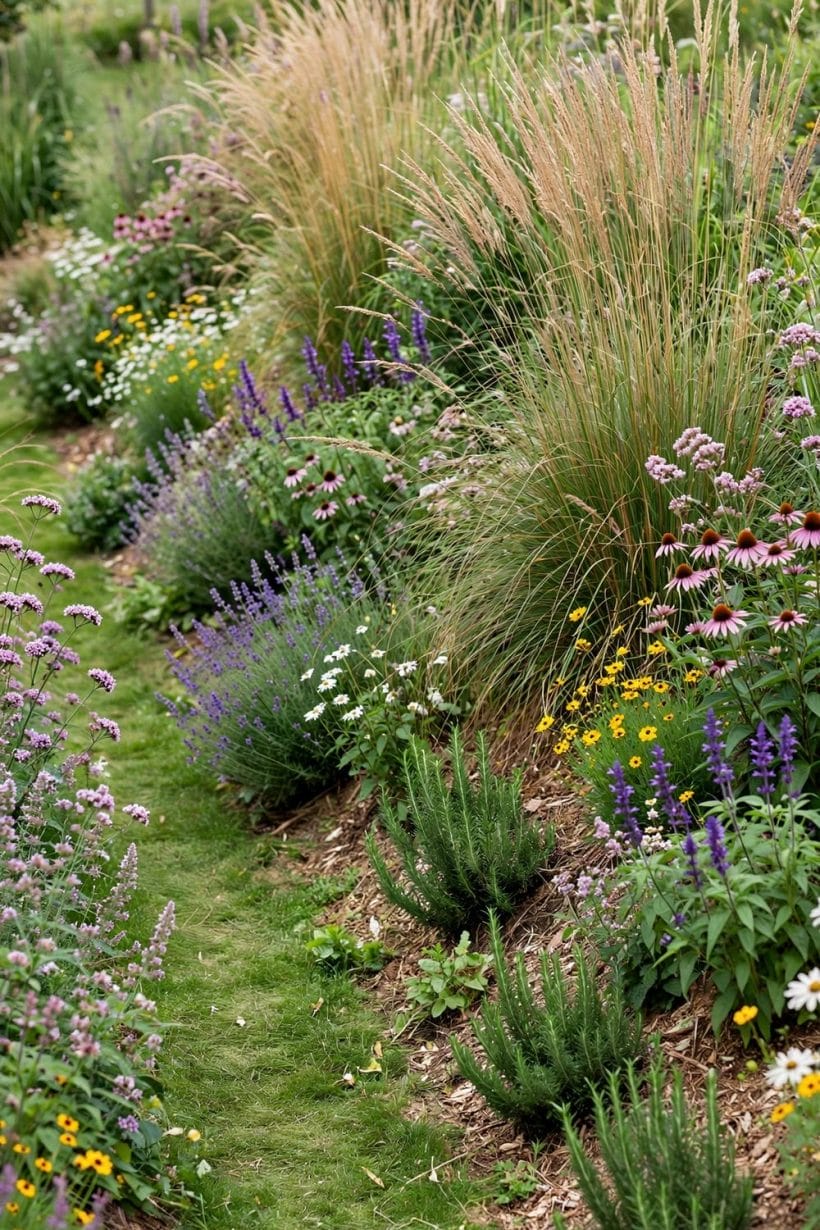
Planting is what turns a shaped bank of earth into a garden feature, and the planting of a berm is best thought of in three positions: the crest, the slopes and the base. The crest is the most exposed position, catching wind and sun and drying sooner than the ground below. It suits plants that enjoy an open, sunny position and do not mind a little exposure: compact shrubs, ornamental grasses, and perennials that hold their shape through the season. A single specimen plant on the crest, a small tree or a well-chosen shrub, can anchor the whole feature and give the eye a resting point.
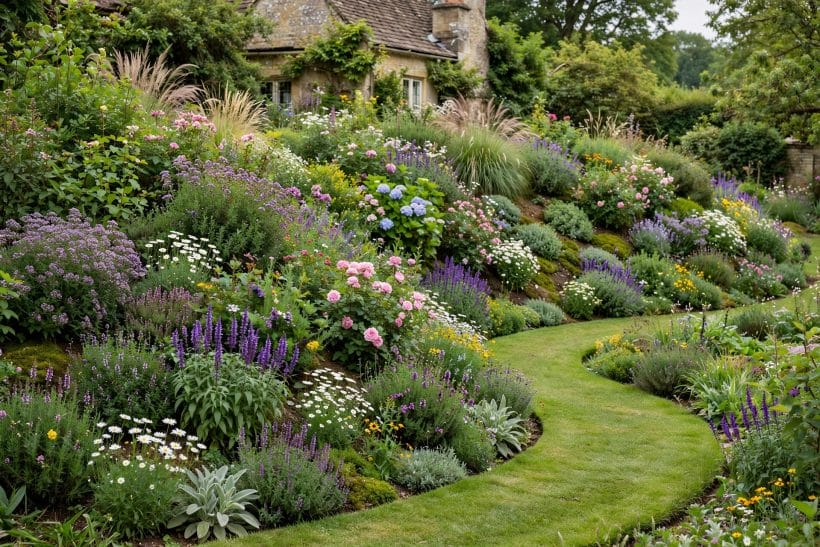
The slopes are the working part of the berm. Plants here need to knit the bank together, covering the ground so that the soil is held by roots and shaded by foliage, and so that the slope reads as a planted surface rather than bare earth. Spreading shrubs, groundcover perennials and drifts of grasses all serve this purpose, and they are best planted in generous groups that follow the curve of the bank rather than in straight rows that fight it. A slope planted in flowing drifts, with taller plants toward the crest and lower, spreading plants toward the base, looks settled from the start and only improves as the plants grow into one another.
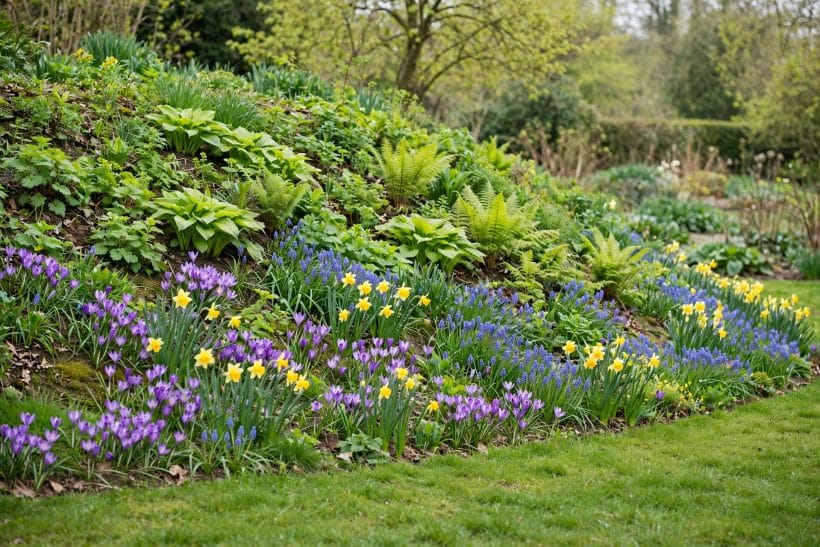
The base of the berm is where it meets the lawn or the path, and the planting here should make that meeting gentle. Low, spreading plants that spill a little over the edge soften the junction and hide the line where bank meets flat ground. Spring bulbs planted through the base and the lower slopes give the berm an early season of colour before the main planting wakes, and evergreen groundcover keeps the shape readable through winter. Throughout, the planting palette should suit the garden as a whole: a berm planted with the same shrubs, grasses and perennials as the surrounding borders will feel like part of the garden, while one planted in an unrelated style will always look like an addition.
6. Shape, Soil and the Feel of the Ground
The shape of a berm is its most important quality, and the best shapes are the least dramatic. A crest that is broad and gently rounded, with slopes that ease away on both sides, looks like a natural rise in the ground and is easy to plant, to mow around and to walk past. A crest that is narrow or pointed, or slopes that are steep and abrupt, look artificial and are harder to keep planted, because soil and mulch tend to move on a steep face and plants struggle to establish. The rule of thumb is simple: if the shape would look at home in a meadow or a park, it will look at home in a garden; if it looks like a construction, it will always read as one.
The soil of a berm behaves a little differently from level ground. Raised ground drains more freely and dries sooner after rain, and the crest dries soonest of all. That is a useful quality for plants that dislike sitting in wet soil, and it is one reason why Mediterranean plants, grasses and many perennials thrive on a bank. It also means that a newly planted berm needs attentive watering until its plants are established, and that mulching the slopes helps the soil hold moisture while the planting knits together. Over time, the roots of the planting and the cover of foliage do much of this work themselves, and an established berm needs little more than ordinary garden care.
It is also worth remembering that a berm is a living shape. Plants grow, shrubs spread, grasses thicken, and the outline of the bank softens year by year. A berm that is planted generously at the start will look fuller sooner, but it will also need the occasional thinning and reshaping as plants mature, so that the crest stays readable and the slopes stay covered. This slow change is part of the pleasure of the feature. Unlike a wall or a fence, which looks the same the day it is finished as it does years later, a berm grows into itself, and the garden around it grows with it.
7. Berms Beside Paths, Patios and Boundaries
Berms earn their keep most visibly where the garden meets its harder surfaces. Beside a path, a low planted bank lifts the planting to the eye level of someone walking past, so that a stroll through the garden becomes a walk among plants rather than a walk beside them. The curve of the bank can also guide the path itself, easing a straight walk into a gentle bend and giving the garden a sense of discovery. Where the path is the main route from the house to the far end of the garden, a berm on one side is enough; banks on both sides can make the walk feel hemmed in rather than accompanied.
Beside a patio, a berm works as a green backdrop. A seating area that looks out onto a planted bank feels sheltered and private, even when the bank itself is low, because the eye rests on foliage rather than on a fence or a neighbouring building. The planting here deserves plants that reward close attention: fragrant shrubs, grasses that move in the breeze, perennials with a long season of interest. A patio that opens onto a berm also gains a natural extension of its own space, a planted outlook that makes sitting outside feel like sitting within the garden rather than beside it. For ideas on shaping the paved areas themselves, see these backyard patio ideas alongside the planting notes here.
Along a boundary, a berm changes the character of the edge entirely. A fence on flat ground is a line; a fence behind a planted bank is a backdrop, glimpsed through foliage and softened by the rising ground in front of it. The bank also gives the boundary planting room to be generous, with shrubs at the crest, mid-height plants on the slopes and groundcover at the base, so that the boundary reads as a deep, layered border rather than a thin screen. For the wider setting of a front garden, front yard landscaping ideas and cottage garden looks pair naturally with the soft, planted edges a berm creates.
8. How a Berm Differs from Related Features
Gardeners sometimes confuse a berm with its neighbours, and the distinctions are worth setting out clearly, because each feature suits a different purpose. A raised bed is the closest relative, but it is a contained structure: its soil is held within timber, stone or another edging, and its shape is the shape of its frame. A berm has no frame. Its shape is the shape of the ground itself, and it flows into the surrounding garden without an edge. Raised beds suit vegetable growing and precise planting in a small area; berms suit ornamental planting and the shaping of the garden as a whole. Where a garden already uses raised beds for growing, a berm elsewhere in the garden can complement them without repeating them, as these raised garden bed ideas show a different kind of raised planting altogether.
A retaining wall is a different creature again. It holds back a change of level with a built structure, creating a level area above and a level area below, and it is engineering as much as gardening. A berm creates no level platforms and holds nothing back; it is a slope, not a step. Where a garden needs a flat terrace on a sloping site, a wall is the honest answer, and a berm is not a substitute for it. Where the ground is already level and the aim is simply to add shape and planting height, a berm gives that shape without any structure at all.
Two further features are sometimes mentioned alongside berms. A mound is a smaller, more rounded rise, often carrying a single tree or a rock feature, and it can be thought of as a berm in miniature, a single swelling rather than a running bank. A swale is a shallow channel in the ground, a dip rather than a rise, and it is the mirror image of a berm in profile. The two are sometimes used in the same landscape, the rise and the dip echoing one another, but they are distinct features with distinct characters. Understanding these differences helps a gardener choose the right feature for the right place, rather than asking one feature to do the work of another.
9. Living with a Berm Through the Seasons
A berm repays attention through the year, and each season asks something slightly different of it. In spring, the bank wakes early: the sunny slopes warm sooner than flat ground, bulbs planted through the base and the lower slopes flower first, and the first growth of grasses and perennials softens the winter outline. Spring is the season for tidying the berm, cutting back the previous year’s growth of grasses and perennials, refreshing mulch where it has thinned, and checking that the slopes are fully covered before the growing season gathers pace.
Summer is the berm’s show season. The crest planting is in full leaf and flower, the slopes are covered, and the bank reads as a lush, planted form. Care in summer is mostly a matter of watering in dry spells, especially on the crest, which dries first, and of keeping the edges where the bank meets the lawn neatly trimmed so that the shape stays readable. A berm that is allowed to sprawl into the lawn loses its outline, while one whose edges are kept clean holds its curve all season. Deadheading spent flowers and trimming shrubs that outgrow their place keeps the planting in proportion to the bank beneath it.
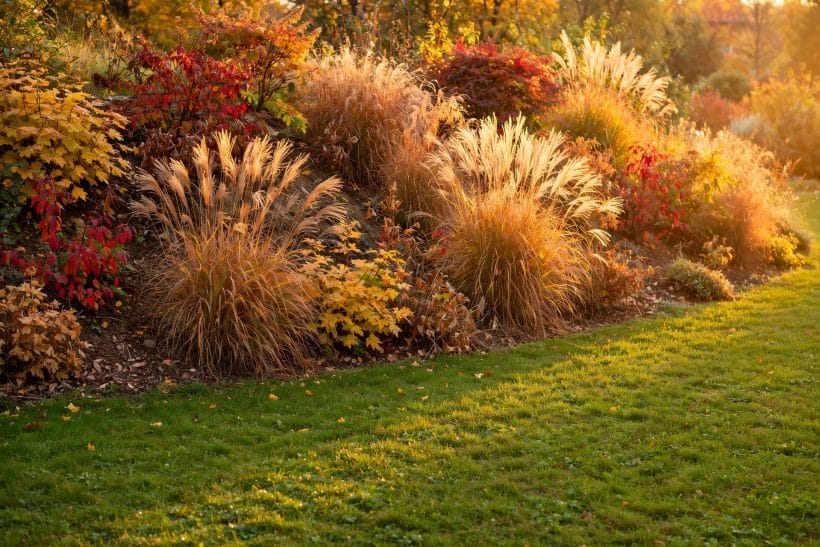
Autumn and winter ask for a lighter hand. Autumn colour on a bank can be spectacular, with shrubs and grasses turning together across the slope, and the falling leaves can simply be left to settle as a natural mulch or gathered for the compost. In winter, the shape of the berm itself carries the garden: the crest against the sky, the evergreen shrubs holding the slopes, the bare stems of grasses catching frost. Evergreen planting earns its place on a berm in winter above all, because it keeps the bank looking intentional when the perennials have retreated. A berm with a good evergreen backbone never looks abandoned, even in the quietest months.
10. Planning Questions Before Choosing a Berm
Before settling on a berm, a few honest questions save disappointment later. The first is about room: is there enough open ground for a bank with gentle slopes and a broad crest, without crowding paths, seating areas or the views from the house? A berm squeezed into too small a space will always look pinched, and a level border would serve such a spot better. The second question is about purpose: is the berm there to lift a border, to screen a view, to break up a flat lawn, or simply to add shape? A clear purpose leads to a clear form, while a berm built without one tends to drift into an awkward lump.
The third question is about planting. A berm is only as good as its plants, and the planting needs to suit the position: sun or shade, exposure, and the character of the rest of the garden. It is worth choosing plants that are already thriving nearby, since they have proven themselves in the same soil and climate, and mixing evergreen structure with seasonal colour so that the bank holds its shape all year. Flower bed ideas and courtyard landscaping ideas can help here, offering planting combinations that translate well onto a bank, from flowing perennial drifts to structured shrub groupings.
The final question is about the long view. A berm is a permanent change to the shape of a garden, and its planting will mature over years. Does the shape still work when the shrubs are fully grown? Does it still leave room for the lawn, the paths and the seating areas to be used as they are now? Will the planting still be manageable when it is mature, or will it demand more care than the household can give? Gardens change, and a berm that is planned with its mature size in mind will grow gracefully into the garden around it. Where any of these questions points to a substantial change of level, to ground that is already wet or unstable, or to a boundary shared with neighbours, a landscape professional should be part of the conversation before any ground is moved.
Final Considerations
A berm is one of the quietest ways to give a garden shape. It asks for no structure, no hard materials and no machinery of display, only earth shaped with a gentle hand and planted with care. Done well, it lifts a border, softens a boundary, breaks up a flat lawn and gives the garden a second plane of planting that rewards the eye in every season. It suits gardens that aim for a natural, landscape character, where curves matter more than corners and where planting, rather than paving or walls, does the work of shaping space.
Its limits are worth respecting. A berm is not a substitute for a retaining wall, not a contained bed for growing, and not a solution for a garden that is short of room. Its slopes must stay gentle, its planting must stay in proportion to the bank, and its edges must be kept clean so that the shape reads clearly. Where those conditions are met, a berm is a feature that grows better with age, as its plants knit together and its outline softens into the garden around it. For a small house garden, the same thinking applies at a smaller scale: the porch and the planting around it set the tone for the whole plot, as these tiny house porch ideas show, and a low planted bank beside an entrance path can welcome visitors as warmly as any porch planting.
Start, then, with the garden as it is. Stand at the windows, walk the paths, and look for the place where the ground itself seems to want a little lift: a flat border that never quite catches the eye, a boundary that feels too hard, a lawn that runs flat to the fence without a pause. That is where a berm belongs. Shape it gently, plant it generously, and give it time. The best berms are the ones visitors admire without quite knowing why the garden feels so composed, and that quiet, almost invisible success is exactly what the feature is for.

0 Comments