
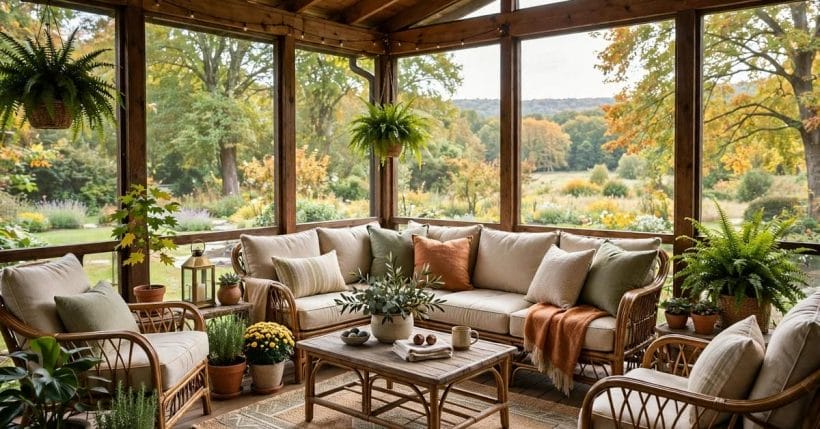
A three-season porch is the room that refuses to choose between inside and outside. Screened or glazed against wind and insects, open to breeze and garden light, it carries you from the first warm days of spring through the long evenings of autumn. Done well, it becomes the most-used room in the house for half the year. Done carelessly, it becomes a draughty corridor full of furniture that never quite works.
This guide walks through what makes a three-season porch work: light, seating, shade, plants, storage and the small details that turn a passage into a place to linger.
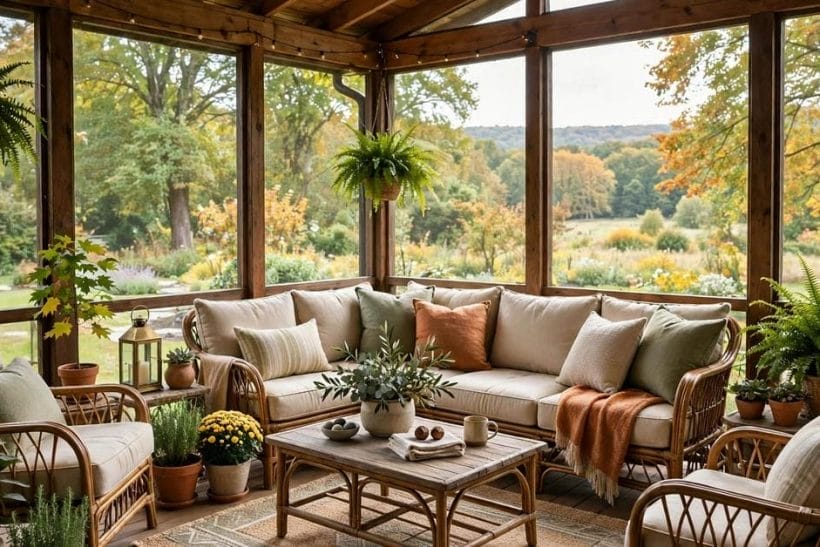
1. What Makes a Porch Three-Season
A three-season porch sits between a fully open porch and a fully heated room. It is enclosed enough to keep out wind, rain and insects, but it is not built or heated as a year-round living room. Screens, removable glazing panels, or a mix of both are the usual enclosure, and the choice between them shapes everything else: screens maximise breeze, glazing maximises warmth on cool days, and a combination lets you adapt through the seasons.
The honest test of a three-season porch is how many weeks a year you actually use it. If it is too hot in summer, too cold in spring, or too exposed to use comfortably, it fails its brief whatever it cost. The fixes are rarely expensive — shade, ventilation, a rug underfoot and seating that invites a long sit — but they need to be planned from the start rather than bolted on after the first uncomfortable season.
Think of the porch as a room with weather, not as an outdoor space with furniture in it. That shift in thinking changes every decision that follows, from flooring to lighting to how you store cushions when a storm blows through.
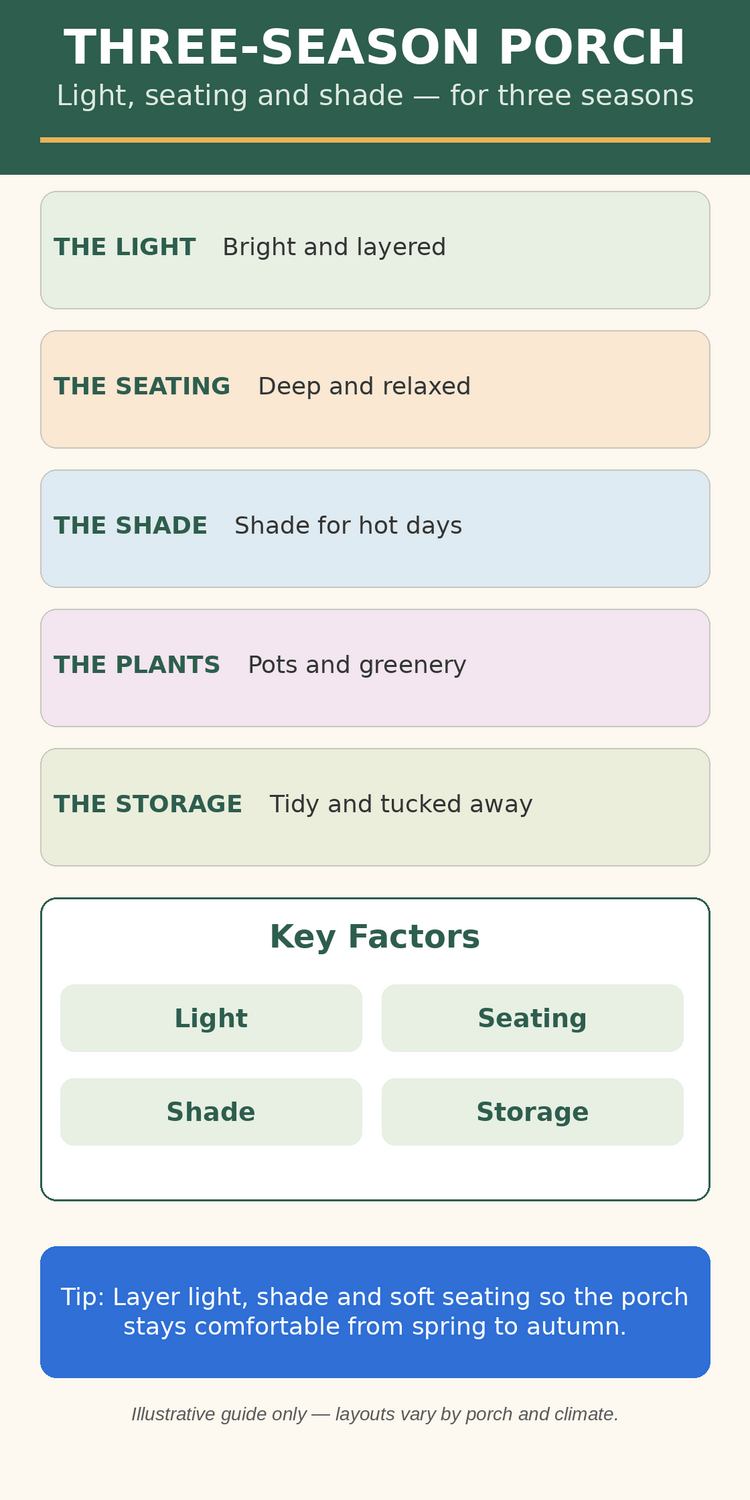
2. Light: Bright Without Glare
Light is a three-season porch’s greatest asset and its first problem. A porch that faces the sun can be gloriously bright at noon and unbearably glaring by mid-afternoon, while a north-facing porch can feel dim even on a fine day. The answer is layered light: daylight as the base, shade to tame it, and gentle artificial light for evenings.
Start by watching the porch through a day before you furnish it. Note when the sun arrives, where it falls, and where glare lands on seating. Sheer curtains, adjustable blinds or shade cloth can soften the harsh hours without darkening the room, and they can be drawn back completely when the light is kind. For evenings, warm, low lighting suits a porch far better than a single bright overhead light, which flattens the space and draws insects to the brightest point.
Lanterns, string lights and small table lamps all work well on a porch, provided they are suited to a space that is not fully sealed against damp. Keep electrics appropriate to the setting, and let a qualified professional handle any fixed wiring rather than improvising it.
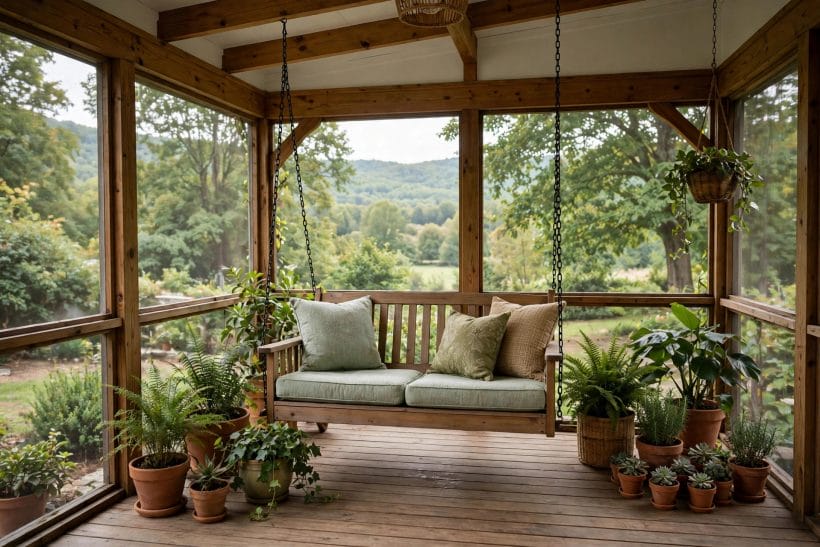
3. Seating: Deep, Relaxed, Weather-Wise
Seating makes or breaks a porch. The test is simple: can you sit for an hour without shifting, reading, talking or simply watching the garden? If the answer is no, the seating is decoration, not furniture. Deep seats, supportive backs and room to put your feet up matter far more than how a chair photographs.
Choose seating that tolerates porch conditions. A three-season porch is drier than open air but damper than a living room, so materials should handle humidity, temperature swings and the occasional wind-blown rain. Cushions should be easy to bring in or cover, and frames should not warp, rust or mildew after one damp season. Test seating in person when you can; a chair that looks inviting in a catalogue can be unforgiving after twenty minutes.
Arrange seating for conversation, not for display. Chairs facing each other across a low table invite talk; chairs lined against a wall invite people to leave. Leave room to move around the seating without squeezing past, and keep at least one seat that catches the best view, since that is where everyone will want to sit.
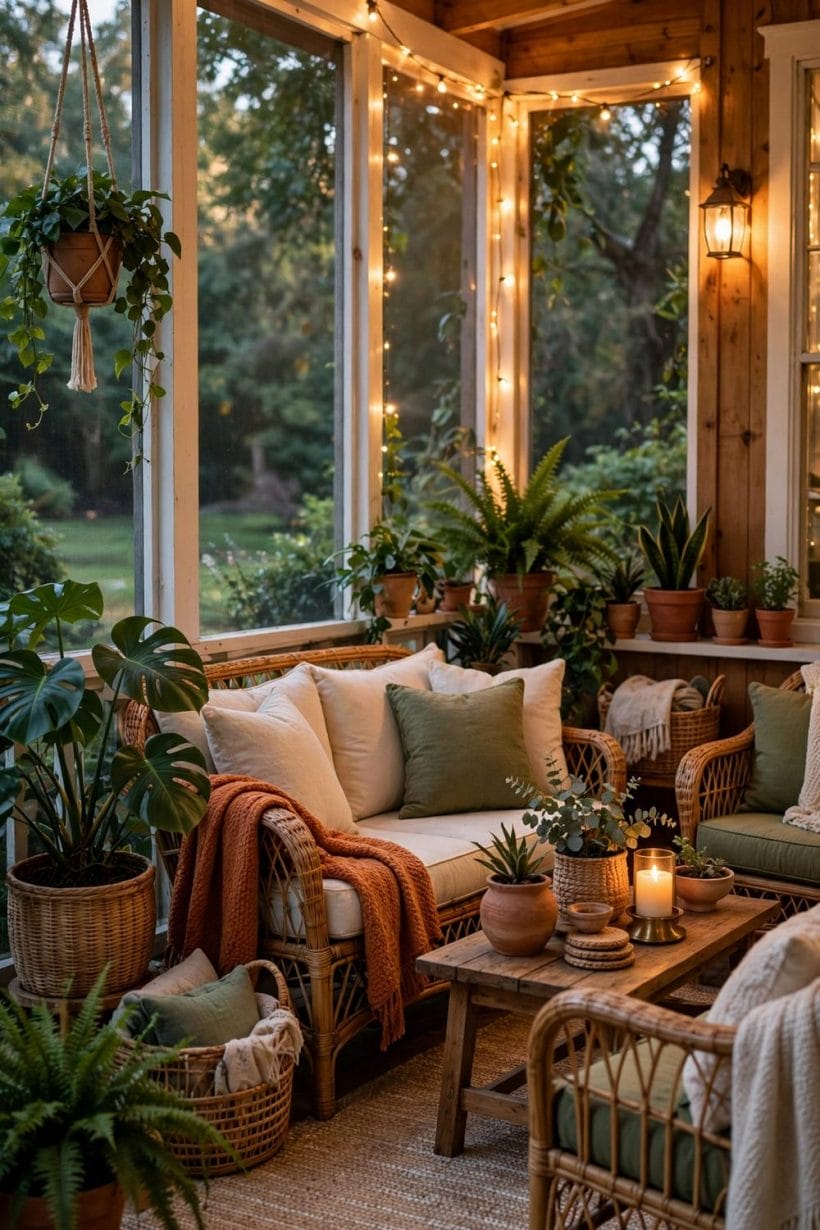
4. Shade: The Difference Between Used and Empty
Shade is what turns a porch from a fair-weather novelty into a daily room. Without it, a sun-facing porch overheats by late morning and stays empty until evening. With it, the same porch is comfortable through the hottest part of the day. Shade can come from the porch’s own roof overhang, from blinds or curtains, from planting outside, or from a combination of all three.
Outside planting is the most generous shade of all. A climber on a trellis, a small tree placed to shade the afternoon sun, or a pergola with a light cover can cool a porch by several degrees while adding beauty that no blind can match. Our entrance pergola guide shows how a pergola frames an approach, and the same thinking applies to shading a porch: structure first, planting second, fabric last.
Inside, adjustable shade matters because the sun moves. Fixed shade that is perfect at noon can be useless at four o’clock, so blinds, curtains or movable screens that can be adjusted through the day are worth more than a single fixed solution. The goal is control, not darkness: a porch should stay bright even when it is shaded.
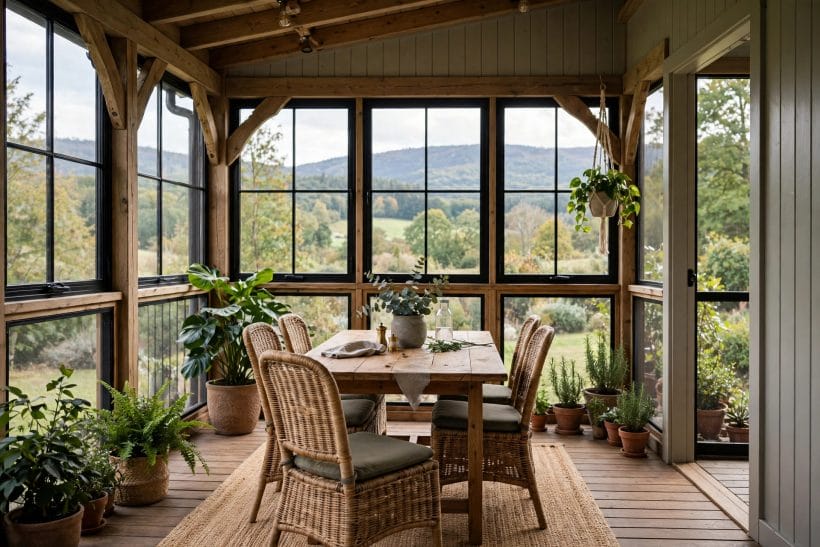
5. Plants: The Porch’s Best Decoration
Plants belong on a porch more naturally than almost anywhere else in the house. They soften hard edges, scent the air, and connect the room to the garden beyond it. Pots are the practical choice, since they can be moved for sun, shelter or cleaning, and a mix of pot sizes — a few large anchors plus smaller companions — looks more settled than a row of identical small pots.
Choose plants for porch conditions rather than for appearance alone. A porch swings between warm days and cool nights, and plants that need steady indoor warmth will sulk. Hardy, forgiving plants that tolerate a breeze and variable light are the wiser choice, and grouping plants together helps them share humidity and shelter each other from wind.
Keep plants where they do not block movement or drip onto seating. A plant that forces everyone to duck or that stains a cushion every time it is watered will be resented, however beautiful it looks. Trailing plants suit high shelves and hanging positions, while upright plants anchor corners and frame the doorway.
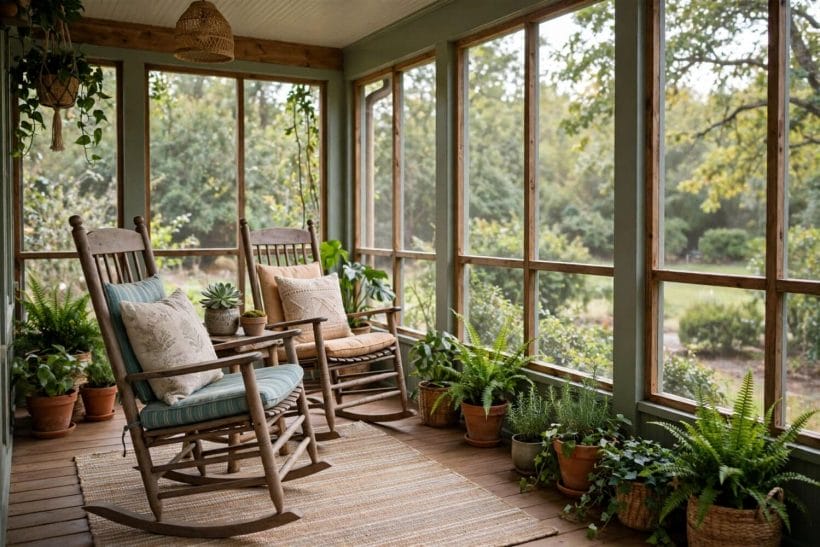
6. Flooring and Rugs: Warm Underfoot
Porch flooring takes more punishment than living-room flooring: damp feet, muddy paws, blown-in leaves and temperature swings all test it. The floor should be easy to clean, forgiving underfoot, and able to handle moisture without damage. Whatever the base floor, a rug changes the feel of a porch more than almost any other single addition, marking out the seating area and warming bare feet.
Choose a rug that can be cleaned easily and dried quickly, since porch rugs meet more dirt and damp than indoor ones. A flat, sturdy weave suits a porch better than a deep pile, which traps leaves and takes days to dry after a wet spell. Size matters too: a rug that all the seating sits on, front legs at least, anchors the arrangement, while a rug that floats in the middle of the floor looks lost.
Keep a mat at the porch entrance as well as inside it. Two mats — one outside the door, one inside — catch far more dirt than one alone, and they protect both the porch floor and the rooms beyond it.
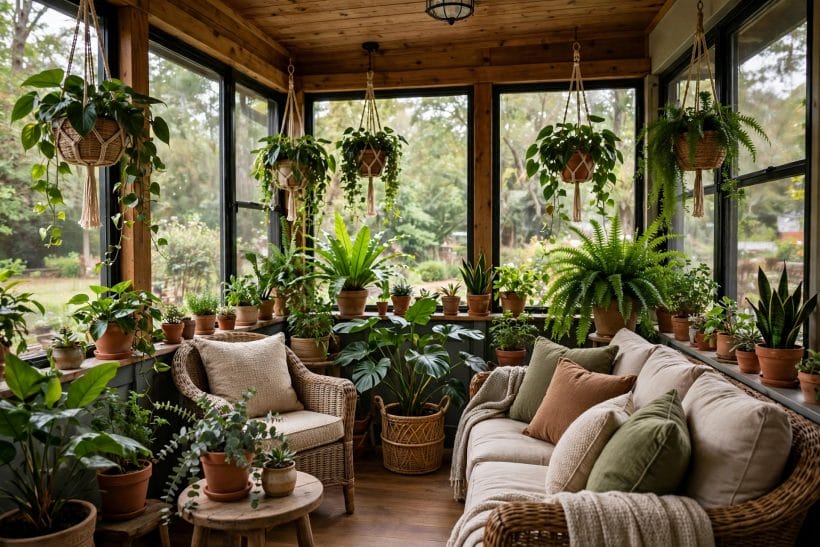
7. Dining and Gathering on the Porch
A porch that can host a meal is a porch that gets used. Dining on a porch feels like a small holiday even on an ordinary evening, and it does not need a grand table to work. A sturdy table at a comfortable height, chairs that are easy to sit in for an hour, and lighting that flatters faces rather than glaring overhead are the whole recipe.
Keep dining practical. A table that is hard to clean, chairs that stain at the first spill, or a layout that forces the cook to carry everything through a narrow doorway will discourage use. Store the everyday dining pieces on or near the porch when you can, so setting the table is a pleasure rather than a project.
For larger gatherings, flexible seating beats a fixed arrangement. A bench that tucks under a table, a couple of folding chairs stored nearby, and a table that extends when needed let a porch grow from two people to eight without a furniture crisis. Our patio fireplace ideas show how outdoor gathering spaces are zoned for conversation, and a porch benefits from the same thinking at a smaller scale.
8. Storage: Tidy Without a Trip Indoors
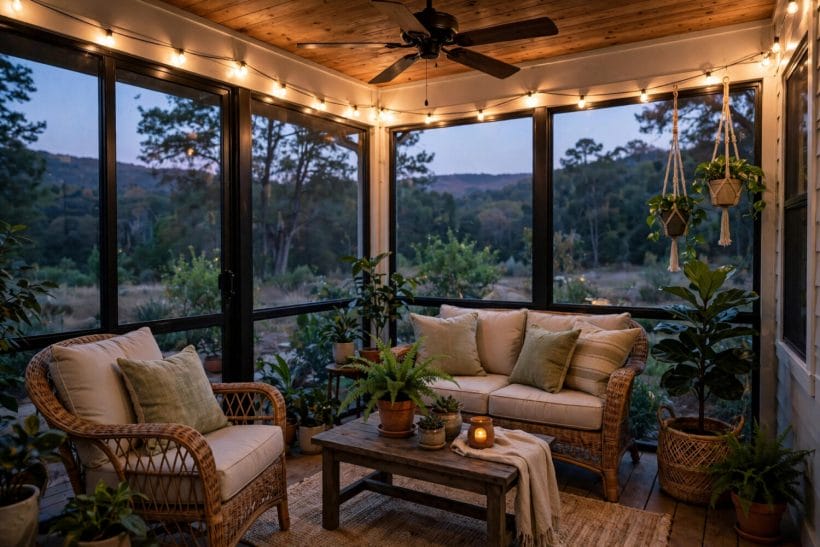
Storage is the unglamorous secret of a well-used porch. Cushions, throws, books, games and gardening bits all need a home that is on the porch, not three rooms away, or they will end up in piles on chairs. A bench with storage inside, a weather-tolerant cupboard, or a couple of sturdy baskets can hold the everyday clutter and keep the porch inviting.
Store cushions where they stay dry but remain easy to grab. A chest that doubles as a side table or a bench seat is ideal, since it earns its floor space twice. Throws and blankets deserve a basket by the best seat, ready for cool evenings, and reading material deserves a shelf or a small table rather than a stack on the floor.
Keep storage honest: if a cupboard is hard to open, too small, or in an awkward corner, it will not be used, and clutter will return. The best porch storage is the storage you reach for without thinking.
9. The Porch and the House: One Flow
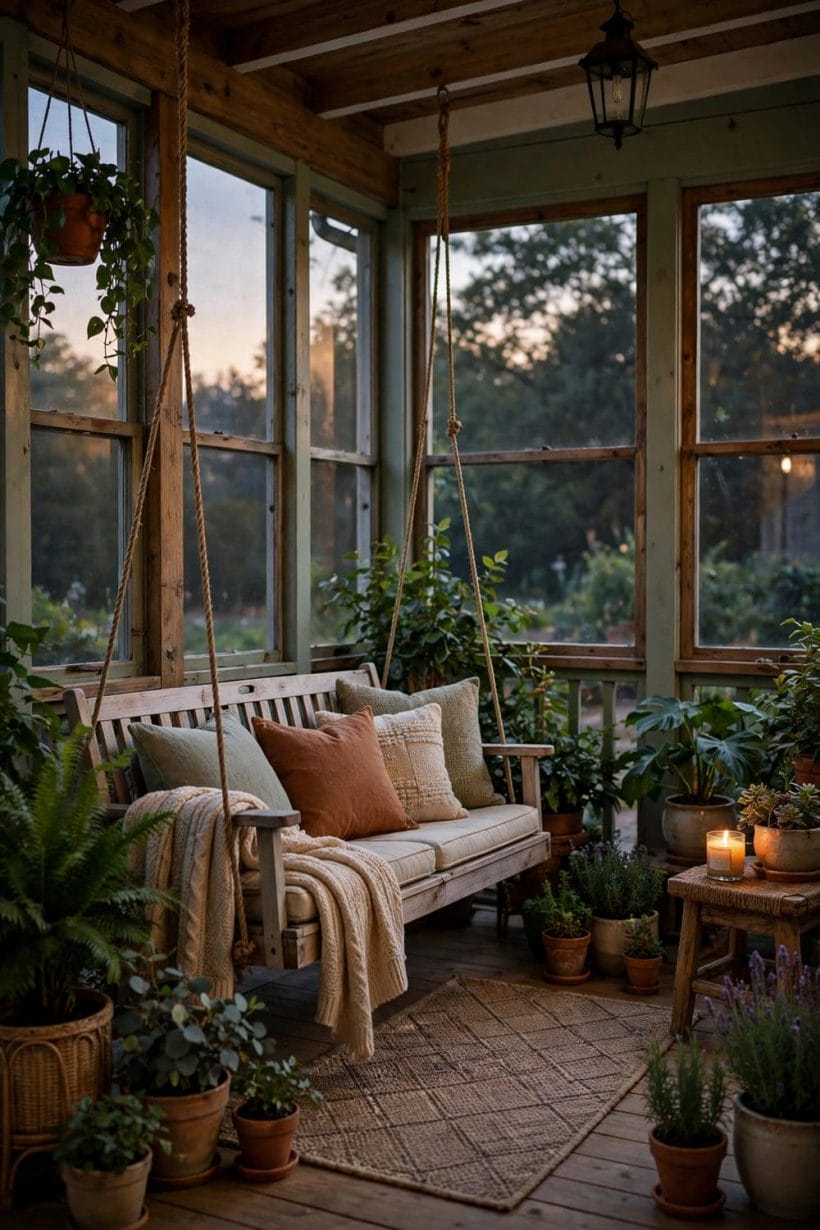
A porch works best when it flows with the house rather than sitting apart from it. The doorway between porch and interior should be easy to pass through with hands full, the floor levels should meet sensibly, and the porch’s colours and materials should feel related to the rooms inside. A porch that clashes with its own house feels like an afterthought, however well furnished.
Think about the approach too. The path to the porch, the planting beside it, and the lighting that guides visitors after dark all shape the first impression, and they cost little compared with the porch itself. Our exterior entryway guide and bluestone patio ideas show how approaches and adjoining outdoor surfaces can be planned together, and sunken spa patio ideas show the same outdoor-living zoning at a larger scale.
Finally, plan for the shoulder seasons. A few warm throws, a portable heater suited to a semi-enclosed space used with proper care, and glazing or screens that can be closed against a cold snap can stretch a three-season porch by weeks at either end of its year. The porch that is comfortable in April and October is the porch that earns its keep.
10. Small Details That Earn Their Keep
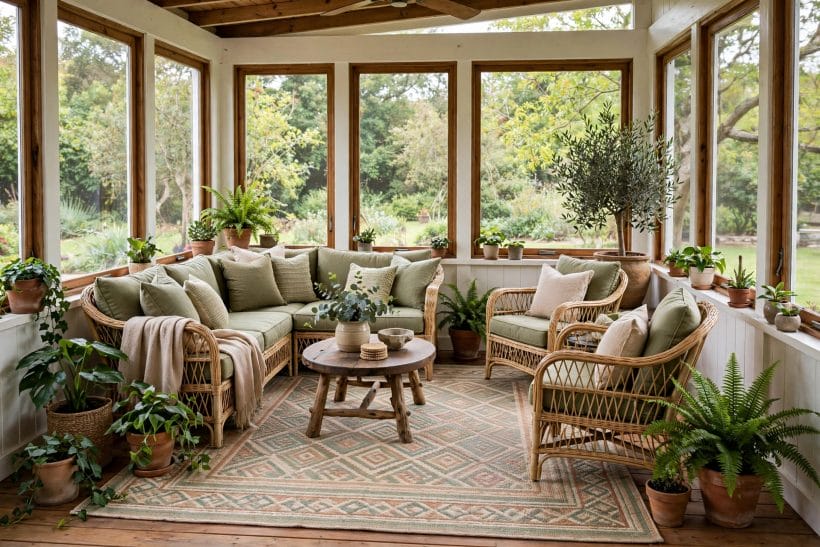
The details that make a porch delightful are small and cheap. A hook by the door for a hat or a bag, a small table within reach of every seat for a drink or a book, a clock that can be read from the best chair, and a candle or lantern for evenings all cost little and get used daily. A porch without these details feels unfinished, however good its furniture.
Sound matters too. A porch near a road benefits from planting or screening that softens noise, while a quiet porch benefits from the sounds it already has — birdsong, wind in leaves, rain on the roof. Avoid filling a porch with a television or a loud speaker; the porch’s own soundscape is part of its charm, and it is easily drowned.
Keep the porch’s character consistent. A porch that mixes too many styles — rustic here, modern there, nautical somewhere else — feels restless. Choose one calm direction, whether it is natural timber and linen, painted wood and bright cushions, or dark metal and deep greens, and let the details follow it.
Final Considerations
A three-season porch succeeds when it is comfortable, easy and inviting for half the year: light that can be tamed, seating that invites a long sit, shade that works through the day, plants that suit the setting, and storage that keeps it tidy without a trip indoors. Plan the porch as a room with weather, connect it generously to the house and garden, and let the small details do their quiet work.
Before you furnish, spend time in the porch itself. Sit in it at different hours, notice where the sun falls and where the wind finds its way in, and furnish around what you learn rather than around a picture in a catalogue. The porch that is planned from its own light, breeze and views is the porch that gets used daily, while the porch furnished from a picture often looks right and feels wrong. Start with the seating and the shade, add plants and storage, and let the room grow into itself over its first season. For the wider outdoor picture, tiny house porch ideas and tiny house designs show how porches anchor whole-home plans, from compact footprints to full outdoor rooms.


0 Comments