
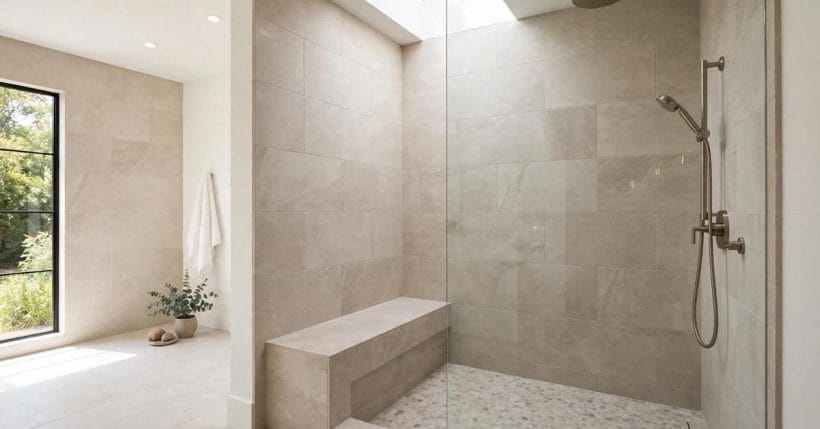
A shower room is the bathroom stripped to its most refreshing essence: a generous shower, room to move, and surfaces that dry quickly and clean easily. Done well, it feels more spacious than a bathroom twice its size, because nothing in it is fighting for attention.
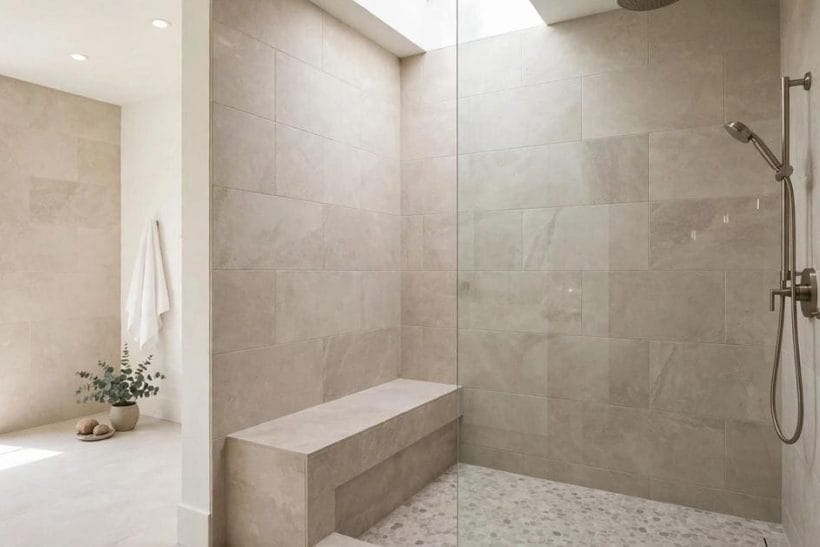
This guide covers the shower room on its own terms — layout, shower zone, surfaces, light and storage — and keeps it distinct from its neighbours: the double shower, the open shower, and the full bathroom.
1. The Shower Room at a Glance
The shower room’s appeal is focus. Where a full bathroom balances a bath, a basin and a toilet, the shower room gives the shower the whole room, and the rest of the space serves it: a basin for washing, a toilet where the plan includes one, and clear, dry floor in between.
| Element | What good looks like |
|---|---|
| Layout | Wet zone at one end, dry zone at the other |
| Shower zone | Room to turn, a bench or shelf, easy controls |
| Surfaces | Large tiles, few grout lines, slip-aware floors |
| Light and air | Bright, with ventilation that clears steam fast |
| Storage | Recessed niches and closed cabinets, not open clutter |
The split from its neighbours is worth stating plainly. A double shower is about two people showering side by side; a shower room is about one generous shower in a room of its own. And while the room shares the bathroom family’s concerns, it is not a general bathroom post — its subject is the shower room layout, and every section below stays on that subject.
2. Layout First
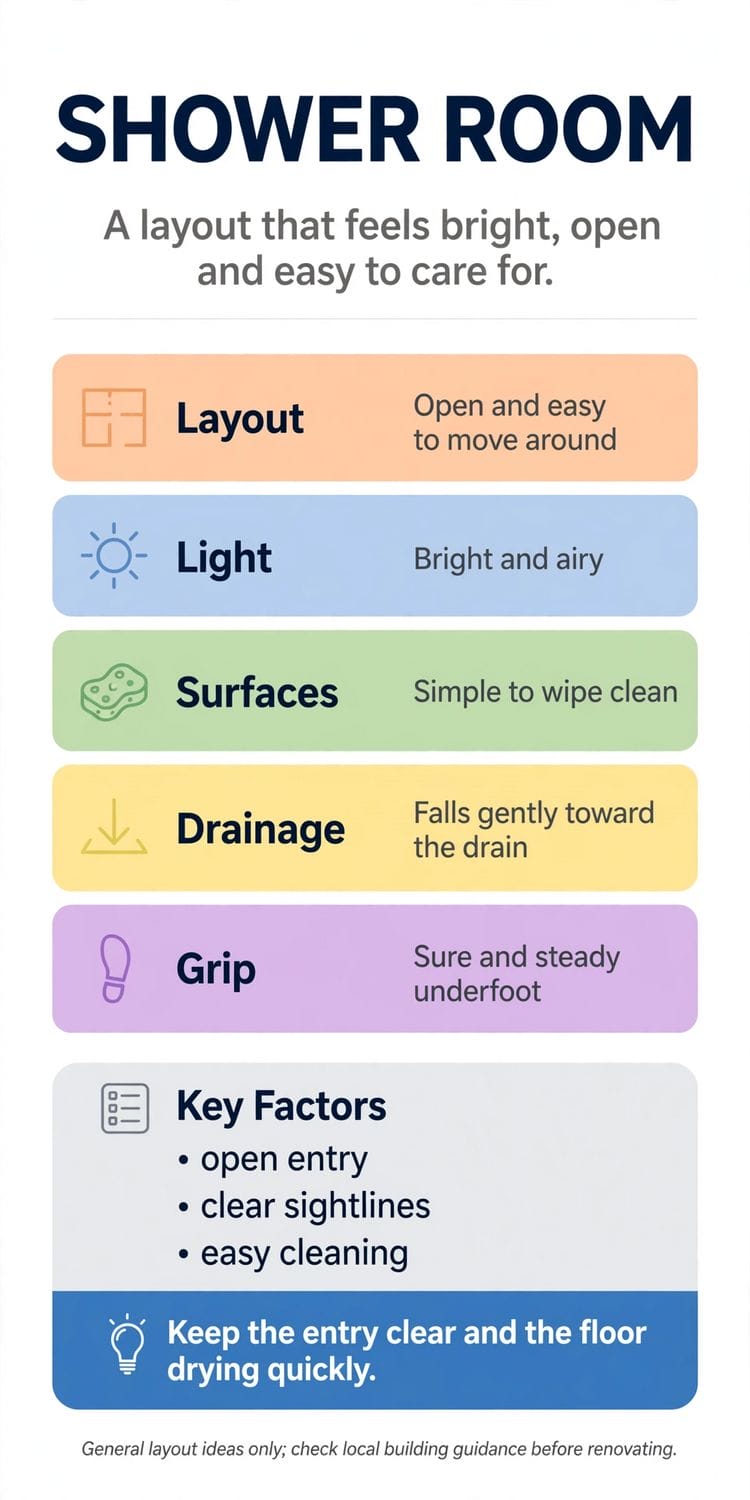
Every good shower room starts with a wet-dry split. The shower occupies one end or one corner, the basin and the door occupy the other, and the floor between them stays dry in normal use. That split is what keeps the room feeling spacious rather than soggy: dry floor reads as room, wet floor reads as a shower tray.
Glass helps the split without closing the room down. A fixed glass panel contains spray while keeping sightlines open, and a frameless or slim-framed panel does it with the least visual weight. A curtain contains spray too, and suits a smaller room or a tighter budget, but it closes the space visually and needs regular cleaning to stay fresh.
Door swing deserves a moment’s thought, because a shower room door that opens onto a wet floor or blocks the basin is a daily annoyance. Plan the swing onto dry floor, clear of the basin and the toilet where one is included, and keep the path from the door to the shower free of anything that forces a sidestep in bare feet.
3. The Shower Zone
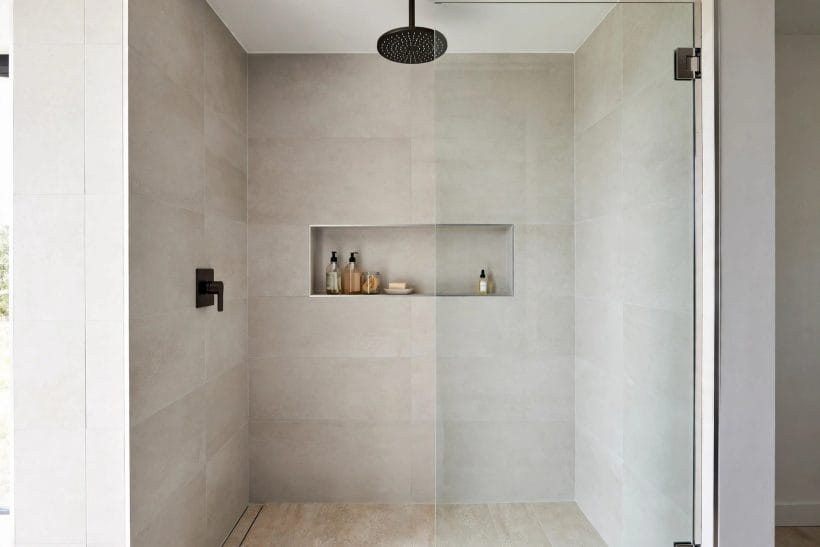
Inside the shower zone, room to move matters more than any fitting. Space to turn, to reach the controls without standing under the water, and to step out without contorting — those three comforts define a good shower more than the shower head’s style.
Controls belong where they can be reached before stepping under the spray, at a height every household member can manage. A handheld shower on a sliding rail earns its place in almost every shower room: it rinses the enclosure, helps with cleaning, and suits children, pets and anyone who prefers to sit. A bench or a fold-down seat extends the same generosity to anyone who wants to sit, and it costs little more than the wall space it occupies.
Water pressure and temperature are the room’s hidden comforts, and both belong to the home’s plumbing system rather than to the shower fitting alone. If pressure is weak or temperature swings, the fix is a plumbing conversation with a professional, not a more expensive shower head. Say so plainly in any plan, and budget for the professional’s advice before the tiling starts.
4. Drainage and Slip, Stated Generally
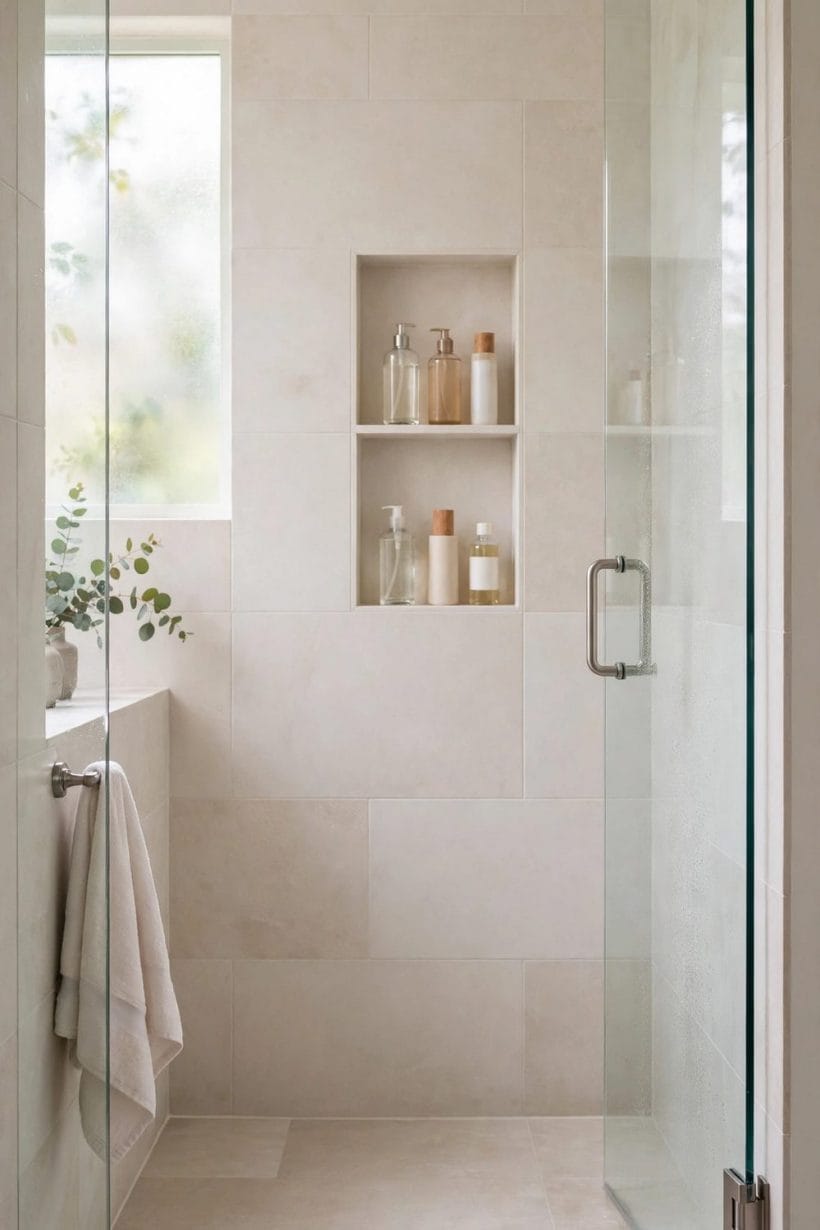
Drainage is the shower room’s quiet engineering, and it rewards early attention. A floor that falls gently toward the drain, a drain positioned where water naturally gathers, and a trap that is easy to reach and clean will prevent most of the puddles and smells that plague badly planned wet rooms.
Slip resistance belongs in the same conversation. Floors in a shower room are wet by design, so the floor finish should offer grip when wet — smaller tiles with more grout lines, textured stone, or a finish rated for wet use all help. Glossy large-format tiles on a shower floor look sleek in a photograph and betray that promise under bare feet; keep the glossy finishes for the walls, where they shine without risk.
Both topics — drainage falls and slip ratings — sit with local building rules and the professionals who fit the room. This guide states them generally on purpose: the right fall and the right rating depend on the floor build-up, the drain type and local rules, and a fitter who sees the room will specify them correctly. What the homeowner’s job is, is to ask for them by name and to check they are in the plan before work begins.
5. Tiles and Surfaces
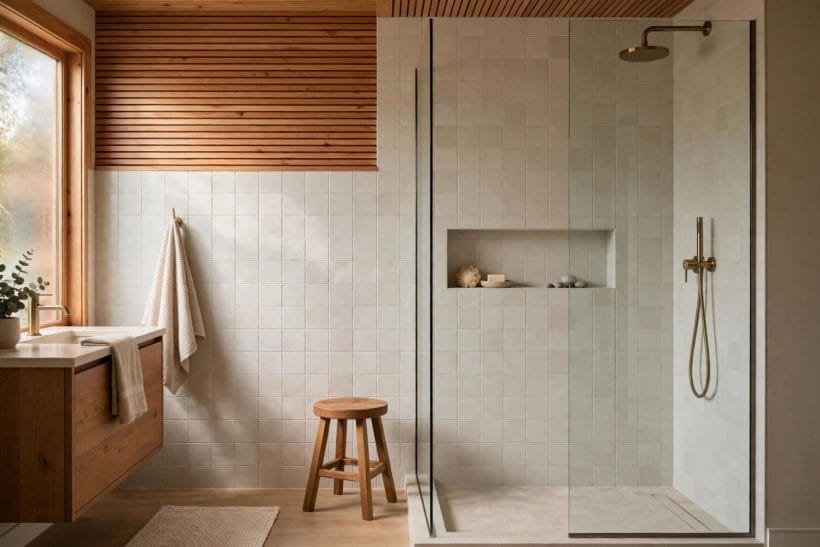
Large-format tiles on the walls are the shower room’s best friend. Fewer grout lines mean less cleaning, a calmer look, and a room that feels larger because the eye travels without interruption. Carry one tile across the walls and into the shower zone for the most seamless effect, and let the floor tile be its quieter partner rather than a competing pattern.
Colour should stay calm. Light, warm neutrals make a small shower room feel open and show water marks less; deep colours can look dramatic but darken the room and demand better lighting to stay welcoming. A single accent — a niche tiled in a contrasting colour, a border row, a feature wall behind the basin — gives the room character without shrinking it.
Grout colour is a small decision with a large effect. A grout close to the tile colour disappears and keeps the room calm; a contrasting grout draws a grid over every wall and doubles the visual busyness. In a wet room, where grout also needs regular cleaning, the quieter choice is usually the wiser one.
Cabinetry in the shower room should follow the same calm logic. A vanity in a dark finish can anchor the dry end of the room beautifully, provided the walls stay light and the mirror stays large; a dark vanity in a dark room, by contrast, closes the space down. For the cabinet-colour side of the same bathroom family, black cabinet bathroom ideas show how a dark vanity carries a bathroom, and the shower room borrows that lesson at one end only — the shower end stays light, bright and open.
6. Glass and Enclosure
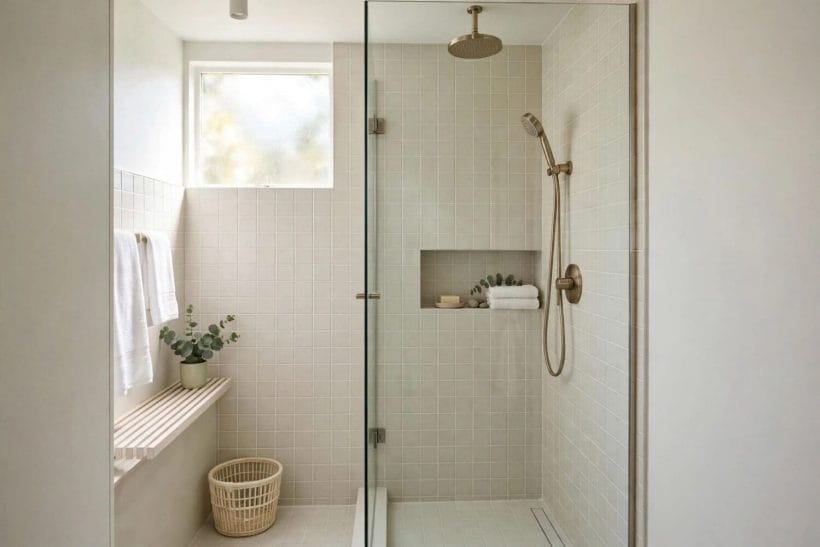
The enclosure is where the shower room’s openness is won or lost. A fixed panel with a walk-in opening keeps the room open and the spray contained, and it has no door to swing into the dry zone. A hinged or sliding door encloses the shower more fully and suits rooms where spray control matters more than openness, or where the shower sits close to the basin.
Glass care is straightforward but worth stating: a squeegee after showering, a regular wipe with a suitable cleaner, and attention to the seals and hinges before they stiffen or leak. Hard water areas demand more frequent attention, and a water-softening conversation with a professional may be worth having if limescale is a constant battle.
Framing choices follow the room’s style. Slim black framing suits a contemporary room and draws a clean line around the glass; frameless glass suits a minimal room and all but disappears. Chrome and brushed finishes sit between the two. Whatever the finish, the fixings and seals are the parts that matter most — a beautiful panel on poor fixings is a problem waiting for a wet floor.
7. Light and Ventilation
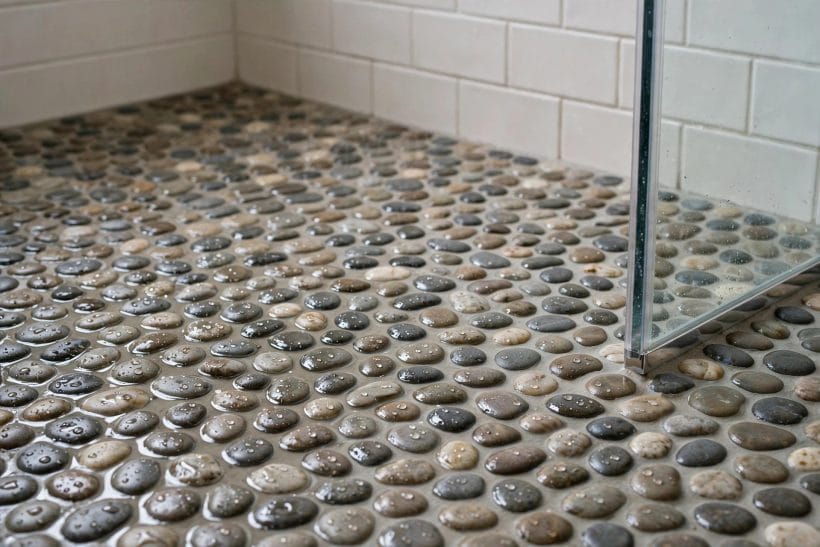
Light makes a shower room feel clean, and ventilation keeps it that way. A window, even a small frosted one, gives daylight and a way to clear steam; where no window exists, a properly sized extractor fan, vented outside rather than into a void, does the same job mechanically.
Layer the light: a bright, even ceiling light for the room, and a warmer, softer light near the mirror for washing and grooming. Mirror lighting from the sides rather than from above avoids harsh shadows on the face, and a dimmer on the main light lets the room shift from bright morning use to a softer evening mood.
Ventilation deserves a practical rule: run the fan during the shower and for a while after, until the mirror clears. That one habit prevents more mould and peeling paint than any product, and it costs nothing. If the fan is noisy enough that nobody uses it, replacing it with a quieter model is money well spent.
8. Storage and Niches
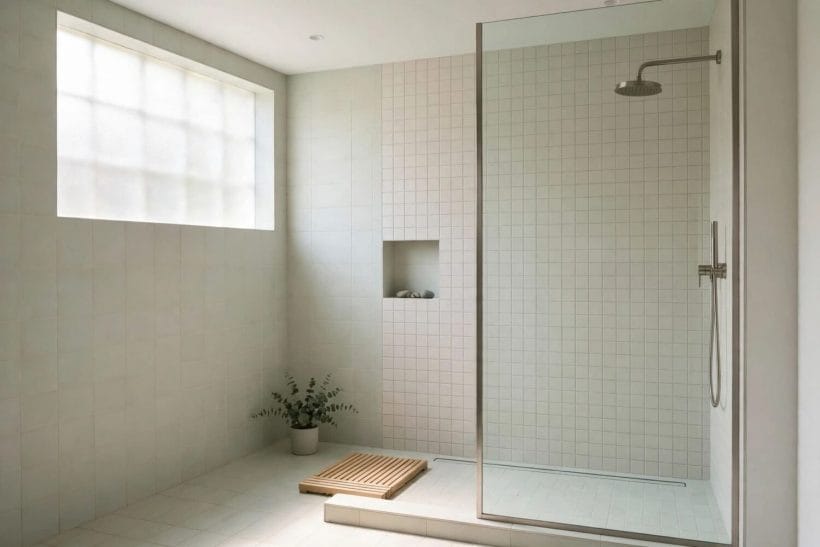
Storage in a shower room should be recessed first and freestanding second. A tiled niche in the shower wall holds bottles at hand height without a caddy hanging off the controls; a recessed cabinet above the basin holds daily items behind a mirror; a tall, narrow cabinet on the dry side holds towels and cleaning supplies out of the spray.
Open storage in a wet room gathers damp and dust, so keep it for display only — a rolled towel, a plant that likes humidity, a single decorative bottle. Everything used daily belongs behind a door or in a niche, where steam cannot reach it and the room stays calm.
Towels need a plan of their own. A heated rail on the dry wall dries towels between uses and warms the room slightly; hooks on the back of the door serve the same purpose without plumbing. Either beats a towel draped over the glass panel, which drips onto the floor and fogs the glass.
9. Small Shower Rooms
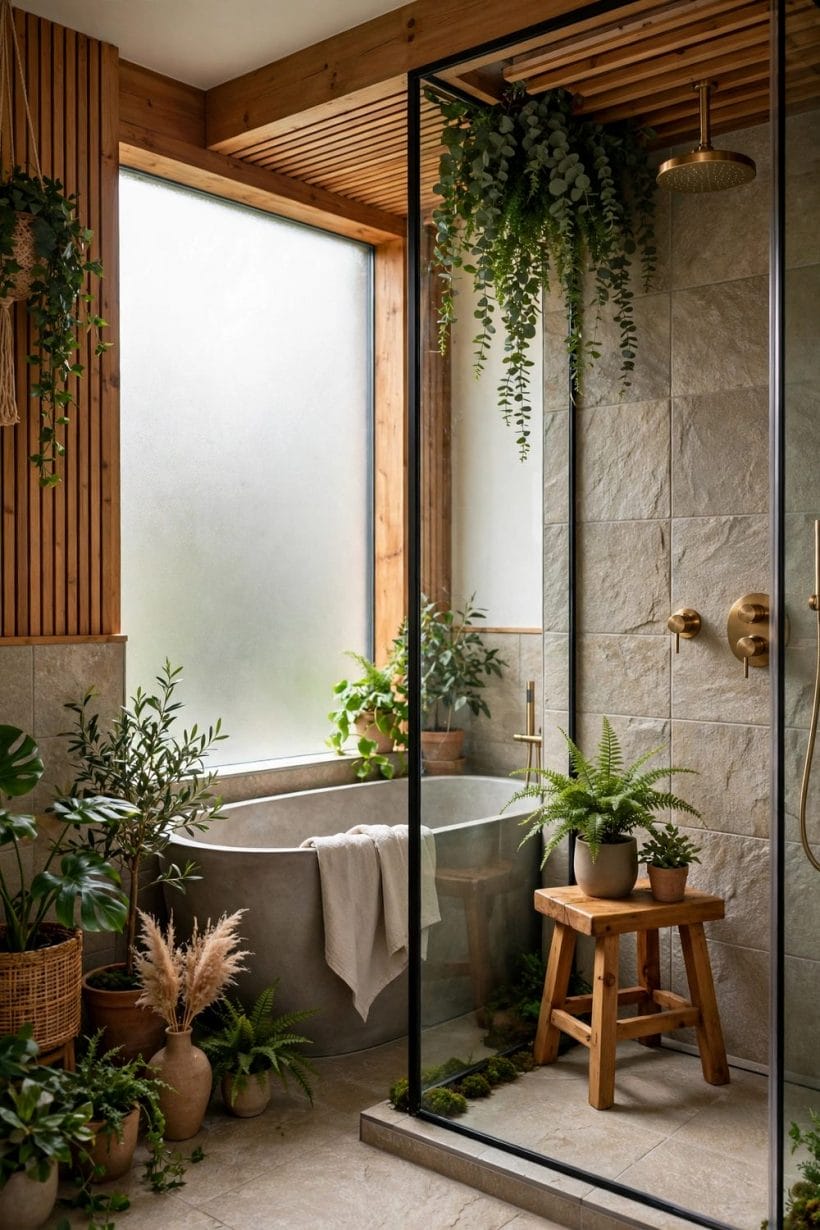
A small shower room rewards the same discipline at a smaller scale: one tile, one glass panel, one niche, and a clear floor. A corner shower with a curved or angled entry can save the swing space a door would take, and a wall-hung basin and toilet, where the plan includes them, free floor area that makes the room feel larger.
Colour and mirror do the rest. Light walls, a large mirror over the basin, and a glass panel rather than a curtain all extend the sightlines, and a single continuous floor tile from the door to the shower stops the room reading as two cramped halves. Avoid breaking a small shower room into visual compartments; its virtue is openness, and every partition taxes it.
The small-bathroom discipline behind all of this is worth naming, because the shower room is often the smallest bathroom in the house. Every fitting must justify its footprint, every surface must earn its cleaning, and nothing decorative may steal space from the shower itself. Tiny bathroom ideas gather that discipline across the whole small-bathroom family, and the shower room is its purest expression: one generous shower, and everything else in service to it.
For the vanity side of the same small bathroom, built-in bathroom vanity thinking shows how a vanity can be fitted into the room without stealing the shower’s space, and vanity lighting and mirror ideas cover the mirror lighting the shower room’s grooming corner needs.
10. Easy-Care Finishes
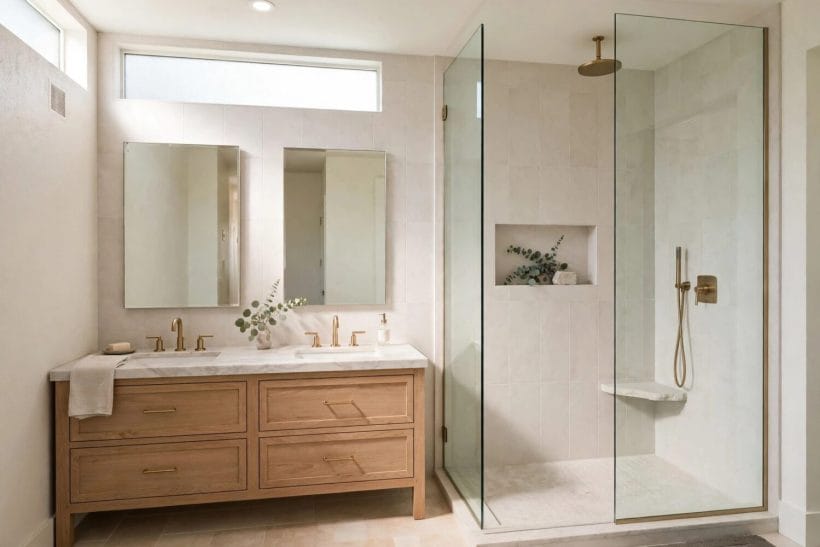
A shower room is cleaned more often than any room in the house, so finishes should be chosen for cleaning as much as for looks. Smooth wall tiles, a frameless or slim-framed panel, a wall-hung basin with clear floor beneath it, and a drain trap that lifts out for cleaning all reduce the weekly chore to a wipe and a rinse.
Sealants and grout are the room’s maintenance items. Check the sealant lines around the shower and the basin a few times a year, and renew them when they shrink, crack or discolour; a failed sealant line lets water behind the tiles, where it does quiet damage. Grout sealers slow staining in the shower zone, and a grout brush kept in the room makes the small, regular clean more likely than the grand, postponed one.
Finally, keep the cleaning products the room needs in the room: a squeegee on a hook, a suitable tile cleaner under the basin, a cloth that lives in the niche. A shower room that is easy to clean stays clean, and a clean shower room is the whole point of the style.
Final Considerations
A good shower room is a study in focus: one generous shower, a clear wet-dry split, calm surfaces, bright light and storage that hides. Give it those five, and the smallest bathroom in the house can become the most refreshing room in it.
For the bathroom family around it, Tuscan style bathroom shows the same room handled in a warm regional style, and the shower room’s discipline — one subject, done properly — is what keeps each of those rooms distinct rather than blurred together.


0 Comments