
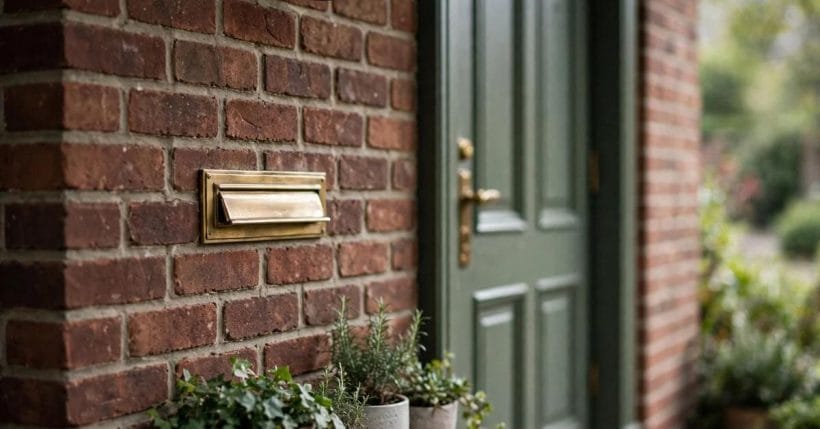
Post arriving through the wall of a house, rather than through the door, is a quiet convenience that many homes already enjoy. The slot sits in the masonry or cladding beside the entrance, the flap opens from the street side, and letters drop through to a landing spot indoors. Nothing about the arrangement calls attention to itself once it is in place, which is part of its appeal: the door keeps its clean face, the porch keeps its line, and the daily post has a fixed home. People searching for how to install a through the wall mail slot are usually weighing exactly this arrangement against a slot in the door or a separate box by the gate.
This guide looks at the through-wall mail slot in general terms: what it is, what its parts do, where it sits, what the wall itself means for the work, and which questions belong to a professional. It is a what-to-check guide, not a work guide. Cutting into an exterior wall is structural work, and it belongs to a qualified professional only. Nothing here describes cutting, opening up a wall, or fixing a slot into place. Where this guide mentions a check, it means something to notice, ask about, or have a professional confirm before any decision is made.
1. What a Through-Wall Mail Slot Is
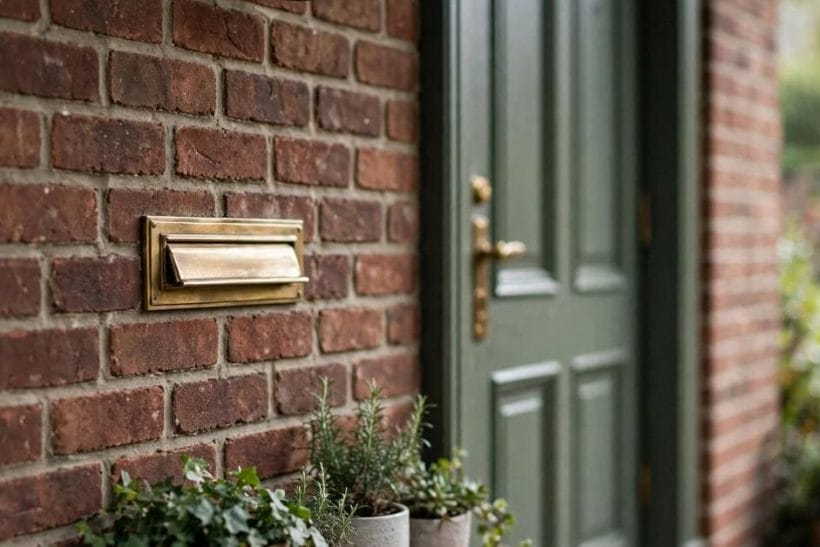
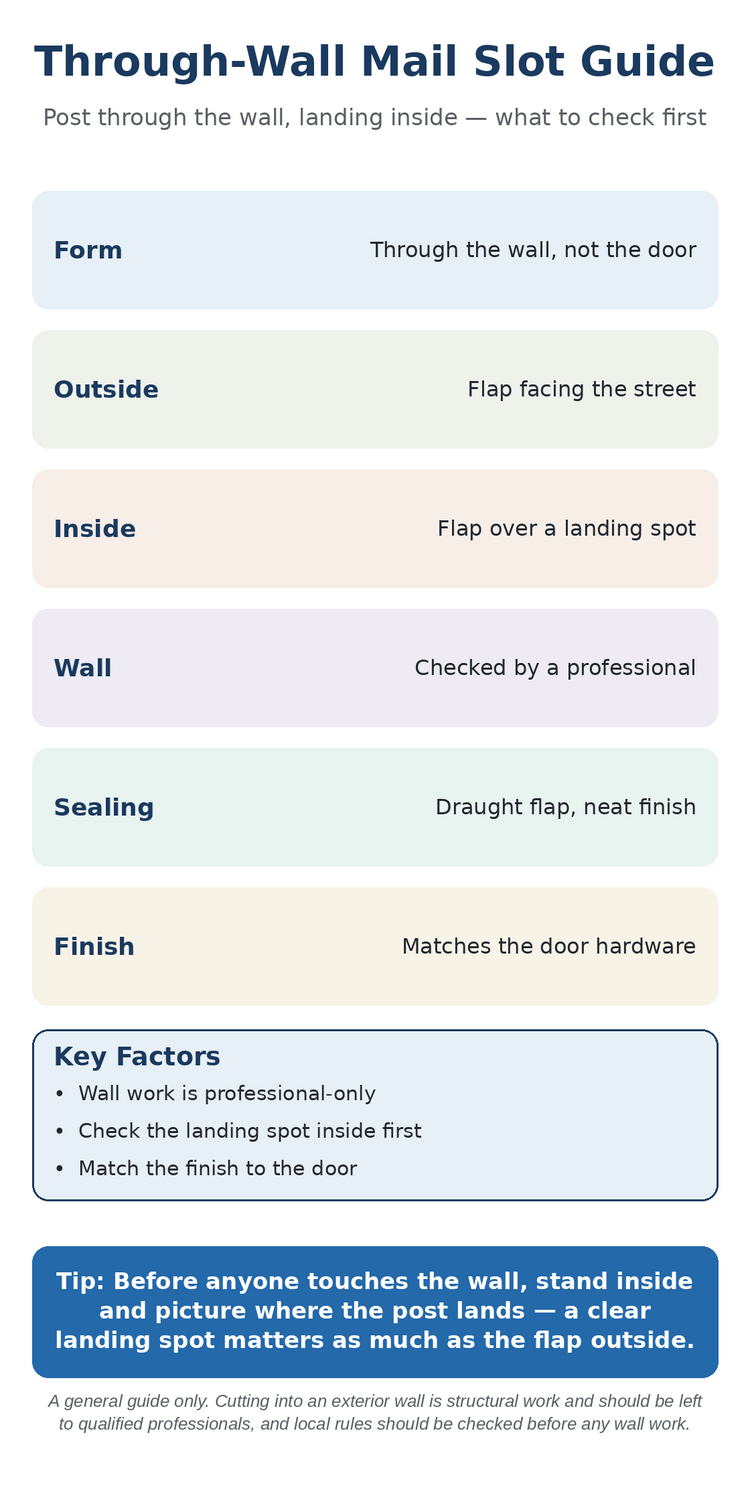
A through-wall mail slot is an opening made through the thickness of an exterior wall, fitted with a flap on the outside face and a flap on the inside face, so that post pushed through from outdoors lands indoors. It differs from a door slot, where the opening sits in the door leaf itself, and from a freestanding mailbox, where post is collected from a box set apart from the house. The wall slot keeps delivery at the house wall while leaving the door untouched, which suits homes where the door is a feature in its own right or where a door slot would weaken the look of a panelled or glazed door.
The appeal is mostly practical. Post arrives sheltered from rain once it is through the wall, it cannot be lifted away as a loose box could be, and there is no separate structure to maintain in the garden. The trade is that the wall itself is involved: an opening through a wall is a permanent change to the fabric of the house, and it needs to be planned with the wall in mind rather than treated as a small fitting job. That is why the sections that follow spend as much time on the wall, the weather and the landing spot as on the slot itself.
It also helps to settle one common confusion early. A wall slot is not simply a door slot moved sideways. The wall is thicker than a door, the opening passes through layers of material rather than a single leaf, and the inside landing arrangements are different, since post falls to a spot on the inner face of the wall rather than behind a door. Judging the idea on its own terms, as a wall feature with its own checks, leads to better decisions than judging it as a door fitting in a new place.
2. The Parts That Make Up the Slot
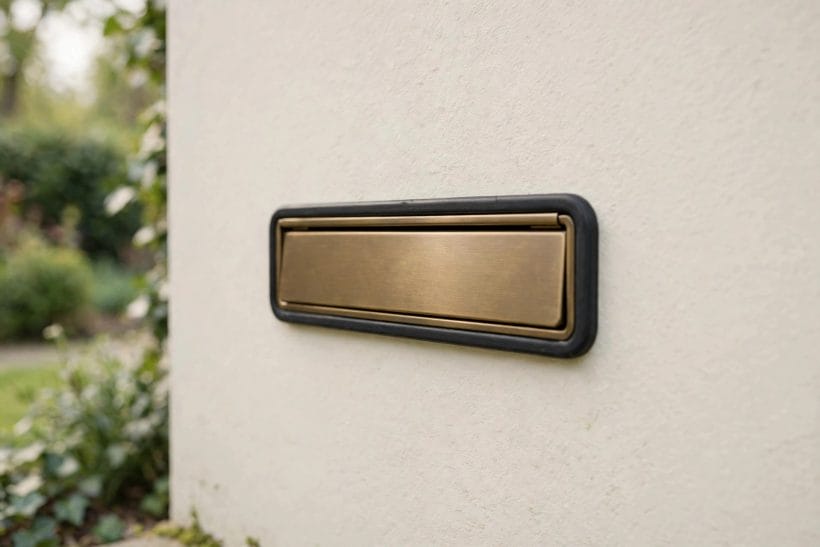
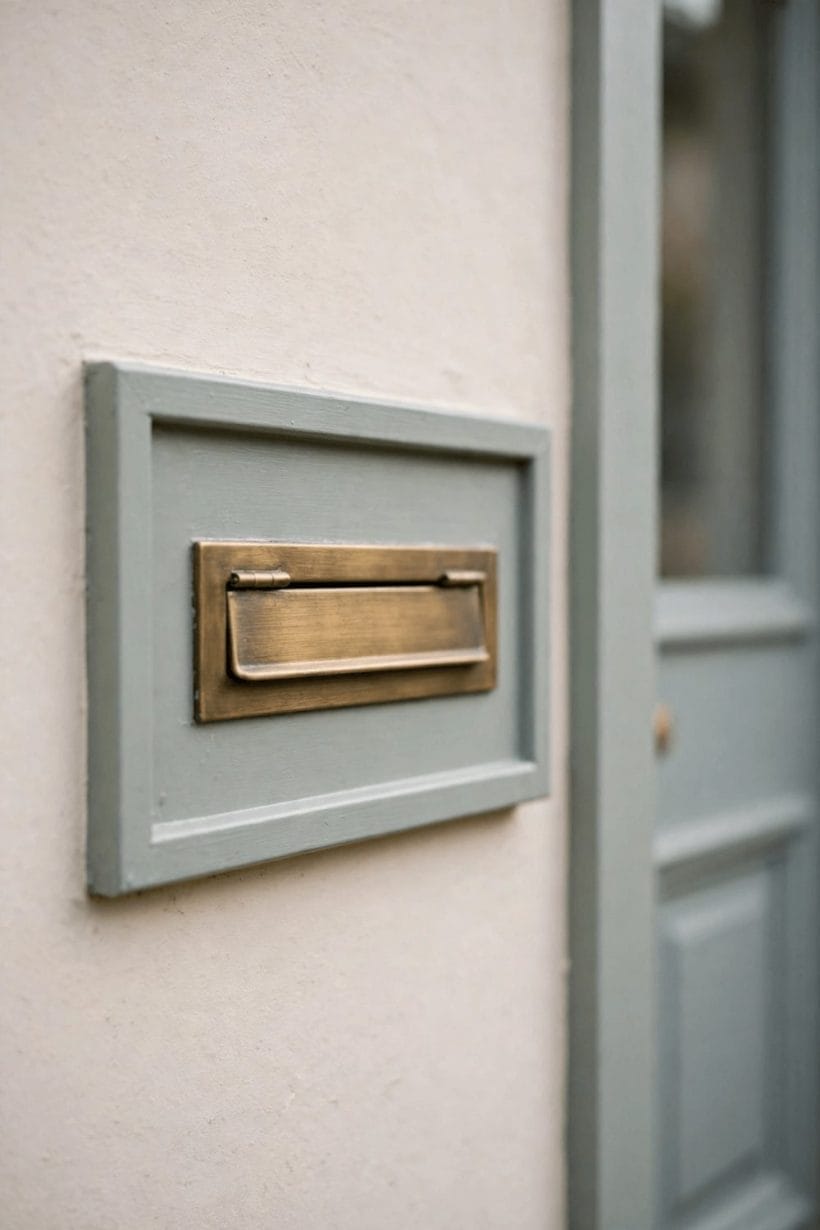
Most through-wall slots share the same family of parts, whatever their finish. On the outside face sits the outer flap, the hinged plate a visitor pushes to post a letter. Through the wall runs a sleeve or tunnel that lines the opening and gives the post a clean passage. On the inside face sits the inner flap, which closes the opening from the room side and is often fitted with a draught flap behind it. Around both faces sit the fixings and trims that hold the assembly to the wall and dress the edges where metal meets masonry, render or timber.
Each part earns its place. The outer flap takes the weather and the daily push of hands, so its hinge and spring matter more than its shine. The sleeve keeps the inside of the opening tidy and stops loose material from shedding into the passage. The inner flap and draught flap between them hold back wind and weather when the slot is at rest. The trims are not decoration alone: they cover the joint between the fitting and the wall, and a neat joint is what keeps the finished job looking settled rather than added on as an afterthought.
When comparing designs, it is worth looking at how the parts work together rather than admiring one part alone. A handsome outer flap paired with a flimsy inner flap will let in draughts. A sturdy sleeve with a poorly seated trim will look unfinished from the street. A complete set, where every part is made for the same depth of wall and the same kind of use, behaves better over time than a collection of parts chosen separately. Maker guidance that comes with a set describes the conditions it was made for, and that guidance is part of the comparison.
3. Where the Slot Sits on the Wall
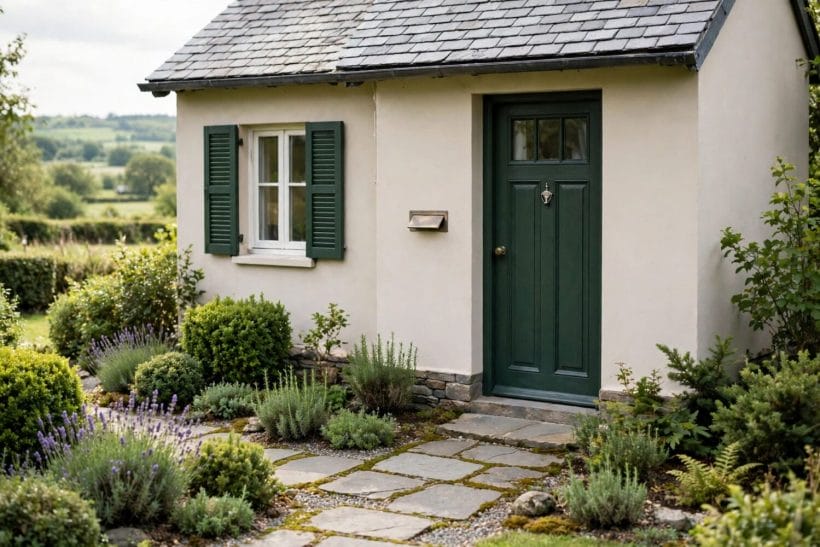
Position is the first decision that shapes everything else. The usual place is the stretch of wall beside the front door, within easy reach of a visitor standing on the path, and clear of planting, steps and porch furniture. The slot should be findable at a glance: a visitor carrying post should not have to hunt along the wall or reach past a bush to find it. A position near the door also keeps the delivery route short and obvious, which matters on dark mornings and in poor weather.
Height matters in a quieter way. Too low, and post lands awkwardly or the flap sits where it catches boots and bags. Too high, and the flap is a stretch for shorter visitors and the inside landing spot ends up at an unhelpful height too. The comfortable band is the one where a standing visitor can push a letter through without bending or reaching, and where the inside flap opens over a surface or floor that can receive the post without it scattering. There is no single correct height for every house, since steps, slopes and porch layouts all shift the picture, but the test is the same in each case: easy from outside, sensible from inside.
What sits around the slot matters as well. A porch light nearby helps a visitor find the flap after dark, and a clear stretch of path in front of it keeps delivery simple in all weathers. Climbing plants look charming over a wall, but foliage that grows across the flap will frustrate delivery and trap damp against the fitting. Keeping the wall around the slot clear, lit and reachable is a small piece of housekeeping that pays for itself every day the post arrives.
4. What the Wall Itself Means for the Job
An exterior wall is not a blank board. It may be solid masonry, a cavity wall with two leaves and a gap between them, a timber-framed wall with cladding, or a rendered wall over blockwork, and each construction behaves differently when an opening is made through it. Some walls carry loads from above. Some carry services, such as wiring or pipework, within their thickness. Some rely on their outer leaf to keep weather out and their inner leaf to keep warmth in. A professional checks what kind of wall is involved before any opening is considered, because the answer changes what is possible and what needs protecting.
Weatherproofing is part of that same check. An opening through a wall is a break in the weather line, and the way the sleeve, flaps and trims seal against rain and wind decides whether the job stays dry. A wall that faces driving rain needs its sealing judged more strictly than a sheltered porch wall. A rendered wall needs its finish made good around the fitting so that hairline cracks do not invite damp. These are professional judgements, made on the actual wall, and they are the reason this guide treats wall work as professional-only throughout.
There is also the question of permission and rules. Some homes sit in areas where changes to the front of the house need consent, and some walls belong to a shared structure where a neighbour or managing body has a say. Checking the local position before work is planned avoids an awkward reversal later. A professional engaged for the job will usually know which checks apply, and asking the question early costs nothing compared with undoing finished work.
5. The Outside Flap and the Weather
The outside flap is the public face of the slot, and it does the hardest job. It faces rain, wind, dust and frost, it is pushed many times a week, and it must close firmly every time so that the opening is sealed when at rest. A flap that hangs slightly open lets in wind and rain and invites draughts indoors. A flap that sticks makes delivery a struggle and tempts visitors to force it. The hinge, the spring and the weight of the flap together decide which of these the household lives with.
Finish is part of weather resistance too, not just appearance. A flap in a material that suits the local climate will hold its look and its movement for longer than one chosen for shine alone. Salt air near the coast, hard frost inland and long damp spells each test a finish differently, and maker guidance usually says which conditions a finish was made for. Matching the flap finish to the other exterior hardware, such as the door handle and the porch light, keeps the entrance looking considered, and that wider picture is worth a look before any single finish is chosen. Front door ideas show how hardware, colour and glazing can be balanced across an entrance, which helps a wall slot read as part of the door composition rather than an addition.
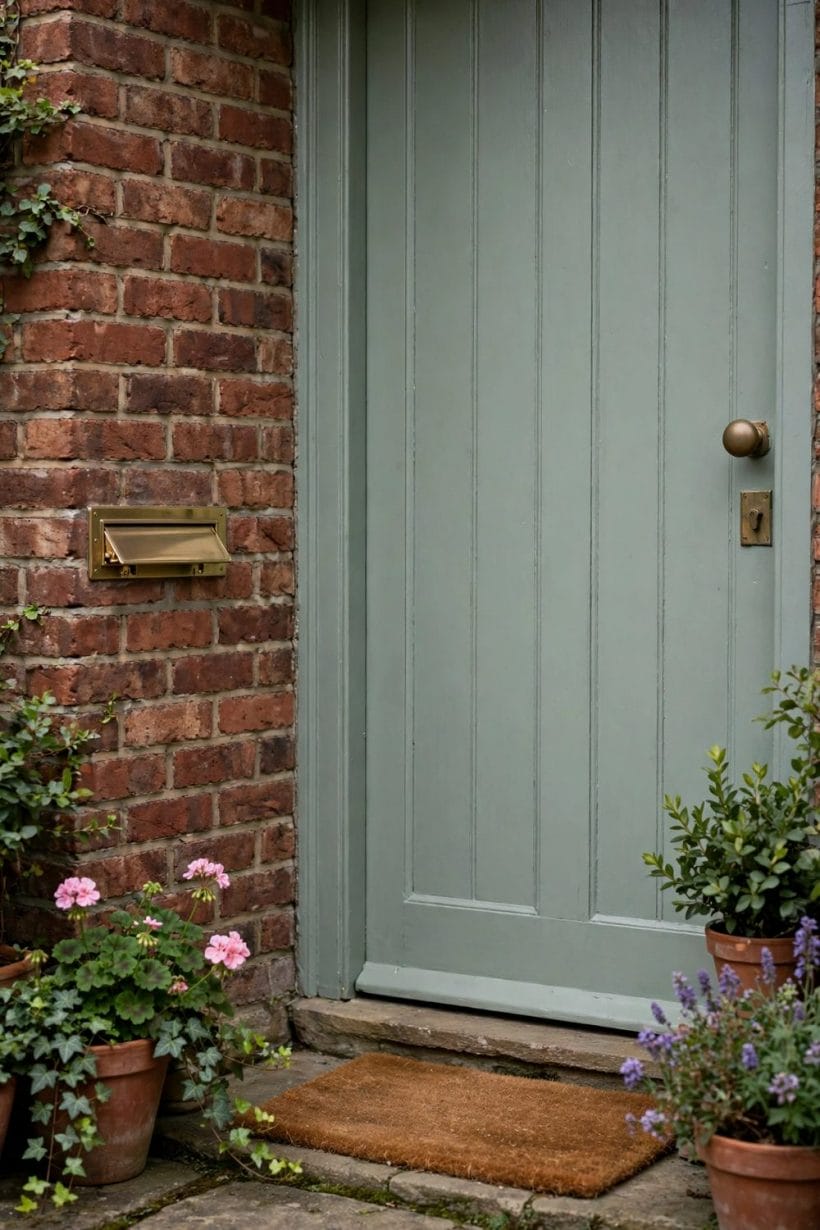
One more outside check is worth making: the flap should be readable as a mail slot at a glance. A flap that blends too well into the wall, or one hidden behind planting, will be missed by unfamiliar visitors and delivery workers. A clear, well-proportioned flap in a sensible position does its own signposting, and that plain visibility is a genuine practical virtue.
6. The Inside Flap and the Landing Spot
What happens on the inside face of the wall decides whether the slot is a pleasure or a nuisance to live with. Post pushed through the wall has to land somewhere, and that somewhere should be planned rather than discovered. A low table, a shelf or a tidy stretch of floor beneath the inner flap gives letters a place to arrive without scattering across a hallway. Where the slot opens above a staircase or a cluttered corner, post will end up in awkward places and the slot will feel like a poor choice even though the fitting itself is sound.
The inner flap deserves the same attention as the outer one. It should open easily when post arrives and close firmly afterwards, and its draught flap should sit flat so that wind does not whistle through the opening on gusty days. A quick check in a strong wind tells a household a lot: still air around the inner flap means the sealing is doing its work, while a noticeable draught points to a flap or seal that needs attention. This is a check to make, not a fault to fix by dismantling the fitting, and a professional should be asked about any persistent draught.
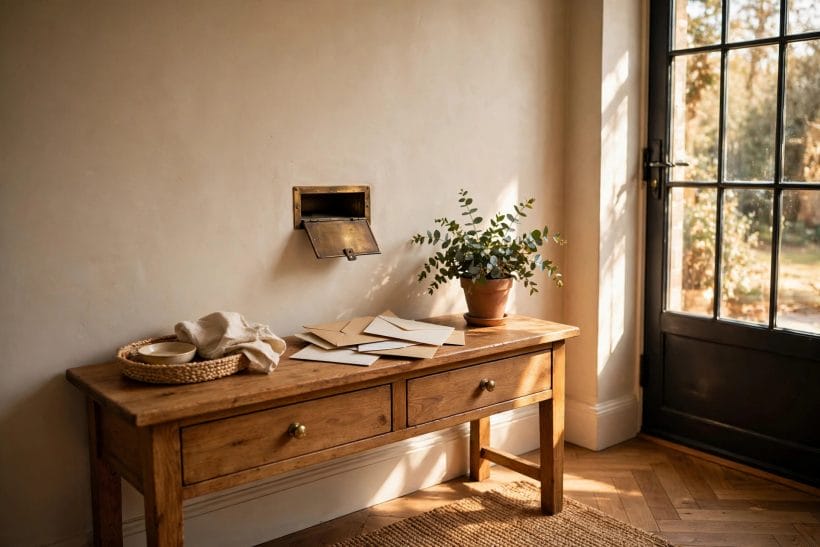
The landing spot also shapes the hallway around it. A console table under the slot can hold the day’s post, keys and a small tray, turning arrival into a tidy routine. Entryway ideas show how a landing surface, hooks and storage can be arranged so that post has a home from the moment it comes through the wall. Planning the inside arrangement at the same time as the slot position, rather than after the work is done, is what makes the whole arrangement feel intentional.
7. Draughts, Light and Sound Around the Opening
Any opening through an exterior wall changes how the wall performs, and the slot is no exception. The three things a household is most likely to notice are draughts, light and sound. A well-sealed slot with two flaps and a draught flap between them should keep all three to a level that passes unnoticed in daily life. A slot where a flap does not seat properly will announce itself on windy nights and in cold weather, and that announcement is the signal to have the fitting checked.
Light through the slot is a smaller matter, but it is worth noticing. A thin line of daylight around a flap that does not close fully is a visible sign that the seal is not doing its work, and it usually appears alongside a draught. Sound follows the same path: a slot that lets in a whistle of wind will also let in more street noise than a well-sealed one. None of these points is a reason to avoid a wall slot, but together they are the reason the sealing and the flaps deserve more attention than the finish alone.
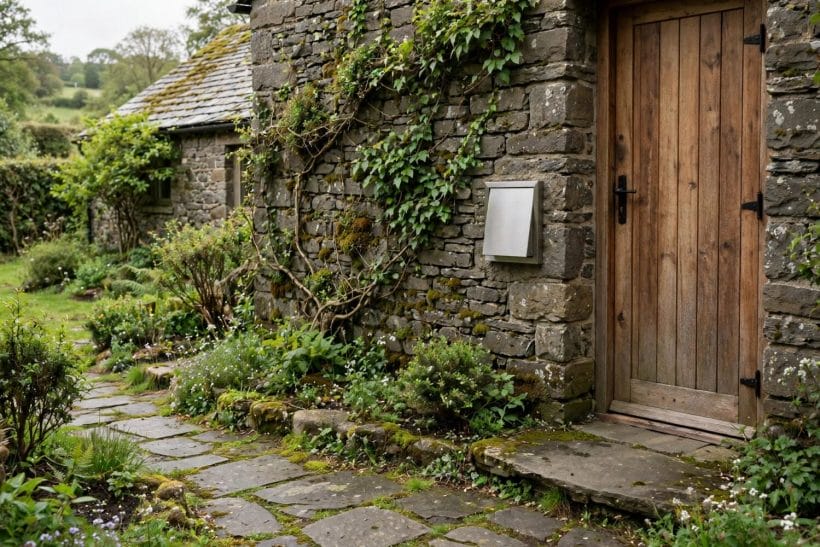
Seasonal change is the last part of this check. Materials move slightly with heat and cold, hinges stiffen in frost, and seals age over the years. A flap that closes cleanly in summer but drags in winter is telling the household something about its hinge or its seal. Noticing these small changes early, and having them looked at before they become a stuck flap or a permanent draught, is ordinary care for a fitting that works every day.
8. Security Checks Worth Making
A slot through a wall is also an opening in the security of the house, and it should be judged with that in mind. The useful questions are plain ones. Can a hand reach through the slot to anything valuable on the inside, such as keys left near the door? Can the inner flap be pushed open from outside and held open? Is the landing spot visible from the street through the slot, or is it screened by the hallway layout? Arranging the inside so that keys, valuables and sightlines are kept away from the slot answers most of these questions without any special device.
The fitting itself contributes too. A flap that closes firmly and cannot easily be held open from outside is a better neighbour than one that flops. A sleeve that limits what can be seen or reached through the opening adds a further quiet layer. These are points to raise with the professional supplying or fitting the slot, since the range of designs varies and the right choice depends on how exposed the entrance is and how the hallway is laid out.
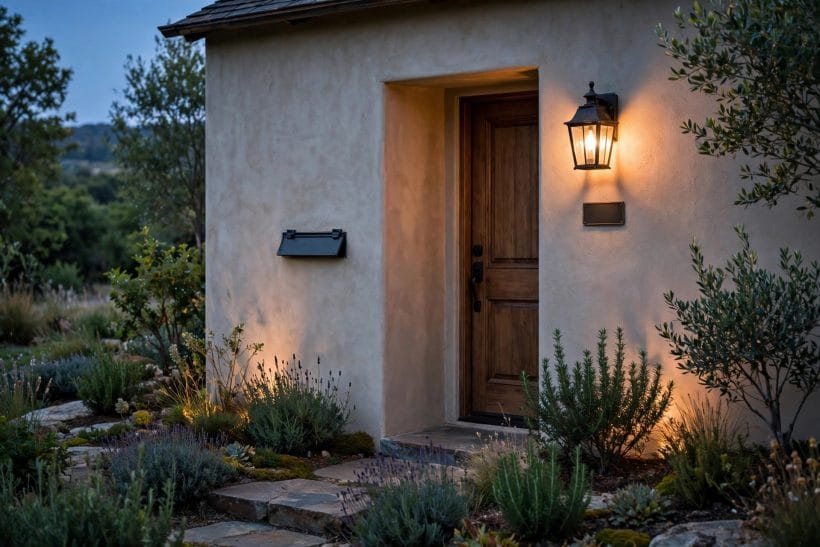
One habit completes the picture: never leave keys, parcels or anything worth taking within reach of the slot, on either side of the wall. A slot that delivers post into a tidy hallway where nothing sensitive sits nearby is a sound arrangement. The same slot delivering into a hallway where keys hang beside it is a weaker one, and the difference is made by household habit rather than by the fitting.
9. Finishes That Sit Well Beside a Front Door
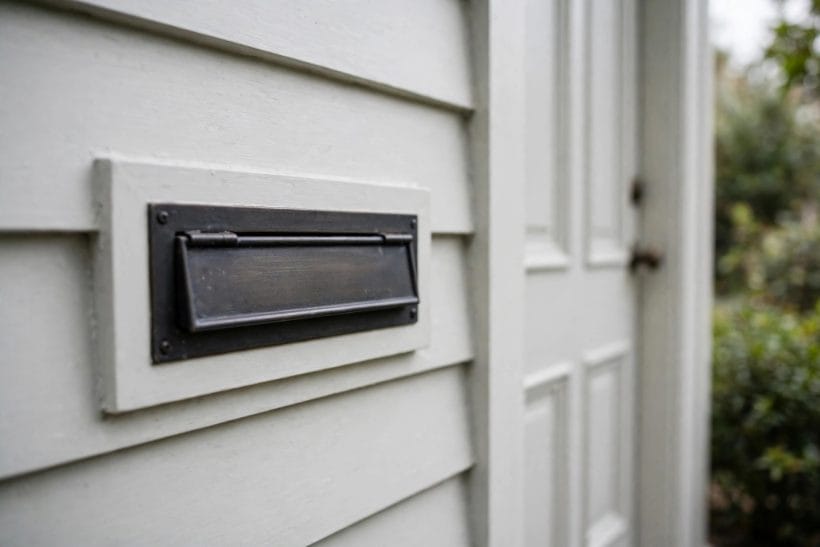
A wall slot is a piece of entrance furniture, and it should be chosen with the same eye as the door handle, the house number and the porch light. Brass warms a brick wall and suits a traditional door. Brushed steel suits a plainer, more contemporary entrance. Dark bronze or black sits quietly against painted timber and rendered walls. The aim is not to match everything exactly, which can look forced, but to keep the metals and tones in the same family so that nothing jars.
Wall material changes the picture. Against brick, a slot with a clear plate and crisp edges reads well, since the plate gives the eye a clean shape among the texture of the courses. Against render, a slot with a neat trim that covers the joint between metal and render looks most settled. Against timber cladding, a slot mounted on a flat board or trim, rather than directly across uneven boards, gives the fitting a level seat. These are details a professional will raise when the wall is inspected, and they are worth discussing before a finish is ordered.
The wider entrance composition deserves a final look too. Exterior entryway ideas show how a path, planting, lighting and door furniture combine into a welcoming approach, and a wall slot sits inside that composition. Brick porch ideas and covered porch ideas show the same balance from the porch side, where shelter changes how the slot weathers and how easily visitors reach it. A slot chosen as part of the entrance, rather than on its own, is the one that still looks right years later.
10. When a Wall Slot Is the Wrong Answer
A wall slot suits many homes, but not every home, and recognising the exceptions is part of choosing well. A wall that carries services, a wall in poor condition, or a wall where the inside landing spot would fall over a staircase or a fixed cupboard may all argue against the idea. A home where the front wall is shared, listed or subject to consent may face a permission hurdle that makes the project impractical. In each case the honest answer is to pause and weigh the alternatives rather than to press on regardless.
The alternatives are respectable in their own right. A slot in the door keeps delivery at the entrance without touching the wall. A separate mailbox by the gate or on a post suits homes where the wall is unsuitable or where the walk to the gate is short. Brick mailbox ideas show how a freestanding box can be built into the entrance design rather than left as an afterthought, which makes the comparison a design choice rather than a compromise. Choosing the alternative that fits the house is better than forcing the wall slot that does not.
There is also the simple test of daily life. If the household collects post rarely, if the hallway has no sensible landing spot, or if the entrance is so exposed that weather and security checks keep failing, a wall slot may add fuss rather than convenience. A fitting that is used every day should make daily life slightly easier, and when it does not, the right move is to choose differently while the choice is still open.
Final Considerations
A through-wall mail slot is a small feature with a long list of quiet checks: the wall and its construction, the position beside the door, the outside flap against the weather, the inside flap and its landing spot, the sealing against draughts, the security of the hallway, and the finish against the door furniture. None of these checks is difficult on its own, but together they are what separate a slot that serves the household for years from one that draughts, sticks or scatters post across the hall.
The single most important point bears repeating plainly. Cutting into an exterior wall is structural work for a qualified professional only. This guide has described what to check and what to ask, not how to carry the work out, and any household considering a wall slot should have the wall inspected and the job priced and planned by a professional before anything is ordered. With that advice followed, the slot itself becomes what it should be: a neat flap in the wall, a tidy landing spot indoors, and post that arrives sheltered, whatever the weather outside.


0 Comments