
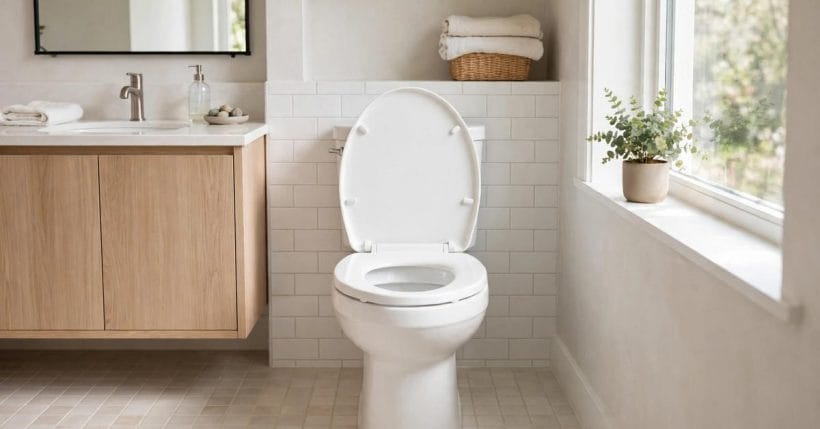
You press the handle, the water swirls, and then very little happens. The bowl stays too full, the waste stays put, and a second press does not fix it.
This guide walks through the observations that explain a toilet won’t flush completely, what to notice before anyone touches a pipe, and what to pass on to a plumber.
1. What a Swirling, Failing Flush Actually Looks Like
Not every failing flush looks the same, and the differences matter. A bowl that swirls weakly is telling a different story from a bowl that fills almost to the rim, and both differ from a bowl that flushes well one day and barely moves the next. Before assuming anything, watch one full flush from start to finish and notice what actually happens rather than what you expected to happen.
When people describe a toilet won’t flush completely, they usually mean one of three things: the water moves but carries nothing away, the water rises and then drains away very slowly, or the flush starts strongly and fades before the job is done. Each pattern points a plumber toward a different part of the system, which is why the pattern itself is worth noting down.
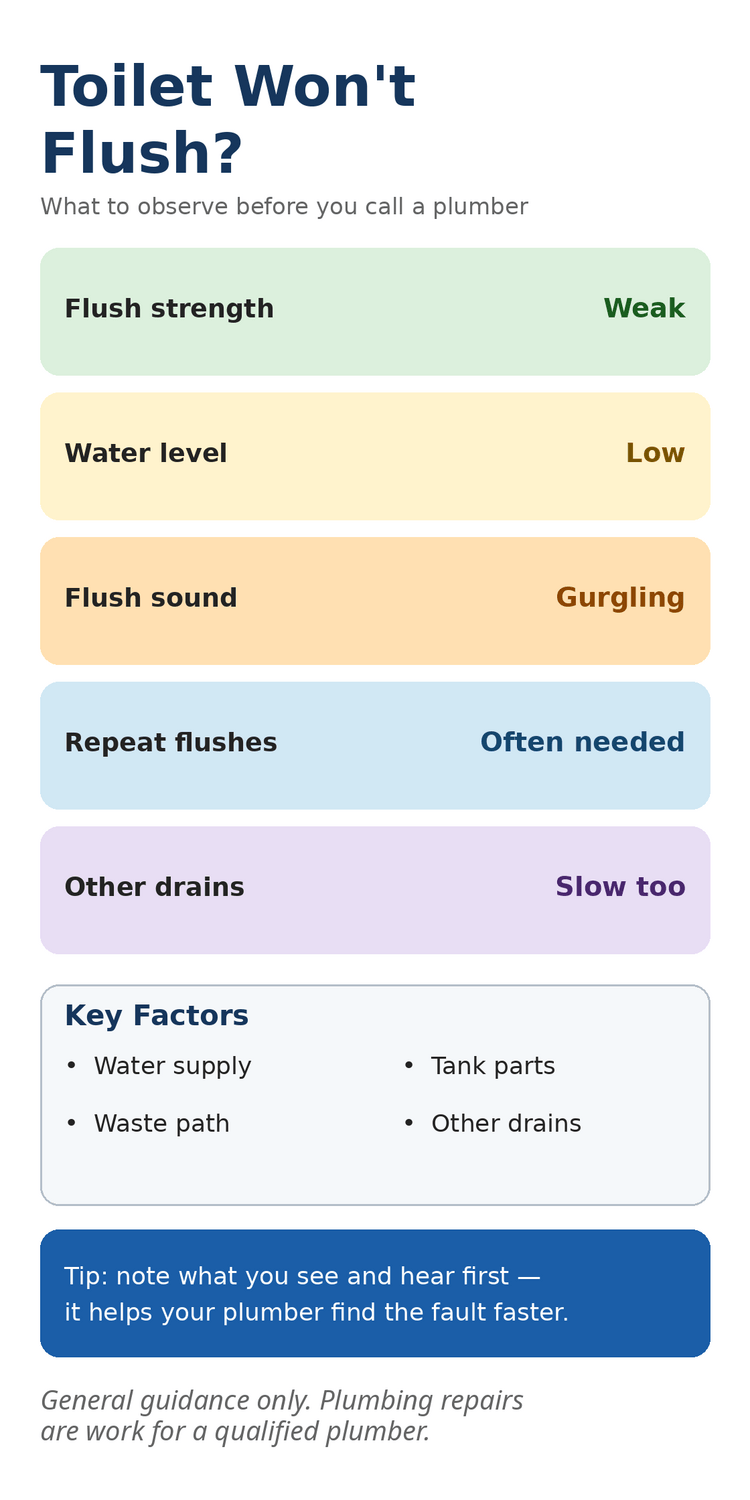
The table below sets out the main things to observe. Nothing here asks you to open anything up or fix anything; it is a watching brief, and it gives the rest of the guide its shape.
| What to observe | What it looks like | What to note down |
|---|---|---|
| Flush strength | Weak swirl, no real push | Whether it is always weak |
| Water level | Low, high, or slow to return | Where the water settles |
| Sound | Gurgling, hissing, or silence | When the sound appears |
| Other drains | Slow, fine, or also gurgling | Which rooms are affected |
Keep those four rows in mind as you read. A flush problem that turns out to be one toilet alone is a different conversation from a problem that shows up across the whole bathroom, and your notes are what let a plumber tell the two apart quickly.
2. Start With the Flush Itself: Strength, Sound and Repeat Flushes
The flush itself is the best first witness. Does the water rush, swirl, or barely stir? Does it start with energy and fade halfway, or does it never really get going? A flush that fades midway suggests the push behind it is running out, while a flush that never gathers strength suggests the push was never there. Both are observations, not diagnoses, but they narrow the conversation considerably.
Count how many flushes it takes to clear the bowl, and whether that number is changing. A toilet that needed one flush last month and now needs three is getting worse, and a worsening pattern is worth saying out loud to a plumber. A toilet that has always been a little lazy, on the other hand, may simply be a weak performer, and the question becomes whether something changed or whether you have only just started noticing it.
Notice too whether the handle itself feels different. A handle that feels loose, stiff, or oddly light under the hand is a change worth mentioning, even though the parts behind it are a plumber’s business. Handles, linkages and internal tank parts wear with use, and a change in feel often arrives at the same time as a change in performance. You do not need to know which part is involved; you only need to report that the feel changed and when.
3. Look at the Water Level in the Bowl and the Tank
Water level is the quietest clue in the bathroom and one of the most useful. After a flush, does the bowl refill to its usual level, sit lower than you remember, or take a long time to settle? A bowl that sits low after every flush behaves differently from a bowl that sits high and drains slowly, and a plumber will want to know which one you have.
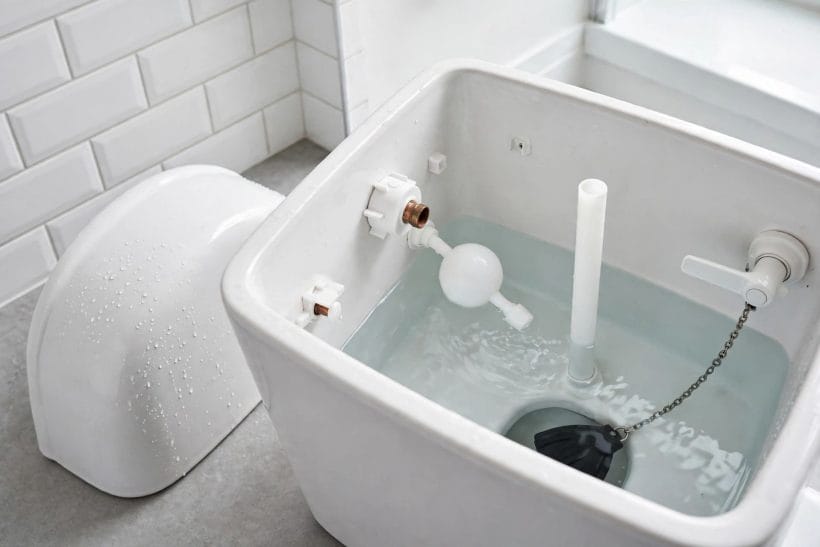
The tank matters for the same reason, and you can observe it without touching anything inside it. If your tank has a lid that lifts off easily, a glance at the water inside tells you whether the tank is filling well between flushes. A tank that refills slowly leaves the next flush with less push behind it, which can look exactly like a weak flush when the real story is a slow refill. If the lid is heavy, fixed, or awkward, leave it alone and simply note how long the tank takes to sound full again after a flush.
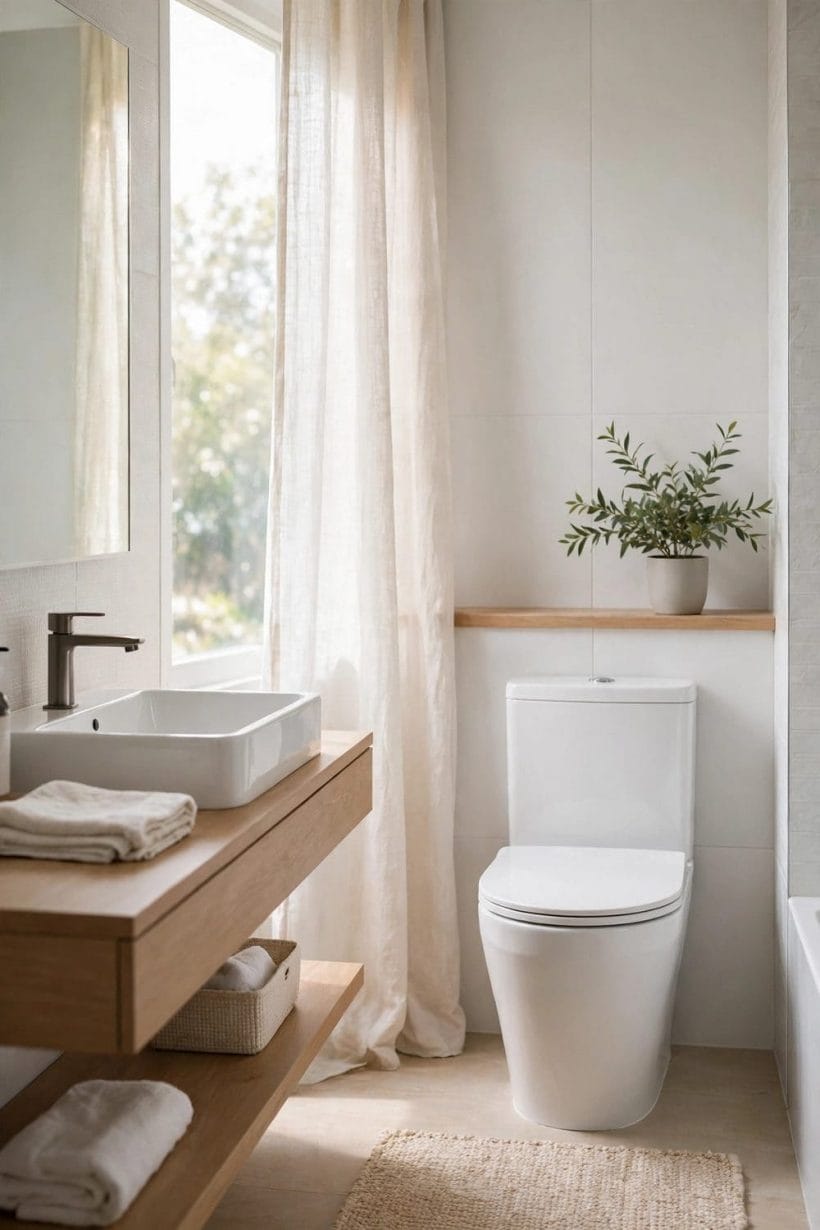
Timing is the observation here, not measurement. Nobody needs a ruler or a reading; “the tank takes a long while to sound ready again” is a perfectly good note. In a small bathroom, where the tank sits close to the wall and the room amplifies every sound, that refill sound is easy to hear and easy to describe, and tiny bathroom ideas show how these compact rooms are planned around exactly that kind of close-quarters plumbing.
4. Listen: Gurgling, Hissing and Silence After the Flush
A healthy flush has a fairly boring soundtrack: a rush, a refill, and then quiet. Anything that breaks that pattern is worth noticing. Gurgling from the bowl or from a nearby drain after the flush suggests air is moving where it should not be, or water is struggling past something downstream. A faint hissing that goes on long after the flush suggests water is still moving somewhere it should have stopped. Silence where there used to be a refill sound suggests the refill is not happening as it should.
Sounds also tell you about timing. A gurgle that arrives right at the end of the flush is a different note from a gurgle that shows up minutes later, or from a drain in another room that gurgles when this toilet flushes. Those cross-room sounds are especially useful, because they hint that the story involves more than one fixture, and a plumber will always ask whether anything else in the house reacts when this toilet is flushed.
Do not go hunting for sounds with your ear against pipes or by flushing over and over to reproduce them. One or two careful flushes, noticed properly, give a plumber more than a dozen rushed ones. Repeated flushing on a toilet that is already struggling can also push water where it should not go, so once you have your notes, stop testing and let the observations stand.
5. Check Whether Other Drains Are Slow Too
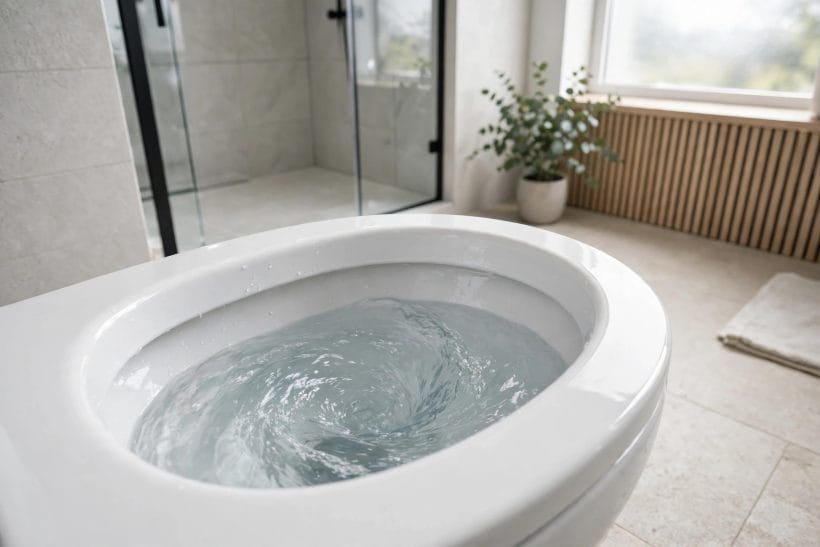
This is the single most useful check in the whole guide, and it costs nothing. Run through the other drains in the bathroom and, if you can, elsewhere in the house: does the basin drain normally, does the shower or bath empty at its usual pace, does the kitchen sink behave? If every drain is fine and only the toilet struggles, the trouble is most likely local to that toilet. If several drains are slow or gurgling together, the trouble is more likely further down the shared pipework.
The distinction changes the conversation with a plumber completely. A local problem and a shared problem are found differently, fixed differently, and talked about differently, so arriving with the answer to “is it just this toilet?” saves everyone time. It also stops a local fix being tried on a shared problem, which is one of the more common ways a small job turns into a second visit.
Make the check calmly and in one pass rather than as a frantic tour of every tap in the house. Note which fixtures are affected and which are not, and whether the slowness is new or something you have lived with for a while. A house where the shower has always drained slowly is a different story from a house where three drains slowed down in the same week, and that difference in timing is exactly what a plumber needs to hear.
6. Think About What Went Into the Bowl Recently
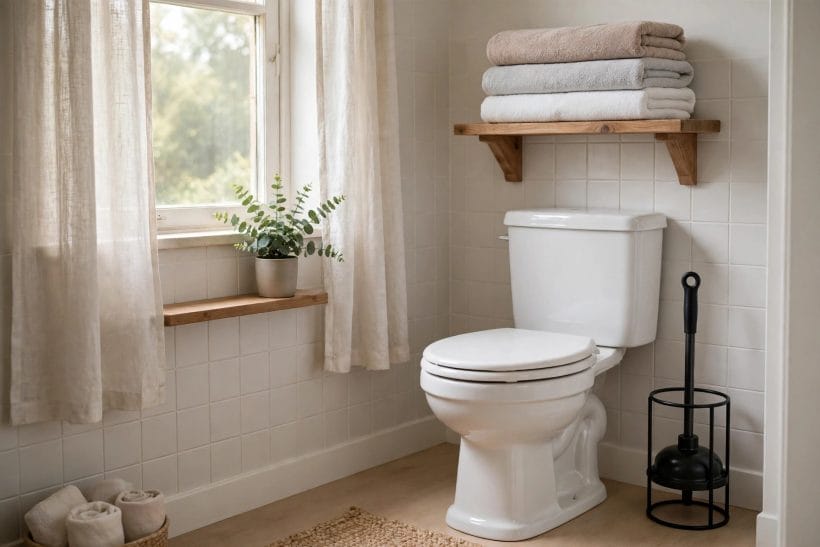
Toilets are built for very little: human waste and toilet paper, and nothing else. Everything else that goes down, from wipes marketed as flushable to cotton pads, bandages, and the occasional toy, can catch or gather where the pipe narrows or bends, and the result often looks like a gradually weakening flush rather than a sudden blockage. The flush gets a little lazier each week until one day it barely moves at all.
If the weakness arrived gradually, think back over recent weeks rather than recent hours. A single unusual item may have started the trouble, but the slow decline is usually the build-up around it. If the weakness arrived all at once, think about what changed that day: a new product in the bathroom, a guest unfamiliar with the house rules, or a child exploring what the toilet can swallow. None of this is about blame; it is about giving a plumber a starting point instead of a mystery.
This is also where different toilet types part company. A conventional toilet and a waterless or composting unit handle waste in entirely different ways, and what blocks one may be normal use for the other, so knowing your own type matters when you describe the problem. The best composting toilet for a tiny house guide shows how far apart those worlds are, and why a symptom that alarms one household is routine in another.
7. Small Bathrooms, Shared Bathrooms and Timing
Context around the toilet matters as much as the toilet itself. A bathroom shared by several people gets flushed far more often than a guest bathroom, and heavy use can expose a weakness that light use would hide for months. A toilet that struggles every Monday morning after a busy weekend is telling you about load as well as about plumbing, and that pattern is worth mentioning.
Timing across the day can matter too. A flush that is weak first thing in the morning but fine by evening, or fine on weekdays and weak when the house is full, points toward patterns of use and supply that a single visit might miss. Keep a simple mental log for a day or two: when the flush was weak, who had used the bathroom, and whether anything else was running at the time. Two days of notes beat two weeks of vague impressions.
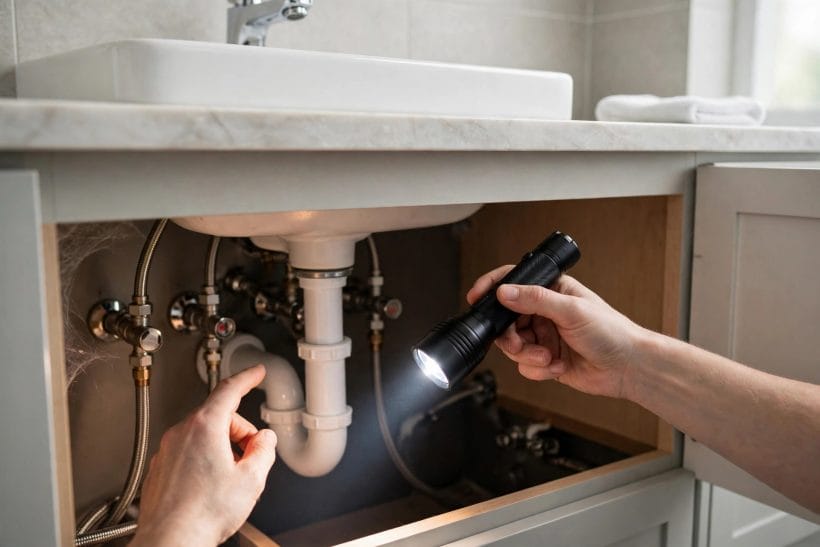
Small homes add one more wrinkle, because the bathroom often sits close to the kitchen or the sleeping area, and a struggling toilet affects the whole household quickly. Planning a compact bathroom well, with sensible clearances and access to the pipework, makes a plumber’s visit easier when trouble does arrive, and tiny house bathroom designs show how that access and layout thinking works in practice. Good layout never fixes a blockage, but it does make the fix faster and less disruptive.
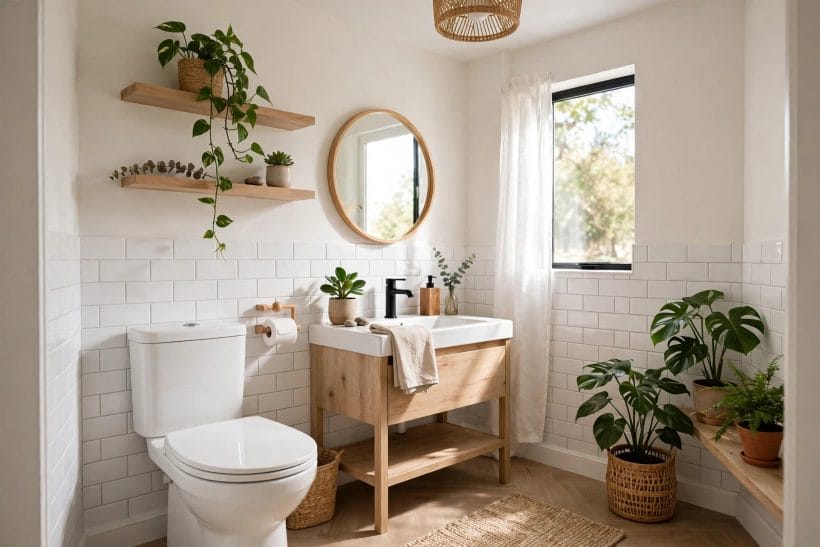
8. What to Tell Your Plumber Before They Arrive
A plumber’s first questions are almost always the same, and having the answers ready makes the visit shorter and sharper. When did the weakness start, and did it arrive suddenly or gradually? Is it this toilet alone, or are other drains slow too? How many flushes does it take now, and is that number rising? Does the bowl sit low, high, or slow to settle after a flush? Are there sounds, and when do they appear?
Add the recent-history notes from the earlier sections: anything unusual that went down the bowl, any change in how the handle feels, and whether the tank seems slow to sound full again. Mention the age and type of the toilet if you know them, and whether the bathroom has had any recent work done, since recent work sometimes disturbs pipework in ways that only show up weeks later. A short, factual list beats a long, worried story every time.
It also helps to clear the way before the visit: move bathroom mats, bins and anything stored around the toilet base so the plumber can see and reach the fixture properly. That is not plumbing work; it is simply giving the professional room to work. Leave the lid, the tank and any panels exactly as they are, and let the plumber be the first person to open anything up.
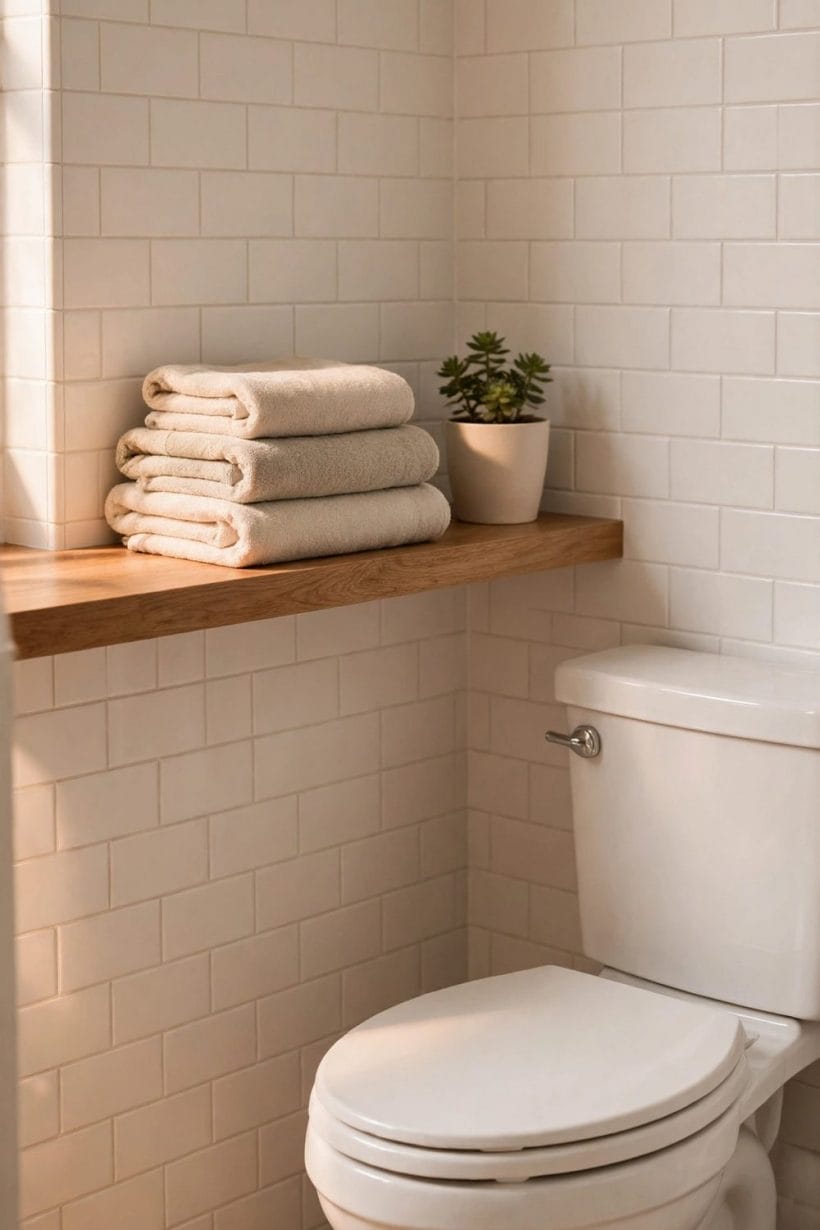
9. When to Stop Flushing and Call for Help Promptly
Most weak flushes are an annoyance, but a few signs mean the toilet should not be flushed again until a plumber has seen it. Water rising toward the rim of the bowl on every flush, water appearing on the bathroom floor, a smell of sewage in the bathroom, or waste coming back up through a nearby drain are all signs to stop and call promptly. Repeated flushing in those conditions risks pushing water onto floors and into places it should never reach.
Watch the floor as well as the bowl. A damp patch around the base of the toilet, a floor that stays wet after mopping, or a stain spreading across the bathroom floor can mean water is escaping somewhere it should not, and that kind of damp damages floors and the rooms below over time. Flooring choices and bathroom layouts can make that damage easier or harder to live with, which is why tiny house flooring ideas are worth a look when a bathroom is being planned or repaired, but once water is escaping, the plumber comes before any decorating decision.
If the house has only one toilet, say so when you call. A single-toilet household is a different kind of urgency from a house with a spare bathroom, and plumbers reasonably prioritise accordingly. Be honest about the symptoms, clear about the timing, and do not understate a sewage smell or rising water in the hope of a cheaper visit; those details are what get the right response.
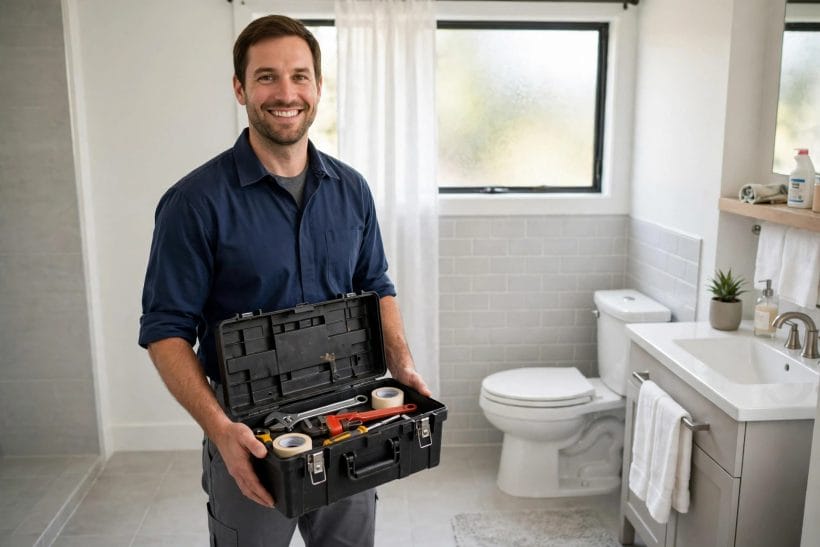
10. Keeping the Bathroom Usable Until the Visit
Between noticing the problem and the plumber’s arrival, the goal is simple: keep the bathroom usable without making anything worse. Flush once per use and no more, and resist the urge to keep pressing the handle in the hope that one more flush will clear it. Each extra flush on a struggling toilet adds water to a bowl that is already not emptying properly, and patience here is genuinely protective.
Keep the bathroom clean and dry in the ordinary household sense: wipe up splashes, keep towels and bath mats away from the base of the toilet, and keep the floor clear so you can spot new damp quickly. If the toilet is the household’s only one, agree a simple routine with everyone in the house so nobody is caught out, and keep the plumber’s arrival time in mind when planning the day. Small courtesies like these keep a frustrating wait from turning into a household argument.
Use the waiting time to finish your notes rather than to experiment. A tidy list of when the weakness started, which drains are affected, what the water level does, and what sounds you heard is more useful than any amount of hopeful flushing. When the plumber arrives, hand over the list, step back, and let the professional take it from there. That handover is the moment this guide has been building toward: careful observation on your side, skilled repair on theirs.
Final Considerations
A toilet that swirls without flushing is frustrating, but it is also informative. The pattern of the weakness, the water level, the sounds, and whether other drains share the trouble together sketch a picture that a plumber can work from, and a household that arrives with that picture gets a faster, more accurate visit. Observation is not a substitute for repair, and it is not meant to be; it is the bridge between noticing a problem and getting it fixed properly.
If the trouble has made you think about the toilet itself, whether it is the right fit for the bathroom or simply past its best, that is a separate question with its own guide. Toilet Checks: Flush, Fit, Water Use and the Bathroom Around It covers the buying-checks angle in full, from fit and water use to comfort and care, and it is the right next read once the immediate flush problem is resolved. Keep the two jobs apart: fix the flush first, and judge the toilet itself afterwards.
For the wider home, the bathroom never stands alone. The interior design ideas collection puts the bathroom back into the context of the whole house, where layout, light and storage all shape how a small room feels day to day. A bathroom that works well is rarely about one fixture; it is about a room planned as a whole, maintained with attention, and repaired promptly by the right person when something goes wrong.




0 Comments