

Turquoise can feel fresh in the morning and calm at night, which is why turquoise rooms keep winning over plain neutrals. Used in layers, it suits compact bedrooms and generous suites alike.
Here are 75 practical ideas covering layouts, colour pairings, storage and restful styling, so you can take one small change or plan a whole room.
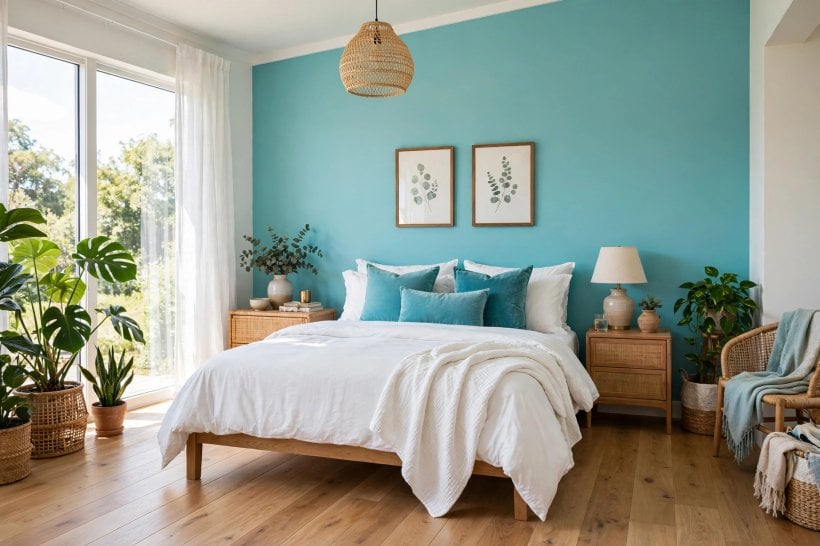
1. Layouts That Give Turquoise Room To Breathe
Start with the layout, because colour works hardest when the furniture already makes sense. These first ideas, and the summary below, show how turquoise rooms can feel open rather than intense, even when the footprint is small and storage has to earn its place.
| Focus | Best first move |
|---|---|
| Layout | Centre the bed on the clearest wall and keep a walkway both sides wherever space allows. |
| Colour | Pick one main turquoise tone, then support it with warm white, pale timber and one deeper accent. |
| Storage | Use the bed base, headboard wall and one tall unit before adding extra freestanding pieces. |
| Light | Layer a ceiling light, two bedside lights and soft window dressing for evening calm. |
| Restful styling | Repeat turquoise in three places only, then let texture and neutrals do the rest. |
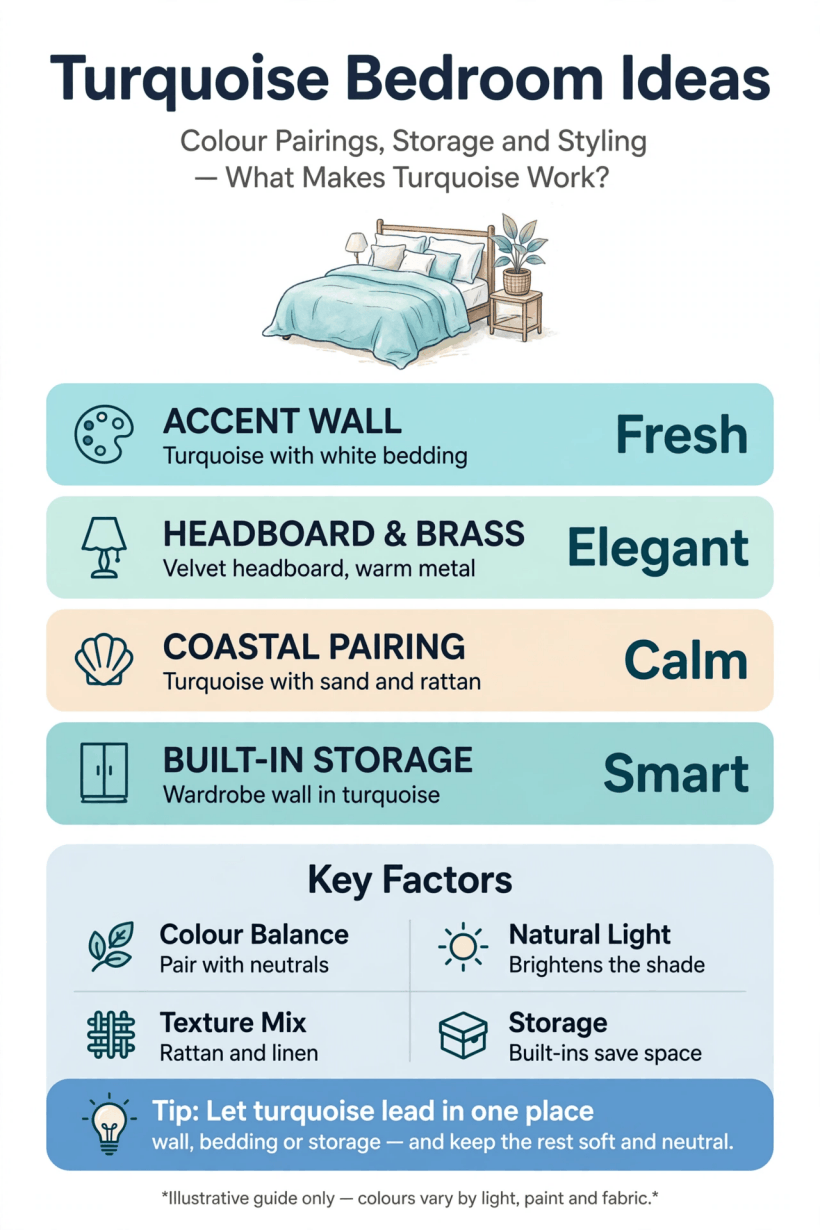
A quick visual guide to balancing turquoise with layout, light, storage and softer supporting colours.
1. Centre the bed first. Place the bed on the longest clear wall, then arrange everything else around it, so the colour story starts from a calm, symmetrical focal point.
2. Leave breathing space. Keep a clear gap between bed and wardrobe doors, because a room that moves well always feels larger and more restful than one filled edge to edge.
3. Float a compact bedside. Wall-mounted bedside shelves free the floor, suit small rooms like those in these small bedroom interior design ideas, and keep books and lamps within easy reach.
4. Put the dressing zone near light. A small table or stool near the window makes morning routines easier and keeps cosmetics and clutter away from the pillow end of the room.
5. Keep tall furniture together. Group wardrobe and tall storage on one wall so the remaining walls stay lower, lighter and better suited to colour and artwork.
6. Angle nothing without reason. Straight, simple lines calm a strong colour, while angled furniture wastes corners and makes a compact bedroom feel restless and harder to clean.
7. Make a reading corner. One chair, a small side table and a lamp in a corner give the bedroom a second purpose without needing a larger footprint.
2. Walls, Paint and Gentle Colour Blocking
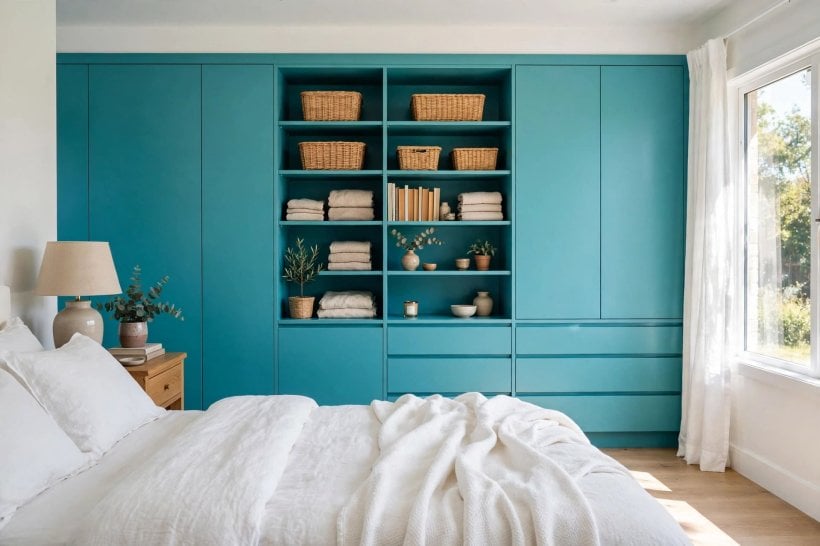
8. Paint the headboard wall only. A single turquoise wall behind the bed gives depth and focus, while the other walls stay pale and keep the room feeling airy.
9. Try a half-height wall. Paint turquoise to picture-rail or headboard height and warm white above it, a trick that feels designed and stops colour climbing too high.
10. Use a soft, greyed turquoise. Muted tones with a little grey feel restful in bedrooms, especially in north-facing light where bright shades can turn chilly.
11. Go deep for a cocoon. A rich teal-turquoise on all walls can feel wonderfully enclosing in a large or very bright room, balanced with pale bedding and timber.
12. Colour-block a niche. Paint the inside of an alcove or wardrobe recess in turquoise to create a dressing or reading moment without repainting the whole room.
13. Paint the ceiling pale aqua. A very light wash overhead hints at sky and water, keeps walls neutral and makes tall rooms feel softer and more finished.
14. Add white panelling below. Simple wall panelling painted white protects the lower wall, adds classic detail and gives saturated turquoise a crisp place to stop.
15. Test at two times of day. Turquoise shifts between morning and lamplight, so paint a large sample board and live with it before committing to walls or joinery.
3. Bedding Layers That Do the Colour Work
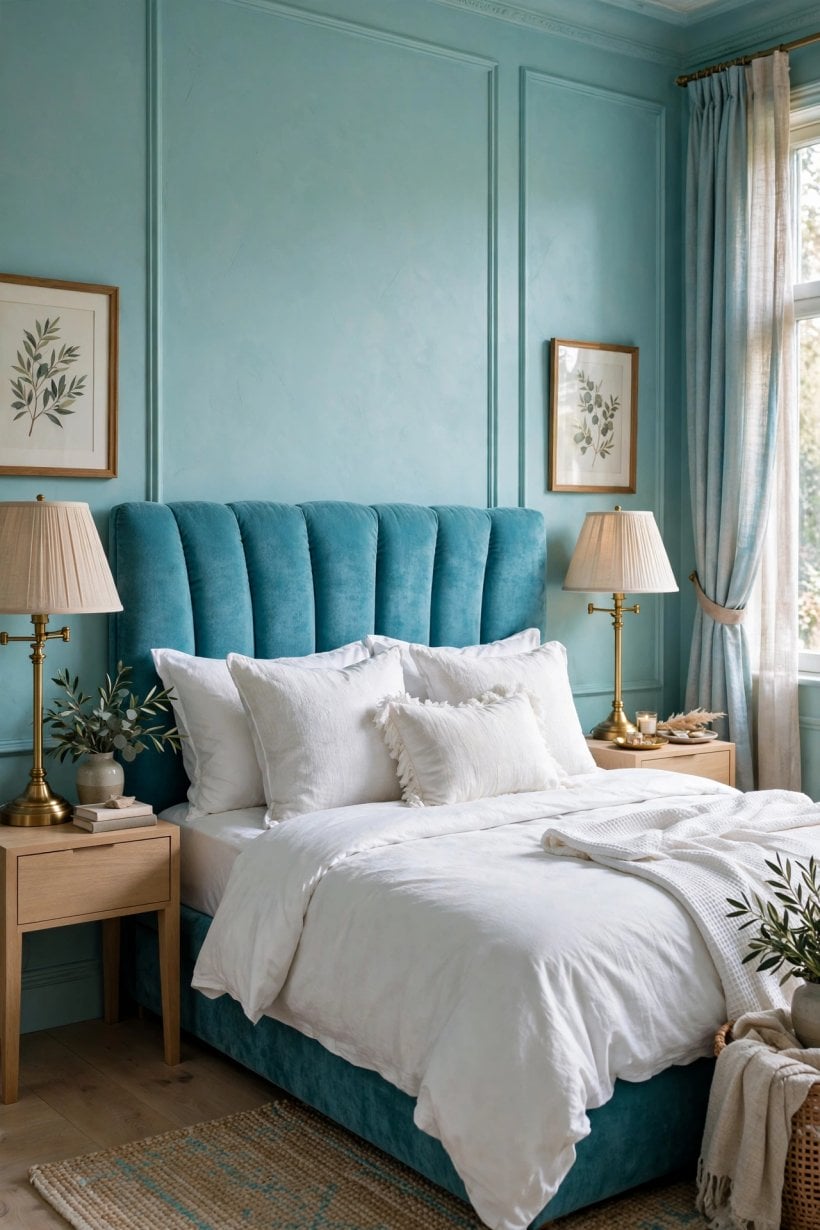
16. Start with white bedding. Crisp white or warm ivory sheets make turquoise cushions and throws look intentional, and they are easy to refresh through the seasons.
17. Layer three turquoise tones. Combine a pale throw, mid-tone cushions and one deeper pillow so the bed reads as a gradient rather than a single flat block.
18. Add a patterned duvet. A subtle stripe, small motif or painterly print containing turquoise lets you introduce the colour in a softer, more forgiving way.
19. Use linen for texture. Washed linen in aqua or sea-glass tones brings a relaxed, slightly rumpled softness that suits restful rooms, as seen in modern tiny house bedroom styling.
20. Reverse the layers seasonally. Fold a deep turquoise blanket at the foot in winter, then swap to a pale coverlet in summer for the same bed, two moods.
21. Keep pillows in odd numbers. Three or five cushions look composed without trying too hard, especially when sizes step down from large squares to one long bolster.
22. Pick up the colour in a bed skirt or valance. A tailored base in a quiet turquoise grounds the bed and hides storage boxes tucked neatly underneath.
23. Wash before you judge. New bedding colours deepen or soften after washing, so check your chosen shade against the wall once it has been laundered and ironed.
4. Headboards, Beds and Statement Pieces
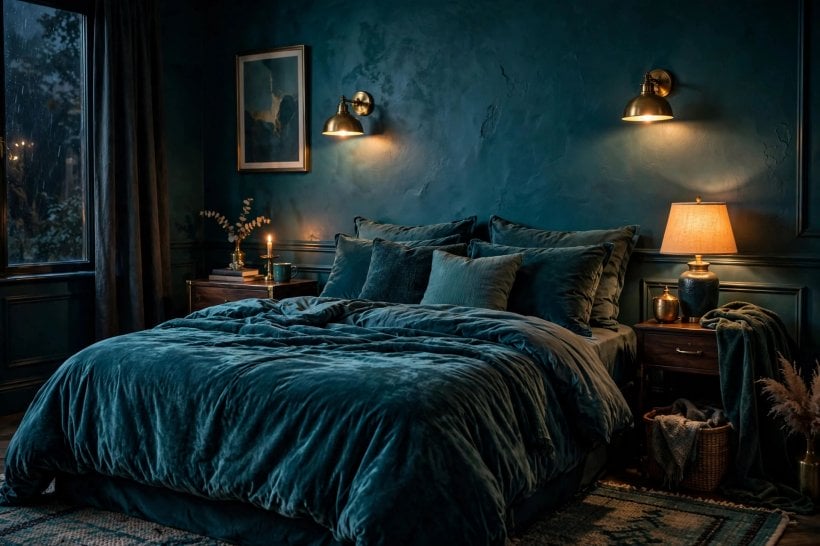
24. Upholster the headboard. A padded headboard in turquoise velvet or linen becomes the whole room’s statement, so walls and bedding can stay calm around it.
25. Paint a timber headboard. A simple slatted or panelled wooden headboard painted in satin turquoise is an affordable weekend change with a surprisingly tailored result.
26. Choose a low platform bed. Low frames suit compact rooms and long views across the bed, keeping colourful bedding as the hero rather than bulky furniture.
27. Try a rattan or cane bed. Natural woven textures warm up cool turquoise beautifully and stop the scheme feeling flat or overly matched.
28. Add a bench at the foot. A bench in a deeper shade holds a throw, gives you somewhere to sit while dressing and makes the bed arrangement feel complete.
29. Paint one bedside table. When matching furniture feels dull, paint a single bedside in turquoise as a small, joyful accent that is easy to change later.
30. Hang a canopy or curtain. A sheer panel behind the bed softens a strong headboard colour and adds gentle movement, especially in rooms with hard, plain walls.
31. Frame the bed with pendants. Two hanging lights free the bedside surfaces and draw the eye upward, making the bed wall feel taller and more deliberate.
5. Colour Pairings That Always Feel Restful

32. Turquoise with warm white. This is the safest, freshest pairing: clean in daylight, soft under lamps and easy to live with in rooms of any size.
33. Turquoise with pale oak. Light timber adds warmth that balances turquoise’s cool side, echoing the balanced schemes in these colourful tiny house interiors.
34. Turquoise with navy. Deep blue grounds brighter turquoise and creates a layered, sea-inspired palette that works especially well with white bedding and brass details.
35. Turquoise with blush. A touch of soft pink warms turquoise and feels gentle rather than sweet when both colours are muted and used in small doses.
36. Turquoise with charcoal. Dark grey adds definition to pale aqua schemes, through a bed frame, cushions or a single dramatic lamp base.
37. Turquoise with sage. Two soft, nature-led colours together feel calm and organic, particularly with cream textiles and lots of natural fibre texture.
38. Turquoise with mustard accents. A tiny amount of warm yellow, in a cushion or artwork, makes turquoise look fresher by contrast without turning the room busy.
39. Turquoise with black details. Slim black frames, handles or light fittings sharpen a pale scheme in the same way eyeliner defines a face: sparingly and precisely.
6. Storage That Keeps the Colour Calm
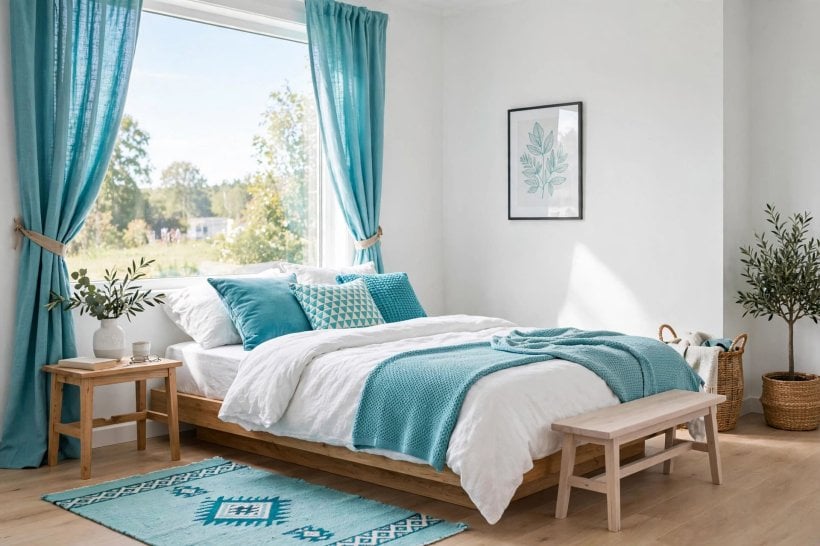
40. Build wardrobes around an alcove. Fitted storage painted to match the walls, or in a shade deeper, turns awkward recesses into a calm, continuous run of doors.
41. Use under-bed drawers. Divided drawers keep spare bedding and out-of-season clothes out of sight, a principle every small living room and small bedroom shares: hide the bulk, show the calm.
42. Add a headboard shelf. A shallow shelf or ledge behind the pillows holds books, a clock and a glass of water where separate bedside tables will not fit.
43. Choose closed storage first. Doors and drawers keep colourful rooms restful, because visual clutter competes with strong colour far more than neutral furniture does.
44. Paint inside the wardrobe. A hidden wash of turquoise inside cupboards or drawers is a private delight that does not affect the room’s calm exterior at all.
45. Use baskets in natural fibres. Lidded baskets on open shelves contain chargers, scarves and bedtime clutter while adding warm texture against cool painted surfaces.
46. Fit a window seat with storage. A seat under the window with a lift-up or drawer base provides reading space, blanket storage and a natural home for a turquoise cushion.
47. Label drawers discreetly. Small labels inside drawers keep shared storage peaceful, because everyone can find things without emptying a whole cupboard onto the bed.
7. Windows, Light and Soft Furnishings
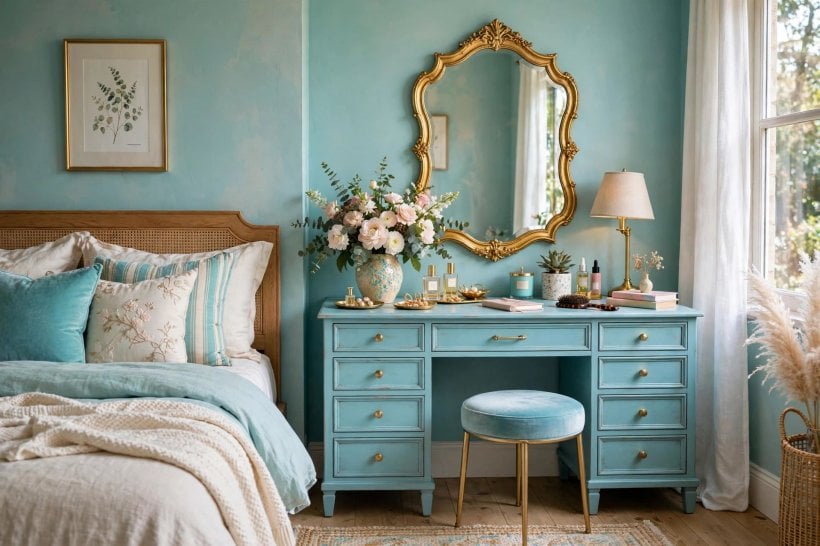
48. Hang curtains high and wide. Fixing curtains above the frame and beyond its sides makes windows look larger and lets maximum daylight reach a colourful room.
49. Choose sheer plus blackout layers. A sheer for privacy and glow, with a heavier curtain or blind behind, gives control for lie-ins, naps and early summer mornings.
50. Match blinds to the wall. A simple blind in a shade close to the wall keeps the window architecture clean and lets bedding carry the turquoise story.
51. Warm the light bulbs. Warm-toned bedside lighting stops turquoise turning cold or clinical in the evening, when the bedroom needs to feel most restful.
52. Add a dimmer or low lamp. One low, shaded lamp for the last hour of the day signals rest far better than a bright ceiling light left blazing.
53. Use a textured rug. A pale rug with a woven or bordered pattern softens floorboards, warms bare feet and gives strong wall colour a quiet base.
54. Repeat curtain colour in cushions. When curtains carry turquoise, repeat a smaller amount on the bed so the window and bed feel connected across the room.
55. Keep mirrors opposite light. A mirror placed to catch window light brightens darker turquoise schemes and makes compact bedrooms feel deeper, much like tricks used in a small bathroom.
8. Pattern, Art and Personal Details
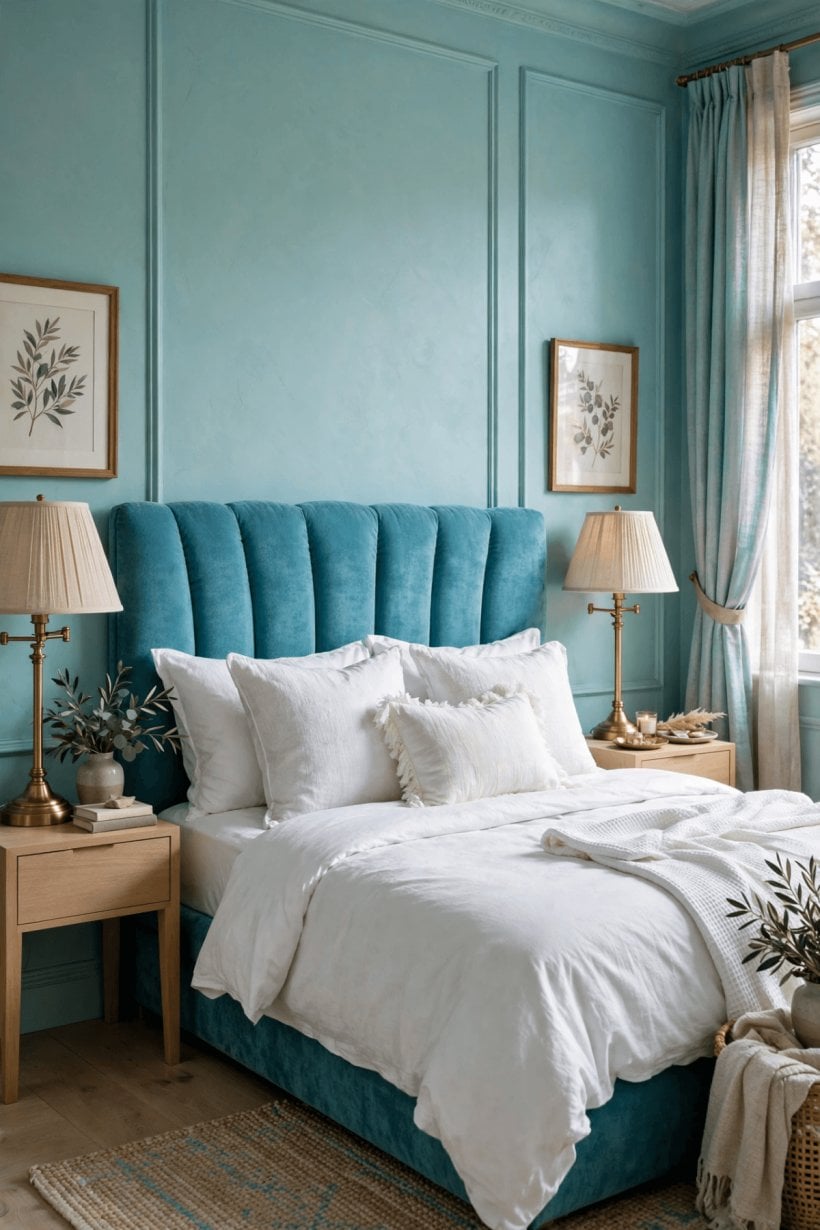
56. Hang one large artwork. A single generous picture containing sea, sky or abstract turquoise tones anchors the bed wall better than many small frames.
57. Create a small gallery pair. Two matching prints either side of the bed reinforce symmetry and give restless walls a calm, deliberate rhythm.
58. Mix pattern scales. Pair one large pattern, such as a duvet print, with one small pattern in cushions, keeping the same colour family throughout.
59. Add stripes for order. A narrow striped cushion, throw or rug introduces structure that balances the softness of washed turquoise textiles beautifully.
60. Display books with aqua covers. A small stack of favourite books whose spines pick up the room’s tones is personal, useful and easy to rearrange.
61. Use ceramics as accents. A turquoise-glazed vase, lamp base or bedside dish adds shine and a hand-made quality that flat paint cannot achieve alone.
62. Keep surfaces edited. Choose three objects per surface at most, a habit borrowed from calm tiny house kitchen design, where every visible item earns its place.
9. Small Rooms, Guest Rooms and Rental-Friendly Ideas
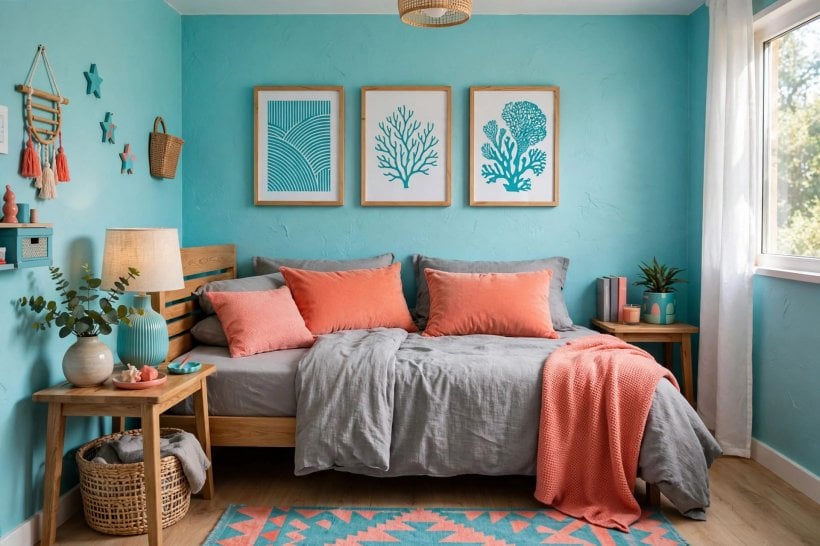
63. Keep small rooms pale. In a tiny bedroom, reserve turquoise for bedding, cushions and one wall, so the space stays bright and easy to update.
64. Use removable colour. Cushions, throws, a rug and artwork deliver turquoise without paint, which suits rentals and anyone who likes changing schemes seasonally.
65. Style a guest bed generously. White bedding, a folded turquoise throw and a small carafe make a spare room feel considered rather than leftover.
66. Add a luggage-friendly corner. A clear corner, a hook and a small bench help guests settle without covering your carefully styled bed in bags.
67. Choose washable textiles. Guest and family rooms benefit from throws and cushion covers that wash easily, keeping fresh colours looking fresh for longer.
68. Paint the door interior. The inside of a bedroom door in soft turquoise is a contained surprise that works even where wall colour must stay neutral.
69. Use a single statement cushion. When budget or space is tight, one large, beautifully made turquoise cushion on plain bedding changes the room’s whole temperature.
10. Finishing Touches for Sleep and Calm
70. Keep technology visually quiet. Hide chargers in a drawer or basket, and route cables behind furniture so the bedside stays as calm as the colour palette.
71. Add a plant with soft foliage. A trailing or feathery plant echoes turquoise’s natural references and softens hard furniture lines without adding visual noise at bedtime.
72. Choose a bedside scent carefully. A gentle, familiar scent in a drawer sachet or linen spray can become part of the room’s restful routine, kept subtle rather than strong.
73. Make the bed every morning. Smooth sheets, squared pillows and a folded throw let your turquoise layers look intentional and make returning to the room a pleasure.
74. Edit one thing a month. Remove, move or replace a single item monthly, so the scheme evolves gently instead of accumulating clutter that fights the colour.
75. Photograph the room. A phone photo reveals imbalance, tangled cables and one colour too many far more honestly than standing in the room itself ever will.
Final Considerations
Turquoise rewards restraint: one main tone, a few repeats, warm supporting materials and storage that keeps surfaces clear. Start with bedding or a single wall, live with it through different light, then add depth only where the room still feels flat. Whether your bedroom is a compact spare room or a generous suite, that measured approach keeps the colour feeling fresh, personal and genuinely restful, night after night.



0 Comments